Archive for the 'OHCHR' Category

Rich palette of side events at 41st Session of the UN Human Rights Council

June 21, 2019

The 41st session of the UN Human Rights Council is to start soon. In addition to items of the agenda [see https://humanrightsdefenders.blog/2019/06/14/guide-to-human-rights-defenders-issues-at-the-41st-human-rights-council-starting-on-24-june/] there are – as usual – many side events in Geneva, both by States and NGOs, that relate to human rights defenders. You can download the list of NGO events here.

Here a selection:

  • Launch of ISHR joint report on strengthening HRC membership on 1 July at 13:00 at the UN Delegates restaurant. Speakers will introduce the report and highlight some of the key challenges, opportunities and practical recommendations, including with regard to good practice relating to candidacy and membership of the HRC.
  • Promoting and Protecting Civic Space for Migrants and Refugees is organised by CIVICUS and Solidarity Center and will take place on 24 June at 12:00. This event will examine findings on civic space barriers for migrant/refugees in Germany, Jordan, Kenya, Malaysia and Mexico from a new report by Solidarity Center and CIVICUS; provide an analysis of some of the civic space trends for migrants/refugees across the five countries; and hear from civil society activists on the ground.
  • Health impacts for US Asylum is organised by Physicians for Human Rights (PHR) and will be held on 26 June at 10:00 in Room VIII. PHR will present findings from two reports about the asylum crisis in the United States with research based on forensic evaluations of more than 180 child asylum seekers regarding their trauma exposure in country of origin and reasons for fleeing, and documentation of cases where US immigration enforcement has impeded migrants access to emergency health care.
  • Defending rights online: Challenges facing human rights defenders and a free and open Internet is organised by Article 19 and will be held on 26 June at 15:30 in Room VIII. It will discuss what more States at the Human Rights Council can do to bolster safeguards for the protection of human rights online, while also holding States accountable for violations of those rights. The panelists include the Special Rapporteur on freedom of opinion and expression and human rights defenders from Russia, Mexico, Tanzania and Tajikistan. https://www.article19.org/resources/event-defending-online-civic-space-challenges-facing-human-rights-defenders/
  • Freedoms of expression, assembly, and association in Asia organised by Forum-Asia and will be held on 26 June 2019 at 15:00. This side event aims to discuss issues related to freedoms of expression, assembly, and association in Asian states.
  • Ending Impunity for Murdered Journalists: Enhancing the role and impact of the UN is organised by Article 19 and will be held on 27 June at 11:30 in Room VIII. The panelists include the Special Rapporteur on extrajudicial, summary or arbitrary executions, the Special Rapporteur on freedom of opinion and expression, and Hatice Cengiz, Fiancée of Jamal Khashoggi. It will examine how the UN’s response to cases of murdered journalists might be enhanced.
  • Criminalisation of solidarity in migration organised by the International Commission of Jurists (ICJ) and OHCHR, and will be held on 27 June in  Kazakh Room – Cinema XIV. The event will feature the screening of the movie “The Valley” by Nuno Escudeiro, documenting the situation of human rights defenders and migrants in South of France, with an introductory panel and a discussion session after the movie (THE VALLEY is a coproduction Point du Jour (France), Miramonte Film (Italy) and was awarded the Emerging international filmmaker at the HOT DOCS film festival, Toronto).
  • Women’s rights under attack: the case of Poland, organised by the International Federation for Human Rights (FIDH) and Human Rights Watch, will take place on 27 June, at 13:00 in Room XV. This side event will expose attempts to erode sexual and reproductive health and rights, campaigns against women’s rights organisations, and targeting of women’s rights activists – against the backdrop of a decline in the rule of law in the country. It will explore how international and regional organisations should address this concern in Poland and in the rest of the continent.
  • Needs, best practices and risks of research and data collection on sexual orientation and gender identity, organised by COC Nederland and sponsored by ISHR will be held on June 27 at 15:30 in Room V.
  • Human Rights in Kashmir is organised by the International Commission of Jurists and will be held on 28 June at 13:00 in Room XXI.
  • The human rights problem of political marginalisation is organised by Salam for Democracy and Human Rights (Bahrain) and CIVICUS, and will take place on 2 July at 12:00. Despite steadily rising levels of social and political marginalization in Bahrain, the government has sought to convey the appearance of political stability. In a context where freedoms of expression, peaceful assembly and association are severely restricted, what strategies can civil society – in Bahrain and in other countries around the world – bring into play to reduce political marginalisation?
  • The situation of migrants and refugees rights in Brazil is organised by Conectas and will be held on 2 July at 14h in Room VIII. The event will discuss the rights of migrants and refugees in Brazil focusing on the situation of Venezuelans refugees coming to the country, the reasons why they are leaving Venezuela and how Brazil is responding to this situation.
  • Human rights in Myanmar is organised by Physicians for Human Rights, and will be held on 1 July at 12:00 in Room VIII. PHR will provide an in-depth briefing on new research findings that reveal a painful, long-term legacy of the Rohingya Crisis and underscore the urgent need for accountability.
  • Human rights in Myanmar is organised by Forum Asia and will be held on 1 July 2019 at 14:30 in Room VIII. Human rights defenders and the Special Rapporteur on Myanmar will provide updates on the situation in the country since the last Council session.
  • Upholding the rule of law: The UN database on businesses operating in the OPT is organised by the Cairo Institute for Human Rights Studies and will be held on 5 July at 14:00 in Room VIII. More than three years following the establishment of the Database mandate pursuant to Human Rights Council Resolution 31/36– the results of this process are not being transmitted with the necessary transparency. The side event will focus on the importance of releasing the database as a public online platform of business enterprises engaged in business activities related to Israeli settlements.
  • Human rights in Sudan is organised by DefendDefenders and Physicians for Human Rights. It will be held on 8 July at 13:00 in Room XXIV. This event will bring Sudanese voices to the Council to speak about the situation in Sudan and the ongoing crackdown.
  • Human Rights in Venezuela is organised by the International Commission of Jurists and will be held on 8 July at 14:30 in Room IX.

Any others that come to my attebtion will be reported later.


NEWS: UN expert, Agnes Callamard, says Saudi Arabia is responsible for ‘extrajudicial’ killing of Khashoggi and calls it ‘international crime’.

June 19, 2019
The UN rapporteur believes that the killing of Khashoggi constitutes an international crime [File: Sedad Suna/EPA-EFE]

Saudi journalist Jamal Khashoggi was killed by Saudi agents inside the Saudi consulate in Istanbul on 2 October 2018 says UN extrajudicial executions investigator Agnes Callamard in her report which was released on Wednesday 19 June 2019. She said Khashoggi’s death “constituted an extrajudicial killing for which the State of the Kingdom of Saudi Arabia is responsible”. Al Jazeera published the Executive Summary (see below), while Rob Berschinski of Human Rights First calls on Congress to pursue accountability for his murder. “Callamard’s report underscores that there will be no justice for Jamal Khashoggi unless Congress steps up. Saudi leaders have made it clear that they intend to get away with murder. President Trump has made it clear that he values arms sales over the killing and dismemberment of a U.S. resident. Congress must make it clear that it will not let this stand,”. He added that “the Senate has passed aunanimous resolution that found, based on U.S. intelligence, that Crown Prince Mohammed bin Salman is responsible for Khashoggi’s murder. Republican and Democratic House leaders have called for accountability. Now is the time for action, not words.”

See also: https://humanrightsdefenders.blog/2019/03/18/jamal-khashoggi-murder-the-plot-thickens/

——–

Executive summary

State Responsibilities

1.   Mr. Khashoggi’s killing constituted an extrajudicial killing for which the State of the Kingdom of Saudi Arabia is responsible. His attempted kidnapping would also constitute a violation under international human rights law. From the perspective of international human rights law, State responsibility is not a question of, for example, which of the State officials ordered Mr. Khashoggi’s death; whether one or more ordered a kidnapping that was botched and then became an accidental killing; or whether the officers acted on their own initiative or ultra vires.

2.   The killing of Mr. Khashoggi further constituted a violation of the Vienna Convention on Consular Relations (thereafter VCCR) and of the prohibition against the extra-territorial use of force in time of peace (customary law and UN Charter). In killing a journalist, the State of Saudi Arabia also committed an act inconsistent with a core tenet of the United Nations, the protection of freedom of expression.  As such, it can be credibly argued that it used force extra-territorially in a manner “inconsistent with the Purposes of the United Nations.”

3.   Further, the circumstances of the killing of Mr. Khashoggi may constitute an act of torture under the terms of the Convention Against Torture, ratified by Saudi Arabia. Finally, the killing of Mr. Khashoggi may also constitute to this date an enforced disappearance since the location of his remains has not been established.

Individual liability

4.   The Special Rapporteur has determined that there is credible evidence, warranting further investigation of high-level Saudi Officials’ individual liability, including the Crown Prince’s.  She warns against a disproportionate emphasis on identifying who ordered the crime, pointing out that the search for justice and accountability is not singularly dependent on finding a smoking gun and the person holding it. The search is also, if not primarily, about identifying those who, in the context of the commission of a violation, have abused, or failed to fulfill, the responsibilities of their positions of authority. 

Duty to investigate and consular immunity

5.   The Special Rapporteur has found that both the investigations conducted by Saudi Arabia and Turkey failed to meet international standards regarding the investigation into unlawful deaths.

6.   Saudi officials were present in the Saudi consulate and residence in Istanbul from 6 to 15 October during which time they presumably investigated the killing. However, the Special Rapporteur was not provided with any information regarding the evidence they may have collected during this period. The Saudi Public Prosecution made public a few of their findings on 15 November but the statement was light on details, limiting itself to a few general allegations. Other statements regarding the actions and responsibilities of specific individuals were a welcomed step. However, the Special Rapporteur notes that some of the individuals allegedly referenced in these statements and the identity of 11 perpetrators currently on trial do not match. Further, the Saudi authorities have yet to disclose the whereabouts of the remains of Mr. Khashoggi.

7.   The Special Rapporteur found that under the terms of the VCCR, Saudi authorities were under no legal obligation to grant access to the Consular premises to the Turkish investigators. However, Saudi Arabia was under an international obligation to cooperate with the Turkish authorities in the investigation of the killing of Mr. Khashoggi. Such cooperation necessarily demanded that they gave access to the consulate to the Turkish authorities in a prompt and effective fashion and in good faith. Consular immunity was never intended to enable impunity. 

8.   The Special Rapporteur found credible evidence pointing to the crime scenes having been thoroughly, even forensically, cleaned. These indicate that the Saudi investigation was not conducted in good faith, and that it may amount to obstructing justice. 

9.   Turkish investigators, accompanied by Saudi investigators, only had access to the Consulate on the 15th October for 6 hours and to the Consul’ residence on 17th October for around thirteen hours, where they also had to search the whole consular vehicle fleet. Their scientific and forensic inquiries were limited to “swabbing” and they were not allowed to drain a well located in the residence. The limitations imposed by Saudi Arabia on the Turkish investigation cannot be justified by the need to protect Consular operations.

10.  Turkish investigators decided not to search the Saudi Consulate without proper authorization from the Saudi authorities. The Special Rapporteur found that this was the appropriate way to proceed: creating an exception to the VCCR grounded inviolability of the Saudi Consular premises for the purpose of an investigation would have been unnecessary and disproportionate.

11.   She also found that Turkey’s fear over an escalation of the situation and retribution meant that the consular residences or consular cars were also not searched without permission even though they are not protected by the VCCR.

12.   The Special Rapporteur regrets that it appears no international body or other State came forward with an offer to “mediate” between the two parties to negotiate prompt and effective access to the crime scene.  This could have been done to also help de-escalate the crisis, protect equally the VCCR and human rights, and address as well the fear of retaliation. Instead, it appears that other Member States pondered rather only their own national and strategic interests. The United Nations either considered it had no evident means of intervention or elected not to intervene. In retrospect, it is evident that the ultimate casualty of these considerations was justice and accountability for Jamal Khashoggi.

Duty to protect and to warn

13.   On the basis of credible information at her disposal, the Special Rapporteur has concluded that there is insufficient evidence to suggest that either Turkey or the United States knew, or ought to have known, of a real and imminent or foreseeable threat to Mr. Khashoggi’s life. There was credible evidence to suggest that, had Mr. Khashoggi returned to Saudi Arabia, or been lured there, he would have been detained, possibly disappeared, and harmed. These risks were not linked to his life or presence in his countries of residence, namely the US or Turkey.  She did not secure credible evidence that US authorities had intercepted the Saudi Crown Prince’s communications or that such intercepts had been assessed before the time of the killing of Mr. Khashoggi.

14.   The killing of Mr. Khashoggi has highlighted the vulnerabilities of dissidents living abroad, and the risks they are facing of covert actions by the authorities of their countries of origin or non-State actors associated to them. The States of the countries where they have found residence or exile are under an obligation to respect their human rights, and protect them against violence by the States of the countries they have escaped from.  This obligation should entail, namely:

(a)   The duty to protect is triggered whenever Governments know or ought to know of a real and immediate threat or risk to someone’s life;

(b)   Such an obligation to protect includes, but is not limited to, a duty to warn the individual of an imminent threat to their life

(c)   The obligation to protect, including the duty to warn, is imposed on all Governments agencies and institutions, and thus includes Intelligence Agencies

(d)   The obligation to protect applies regardless of the status of citizen or alien on the territories of the State.

(e)   The obligation to protect, including the duty to warn, demands that risks assessment take into account whether some individuals may be particularly at risk because of their identity or activities, such as journalists or human rights defenders.

(f)    The obligation to protect, including the duty to warn, may be triggered extra-territorially, whenever States exercise power or effective control over individual’s enjoyment of the right to life.

Duty to prosecute and reparations

15.  The Kingdom of Saudi Arabia has taken timid steps towards addressing its State responsibilities in terms of prosecution and reparation. But these stop short of what is required under international law. The accountability gap is all the more worrying given that it concerns a crime that has received an unprecedented level of attention and outcry internationally, including official public condemnation the world over.

16.  The on-going trial in Saudi Arabia of 11 suspects in the killing of Mr. Khashoggi, while an important step towards accountability, fails to meet procedural and substantive standards. The trial is held behind closed doors; the identity of those charged has not been released nor is the identity of those facing the death penalty. At the time of writing, at least one of those identified as responsible for the planning and organizing of the execution of Mr. Khashoggi has not been charged. 

17.  The Government of Saudi Arabia has invited representatives of Turkey and of the permanent members of the Security Council to attend at least some of the hearings.  However, the Special Rapporteur has been told that this trial observation was conditional upon agreement to not disclose its details. Trial observation under those conditions cannot provide credible validation of the proceedings or of the investigation itself. It is particularly concerning that, given the identity of the observers, the institution of the UN Security Council itself has been made complicit in what may well amount to a miscarriage of justice. 

18.  In view of her concerns regarding the trial of the 11 suspects in Saudi Arabia, the Special Rapporteur calls for the suspension of the trial.

19.  To date the Saudi State has failed to offer public recognition of its responsibility for the killing of Mr. Khashoggi and it has failed to offer an apology to Mr. Khashoggi’s family, friends and colleagues for his death and for the manner in which he was killed. The Special Rapporteur obtained information regarding a financial package offered to the children of Mr. Jamal Khashoggi but it is questionable whether such package amounts to compensation under international human rights law. 

20.  The restructuring of the Intelligence Services announced by King Salman is insufficient. There has been no subsequent information elaborating on the impact of the restructuring (or any other measures) on the decision-making, training, and codes of ethics of the Security Agencies, to name a few issues of concern.  Instead, one would expect the Kingdom of Saudi Arabia to demonstrate non-repetition including by releasing all individuals imprisoned for the peaceful expression of their opinion and belief; investigating all allegations of torture and lethal use of force in formal and informal places of detention; investigating all allegations of enforced disappearances and making public the whereabouts of individuals disappeared. It should also undertake an in-depth assessment of the actors, institutions and circumstances that made it possible for the execution of Mr. Khashoggi to be carried forward and identify the reforms required to ensure non-repetition.

Universal jurisdiction

21.  The Special Rapporteur believes that the killing of Mr Kashoggi constitutes an international crime over which States should claim universal jurisdiction. The killing of Mr. Khashoggi is a violation of a jus cogen norm. It violates the VCCR and the prohibition against the extraterritorial use of force in times of peace. The circumstances of the execution may amount to an act of torture under the Convention Against Torture. It is a continuing case of enforced disappearance since the remains of Mr. Khashoggi have not been located. It concerns a journalist in self-imposed exile. His execution has an enduring international impact.

Accountability

22.  The Special Rapporteur is concerned that legal accountability for the execution of Mr. Khashoggi is being made difficult to obtain. The trial underway in Saudi Arabia will not deliver credible accountability. Turkey has not initiated proceedings yet and hopes for credible accountability are weak in a country with such a track record of imprisonment of journalists. Jurisdictional challenges and the impossibility of conducting a trial in absentia mean that a trial in the US will face many challenges. The Special Rapporteur makes a number of proposals for how some of these issues may be addressed while warning that no one proposal on its own will deliver credible accountability.

23.  The Special Rapporteur emphasizes that the search for accountability and justice should include other means, including political, diplomatic, financial, symbolic. Actions to celebrate and recall the life of Jamal Khashoggi have an important part to play in ensuring public accountability for his execution.


https://www.humanrightsfirst.org/press-release/un-khashoggi-report-call-action

https://www.aljazeera.com/news/2019/06/khashoggi-executive-summary-callamard-report-190619105102019.html
Human rights in the response to HIV: a UN consultation

June 6, 2019

HIV and AIDS used to be a major and controversial topic. It has now moved a bit to the background but is still most relevant. This also shows some of the good work the UN is doing that many people dont know about:

In accordance with Human Rights Council resolution 38/8, a consultation on human rights in the response to HIV was held in Geneva on 12 and 13 February 2019. It was attended by a wide range of stakeholders, including representatives of Member States and of United Nations agencies, funds and programmes, special procedure mandate holders, experts and members of civil society, including persons living with, presumed to be living with, at risk of or affected by HIV. During the consultation, participants examined best practices, evidence, lessons learned and the challenges faced when removing human rights barriers and the promotion of human rights in the response to HIV in regional and subregional strategies. Participants discussed issues and challenges pertaining to the respect for and the promotion of human rights in the response to HIV, with a focus on regional and subregional strategies and best practices. The full report published on 1 May 2019 can be found in the link below. These are the recommendations made at the consultation.

Recommendations

Participants made a number of recommendations during the consultation, particularly with regard to regional and subregional strategies and best practices:

(a)States should remove structural barriers, including discriminatory laws and policies, and apply human rights-based approaches to the response to HIV, putting people living with HIV at the centre of their policies, programmes and practices. In order not to leave anyone behind, States should increase their efforts to reach the most marginalized women and adolescents, key populations vulnerable to HIV, including gay men and other men who have sex with men, sexworkers, people who use drugs, transgender people, and persons in prisons and other closed settings. Communities should be involved in the design, implementation and delivery of policies, programmes and practices.

(b)States should review their laws in accordance with international human rights law. In order to improve the human rights aspect in the response to HIV, States and their parliaments could collaborate at the regional and subregional levels to develop human rights-based normative content to inspire the domestication of laws at the national level. In order to reach Sustainable Development Goal target 3.3 and to leave no one behind, States should adopt legislation, policies and practices that decriminalize sex work, drug use, same-sex relations, and gender identity and expression, and provide access to gender recognition.

(c)In order to improve the effectiveness of the response to HIV, States should strengthen cooperation at the regional, subregional and global levels to support and invest in programmes and services that promote the right to health and the rights of people living with HIV.

(d)Strengthened accountability is vital to ensure that the rights of people living with HIV, including the right to health, are promoted and respected. States should collaborate with regional human rights mechanisms and engage with them in good faith, and follow up on decisions and sentences made by such bodies with a view to effectively implementing them.

(e)National human rights institutions and civil society have an important role to play in strengthening human rights accountability. The shrinking space for civil society is a key driver in leaving behind people living with HIV, particularly key populations. States should respect, protect and promote civil society space, provide an enabling regulatory and funding environment that allows civil society to work at the national, regional and subregional levels, and repeal laws that create barriers to the activities of civil society bodies. Civil society should be empowered to collect data, address human rights violations, participate in policymaking and decision-making, implementation and monitoring, including on issues relating to HIV and the rights of people living with HIV. In order to improve its effectiveness,civil society could cooperate at the regional level on joint advocacy efforts, including with regional mechanisms.

(f)In the current context of shrinking donor funding for HIV and health programmes, including in newly transitioned middle-income States, programmes aimed at removing barriers to human rights can be affected, particularly with regard to the rights of key populations. The retraction of global health funding in States transitioning to middle-income, without corresponding investment by domesticfunds, can lead to the loss of funding for services and rights programmes and advocacy for key populations, making them even more vulnerable. The Human Rights Council could develop guiding principles for health donors, which would be based on human rightsand should be formulated in coordination with UNAIDS and in consultation with States, key populations, communities and donors.

(g)States should review and adopt legislation, programmes and policies to combat stigma and discrimination, violence and abuseagainst people living with or at risk of HIV, with particular attention to key populations. States should work with United Nations agencies, civil society, communities and key populations to invest in programmes, education and other actions to eliminate HIV-related stigma and discrimination in all areas of life, including through the Global Partnership for Action to Eliminate All Forms of HIV-related Stigma and Discrimination. Regional and subregional networks have an important role to play in raising awareness and eliminating stigma and discrimination.

(h)States should ensure that universal health coverage promotes both the health and rights of all persons, including the most marginalized, such as people living with HIV and key populations, and addresseshuman rights barriers to health. States should ensure that human rights, including the right to health of persons living with HIV, are integrated into discussions on universal health coverage, including in the lead-up to the high-level meeting of the General Assembly on universal health coverage and in its outcome document

UN Human Rights Council

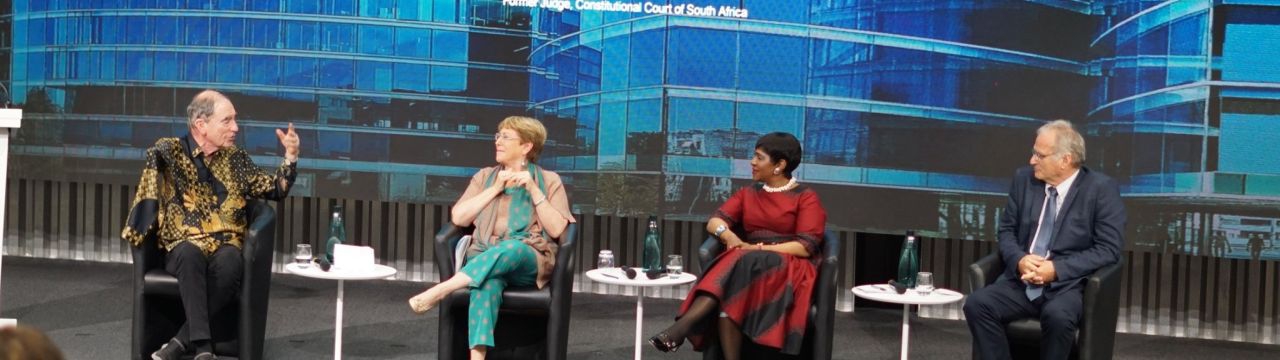
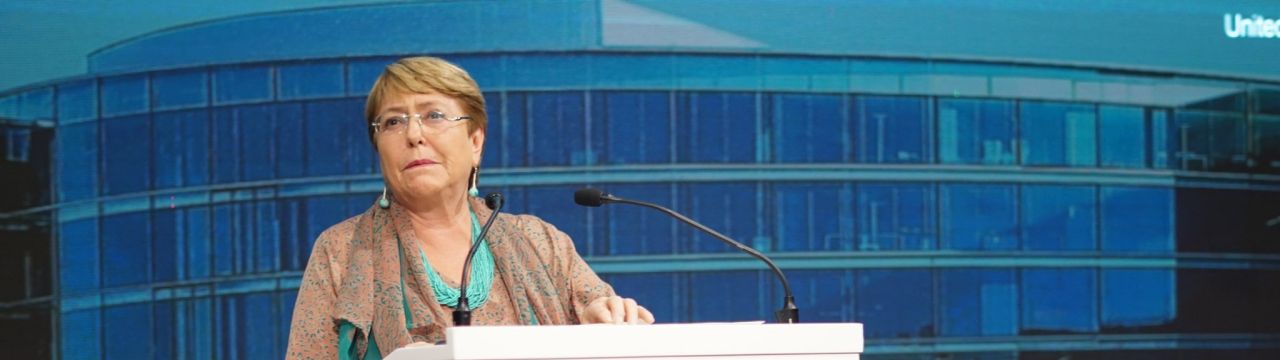
UN High Commissioner to present her Human Rights Report 2018 to Civil Society

May 29, 2019

On 14 June 2019 the UN High Commissioner for Human Rights Ms. Michelle Bachelet will present the UN Human Rights Report 2018 to Civil Society. The event wil take place from 14:00 to 15:00 on Friday, 14 June, in the Ground Floor Conference Room at Palais Wilson. Please note that the meeting is limited to NGOs holding annual accreditation with UNOG (confirm by 11 June to zghanem@ohchr.org).
However the electronic version of the Report is already available on the Office’s website: https://www.ohchr.org/Documents/Publications/OHCHRreport2018.pdf

Breitbart tries its hands on the Italian migration situation

May 24, 2019

The screamng headline “Italian media has alleged that pro-migrant activists and leftist politicians are behind an attack by the United Nations on the immigration of policy of populist Italian Interior Minister Matteo Salvini.” is a give away. It is indeed from Breitbart News (24 May 2019). I will not often refer to this source but thought that it would good to see what kind of nonsense is produced and effectivley reaches a lot of people. I will let the piece below speak for itself, including the almost comical notion that UN Rapporteur Michel Forst should not work with Front Line Defedners.

For the migration defenders context in Italy see: https://humanrightsdefenders.blog/2019/05/15/european-governments-should-stop-treating-solidarity-and-compassion-as-a-crime/ and https://humanrightsdefenders.blog/2018/12/02/un-experts-consider-human-rights-defenders-in-italy-under-threat/. Read the rest of this entry »

Lack of funds forces lack of oversight by UN

May 20, 2019
wrting for IPS on 20 May 2019 relates that the “    

The Geneva-based Office of the UN High Commissioner for Human Rights (OHCHR) says six of the UN’s 10 treaty bodies are being forced to cancel their sessions this year due to financial reasons. The situation has been described as “an unprecedented consequence of some UN member States delaying payments due to the Organisation.” Anna-Karin Holmlund, Senior UN Advocate at Amnesty International, told IPS: “Amnesty is deeply concerned by member states’ delay in paying their assessed contributions, which will have a direct effect on the ability of the UN to carry out its vital human rights work.” By 10 May, only 44 UN member states – out of 193 — had paid all their assessments due, with the United States owing the largest amount.

The OHCHR said last week the cancellations meant that reviews already scheduled with member states, as well as consideration of complaints by individual victims of serious human rights violations — including torture, extra-judicial killings, enforced disappearances -– will not take place as scheduled. “The cancellation of sessions will also have numerous other negative consequences, and will seriously undermine the system of protections which States themselves have put in place over decades,” said a statement released by the OHCHR.

The chairpersons of the 10 Committees are deeply concerned about the practical consequences of cancelling these sessions and have sent a letter to the UN Secretary General and the High Commissioner for Human Rights, requesting they, together with Member States, explore ways of addressing this situation, “as a matter of urgency.”..

http://www.ipsnews.net/2019/05/uns-mandate-protect-human-rights-takes-another-hit/

ISHR on Reprisals: UN and States must do more to address reprisals

May 13, 2019

On 6 May 2019 the International Service for Human Rights (ISHR) submitted two reports to the UN Secretary General on the topic of reprisals against human rights defenders. The conclusion is that many defenders still face unacceptable risks and are unable to cooperate safely with the UN and regional human rights bodies and mechanisms. The reports were prepared in response to the call made by the United Nations High Commissioner for Human Rights inviting representatives of civil society to provide information on preventing and addressing acts of intimidation and reprisals related to cooperation with the United Nations. This blog has devoted many posts to this nefarious issue, see e.g.: https://humanrightsdefenders.blog/tag/reprisals/

Read the rest of this entry »

Right-wing Nationalism Undermines Human Rights work by UN

May 12, 2019

Under the title “Rise of Right-wing Nationalism Undermines Human Rights Worldwide”

The rise of right-wing nationalism and the proliferation of authoritarian governments have undermined human rights in several countries in Europe, Asia, Africa, the Middle East and Latin America. As a result, some of the international human rights experts – designated as UN Rapporteurs – have either been politically ostracized, denied permission to visit countries on “fact-finding missions” or threatened with expulsion, along with the suspension of work permits.

The Philippines government, a vociferously authoritarian regime, has renewed allegations against Victoria Tauli-Corpuz, the UN Special Rapporteurs on the Rights of Indigenous Peoples. [see also: https://humanrightsdefenders.blog/2019/03/02/duterte-there-is-no-war-on-human-rights-defenders-only-on-criminals/]

…Anna-Karin Holmlund, Senior UN Advocate at Amnesty International, told IPS “We have witnessed several deeply worrying personal attacks by UN Member States against the independent experts, including personal attacks, threats of prosecution, public agitation and physical violence in the past year”…

Meanwhile, the Government of Burundi has closed down the UN Human Rights Office triggering a protest from Michelle Bachelet, the UN Human Rights Commissioner in Geneva. [see also: https://humanrightsdefenders.blog/2018/12/07/final-step-burundi-closes-down-un-office/ ]

And under the Trump administration, the US has ceased to cooperate with some of the UN Rapporteurs, and specifically an investigation on the plight of migrants on the Mexican border where some of them have been sexually assaulted—abuses which have remained unreported and unprosecuted. [see also: https://humanrightsdefenders.blog/2019/03/16/us-ngos-react-furiously-to-visa-restrictions-imposed-on-icc-investigators-by-trump-administration/]

The government of Myanmar has barred a UN expert from visiting the country to probe the status of Rohingya refugees.

In March, the UN Special Rapporteur on the Independence of Judges and Lawyers, Diego García-Sayán, postponed an official visit to Morocco because the government “has not been able to ensure a programme of work in accordance with the needs of the mandate and the terms of reference for country visits by special procedures.” [see also: https://humanrightsdefenders.blog/2019/03/21/special-rapporteur-diego-garcia-sayan-not-swayed-by-moroccan-assurances-for-his-visit/]

Referring to the situation in Colombia, Robert Colville, Spokesperson for the UN High Commissioner for Human Rights, said May 10: “We are alarmed by the strikingly high number of human rights defenders being killed, harassed and threatened in Colombia, and by the fact that this terrible trend seems to be worsening”…

And last month, Israel revoked the work permit for Omar Shakir, the Israel and Palestine Director of Human Rights Watch, prompting a protest from the United Nations……According to a report in the New York Times March 10, Leilana Farha, the UN Special Envoy for Housing was “shocked” to discover that some of the Egyptians she interviewed in Cairo’s poor areas “had suffered reprisals for talking to her.” [see also: https://humanrightsdefenders.blog/2019/04/18/israel-deportation-of-human-rights-watchs-staff-member-again-on-the-table/%5D

..

Urmila Bhoola of South Africa, Special Rapporteur on Contemporary Forms of Slavery, told IPS she has visited Niger, Belgium, Nigeria, El Salvador, Mauritania, Paraguay and, lastly Italy, in October 2018. She pointed out that “country visits are only conducted upon invitation from governments”. “I have issued requests for country-visits to many countries but due to the mandate’s name and focus, member states are often reluctant to invite the mandate on contemporary forms of slavery, to conduct a visit”. In this sense, she pointed out, member states may not openly refuse a visit but may not reply to country visit requests….

http://www.ipsnews.net/2019/05/rise-right-wing-nationalism-undermines-human-rights-worldwide/


Former U.N. High Commissioner for Human Rights Zeid warns about the moral collapse of global leadership.

May 9, 2019

In a video Op-Ed in the NYT of 6 May 2019, former U.N. High Commissioner for Human Rights, Zeid Ra’ad Al Hussein, argues that world leaders are weak, shortsighted and mediocre, and no longer willing or able to defend human rights. Abuses used to be called out and stopped, and human rights offenders had something to fear. Today, they are met with silence instead. Zeid Ra’ad Al Hussein served as the United Nations High Commissioner for Human Rights from 2014 to 2018.

[see: https://humanrightsdefenders.blog/2017/12/22/bound-to-happen-but-still-high-commissioner-zeid-announces-he-will-not-seek-second-term/] 

Previously he spent 18 years as a diplomat helping to establish the International Criminal Court and serving on the Security Council. He is now the Distinguished Global Leader in Residence at the Perry World House, University of Pennsylvania.

Special Rapporteur Forst launches campaign: “TOGETHER WE DEFEND HUMAN RIGHTS”

May 8, 2019

“We all can be human rights defenders, as long as we peacefully stand up for other people or speak out against injustice or discrimination” says Michael Forst – the UN Special Rapporteur on human rights defenders – in launching his new campaign #TogetherWeDefend. The campaign promotes human rights defenders worldwide by fully recognising the good they do. 

Follow the link https://togetherwedefend.org  to find out more, subscribe and join the campaign.

For some of my earlier posts on Forst see: https://humanrightsdefenders.blog/tag/michel-forst/