Archive for the 'Human Rights Council' Category
March 4, 2016
Severe time restraints made that several NGOs could not make their oral statement on 4 March 2016 during the Interactive Dialogue with the United Nations Special Rapporteur on the Situation of Human Rights Defenders in the UN Human Rights Council [see: https://thoolen.wordpress.com/2016/02/25/preview-of-the-upcoming-session-of-the-un-human-rights-council/].
Here follows the text of the statement that the World Organisation Against Torture (OMCT) and FIDH, within the framework of the Observatory for the Protection of Human Rights Defenders, would have delivered:
Read the rest of this entry »
Posted in FIDH, human rights, Human Rights Council, Human Rights Defenders, Observatory for the Protection of Human Rights Defenders, OMCT | Leave a Comment »
Tags: FIDH, Human Rights Defenders, intervention, Michel Forst, Observatory for the Protection of Human Rights Defenders, OMCT, oral statement, Special Rapporteur on Human Rights Defenders, stigmatization, UN Human Rights Council
March 2, 2016

DefendDefenders (East and Horn of Africa Human Rights Defenders Project) together with the many NGOs, whose logos are shown above, will host the side event “Crisis in Burundi: Implementing Sustainable Solutions” on 4 March 2016 (15h00 – 17h00), Room XXIV, Palais des Nations, Geneva.
Panelists:
- Michel Forst, UN Special Rapporteur on the situation of Human Rights Defenders
- Pierre Claver Mbonimpa, President of APRODH (and Laureate MEA 2007)
- Tom Gibson, Representative for Burundi and DRC at Protection International
Moderator:
- Hassan Shire, Executive Director of East and Horn of Africa Human Rights Defenders Project.
The situation in Burundi is terrible as is know from the many reports issued already and the December 2015 Special Session of the UN Human Rights Council, which culminated in the adoption of a strong resolution mandating the High Commissioner for Human Rights to deploy a mission by independent experts to visit the country to investigate human rights violations, represents an important step to ensuring greater accountability for violations of fundamental rights in Burundi. However, the Burundian Government’s refusal to facilitate this mission has severely hampered efforts to identify and implement a sustainable resolution to the crisis [https://thoolen.wordpress.com/2016/02/08/what-is-burundi-doing-in-the-un-human-rights-council/]. Although there is now a bit of hope as three investigators are due to visit Burundi for a week from March 1, the Office of the High Commissioner for Human Rights (OHCHR) said in a statement. The three experts — from Algeria, Colombia and South Africa — are members of the UN’s Independent Investigation on Burundi (UNIIB). “Our aim is to help the state fulfil its human rights obligations, ensure accountability for human rights violations and abuses, including by identifying alleged perpetrators,” said Christof Heyns, the UN’s Special Rapporteur on Extrajudicial, Summary of Arbitrary Executions who is one of the investigators. The African Union (AU) said it would increase the number of human rights and military observers deployed. “The AU will deploy 100 human rights observers and 100 military monitors to Burundi to monitor the situation,” a statement on the South African presidency’s website said Saturday.
Source: HRC31: Side-event on Burundi on 4th March at 3pm – East and Horn of Africa Human Rights Defenders Project
http://www.timeslive.co.za/africa/2016/02/29/UN-to-send-human-rights-team-to-Burundi
Posted in human rights, Human Rights Council, Human Rights Defenders | Leave a Comment »
Tags: Burundi, Christof Heyns, DefendDefenders, East and Horn of Africa Human Rights Defenders Project, Geneva, MEA 2007, Michel Forst, monitoring, NGO 'Protection International, Pierre Claver Mbonimpa, side event, UN Human Rights Council, UN's Independent Investigation on Burundi (UNIIB)
March 1, 2016
 On Monday 7 March 2016, from 13h30-15h00 in Room XVIII, Palais des Nations, Geneva, there will be a side event:Protection needs of human rights defenders working on economic, social and cultural rights: Challenges and good practice. (see my previous post: https://thoolen.wordpress.com/2016/02/29/regional-update-for-asia/)
The current and previous Special Rapporteurs on the situation of human rights defenders have emphasised the specific risks that defenders working on economic, social and cultural rights face. Whether they are activists fighting corruption or promoting transparency, working on land and environment rights, or defending their right to housing, ESC-rights defenders are among the most isolated and stigmatised defenders. This side event hopes to shed light on the risks faced by economic, social and cultural rights defenders, and draw on the report of the Special Rapporteur presented to the 31st session of the Human Rights Council to present good practices in furthering their protection.
panelists:
• Michel Forst, Special Rapporteur on the situation of human rights defenders
• Navi Pillay, former High Commissioner for Human Rights
• Allo Awol, human rights defender from Eritrea
• Arutchelvan Subramaniams, human rights defender from Malaysia
• Pedro Tzicá, human rights defender from Guatemala
Moderator: Ms Catarina de Albuquerque, Executive Chair of Sanitation and Water for All (SWA) and former UN Special Rapporteur on the right to safe drinking water and sanitation.
Interpretation in English and Spanish will be provided. The event will be webcast live at www.ishr.ch/webcasts
Source: Protection needs of human rights defenders working on economic, social and cultural rights | ISHR
Posted in human rights, Human Rights Council, Human Rights Defenders, ISHR | Leave a Comment »
Tags: Allo Awol, Arutchelvan Subramaniams, Catarina de Albuquerque, civil society activists, environmental issues, Geneva, Human Rights Defenders, ISHR, land rights, Michel Forst, Navi Pillay, Pedro Tzicá, side event, social and economic rights, webcast
February 29, 2016
The Statement of the UN High Commissioner for Human Rights, Zeid Ra’ad Al Hussein, at the 31st session of the Human Rights Council in Geneva, on 29 February 2016 is worth reading (as usual). Some of the highlights are: 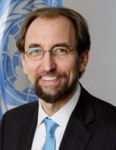
Today we meet against a backdrop of accumulating departures from that body of institutions and laws which States built to codify their behaviour. Gross violations of international human rights law – which clearly will lead to disastrous outcomes – are being greeted with indifference. More and more States appear to believe that the legal architecture of the international system is a menu from which they can pick and choose – trashing what appears to be inconvenient in the short term.
Read the rest of this entry »
Posted in human rights, Human Rights Council, Human Rights Defenders | Leave a Comment »
Tags: conflict, Human Rights Up Front, humanitarian law, migration, nationalism, racism, refugees, statement, UN High Commissioner for Human Rights Zeid, UN Human Rights Council, Zeid Ra'ad Al Hussein
February 29, 2016
A regional update on Asia is based on a submission to United Nations’ Human Rights Council by the Asian Legal Resource Centre (15 February) and a report of the Regional Consultation of Citizens’ Voices held in Kathmandu (25/26 February) held under the aegis of South Asians for Human Rights (SAHR).
The Asian Legal Resource Centre directs the attention of the Human Rights Council to the critical situation of human rights defenders in China, Bangladesh, and Thailand, who are facing dire threats to their person and profession: Read the rest of this entry »
Posted in human rights, Human Rights Council, Human Rights Defenders, OMCT, UN | 1 Comment »
Tags: Adilur Rahman Khan, Asian Legal Resource Centre, Bangladesh, Basil Fernando, China, Geneva, Gerald Staberock, Ghazi Salahuddin, Hameeda Hossain, India, Nepal, Pakistan, side event, South Asians for Human Rights, Thailand
February 25, 2016
The UN Human Rights Council will hold its 31st regular session at Palais des Nations in Geneva from 29 February to 24 March 2016 (it also marks the 10th anniversary of the Human Rights Council). The International Service for Human Rights (see link at the bottom of the post) has published an Alert full of details, but I highlight here the elements that concern human rights defenders most directly:
Human rights defenders: The Special Rapporteur on the situation of human rights defenders, Michel Forst, will present his annual report to the Council on 3 March. The report focuses on good practices to promote and protect the rights of human rights defenders. Presentation of the report will be followed by a dialogue. Of significance this session is a substantive resolution that will be presented by Norway on the situation of human rights defenders. The resolution at this session of the Council follows on the heels of the resolution on human rights defenders presented at the General Assembly in November 2015. The General Assembly resolution included a number of new, important and substantive provisions, including on the vital role of advocacy and the work of defenders in contributing to sustainable development and the realisation of economic, social and cultural rights, and the responsibilities of business enterprises with respect to engaging, consulting and protecting defenders. [see also: https://thoolen.wordpress.com/2015/12/18/un-general-assembly-adopts-resolution-on-human-rights-defenders-with-increased-majority/] This latest resolution provides an opportunity to recognise the critically important work of economic, social and cultural rights defenders, and the cross-cutting challenges they face, including restrictions not only on their rights to health, food, housing, social security and work, but also on their rights to freedom of expression, association, assembly and life itself. Economic, social and cultural rights activists have been identified by current and previous Special Rapporteurs on the situation of human rights defenders as among the most isolated and stigmatised defenders. It is integral that the resolution recognises the role of both State and non-State actors in the protection of human rights defenders, and enjoys broad State support for strong language demanding their protection. (On 7 March, ISHR will facilitate a side event on this topic which will be the subject of a separate post) Read the rest of this entry »
Posted in human rights, Human Rights Council, Human Rights Defenders, ISHR, OHCHR, UN | 1 Comment »
Tags: Burundi, China, draft resolution, freedom of assembly, Human Rights Defenders, ISHR, Michel Forst, Myanmar, Norway, reprisals, side event, social economic and cultural rights, UN General Assembly, UN High Commissioner for Human Rights, UN Human Rights Council, UN Special Rapporteurs, UPR
February 25, 2016
 launches its new RightDocs tool with a Demo on 29 February 2016, from 18:00-19:30 in the Palais des Nations, Delegates Restaurant, Geneva.
RightDocs is a new tool to search, sort, filter, and discover resolutions of the UN Human Rights Council online and public.
The RightDocs tool is supported by the Permanent Mission of Denmark to the UN in Geneva. Read the rest of this entry »
Posted in Human Rights Council, Human Rights Defenders, HURIDOCS, UN | 1 Comment »
Tags: access, Denmark, documentation tools, Geneva, human rights documentation, HURIDOCS, launch, on-line, RightDoc, UN Human Rights Council
February 8, 2016
Burundi is still one of the basket cases in Africa and since my lats post nothing has improved [https://thoolen.wordpress.com/2015/11/10/burundi-what-more-early-warning-does-one-need/]. The Special Session of the Human Rights Council in December 2015 mandated the High Commissioner for Human Rights to put together an expert mission to Burundi, to investigate abuses and make recommendations to the Council and the Burundian government on ways of ending serious human rights violations. But the follow-up is below par: Read the rest of this entry »
Posted in human rights, Human Rights Council, Human Rights Defenders, ISHR | 8 Comments »
Tags: Burundi, High Commissioner for Human Rights, Human Rights Defenders, ISHR, Kenya, membership UN human rights council, Michael Ineichen, monitoring, Prince Zeid Raad Zeid al-Hussein, suspension, threats, UN, UN Human Rights Council
January 20, 2016
A group of five United Nations human rights experts have joined the debate in France on security. Yesterday, 19 January it warned that the current state of emergency in France and the country’s law on surveillance of electronic communications impose excessive and disproportionate restrictions on fundamental freedoms.

UN SG Ban Ki-moon pays tribute to the victims of the terrorist attacks in Paris on 13 November. 6 December 2015. UN Photo/Eskinder Debebe
In a list of concerns to the French Government, the independent experts stressed a lack of clarity and precision on provisions regarding several state of emergency and surveillance laws that relate to the legitimate rights of privacy and freedoms – of expression, peaceful assembly and association.
To guarantee the rule of law and prevent arbitrary procedures, the experts recommended the adoption of prior judicial controls over anti-terrorism measures. Since the recent terrorist attacks in France, the state of emergency law in force, which temporarily expands the executive powers in the fight against terrorism, only allows judicial review a posteriori.
The UN experts also noted that the November 2015 law on surveillance of international electronic communications expands the executive power over the collection, analysis and storage of communications content or metadata – without requiring prior authorization or judicial review.
The UN experts also expressed alarm that environmental activists in France have been under house arrest in connection with the state of emergency invoked following the November attacks. “These measures do not seem to adjust to the fundamental principles of necessity and proportionality,” they said, highlighting the risks faced by fundamental freedoms in the fight against terrorism.
Calling on France not to extend the state of emergency beyond 26 February 2016, they said, that: “While exceptional measures may be required under exceptional circumstances, this does not relieve the authorities from demonstrating that these are applied solely for the purposes for which they were prescribed, and are directly related to the specific objective that inspired them.”
The independent experts – David Kaye, Special Rapporteur on freedom of opinion and expression; Maina Kiai, Special Rapporteur on the rights to freedom of peaceful assembly and of association; Michel Forst, Special Rapporteur on the situation of human rights defenders; Ben Emmerson, Special Rapporteur on the protection and promotion of human rights and fundamental freedoms while countering terrorism; and Joseph Cannataci, Special Rapporteur on the right to privacy – expressed their solidarity and deepest sympathy to the victims of the terrorist attacks committed in France and many other places in the world.
Source: United Nations News Centre – UN experts urge France to protect fundamental freedoms while combatting terrorism
Posted in human rights, Human Rights Council, Human Rights Defenders, UN | Leave a Comment »
Tags: anti-terrorist laws, Ben Emmerson, David Kaye, environmental activists, France, Joseph Cannataci, Maina Kiai, mass surveillance, Michel Forst, Special Rapporteur on Human Rights Defenders, state of emergency, UN Special Rapporteurs
January 13, 2016
Ted Piccone, Senior Fellow, Foreign Policy, at The Brookings Institution published on 12 August 2015 a post entitled: “5 Myths About the UN Human Rights Council”. A bit belatedly I repeat it here for those – especially in the USA – who need a coherent statement in favour of continued engagement by the US in the UN Human Rights Council:
Read the rest of this entry »
Posted in human rights, Human Rights Council | Leave a Comment »
Tags: Brookings Institute, Foreign Policy of the USA, Huffington Post, Ted Piccone, UN Human Rights Council, USA


