Archive for the 'organisations' Category

Policy response by human rights to COVID-19: the Human Rights Foundation

April 5, 2020

Further in the series of posts on this topic: On 13-14 April 2020, the New York based Human Rights Foundation will host COVIDCon, a virtual Oslo Freedom Forum event focused on how tyranny sparked and is exploiting the novel coronavirus pandemic to crack down on civil liberties. For earlier posts: https://humanrightsdefenders.blog/tag/covid-19/

This two-day event, open to global audiences, will feature presentations and panels about the current pandemic and its relationship to state censorship, disinformation, surveillance, and the future of civil liberties. COVIDCon sessions will showcase the difference in the responses of authoritarian regimes and democratic governments to the outbreak of the novel coronavirus.

Confirmed speakers include former Chinese prisoner of conscience Yang Jianli; Iranian journalist and human rights activist Masih Alinejad; Russian democracy advocate Garry Kasparov; recently expelled Wall Street Journal deputy China bureau chief Josh Chin; entrepreneur and angel investor Naval Ravikant; Hong Kong pro-democracy activist Joshua Wong; futurist and “After On” author Rob Reid; Pulitzer Prize-winning author Anne Applebaum; Ideas Beyond Borders’ Melissa Chen; China-U.S. expert Kyle Bass; and others.

Day 1 of the conference will focus on how tyranny sparked the pandemic. Sessions will include:

  • Censorship in China: The Pandemic Spark
  • How Democracies and Dictatorships are Reacting to the Virus
  • China: Savior or Culprit?
  • Reporting on COVID-19: State Censorship and Surveillance
  • What the Pandemic has Revealed about Chinese Economic Dominance
  • The Increasing Risk of Synthetic Biology

Day 2 of the conference will focus on how tyranny exploits the pandemic. Sessions will include:

  • Iran’s Criminal Negligence: COVID-19’s Gateway to the Middle East
  • Pandemic Power Grab: State Abuse of Emergency Laws
  • Trampling on the Rule of Law and Undermining Public Health
  • Keeping Protest Movements Alive During The Pandemic
  • How the Pandemic Changes the Relationship Between Citizen, Technology, and State

REGISTER

https://mailchi.mp/dcbac9797509/authoritarian-regimes-ill-equipped-for-public-health-emergencies-287692?e=f80cec329e

Wang Quanzhang must be granted freedom, not ‘non-release release’ and on 22 April that happened

April 5, 2020
On 3 April 2020 Michael Caster wrote “If you care about human rights in China, April 5 – this Sunday – should be circled on your calendar. On that day, human rights lawyer Wang Quanzhang, my old friend and colleague, after an outrageous series of abuses by the Chinese state, is set to walk free. Wang, a defender of villagers’ rights and religious minorities, has been disappeared into Residential Surveillance at a Designated Location (RSDL), hidden under a false name in pre-trial detention for years, and subjected to a secret trial where he was refused legal representation.“

wang quanzhang

An activist holds a sign calling for Wang Quanzhang’s release in Hong Kong. Photo: HKFP/Catherine Lai.

…..China law scholar Jerome Cohen coined the term “non-release release” in 2016, then discussing the fake release of human rights lawyer Wang Yu. Like Wang Quanzhang, she had been held in secret for months under RSDL, where she was also tortured….Since Wang was disappeared, his wife Li has also become a fierce defender, despite mounting intimidation from the police. On March 24, Li received a hand-written letter from Wang in prison saying that after release he will likely have to return to his hometown in Jinan. Those of us who know China can read between the lines. Wang risks being forcibly sent away, where he will be kept, apart from his police escorts, away from all others including his family. See also: https://humanrightsdefenders.blog/2018/12/05/li-wenzu-wife-of-wang-quanzhang-wins-2018-edelstam-award/

Responding to the release of Chinese human rights lawyer Wang Quanzhang after four and a half years in prison for “subverting state power”, Amnesty International’s China Researcher Doriane Lau said on 5 April 2020: “There are reasons to fear that Wang Quanzhang’s release from prison offers merely the illusion of freedom. The Chinese government has a history of monitoring and controlling human rights defenders even after they’re released from jail…..Wang Quanzhang was targeted by the government for his work defending human rights and helping to expose corruption. It is an outrage that he was ever jailed in the first place, but now he has served his sentence the authorities must immediately lift all restrictions on him and allow him to return to his family home.”

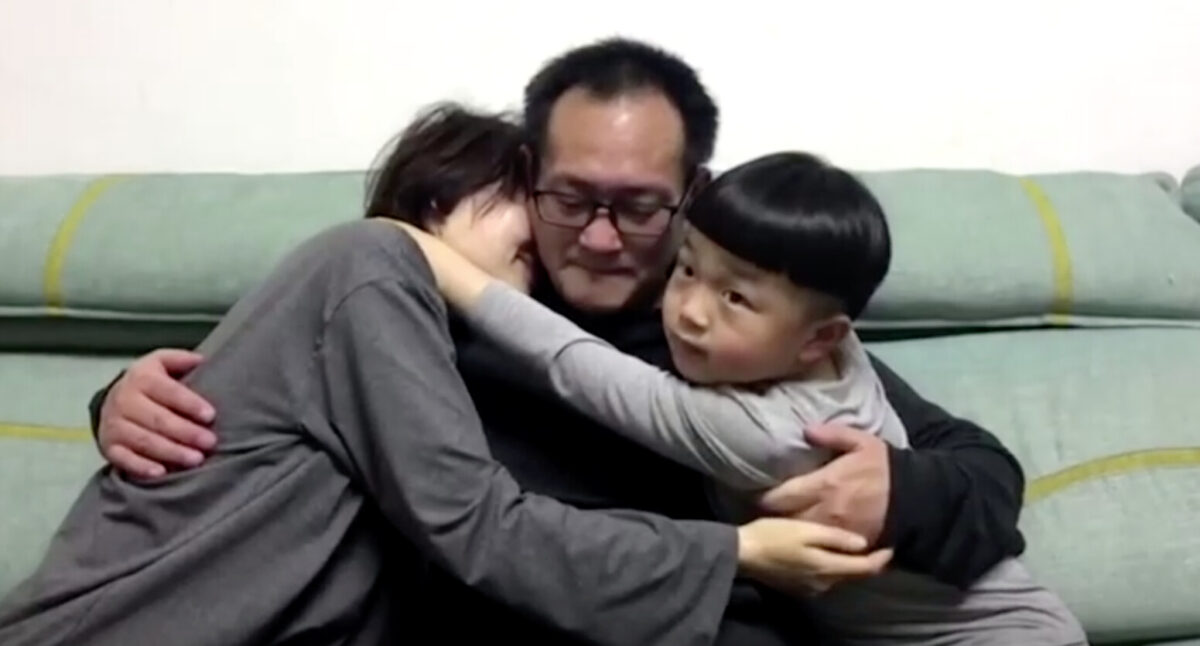
And then on 27 April 2020: ‘Feels Like a Dream’: Teary Reunion for Freed Chinese Human Rights Lawyer and Family

…Many activists and lawyers targeted in the 2015 crackdown were subject to heavy surveillance and deprived of freedom of movement after they were released from prison or detention. Human rights lawyer Jiang Tianyong went missing immediately after finishing a two-year prison sentence. He was subsequently sent back to his hometown, where he and his family were closely monitored and followed by the authorities. [see also: https://humanrightsdefenders.blog/2017/11/21/jiang-tianyong-chinese-defender-of-defenders-sentenced-to-2-years-jail/]

5 june 2020: https://www.hrw.org/news/2020/06/05/chinese-human-rights-lawyer-released-after-4-years-0

https://www.amnesty.org/en/latest/news/2020/04/china-wang-quanzhang-freedom-an-illusion-until-government-lifts-ruthless-restrictions/

Policy response from Human Rights NGOs to COVID-19: Witness

April 5, 2020

In the midst of the COVID-19 crisis, many human rights organisations have been formulating a policy response. While I cannot be complete or undertake comparisons, I will try and give some examples in the course of the coming weeks. Here the one by Sam Gregory of

…..The immediate implications of coronavirus – quarantine, enhanced emergency powers, restrictions on sharing information –  make it harder for individuals all around the world to document and share the realities of government repression and private actors’ violations.  In states of emergency, authoritarian governments in particular can operate with further impunity, cracking down on free speech and turning to increasingly repressive measures. The threat of coronavirus and its justifying power provides cover for rights-violating laws and measures that history tells us may long outlive the actual pandemic. And the attention on coronavirus distracts focus from rights issues that are both compounded by the impact of the virus and cannot claim the spotlight now.

At WITNESS we are adapting and responding, led by what we learn and hear from the communities of activism, human rights and civic journalism with which we collaborate closely across the world. We will continue to ensure that our guidance on direct documentation helps people document the truth even under trying circumstances and widespread misinformation. We will draw on our experience curating voices and information from closed situations to make sense in confusion. We will provide secure online training while options for physical meeting are curtailed. We will provide meaningful localized guidance on how to document and verify amid an information pandemic; and we will ensure that long-standing struggles are not neglected now when they need it most.

In this crisis moment, it is critical that we enhance the abilities and defend the rights of people who document and share critical realities from the ground. Across the three core thematic issues we currently work on, the need is critical. For issues such as video as evidence from conflict zones, these wars continue on and reach their apex even as coronavirus takes all the attention away. We need only look to the current situation in Idlib, Yemen or in other states of conflict in the Middle East.

For other issues, like state violence against minorities, many people already live in a state of emergency.

Coronavirus response in Complexo do Alemão favela, Rio de Janeiro (credit: Raull Santiago)

Favela residents in Brazil have lived with vastly elevated levels of police killings of civilians for years, and now face a parallel health emergency. Meanwhile immigrant communities in the US have lived in fear of ICE for years and must now weigh their physical health against their physical safety and family integrity. Many communities – in Kashmir and in Rakhine State, Burma – live without access to the internet on an ongoing basis and must still try and share what is happening. And for those who fight for their land rights and environmental justice, coronavirus is both a threat to vulnerable indigenous and poor communities lacking health care, sanitation and state support as well as a powerful distraction from their battle against structural injustice.

A critical part of WITNESS’ strategy is our work to ensure technology companies actions and government regulation of technology are accountable to the most vulnerable members of our global society – marginalized populations globally, particularly those outside the US and Europe, as well as human rights defenders and civic journalists. As responses to coronavirus kick-in there are critical implications in how both civic technology and commercial technology are now being deployed and will be deployed.

Already, coronavirus has acted as an accelerant – like fuel on the fire – to existing trends in technology. Some of these have potentially profound negative impacts for human rights values, human rights documentation and human rights defenders; others may hold a silver lining.

My colleague Dia Kayyali has already written about the sudden shift to much broader algorithmic content moderation that took place last week as Facebook, Twitter, Google and YouTube sent home their human moderators. Over the past years, we’ve seen the implications of both a move to algorithmic moderation and a lack of will and resourcing: from hate speech staying on platforms in vulnerable societies, to the removal critical war crimes evidence at scale from YouTube, to a lack of accountability for decisions made under the guise of countering terrorist and violent extremist content. But in civil society we did not anticipate that such a shift to more broad algorithmic control would happen so rapidly in such a short period of time. We must closely monitor and push for this change not to adversely affect societies and critical struggles worldwide in a moment when they are already threatened by isolation and increased government repression. As Dia suggests, now is the moment for these companies to finally make their algorithms and content moderation processes more transparent to critical civil society experts, as well as reset on how they support and treat the human beings who do the dirty work of moderation.

WITNESS’s work on misinformation and disinformation spans a decade of supporting the production of truthful, trustworthy content in war zones, crises and long-standing struggles for rights. Most recently we have focused on the emerging threats from deepfakes and other forms of synthetic media that enable increasingly realistic fakery of what looks like a real person saying or doing something they never did.

We’ve led the first global expert meetings in Brazil, Southern Africa and Southeast Asia on what a rights-respecting, global responses should look like in terms of understanding threats and solutions. Feedback from these sessions has stressed the need for attention to a continuum of audiovisual misinformation including ‘shallowfakes’, the simpler forms of miscontextualized and lightly edited videos that dominate attempts to confuse and deceive. Right now, social media platforms are unleashing a series of responses to misinformation around Coronavirus – from highlighting authoritative health information from country-level and international sources, to curating resources, offering help centers, and taking down a wider range of content that misinforms, deceives or price gouges including even leading politicians, such as President Bolsonaro in Brazil. The question we must ask is what we want to see internet companies continue to do after the crisis: what should they do for a wider range of misinformation and disinformation outside of health – and what do we not want them to do? We’ll be sharing more about this in the coming weeks.

And where can we find a technological silver lining? One area may be the potential to discover and explore new ways to act in solidarity and agency with each other online. A long-standing area of work at WITNESS is how to use ‘co-presence’ and livestreaming to bridge social distances and help people witness snd support one another when physical proximity is not possible.

Our Mobil-Eyes Us project supported favela-based activists to use live video to better engage their audiences to be with them, and provide meaningful support. In parts of the world that benefit from broadband internet access, and the absence of arbitrary shutdowns, and the ability to physically isolate, we are seeing an explosion of experimentation in how to operate better in a world that is both physically distanced, yet still socially proximate. We should learn from this and drive experimentation and action in ensuring that even as our freedom of assembly in physical space is curtailed for legitimate (and illegitimate) reasons, our ability to assemble online in meaningful action is not curtailed but enhanced.

In moments of crisis good and bad actors alike will try and push the agenda that they want. In this moment of acceleration and crisis, WITNESS is committed to ensuring an agenda firmly grounded, and led by a human rights vision and the wants and needs of vulnerable communities and human rights defenders worldwide.

Coronavirus and human rights: Preparing WITNESS’s response


Policy response from Human Rights NGOs to COVID-19: ISHR

April 3, 2020

In the midst of the COVID-19 crisis, many human rights organisations have been formulating a policy response. While I cannot be complete or undertake comparisons, I will try and give some examples in the course of the coming weeks. If there are special ones you would like to draw my attention to, please do not hesitate. Here is one from Phil Lynch, the Director of the International Service for Human Rights:

 

Staying true to our values is never more important than during times of hardship or crisis. At ISHR, there are five values driving our response to the COVID-19 global pandemic: solidarity, dynamism, alertness, wellbeing and hope.

Solidarity

…Solidarity is an essential value at this time. At ISHR this means showing solidarity with colleagues – with a number of staff volunteering to help and alleviate the workload of others who may have reduced capacity – as well as solidarity with human rights defenders, with our programme staff reaching out to national and regional-level partners to discuss their wellbeing, situation, priorities and needs. Please do reach out to us if there are any ways we can provide support to you at this vital time. In addition to showing solidarity, we’ve also greatly appreciated receiving solidarity. I’ve personally benefited from the wisdom, insights and advice of other NGO directors in terms of their response to this crisis, and discovered the musical talents of neighbours as we’ve gathered on our balconies every evening to clap and sing our gratitude to the doctors, health care professionals and sanitation workers on the frontlines of this crisis.

Dynamism

This crisis has highlighted the importance of dynamism, adaptability and planning for uncertainty, as well as the limitations of log frames, tightly earmarked funds, and donor restrictions on building organisational reserves.

At ISHR we are determined to use this crisis as an opportunity to innovate and to test and expand new ways of working. Last year, thanks to the support of several donors – including the United Kingdom, Canada, Switzerland and the Netherlands – we launched the ISHR Academy – an interactive, online platform to build the capacity and skills of human rights defenders to leverage the UN human rights system to contribute to national level change. With a significantly increased demand for online training and strategic advocacy support, we’re currently working on new modules for the Academy, as well as translation into Spanish. With further financial support we’d love to develop even more modules and in additional languages. This would increase access to resources, strategic advice and tailored advocacy support for human rights defenders from all regions. The suspension, postponement and cancellation of a significant number of meetings and sessions of international and regional human rights mechanisms has starkly exposed the need for such bodies to develop means by which human rights defenders can more effectively engage and participate remotely. This is relevant not only now in response to the COVID-19 crisis, but in the longer term in response to the climate crisis and the imperative of reducing travel-related emissions. Effective means of virtual participation are also critical for defenders who lack the resources to travel to Geneva or New York, as well as those for whom travel may be restricted or banned by repressive governments. ISHR programme staff are actively engaged on these issues – leading and participating in strategic discussions and the formulation of practical recommendations as to how to use this crisis as an opportunity to make human rights mechanisms more accessible, effective and protective for defenders worldwide.

Alertness

ISHR is not the only body looking at ways to use this crisis as an opportunity. Unfortunately, some governments will use this emergency as a subterfuge to more permanently increase surveillance, as well as restrict fundamental rights to freedom of expression, association, assembly, protest and movement. Alertness is therefore a critical value at this time. We must be vigilant to ensure that any laws or regulations enacted in response to COVID-19 are for the legitimate purpose of protecting public health, and that any restrictions they impose are reasonable, proportionate and strictly time bound….With persons in detention at particular risk, ISHR staff are also using the opportunity to push for the release of arbitrarily detained human rights defenders, including several with underlying health conditions in States including China, the United Arab Emirates and Bahrain.

Wellbeing

..All ISHR staff have worked remotely since at least 13 March, with exceptions only for staff that need to attend the Geneva office for short periods for essential functions. Staff are working from various locations and states of confinement in Switzerland, France, New York, London, Brussels, Abidjan and Jakarta. We have agreed a complete restriction on work-related travel, with both this restriction and the work from home arrangements remaining in place for the indefinite future.

….Financial security is imperative at this time and I am so impressed and thankful for the initiative of major donors such as the Sigrid Rausing Trust and the Open Society Foundations to proactively reaffirm their funding commitment, to indicate that they will be highly flexible in the use of funds and reporting requirements, and to invite us to reach out if we need further support. Best practice at this time of unprecedented uncertainty is to enable the conversion of project or earmarked funds to core or unrestricted funds. I am working with the Board to evaluate and prepare for a range of scenarios, ensuring the long term sustainability of ISHR. Your contributions as private donors will be vital in this regard – every donation helps!

Hope

The final value motivating ISHR at this time is that of hope, which we draw from many places.

We take hope from the doctors, health care professionals and sanitation workers who bravely and tirelessly provide vital care and support.

….

I wish you, your families, your loved ones and your colleagues are and remain healthy, safe and well.

—-

See also my earlier: https://humanrightsdefenders.blog/2020/03/27/covid-19-spread-leads-to-reactions-and-messages-of-solidarity/

http://www.ishr.ch/news/covid-19-focusing-wellbeing-solidarity-dynamism-alertness-and-hope

Internet shutdowns in times of COVID-19 could cost lives

April 2, 2020
Intentionally shutting down or restricting access to the internet violates multiple rights and can be deadly during a health crisis such as the COVID-19 pandemic, Human Rights Watch said on 31 March 2020. Governments that are currently imposing an internet shutdown, such as Bangladesh, Ethiopia (it just announced restoring service), India, and Myanmar, should lift them immediately to save lives. During a health crisis, access to timely and accurate information is crucial. People use the internet for updates on health measures, movement restrictions, and relevant news to protect themselves and others.

Refugees and migrants in camp conditions at high risk of COVID-19

March 30, 2020

New EU Action Plan for Human Rights and Democracy 2020-2024

March 27, 2020

Since the adoption of the EU strategic framework on human rights and democracy in 2012, the EU has adopted two EU Action Plans (2012-2014 and 2015-2019). The new proposal follows up on this, setting out the priorities for the period of 2020-2024.

This Action Plan identifies priorities around five mutually reinforcing lines of action:

  • Protecting and empowering individuals;
  • Building resilient, inclusive and democratic societies;
  • Promoting a global system for human rights and democracy;
  • New technologies: harnessing opportunities and addressing challenges;
  • Delivering by working together.

What is new in this Action Plan?

The new Action Plan builds on the previous action plans and continues to focus on some long-standing priorities, such as supporting human rights defenders and the fight against death penalty. More importance is given to empower people and defeat discrimination on all grounds. It also addresses more prominently the accountability gap, the erosion of rule of law and access to justice. This Action Plan takes account of today’s world new challenges and therefore focuses in particular on:

  • environmental challenges and climate change;
  • leveraging the benefits of digital technologies and minimising the risks of misuse in line with EU’s commitment to lead the transition to a new digital world;
  • stepping up economic, social and cultural rights;
  • more emphasis on democracy, including on the misuse of online technologies and shrinking civic and political space;
  • a stronger focus on human rights defenders;
  • strategic communication and public diplomacy.

How will the Action Plan be implemented?

The objectives under the Action Plan will be implemented at country, regional and multilateral level, taking account of local circumstances and specificities. The EU will leverage the broad range of policies, tools and political and financial instruments at its disposal to implement it, such as:

  • political, human rights and sectoral policy dialogues;
  • EU trade policies, including the EU’s generalised scheme of preferences;
  • thematic and geographical instruments under the 2021-2027 multiannual financial framework;
  • actions in multilateral and regional human rights fora;
  • communication activities and awareness‑raising campaigns;
  • public statements, démarches;
  • observing trials of human rights defenders;
  • the implementation of 13 EU human rights guidelines;
  • election observation and its follow-up;
  • dialogue with civil society, human rights organisations and the business sector.

The EU Action Plan provides guidance to over 140 EU Delegations and Offices as well as Member States embassies for targeted initiatives and actions at country level all over the world.

How will the Commission and the High Representative follow up on and monitor the implementation of this Action Plan?

Actions apply to all regions in the world taking into consideration local needs and specificities. The EU’s 142 Delegations and Offices will take a lead in reflecting the priority actions in initiatives at the country level including through the adoption of tailored-made strategies at a local level. The EU will also engage with different stakeholders on the overall implementation, and organise an annual meeting with civil society. The public EU annual report on Human rights and democracy in the worldis another effective tool to monitor the progress made in a transparent manner. A mid-term review of the implementation is foreseen.

What has the EU achieved on human rights and democracy worldwide so far?

  • Since 2015, more than 30 000 human rights defenders were protected by the EU via the dedicated mechanism ProtectDefenders.eu. In 2019 alone, the EU raised Human Rights Defenders cases in dialogues and consultations with over 40 countries.
  • The EU advocated for abolition of death penalty.
  • Between January 2015 and October 2019, the EU supported over 3 350 actions relevant to children’s rights in 148 third countries and territories. For example, under the global programme on Female Genital Mutilation (€11 million), 16 countries adopted action plans and 12 established national budget lines to put an end to Female Genital Mutilation.
  • In 2014-2019, the EU supported democracy in more than 70 partner countries with €400 million aiming at, for instance, contributing to the organisation of elections and supporting oversight bodies, independent media, parliaments and political parties to play their essential role in democratic societies. 98 EU Election Observation Missionswere deployed worldwide.
  • The General System of Preference contributed to the implementation of human rights and labour Conventions, including through monitoring missions in 11 countries in the last year. For example, this contributed to a reduction of child labour to 1% in Sri Lanka through pioneering ‘Child Labour Free Zones’.


Joint Proposal

…Article 22 of the Treaty on the European Union offers the European Council the possibility to adopt a unanimous Decision setting out the EU’s strategic interests and objectives in specific areas of the Common Foreign and Security Policy (CFSP). Once the European Council sets the strategic objectives, the Council would then be able to adopt by qualified majority (QMV) decisions implementing the European Council’s strategic decisions.

Why is this proposed now? In 2018, the Commission has proposed to move from unanimity to QMV in certain areas of the CFSP. The Von Der Leyen Commission recognises that to be a global leader, the Union needs to take decisions in a faster and more effective way and overcome unanimity constraints that hamper our foreign policy, as set out in the High Representative/Vice-President’s mission letter. The Joint Proposal adopted by the College today offers such a possibility, by proposing to take decision related to the implementation of the Action Plan by QMV.

For more information:

Press release

Joint Communication EU Action Plan on Human Rights and Democracy 2020-2024

EU Action Plan 2020-2024

Joint Proposal for a recommendation of the Council to the European Council

Annex to the Joint Proposal for a recommendation of the Council to the European Council


International Women’s Day 2020: Joint Statement at 43rd session of UN Human Rights Council

March 9, 2020

Many organisations, especially NGOs, used the occasion of International Women’s Day 2020 to highlight work carried out by women human rights defenders. See also: https://humanrightsdefenders.blog/2020/02/27/women-human-rights-defenders-in-focus-at-43rd-human-rights-council/. Here an example of how 18 NGOs came together for a Joint Statement during the 43rd session of the UN Human Rights Council

The speaker was: Paola Salwan Daher, Center for Reproductive Rights:

ICJ calls on Malaysia to finally abolish laws restricting freedom of expression and assembly

March 5, 2020

Malaysiakini wrote on the International Commission of Jurists (ICJ) on the authorities to stop their investigations against activists engaging in peaceful protests. The call came after police today probed Ambiga Sreenevasan, Marina Mahathir, and numerous others over peaceful assemblies in Dataran Merdeka and outside the Sogo shopping centre over the weekend. The protests were held over the political turmoil which saw the collapse of the Pakatan Harapan government. “These investigations have the effect of harassing and intimidating human rights defenders and pro-democracy activists, and look worryingly like a new crackdown on dissent,” said ICJ Asia Pacific director Frederick Rawski. Read the rest of this entry »

New Amnesty report on human rights defenders helping migrants

March 4, 2020
Amnesty accuses European law enforcement agencies of using trafficking and terrorism laws
Human rights group Amnesty has warned that concerned citizens across Europe are facing prosecution for offering help and assistance to refugees and migrants.

In a new report published on 3 March 2020, Amnesty International said European law enforcement authorities and prosecutors are “misusing already flawed” laws intended to prevent people smuggling and terrorism to target members of the public who offer migrants shelter and warm clothing, or attempt to rescue them at sea. Amnesty examined several cases that took place in Croatia, France, Greece, Italy, Malta, Spain, Switzerland and the UK between 2017 and last year, during which human rights defenders who attempted to help refugees and migrants were targeted under legislation intended to tackle organised immigration crime networks. Amnesty’s report comes as world media attention has once again turned to the Mediterranean migrant crisis after Turkey opened its border with Greece to thousands of Syrian refugees.

In one such case, Frenchman Pierre Mumber was charged with “facilitating irregular entry” into France when he was caught offering tea and warm clothing to four west African asylum seekers before being acquitted on appeal. The report also notes that Swiss citizens have faced prosecution for providing migrants and refugees with shelter or helping them access services and protection. Elsewhere, the agency revealed that people in Italy who have worked to rescue migrants and refugees crossing the Mediterranean on unseaworthy vessels have been subjected to smear campaigns and criminal investigations. See also:

https://humanrightsdefenders.blog/2019/12/18/international-migrants-day-the-story-of-the-ocean-viking/

https://humanrightsdefenders.blog/2018/12/02/un-experts-consider-human-rights-defenders-in-italy-under-threat/

https://humanrightsdefenders.blog/2020/02/12/luventa10-sea-rescue-group-gets-ai-germanys-human-rights-award/

Commenting on the contents of the report, Elisa De Pieri, Regional Researcher at Amnesty International, said: “The increased focus on limiting and deterring arrivals in Europe has meant that making refugees or migrants feel safer or welcomed is seen as a threat. “The failure of European states to fulfil the basic needs of refugees and migrants means it is often left to ordinary people to provide essential services and support. “By punishing the people who step up to fill the gaps, European governments are putting people on the move at even greater risk.”

Click to access EUR0118282020ENGLISH.PDF

Amnesty accuses European police of targeting ‘human rights defenders’ who help refugees and migrants