Archive for the 'organisations' Category

Human Rights in Africa in 2019: rage

January 16, 2020

There was rage across the African continent last year, says Human Rights Watch in its annual report, with no sign of cooling down in 2020. In Sudan and Guinea, there were manifestations of frustration with entrenched leadership.  In Zimbabwe, protests mostly about economic conditions.  While in rural Ethiopia and the Democratic Republic of Congo, they were about the rights of communities displaced by conflict. But the public outrage is good to see, said Human Rights Watch (HRW) at its Johannesburg report unveiling. Africa Advocacy director for HRW Carine Kaneza Nantulya says ordinary citizens took the spotlight this year.v”We’ve seen, I think, the average men and women of the African continent taking agency, being agents for their own for the changes they wanted to see, which we saw an increase of peaceful protest in different countries,” she said. “The second takeaway is that we’ve also seen a backsliding from government in terms of political and civic space.”

That has taken the form of outright police aggression and repression, as seen in Southern Africa, says the group’s Southern Africa researcher, Dewa Mavhinga. “We expected more from southern African leaders, including President Ramaphosa of South Africa, based on their commitment and promises to fulfill people’s rights across the region, “ he said.   “But we saw that there was a constriction of space for human rights defenders in countries like Zimbabwe,” Mavhinga told VOA.

But there was also a glimmer of hope, as Ethiopian Prime Minister Abiy Ahmed won the Nobel Peace Prize for his reform agenda and for his reconciliatory moves with arch-enemy Eritrea, noted HRW’s Africa deputy advocacy director, Babatunde Olugboji. “He’s done quite a few great things in Ethiopia, he’s released political prisoners and is actually reforming some repressive laws,” he said. “He sort of made peace with Eritrea. So things are moving in the right direction, mostly,” said Olugboji.   “There’s still a lot to be done in Ethiopia,” he added.

He pointed to an event few people could have predicted at this time last year: the popular uprising that led to the ouster of Sudanese President Omar al-Bashir after a 30-year rule marked by oppression,  human rights abuses, and  attempted genocide in the Darfur region.

Human Rights Watch issues World Report 2020 (covering 2019)

January 15, 2020

On 14 January 2020 Human Rights Watch published it 30th annual World Report (entitled 2020 but covering events in 2019). From the preface:

It summarizes key human rights issues in more than 100 countries and territories worldwide, drawing on events from late 2018 through November 2019. In a keynote essay, Human Rights Watch Director Kenneth Roth examines the increasingly dire threat to the global system for protecting human rights posed by the Chinese government under President Xi Jinping. Deepening and increasingly sophisticated domestic repression show that China’s leaders view human rights at home as an existential threat. That, in turn, has led Beijing to see international laws and institutions for the defense of human rights as an existential threat. As a result, Chinese authorities seek to censor criticism of China overseas, mute attention to human rights in its global engagements, and weaken global rights mechanisms. At stake is a system of governance built on the belief that every person’s dignity deserves respect—that regardless of official interests, limits exist on what states can do to people. [see also: https://humanrightsdefenders.blog/2019/01/19/are-human-rights-defenders-making-a-comeback-kenneth-roth-thinks-so/]

Noting that global institutions are built in part “on the belief that every person’s dignity deserves respect, that regardless of the official interests at stake, there are limits to what states can do to people,” Roth concludes that China is not simply a new and emerging power finding its place, but a country that poses an existential threat to the international human rights system.

The rest of the volume consists of individual country entries, each of which identifies significant human rights abuses, examines the freedom of local human rights defenders to conduct their work, and surveys the response of key international actors, such as the United Nations, European Union, African Union, United States, China, and various regional and international organizations and institutions.

The book reflects extensive investigative work that Human Rights Watch staff undertook in 2019, usually in close partnership with human rights activists and groups in the country in question. It also reflects the work of its advocacy team, which monitors policy developments and strives to persuade governments and international institutions to curb abuses and promote human rights.  As in past years, this report does not include a chapter on every country where Human Rights Watch works, nor does it discuss every issue of importance. The absence of a country or issue often simply reflects staffing or resource limitations and should not be taken as commentary on the significance of the problem. There are many serious human rights violations that Human Rights Watch simply lacks the capacity to address.

The factors we considered in determining the focus of our work in 2019 (and hence the content of this volume) include the number of people affected and the severity of abuse, access to the country and the availability of information about it, the susceptibility of abusive forces to influence, and the importance of addressing certain thematic concerns and of reinforcing the work of local rights organizations.

The World Report does not have separate chapters addressing our thematic work but instead incorporates such material directly into the country entries. Please consult the Human Rights Watch website for more detailed treatment of our work on children’s rights; women’s rights; arms and military issues; business and human rights; health and human rights; disability rights; the environment and human rights; international justice; terrorism and counterterrorism; refugees and displaced people; and lesbian, gay, bisexual, and transgender people’s rights; and for information about our international film festivals.

(The book was edited by Danielle Haas, senior editor at Human Rights Watch, with assistance from Naimah Hakim, Program associate. Grace Choi, director of publications and information design, oversaw production of visual elements and layout.)

Front Line Defenders Global Analysis 2019 is out: 304 HRDs killed

January 14, 2020
The most dangerous and deadly sector of human rights defenders remains land, environmental and indigenous rights, according to the Global Analysis report 2019 by Front Line Defenders. 304 people across 31 countries were targeted and killed last year and the document starts by listing their names.

Front Line Defenders said this was due to “the profit driven exploitation of natural resources, combined with corruption, weak governments and poverty“. Speaking to RTÉ News, Executive Director of Front Line Defenders, Andrew Anderson, described the scale of the killings as “horrific” ..almost one person a day is being killed around the world because they are working “peacefully to defend land rights, environmental rights” and to “hold the powerful to account”.  “The true scale of the problem is probably much higher” he said.

In the cases for which the data is available, the report found:

  • 85% of those killed last year had previously been threatened either individually or as part of the community or group in which they worked
  • 13% of those reported killed were women
  • 40% of those killed worked on land, indigenous’ peoples and environmental issues

Last year saw mounting pressure on activists defending LGBTI rights, as well as women’s rights and migrants’ rights. Female activists faced online smear campaigns, trolling and defamation to intimidate, shame or harass in order to push women activists out of online spaces. The statistics show that 13% of human rights defenders killed in 2019 were women. The report also notes some positive developments, including the male guardianship system being revoked in Saudi Arabia, women from the Sulaliyat tribe in Morocco being able to inherit and own land, and Sudan removing a law where women could be arrested if found dancing, wearing trousers or mixing with men who were not their relatives.

With massive protests in Iran, Hong Kong and Chile, Front Line Defenders said that 2019 was characterised by waves of public uprisings of “remarkable magnitude”, which demanded change of how people are governed. However, it said there were restrictions on freedom of expression and authorities often invoked “security” as a justification to ban all peaceful demonstrations Physical assaults, defamation campaigns and digital attacks were major issues.

Internet shutdowns, restricting access or blocking communication tools, such as social media, were common. Messaging app WhatsApp, which is popular for organising and communications, became a “serious threat” when it was used against human rights defenders in a number of cases.

As the role of human rights defenders ranged from organising and mobilising to monitoring and documenting human rights violations, the human rights organisation said it provided more than 620 protection grants to activists at risk in 2019.

For last year’s report see: https://humanrightsdefenders.blog/2019/01/09/front-line-defenders-says-record-number-of-activists-killed-in-2018/

https://www.rte.ie/news/ireland/2020/0114/1107280-front-line-defenders/

https://www.theguardian.com/law/2020/jan/14/300-human-rights-activists-killed-2019-report

Saudi Arabia finds that celebrities are easier to buy than human rights NGOs

January 13, 2020
On 13 January 2020 Amnesty International has released a joint statement, along with Transparency International and Civicus, [https://www.amnesty.org/en/documents/ior30/1649/2020/en/] explaining why it will not be engaging in this year’s C20 process, a cycle of preparatory meetings leading up to the annual G20 summit, which  started yesterday with a three-day “kick-off meeting”.

“The C20 is supposed to provide a platform for civil society voices from around the world to influence the G20 agenda. Since Saudi Arabia has locked up most of its own independent activists, the only domestic organizations present will be aligned with the government – which makes a mockery of the whole process,” said Netsanet Belay, Research and Advocacy Director at Amnesty International. “The C20 in Riyadh is a sham. We cannot participate in a process which is being abused by a state which censors all free speech, criminalizes activism for women’s and minority rights, as well as homosexuality, and tortures and executes critics.”

Saudi Arabia took over the G20 presidency in December 2019. It has recently invested in expensive PR campaigns to improve its image, and hosted several high-profile sporting events which draw international visitors [see e.g.: https://humanrightsdefenders.blog/2020/01/04/dakar-rally-starts-on-5-january-in-jeddah-but-hrds-in-jail/]. But behind this carefully cultivated façade, Saudi Arabia’s human rights record is as appalling as ever. Saudi Arabia is responsible for the extrajudicial execution of the journalist and peaceful critic Jamal Khashoggi. More than a year after his murder in October 2018, there has been no justice or accountability for his death. [see also: https://humanrightsdefenders.blog/2019/12/27/saudi-arabia-continues-to-buy-celebrities-this-time-for-the-mdl-beast-festival/]

The country’s leading women’s rights activists remain behind bars and on trial for their promotion of women’s rights in the country. Scores of other individuals, including human rights defenders, have been serving lengthy prison terms for their peaceful activism or have been arbitrarily detained for up to a year and a half without charges. The Saudi Arabian authorities have also carried out executions following unfair trials and routine torture and other ill-treatment in custody.

The Saudi-led C20 process has already failed to guarantee the C20’s fundamental principles. The appointment of the Chairs of working groups and various committees was opaque and non-consultative, while arbitrary decisions have excluded experienced international groups. The C20 process is led by the King Khalid Foundation, which is connected to the Saudi Royal Family, and cannot be considered as transparent, inclusive and participatory. Since the Saudi authorities ban political parties, trade unions and independent human rights groups, there is no way the C20 meetings can be the free and open discussions they are designed to be.

The full statement is available here

Civil Rights Defenders is looking for a controller with experience of working with projects

January 10, 2020

The Stockholm-based NGO Civil Rights Defenders wants to take its Finance Department to the next level and is now looking for a Controller to help develop processes and working methods. As a Controller, you are a key asset in the Finance Department. The main focus is to simplify and improve all financial areas in order to get the very best results out of our new ERP system Maconomy. As a Controller, you will be responsible for a number of departments and act as controller for important projects in close cooperation with your colleagues in Stockholm as well as the rest of the world.

Some of the key activities include

  • Setting up project budgets in consultation with our project and program managers.
  • Financial reporting of our projects to donors and auditors.
  • Supporting department managers in budgeting and forecasting.
  • Responsible for analysing projects and department results in connection with monthly, quarterly and annual reports.
  • Contact person for our departments regarding financial matters.
  • Contributing to our work with new reports and improved controlling processes.
  • Participating in improving the financial work.

We are especially interested in applicants with

  • A Degree of Master of Science in Business and Economics, or similar, with a few years working experience in controlling and project reporting.
  • Experience in a project-based work, preferably from a non-profit organisation or consultancy-driven work.
  • Strong interest in pursuing improvement, big or small.
  • Experience in managing ERP systems, such as Maconomy.
  • Good knowledge of Microsoft Office Suite and a very experienced Excel user.
  • Very good knowledge of Swedish and English, both written and verbal.

About the position

  • Permanent employment (100%) with an initial six months probation period.
  • The position is based at Civil Rights Defenders’ head office in Stockholm, Sweden.
  • The position may include some travel to Civil Rights Defenders’ local offices.

Application

To apply, submit your cover letter and CV to info@crd.org no later than 30 January 2020. Please state “Controller” in the subject line. Interviews will be conducted on an ongoing basis, meaning the position could be filled ahead of the deadline. Welcome with your application! For questions about this position, please contact Karin Ancker, CFO. Civil Rights Defenders has a local union club connected to Unionen. The union can be reached at crdunionclub@crd.org.

https://crd.org/2020/01/08/civil-rights-defenders-is-looking-for-a-controller-with-experience-of-working-with-projects/#

Dakar Rally starts on 5 January in Jeddah but HRDs in jail

January 4, 2020

Welcoming the New Year with civil society in Geneva

January 1, 2020

ISHR and  HRCnet are hosting a welcome reception for Ambassador Elisabeth Tichy-Fisslberger, the incoming President of the Human Rights Council. On Thursday 16 January 2020, 6:15pm – 7:30pm, Rue de Varembé 1, Geneva, Ground Floor Conference Room. This will be an opportunity for civil society colleagues, human rights experts and diplomats to meet and greet the incoming President and Vice-Presidents and wish farewell to the outgoing Bureau in a relaxed atmosphere. As space is limited, you need to register for this event.

Please click here to register before 12:00 noon on Monday 13 January. And for those who won’t be in Geneva that night: ISHR would love to hear your thoughts about what the Human Rights Council’s priorities for 2020 should be. Feel free to share them on Twitter using #HRC2020 and we’ll share a selection with the incoming HRC President. ISHR thanks the Permanent Mission of Australia for its contribution to the civil society welcome reception.

A HAPPY NEW YOUR TO YOU ALL

Egyptian human rights defender Gamal Eid assaulted

December 31, 2019
On 30 December 2019 Front Line Defenders and others reported that Egyptian human rights defender Gamal Eid was assaulted outside his home on Sunday, 29 December 2019 by up to a dozen men. They beat him and when neighbors tried to intervene, they were threatened at gunpoint. After, the men dumped paint on Gamal Eid and threatened him to stop his human rights work. The human rights defender recognized one of the men as a “state security officer” who was with the men “giving orders and saying this is that he should be ‘disciplined’.”

Gamal Eid is a renowned lawyer and advocate of freedom of expression in Egypt. He is the founder and director of the Arab Network of Human Rights Information (ANHRI), which was established in 2003 to promote freedom of expression, campaign against censorship in the Middle East and North Africa, and provide legal assistance to journalists and internet activists.

According to the ANHRI website, this is the fourth attack on Gamal Eid this year and comes amidst a wider crackdown on Egyptian civil society and human rights defenders. [see also: https://humanrightsdefenders.blog/2016/09/18/egypt-court-freezes-assets-of-rights-defenders-and-ngos/]

Following the attack, Gamal Eid released a statement: “I think they do not want to repeat the scandal of torturing Julio Regeni to death, so they resorted to attacking me one time after another, to punish me, silence me and stop me from doing human rights work and my frequent criticism of the gruesome human rights violations, but again, silence and collusion are not our choices.”

https://www.frontlinedefenders.org/en/case/gamal-eid-assaulted-outside-his-home

Egypt: Rights activist Gamal Eid brutally attacked by security forces

Annual reports 2019: Tanzania mostly a bad year

December 31, 2019
And here the last of my selected annual reports of 2019:

..Should the country’s human rights defenders have any New Year resolutions of ensuring some notable rights violations are brought to an end, they must brace to encounter setbacks and frustrations from what is happening on the ground. Concerns on declining press freedom, the ban on political rallies, the push for an arrangement that would ensure a free and fair elections are some of the issues that continued to test the commitment of authorities in ensuring respect for human rights principles…

While it is true that there were many incidents which activists have described as blatant violations of human rights and the rule of law, the most recent is the ‘kidnapping’ of rights activists Tito Magoti and Theodory Faustine. Their earlier absence in the public eyes sent people into a frenzy which forced the police to clarify that it was they who ‘arrested’ the two. Mr Tito Magoti and Mr Theodory Giyan face three counts of leading a criminal gang, possession of a computer programme designed to commit an offence and money laundering. The former is a Public Affairs’ officer with the Legal and Human Rights Centre (LHRC) while the latter is associated with a digital solutions company, iPF Softwares. They are both at Segerea Remand prison awaiting their case scheduled on January 7, 2020 for mentioning.

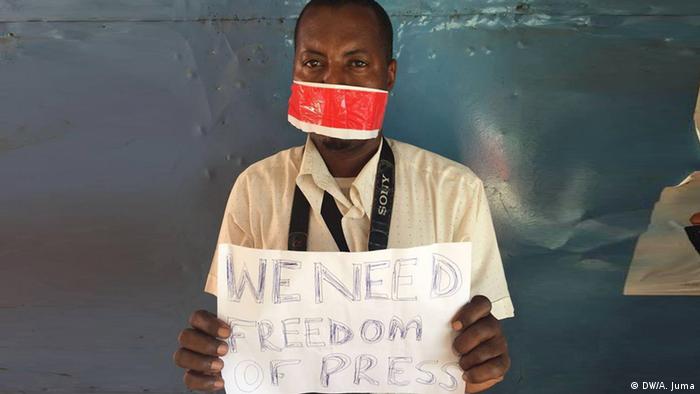
..Journalists and the press, in general, were neither spared from the wreck of 2019 violations of people’s basic freedoms. According to the Media Council of Tanzania (MCT), a local press freedom advocacy group, incidents of violations of press freedom, including threats and interference in editorial independence, increased in Tanzania from eight in 2015 to 28 cases in 2019. [see e.g. https://humanrightsdefenders.blog/2019/08/06/journalist-kabendera-in-tanzania-now-suddenly-held-on-economic-charges/]

..Perhaps the serious blow to the country’s human rights landscape came from the government’s decision to withdraw its declaration it made under Article 34(6) of the Protocol establishing the African Commission on Human and Peoples’ Rights (AfCHPR) which gives individuals and non-governmental organisations (NGOs) a direct access to the court once the national judicial mechanisms have been exhausted. The decision came soon after the African Union rights body condemned massive human rights violations by authorities, especially reluctance to investigate serious human rights breaches like that of the disappearance of freelance journalist Azory Gwanda. [see: https://humanrightsdefenders.blog/2019/12/06/tanzania-wants-to-withdraw-right-to-complain-to-african-court/]

..Meanwhile, the political parties continued to raise the alarm; that they were operating under stringent conditions in the past three years as the government’s ban on political rallies remained in force. The year 2019 also witnessed the passing of amendments into the Political Parties Act which Tanzania’s political observers described as draconian.

.. Amidst these negative developments, nonetheless, there was also some positive steps taken by the government to try expressing its commitments to issues pertaining to human rights and good governance. This includes the revival of the State human rights and good governance commission. Since the stepping down of the former chairman, renowned lawyer Bahame Tom Nyanduga and his commissioners, the CHRGG remained inactive, making many of its tasks taken over by independent rights organisations which are blaming authorities over alleged failures to uphold the principles of human rights and the rule of law . President John Magufuli finally sworn-in the new CHRGG commission and asked the officials to go and help people whose rights are violated. President Magufuli’s directives to the commission were timely, to say the least, as they came immediately before Amnesty International and Human Rights Watch released scathing reports on the human rights situation in Tanzania. Launched on October 28, 2019, the two organisations expressed concerns the state of human rights in Tanzania.

..Other human rights-related concerns in 2019 were the frequent anti-human rights statements made by senior government officials which are often followed by cracking down on individuals and organisations.

Rights activists have also expressed uneasiness with the rhetoric, often coupled with arbitrary arrests and threats to deregister nongovernmental groups, which they think has stifled independent reporting by journalists and public discussion on human rights violations and abuses including in the context of the upcoming elections. “Tanzania should show true commitment to protecting and fulfilling the rights to freedom of expression and association. The authorities need to put a stop to harassment, intimidation, and arbitrary arrests of activists, journalists, and opposition members,” said Oryem Nyeko, Africa researcher at Human Rights Watch.

Annual reports 2019: Amnesty International

December 29, 2019

The 3rd annual report comes from Amnesty International which this year looks at some of the positive highlights, many won by human rights defenders:

[The first two annual reports in this blog are: https://humanrightsdefenders.blog/2019/12/27/annual-reports-2019-civicus-global-report/ and https://humanrightsdefenders.blog/2019/12/28/annual-reports-2019-huridocs-harnessing-the-power-of-human-rights-information/]

With inequality, injustice and hate speech seemingly ever more prevalent across the globe, you’d be forgiven for thinking 2019 has been a bad year for human rights. Yet, AI says that we have also seen some significant wins. Activists the world over have been galvanised to stand up and fight for our human rights – and thanks to their relentless campaigning we achieved some striking leaps forward. Here are some highlights…

January 

Legal abortion services were finally available to women in Ireland, following an historic referendum in May 2018 that marked a huge victory for women’s rights. It was the result of years of dedicated work by activists, including Amnesty International, to encourage a powerful conversation that helped catalyse the abortion debate in Ireland. This ultimately led to greater protection for those people who need an abortion there, and paved the way for the same inspiring progress in Northern Ireland later in the year.

As a tribute to Julián Carrillo, an environmental rights defender killed in October 2018, we launched Caught between bullets and neglect, a digest on Mexico’s failure to protect environmental human rights defenders. Just a few hours after the launch, two suspects in Julián’s murder were arrested, showing the immediate impact Amnesty’s work can have on justice.

The Angolan Parliament approved a revision of the Criminal Code to remove a provision widely interpreted as criminalizing same-sex relationships. They even took a step further, by criminalizing discrimination against people based on sexual orientation – the first country in 2019 to make this move, and a hearteningly radical move for an African nation.

February

After spending 76 days in detention in Thailand, refugee footballer Hakeem al-Araibi was able to return to his home in Melbourne on 12 February. The Bahrain-born footballer had been detained upon arrival in Bangkok on 27 November 2018, due to an erroneous Interpol red notice, and faced the threat of extradition to Bahrain. A campaign launched by Amnesty and other groups to free the footballer, who is a peaceful and outspoken critic of the Bahraini authorities, grew into the #SaveHakeem movement. The campaign spanned three continents, engaging footballers, Olympians and celebrities, and drawing the support of more than 165,000 people.

Following international attention and campaigning by Amnesty, Saudi authorities overturned a call by the Public Prosecution to execute Saudi woman activist Israa al-Ghomgham for charges related to her peaceful participation in protests. Israa al-Ghomgham still faces a prison term, and Amnesty continues to campaign for her immediate and unconditional release.

March

In Ukraine, an International Women’s Day rally organized by human rights defender Vitalina Koval in Uzhgorod, western Ukraine, went ahead peacefully, with participants protected by police. The event marked a major change for the region, after similar rallies organised by Koval in previous years had been targeted by far-right groups, with police singularly failing to protect participants from violence.

AFRICOM admitted for the first time that its air strikes have killed or injured civilians in Somalia, after the release of Amnesty’s investigation The Hidden US War in Somalia: Civilian Casualties from Air Strikes in Lower Shabelle. Following this report, US military documents came to light confirming that the US authorities knew of further allegations of civilian casualties resulting from many of their air strikes in Somalia.

Gulzar Duishenova had been championing disability rights in her country Kyrgyzstan for years. In March 2019, her persistence paid off when Kyrgyzstan finally signed up to the Disability Rights Convention. Amnesty supporters wrote nearly a quarter of a million messages backing her.

And in Iraq, just days after Amnesty and other NGOs raised the alarm about a draft cybercrime law that would seriously undermine freedom of expression there, the Iraqi parliament chose to withdraw the bill, confirming to Amnesty that its “concerns have been heard”.

April

In April, love triumphed when a ban on all LGBTI events in Ankara, Turkey, was lifted by the administrative appeals court. “This is a momentous day for LGBTI people in Turkey, and a huge victory for the LGBTI rights activists – love has won once again,” said Fotis Filippou, Campaigns Director for Europe at Amnesty International.

The District Court of The Hague issued an interim ruling in favour of Esther Kiobel and three other women who took on one of the world’s biggest oil companies, Shell, in a fight for justice. Esther has pursued the company for more than 20 years over the role she says it played in the arbitrary execution of her husband in Nigeria. Amnesty has shared over 30,000 solidarity messages with Esther Kiobel, and is supporting her Kiobel vs Shell case in The Hague. As a result of this hearing, the court in October 2019 heard for the first time the accounts of individuals who accuse Shell of offering them bribes to give fake testimonies that led to the ‘Ogoni Nine’ – who included Esther Kiobel’s husband – being sentenced to death and executed.

President of Equatorial Guinea, Teodoro Obiang Nguema, announced that his government would introduce legislation to abolish the death penalty.

May

Taiwan became the first in Asia to legalize same-sex marriage after passing an historic law on 17 May, with the first same-sex weddings taking place on 24 May. Together with LGBTI rights groups from Taiwan, Amnesty had campaigned for this outcome for many years. We are now working to end all discrimination against LGBTI people in Taiwan.

Qatar promised more reforms to its labour laws ahead of the 2022 World Cup. Human rights pressure also played a role in FIFA’s decision to abandon plans to expand the 2022 Qatar World Cup to 48 teams, which would have involved adding new host countries in the region. Amnesty worked together with a coalition of NGOs, trade unions, fans and player groups, calling attention to the human rights risks of the expansion, including the plight of migrant workers building new infrastructure.

June

Climate change activist Greta Thunberg and the Fridays for Future movement of schoolchildren were honoured with Amnesty International’s Ambassador of Conscience Award 2019. The Fridays for Future movement was started by Greta, a teenager from Sweden who in August 2018 decided to miss school every Friday and instead protest outside the Swedish parliament, until it took more serious action to tackle climate change.

In a long overdue move, Greece passed legislation to recognize that sex without consent is rape, and Denmark’s government committed to doing the same. This development is testament to the persistence and bravery of survivors and campaigners for many years, and creates real momentum across Europe following 2018 Amnesty’s review of outdated legislation in 31 European countries and other barriers to accessing justice for rape survivors.

From 1 June 2019, contraceptives and family planning clinic consultations became free of charge in Burkina Faso. The change was seen as a response to our 2015 My Body My Rights petition and human rights manifesto calling for these measures to be put in place. With financial barriers removed, women in Burkina Faso now have better access to birth control, and more choice over what happens to their bodies.

July

In a momentous and inspiring day for human rights campaigners, the UK parliament voted through a landmark bill on 22 July to legalize same sex marriage in Northern Ireland. The bill also forced the UK government to legislate for abortion reform in Northern Ireland, including decriminalization on the basis that a Northern Ireland Executive (government of NI) did not return in three months.

Also in July, in a US Congressional hearing, a senior Google executive gave the clearest confirmation yet that the company has “terminated” Project Dragonfly, its secretive programme to develop a search engine that would facilitate the Chinese government’s repressive surveillance and censorship of the internet. This followed Amnesty’s #DropDragonfly campaign, and hundreds of Google staff speaking out.

On 22 July, 70-year-old human rights defender and prominent Palestinian Bedouin leader Sheikh Sayyah Abu Mdeighim al-Turi was released from prison in Israel, after spending seven months in detention for his role in advocating for the protection of Bedouins’ rights and land. Sheikh Sayyah thanked Amnesty International and all those who took action on his behalf: “I thank you all very much for standing up for the right of my people and the protection of our land. While I was in prison, I felt and heard your support loud and clear, and it meant the world to me.”

August

Mauritanian blogger Mohamed Mkhaïtir, who was sentenced to death and held in arbitrary detention for more than five years after publishing a blog on caste discrimination, finally walked free.

In August, Saudi Arabia announced major reforms easing some of the major restrictions imposed on women under its repressive male guardianship system, including allowing them the right to obtain a passport which should make it possible for them to travel without permission from a male guardian. The changes also grant women in Saudi Arabia the right to register marriages, divorces, births and deaths and to obtain family records. While we welcome these changes, people campaigning for women’s rights remain in prison, and we must do all we can to fight for their freedom.

September

Syrian national Ahmed H. was finally allowed to return home, after being imprisoned and then held in immigration detention in Hungary for more than four years. He had been arrested on terrorism charges after being caught up in clashes on the Hungarian border. At the time he was helping his elderly parents, who were escaping Syria and were crossing into Hungary as refugees. An amazing 24,000 people joined the #BringAhmedHome campaign, calling on Cyprus to allow Ahmed to return to his family.

A court in Tunis acquitted 18-year-old activist Maissa al-Oueslati, after she faced trumped-up charges that could have resulted in her imprisonment for up to four years. Maissa and her 16-year-old brother had been arbitrarily detained by police earlier in the month for filming a protester threatening to set himself on fire in front of a police station.

October

At midnight on Tuesday 22 October 2019, after a last-minute effort by the DUP to overturn the bill, same sex marriage became legal in Northern Ireland, while abortion was decriminalised. All criminal proceedings were dropped, including those against a mother who faced prosecution for buying her 15 year-old daughter abortion pills online.

Grainne Teggart, Amnesty International’s Northern Ireland Campaign Manager, said it was the beginning of a new era for Northern Ireland, in which the nation was freed from oppressive laws that police people’s bodies and healthcare. “Finally, our human rights are being brought into the 21st century. This will end the suffering of so many people. We can now look forward to a more equal and compassionate future with our choices respected.”

November

Kurdish-Iranian award-winning journalist and refugee Behrouz Boochani arrived in New Zealand to attend a special WORD Christchurch event on a visitor’s visa sponsored by Amnesty International. It was the first time Boochani, known for his work reporting on human rights abuses from within the Australian government’s refugee detention centres, had set foot outside Papua New Guinea since he was detained on the country’s Manus Island in 2014.

Humanitarian volunteer Dr Scott Warren was found not guilty by a court in Arizona of charges linked to helping migrants on the US-Mexico border. In a similar case, Pierre Mumber, a French mountain guide who gave hot tea and warm clothes to four West African asylum seekers in the Alps, and was acquitted of “facilitating irregular entry”.

December

Alberto Fernández is inaugurated as President of Argentina on 10 December. As president-elect, Fernández announced he would push for the legalization of abortion as soon as he took office, saying: “It is a public health issue that we must solve.”

The Philippines’ Commission on Human Rights said that 47 major fossil fuel and carbon-polluting companies could be held accountable for violating the rights of its citizens for the damage caused by climate change. The landmark decision paves the way for further litigation, and even criminal investigations, that could see fossil fuel companies and other major polluters either forced to pay damages, or their officials sent to jail for harms linked to climate change.

The regional Economic Community of West African States’ (ECOWAS) Court of Justice rejected a 2015 ban imposed by the government of Sierra Leone preventing pregnant girls from sitting exams and attending mainstream school – and ordered the policy to be revoked with immediate effect.