Archive for the 'organisations' Category

Tonight WITNESS’ virtual Gala with Peter Gabriel, Kimberley Nichole and Angela Davis

May 21, 2020

Tonight, 21 May 21, at 6:00 p.m. ET, the NGO WITNESS has its virtual Un-Gala, a celebration in defense of truth and human rights, live on Facebook and YouTube.

You’ll be able to hear the activist, author and educator Angela Davis, in conversation with media activist and WITNESS’ Senior Program Coordinator Palika Makam.  You’ll be hearing a new piece on COVID-19 created by WITNESS’ Founder Peter Gabriel  and you can listen to the incredible voice of artist Kimberly Nichole.
The Un-Gala is free of charge but donations to WITNESS are most welcome.

RSVP here


Calls for Nominations for Roger Baldwin Award

May 19, 2020

The winner will be selected by a distinguished jury, and will receive a trip to the United States to engage in advocacy, subject to Covid-19-related travel restrictions, as well as a $30,000 prize. Nominations can be made by an individual or an organization. Nominees will be judged based on the following criteria:

  • The nominee’s work is unique or particularly distinctive;
  • The nominee’s work has been effective in advancing human rights in a country other than the United States;
  • The nominee faces risk or insecurity as a result of their work; and
  • The nominee would benefit significantly from receiving the Baldwin Award, in the form of enhanced protection, or in any other way.

For further information about the award or the nomination process, please contact Emilee Cutright at CutrightE@humanrightsfirst.org or (202) 370-3307.

https://www.humanrightsfirst.org/baldwin-award

IM: Adri Kemps: former director AI Netherlands and volunteer at Netherlands Helsinki Committee.

May 18, 2020
On 13 May 2020, Adri Kemps passed away at the age of 65. He was – from 1993 – 2001 – Director of Amnesty International Netherlands. Even after an infarct in 2015 he continued to be active in human rights work e.g. as an active volunteer at the Netherlands Helsinki Committee.  Adri was known for his cheerful character, optimistic outlook, but above all his passion, especially about human rights. He could be stubborn and persistent as well, but always engaging and a true gentleman. That combination brought him many successes, as the obituary written by his friend and long-time colleague Harry Hummel underlines.

Remembering the life of Adri Kemps (1955 – 2020)

…. Adri was part of a brilliant team, at the national office of Amnesty International. Human rights until that time were a concept only known to a group of foreign policy experts and to a minute fraction of the legal community. Amnesty in the Netherlands was hugely successful in popularizing the concept as a notion that stood above political struggle. Adri and his friends developed campaigns to mobilise public support to raise human rights issues in countries around the world. A new action method for Amnesty, that was viewed by many in the organization’s London headquarters as a suspect deviation. This group of volunteers was dominant in the Netherlands’ representation in Amnesty’s international decision-making bodies. By 1980, they formed the majority of the executive board of Amnesty Netherlands. A group of people aged 25 or younger leading an organization with a budget of millions and several dozen staff members, unthinkable in today’s professionalized civil society sector in the Netherlands.

At that time, Adri was part of the board for a couple of years. He was also engaged in setting up a number of other organizations working on international solidarity (as this was called). He soon left for Nicaragua, joining his partner Marijke (who he had met at Amnesty), and gradually carving out a role for himself in development work in that new location.

In the beginning of the 1990s, a much more mature man, he joined Amnesty Netherlands again as Executive Director. An exceedingly difficult job, he had to lead an organization that was professionalizing rapidly but still maintained some characteristics of the volunteer spirit. The period was a challenging time for human rights, and yet it was a high period for their national as well as international recognition. Adri skilfully utilized this for the benefit of the organization.

After yet another, shorter period living in Nicaragua, he returned to the Netherlands to head the Netherlands Fundraising Regulator (CBF). An entity that runs a certification scheme for fund-raising NGOs, independent from both government and civil society, yet a civil society body itself, and subject to diverse pressures and not easy to lead.

He started running into health problems, including a stroke now six years ago. During his recovery, he joined the Netherlands Helsinki Committee’s office, and stayed on to work on an increasingly broad range of assignments. His expertise and strategic and tactical insight helped the organization tremendously in its fund-raising efforts. He took on substantive activities as well – things important for the promotion and defence of a healthy society but that did not necessarily fall in the defined areas of work of the organization – a training on strategy development for fund-raising organizations in Ukraine, involvement in a study on political advertising on the internet.

He continued to be active in local social democracy in Haarlem, where he lived, and increasingly also in initiatives to recreate a sound environment and in addressing the climate crisis. The extreme political repression that has developed over the past years in Nicaragua, the country where he had lived for such a long time, affected him a lot. He spent time advising on initiatives to help local people and increase pressure on the government.

The maxim that to be a human rights activist, you must by definition be an optimist, definitely applied to Adri. His co-workers at the NHC remember him as a friendly, interested and cheerful colleague, bringing a lot of positivity and creativity to the workplace.

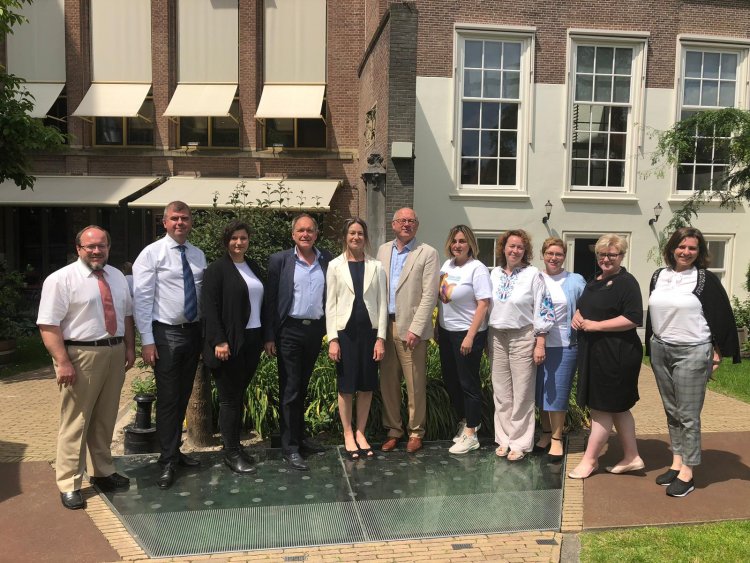
Adri (in the middle) at a meeting with Ukrainian civil society and government representatives, discuss effective government-civil society partnerships

https://www.nhc.nl/in-memoriam-nhc-expert-advisor-and-volunteer-adri-kemps/

Brian Dooley to advice Mary Lawlor

May 13, 2020
Further to the announcement of Mary Lawlor as Special Rapporteur on HRDs [see: https://humanrightsdefenders.blog/2020/05/07/mary-lawlor-takes-up-post-as-un-special-rapporteur-for-human-rights-defenders/]. Human Rights First on 12 May 2020 proudly announced that Brian Dooley, its senior advisor on human rights movements and the risk of persecution and reprisal they face, will also serve as an advisor to Mary Lawlor. Dooley will advise the special rapporteur on a range of issues facing human rights defenders while continuing his work at Human Rights First.

“We are incredibly proud Brian was chosen for such a distinguished and important role,” said Mike Breen, president and CEO of Human Rights First. “Brian has been critical to the success of numerous campaigns to support human rights defenders in Bahrain, Egypt and Hong Kong over the last ten years. He will be an asset to the UN Special Rapporteur’s team and his work will undoubtedly increase the visibility of the threats that human rights defenders face, and hopefully, lead to better protections for those doing the vital work of advancing human rights.”  For some of my older posts referring to Brian Dooley: https://humanrightsdefenders.blog/tag/brian-dooley/.

See also: https://en.wikipedia.org/wiki/Brian_J._Dooley

Michael Ineichen leaves ISHR and a legacy

May 9, 2020
Michael Ineichen – ISHR programme director  – leaves the International Serivce for Human Rights and on 30 April 2020 he wrote a farewell note: “Leaving ISHR: thanks for 14 years of purpose, inspiration and learning”. He was often mentioned in this blog, see e.g.: https://humanrightsdefenders.blog/tag/michael-ineichen/. But fortunately he stays in Switzerland and in the human rights world: AI Switzerland.
 
Today, almost 14 years after joining “the service” I’m saying farewell to the International Service for Human Rights……I joined ISHR as an intern in 2006. Fresh off university, with a baby underway while fellow interns were spending their non-existent salaries on drinks by the lake. I was expecting to find a job, but found a purpose, a second family, and inspiration for a lifetime.

With my academic notion of “international human rights”, I knew very little of the reality experienced by the human rights defenders who struggle every day for more just, rights-respecting and equal societies. Back then, I was yet to be inspired by the courage, dedication, pain, doubt, joy and laughter of the many human rights activists I had the privilege of meeting over the years. I was yet to be appalled by the human rights violations and abuses of governments and unscrupulous companies, and the brazen efforts of some diplomats and governments to hide the truth from the eyes of the world, or somewhat reassured by the equally sustained efforts of others to create space for civil society and push for accountability.

In the last 14 years, there was not one week when I did not draw inspiration from one or more of the many human rights defenders ISHR works with. You are the reason this organisation exists. Among the stories which marked me the most, and which illustrates both the tremendous solidarity and deep frustration of engaging with international human rights mechanisms, is that of Chinese defender Cao Shunli.

She campaigned for something that most of us take for granted: independent civil society input into her government’s human rights report to the UN. As a result of her activism, she was blocked from travelling to Geneva, and – having been denied medical treatment – passed away in detention. Together with many civil society activists, I wanted to observe a moment of silence at the Human Rights Council in her memory. But the Chinese delegation was outraged, and interrupted the meeting for more than an hour. To this day, Cao Shunli’s death remains unaccounted for, and six successive Human Rights Council Presidents have failed to fully resolve this most emblematic case of reprisals. So much for the deep frustration. [see also: https://humanrightsdefenders.blog/2015/03/27/china-or-the-un-must-ensure-independent-investigation-into-death-of-cao-shunli/]

However, there’s also solidarity. Instead of stifling opposing views, with its heavy handed response even in the HRC, the Chinese delegation attracted massive attention to Cao Shunli and her struggle, and triggered an intense moment of global solidarity. Every member of civil society in the room was standing up – with Cao Shunli, and the human rights movement as a whole. Afterwards, every diplomat in Geneva knew Cao Shunli, and her story contributed significantly to the creation of a stronger UN response to reprisals. And, years later, Chinese human rights activists whom I’ve never met in my life look at me with a hint of recognition, saying “I know you. You’re the guy who stood up to our government, and made the UPR meaningful. We all watched behind the firewall.”

Hers is but one of the many stories I take with me, as I open a new chapter in my professional life. There are many others, happy and sad, of human rights defenders who have extended their trust to ISHR and myself. From Alphonsus to Ziad, I will always be grateful for the chance to reflect together on using the opportunities of international advocacy towards our common human rights struggle.  

…
I’ve seen times when donors trust in the track record, dedication and commitment of a civil society organisation like ISHR, or conversely when they insist on wasteful and narrow-minded administrative processes…..And I’ve seen how a strong focus on solidarity, well-being and passion can bring teams and an entire organisation to punch well above their weight. And finally, the last 14 years have been a period of immense personal growth – not always easy and smooth, but  I’ve grown as a father, husband and person. And I thank ISHR for being 100% supportive along the way.

As I look forward to opening a new chapter in my professional life by joining Amnesty Switzerland, I wish ISHR – Phil, the amazing team of staff, its dedicated board and the human rights defenders community it works with and supports – all the best for navigating these challenging times. You have and will continue to profoundly shape the human rights world, and I am proud and grateful to have been a part of the team.

Merci

https://www.ishr.ch/news/leaving-ishr-thanks-14-years-purpose-inspiration-and-learning

European Union on human rights in times of the coronavirus pandemic

May 6, 2020

I did several posts on the policy response of NGOs and the UN on human rights in the times of the corona virus pandemic [https://humanrightsdefenders.blog/tag/covid-19/]. Other intergovernmental bodies have of course also staked out their position. Here the EU through its High Representative, Josep Borrell:

… Respect for all human rights must remain at the heart of fighting the pandemic and supporting the global recovery.

The pandemic and its socio-economic consequences are having a disproportionate impact on the rights of women, children and elderly persons, and on all persons in vulnerable situations, including refugees, migrants, internally displaced persons, and are deepening pre-existing inequalities. Response measures should take account of the needs of those that are most at risk of marginalisation, stigmatisation, xenophobia and racism and other forms of discrimination. Prevention of, and protection from, all forms of sexual and gender-based violence, including through appropriate redress mechanism, and continued access to all essential health services, are particularly important in a time of confinement. All measures and actions taken in response should be inclusive and gender-responsive and ensure the women’s full and effective participation in decision-making processes and in all stages of response and recovery. The heavy impact of the crisis on economic and social rights also needs to be addressed.

The European Union reaffirms the need to pay special attention to the growing impact of the pandemic on all human rights, democracy and the rule of law. In emergency circumstances, international human rights law allows states to limit certain human rights provided that the measures are necessary, proportionate, temporary in nature, and non-discriminatory. The coronavirus pandemic should not be used as a pretext to limit democratic and civic space, the respect of the rule of law and of international commitments, nor to curtail freedom of expression, freedom of the press and access to information online and offline. The measures should not be used to restrict the work of human rights defenders, journalists, media workers and civil society organisations. Digital technologies that have the potential to help contain the pandemic should be used in full respect of human rights including the right to privacy.

Protecting the right of everyone to the highest attainable standard of health requires access to reliable information. People must be empowered to protect their own health and those of others. Misleading or false information can put lives in danger. It is therefore crucial to resolutely counter disinformation with transparent, timely and fact-based communication and thus reinforce the resilience of societies.

The European Union recognises that the role of civil society and human rights defenders is more important than ever to encourage solidarity, support those who are most in need, and defend human rights, fundamental freedoms and democratic space, and to promote accountability.

This is a time for solidarity and global cooperation through multilateral efforts.  The European Union reaffirms its commitment to contribute to the global response to the pandemics. The European Union will promote coordination in all relevant multilateral fora, including working with the UN, WHO, the Council of Europe, the OSCE and other regional organisations. Measures taken at the national level are also of particular importance. The European Union supports the important role of the UN system in mobilising and coordinating the global response to the pandemic with human rights at the forefront. We strongly support the UN Secretary General’s call for an immediate global ceasefire, as well as the call to end gender-based violence, and the work of the High Commissioner for Human Rights and her Office……..

https://www.consilium.europa.eu/en/press/press-releases/2020/05/05/declaration-by-the-high-representative-josep-borrell-on-behalf-of-eu-on-human-rights-in-the-times-of-the-coronavirus-pandemic/

NSO versus Whatsapp continues in court

May 5, 2020

WhatsApp logo is seen displayed on a smart phone screen on 11 December 2019 [Ali Balıkçı/Anadolu Agency]

WhatsApp logo is seen displayed on a smart phone screen on 11 December 2019 [Ali Balıkçı/Anadolu Agency]

The NSO Group has always maintained its innocence insisting that its spyware is purchased by government clients for the purpose of tracking terrorists and criminals and that it had no independent knowledge of how those clients use its spyware. This claim is contradicted by court documents in WhatsApp’s lawsuit filed last year against the Israeli firm. While bringing the lawsuit, WhatsApp said in a statement that 100 civil society members had been targeted and called it “an unmistakable pattern of abuse”. New documents seen last week indicate that servers controlled by NSO Group and not its government clients, as alleged by the Israeli firm, were an integral part of how the hacks were executed. “NSO used a network of computers to monitor and update Pegasus after it was implanted on users’ devices,” said WhatsApp, “these NSO-controlled computers served as the nerve centre through which NSO controlled its customers’ operation and use of Pegasus [software used to hack computers and phones].”NSO Group is also accused by WhatsApp of gaining “unauthorised access” to its servers by evading the company’s security features.

n the ongoing legal battle between Facebook and software surveillance company NSO Group, the social media giant is trying to get NSO Group’s legal counsel dismissed because of an alleged conflict of interest. In a court filing made public this week, Facebook asked a federal judge to disqualify law firm King & Spalding from representing NSO Group because the firm previously represented Facebook-owned WhatsApp in a different, sealed case that is “substantially related” to the NSO Group one. King & Spalding, an Atlanta-based firm with a range of big corporate clients, has denied there is a conflict of interest, according to the filing.“Any attorney defending this suit would love to have insight into how WhatsApp’s platform and systems work,” the court filing states. “And King & Spalding has that insight—because it was once WhatsApp’s counsel.”The dispute with Facebook is one of multiple legal battles currently facing NSO Group. Amnesty International is trying to get an Israeli court to revoke NSO Group’s export license in Israel, citing Pegasus’s alleged role in humans rights abuses. [see: https://humanrightsdefenders.blog/2019/09/17/has-nso-really-changed-its-attitude-with-regard-to-spyware/]https://www.amnesty.org/en/latest/news/2020/06/nso-spyware-used-against-moroccan-journalist/

https://www.cyberscoop.com/nso-group-lawsuit-whatsapp-conflict-of-interest-king-spalding/

Israel’s NSO Group accused of ‘unmistakable pattern of abuse’ in hacking case

World Press Freedom Day 2020 – a few more links

May 4, 2020

Yesterday’s post [https://humanrightsdefenders.blog/2020/05/03/world-press-freedom-day-2020-a-small-selection-of-cases/ ] is already in need of updating. Here a few more examples of what happened on World Press Freedom Day:

—-

Reporters Without Borders (RSF) published exclusive interviews by Philippine journalist Maria Ressa with Washington Post columnist Rana Ayyub, whistleblower Edward Snowden, Nobel economy laureate Joseph Stiglitz and RSF secretary-general Christophe Deloire on the subject of “Journalism in crisis: a decisive decade.”
—-

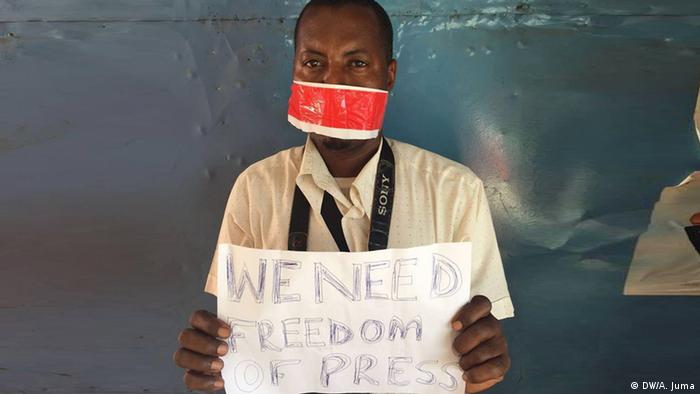
Deutsche Welle’s Freedom of Speech Award honors journalists persecuted for coronavirus reporting

Deutsche Welle is presenting journalists from four continents with this year’s Freedom of Speech Award for their coverage of the coronavirus crisis. The recipients are being honored on behalf of all media professionals around the world who are publishing independent information about the coronavirus pandemic while working under difficult conditions. [see also: https://humanrightsdefenders.blog/2016/06/10/dw-freedom-of-speech-award-goes-to-turkish-%e2%80%b2hurriyet%e2%80%b2-journalist-sedat-ergin/#more-8152]

“At a moment of a global health emergency, journalism serves a crucial function, and each journalist bears great responsibility,” DW Director General Peter Limbourg said while announcing the award winners in Berlin. “Citizens of any country have the right of access to fact-based information and critical findings,” he said. “Any form of censorship may result in casualties and any attempts to criminalize coverage of the current situation clearly violate the freedom of expression.” For a list of this year’s laureates, see: https://www.dw.com/en/deutsche-welle-freedom-of-speech-award-17-laureates-from-14-countries/a-53306033

Michelle Bachelet, the UN high commissioner for human rights, said in a video message to the journalists honored that the general public needs “full and accurate information about the pandemic, and to be involved in the decisions that are being made on our behalf.” The International Press Institute documented more than 150 violations of press freedom worldwide through the end of April. The IPI has tracked cases of censorship and restrictions on access to information — but the greatest number of violations of press freedom have been arrests of journalists and verbal or physical attacks on them. (https://www.dw.com/en/un-commissioner-michelle-bachelet-honors-journalists/av-53297637)

——

SNHROn the occasion of World Press Day, the Syrian Network for Human Rights (SNHR) issued a report demanding the release of 422 citizen journalists in Syria, most of whom are detained by the Syrian regime, and are now threatened by the COVID-19 pandemic. The report notes that 707 citizen journalists have been killed since March 2011 to date, 78% of them by Syrian Regime forces. The 20-page report shows how the Syrian regime has been well aware of the danger posed by press freedom to its tyrannical rule for decades, abolishing all independent newspapers, and allowing only three official newspapers to be published, which are simply Syrian regime mouthpieces, dedicated to promoting, defending and justifying the regime’s actions. As the report further notes, it’s no exaggeration but simply a statement of fact to say that there is no such thing as a free press under the Syrian regime…..The report distributes the total death toll according to the main parties to the conflict, with the Syrian regime being responsible for the deaths of 551 citizen journalists, including five children, one woman, five foreign journalists, and 47 other citizen journalists due to torture in detention centers, while Russian forces were responsible for the deaths of 22 citizen journalists, and ISIS killed 64, including one child, two women, three foreign journalists, and three under torture. Hay’at Tahrir al Sham also killed eight, including two who died due to torture. Factions of the Armed Opposition were responsible for the deaths of 25 citizen journalists, including one child and three women.

View full Report


Saudi Arabia ends death penalty for minors and flogging but Abdullah al-Hamid dies in detention

April 27, 2020
Many media reported on Saudi Arabia‘s King Salman having ordered an end to the death penalty for crimes committed by minors and to floggings, which should indeed be considered progress. King Salman’s son and heir, Crown Prince Mohammed bin Salman, has sought to modernize the country, attract foreign investment and revamp Saudi Arabia’s reputation globally. He’s also overseen a parallel crackdown on liberals, women’s rights activists, writers, moderate clerics and reformers. The 2018 killing of Saudi writer Jamal Khashoggi in Turkey by agents who worked for the crown prince drew sharp criticism internationally. [for some ealrier posts on Saudi Arabia, see: https://humanrightsdefenders.blog/tag/saudi-arabia/]

The latest royal decree could spare the death penalty for at least six men from the country’s minority Shiite community who allegedly committed crimes while under the age of 18, including Ali al-Nimr, who had participated in anti-government protests. Such activity carries terrorism-related charges in the kingdom for disturbing order and disobeying the ruler. Amnesty International and Human Rights Watch have long called on the kingdom to abolish the use of the death penalty, particularly for crimes committed by minors. The president of the Saudi government’s Human Rights Commission, Awwad Alawwad, confirmed the latest decision in a statement Sunday, saying it helps the kingdom establish “a more modern penal code and demonstrates the kingdom’s commitment to following through on key reforms.” He said “more reforms will be coming,” and that the two decisions “reflect how Saudi Arabia is forging ahead in its realization of critical human rights reforms even amid the hardship imposed by the COVID-19 pandemic.”

Five years ago, prominent Saudi blogger Raif Badawi was given 50 lashes before hundreds of spectators in the metropolitan city of Jiddah. [see also: https://humanrightsdefenders.blog/2015/10/29/saudi-blogger-raif-badawi-awarded-europes-sakharov-prize/]. It drew outrage and condemnation from around the world, including from many of Saudi Arabia’s Western allies.

In the meantime long prison sentences carry their own risk as seen in the case of Saudi human rights defender Abdullah al-Hamid, 69, has died in custody in a hospital in Saudi Arabia, according to the Right Livelihood Foundation, which awarded a prize [https://humanrightsdefenders.blog/2018/11/14/right-livelihood-award-urges-freedom-for-3-saudi-laureates/]. It said on Friday that al-Hamid, who was serving an 11-year prison sentence, was taken to hospital after suffering from ill-health in a Riyadh prison earlier this year. He subsequently had a stroke and fell into a coma in early April, according to rights groups including Amnesty International. “Dr al-Hamid was a fearless champion for human rights in Saudi Arabia,” Lynn Maalouf, Amnesty’s Middle East research director, said in a statement.

The Right Livelihood Foundation said al-Hamid was repeatedly denied crucial medical care and “paid the ultimate price for his convictions”. Ole von Uexkull, head of the foundation, blamed Saudi authorities for his death, saying that al-Hamid’s “unlawful imprisonment and inhumane treatment … led to his death“.

Martin Ennals Award laureates rally to demand freedom for their imprisoned fellow award-winners

April 24, 2020

On 21 April 2020, – for the first time – a group of 14 former winners of the Martin Ennals Award for Human Rights Defenders rallied around their follow laureates lingering in jail.  They signed a joint letter to the Permanent Representatives to the UN of Bahrain, China, Iran and the United Arab Emirates:

Your Excellencies:

As the COVID-19 pandemic spreads, we the undersigned, winners of the Martin Ennals Award for Human Rights Defenders, are calling for the release of all imprisoned human rights defenders around the world, who are at tremendous risk due to the virus. We add our voices to the calls of international leaders, of hundreds of civil society organizations and thousands of mobilized citizens, to grant clemency towards vulnerable prisoners during this health crisis, including our fellow award-winners who are imprisoned for their defense of human rights in four countries:

…..

Today we are deeply concerned about the continued imprisonment of defenders across the world, despite their exposure to and high risk of contracting COVID-19. Numerous health authorities and human rights organisations have denounced the risks of COVID-19 for prisoners held in crowded conditions. …[ See e.g. also: https://humanrightsdefenders.blog/2020/04/23/civicus-and-600-ngos-dont-violate-human-rights-while-responding-to-covid-19/; https://humanrightsdefenders.blog/2020/04/14/un-guidelines-for-use-of-emergency-powers-in-time-of-covid-19-pandemic/%5D

Despite the tragedy of lives lost and significant economic damage, we believe this crisis will also present opportunities for a better world. Now is the time to remedy the unjust detention of these individuals. By releasing our brothers and sisters – Ilham, Ahmed, Nabeel, Abdullah, and Nasrin – the leaders of your nations would demonstrate their capacity for mercy and responsibility. We therefore call on your government to free our fellow Martin Ennals Award winners immediately, as well as all human rights defenders in detainment, so that their physical integrity is ensured, and they can receive appropriate medical and psychological support.

 Signed:

Huda al-Sarari
Yemen, Laureate 2020

Norma Librada Ledezma
Mexico, Finalist 2020

Sizani Ngubane
South Africa, Finalist 2020

Abdul Aziz Mohamat
Sudan, Laureate 2019

Eren Keskin
Turkey, Finalist 2019

Marino Córdoba
Colombia, Finalist 2019

Mohamed Zaree
Egypt, Laureate 2017

Karla Avelar
El Salvador, Finalist 2017

Asmaou Diallo
Guinea, Finalist 2015

Adilur Rahman Khan
Bangladesh, Finalist 2014

Mona Seif
Egypt, Finalist 2013

Bahrain Center for Human Rights, Finalist 2012

Arnold Tsunga
Zimbabwe, Laureate 2006

Clement Nwankwo
Nigeria, Laureate 1996

—-

https://www.martinennalsaward.org/the-mea-winners-are-calling-for-the-release-of-imprisoned-hrd-including-their-fellow-award-winner/