Archive for the 'organisations' Category

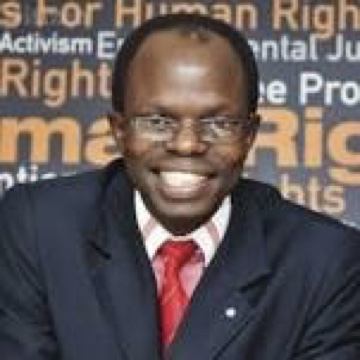
Human rights lawyer Thulani Maseko shot dead in eSwatini

January 23, 2023

On 22 January 2023 Freedom Under Law (FUL) said that the news that eSwatini human rights lawyer Thulani Maseko has been gunned down in cold blood comes as no surprise. The eSwatini government said Maseko was brutally shot and killed by unknown criminals at his home in Mbabane on Saturday night. See: https://www.trueheroesfilms.org/thedigest/laureates/03464020-c1e6-11ea-a3f7-933e766692a6

A ceaseless and fearless human rights lawyer, an outspoken critic of the regime in his beloved eSwatini, Thulani had all too long suffered at the hands of a heedless regime. But he lived by the motto: ‘My head is bloody, but unbowed … I am the master of my fate: I am the captain of my soul’.

“Sadly, and to the shame of those engaged in the administration of justice in his country, all too often he was a lone beacon of light,” FUL chair judge Johann Kriegler said. He said no-one could be misled by the cynical message of condolence put out on behalf of the eSwatini government.

His passing has not only left his family bereft of a loved one; his country has been left the poorer, its human rights conscience brutally stifled.

FUL said in paying tribute to Maseko that it respectfully suggested it would be fitting if the Law Society of eSwatini were to mark his passing by observing January 21 every year as a day of mourning his death and rededication to the rule of law. “To his widow and family we express our grateful condolences. They have paid a bitter price on behalf of all who try to serve the principles for which their dear one lived.

According to the eSwatini government, Maseko was shot by “unknown criminals”. “[His] demise is a loss to the nation, and his footprints as a human rights lawyer are there as proof of his contributions to the country. He will be surely missed,” it said in a statement.  Spokesperson Alpheous Nxumalo said the country’s security forces had assured the government that they were already at work looking for the killers and would not rest until they have been brought to book. “Government also wants to warn against speculations and insinuations, peddled particularly on social media platforms in instances like these. Again, government distinctively disassociates… and the country’s authorities from these heinous acts.”

Maseko chaired the Multi-Stakeholders Forum, a collaboration of political parties and civil society groups working to amplify calls for democratic reforms. 

In 2018, Maseko took Swaziland’s King Mswati III to court for changing the country’s name. He had argued that the resources to be channelled to the name change should rather go towards improving living standards of the poor, according to reports by City Press. In 2014, Maseko was sentenced to two years in prison, with the editor of news magazine The Nation, Bheki Makhubu, for contempt of court over articles critical of the government and judiciary. The Nation published articles co-authored by the two men which were critical of the chief justice and suggested that he may have abused his powers. See also: https://lawyersforlawyers.org/en/lawyers/thulani-maseko/

A very impressive group of NGOs and individuals co-signed a statement condemning his killing: https://www.fidh.org/en/issues/human-rights-defenders/eswatini-condemnation-of-assassination-of-renowed-hrd-thulani-maseko

https://www.businesslive.co.za/bd/national/2023-01-22-human-rights-lawyer-thulani-masekos-murder-is-no-surprise-says-freedom-under-law/

https://www.hrw.org/news/2023/01/25/eswatini-activist-rights-lawyer-brutally-killed

https://www.news24.com/news24/southafrica/news/human-rights-lawyer-thulani-maseko-shot-dead-outside-home-in-eswatini-20230122

https://www.frontlinedefenders.org/en/case/case-history-thulani-maseko
Breaking news: Laureates of the MEA for 2023 announced

January 19, 2023

Today the three Martin Ennals Award Laureates 2023 were announced !

The 2023 Laureates — Delphine Djiraibé (Chad), Feliciano Reyna (Venezuela), and Khurram Parvez (Jammu and Kashmir) — have each dedicated over 30 years of their lives to building movements which brought justice for victims, accountability from leaders, or medicines to the marginalized. They have made human rights real for thousands of people in their communities, despite the ongoing, sometimes life-threatening, challenges they endure.  For more on this award and its laureates, see: https://www.trueheroesfilms.org/thedigest/awards/043F9D13-640A-412C-90E8-99952CA56DCE

———————

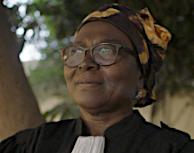
Delphine Kemneloum Djiraibé was one of the first female lawyers in Chad and a pioneer of the human rights movement in one of the poorest countries in the world, fraught with corruption and human rights abuses. Convinced that her role is to “challenge the power”, Delphine has advocated on behalf of victims and the democratic process for over 30 years. She was a key figure in bringing the former dictator Hissène Habré to justice. Djiraibé heads the non-governmental organisation Public Interest Law Center (PILC), which trains volunteers and accompanies citizens seeking justice for violations of their rights. In recent years she has been particularly active in combating gender-based violence and is in the process of establishing the first women’s counselling center in Chad, which will include an emergency shelter for women affected by domestic violence. See also: https://www.trueheroesfilms.org/thedigest/laureates/5B701F71-12FD-B713-9F99-5E09B9AFD6DA

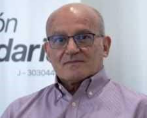
After the death of his partner Rafael from AIDS in 1995, Feliciano Reyna, then an architect, founded Acción Solidaria to provide much needed medication and treatment to Venezuelans living with HIV & AIDS. Feliciano and Acción Solidaria began advocating for access to health for the marginalised LGBTQI population in a country where healthcare was on the decline and corruption on the rise. They created the first national AIDS Help Line in Venezuela and ran a national awareness campaign on HIV & AIDS, which aired on TV and in movie theaters, and received radio and magazine coverage. Feliciano Reyna went on to found CODEVIDA, a coalition of Venezuelan organisations promoting the rights of Venezuelan citizens to health and life. As he put it: “We walked directly into the complex humanitarian emergency in Venezuela”. Despite ongoing threats, since 2006, he has worked closely with UN mechanisms to defend human rights in his country. In 2019 his advocacy was instrumental in establishing the Independent International Fact-Finding Mission on Venezuela. 

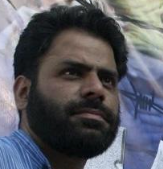
At the age of 13, when Khurram Parvez witnessed the shooting of his grandfather during a protest demonstration against the molestation of women outside his house in Kashmir, he chose to “not incite violence and become part of some revenge” , but rather to become a “nonviolent activist“. He founded the Jammu and Kashmir Coalition of Civil Society (JKCCS) and is the Chair of the Asian Federation Against Involuntary Disappearances. For 15 years he has travelled to the most remote parts of the region to sit with victims of abuse, collect documentation and report on their stories. Under his leadership, the JKCCS has been highly effective in translating the protections guaranteed in international human rights law into local realities. Despite continued attacks on his right to freedom of expression by the Indian government, being jailed in 2016 and losing a leg to landmines, Khurram relentlessly spoke the truth and was an inspiration to civil society and the local population. In November 2021, he was arrested under the Unlawful Activities Prevention Act (UAPA) on politically motivated charges. He remains detained without trial in India.  See also: https://www.trueheroesfilms.org/thedigest/laureates/81468931-79AA-24FF-58F7-10351638AFE3

You can watch them take questions from the press at the Club Suisse de la Presse, livestreamed on February 14th, 2023 from 12h CET.

A celebration of the Laureates 2023 will take place on 16 February at the Salle communale de Plainpalais in Geneva, at 6:30pm. The event is open to the public and livestreamed from the Martin Ennals Foundation’s website and Facebook page. Sign-up to the Ceremony

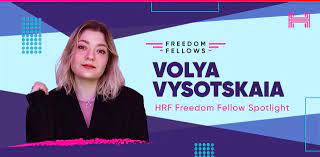
Meet Volya Vysotskaia, a Belarusian human rights defender

January 12, 2023

Meet HRF Freedom Fellow Volya Vysotskaia, a Belarusian human rights activist who exposes repression and torture by state officials. 

Vysotskaia is currently part of the 2022 Freedom Fellowship, a programme of the Human Rights Foundation, a one-year program that provides hands-on, expert mentorship across seven critical areas: leadership, movement-building, organizing, fundraising, media, mental health, and digital security.

On September 27, the Investigative Committee of the Republic of Belarus announced that five people would be tried in absentia — Vysotskaia is one of them. She has since been denied information about the trial, and her request to appear virtually was rejected. Should she return to Belarus, a country where torture and inhuman treatment is routine, officials will likely detain her.

Learn more about Vysotskaia’s case.

Q: Can you tell us about your activism protecting democracy in Belarus?

A: From August 2020 to October 2021, I was an editor of the Telegram channel, the “Black Book of Belarus.” Our work “de-anonymized” or identified law enforcement officers and other government authorities who committed human rights violations, hiding behind their high-power statuses. We published the pictures and personal data of riot police officers, prosecutors, judges, and other officials to hold them accountable for their repression of Belarusian citizens demanding democracy and freedom. 

Q: What led to the criminalization of the Black Book of Belarus’ editors and readers? 

A: In October 2020, a special service agent infiltrated our team and leaked information about members. Previously, he was part of the special operation that hijacked a Ryanair flight in May 2021 to imprison Sofia Sapega, another team member. After we uncovered the agent, my team and I were chased down in Vilnius, and dozens of people in the Telegram group were also imprisoned. 

Q: What is unique about your criminal case? 

A: The case brought against my four colleagues and me is the first trial in absentia in the country’s history. We have been accused of “exasperation of enmity” and “social disagreement,” as well as illegal actions relating to private life and personal data. The Belarusian KGB has also added us to the list of individuals engaging in “extremist activities.” Belarusian courts recognize almost all civil society organizations as extremists, but we will be the first to be tried and sentenced without the opportunity to defend ourselves. 

Belarusian authorities are undoubtedly denying us the right to a fair trial. Notably, I was denied access to information about my criminal case, and I never met the lawyer assigned to me, nor did the lawyer ever respond to my calls. 

Q: What is the scope of legal harassment against Belarusian pro-democracy activists in exile? 

A: The Lukashenko government changed the criminal procedural law back in July and invented a special proceeding for trying in absentia those who are engaged in “anti-state activities,” and living in exile. The addendum of this new procedural law provides that defendants are no longer aware of the content of their cases. It is sufficient for the legislative body to post this information on official websites, which clearly violates Article 14 of the International Covenant on Civil and Political Rights (ICCPR).

Q: What should the international community learn from your case? 

A: The violations of the right to a fair trial, among other rights, didn’t start in Belarus with our case. It just brings back the attention of the international community to the fact that the repressions in Belarus haven’t stopped. They continue every day. The power, the judicial system, and the independence of Belarus with Lukashenko are fake. The regime represses and scares the Belarusians inside the country, and while the international community doesn’t react to the severe violations of human rights, the regime spreads its attention to those living in exile. Because silence allows them to do that.

The international community has to learn that there have to be efficient mechanisms for bringing perpetrators to trial until they destroy whole nations, as well as to guarantee the defense for the victims of violations. International justice can’t be built on the international ignorance of injustice. Being concerned doesn’t stop dictators.Repression in Belarus. HRF condemns the actions of Alexander Lukashenko’s regime and stands with Volya and all Belarusians who speak truth to power, even when their lives are at risk

The Freedom Fellowship is a one-year program that gives human rights advocates, social entrepreneurs, and nonprofit leaders from challenging political environments the opportunity to increase the impact of their work. Through mentorship and hands-on training sessions, fellows develop critical skills and join a growing community of human rights activists.

https://hrf.org/category/freedom-fellows/

Applications for the 2023 Human Rights Defender Advocacy Programme (HRDAP) of the ISHR: deadline 10 January

January 5, 2023

The International Service for Human Rights in Geneva (ISHR) calls for applications for a new hybrid version of the Human Rights Defender Advocacy Programme (HRDAP). This intensive course will take place remotely between 17 April and 7 June and will be followed by an in-person training from 14 to 24 June 2023 in Geneva. The course equips human rights defenders with the knowledge and skills to integrate the UN human rights system into their existing work at the national level in a strategic manner. It also provides an opportunity for participants to prepare for and engage in lobbying and advocacy activities at the UN with the aim to create change back home. Find out why you should join HRDAP23 from Bonnie, one of our HRDAP 2022 Alumni:

So if you are a human rights defender keen to use the UN to push for change at home, get a taste of the programme here and apply before 10 January 2023!


Apply before 10 January 2

Now it is the turn of the Moscow Helsinki Group to be liquidated

January 3, 2023

Tanya Lokshina, Associate Director, Europe and Central Asia Division, reported on 21 December 2022 on how the Moscow Helsinki Group MHG), Russia’s oldest Human Rights Group, faces ‘Liquidation’

Moscow Helsinki Group’s logo
Moscow Helsinki Group’s logo.  © 2022 Moscow Helsinki Group

Last week, Russia’s Justice Ministry filed a petition with the Moscow City Court seeking “liquidation” of the Moscow Helsinki Group (MHG), a leading Russian human rights organization.

On 12 May Tanya Lokshina received one of MHG’s annual awards for contributions to human rights and the Russian human rights movement. She writes: “By then, in the aftermath of Russia’s full-scale invasion of Ukraine, the authorities had shut down Human Rights Watch’s Moscow office, along with the offices of 14 other foreign nongovernmental organizations. I had already left the country with the rest of our team, and my 9-year-old son received the beautifully framed award on my behalf. I first saw it several weeks later, when he joined me in Tbilisi, Georgia, where I had relocated to continue my work. I generally don’t display awards and diplomas, but receiving one from MHG was so special that it now hangs on my wall.”

MHG was founded in 1976 by Soviet dissidents to expose governmental repression. It lasted nine months before the government jailed or forced practically all its members into exile. After the USSR’s collapse, the group revived in the 1990’s under the leadership of Lyudmilla Alexeeva, a legendary human rights defender, and has been working tirelessly to expose abuses, build up a country-wide human rights movement in Russia, and advocate for the rule of law. [see also: https://humanrightsdefenders.blog/2018/12/10/russian-human-rights-defender-ludmila-mikhailovna-alexeeva-is-no-longer/]

The liquidation lawsuit is based on the Justice Ministry’s ad hoc inspection of MHG. The liquidation petition cites several supposed violations of Russia’s stifling legislation on nongovernmental organizations, including the group being registered in Moscow but operating elsewhere in Russia, and the group’s charter lacking information on the location of its executive body. These are obviously bureaucratic pretexts that could not justify such a drastic move.

This year, Moscow courts liquidated four other major human rights groups in addition to Memorial, so it’s hard to find optimism for a fair trial for MHG. But it’s not hard to be optimistic about Russia’s human rights movement. It outlasted the Soviet Union; it will outlast today’s oppressors. See: https://humanrightsdefenders.blog/2022/12/12/foreign-agent-law-in-russia-from-bad-to-worse/.

And it goes on, the Andrei Sakharov Foundation, see: 24 January 2023 HRW post: https://www.hrw.org/news/2023/01/24/russia-designates-another-rights-organization-undesirable

https://www.hrw.org/news/2022/12/21/russias-oldest-human-rights-group-faces-liquidation

Amnesty International looking for Senior Regional Campaigner for Eastern Europe and Central Asia region

December 19, 2022

The urgent human rights issues in the Eastern Europe and Central Asia region are hugely varied and demand creative campaigns that are well-researched, well-planned and well-managed despite the time pressures that surround them.

JOB PURPOSE: To lead the identification, development, implementation and evaluation of Amnesty International’s campaigning and advocacy strategies on human rights violations in the Eastern Europe and Central Asia region, to deliver impact in relation to agreed priorities, utilizing political judgment and analytical, communication and representational skills.

ABOUT YOU

  • Lead the development and implementation of campaign strategies, ensuring campaigns result in measurable change.
  • Advise on, coordinate and review the contribution to relevant campaigns by regional colleagues and other programmes.
  • Coordinate action planning and ensure consistency with campaigning standards and optimal use of resources.
  • Assess opportunities for action, identifying creative and effective campaigning tactics.
  • Provide advice to sections and structures and external partners on the development and implementation of campaign strategies.
  • Responsible for ensuring there is effective communication between relevant IS teams, sections and structures and partners about projects.
  • Draft, review and advise on campaign materials for internal and external use, ensuring products are coherent within the campaign strategy.
  • Communicate AI’s concerns, positions and messages to external and internal audiences.
  • Contribute to planning, execution and evaluation stages of campaign projects; develop and share campaigning best practice.

SKILLS AND EXPERIENCE

  • The ability to adapt to fast-changing political situations in, and related to, Eastern Europe and Central Asia.
  • Experience of leading and implementing campaigns at the national & international level and the ability to lead innovation and creative approaches to campaigning.
  • Knowledge of working on, and in, the region and a specialist knowledge in relation to specific countries or other geographical areas in the region.
  • Digitally competent, with experience of digital campaigning and keeping up to date with digital trends and campaigning methodologies.
  • Experience of working with colleagues and partners based around the world.
  • Excellent communications skills in English and Russian in a fluent, clear and concise way. Knowledge of another regional language desirable
  • Experience of leading project teams and the ability to engage and inspire team members.
  • Experience of managing conflicting demands, meeting deadlines and adjusting priorities
  • Ability to undertake research to gather information relevant to the development of campaign strategies.
  • Ability to evaluate campaigns and projects and to report progress against stated objectives; experience of managing budgets and reporting against expenditure.

Amnesty International is committed to creating and sustaining a working environment in which everyone has an equal opportunity to fulfill their potential and we welcome applications from suitably qualified people from all sections of the community. For further information on our benefits, please visit https://www.amnesty.org/en/careers/benefits/

APPLY HERE

https://careers.amnesty.org/vacancy/senior-regional-campaigner-london-3481/3509/description/

Save the date: Martin Ennals Award Ceremony 2023

December 19, 2022

The Martin Ennals Award Ceremony in 2023 will take place on 16 February, 2023 at 18:30 CET. 
The Ceremony will be organized together with the City of Geneva, in a hybrid format.
Please note that entry to the usual venue, the salle communale de Plainpalais in Geneva, is on a
first-come, first-served basis.  

The Ceremony will also be livestreamed from Geneva to worldwide locations on our website and Facebook page.
Detailed information on the Ceremony will follow shortly. See more on this award: https://www.trueheroesfilms.org/thedigest/awards/043F9D13-640A-412C-90E8-99952CA56DCE

On January 19th, 2023 at 12:00 CET the MEA will announce the Laureates 2023.

Belarusian Human Rights defender Aleh Hulak dies

December 18, 2022
Aleh Hulak
Aleh Hulak © 2022 Belarusian Helsinki Committee

On 16 December, 2022 Human Rights Watch published “In Memory of Aleh Hulak“, chair of the Belarusian Helsinki Committee (BHC) and a long-time leader of the Belarus human rights movement. Hulak, 55, led the Helsinki Committee with courage and unwavering commitment, including through the country’s recent, vicious crackdown on rights and the entrenchment of President Aliaksandr Lukashenka’s autocracy.

The BHC, one of the country’s oldest human rights groups, has a broad mandate to advance civil and political, and social and economic rights. Hulak was a strong voice for free speech and the release of political prisoners and also for fair work conditions, and upholding human rights in business, trade union operations and health care.  

The Belarusian government liquidated the BHC in 2021, along with hundreds of other independent groups. Hulak for years had pursued, against all odds, the group’s accreditation at the United Nations Economic and Social Council. In a bittersweet victory, his efforts succeeded less than two months ago.

https://www.hrw.org/news/2022/12/16/belarus-memory-aleh-hulak

Foreign Agent law in Russia from bad to worse

December 12, 2022

A new law entered into force in Russia that drastically expands the country’s oppressive and vast “foreign agents” legislation, Human Rights Watch said on 1 December 2022. The law is yet another attack on free expression and legitimate civic activism in Russia, and should be repealed:

Adopted in July 2022, the law’s entry into force was delayed until December 1. The law expands the definition of foreign agent to a point at which almost any person or entity, regardless of nationality or location, who engages in civic activism or even expresses opinions about Russian policies or officials’ conduct could be designated a foreign agent, so long as the authorities claim they are under “foreign influence.” It also excludes “foreign agents” from key aspects of civic life. 

“For more than a decade, Russian authorities have used ‘foreign agents’ laws to smear and punish independent voices,” said Rachel Denber, deputy Europe and Central Asia director at Human Rights Watch. “This new tool in the government’s already crowded toolbox makes it even easier to threaten critics, impose harsh restrictions on their legitimate activities and even ban them. It makes thoughtful public discussion about Russia’s past, present, and future simply impossible.” See also: https://humanrightsdefenders.blog/2022/05/21/kasparov-and-khodorkovsky-are-now-also-foreign-agents/

In Russia, the term “foreign agent” is tantamount “spy” or “traitor.” The foreign agent designation remains extra-judicial, with no possibility to contest it in court before the designation is made. Those designated must comply with all requirements the day after the authorities add them to the registry, even if they challenge the designation in court.

When the first foreign agent law was adopted in 2012, only registered organizations could be designated “foreign agents.” Successive amendments gradually expanded the application from registered organizations, to media, to other categories of individuals, and to associations without legal entities.

The July law, On Control Over Activities of Entities/Persons Under Foreign Influence, replaces these with a consolidated, simplified, but endlessly broad definition to cover any person – Russian, foreign or stateless; any legal entity, domestic or international; or any group without official registration, if they are considered to have received foreign support and/or are considered to be “under foreign influence” and engaged in activities that Russian authorities would deem to be “political.” It also covers anyone who gathers information about Russia’s military activities or military capabilities, or creates or publicly disseminates information or funds such activities.

The law defines “foreign influence” as “support” from foreign sources that includes funding, technical assistance, or other undefined kinds of assistance and/or open-ended “impact” that constitutes coercion, persuasion, and/or “other means.”

Under this definition, any interaction with a foreign element can potentially be construed as “foreign influence,” Human Rights Watch said. There is also no requirement for any causal link between “foreign influence” and the “political” or other activities for the designation to be applicable.

Foreign sources include not only foreign states or foreign entities, but also international organizations, presumably including such multilateral organizations as the United Nations. The law considers Russian nationals or organizations “foreign sources” if they are respectively considered by the Russian authorities to be under “foreign influence” or to be beneficiaries of “foreign funding.”

To avoid the “foreign agent” label, an organization needs to ensure that no source of any donation was at any stage “tainted” by “foreign influence,” including indirectly.

In defining what constitutes “political” activities of a foreign agent, the law consolidates provisions of earlier iterations of “foreign agent” amendments to include “opinions about public authorities’ decisions or policies.” For example, a journalist who publishes a commentary about urban development plans could fall under the definition of foreign agent activity.

The new law also excludes “foreign agents” from key aspects of public life. These include bans on joining the civil service, participating in electoral commissions, acting in an advisory or expert capacity in official or public environmental impact assessments, in independent anti-corruption expertise of draft laws and by-laws, or electoral campaigns or even donating to such campaigns or to political parties.

Foreign agents are also banned from teaching or engaging in other education activities for minors or producing informational materials for them. They cannot participate in organizing public assemblies or support them through donations and are barred from a number of other activities.

The law expands the notion of a person or entity affiliated with a “foreign agent,” which was first introduced in 2021 in relation to electoral candidates. A person remains “affiliated” up to two years after they sever ties with the foreign agent, even if the “affiliation” started before the law entered into force, and even if the “affiliation” started before the entity was designated a foreign agent.

Since the adoption of the first “foreign agents” law, hundreds of civic groups and activists, including those that work on human rights, the environment, election monitoring, and anti-corruption, have been designated “foreign agents.” A large number of organizations had to close down because they either sought to avoid the toxic label or were unable to bear the hefty fines imposed for not complying with the law’s burdensome, arbitrary labelling and reporting requirements. The authorities used the “foreign agents” law as a legal pretext to close down other groups, such as the human rights group Memorial, one of the 2022 Nobel Peace Prize laureates. See also: https://humanrightsdefenders.blog/2021/12/29/russias-supreme-court-orders-closure-emblematic-memorial/

This new ‘foreign agents’ law is an unrestrained attack on Russian civil society aimed at gagging any public criticism of state policies,” Denber said. “It should be scrapped.”

https://www.hrw.org/news/2022/12/01/russia-new-restrictions-foreign-agents

HURIDOCS – who will continue Friedhelm Weinberg’s excellent leadership?

December 12, 2022

After more than 10 years, Friedhelm Weinberg will be leaving HURIDOCS in early 2023. Having worked with him in person on many occasions, I can testify that his leadership has been most impressive, for the NGO itself [see e.g. https://humanrightsdefenders.blog/category/organisations/huridocs/] and the in the area of networking with others, such as the MEA and THF [see e.g. his: https://youtu.be/zDxPbd9St9Y]. In his own announcement, he modestly refers to all his colleagues:

It has been an incredible decade with HURIDOCS, working with amazing colleagues and partners at the intersection of human rights and technology. Together, we have drastically increased support to activists to leverage technology for documentation, litigation and advocacy work. We have pioneered flexible, reliable and robust software tools such as Uwazi, while responsibly sunsetting the past generation of open source software.

None of this would have been possible without the team we have built, and that was collaborating remotely across the globe well before 2020. It’s a committed, humorous and professional bunch, and I have learned so much with every single one of them, as we made things happen and as we hit walls and then picked each other up. I am also grateful to our board that brings together wisdom from leading NGOs, technology companies, the financial sector, but, more importantly, people that were generous with guidance, encouragement and critique.

It has also been a decade of many heartbreaks. From partners whose offices have been raided, that have been declared foreign agents, threatened, attacked. From wars and conflicts breaking out, affecting people we work with. From the difficulties of all we’re doing sometimes not being enough. From worrying how to raise the money to sustain and grow a team that can rise to these challenges.

It is a bittersweet departure, because it has been life-affirming – and yet it is for a perspective that fills me with warmth and excitement. For a while, I will be with our children, with the second one due to arrive in early 2023. 

As I have made the decision to leave HURIDOCS, I also have felt really down and much of the stress built up over a decade manifested physically. Seeking treatment, I have been diagnosed with burnout and depression, and have been recovering with the support from specialists, friends and family. This is neither a badge of honor nor something I want to be shy about, it’s just the reason you haven’t seen much of me recently in professional circles. It’s getting better and I am grateful to have the time and space for healing.

Currently, Nancy Yu is leading HURIDOCS as Interim Executive Director, as Lisa Reinsberg as the Board Chair holds the space and directs the succession process. I am grateful to both of them to step up and step in, as well as the team, our partners and funders for a decade of working together to advance human rights.

As the search for his successor has started, please have a look at the recruitment announcement and consider applying or sharing it with suitable candidates: https://lnkd.in/e7Y7smqT

https://www.linkedin.com/feed/update/urn:li:activity:7005479545189322752/