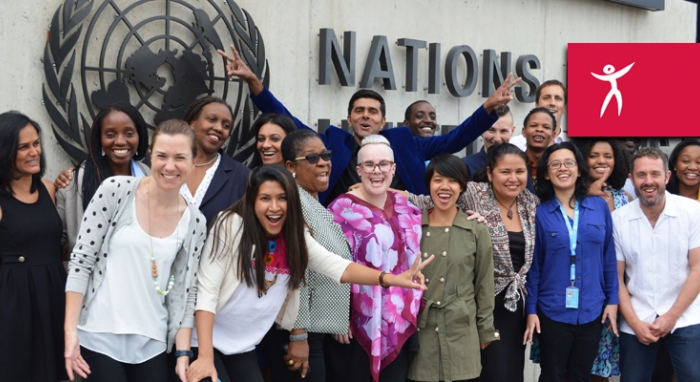
The International Service for Human Rights (ISHR) is calling for applications for its flagship Human Rights Defenders Advocacy Program in 2017 – the extensive training programme for human rights defenders. The training will take place in Geneva between 29 May and 9 June 2017 and provides defenders with opportunities to put their advocacy skills directly into action at the 35th session of the UN Human Rights Council.
ISHR’s Human Rights Defender Advocacy Programme (HRDAP) equips defenders with the knowledge and skills to make strategic use of the international human rights system. It also provides an opportunity for participants to directly engage in lobbying and advocacy activities at the UN level to effect change on the ground back home. As well as receiving training modules on all the UN human rights mechanisms from a range of experts, participants will also have the opportunity to build networks in Geneva and around the world, carry out lobbying of UN member States and UN staff, and learn from peers from a range of regions working on a range of human rights issues.
Participants will take part in:
A short online learning component, prior to face-to-face training, to enable you to consolidate your existing knowledge and develop your advocacy objectives;
Intensive training in Geneva during June, to coincide with the 35th session of the Human Rights Council. The training will focus on ways to effectively use international human rights mechanisms and to influence outcomes;
Specific advocacy at Human Rights Council sessions and other relevant meetings, with regular feedback and peer education to learn from the experiences, including expert input from leading human rights advocates.
This programme is directed at experienced human rights defenders in non governmental organisations and national human rights institutions, with existing advocacy experience at the national level and some prior knowledge of the international human rights system. If you are interested in applying for ISHR’s training programme, please read the call for applications to check that you comply with the requirements. The link to the online application form can be found under point 5 of the call for applications.
The call for applicants can be found here. For more information, write to hrdap2017@ishr.ch.
Travel bans on human rights defenders are popular with all kind of autocratic regimes but seem to enjoy special status in the Middle East. The video clip above (part of a joint campaign by AI and HRW) focuses on Egypt and so does the statement by 6 other NGOs issued on 9 November. They strongly condemn the travel ban against Malek Adly, prominent Egyptian human rights lawyer and director of the Lawyers Network of the Egyptian Center for Economic and Social Rights (ECESR). But there is more: Read the rest of this entry »
As the Geneva-based International Service for Human Rights (ISHR) is one of the most important sources of information on HRDs and the UN, I hope that many of you will be able to give them feedback on their various communications and digital publications by filling our the on-line survey in the link below. It indeed takes not more than 5 minutes to complete.
The Permanent Missions of Costa Rica, Finland, and Switzerland to the United Nations, together with Amnesty International and the International Service for Human Rights (ISHR), are organizing a side event in the margins of the General Assembly’s 71st session in New York on 24 October 2016 on the topic of: Implementation of United Nations human rights treaty body recommendations.
The event will take place at 3pm in Conference Room 6 of United Nations HQ in New York.
Some of the question to be discussed are: How can implementation of human rights treaty bodies’ recommendations be strengthened? What progress has there been in the area of follow-up and implementation since the High Commissioner’s 2012 report on strengthening the United Nations human rights treaty body system and Resolution 68/268? What are the national mechanisms for reporting and follow-up (NMRF) and which models have been the most effective in different States?
The discussion will focus on tools to encourage engagement and compliance with human rights treaty body recommendations in order to improve the promotion and protection human rights for all, including the treaty body follow-up procedures, national mechanisms for reporting and follow-up, and the role of civil society. Speakers will include representatives of treaty bodies, OHCHR, civil society, and government.
The Permanent Mission of Norway to the UN, Amnesty International, the Center for Justice and International Law (CEJIL), the International Federation for Human Rights (FIDH), Global Witness, the International Platform against Impunity, and the International Service for Human Rights (ISHR) cordially invite you to a panel discussion. “Empower environmental defenders, safeguard our future”
Monday 24 October 2016 1:00-2:30 in Conference Room 7 at the United Nations HQ in New York
In his latest report to the General Assembly, the Special Rapporteur on Human Rights Defenders warns of “a truly global crisis” of killings of environmental human rights defenders and that the vision espoused in the 2030 Agenda for Sustainable Development is “doomed to fail” if more is not done to protect those on the frontlines. The Special Rapporteur calls for urgent action and outlines a range of recommendations to empower and protect environmental defenders.
This side event will foster a discussion of these recommendations: why they are important, what is required to implement them effectively, and what the main challenges are to their effective implementation.
Speakers will include the Special Rapporteur on human rights defenders, Michel Forst, as well as State, NGO, and business representatives.
The problem of reprisals against human rights defenders has been the subject of quite a few posts in this blog [see my earlier posts: https://thoolen.wordpress.com/tag/reprisals/]. On 3 October 2016 the SG of the United Nations, Ban Ki-moon, finally unveiled details about the long-awaited focal point against reprisals. This is a much-needed element to help combat the growing problem of governments preventing human rights defenders from engaging with the UN or punishing and even imprisoning them when they do so.
Assistant Secretary General, Andrew Gilmour, will be given a special mandate to receive, consider and respond to allegations of intimidation and reprisals against human rights defenders and other civil society actors engaging with the UN. In announcing the appointment Mr Ban said ‘These courageous individuals are often our only eyes and ears in extremely tough environments – and we owe them our best possible support’. ‘I have decided, in consultation with the High Commissioner for Human Rights, to designate my new Assistant Secretary-General for Human Rights, Mr. Andrew Gilmour, to lead our efforts within the UN system to put a stop to all intimidation and reprisals against those cooperating with the United Nations on human rights,’.
A recent report by the SG shows that reprisals take many forms, including travel bans, the issuance of arrest warrants on terrorism charges, detention and torture, surveillance, death threats, attempts to frame activists for criminal acts, defamation, and intimidation. In several cases defenders are tarnished as ‘terrorists’ or ‘traitors’, contributing to perceptions that engagement with the UN is an act of betrayal. In some cases reprisals have led to individuals fleeing their country, in others, to death.
This is an extremely welcome development. The ability of people or organisations to provide evidence or submit information or complaints to the UN is not a privilege – it is a fundamental right enshrined in the UN Declaration on Human Rights Defenders and it must be protected,’ said Ms Sinclair, ISHR’s legal counsel.
Human right defender, Iftikhar Mubarik, discusses his work addressing child exploitation in Pakistan and how he seeks to utilise the UN Human Rights system.
Ghana, Hungary, Ireland and Uruguay – in cooperation with ISHR – are organizing a panel discussion about current situations, existing practices and new ideas for better implementation of Human Rights Council resolutions on preventing and responding to reprisals.
Monday 26 September 2016, 1.00 – 3.00 pm – Room XXIII, Palais des Nations
Panelists
• Ms Peggy Hicks, Office of the High Commissioner for Human Rights
• Mr Alessio Bruni, Rapporteur on reprisals of the Committee Against Torture
• H.E. Ms Yvette Stevens, Permanent Representative of Sierra Leone to the UN
• Ms Maryam Al-Khawaja, Co-director of Gulf Center for Human Rights
• Mr Philip Lynch, Director of International Service for Human Rights
Moderator
• H.E. Ms Zsuzsanna Horváth, Permanent Representative of Hungary to the UN
The ISHR has now published ‘scorecards’ for each of the States seeking election to the UN Human Rights Council for 2017-2019. Read the rest of this entry »
As usual, the Geneva-based International Service for Human Rights(ISHR) has published a preview of the main items coming up in the next (33rd) session of the Human Rights Council‘s starting on Tuesday 13 September 2016. It will finish on 30 September. For human rights defenders the focus on the question of reprisals is of great importance.
Other thematic issues are: enforced disappearances, arbitrary detention and National Human Rights Institutions.
Reprisals
A highlight this session will be the opportunity for States to respond to the Secretary-General’s latest report documenting serious cases of intimidation and reprisals against human rights defenders, and contribute to finding concrete solutions at panel discussion to be hosted by the core group of States on this topic (Hungary, Uruguay, Ghana, Ireland and Fiji). The Secretary General’s annual report on cooperation with the UN, its mechanisms and representatives in the field of human rights – more frequently referred to as the “reprisals report” – will be presented at this session of the Council. The report covers the period from 1 June 2015 onwards.
Particular attention during HRC33 will be paid to Bahrain. According to allegations of travel bans against human rights defenders documented by the President of the Human Rights Council, and communicated via the minutes of a recent meeting of the HRC Bureau [LINK], in which the President expressed concern about “the lack of appropriate action or adequate explanatory information from the concerned State” to the allegations.
The Secretary-General’s report consists of a compilation of cases of intimidation and reprisals due to cooperation with the UN organisations and its specialised agencies in the field of human rights, including cases in relation to the Council, its UPR and Special Procedures; Human Rights Treaty Bodies; the OHCHR, its field presences and Human Rights Advisers; United Nations Country Teams; human rights components of peacekeeping missions and other parts of the Secretariat or specialized agencies working in the field of human rights.
The Secretary General’s last report documented a significant number of cases in which people have been threatened, stigmatised, censored, restricted from travelling, detained, beaten, held in solitary confinement, disappeared, and tortured for their work to expose and pursue accountability for human rights violations at the UN. In many of the cases the threats and attacks have not been properly investigated nor have perpetrators been held to account. However, the report did note a range of positive developments aimed at preventing and promoting accountability for reprisals highlighting that:
a number of treaty bodies have appointed reprisals rapporteurs or focal points,
In line with previous recommendations of the Secretary-General, States are encouraged to use the General Debate under Item 5 to address the cases documented. This should include in particular the States concerned, i.e. those mentioned in the report, who are expected by civil society to respond to the allegations and set out the steps taken to investigate them, hold the perpetrators to account and provide remedies to the victims.
The Working Group on Enforced Disappearances will present its report, summarising its activities over the last year and previewing its thematic study on enforced disappearances in the context of migration. Included in this is a short discussion of ‘individuals [who] migrate due to the disappearances of their relatives or loved ones or to avoid reprisals due to their work in searching and pursuing justice… and human rights defenders who are forced to migrate due to their work fighting enforced disappearances.’ The Working Group’s report also expresses serious concern as to ‘a pattern of threats, intimidation and reprisals against victims of enforced disappearance, including family members, witnesses and human rights defenders working on such cases. It calls upon States to take specific measures to prevent such acts and re-iterates the call for the UN to appoint a high-level official to combat reprisals as a matter of urgency and priority.
Working Group on Arbitrary Detention
The mandate of the Working Group on Arbitrary Detention will be renewed at this session. Among the likely ‘asks’ of the resolution are more resources to support their ability to respond to victims of arbitrary detention, the ability to raise awareness through reporting to the UN General Assembly and the mandate from the Council to embark on a thematic study.
National human rights institutions
National human rights institutions have a vital role to play in contributing to the national implementation of international human rights obligations. The annual report of the Secretary-General and High Commissioner sets out a range of steps and measures that both States and NHRIs should take in this regard. For States, such steps should include ensuring that the NHRI is broadly mandated (including in respect of economic, social and cultural rights), that it is adequately resourced, authorised to inspect places of detention, and protected from interference, intimidation and reprisals. For NHRIs, the report emphasises the importance of engaging and consulting closely with civil society, contributing to the protection of human rights defenders, and enhancing cooperation with international human rights mechanisms as a means of bridging the ‘implementation gap’.
Of special relevance for human rights defenders are also the country situations on the agenda of the 33rd Session:
Following the special session of the Human Rights Council on Burundi in December 2015, an interactive dialogue on the situation in Burundi is scheduled to take place on 27 September. From 13 to 17 June three human rights experts of the United Nations Independent Investigation on Burundi conducted their second visit to Burundi to address the human rights concerns raised in the special session Human Rights Council resolution. The experts will present their final report to the Human Rights Council this session. The gravity of human rights violations and the level of State responsibility in Burundi is unacceptable. [https://thoolen.wordpress.com/2016/02/08/what-is-burundi-doing-in-the-un-human-rights-council/]
Given the deteriorating situation of human rights in Cambodia, and the impunity with which intimidation and violence against human rights defenders occur, a range of national and international organisations calls on the Council to adopt a resolution on the country. This step would acknowledge the backsliding over the last year; reiterate the Council’s expectations for meaningful cooperation, with the Special Rapporteur and the OHCHR; and lay out benchmarks for the coming year, in light of the 2017 elections and the anniversary of the Paris Peace agreement, that would indicate clear progress achieved through the technical assistance and capacity-building mandate The interactive dialogue with the Special Rapporteur on Cambodia, scheduled for 28 September, is a chance for the international community to hear from, and respond to, Special Rapporteur Rhona Smith following her visits to the country and the communications she and other UN experts sent related to harassment and detention of NGO workers and the killing of well-known public figure Kem Ley. [https://thoolen.wordpress.com/2016/05/04/civil-society-condemns-charges-human-rights-defenders-cambodia/]
Individual interactive dialogues with mandate holders will be held in relation to Sudan, Central African Republic and Somalia. Interactive dialogues on the High Commissioner’s reports and oral updates will be held on the Democratic Republic of the Congo, Libya, and Ukraine. The High Commissioner will present his reports on Cambodia and Yemen in a General Debate under Item 10. There will also be an interactive dialogue with the Commission of Inquiry on Syria.
The Council will adopt the UPR reports of 14 countries.


 Hans Thoolen on Human Rights Defenders and their awards