Archive for the 'ISHR' Category

China’s freedom of expression subject of side event on 13 March

March 4, 2019


In November 2018, China underwent its Universal Periodic Review and received many recommendations on freedom of expression, both online and off. This side event will elevate the views of civil society actors who are committed to seeing improvements in the protection of freedom of expression in China.

13 March 2019 , 13h30-14h30, in Room XXIII, Palais des Nations, Geneva

Panelists:

  • Judith Lichtenberg, Director of Lawyers for Lawyers
  • A 1989 democracy activist
  • Uyghur PEN representative
  • Steven Butler, Asia Program Coordinator, Committee to Protect Journalists
  • Sarah M Brooks, Asia Advocate, International Service for Human Rights.

Event co-organised by:

Download the event flyer

For some of my earlier posts re China: https://humanrightsdefenders.blog/tag/china/

Join the conversation on Twitter: #ChinaUPR

https://mailchi.mp/ishr/749qlxejj6-32025?e=d1945ebb90

International Women’s Human Rights Week: two events in Geneva along UN Human Rights Council

February 28, 2019

During International Women’s Week there are two events focusing on Women Human Rights Defenders:


March 1, 2019
 11:30-13:00 Room XXV Palais des Nations, Geneva

Women human rights defenders are on the front lines of struggles to attain peace, security, dignity and sustainable development for all. They work diligently to advance justice, freedom and equality to meet the ultimate goals of the Universal Declaration of Human Rights. Yet, State and non-State actors, in the majority of cases involving violations against these defenders, have experienced widespread impunity including at the international level. Women human rights defenders met in New York at a high-level event at the UN Headquarters in July 2018 to send a strong message: “we’ve had enough!”

Join us in Geneva parallel to the 40th session of the UN Human Rights Council where women human rights defenders will present how the shortcomings and gaps of the UN system with regards to women human rights defenders protection can be filled.

Panellists: 

  • Michel Forst, UN Special Rapporteur on the situation of human rights defenders
  • Rogeria Ferreira Peixinho, WHRD from Brazil
  • Brenda Valladares, WHRD from USA
  • Lucy Mazingi, WHRD from Zimbabwe
  • Cindy Aung, WHRD from Myanmar
  • Alda Facio, member of the UN Working Group on discrimination against women in law and practice

Moderator :

Veronica Vidal, Association for Women’s Rights in Development (AWID)

Cosponsors: ISHR, Amnesty International, Asian Forum for Human Rights and Development (FORUM-ASIA) Association for Women’s Rights in Development (AWID), Gulf Centre for Human Rights, Mesoamerican Initiative for Women Human Rights Defenders (IM-Defensoras), Urgent Action Fund for Women’s Human Rights and Just Associates (JASS). All are members of the Women Human Rights Defenders International Coalition. (https://mailchi.mp/ishr/749qlxejj6-32017?e=d1945ebb90)

For some of my older posts on WHRDs: https://humanrightsdefenders.blog/tag/women-human-rights-defenders/page/5/


The Geneva Gender Debate: 6 March 18h30 – 20h00 Auditorium Ivan Pictet, Maison de la Paix, Geneva

In the tradition of the Oxford Union debates, the Graduate Institute and the International Gender Champions are hosting their 3rd Annual Geneva Gender Debate during International Women’s Week.

This year’s topic: Gender & Language

The motion: This house believes gender neutral language is not a necessity for gender equality.

Introductory remarks: Philippe Burrin, Director, the Graduate Institute, Geneva

The debaters for the House:

  • Arancha Gonzalez, Executive Director, International Trade Centre
  • Michael Gaffey, Ambassador, Permanent Mission of Ireland to the UN and other International Organizations in Geneva

The debaters against the House Motion:

  • Inger Andersen, Director General, International Union for Conservation of Nature
  • Elhadj As Sy, Secretary-General, International Federation of Red Cross and Red Crescent Societies

Moderator: Caitlin Kraft-Buchman, Executive Director and Founder, Women@theTable

This debate is organised in partnership with the International Gender Champions and the Gender Centre of the Graduate Institute. To register: http://graduateinstitute.ch/events/_/events/corporate/2019/the-geneva-gender-debate-2019


Human Rights Defenders’ issues in the 40th session of the UN Human Rights Council

February 20, 2019

Based on the – as usual – excellent briefing by the International Service for human Rights on the key issues on the agenda of the 40th session of the UN Human Rights Council (starting on 25 February 2019), I am focusing on the items that concern human rights defenders most.

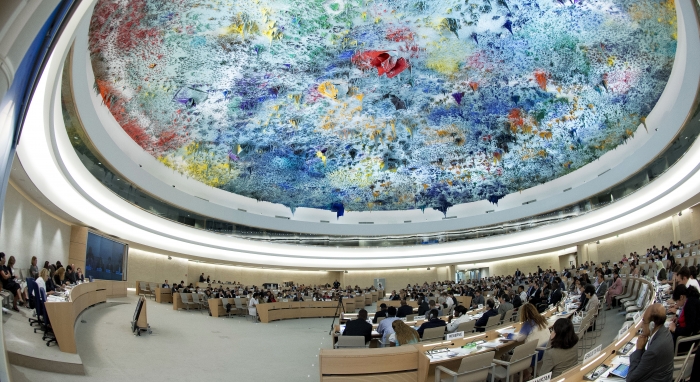
The UN Human Rights Council (the Council) will hold its 40th regular session at Palais des Nations in Geneva from 25 February 2019 to 22 March 2019.

Here are some highlights of the session’s thematic discussions.

Protection of human rights defenders including women human rights defenders

The Council will consider a resolution, presented by Norway, on the situation of human rights defenders working on rights related to land and environment, in particular the specific risks faced by women human rights defenders, to combat impunity for attacks against them, and ensure full civil society participation in development and the management of natural resources. The resolution should call on States to commit to conditioning the provision of diplomatic support to business – such as export credit guarantees and trade support – on companies’ commitment to respect, consult and protect defenders. It should also acknowledge the increasing willingness of some companies to speak out against threats and attacks on human rights defenders, and to raise the bar on accountability for companies who don’t.

The Special Rapporteur on the situation of human rights defenders will present his report on women human rights defenders on 28 February. [see: https://humanrightsdefenders.blog/2019/02/17/latest-report-by-special-rapporteur-on-women-human-rights-defenders-is-now-available/]

Reprisals

Reports of cases of intimidation and reprisal against those cooperating or seeking to cooperate with the UN not only continue, but grow. [I did almost too many posts on this, see recent ones: https://humanrightsdefenders.blog/tag/reprisals/]

The UN has taken action towards addressing this critical issue including:

  • Establishing a dedicated dialogue under item 5 to take place every September;
  • Affirmation by the Council of the particular responsibilities of its Members, President and Vice-Presidents to investigate and promote accountability for reprisals and intimidation; and
  • The appointment of UN Assistant Secretary General on Human Rights, Andrew Gilmour, as the Senior Official on addressing reprisals.

However, ISHR and most NGOs remains deeply concerned about reprisals against defenders who try to engage with UN mechanisms, and consistently with previous calls, urges all States and the Council to do more to address the situation. Item 5 of the Human Rights Council’s agenda provides a key opportunity for States to raise concerns about reprisals, and for governments involved in existing cases to provide an update to the Council on any investigation or action taken toward accountability to be carried out. (In line with previous calls, ISHR expects the President of the Human Rights Council to publicly identify and denounce specific instances of reprisals)

Country-specific:

China

The past year was marked by vitally important monitoring and review of China’s human rights situation by the United Nations human rights system. The upcoming session of the UN Human Rights Council provides a key opportunity for States to reinforce the issues raised over the last year, and express collective concern about worsening rights abuse in China and the government’s failure to follow through on its obligations and commitments.

ISHR and almost 40 other organisations are calling on the Council to adopt a resolution addressing human rights in China, with particular focus on Uyghur Muslims and other ethnic and religious minority groups, over a million of whom are being interned and detained in Xianjiang region alone. [see: https://www.ifex.org/china/2019/02/19/xinjiang-resolution/]

Saudi Arabia

If the international community is serious about contributing to advancing women’s rights in Saudi Arabia, it should recognise Saudi women human rights defenders as agents of change and urge the Saudi authorities to take all necessary measures to guarantee a safe and enabling environment for them to continue their vital work. ISHR recalls that in November 2018, Saudi Arabia underwent its Universal Periodic Review where at least 23 States called for the protection of human rights defenders and journalists in the kingdom. Over 170 organisations from across the globe have previously called for the Council to hold an inquiry into human rights abuses in the country. [see also how Saudi Arabia is trying to cover up its violations: https://humanrightsdefenders.blog/2019/02/01/sports-and-human-rights-focus-on-sports-washing-big-names-play-for-big-money/%5D

Burundi

At last Council session, the Council renewed the mandate of the Commission of Inquiry on Burundi, who will present its oral briefing on 12 March at 12:00. ISHR continues to remain highly concerned about the human rights situation in Burundi and its refusal to cooperate with the Council’s mechanisms. For more information on the situation of human rights defenders in Burundi, check ISHR Briefing Paper for the UPR here. [see also: https://humanrightsdefenders.blog/2018/12/07/final-step-burundi-closes-down-un-office/]

Other thematic reports and country situations

The Council will also consider the promotion and protection of human rights while countering terrorism on several occasions. The High Commissioner will present a report on the issue and the Special Rapporteur will present her annual report focused on national security restrictions on civic space, as well as reports of the visits to TunisiaSaudi Arabia, Sri Lanka,  France and Belgium. [see inter alia: https://humanrightsdefenders.blog/tag/anti-terrorism-legislation/]

The Council will consider several reports on torture, including the annual report of the Special Rapporteur, the reports from his visits to Serbia and Kosovo, Ukraine, and Argentina, and two reports by the Secretary General on the United Nations Voluntary Fund for Victims of Torture and the Special Fund established by the Optional Protocol to the Convention against Torture and Other Cruel, Inhuman or Degrading Treatment or Punishment.

At this 40th session, the Council will discuss a range of economic, social and cultural rights in depth through dedicated debates with mandate holders alongside the annual report of the Secretary-General on the realisation of economic, social and cultural rights globally.

Country situations

The High Commissioner will present her first annual report to the Council on 6 March at 10:00. In addition, the Council will consider reports by the High Commissioner and mandate holders on several country situations. The Council is also expected to consider resolutions addressing a range of country situations, in some instances involving the renewal of the relevant expert mandates. The country-specific debates include:

  • Interactive dialogue with the Commission of Inquiry on Syria
  • Interactive dialogue with the Commission on human rights on South Sudan 
  • Interactive dialogue with the Special Rapporteur on Iran
  • Interactive dialogue with the Special Rapporteur on the Democratic People’s Republic of Korea
  • Interactive dialogue with the Special Rapporteur on Myanmar
  • Enhanced interactive dialogue with the Special Rapporteur on Eritrea
  • Interactive dialogues with the Special Rapporteur and the Commission of Inquiry on the Occupied Palestinian Territories
  • Enhanced interactive dialogue on the High Commissioner’s report on the Democratic Republic of Congo
  • Interactive dialogue with the Independent Expert on Mali 
  • High-level interactive dialogue on the Central African Republic
  • Interactive dialogue on the OHCHR report on Sri Lanka
  • Interactive dialogue on the High Commissioner’s oral report on Ukraine 
  • High Commissioner oral briefings and Secretary General reports on the following countries: Colombia, Cyprus, Guatemala, Honduras, Venezuela, Yemen and Afghanistan

Adoption of Universal Periodic Review (UPR) reports

During this session, the Council will adopt the UPR working group reports on several countries and provides an opportunity for Saudi Arabia, China, Nigeria and Chad to accept recommendations made in relation to human rights defenders, as proposed in ISHR’s briefing papers.

Resolutions

During the organisational meeting for the 40th session held on 11 February 2019, the President of the Human Rights Council presented the programme of work. It includes four panels of discussion and 108 reports. States also announced at least 15 resolutions but more can resolutions can be expected. These include:

  • Rights of Child (GRULAC and the EU)
  • Human rights situation in the Democratic People’s Republic of Korea (EU, Japan)
  • Human rights situation in Myanmar (EU)
  • Human rights, democracy and the rule of law (Morocco, Norway, Peru, Romania, Republic of Korea, Tunisia)
  • Promoting reconciliation, accountability and human rights in Sri Lanka (UK, Germany, Macedonia)
  • Human rights situation in South Sudan (UK)
  • Human rights situation in Syria (France, Germany, Italy, Jordan, Kuwait, Morocco, Qatar, Saudi Arabia, Turkey, United Kingdom)
  • Human rights defenders (Norway)
  • Human rights situation in Iran (Macedonia, Moldova, UK, Sweden)

Panel discussions

During each Council session, panel discussions are held to provide member States and NGOs with opportunities to hear from subject-matter experts and raise questions. All panel discussions will be broadcast live and archived onhttp://webtv.un.org. These panel discussions include:

  • Annual high-level panel discussion on human rights mainstreaming titled “Human rights in the light of multilateralism: opportunities, challenges and the way forward” which will take place on 25 February at 16:00.
  • Biennial high-level panel discussion on the question of the death penalty, titled “Human rights violations related to the use of the death penalty, in particular with respect to the rights to non-discrimination and equality” which will take place on 26 February at 09:00.
  • Debate on the mitigation and countering of rising nationalist populism and extreme supremacist ideologies (for the Commemoration of the International Day for the Elimination of Racial Discrimination), which will take place on 15 March at 16:00. [see also: https://humanrightsdefenders.blog/2018/05/24/mea-at-25-high-level-anniversary-panel-looks-at-human-rights-in-crisis/]

Side events

Many side event will be organized by NGOs (you can download the draft list of NGO events here). the ISHR is organizing at least 3 that are of particular interest to human rights defenders:

  • Protection of women human rights defenders, 1 March from 11:30 to 13:00 in Room XXV
  • Can the UPR advance Freedom of Expression in China?, 13 March from 13:30 to 14:30 in Room XXIII
  • 20 years after the adoption of the HRD Declaration: The positive experience of West Africa on the development of national laws protecting defenders, 20 March 15:00 to 16:00 in Room XXIII

Also relevant are:

  • Reconciliation, accountability and human rights in Sri Lanka, organised by Forum-Asia, will take place on 28 February, at 14:00 (time and location TBC). This side event aims to provide the international community with information on the Government’s implementation of the resolution 30/1 from the perspectives of civil society, and share proposals for further action by the Human Rights Council.
  • Counter terrorism laws and civic space, organised by the Civic Space Initiative (A19, CIVICUS, ICNL and WMD) and will take place on 1 March at 10:30 (time and location TBC).
  • Escazu and Beyond: Strengthening the global normative framework on protecting environmental defenders, organised by CIVICUS and will take place on 5 March at 11:00 (time and location TBC). The side event aims to bring together civil society representatives, UN bodies and State representatives to discuss their intersecting role in promoting and protecting civic space for environmental defenders.
  • Saudi Arabia : Time for accountability, organised by the Right Livelihood Award Foundation, to take place on 4 March.
  • Film screening of the Long Haul: a documentary tribute to human rights activist and professor Sir Nigel Rodley, organised by the International Commission of Jurists and the Permanent Mission of the UK. It will take place on 7 March from 13:00 to 15:00.
  • South Sudan: No sustainable peace without justice, organised by DefendDefenders. It will highlight ongoing grave violations in South Sudan despite the signing of the Revitalised Peace Agreement, lack of domestic accountability, and the need to renew the mandate of the UN Commission on Human Rights (CoHR) in South Sudan. It will take place on 8 March from 13:00-14:00 in Room XXIV (time and location TBC).
  • Human rights in Myanmar, organised by Forum Asia, will take place on 11 March at 16:00 (time and location TBC). Defenders from Myanmar will present their perspectives on the next steps the Human Rights Council should take to ensure justice and accountability for mass atrocity crimes, to address root causes, and provide support for victims.
  • Human rights in Malaysia, organised by Forum Asia, will take place on 13 March at 13:00 (time and location TBC). Following Malaysia’s UPR in November 2018, civil society from the country will suggest steps for the government to implement its UPR recommendations, while engaging with civil society and the national human rights institution in the process.

Read here ISHR’s recommendations on the key issues that are or should be on the agenda of the UN Human Rights Council in 2019. [see https://humanrightsdefenders.blog/2019/02/09/ishr-sets-out-the-priorities-for-the-human-rights-council-in-2019/]

If you want to stay up-to-date: Follow @ISHRglobal and #HRC40 on Twitter, and look out for our Human Rights Council Monitor.

https://www.ishr.ch/news/hrc40-key-issues-agenda-march-2019-session-0

ISHR sets out the priorities for the Human Rights Council in 2019

February 9, 2019
On 28 January 2019 ISHR presented a blueprint for States with recommendations to some of the key issues the Human Rights Council should address in 2019. 

In 2018, the Council adopted some landmark decisions

  • an independent investigative mechanism on Myanmar
  • Yemen, renewing the mandate of the Group of Eminent Experts
  • Burundi, extending the mandate of the Commission of Inquiry.

At the same time, several situations of gross rights violations escaped Council scrutiny for political reasons.[see also: https://humanrightsdefenders.blog/2018/12/04/general-assemblys-3rd-committee-concludes-2018-session/]

The annual “High Level Segment” in March 2019 is a critical opportunity to set the agenda for the year. The Human Rights Council’s three regular sessions in March, June/July and September are further opportunities to advance priorities.

Here is ISHR’s checklist on the human rights situations and issues which should be advanced in 2019.

States should commit to strengthening the Council by demonstrating leadership, principled action and sustained follow through.

All regional groups presented the same number of candidates as seats for the 2018 Council elections and several States with terrible human rights records and with poor records of cooperation with UN mechanisms were elected, turning the elections into more of an appointment process, and going against the vision of the Council’s founding document.

States should collectively express concern about China’s failure to uphold human rights principles and protect the rights of its citizens, especially ethnic Uyghurs and Tibetans and those involved in the defence of human rights. China’s rejection of critical dialogue and universal principles is especially worrying as the Chinese government becomes increasingly active in the Council – a space dedicated to those same values.

States should also collectively press for the immediate and unconditional release of detained women human rights defenders in Saudi Arabia. If the international community is serious about contributing to advancing women’s rights in Saudi Arabia, it should recognise Saudi women human rights defenders as agents of change and urge the Saudi authorities to take all necessary measures to guarantee a safe and enabling environment for them to continue their vital work.

States should also initiate Council action to address recent cases of reprisals in Egypt as reported by the Special Rapporteur on the right to adequate housing after her visit in September 2018. These attacks come amidst a context of wide-scale repression against civil society through intimidation, arbitrary arrests, unfair prosecutions and travel bans.

States should collectively denounce the ongoing judicial harassment and arbitrary detention of human rights defenders in Bahrain, including reprisals for engaging or attempting to engage with UN mechanisms. As a minimum, States should call on the Bahraini authorities to immediately release all those detained for exercising their rights to freedom of expression, assembly and association, such as Nabeel Rajab and Abdulhadi Al Khawaja.

At the 40th session:

The Council will consider a resolution on the situation of human rights defenders working on rights related to land and environment. ISHR calls on States to address the particular threats and attacks against this group of defenders, in particular the specific risks faced by women human rights defenders, to combat impunity for attacks against them, and ensure full civil society participation in development and the management of natural resources. The draft resolution should call on States who prioritise the protection of human rights defenders to condition their provision of diplomatic support to business – such as export credit guarantees and trade support – on companies’ commitment to respect, consult and protect defenders. ..The Special Rapporteur on the situation of human rights defenders will present his report on the situation of women human rights defenders. States should publicly recognise the specific risks and threats women defenders face and commit to taking further measures to enhance their protection, underline the legitimacy of their work, their specific protection needs and adequate remedies to the specific violations they face.

At the 41st session:

Thanks to the sustained efforts by civil society and supportive UN Member States, the mandate of the Independent Expert on protection against violence and discrimination based on sexual orientation and gender identity (SOGI) was established in 2016. At the 41st session, ISHR urges States to renew the mandate and ensure that it is not weakened, so that it continues its vital work in capturing good practices and assisting States in ending discrimination and violence based on SOGI. The mandate continues to work with a diverse range of States from all geographical regions. Defenders from across the globe have affirmed that the mandate has contributed to their protection and recognition of their work. ..The Council will also consider a resolution on migrants and human rights. States should ensure that the text reiterates their obligations to support and not restrict defenders’ in their vital work and to protect migrant rights defenders in the face of rising intolerance, xenophobia and illiberalism. ISHR recalls Principle 18, from the OHCHR Principles and Guidelines on the human rights protection of migrants in vulnerable situations, which sets out measures States can take to respect and support the activities of migrant rights defenders.

At the 42nd session:

Human rights defenders must be able to access the UN freely and safely so that the UN can do its crucial work of monitoring countries’ compliance with human rights obligations and protecting victims from abuses. At the 42nd session in September 2019, States should not miss the opportunity to cite specific cases of reprisals at the second interactive dialogue on the Secretary-General’s annual report on reprisals….Finally, the accessibility of the Council to rights holders, victims and defenders is both a key contributor to, and indicator of, the Council’s relevance and success.  As discussions on enhancing the efficiency of the Council resume, States should continue to support and guarantee that any proposed measures do not restrict or limit civil society participation at the Council.

Profile of migrants rights defender Mariana Zaragoza from Mexico

December 18, 2018

On 13 December 2018 ISHRGlobal published this interview with Mariana Zaragoza. Our countries are restricting migrants’ rights, and there is always something we can do to demand full protection of people“, says Mariana Zaragoza in her interview. Mariana works in the immigration programme at the Ibero-American University of Mexico and she advocates for migrants and refugees’ rights.

Human Rights Day 2018: just an anthology

December 10, 2018

There is so much going on on this day – International Human Rights Day – that I can only give a cursory overview of some highlights in 2018 like I did in previous years [see e.g. https://humanrightsdefenders.blog/2016/12/09/sampling-international-human-rights-day-2016-be-a-human-rights-defender/, and https://humanrightsdefenders.blog/2017/12/11/human-rights-day-2017-in-asia-mind-the-gap/]. Here is my selection of 10: Read the rest of this entry »

General Assembly’s 3rd Committee concludes 2018 session

December 4, 2018
The General Assembly‘s human rights committee – the Third Committee – has concluded its seven week session by adopting 57 resolutions, several of which focus on critical human rights challenges and reassert the importance of fundamental freedoms.  The ISHR – as usual – provides an excellent account of key highlights and outlines how these texts will finally be signed off on by the General Assembly Plenary.

This has been an intense session, where sovereignty has been much cited in clashes between States; where divergences in traditional State groupings have been exposed, and important statements and resolutions have been passed reaffirming fundamental freedoms,‘ said ISHR’s Eleanor Openshaw. [ see also: https://humanrightsdefenders.blog/2018/10/05/third-committee-of-un-general-assembly-2018-will-consider-human-rights-issues/]

Several key resolution negotiations and outcomes are outlined below.  This is not the end of the road for these resolutions, however.  Costs of any activities and staffing included in these resolutions will now be considered by the General Assembly’s finance committee – the Fifth Committee –  before all resolutions are finally signed off by the General Assembly Plenary in the third week of December.  States have the opportunity to change their mind on resolutions ahead of final decision-making by the Plenary.  

Thematic Resolutions

Freedom of peaceful assembly and association –  Introduced by the US as a one off, this Third Committee resolution is essentially an ‘omnibus’ text, drawing on language agreed in relevant General Assembly and Human Rights resolutions – including those related to  human rights defenders and the safety of journalists.  The new resolution speaks of the need to protect journalists and media workers, including when covering demonstrations, both online and offline.  It condemns violations and abuses against peaceful protestors on the basis of their political opinion or affiliation.  The resolution does not specifically reference the work of the UN Special Rapporteur on Freedom of Peaceful Assembly and Association – a given in most such thematic resolutions. This, in the context of the US’ withdrawal from the Human Rights Council – the body that creates such rapporteurships.  

During negotiations, the US withstood pressure to include a greater number of references to sovereignty and the importance of national laws, amongst other suggestions.  A vote was called on the draft resolution by China, Russia, Bolivia, Venezuela, Iran, Belarus, Nicaragua and Syria.  The text received strong cross-regional support however, with a final tally of 140 in favour, 0 against and 38 abstentions.  ISHR calls on States that voted against the resolution on freedom of peaceful assembly and association or abstained, to give this key resolution its support at the GA Plenary stage.  Whilst the negotiation process during the Third Committee session could have allowed for greater input from interested parties, the final resolution is strong, and the thematic focus is an important one, in particular in an era of undue restrictions on the exercise and defence of the freedom of peaceful assembly and association.

Extrajudicial and arbitrary executions –  A listing of those most vulnerable to extrajudicial and arbitrary execution in this resolution, became the focus of heated exchanges between States.  This year, divisions between members of a State grouping resulted in a fracturing of the group position.  The Organisation of Islamic Cooperation (OIC) introduced an amendment to delete the listing. When Albania – an OIC member – made clear the amendment was not being presented in their name and, therefore, there was no group position, other States were able to break rank.  This included Tunisia, Lebanon and Turkey.  The amendment was defeated by a vote of 86 -50 with 25 abstentions.

ISHR’s Tess McEvoy welcomed the defence of the inclusion of the listing, which references people targeted because of their sexual orientation or gender identity, and human rights defenders.  ‘By listing those most targeted by extrajudicial executions, you increase attention on the need for their protection,’ said McEvoy. ‘You also hope that impunity – all too common in regard to attacks against particular groups – is effectively challenged.”  A vote was then called on the overall text, to the dismay of lead negotiator Finland.  ‘This resolution is about the right to life,’ said the Finnish Ambassador.  The resolution was adopted, with the listing of those most vulnerable to extrajudicial executions included, 111-0 with 66 abstentions…

..Protecting children from bullying –  Bullying ‘includes a gender dimension’ and is ‘associated with gender-based violence and stereotyping’,  concluded the Third Committee through this consensus text.  The resolution includes strong language on the need to protect all children from and includes agreed language of the most recent CSW on the family.

Violence against women and girls –  With a focus on the experience of women human rights defenders, States are called on to prevent violations and abuses against all women defenders with specific condemnation of gender-based violence, harassment and threats (both online and offline).  US amendments related to the references to sexual and reproductive health and sexual education were defeated on the basis that these would change agreed language. The US ultimately disassociated itself with those paragraphs.

Child, early and forced marriage – Last-minute amendments to include sovereignty language into a resolution focusing on sexual and reproductive health and rights, introduced by the US, were voted down.  

……

Country-specific resolutions

Myanmar –  Key decisions by the Human Rights Council are echoed by the Third Committee in their resolution, including in regard to the establishment of an investigative mechanism to facilitate criminal proceedings in regard to allegations of violations of international law. This said, several elements are missing in the Third Committee text, including references to the ICC and to journalists detained by the Myanmar government.  This year’s resolution gained 20 more votes than last year, passing 142 – 10 with 26 abstentions.   Critics included Russia, China and Laos, who spoke to what they considered the ‘illegitimacy’ or ‘irrelevance’ of country resolutions. Japan explained its abstention on the basis that Myanmar should carry out its own investigations (albeit with international community support).   Myanmar noted that it was the most scrutinised country-  citing ‘at least seven mechanisms’ with a monitoring role- at a cost of 28.6 million USD per year to the UN. Myanmar is a ‘struggling democracy facing many challenges’, noted the representative, comparing Myanmar’s treatment to that of Yemen which, it claimed, didn’t receive the attention it should.  

Iran –  In this resolution introduced by Canada, Iran is urged to end its harassment, intimidation and persecution of human rights defenders, including minority, students’ rights and environmental defenders as well as journalists, lawyers, bloggers, media workers and social media users, and to halt reprisals against them. ISHR, along with several national, regional and international NGOs called on States to vote for these (and other) calls.  

Autonomous Republic of Crimea and the city of Sevastopol, Ukraine –  Ensuring and maintaining a safe and enabling environment for journalists, media workers, human rights defenders and defence lawyers in Crimea, is a key call in this resolution which passed 67-26, with 82 abstentions.  

Syria –   Recalling resolutions adopted by key mechanisms and bodies across the UN system from 2011 onwards, this latest Third Committee resolutions references concern about a range of issues including chemical weapons attacks, rapes, enforced disappearances, the crackdown on journalists and media and other human rights violations. The resolution, introduced by Saudi Arabia, passed with much support with 106 votes in favour, 16 votes against and 58 abstentions. 

Report of the Human Rights Council

The Human  Rights Council in Geneva sends a report to the General Assembly outlining decisions taken in the previous twelve months.  Controversially, this report is considered first by the Third Committee and a resolution on the report drawn up by the African Group.  This year a vote was called on the resolution by Israel to signal their opposition to the standing item on the Council agenda on Israel.  Ultimately, the resolution passed by 111 – 3, with 65 abstentions.
Attacks against the Commission of Inquiry on Burundi

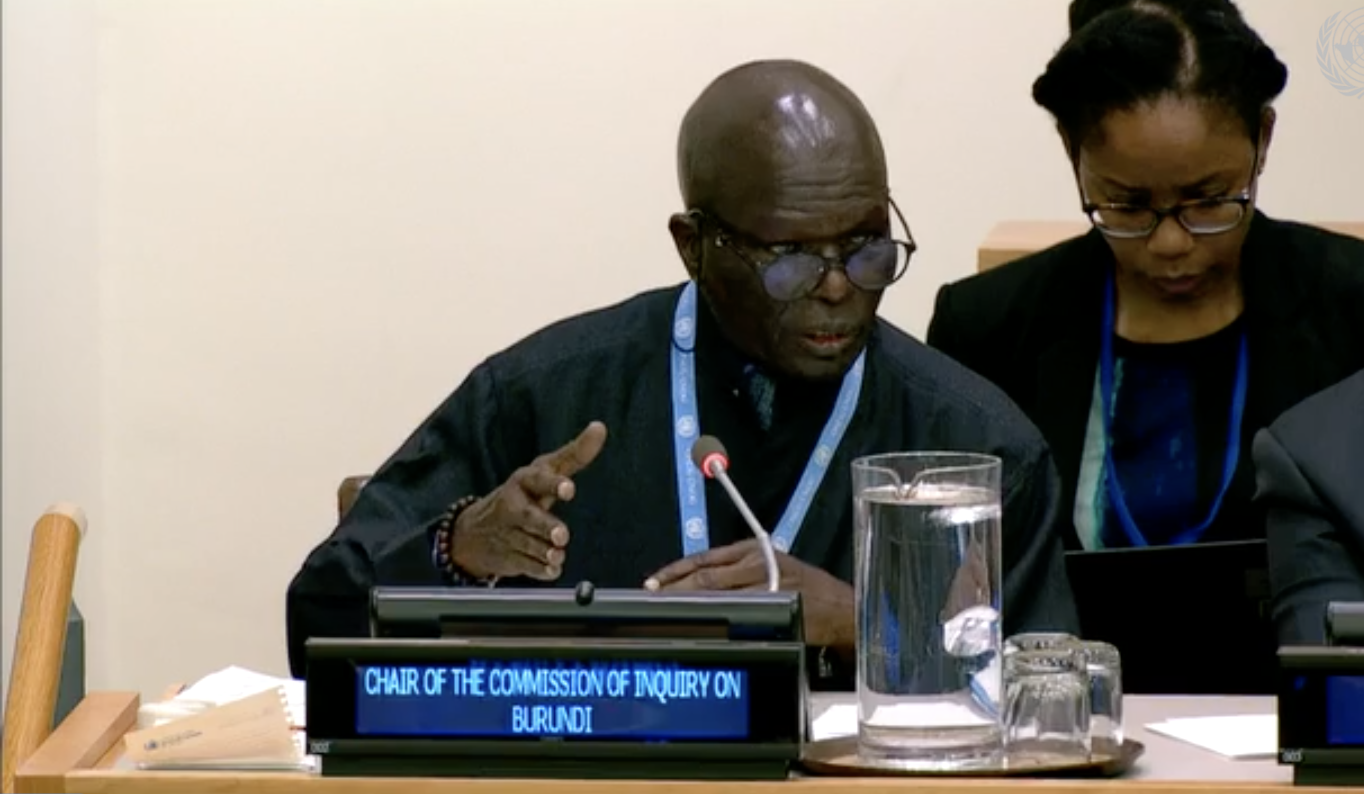
Burundi made several attempts to stop the Commission of Inquiry on Burundi from presenting its report to the Third Committee. When these were foiled, in a repeat of what happened last year, the Burundian Ambassador took the floor to abuse Commission members.  Too few States defended the Commission from these attacks, and the Chair of the Third Committee said nothing.  Swift in condemning the verbal attacks, however, was the High Commissioner for Human Rights, Michelle Bachelet, who called on Burundi ‘to issue an immediate retraction of this inflammatory statement’.  The President of the Human Rights Council also spoke up for UN independent experts and denounced the vilification.   ‘The defence of UN experts from any attack or intimidation must be swift and unambiguous,’ said Openshaw. ‘The lack of response from the heads of key UN bodies in NY – including the President of the General Assembly and Chair of the Third Committee – is really regretful.’  

ISHR Third Committee side event

ISHR hosted a Third Committee side event in coordination with Amnesty International on Tuesday, 23 October titled ‘Protecting human rights defenders: Reflections on the 20th Anniversary of the Declaration.’ Featured on the panel were Michel Forst, UN Special Rapporteur on Human Rights Defenders; Julia Cruz, a lawyer from the NGO Conectas Human Rights, Brazil and Eleanor Openshaw, New York Director at ISHR. Coming directly from presenting his annual report to the Third Committee, the Special Rapporteur and other panel members addressed contextual questions from electoral violence to good practices in protection policies and legislation as well as implementation of the UN Declaration more broadly. During the event, Forst spoke of the importance of the UN Declaration, which he calls ‘a manifesto for the human rights movement’.  It speaks of the ‘central role of everyone within society in the realisation of human rights for all,’ Forst noted.

ISHR’s Conclusion: dynamics at the Third Committee

1/  The tactic of disassociation from paragraphs of resolutions that a particular State dislikes, has continued this session.  The US called a vote on a paragraph in the draft resolution on violence against women and then – when the vote went against them – disassociated themselves from the paragraph anyway.  It could be argued that this approach avoids calls for votes on entire texts, instead isolating areas of contention from those around which consensus has been reached.  However, it does undermine the value of the text and overall efforts to move human rights consensus forward. It is highly dispiriting to see this tactic being increasingly employed.

2/  The confirmation that draft resolutions can only be introduced in the name of individual States rather than a grouping – as emerged during the back and forth on the text on extrajudicial executions – should provide dissenters within a State grouping with more leeway to resist pressure to conform with positions they disagree with.  

3/   Sovereignty arguments were presented by several States during the negotiations of a fair number of draft resolutions. These were successful in some negotiations, such as in regard to the death penalty, and were successfully rejected in others. The drive to foreground and repeatedly reference sovereignty in texts is likely to continue, and efforts to contest it need to be well-coordinated and arguments refined.  

https://www.ishr.ch/news/ga73-third-committee-human-rights-wrap

General Assembly 2018: Human Rights Defenders were a main dish on 23 October

November 7, 2018

On 26 October 2018, the ISHR reported on how the General Assembly addressed the 20th anniversary of the Declaration on Human Rights Defenders. Special Rapporteur Michel Forst delivered a detailed reflection and assessment of global protection efforts in his report to the General Assembly this week.

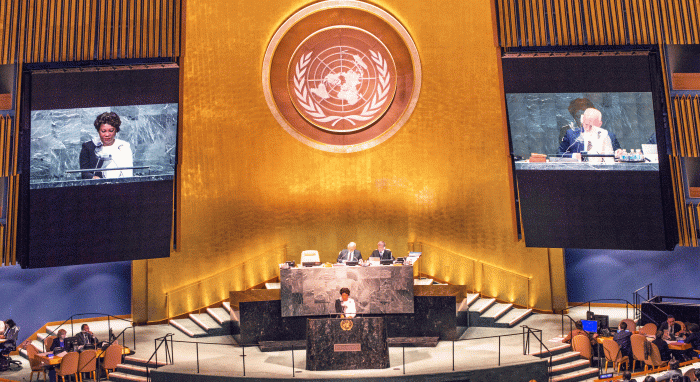
On 23/24 October, the Special Rapporteur on the situation of human rights defenders, Michel Forst, called the international community to action, urging open and frank dialogue and solidarity to address oppression. He addressed the UN General Assembly’s Third Committee and engaged in a dialogue on his report to the General Assembly.

In light of the 20th anniversary of the Declaration on Human Rights Defenders, his report focused on effective implementation strategies, incorporating both a reflection of progress made over the past two decades and an overview of recommendations on how to improve systems and mechanisms moving forward. ‘The past 20 years have been an era of struggle for human rights. Victories have been hard fought and challenges have proliferated,’ the Special Rapporteur said in his report. ‘The celebration of this milestone must be tempered by a recognition of the sacrifices of human rights defenders, their families and their communities.’

After surveying 140 States, the Special Rapporteur addressed the following key matters: the evolution of the use of the term ‘human rights defenders’, mechanisms and practices to support them and legal/ administrative frameworks to protect them. “20 years ago, the Declaration laid the groundwork for the protection of human rights defenders and amplified the importance of their inclusion as a stakeholder in human rights initiatives, but there is still work to be done,” said ISHR’s Legal Counsel Tess McEvoy.

Several States voiced their support for the report and the mandate, including Spain, Iceland, Canada, Australia, EU, Poland, Ireland, Switzerland, Mexico, Liechtenstein, Estonia, Czech Republic, Colombia, France, Slovenia, Norway, US, Belgium and the United Arab Emirates.

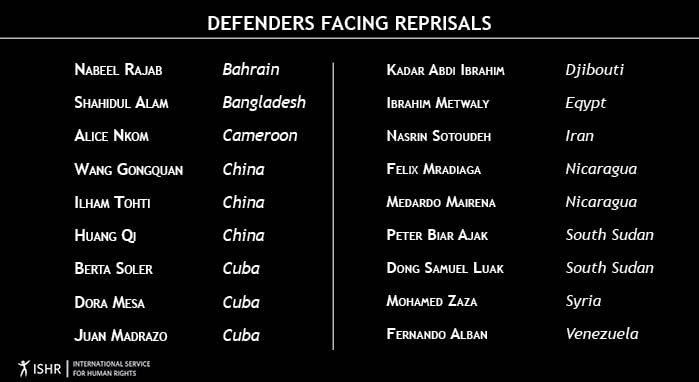
The United States referenced the Secretary General’s report on reprisals highlighting attacks and intimidation against defenders in more than 38 countries, saying they are ‘alarmed and monitoring all allegations.’ The US then proceeded to list over 20 specific names of individuals from 14 different countries who are victims of such reprisals. These include:

Both China and Iran criticised the report on the basis that defenders, activists and social leaders do not deserve ‘special treatment’ regardless of the risks these individuals face. Cuba rejected any attempts to paint political prisoners as human rights defenders. The Russian Federation challenged the notion of ‘State obligation’ on the basis that the Declaration of Human Rights Defenders is a non-binding document. In response to the Russian Federation’s point on the non-obligatory nature of the Declaration of Human Rights, the Special Rapporteur swiftly reminded States that while the Declaration is non-binding it reaffirms other legally binding human rights obligations.

The Special Rapporteur concluded with a call to action at the upcoming Human Rights Defenders World Summit in Paris, where a statement will be prepared, including for presentation at the upcoming high-level event on defenders at the General Assembly.

The Special Rapporteur also referenced a document—outlining the results of his global survey on defenders in 140 countries—which he hoped would be published on the OHCHR website without further delay. He invited supporters of the mandate to inform OHCHR of the need to disseminate the report via the OHCHR website.

The Special Rapporteur referenced the study being prepared by the UN Secretary-General in efforts to protect global defenders. The report of this study will be shared with States in the coming weeks. The Special Rapporteur also voiced concern about the lack of NGO access to the UN and asked members of the Committee on NGOs to invite him in to engage with the Committee.

The Special Rapporteur concluded by saying that his report to the Human Rights Council in March 2019 will focus on the situation of women defenders.

https://www.ishr.ch/news/ga73-un-expert-defenders-reflects-20-years-struggle-progress-and-remaining-challenges

For earlier posts on the anniversary: https://humanrightsdefenders.blog/tag/20th-anniversary-un-declaration-on-hrds/

Profile of Sor Rattanamanee Polkla from Thailand

October 6, 2018

Looking ahead to next month’s UN Forum on Business and Human Rights, ISHR featured this profile ISHR trainee and Thai lawyer Sor Rattanamanee Polkla. Sor describes her work improving access to justice for those affected by development projects in rural Thailand, and explains how she plans to use the connections she made with ISHR and others at the Forum to expand her network and support her community on the ground.

Third Committee of UN General Assembly 2018 will consider human rights issues

October 5, 2018
With the last session of the the Human Rights Council having been considered fruitful by civil society [https://humanrightsdefenders.blog/2018/09/29/in-spite-of-or-because-of-the-us-absence-the-39th-human-rights-council-considered-a-relative-success/], the focus is now on New York. This week, the UN General Assembly’s principal human rights committee – the Third Committee – kicked off its deliberations (Tuesday 2 October, running through to 21 November 2018).  This is a key moment in the year for UN member States to take action in support of the respect of human rights globally, through the negotiation and adoption of resolutions focused on thematic or country situations.   The ISHR provides the following insight:

Over 50 Special Rapporteurs, independent experts, chairs of working groups and treaty bodies will present findings and recommendations to the Committee, and engage in interactive dialogues with member States.  These reports and exchanges should inform the focus and shape of negotiated resolutions. 

The Committee will consider over 60 resolutions, this year focusing on a range of issues from extrajudicial, summary or arbitrary executions, to the rights of indigenous peoples, and the human rights situation in Syria.  Once adopted, resolutions will pass to the UN General Assembly plenary for confirmation in early December. 

While opportunities for civil society to interact with the Third Committee are more limited than those available at the Human Rights Council, NGOs can attend formal sessions, follow them on  UN Web TV and engage informally with individual member States.  For more on the Third Committee see here.  

ISHR will be working to see the inclusion of positive references to human rights defenders and civil society space, in Third Committee resolutions.  We will be monitoring the Third Committee closely, as well as the General Assembly plenary meetings, and reporting on key developments. Follow us on Facebook, Twitter and Instagram at @ISHRglobal and at #UNGA73for the latest updates.

Also, note that the ISHR will be hosting two side events during the Third Committee session. [see also: https://humanrightsdefenders.blog/2017/07/09/civil-society-participation-at-the-un-subject-of-ishr-event-on-17-july/]

The first event will be about implementing commitments on human rights defenders, and it will be held on Tuesday 23 October at 1:15 p.m-2.45pm. The location of the event is to be confirmed. See here for updates.

ISHR’s second event will focus on treaty bodies and the importance of ensuring transparent elections. ISHR aims to facilitate dialogue about ways to improve treaty bodies and election processes moving forward. Time and date for this event to be confirmed. See here for updates.

http://www.ishr.ch/news/alert-ga-73rd-session-agenda-third-committee