Maria Arena and Pier Antonio Panzeri – a MEP and former MEP – write in an opinion piece in the EU Observer of 13 April 2020 that “Covid-19 is a gift for authoritarians and dictators“.
…..However, even in this emergency, it is necessary to maintain a very high level of attention to what is happening to democracy in this historical phase. The fight against the pandemic cannot be used as a pretext for a global attack on human rights and democracy, as is unfortunately happening in several parts of the world. We are not ‘diverting attention’. Quite the opposite. While we are doing everything we can to stop the contagion and start thinking about how to get out of the pandemic socially and economically, we also need to assess the risks for democracy and human rights at a global scale. It is essential to take care ‘now’ also of democracy and rights, because ‘later’ there is a real risk of regression, and without them our future can only be darker.
Second, many countries, on the pretext of Covid-19, are quietly taking advantage of the lack of world public opinion reaction to restrict the space and quality of democracy and eliminate opponents and human rights defenders.….
Finally, refugees in camps, detainees in every country in the world, homeless people, who have the right to be protected and safeguarded as far as possible against the epidemic, must not be forgotten in the emergency. In this context, Europe cannot waive its leading role in the protection of human rights.
We therefore welcome the joint proposal presented last Wednesday, 25 March, by the EU High Representative for Foreign Affairs and the European Commission to the European Council to adopt a decision on the “EU Plan on Human Rights and Democracy 2020-2024“. This includes, inter alia, strengthening the EU’s leadership in promoting and protecting human rights and democracy around the world, and identifying priorities for action, maximising the EU’s role on the world stage by expanding the “human rights toolbox”. [see: https://humanrightsdefenders.blog/2020/03/27/new-eu-action-plan-for-human-rights-and-democracy-2020-2024/]
An important move was the proposal that issues relating to the EU’s human rights policy in the world should no longer be subject to unanimity but to qualified majority voting, in order to avoid vetoes and denials by countries now in dangerous drift.
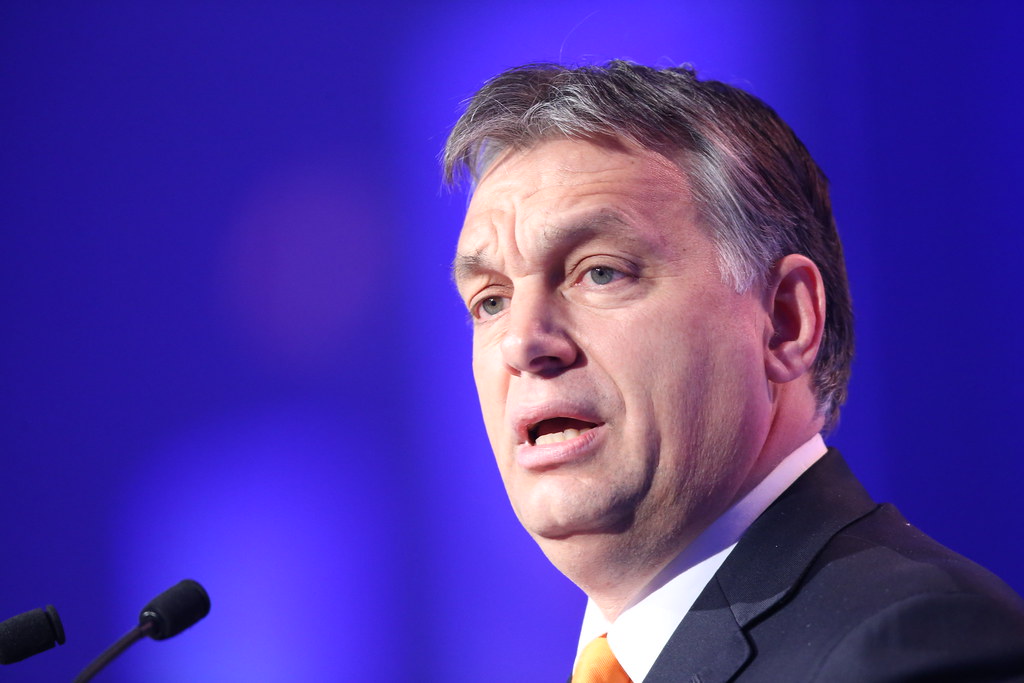
Hungary has defied calls by human rights defenders to respect human rights standards in tackling the COVID-19 outbreak. Monday 30 March 2020, Hungary’s parliament passed a controversial Law on Protection against the Coronavirus, allowing Prime Minister Viktor Orban to rule by decree for an indefinite period [!], and to jail anybody deemed to be publishing ‘fake news’ by up to five years. In the days prior, Civil Rights Defenders condemned the bill on the grounds that it is an attack on the rule of law and democracy, and presents numerous threats to human rights in the country (see https://crd.org/2020/03/24/hungary-state-of-emergency-is-no-excuse-for-undermining-rule-of-law/).
In one of its first moves, the government tabled a bill outlawing legal gender recognition which is a serious and permanent attack on the rights of Trans people. The following day, on Tuesday, it hinted it would use emergency powers to push educational reform by perusing an appalling new curriculum that will rewrite history books by promoting national pride, and making anti-Semitic authors compulsory reading. Coupled with the restrictions on media freedoms, the freedom of expression and the indefinite emergency rule, these measures are a clear overreach of emergency powers and a grave threat to democracy.
20 EU Member States have reacted in a joint-statement that they are “deeply concerned about the risk of violations of the principles of rule of law, democracy and fundamental rights arising from the adoption of certain emergency measures”. However, the statement’s authors did not call out countries by name, thus creating a loophole for Hungary to shamelessly became a signatory itself [SIC and SICK].
Since the adoption of the EU strategic framework on human rights and democracy in 2012, the EU has adopted two EU Action Plans (2012-2014 and 2015-2019). The new proposal follows up on this, setting out the priorities for the period of 2020-2024.
This Action Plan identifies priorities around five mutually reinforcing lines of action:
Protecting and empowering individuals;
Building resilient, inclusive and democratic societies;
Promoting a global system for human rights and democracy;
New technologies: harnessing opportunities and addressing challenges;
Delivering by working together.
What is new in this Action Plan?
The new Action Plan builds on the previous action plans and continues to focus on some long-standing priorities, such as supporting human rights defenders and the fight against death penalty. More importance is given to empower people and defeat discrimination on all grounds. It also addresses more prominently the accountability gap, the erosion of rule of law and access to justice. This Action Plan takes account of today’s world new challenges and therefore focuses in particular on:
environmental challenges and climate change;
leveraging the benefits of digital technologies and minimising the risks of misuse in line with EU’s commitment to lead the transition to a new digital world;
stepping up economic, social and cultural rights;
more emphasis on democracy, including on the misuse of online technologies and shrinking civic and political space;
a stronger focus on human rights defenders;
strategic communication and public diplomacy.
How will the Action Plan be implemented?
The objectives under the Action Plan will be implemented at country, regional and multilateral level, taking account of local circumstances and specificities. The EU will leverage the broad range of policies, tools and political and financial instruments at its disposal to implement it, such as:
political, human rights and sectoral policy dialogues;
EU trade policies, including the EU’s generalised scheme of preferences;
thematic and geographical instruments under the 2021-2027 multiannual financial framework;
actions in multilateral and regional human rights fora;
communication activities and awareness‑raising campaigns;
dialogue with civil society, human rights organisations and the business sector.
The EU Action Plan provides guidance to over 140 EU Delegations and Offices as well as Member States embassies for targeted initiatives and actions at country level all over the world.
How will the Commission and the High Representative follow up on and monitor the implementation of this Action Plan?
Actions apply to all regions in the world taking into consideration local needs and specificities. The EU’s 142 Delegations and Offices will take a lead in reflecting the priority actions in initiatives at the country level including through the adoption of tailored-made strategies at a local level. The EU will also engage with different stakeholders on the overall implementation, and organise an annual meeting with civil society. The public EU annual report on Human rights and democracy in the worldis another effective tool to monitor the progress made in a transparent manner. A mid-term review of the implementation is foreseen.
What has the EU achieved on human rights and democracy worldwide so far?
Since 2015, more than 30 000 human rights defenders were protected by the EU via the dedicated mechanism ProtectDefenders.eu. In 2019 alone, the EU raised Human Rights Defenders cases in dialogues and consultations with over 40 countries.
The EU advocated for abolition of death penalty.
Between January 2015 and October 2019, the EU supported over 3 350 actions relevant to children’s rights in 148 third countries and territories. For example, under the global programme on Female Genital Mutilation (€11 million), 16 countries adopted action plans and 12 established national budget lines to put an end to Female Genital Mutilation.
In 2014-2019, the EU supported democracy in more than 70 partner countries with €400 million aiming at, for instance, contributing to the organisation of elections and supporting oversight bodies, independent media, parliaments and political parties to play their essential role in democratic societies. 98 EU Election Observation Missionswere deployed worldwide.
The General System of Preference contributed to the implementation of human rights and labour Conventions, including through monitoring missions in 11 countries in the last year. For example, this contributed to a reduction of child labour to 1% in Sri Lanka through pioneering ‘Child Labour Free Zones’.
Joint Proposal
…Article 22 of the Treaty on the European Union offers the European Council the possibility to adopt a unanimous Decision setting out the EU’s strategic interests and objectives in specific areas of the Common Foreign and Security Policy (CFSP). Once the European Council sets the strategic objectives, the Council would then be able to adopt by qualified majority (QMV) decisions implementing the European Council’s strategic decisions.
Why is this proposed now? In 2018, the Commission has proposed to move from unanimity to QMV in certain areas of the CFSP. The Von Der Leyen Commission recognises that to be a global leader, the Union needs to take decisions in a faster and more effective way and overcome unanimity constraints that hamper our foreign policy, as set out in the High Representative/Vice-President’s mission letter. The Joint Proposal adopted by the College today offers such a possibility, by proposing to take decision related to the implementation of the Action Plan by QMV.
The European Union launched a call for nominations for the “Samir Kassir Award for Freedom of the Press” at the Delegation of the European Union to Lebanon. During the press conference, Ambassador Ralph Tarraf reaffirmed the European Union’s commitment to pursue Samir Kassir’s struggle for free speech and an independent free press. [for more on this and many other awards relating to freedom of the press, see: http://www.trueheroesfilms.org/thedigest/awards/samir-kassir-award-for-freedom-of-the-press]
The contest is open to candidates from North Africa, the Middle East, and the Gulf until 1 April, 2020, and three awards will be granted for: the best opinion article, investigative article, and audiovisual news report. The contributions must be centered on subjects relating to rule of law, human rights, good governance, fight against corruption, freedom of expression, democratic development and citizen participation. The jury will be composed of seven voting members from Arab and European media and one observer representing the European Union. The names of the jury members will be communicated during the prize-awarding ceremony, which will take place on 2 June 2020 in Beirut, marking the 15th memorial of Samir Kassir’s assassination.
Cuban human rights defenders who participated to the project of presenting a report on EU’s agreement with Cuba. [Civil Rights Defenders]
The EU needs to change strategy if it wishes to stand for democracy in Cuba by opening up to independent civil society, write Anders L. Petersson and Erik Jennische (of the NGO Civil Rights Defenders) on 4 February 2020. On Saturday 1 February. five Cuban democracy activists were stopped at the airport in Havana as they were on their way to Brussels to speak at the European Parliament today. They were banned from leaving the country by the Cuban authorities. Instead, the seminar at the European Parliament was held with Cuban activists based outside the country, and five empty chairs – a vivid reminder of the current strategy’s shortcomings. [Instituto Patmos has shown that at least 226 activists were banned from travelling abroad during 2019]. The five democracy activists were supposed to present their ideas on what the EU could do to promote respect for human rights and democratisation in the country. Their proposals form part of a report by Civil Rights Defenders – a total 30 letters from Cuban democracy activists and organisations – as a contribution to the EU’s policy development.
Although the EU and Cuba in their Agreement recall “their commitment to the recognised principles of democracy”, Civil Rights Defenders regrets that the EU remained silent on the sham elections and the transfer of power that followed. Apparently, it was all acceptable under the new Agreement…..When Federica Mogherini visited Cuba for the last time as High Representative for Foreign Affairs in September 2019, she rather perplexingly concluded that “after completing its generational transition and adopting a new Constitution, Cuba now faces major challenges in carrying out its economic modernization”.
….Reflecting on the stories of harassed and imprisoned activists in Cuba, we cannot afford to make such surrender again. The EU needs to change strategy if it wishes to stand for democracy in Cuba. It needs to build a formal and open dialogue with Cuba’s independent civil society. Since the negotiations began on the Agreement in the spring of 2014, the EU has not invited civil society to a single formal discussion on the content of the Agreement or its implementation. When the EU and Cuba held its human rights dialogue in October 2019, the Cuban government took the liberty to decide which European and Cuban organisations could participate. The papers in the report of CRD hold a great number of proposals and ideas – the two core messages being:
That both European and Cuban civil societies need to be recognised as formal partners to the EU in its relations to Cuba.
That the EU needs to speak out on the absence of democracy in Cuba and denounce all human rights violations.
The EU can never contribute to positive change in Cuba via a dialogue with the Cuban government. The only way is to give legitimacy and support to the civil society that openly and peacefully supports democratisation. It is time for the EU to include civil society in its relations with Cuba.
One of the award-winning Cuban dissident who was detained this week announced that he has been released without charge but barred from a planned trip to Europe for a meeting on human rights. Guillermo Farinas, a 58-year-old psychologist, is a leading voice in the opposition to Cuba’s communist government and won the European Parliament’s Sakharov human rights prize in 2010. Farinas was arrested Tuesday in the central city of Santa Clara, where he lives, as he planned to go to the Spanish Embassy in Havana to pick up travel documents. He had been due to take part in a meeting of the human rights commission of the European Parliament. “The main reason for my arrest was to keep me from traveling to Europe,” Farinas told AFP.
On 3 February 2020 the Fundamental Rights Agency (FRA) of the EU announced a modern websitewhich promises better user experience. The new-look website allows users to quickly and simply find the key fundamental rights information they need. FRA re-designed its website drawing on extensive user testing to meet their needs better, making it fully responsive across all mobile devices.
The EU’s bill of rights, the Charter of Fundamental Rights, takes centre stage, underlining its vital role in the respect, promotion and protection of rights across the European Union. The website offers an enhanced theme-based structure. This groups related information on hate crime, asylum or data protection, for example, so users have faster access to relevant information that interests them most. It also signposts the multitude of different types of material that users can browse from publications for downloading to videos to watch, from datasets to explore to infographics to share.
It prominently highlights useful tools like FRA’s EU Fundamental Rights Information System (EFRIS). This section steers users to key resources, such as promising practices from across the EU on how to combat hate crime or collect equality data, which they could use in their own work. In addition, country-specific information is more prominent so users can find local information from their country. It also flags which information is available in other EU languages. Users can also sign up for project updates via email so they can keep abreast of the latest agency developments. The site reflects FRA’s convening power as a hub for all human rights defenders which they can draw on for their work. It also aims to mirror FRA’s communicating rights mantra to maximise impact and outreach, helping to make a difference for people across the EU.
Accessibility remains a key consideration in the new design of the site.
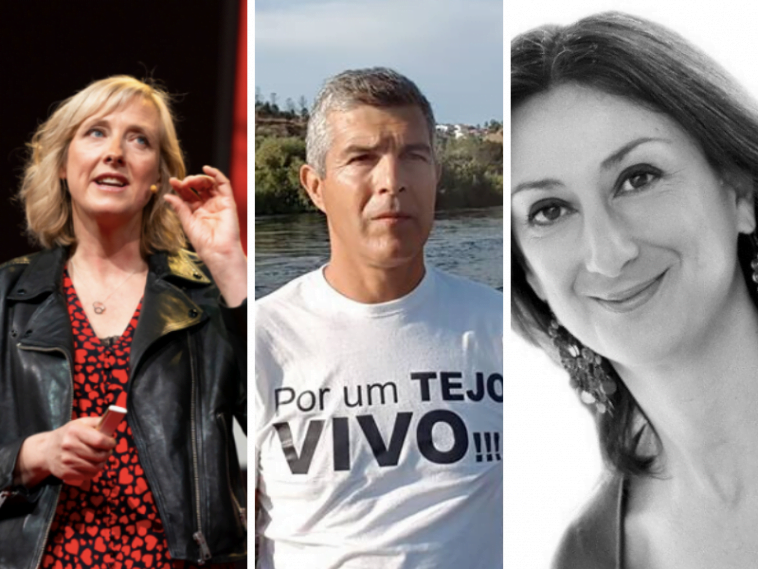
Journalist Carole Cadwalladr, activist Arlindo Marquês and slain journalist Daphne Caruana Galizia have all being victims of SLAPP.
.Joanna Demarco to European Commissioner Vice President Věra Jourová ahead of proposed new laws. The NGOs want to ensure that EThe organisations include the Daphne Caruana Galizia Foundation, Reporters Without Borders, Greenpeace and Friends of the Earth Europe.
Jourová is preparing legislation which will work to deter such lawsuits.
“In essence, SLAPPs are used to silence individuals and organisations that play a watchdog role and hold those in positions of power to account,” they wrote. Naming journalists within the European Union affected by SLAPP, the groups called the lawsuits received by assassinated journalist Daphne Caruana Galizia one of “the most striking examples which include journalists”. “Maltese reporter Daphne Caruana Galizia had 47 law suits pending against her at the time of her assassination,” they said. (The Maltese government has refused to ban the use of SLAPP suits in Malta, rejecting a motion by the Opposition in parliament).
The Shift, which works with international organisations to fight the threats against journalists, has also itself faced threats of SLAPP suits twice – one by a Russian banker and another by Henley & Partners, Malta’s concessionaire for the cash for passports scheme. The same firm also targeted Caruana Galizia prior to her assassination. In both cases, The Shift did not back down. Journalist Carole Cadwalladr, who exposed the Cambridge Analytica data-harvesting scandal, is also facing SLAPP action, the organisations noted. British co-founder of the Leave.EU campaign Arron Banks is refusing to drop the final two SLAPP lawsuits against the journalist who now started a crowdfunding campaign to cover the massive legal costs.
The organisations said that SLAPP lawsuits are not limited to journalists, but are also targeted at academia, trade unionists, activists, civil society organisations and individual citizens, including human rights defenders. Strong EU anti-SLAPP measures, including legislation and legal funds for victims, at a time when there is no such legislation in force in any EU member state will help protect those who are vulnerable to this type of legal harassment, they said. Such measures would also “send a strong political message that the EU is ready to stand up for its citizens and protect fundamental rights,” they continued.
The London-based human rights group Amnesty International says more than 300 people were killed in protests in Iran last month. In a report released on 16 December 2019 Amnesty says that according to reports it compiled, at least 304 people were killed and thousands injured between November 15 and 18 as authorities crushed protests with lethal force. The organization interviewed dozens of people inside Iran. It also analyzed video footage obtained by the group, which shows Iranian security forces opening fire on unarmed protesters who did not pose any imminent risk. The report said thousands of journalists and human rights defenders have also been arrested in an attempt to stop them from speaking out about Iran’s repression. Iran has yet to disclose details of the casualties.
On 18 December the European Union extended sanctions against Iran by another year over what the bloc says are serious human rights violations. The EU said in a statement it extended a travel ban and asset freeze against 82 people and also a ban on EU exports that might help in the repression of internal dissent. In 2011, the EU imposed the restrictions over the repression of peaceful demonstrators, journalists, human rights defenders and others. The sanctions also target those involved in torture, inhumane treatment and stonings or hangings. The extension prolongs the sanctions until April 13, 2018.
On 19 December 2019 Reporters Without Borders (RSF) said it is “appalled” by a Tehran court’s decision to uphold prison sentences for four journalists from the Gam (Step) online magazine. However, the appeals court in Tehran reduced the length of the jail terms from 18 to five years for each journalist — Amirhossein Mohammadifard, Sanaz Allahyari, Amir Amirgholi, and Assal Mohammadi — for a combined total of 20 years, the Paris-based media freedom watchdog said on December 18. The journalists were arrested a year ago on what Amnesty International called “spurious” national security charges related to their reporting on workers’ rights protests in Khuzestan Province over grievances concerning unpaid wages and poor conditions.
RSF said on December 18 that the same appeals court in Tehran also upheld a prison sentence for Marzieh Amiri, a journalist for the reformist Shargh newspaper, but reduced her sentence from 10 years in prison and 148 lashes to five years in prison. Amiri was arrested in May after covering a demonstration outside parliament in the capital.
On 20 December 2019 UN human rights experts called on the Iranian authorities to release all individuals arbitrarily detained and mistreated during recent protests, and expressed concerns over the hundreds of people who have been killed. “We are shocked at reports of the ill-treatment of those detained during the protests that took place in November 2019, and deeply disturbed that the reported use of excessive force by the Iranian security forces led to an untold number of casualties, including deaths,” the experts said.
The European Union Delegation to the United Arab Emirates announced that the 11th Edition of its Chaillot Prize for the Promotion of Human Rights in the GCC Region – honoring local civil society organisations, public or private institutions, as well as individuals for their efforts in promoting general awareness of human rights and the rights of vulnerable groups in the GCC region – has gone to: the Dubai Foundation for Women and Children (for its tireless efforts in protecting and supporting women and children, victims of domestic violence, child abuse and human trafficking) and the Special Olympics World Games Higher Committee (for its ground-breaking event in Abu Dhabi, promoting a spirit of inclusion and tolerance by raising awareness for persons with disabilities). Ahmed Mansoor (see: https://humanrightsdefenders.blog/2019/11/05/massive-call-in-support-of-ahmed-mansoor-at-his-50th-birthday-how-can-emirates-remain-deaf/) was of course NOT mentioned, neither by the EU nor Gulfnews.
Afghanistan’s top intelligence agency must immediately release two human rights defenders it detained after they exposed alleged sexual abuse against children. Musa Mahmudi and Ehsanullah Hamidi, both well-known human rights defenders from Logar province, were arbitrarily detained by the National Directorate of Security (NDS) on 21 November 2019 when they were on their way to meet with the European Union ambassador in Kabul.
The two human rights defenders began receiving threats, including from local officials in Logar, on Facebook after they gave interviews to The Guardian and Afghanistan’s TOLO News about the existence of a paedophile ring in the area. The human rights defenders uncovered more than 100 videos of the alleged abuse. Some of the victims of abuse have been murdered, according to The Guardian. “This is the latest case where human rights defenders have been targeted by the authorities for carrying out their important work. Faced with threats from both the state and non-state actors, they are operating in some of the most hazardous conditions anywhere in the world. There is impunity for attacks on these brave defenders, who have little to no protection.”
I am the director of the Journalism and Mass Communication Unit at Balkh University. I also head a non-governmental organization that works on human rights. For 20 years, as a women’s rights activist, I have pushed to address issues that prevent women from accessing their rights, not only in Balkh but also in other neighbouring provinces such as Samangan, Jowzjan, and Faryab.
One of my achievements is the establishment of the first private university in Balkh – Taj Higher Education Institute, which offers medicine, economy and law. Similar to Kabul, Herat and Kandahar, Balkh has some developments and achievements in terms of women’s rights. However, the province is still well known for the presence of armed groups, the local mafia and warlords, who have no respect for human rights. Due to existing challenges and the weak rule of law, self-censorship is embedded in the day-to-day lives of people in Balkh.
I am no stranger to tolerating injustices, especially when it is a matter of saving my life and my family’s lives. It gets challenging especially when it involves former war commanders who are now elected representatives of the area and, who would not hesitate to exert their power to commit crimes.
I hope in future like-minded women will join hands for the women’s revolution in Afghanistan, to reclaim the rights that we are entitled to.
Day one: Khawar Amiri
I am the Head of the Literacy Department of the Directorate of Education in Khost Province and have worked for many years as a mediator for women’s issues. As most women of Khost Province are illiterate, and some districts are yet to establish schools for girls, through the Literacy Department, I have conducted courses for women and girls above the age of 14 to enable their basic reading and writing skills. As a well-known human rights defender, I have worked in solving many of women’s issues through the Committee on Elimination of Violence against Women and tribal Jirgas (councils), with help of the police.
Women in Khost are exposed to discrimination and violence. Girls’ education is till grade six, after which they are sent off to marriage or asked to stay home. Forced marriages, being sold off, physical violence, lack of access to inheritance rights are some of the issues women face on daily basis. Women don’t work in government posts in Khost, as most of the positions are held by men. Women are discouraged from applying for government positions as their posts are given to men and justified with unlawful reasons for not being appointed.
I have intervened in many cases of women being abused, sometimes solving the case with the help of local elders and at times through direct mediation. One of my biggest successes is organizing a Master’s Degree programme for women in Khost to study in India, funded by the US Embassy. Despite being threatened and attacked, I am continuing my activism.
I hope women are independent, have security, and have equal opportunities for studies, get to live a life free from violence.
You can send a solidarity message to all of the 16 WHRDs in Afghanistan, or any one of them, and let them know that they are not alone. Please email your thoughts in a personal message to AfghanDefenders@amnesty.org and AI will share them with the activists.


 Joanna Demarco
 Hans Thoolen on Human Rights Defenders and their awards