Amnesty International’s 2013 report comes with an introductory video which shows governments are using the excuse of ‘internal affairs’ in shameful attempts to block concerted international action to resolve human rights emergencies.
Yesterday, 22 May, Amnesty International published its annual Report 2013 which documents the state of human rights during 2012. In five regional overviews and a country-by-country survey of 155 individual countries and territories, the report shows how the demand for human rights continued to resound in every corner of the globe… Resistance to injustice and repression took many forms, often inspiring acts of courage and determination from the communities and individuals facing seemingly insuperable obstacles. In the face of indifference, threats and attacks, human rights defenders pursued legal challenges at the national and international level to long-standing impunity and endemic discrimination.
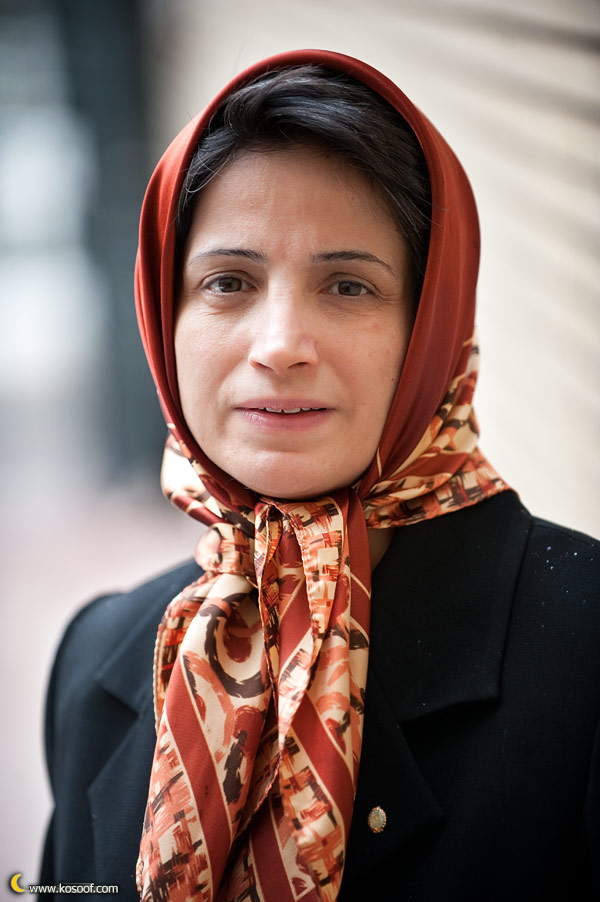
Sometimes my eyes fall on more esoteric contributions to the protection of human rights defenders. Let me share with you Mark Laham’s blog post for the Huffington Times of the 1st of May 2013 which calls for a “borderless” one-hour live online yoga class in honour of Nasrin Sotoudeh, the Iranian lawyer in jail, recipient of the Sakharov Award and Nominee of the MEA 2012. Mark got inspired – through AI – by what he read about Nasrin’s struggle and other brave human rights defenders around the world. “How does Nasrin’s story make you feel?” he asks, ” Me, I…I feel the need to do something that will create positive change for this woman and countless others like her.Read the rest of this entry »
On 12 April 2013 Rupert Abbott, Amnesty International’s Researcher on Cambodia, Laos and Viet Nam posted on Amnesty‘s Livewire an interesting account of his meeting with the just liberated Cambodian Human Rights Defender Mam Sonando. It is a impressive testimony to the resilience of human rights defenders and how campaigning can help them and therefore I reproduce it below:
It was hot – very hot – as I arrived last week at Mam Sonando’s home and radio station on a dusty street in Cambodia’s capital Phnom Penh. He welcomed me at the front door. “Thank you,” he said. With a broad smile, he flashed his signature ‘V for victory’ sign with his right hand. After over eight months in prison, he was free and no longer facing 20 years behind bars.
Mam Sonando, 72, is a well-known and popular journalist. He owns Beehive Radio, one of Cambodia’s few independent radio stations. And he heads the Association of Democrats, which promotes human rights and democracy and helps poor communities. On 11 September 2012, his trial began at the Phnom Penh Municipal Court. He had been arrested two months earlier after Cambodia’s Prime Minister accused him publicly of being behind a plot for a village in eastern Cambodia to secede – to break away from the country. In fact, the villagers there had been involved in a long-running land conflict with a powerful company, and the so-called secession plot was used as a pretext to forcibly evict them. Read the rest of this entry »
As a student activist speaking out against the government, Hassan is at constant threat of being arrested. The Sudanese government tracks and harasses members of the student movement he belongs to. Reports of his friends and contacts being detained, tortured and even killed by the authorities are frighteningly regular. But Hassan’s network is also well organized. His phone is always on him and he uses it to help organize demonstrations, to record and disseminate video of violent crackdowns against the students and to keep his network updated every minute – a network that stretches from Khartoum to the rest of the globe in the time it takes to send a tweet. If he is able to get word out that he’s been arrested, Hassan knows that his network’s response will be swift and structured. The problem is that he knows the first thing the authorities will seize is his mobile phone. And here’s the double danger of not getting word out: the authorities will use the phone book, call log, messages and any open apps – such as G-Mail or Facebook – to identify and track others. Without knowledge of the arrest, the whole network will be easily compromised. Read the rest of this entry »
Voluntary work in one of the world’s leading human rights organisations can provide valuable experience and is a great opportunity to contribute to the international human rights movement. The voluntary work is unpaid, although travel and lunch expenses are provided. Amnesty International can also act as a sponsor to enable you to arrange your own right to be in the UK as a volunteer. Please note that volunteering does not lead directly to employment with Amnesty International.
The volunteers will work in the ‘Individuals at Risk’ team to ensure the development and coordination of a strategic, sustainable body of casework for effective action. The volunteers will work directly with the Individuals at Risk Research and Policy Advisor, under whose supervision the volunteers will contribute to work on human rights defenders protection, with a specific focus on women human rights defenders, as well as work related to relationship management and ethics policy of human rights engagement. The deadline is 17 April.
15 Zimbabwean Civil Society Organizations, on 9 March 2013 issued a joint statement condemning the sustained and escalating assault on non-governmental organisations (NGOs) involved in civic education, human rights monitoring, public outreach and service provision by the State. The cite as the latest example the charging of Jestina Mukoko on which AI issued a separate alert on 8 March: “Prominent Zimbabwe human rights defender hunted down through the media”.
The criminalization of the work of civil society by the Government of National Unity is in direct contradiction with the letter and Spirit of the Global Political Agreement. It appears to us that the persecution of Jestina, who is not at anytime a fugitive from justice, is a direct victimization of an individual, who has been a victim of abduction by State security agents. State actions against Jestina were condemned by the Supreme Court and her prosecution quashed.Read the rest of this entry »
For years Angélica Bello, a human rights defender from Colombia, rarely spent a day alone – that would have been, simply, too dangerous. A number of threats against her because of her job helping the many survivors of sexual violence – women caught up in Colombia’s long-running armed conflict – meant that it was too dangerous for the 45-year-old mother of four to travel alone. In 2000, two of her daughters were kidnapped and kept as sexual slaves by paramilitaries, and were only released after Angélica personally intervened. Read the rest of this entry »
Since 2003, the Geneva Human Rights Film Festival (with the more complicated French name and abbreviation: le Festival du film et forum international sur les droits humains – FIFDH) takes place in parallel to the UN Human Rights Council. Based on the concept “A film, a subject, a debate”, the FIFDH features documentary as well fiction, on themes linked to human rights such as: violence against women, poverty, torture, international justice and even climate change. During 10 days the public is invited to watch the films, meet film makers, actors, experts and victims of human rights violations. There are special screenings for students, and teachers are issued with thematic material. This year a total of 40 films will be screened. New this year is the competition for international fiction. The Jury includes filmmakers and human rights defenders such as: Ai Weiwei, Patrick Chapatte, Romain Goupil and Fadwa Suleiman, Syrian actress in exile. The longstanding festival director is Leo Kaneman: for the programme see: http://www.fifdh.org/
In the meantime, a big controversy has erupted about the showing of the documentary “No Fire Zone: The Killing Fields of Sri Lanka” in what is called in UN terminology a ‘side event’, organised by Human Rights Watch, Amnesty International and the above-mentioned FIFDH, on the premises of the UN. As reported by AP on 25 February, the Sri Lankan Ambassador has sent a letter to the whole Human Rights Council denouncing the film as “discredited, uncorroborated and unsubstantiated” and warning that the Council would be violating its own rules if the film is screened March 1 in Geneva as planned.
The 90-minute documentary alleges government troops and Tamil Tiger rebels engaged in war crimes during the final stages of the conflict in 2009. The film shows interviews with eyewitnesses and original footage of alleged atrocities against civilians including summary execution, sexual violence and torture. The film director Callum Macrae denied that it distorted the facts: “We believe that our film contains very important evidence about the terrible events in the last few months of this war and we believe we have a duty to make that evidence available to the diplomats and country missions at the U.N. Human Rights Council who must make important decisions about how to ensure accountability and justice in Sri Lanka“. See: http://abcnews.go.com/International/wireStory/sri-lanka-opposes-screening-critical-film-18590958. The Sri Lankan Ambassador’s letter which certainly will help to attract a larger audience is to be found on: http://dl.dropbox.com/u/465065/Letter-to-the-President-Human-Rights-Council-2.pdf.




 For years Angélica Bello, a human rights defender from Colombia, rarely spent a day alone – that would have been, simply, too dangerous. A number of threats against her because of her job helping the many survivors of sexual violence – women caught up in Colombia’s long-running armed conflict – meant that it was too dangerous for the 45-year-old mother of four to travel alone. In 2000, two of her daughters were kidnapped and kept as sexual slaves by paramilitaries, and were only released after Angélica personally intervened.
  Hans Thoolen on Human Rights Defenders and their awards