Amnesty International – among a plethora of NGOs – urges Israel to drop charges against Palestinian lawyer Anas Barghouti (24 October 2013). It says that Israeli must drop all charges against the Palestinian human rights lawyer released on bail last night. Anas Barghouti, a lawyer with the Addameer Association for Prisoner Support and Human Rights, was released on bail on the orders of a military judge at Ofer Military Court yesterday because confessions from other detainees submitted as evidence failed to prove he is a security threat. Barghouti had been arrested by the Israeli army more than a month ago 15 September, at a checkpoint north of Bethlehem in the Occupied Palestinian Territories. Nine days later he was charged with “membership in the Palestinian Front for the Liberation of Palestine” – an organisation which Israel has banned – and “leadership of a committee to organise demonstrations”. Amnesty International Middle East and North Africa Director Philip Luther said:“The release of Anas Bargouthi is positive news but he should have never been detained and charged in the first place.“ Barghouti’s arrest is part of a pattern of harassment by the Israeli authorities of Palestinian human rights organisations and activists in the Occupied Palestinian Territories, with individuals suffering arbitrary detentions, restrictions on movement, and raids of homes and offices. For example, last December Israeli security forces raided the offices of Addameer and two other Palestinian NGOs in Ramallah, seizing computers, work files and equipment and ransacking the premises. Addameer’s chair, Abdullatif Ghaith, a resident of East Jerusalem, has been banned by Israel’s military from entering other parts of the occupied West Bank or travelling abroad since 2011. Meanwhile, on 23 September, a week after the Bargouthi’s arrest, Israeli forces also arrested Samer Arbid, Addameer’s accountant. He was placed in custody for questioning until 21 October and then given a four-month administrative detention order – a military order without charge or trial which can be extended indefinitely. Yet another activist from Addameer – Ayman Nasser – was arrested in October last year and charged with offences that included membership of the Popular Front for the Liberation of Palestine and carrying out activities in support of Palestinian prisoners. He was convicted of these charges a month later and spent a year in prison after a trial by military court, being released earlier this week. In detention Nasser told his lawyer that he had been tortured during interrogation following his arrest. He said he was interrogated for up to 20 hours every day and that during the interrogations he was kept in a stress position on a chair with his hands tied behind his back.
The New York Times of Monday 20 October carries a post by Chris Buckley which looks at the documentation submitted for today’s UPR session on China and concludes that it seems as if there are two different countries facing scrutiny in Geneva. Read the rest of this entry »
On 24 September 2013, five NGOs issued a joint statement on Cambodia exactly when there is the interactive dialogue with the UN Rapporteur on that country: Read the rest of this entry »
In a long letter to the UN Human Rights Council now in session a group of 13 NGOs urges the Council to continue monitoring Sudan. The letter has two main chapters on:
Conflicts in Darfur, Southern Kordofan, and Blue Nile, ………and
Repression of Civil and Political Rights……….
The letter ends with urging the Human Rights Council to:
condemn the human rights violations in Darfur, Southern Kordofan and Blue Nile, as well as the government’s continued use of indiscriminate bombing in all three states, attacks on civilians, and other abuses by government forces and allied militia;
establish an independent investigation into ongoing human rights violations in Southern Kordofan, Blue Nile, and Darfur, and report back to the Human Rights Council promptly;
urge Sudan to grant humanitarian agencies access to Southern Kordofan and Blue Nile states, in compliance with international human rights and humanitarian law obligations;
express concern over the continued restrictions of basic civil and political rights, and the continued harassment of critics of the government, including the practice of arbitrary detention, torture and ill-treatment, preventing meaningful public dialogue on critical issues at a time when Sudan is preparing to adopt a new constitution and for national elections in 2015;
urge Sudan to reform its repressive National Security Act of 2010 and other laws granting immunity to officials, seriously investigate allegations of human rights violations and hold perpetrators to account;
renew the special procedure country mandate on Sudan for at least three years under Item 4 with a clear mandate to monitor and report twice a year to the Human Rights Council and the General Assembly on violations of human rights in all parts of Sudan.
——-
Earlier on AI’s Global Blog, Khairunissa Dhala, Researcher on Sudan/South Sudan team at Amnesty International has answered her own question: “Does the human rights situation in Sudan still require a UN-mandated Independent Expert to monitor and report back on developments?” as follows: “Given Sudan’s dire human rights situation – ongoing armed conflicts in three different states, restrictions on freedoms of expression, association and assembly, including arbitrary arrest and torture of human rights defenders and activists – it is hard to imagine that there is even a question on whether this is needed. But we’ve been here before.
Two years ago, I attended the HRC’s 18th session where members of the Council reached a “compromise” on human rights monitoring in Sudan. It was a “compromise” because, while the Independent Expert’s mandate was renewed, it solely focused on providing technical assistance and capacity-building support to the national authorities. In other words, the Independent Expert would no longer be asked to monitor the human rights situation in Sudan. [….]Compromising on the Independent Expert’s mandate was seen as a concession to Sudan by the international community. A concession given to a country where widespread and systematic violations and abuses of international human rights and humanitarian law are taking place.
But there should be no compromise on human rights. Since then, the Independent Expert’s mandate has successively been renewed to provide technical assistance, while the awful human rights situation in Sudan calls for a clear need for monitoring.. Conflict remains ongoing in Southern Kordofan and Blue Nile, to the detriment of the civilian population. Over the past two years I have interviewed numerous men, women and children from these two states. They have shared harrowing accounts of how their loved ones were killed when bombs dropped by Antonov aircrafts, from high altitudes, by the Sudanese Armed Forces, landed on their homes. Coupled with ground attacks by Sudanese forces and the armed opposition group the SPLA-N, this conflict has led to more than 200,000 people fleeing to refugee camps in South Sudan and Ethiopia, in addition to the tens of thousands of internally displaced people in the two areas. The Sudanese authorities are still denying unhindered humanitarian access to all affected areas. Meanwhile, in Sudan’s Darfur state, a decade after the start of the armed conflict, the crisis is ongoing and violence has again intensified. This year alone, more than 300,000 people were forced to leave their homes behind, fleeing violent clashes between predominantly ethnic Arab groups.
Across Sudan, freedom of expression, association and assembly also remain restricted. Journalists and activists face constant harassment, arbitrary arrests, as well as torture and other forms of ill-treatment by Sudan’s National Intelligence and Security Service. Given the critical human rights situation, any compromise on the Independent Expert’s mandate is an abdication of the Human Right Council’s duty to promote and protect human rights in Sudan…..The Independent Expert should have their mandate strengthened to monitor Sudan’s human rights situation under item 4 (Human rights situations that require the Council’s attention) and report twice a year to the Council and the UN General Assembly on violations of international human rights and humanitarian law taking place anywhere in the country.”
On 17 September 2013 Pakistani education rights activist, Malala Yousafzai, who was shot and almost killed by the Taliban, received the Amnesty International Ambassador of Conscience award in Dublin. “I want to live in a world where free, Read the rest of this entry »
The Greek authorities must act immediately to curb the growing spate of xenophobic and racist attacks Amnesty International said on 14 August 2013. It follows a brutal knife attack by a mob of around 20 men on two Pakistani migrants in Heraklion on the island of Crete Read the rest of this entry »
On 29 June 2012 (yes a year ago) AI published a short video on the Internal Criminal Court, which for some reason I had missed, so here is the link to the video which is a simple but clear assessment of 10 years ICC, it’s successes, it’s failures and the challenges it still faces in bringing to justice those accused of genocide, war crimes and crimes against humanity.
Front Line reports the continuous presence of armed security guards in the community of La Nueva Esperanza, in the department of Atlántida, threatening and intimidating the local population, resulted in the temporary kidnapping of two human rights defenders, Mr Daniel Langmeier and Ms Orlane Vidal. Both are working for the Proyecto de Acompañamiento Honduras – PROAH (Honduras Accompaniment Project), an organisation which aims to prevent or alleviate situations of risk against human rights defenders in Honduras. Read the rest of this entry »
Today Amnesty International urges the Cuban authorities to immediately and unconditionally release five men who have been named prisoners of conscience.
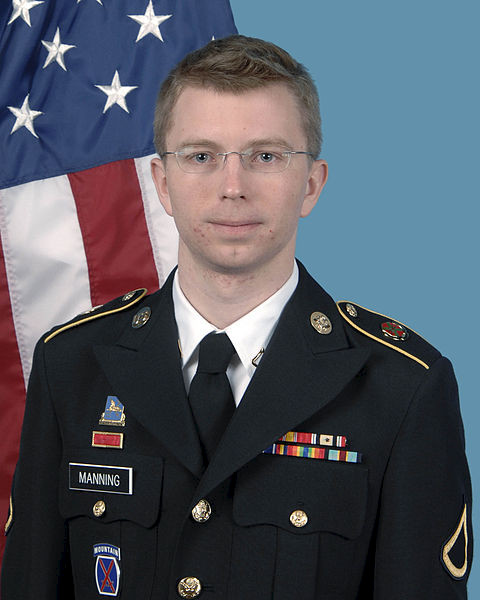
On 4 June this blog referred to the controversy surrounding the question whether Bradley Manning should be a recognized AI Prisoner of Conscience. So it is fair to report that on 30 July 2013 AI USA came out with a statement saying in essence:Read the rest of this entry »