Thalif Deen wrting for IPS on 20 May 2019 relates that the “UN’s Mandate to Protect Human Rights Takes Another Hit’.
The Geneva-based Office of the UN High Commissioner for Human Rights (OHCHR) says six of the UN’s 10 treaty bodies are being forced to cancel their sessions this year due to financial reasons. The situation has been described as “an unprecedented consequence of some UN member States delaying payments due to the Organisation.” Anna-Karin Holmlund, Senior UN Advocate at Amnesty International, told IPS: “Amnesty is deeply concerned by member states’ delay in paying their assessed contributions, which will have a direct effect on the ability of the UN to carry out its vital human rights work.” By 10 May, only 44 UN member states – out of 193 — had paid all their assessments due, with the United States owing the largest amount.
The OHCHR said last week the cancellations meant that reviews already scheduled with member states, as well as consideration of complaints by individual victims of serious human rights violations — including torture, extra-judicial killings, enforced disappearances -– will not take place as scheduled. “The cancellation of sessions will also have numerous other negative consequences, and will seriously undermine the system of protections which States themselves have put in place over decades,” said a statement released by the OHCHR.
The chairpersons of the 10 Committees are deeply concerned about the practical consequences of cancelling these sessions and have sent a letter to the UN Secretary General and the High Commissioner for Human Rights, requesting they, together with Member States, explore ways of addressing this situation, “as a matter of urgency.”..
On 1 May 2019 Friedhelm Weinberg, Executive Director, HURIDOCS, published “3 ways activists are being targeted by cyberattacks’ on the website of World Economic Forum (see below). A timely piece in view of the current turmoil surrounding the discovery of spyware crafted by a sophisticated hackers-for-hire, who took advantage of a flaw in WhatsApp. The Financial Times identified the actor as Israel’s NSO Group, and WhatsApp all but confirmed the identification, describing hackers as “a private company that has been known to work with governments to deliver spyware.” .. As late as Sunday, as WhatsApp engineers raced to close the loophole, a UK-based human rights lawyer’s phone was targeted using the same method. Researchers at the University of Toronto’s Citizen Lab said they believed that the spyware attack on Sunday was linked to the same vulnerability that WhatsApp was trying to patch. NSO’s flagship product is Pegasus, a program that can turn on a phone’s microphone and camera, trawl through emails and messages and collect location data. NSO advertises its products to Middle Eastern and western intelligence agencies, and says Pegasus is intended for governments to fight terrorism and crime. … Asked about the WhatsApp attacks, NSO said it was investigating the issue. “Under no circumstances would NSO be involved in the operating or identifying of targets of its technology, which is solely operated by intelligence and law enforcement agencies,” the company said. “NSO would not, or could not, use its technology in its own right to target any person or organisation, including this individual [the UK lawyer].”
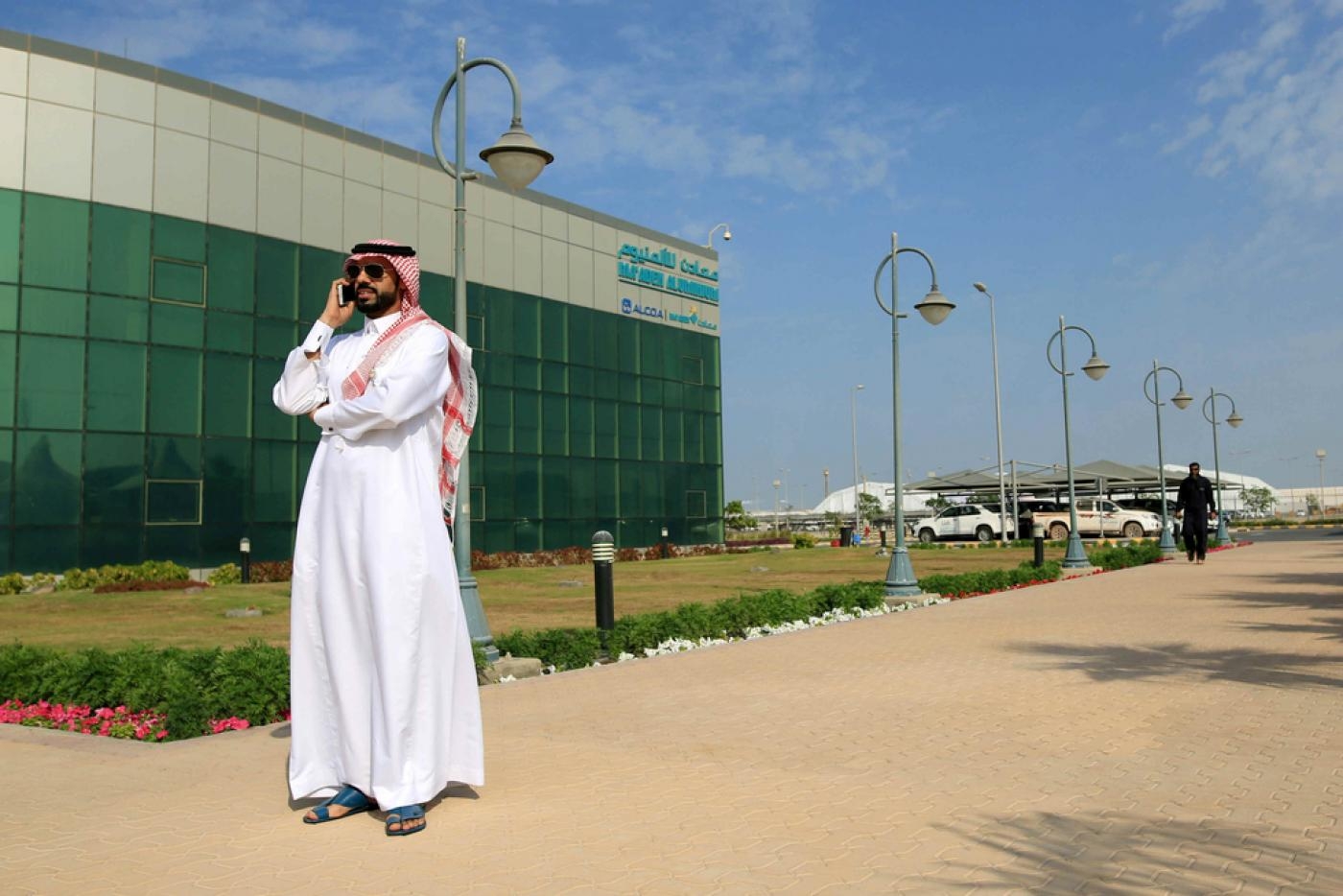
Several reports have shown Israeli technology being used by Gulf states against their own citizens (AFP/File photo)
Middle East Eye of 13 May 2019 reports that Amnesty International is pushing for Israel’s defence ministry to withdraw an export license for NSO Group, an Israeli tech firm that the human rights group has accused of selling spyware to repressive governments to spy on activists. In a statement on Monday, Amnesty said it plans to file a legal petition to the District Court of Tel Aviv on Tuesday to block the export licenses. Danna Ingleton, deputy director of Amnesty Tech, said in an affidavit on Monday that NSO Group has not done its job to protect human rights defenders from being targeted. Instead, many reports have shown that governments have deployed Pegasus spyware “to surveil human rights defenders”, Ingleton said.
NSO Group has been under increased scrutiny after a series of reports about the ways in which its spyware programme has been used against prominent human rights activists. Last year, a report by CitizenLab, a group at the University of Toronto, showed that human rights defenders in Saudi Arabia, the United Arab Emirates and Bahrain were targeted with the software.
In October, US whistleblower Edward Snowden said Pegasus had been used by the Saudi authorities to surveil journalist Jamal Khashoggi before his death. “They are the worst of the worst,” Snowden said of the firm. Amnesty International said in August that a staffer’s phone was infected with the Pegasus software via a WhatsApp message.
——-
Friedhelm Weinberg‘s piece of 1 May is almost prescient and contains good, broader advice:
When activists open their inboxes, they find more than the standard spam messages telling them they’ve finally won the lottery. Instead, they receive highly sophisticated emails that look like they are real, purport to be from friends and invite them to meetings that are actually happening. The catch is: at one point the emails will attempt to trick them.
1. Phishing for accounts, not compliments
In 2017, the Citizen Lab at the University of Toronto and the Egyptian Initiative for Personal Rights, documented what they called the “Nile Phish” campaign, a set of emails luring activists into giving access to their most sensitive accounts – email and file-sharing tools in the cloud. The Seoul-based Transitional Justice Working Group recently warned on its Facebook page about a very similar campaign. As attacks like these have mounted in recent years, civil society activists have come together to defend themselves, support each other and document what is happening. The Rarenet is a global group of individuals and organizations that provides emergency support for activists – but together it also works to educate civil society actors to dodge attacks before damage is done. The Internet Freedom Festival is a gathering dedicated to supporting people at risk online, bringing together more than 1,000 people from across the globe. The emails from campaigns like Nile Phish may be cunning and carefully crafted to target individual activists.. – they are not cutting-edge technology. Protection is stunningly simple: do nothing. Simply don’t click the link and enter information – as hard as it is when you are promised something in return.
Often digital security is about being calm and controlled as much as it is about being savvy in the digital sphere. And that is precisely what makes it difficult for passionate and stressed activists!
2. The million-dollar virus
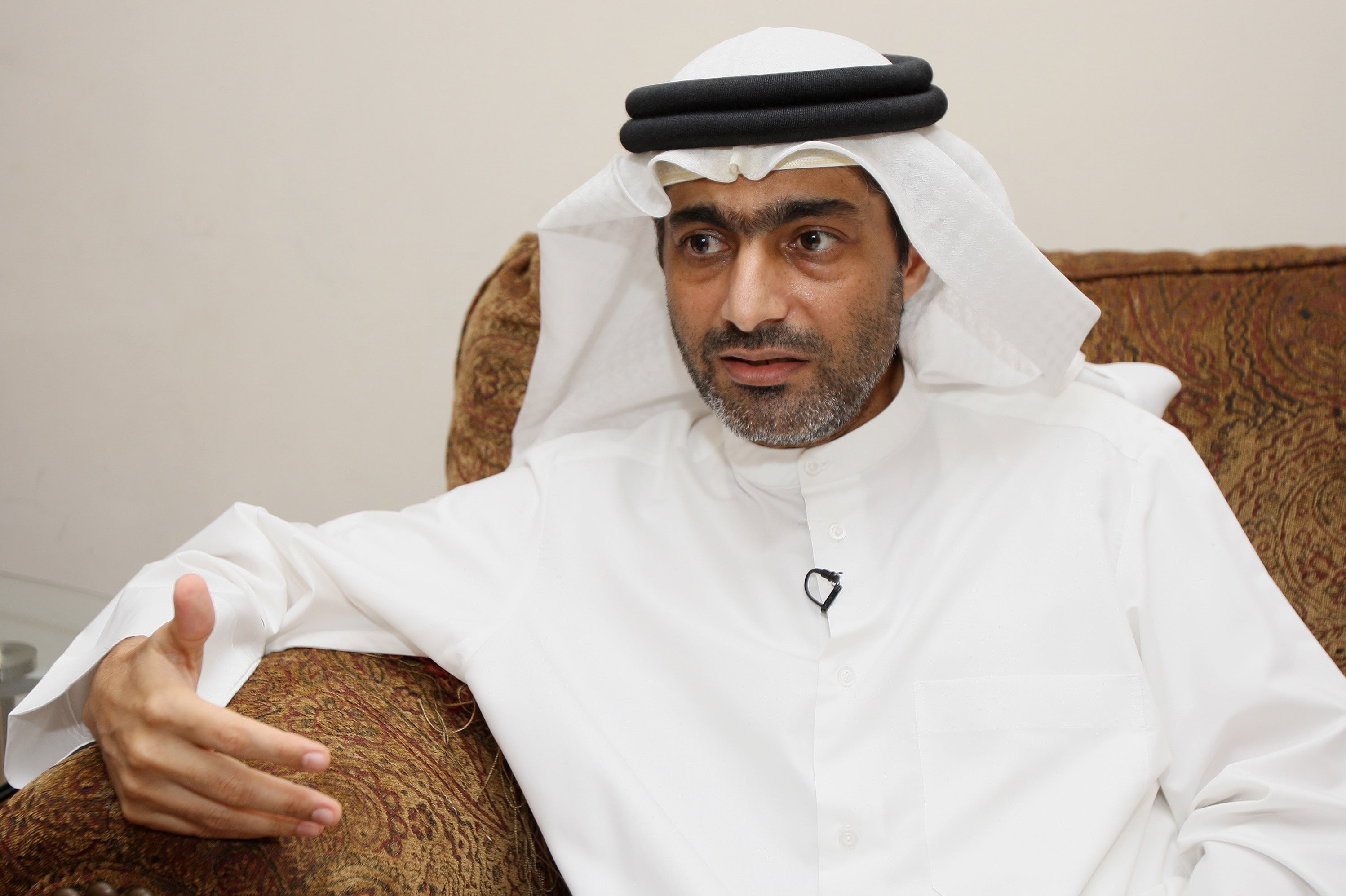
Unfortunately, calm is not always enough. Activists have also been targeted with sophisticated spyware that is incredibly expensive to procure and difficult to spot. Ahmed Mansoor, a human-rights defender from the United Arab Emirates, received messages with malware (commonly known as computer viruses) that cost one million dollars on the grey market, where unethical hackers and spyware firms meet. See also: https://humanrightsdefenders.blog/2016/08/29/apple-tackles-iphone-one-tap-spyware-flaws-after-mea-laureate-discovers-hacking-attempt/]
Rights defender Ahmed Mansoor in Dubai in 2011. Image: Reuters/Nikhil Monteiro
3. Shutting down real news with fake readers
Both phishing and malware are attacks directed against the messengers, but there are also attacks against the message itself. This is typically achieved by directing hordes of fake readers to the real news – that is, by sending so many requests through bot visitors to websites that the servers break down under the load. Commonly referred to as “denial of service” attacks, these bot armies have also earned their own response from civil society. Specialised packages from Virtual Road or Deflect sort fake visitors from real ones to make sure the message stays up.
How distributed denial of service (DDoS) attacks have grown. Image: Kinsta.com; data from EasyDNS
Recently, these companies also started investigating who is behind these attacks– a notoriously difficult task, because it is so easy to hide traces online. Interestingly, whenever Virtual Road were so confident in their findings that they publicly named attackers, the attacks stopped. Immediately. Online, as offline, one of the most effective ways to ensure that attacks end is to name the offenders, whether they are cocky kids or governments seeking to stiffle dissent. But more important than shaming attackers is supporting civil society’s resilience and capacity to weather the storms. For this, digital leadership, trusted networks and creative collaborations between technologists and governments will pave the way to an internet where the vulnerable are protected and spaces for activism are thriving.
Amnesty International UK runs a successful series of (national) media awards. Amnesty’s Media Awards, which have been running annually since 1992, celebrate excellence in human rights journalism and applaud the courage and determination of journalists who often put their lives on the line to report on vital human rights issues. Kate Allen, Director of Amnesty International UK, said at the 3 April 2019 ceremony: “Media work is vitally important for Amnesty and everything we do. This evening we’ve seen some brilliant journalism that has had enormous human rights impact…Without a free press, it’s extremely difficult to expose wrong-doing and hold leaders to account. But even here in the UK we’re seeing it being threatened – especially with the sinister arrest of Trevor Birney and Barry McCaffrey in Northern Ireland last year…That’s why our awards are about congratulating the achievements of the media and championing its role in creating a fairer, more open world.” The awards, hosted by Channel 4 News presenter Cathy Newman, held a moment of silence for the approximately 90 journalists imprisoned last year for doing their jobs. Canada and the USA are undertaking similar events.
The winners of the 2019 AI UK Media Awards include:
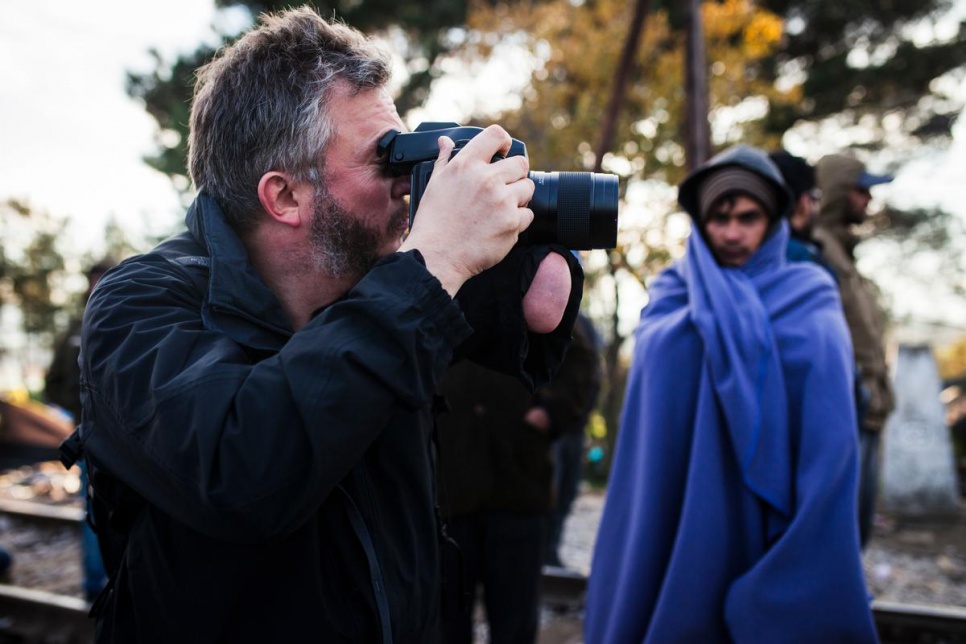
Humanitarian photographer Giles Duley won a Media Award for his powerful series depicting the plight and resilience of Congolese female refugees in Angola. His photo essay, “We Are Here Because We Are Strong”, was commissioned by UNHCR and published in Humanity magazine. The subjects of his project were forced to flee the Kasai region of Democratic Republic of the Congo after violence erupted in March 2017, triggering massive displacement.
The full Media Awards 2019 shortlist can be found here.
Barbora Cernusakova (Amnesty International’s Poland researcher) posted in Euronews on 4 April 2019 a piece entitled “When Polish judges become human rights defenders”.
“There is a danger when politics enters the judiciary,” warned Judge Sławomir Jęksa in his summing up of his decision to accept the appeal of a woman who had been charged for using offensive language at a rally. She had, he reasoned, not only been entitled to express herself in the way that she did, especially since she was expressing genuine concerns about the encroachment on human rights in Poland. Days after his ruling, Judge Jęksa found himself at the receiving end of just the sort of political interference of which he had warned. The Disciplinary Prosecutor started proceedings against him on the grounds that his ruling was an “expression of political opinions” and “an offence against the dignity of the office of the judge.”
Judge Jęksa does not have much faith in the disciplinary procedure which will take place in the Disciplinary Chamber of the Supreme Court. The Disciplinary Chamber is a special body whose members were chosen by a body formed of politicians from the governing party. He is just one of several judges facing similar pressures. More than a dozen judges have faced disciplinary proceedings since last autumn. These may result in sanctions, including their dismissal from office.
Some of the more outspoken judges who publicly expressed their opposition to the government’s interference with the judiciary have even received death threats…..
This is all happening in the context of a wider smear campaign against judges that have upheld decisions in defence of human rights that began in 2017. Judges are constantly portrayed as “enemies of the people” who “damage the interests of Poland.” Pro-government media and social media accounts have gone as far as invading their privacy by regularly publishing their personal information, including details about their sick leave and their trips abroad.
Despite this, judges in Poland continue to organise and collectively resist the pressures from the government. “For the first time in our careers we have to stand our ground and show we are not just civil servants, but the authority that protects legal order,” Judge Dorota Zabłudowska told me.
But the ongoing struggle over the independence of the judiciary in Poland is not only about them. It is a fight for human rights that ultimately affects everyone in the country and indeed in Europe. In a significant move yesterday, the European Commission launched an infringement procedure to protect judges in Poland from political control. …The chilling effect of the abuse of this already flawed disciplinary system is real and this has now been called out by the Commission. Member states should back this step and call on Poland in the General Affairs Council next week to end the harassment and intimidation of judges.
This decision draws an important line in the sand and makes clear that interfering with the independence of the judiciary cannot and will not be tolerated. Allowing one member state to operate outside the rule of law would be to allow the entire system to be contaminated…
Cruel and inhuman punishments such as death by stoning for same-sex sexual acts and amputation for robbery came into effect in Brunei Darussalam as Amnesty International feared. The proposed changes to Brunei’s penal code to incorporate punishments under a strict interpretation of Islamic law – including death by stoning – should be halted, the UN’s top human rights official, Michelle Bachelet, said on Monday 1 April 2019. Now some interesting new celebrity action is on the way:
A boycott of Brunei-owned luxury hotels was sparked last week in an opinion piece by actor George Clooney, who said a boycott of the high-end hotels — where rooms can start at $600 a night or more — is necessary to keep money from flowing “directly into the pockets of men who choose to stone and whip to death their own citizens for being gay or accused of adultery.” It is gaining support from celebrities including Ellen DeGeneres and Elton John as the country on Wednesday implemented what it called Islamic criminal laws including death by stoning for gay sex.
The nine hotels owned by Brunei are:
The Dorchester, London
45 Park Lane, London
Coworth Park, UK
The Beverly Hills Hotel, Beverly Hills
Hotel Bel-Air, Los Angeles
Le Meurice, Paris
Hotel Plaza Athenee, Paris
Hotel Eden, Rome
Hotel Principe di Savoia, Milan
..In his opinion piece last week, Clooney noted that he’s stayed at many of the hotels owned by Brunei, a small nation located on the island of Borneo, but said he was unaware of their ownership “because I hadn’t done my homework.” He acknowledged that a boycott is unlikely to change Brunei’s laws, but said consumers must decide whether they want their money to support laws that violate human rights. “Are we really going to help fund the murder of innocent citizens?” he wrote. “I’ve learned over years of dealing with murderous regimes that you can’t shame them. But you can shame the banks, the financiers and the institutions that do business with them and choose to look the other way.”
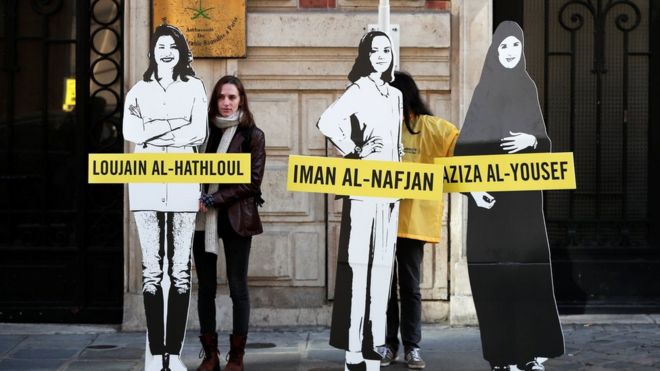
Amnesty International and UK-based Saudi rights organisation, ALQST, named the women as Eman al-Nafjan, Aziza al-Yousef and Roqaya al-Mohareb. Saudi state media said the releases were only provisional. Lynn Maalouf from Amnesty welcomed the releases but said it should not be on a temporary basis. “They have been locked up, separated from their loved ones, subjected to torture and threats for simply peacefully calling for women’s rights and expressing their views,” she said.
Ahead of the Bahrain Formula One Grand Prix this weekend, Amnesty International has highlighted the grim human rights record of the country. Samah Hadid, Amnesty International’s Middle East Director of Campaigns, said: “Beneath the glamour of the F1, there is a far more sinister side to Bahrain, revealing the country as a deeply repressive state where anyone critical of the government can be jailed merely for posting a tweet. “Prominent human rights defenders are under relentless attack in the country.
“Nabeel Rajab was shamefully convicted and sentenced to five years in prison for tweeting about the conflict in Yemen and torture allegations in Jaw Prison. “Instead of just ‘sportswashing’ its image and glossing over its dismal human rights record through high-speed sport, the Bahraini government should immediately repeal laws that criminalise freedom of expression and fast track the release of all prisoners of conscience.”
Since mid-2016, the Bahraini authorities have embarked on a systematic campaign to eliminate organised political opposition in the country. The main targets of this far-reaching repression have been human rights defenders, journalists, political activists, Shi’a clerics and phttps://www.amnesty.org.uk/press-releases/bahrain-verdict-against-sheikh-salman-another-nail-coffin-free-speecheaceful protesters…Earlier this month, Ebrahim Sharif was sentenced to six months in prison, suspended for three years, for a tweet criticising Sudanese President Omar al-Bashir. …. Bahrain has used draconian legislation such as Law No. 58 of 2006 on the Protection of Society from Terrorist Acts, the Law on Political Associations, and repressive provisions of the Penal Code including Articles 134, 160, 165, 168, 214, 215, 216 and 310, to target protesters and other critics of the government. Since 2011, more than 800 people have been stripped of their nationalities. Of those, 115 lost their citizenship following a ludicrous mass trial that relied on confessions extracted under torture.
Jessica Corbett, staff writer for Common Dreams writes on 25 March “‘Blatant Effort to Intimidate and Retaliate’: Pompeo Imposes Visa Ban on ICC Staff Probing US War Crimes“
Secretary of State Mike Pompeo announced new visa restrictions in a press briefing on Friday. (Photo: U.S. State Department)
Human rights defenders expressed outrage on Friday after Secretary of State Mike Pompeo revealed that the Trump administration is revoking or denying visas for any International Criminal Court (ICC) personnel who try to investigate or prosecute U.S. officials or key allies for potential war crimes. The move, Pompeo confirmed is a direct response to ongoing efforts by the ICC to probe allegations of war crimes and crimes against humanity tied to the war in Afghanistan. There was an immediate and almost unanimous outcry by the key human rights NGOs in the USA:
Jamil Dakwar, director of the ACLU‘s Human Rights Program (the ACLU currently represents Khaled El Masri, Suleiman Salim, and Mohamed Ben Soud, who were all detained and tortured in Afghanistan between 2003 and 2008): “This is an unprecedented attempt to skirt international accountability for well-documented war crimes that haunt our clients to this day,” Dakwar said. “It reeks of the very totalitarian practices that are characteristic of the worst human rights abusers, and is a blatant effort to intimidate and retaliate against judges, prosecutors, and advocates seeking justice for victims of serious human rights abuses.”
Richard Dicker, international justice director at Human Rights Watch,called it “an outrageous effort to bully the court and deter scrutiny of U.S. conduct.” He encouraged ICC member countries to “publicly make clear that they will remain undaunted in their support for the ICC and will not tolerate U.S. obstruction.”
Daniel Balson, advocacy director at Amnesty International USA, noted that this is just “the latest attack on international justice and international institutions by an administration hellbent on rolling back human rights protections.” Visa bans, as Balson pointed out, are “powerful tools typically reserved for the most serious of human rights abusers.” But rather than targeting global criminals, the Trump administration has set its sights on the ICC—an impartial judicial body that aims to promote accountability under international law by probing and prosecuting crimes of aggression, crimes against humanity, war crimes, and genocide.
The move is “is highly indicative of [the administration’s] culture of disregard for rights abuses,” said Balson. “Throwing roadblocks in front of the ICC’s investigation undermines justice not only for abuses committed in Afghanistan, but also for the millions of victims and survivors throughout the world who have experienced the most serious crimes under international law.”
Pompeo’s announcement came after John Bolton, President Donald Trump’s national security adviser and a longtime critic of the ICC, threatened to impose sanctions on court officials in September if they continued to pursue an investigation of potential crimes by U.S. civilians or military personnel in Afghanistan….”These visa restrictions may also be used to deter ICC efforts to pursue allied personnel, including Israelis, without allies’ consent,” Pompeo added. “Implementation of this policy has already begun.”
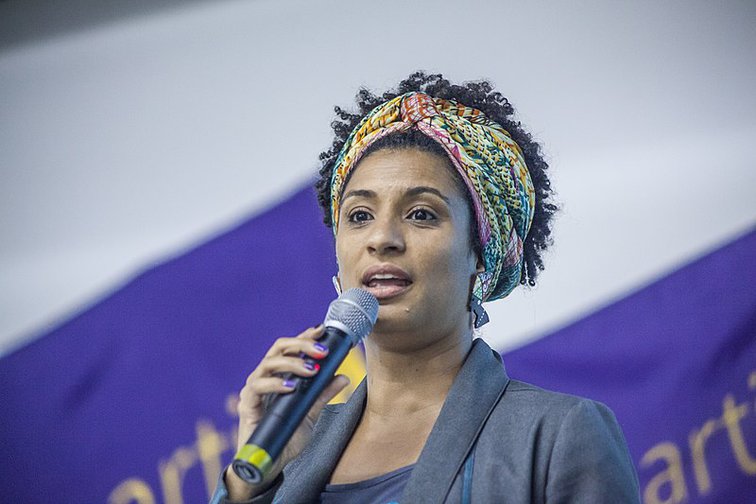
On 12 March 2019 Amnesty International reacted with “BRAZIL: ARRESTS ARE FIRST SIGN OF PROGRESS IN INVESTIGATION INTO KILLING OF MARIELLE FRANCO”.
Responding to reports that Brazilian police have arrested two men in Rio de Janeiro over the killing of human rights defender, Erika Guevara-Rosas, Americas director at Amnesty International, said: “These arrests are the first sign of progress in an investigation that has barely moved in the year since the killings. We are calling for the Brazilian authorities to ensure that investigations are independent and impartial, and to bring all those responsible, including those who ordered the crime, to justice in fair trials.” “There is no better way to honour Marielle Franco’s amazing legacy than by committing to protect human rights defenders and ensuring they can safely continue their vital work.”
A long piece in Open Democracy of 12 March provides more details and links tentatively the murder to the State:
Three moments have been key in unravelling the truth regarding this political crime. The first, the detention in December 2018 of Marcello Moares Siciliano, also a counselor in Rio de Janeiro. He was identified as the supposed intellectual author of the crime and he is being directly accused of being involved in the murder. The State Prosecutor and the Police searched his home and found material connected to the murder that also pointed towards two ex-military police officers who were also detained as possible complices.
The second, in January of this year, was the major revelation that these two military police officers have dark connections to Flavio Bolsonaro, the son of president Jair Bolsonaro, who is currently a senator. The accused are suspected to be members of the militia group ‘Escritório do Crime’, one of the most dangerous criminal groups currently in the west of Rio de Janeiro.
The third, is the unexpected arrest of a military police officer and another ex-police officer only a few days before commemorating one year since her murder. One is accused of pulling the trigger, and the other of driving the vehicle used for the attack. These appear to be the first concrete results of a complex investigation that remains plagued with uncertainty that would confirm the Brazilian state’s role in the murder…
What is certain is that the investigation has also suggested a link between Marielle’s opposition to the militarisation of Rio de Janeiro and her murder. She had discovered some worrying conexions, which could imply her death was caused by powerful mafias that wished to silence her. The complexity and the difficulty of clarifying the events surrounding her death show there are powerful interests impeding the investigation.





 Hans Thoolen on Human Rights Defenders and their awards
A boycott of Brunei-owned luxury hotels was sparked last week in an opinion piece by actor George Clooney, who said a boycott of the high-end hotels — where rooms can start at $600 a night or more — is necessary to keep money from flowing “directly into the pockets of men who choose to stone and whip to death their own citizens for being gay or accused of adultery.” It is gaining support from celebrities including Ellen DeGeneres and Elton John as the country on Wednesday implemented what it called Islamic criminal laws including death by stoning for gay sex.
The nine hotels owned by Brunei are:
..In his opinion piece last week, Clooney noted that he’s stayed at many of the hotels owned by Brunei, a small nation located on the island of Borneo, but said he was unaware of their ownership “because I hadn’t done my homework.” He acknowledged that a boycott is unlikely to change Brunei’s laws, but said consumers must decide whether they want their money to support laws that violate human rights. “Are we really going to help fund the murder of innocent citizens?” he wrote. “I’ve learned over years of dealing with murderous regimes that you can’t shame them. But you can shame the banks, the financiers and the institutions that do business with them and choose to look the other way.”