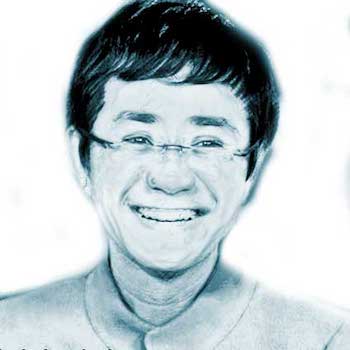
The Norwegian firm took a principled stance to Myanmar’s coup. The same can’t be said for its exit from the country, writes Aung Myo Min, Minister of Human Rights in Myanmar’s National Unity Government., on 25 October 2021.
Praising Norway as a global leader when it comes to protecting human rights defenders and Telenor for acting in principled ways following the attempted coup by pushing back against the military junta’s illegal directives, the author is perplexed that in July, “after considering all possible alternatives and events,” Norway’s largely state-owned telecoms provider agreed to sell its Myanmar operations to the Lebanese firm M1 Group. According to the Centre for Research on Multinational Corporations (SOMO), M1 is “infamous for its business activities in countries with violent totalitarian and extremist regimes.” In 2012, telco MTN Syria, a subsidiary of MTN in which M1 is the major shareholder, undermined protest leaders by blocking text messages at the behest of the Bashir al-Assad regime. In 2013, MTN installed “lawful surveillance equipment” for its mobile network in South Sudan during a crackdown on government critics by state security forces.
It is to be feared that M1 group will hand over user details of some 18.2 million Telenor users to the military junta, placing human rights defenders even more clearly in the crosshairs.
Telenor has operated in Myanmar since 2014, a decision that back then, according to the Group, was informed by “a thorough human rights impact assessment as part of the due diligence.” The Norwegian Government holds a 53 percent stake in Telenor.s.
The Centre for Research on Multinational Corporations, in coordination with 474 Myanmar civil society organizations, has lodged a complaint against the sale with the Norwegian National Contact Point (NCP) for the OECD Guidelines for Multinational Enterprises and, after an initial assessment, the watchdog found merit in the claim. Mediation may well follow. This offers Telenor and the Norwegian government an opportunity to salvage something significantly more valuable than telecoms assets and investments: their reputations.
Telenor says that its decision to sell “was not motivated by financial or strategic objectives,” but guided by its “commitment to its values and standards.” This commitment requires scrutiny. The potential sale of Telenor requires assessment of any adverse human rights impact and prevention or mitigation where they present.
Now (on Thursday 21 October 2021) the 46-strong group of countries across the wider European region has agreed to establish a new legally binding mechanism that would protect environmental defenders.
It takes the form of Special Rapporteur – or independent rights expert – who will quickly respond to alleged violations and take measures to protect those experiencing or under imminent threat of penalization, persecution, or harassment for seeking to exercise their rights under the Convention. As time is of the essence to buttress the safety of environmental defenders, any member of the public, secretariat or Party to the Aarhus Convention, will be able to submit a confidential complaint to the Special Rapporteur, even before other legal remedies have been exhausted. The agreement delegates setting up the new mechanism to the United Nations, or another international body. See also: https://humanrightsdefenders.blog/2019/11/28/cop25-climate-defenders-also-needed-to-be-shielded/
“I remain deeply concerned by the targeting of environmental activists”, said Secretary-General Antonio Guterres, welcoming the rapid response mechanism as “an important contribution to help advance my Call to Action for Human Rights”.
“This landmark decision is a clear signal to environmental defenders that they will not be left unprotected”, said UNECE chief Olga Algayerova. “It demonstrates a new level of commitment to upholding the public’s rights under the Aarhus Convention, as well as Parties’ willingness to respond effectively to grave and real-time challenges seen in the Convention’s implementation on the ground”.
Justice & Peace Netherlands is launching a new call for applications for at risk human rights defenders to participate in Shelter City. The deadline for applications is 7 November 2021 at 23:59 CET.
It is part of Shelter City network – a worldwide initiative to protect human rights defenders at risk and support them to reclaim their civic space! Seventeen cities worldwide offer temporary relocation and shelter, capacity-building tools, trainings and safety to human rights defenders worldwide who stand up against human rights violations in their home countries.
Shelter City provides temporary safe and inspiring spaces for human rights defender at risk where they re-energise, receive tailormade support and engage with allies. The term human rights defender is intended to refer to the broad range of activists, journalists and independent media professionals, scholars, writers, artists, lawyers, civil and political rights defenders, civil society members, and others working to advance human rights and democracy around the world in a peaceful manner.
From March 2022 onwards, several cities in the Netherlands will receive human rights defenders for a period of three months. At the end of their stay in the Netherlands, participants are expected to return with new tools and energy to carry out their work at home.
Journalists’ Safe Haven Initiative
Justice & Peace aims to promote the safety of journalists, and in particular women journalists, worldwide so that they can build new strategies and continue their important work for freedom of expression in their country of origin. With support of the Dutch Ministry of Foreign Affairs, Justice & Peace will be able to provide two additional temporary safe spaces per year in The Hague for journalists at risk and provide them with tailor-made support.
Shelter City and COVID-19
Please note that COVID-19 may pose certain challenges to the stay of human rights defenders in the Netherlands in 2022. These challenges can include:
Limitations and/or changes in the programme that we can offer HRDs during their stay in the Netherlands;
New measures and restrictions (including a lockdown) taken by the Dutch government;
Cancellation of flights to/from the Netherlands;
Postponement of return to the home country after 3 months because of travel restrictions;
Participants might be requested to self-quarantine for 5-10 days upon arrival in the Netherlands (Shelter City programme will be adapted accordingly) and to take other preventive measures due to COVID-19, including a COVID-19 test before travelling to the Netherlands.
Please consider these potential challenges carefully before applying to the programme.
To be eligible for Shelter City, human rights defenders should meet the following conditions:
They implement a non-violent approach in their work;
They are threatened or otherwise under pressure due to their work or activism;
They can be relocated for a period of maximum 3 months. Limited spots are available for people who are not able to stay for the full 3 months;
They are willing and able to return to their country of origin after 3 months;
They are willing to speak publicly about their experience or about human rights in their country to the extent that their security situation allows;
They have a conversational level* of English (limited spots are available for French or Spanish speaking human rights defenders);
They have a valid passport (with no less than six months of validity) or be willing to carry out the procedures necessary for its issuance. Justice & Peace covers the costs of issuing a passport and / or visa (if applicable);
They are not subjected to any measure or judicial prohibition to leaving the country;
They are willing to begin their stay in The Netherlands around March 2022.
Note that additional factors will be taken into consideration in the final round of selection, such as the added value of a stay in The Netherlands as well as gender, geographic, and thematic balance. Please note that we can only accept human rights defenders currently residing in a third country under exceptional circumstances.
To apply for Shelter City, please fill in the form by clicking the link below. Application forms must be submitted by 7 November 2021 at 23:59 CET (Central European Time). An independent commission will select the participants.
Nearly 60 percent of the world’s population (4.66 billion people) uses the internet. It’s our source of instant information, entertainment, news, and social interactions.
But where in the world can citizens enjoy equal and open internet access – if anywhere?
In this exploratory study, our researchers have conducted a country-by-country comparison to see which countries impose the harshest internet restrictions and where citizens can enjoy the most online freedom. This includes restrictions or bans for torrenting, pornography, social media, and VPNs, and restrictions or heavy censorship of political media. This year, we have also added the restriction of messaging/VoIP apps.
Although the usual culprits take the top spots, a few seemingly free countries rank surprisingly high. With ongoing restrictions and pending laws, our online freedom is at more risk than ever.
We scored each country on six criteria. Each of these is worth two points aside from messaging/VoIP apps which is worth one (this is due to many countries banning or restricting certain apps but allowing ones run by the government/telecoms providers within the country). The country receives one point if the content—torrents, pornography, news media, social media, VPNs, messaging/VoIP apps—is restricted but accessible, and two points if it is banned entirely. The higher the score, the more censorship. https://datawrapper.dwcdn.net/IBnNS/3/
The worst countries for internet censorship
North Korea and China (11/11) – No map of online censorship would be complete without these two at the top of the list. There isn’t anything either of them doesn’t heavily censor thanks to their iron grip over the entire internet. Users are unable to use western social media, watch porn, or use torrents or VPNs*. And all of the political media published in the country is heavily censored and influenced by the government. Both also shut down messaging apps from abroad, forcing residents to use ones that have been made (and are likely controlled) within the country, e.g. WeChat in China. Not only does WeChat have no form of end-to-end encryption, the app also has backdoors that enable third parties to access messages.
Iran (10/11): Iran blocks VPNs (only government-approved ones are permitted, which renders them almost useless) but doesn’t completely ban torrenting. Pornography is also banned and social media is under increasing restrictions. Twitter, Facebook, and YouTube are all blocked with increasing pressures to block other popular social media sites. Many messaging apps are also banned with authorities pushing domestic apps and services as an alternative. Political media is heavily censored.
Belarus, Qatar, Syria, Thailand, Turkmenistan, and the UAE (8/11): Turkmenistan, Belarus, and the UAE all featured in our “worst countries” breakdown in 2020. But this year they are joined by Qatar, Syria, and Thailand. All of these countries ban pornography, have heavily censored political media, restrict social media (bans have also been seen in Turkmenistan), and restrict the use of VPNs. Thailand saw the biggest increase in censorship, including the introduction of an online porn ban which saw 190 adult websites being taken down. This included Pornhub (which featured as one of the top 20 most visited websites in the country in 2019).
We welcome the adoption of the resolution on the establishment of the UN Special Rapporteur on human rights and climate change, who will focus on the interdependence between human rights, a healthy environment, and combating climate change and we welcome the Council’s historic recognition of the human right to a clean, healthy and sustainable environment. These are vital steps towards addressing the climate crisis and achieving environmental justice.
Ensuring a safe and enabling environment for civil society participation at the national and international levels is essential.
We welcome the adoption by consensus of the resolution on cooperation with the UN in the field of human rights, in particular the invitation to the Secretary-General to submit his annual reprisals report to the General Assembly, which will ensure greater attention to the issue and contribute to a more coherent system-wide response across the UN.
We express concern over the reclassification of NGO written statements submitted to the 48th session of the HRC from Agenda Item 4 to Agenda Item 3 without informing or consulting with the submitting organizations, and without transparency for the reasons or scope of this reclassification.
We welcome that the resolution on equal participation in political and public affairs puts an important focus on the context of elections and on the impact of COVID-19, underscoring the importance of protecting civil society participation at every level as part of an effective response to the pandemic, in post-pandemic recovery and as a vital component of democratic electoral processes. We regret that, in this and other resolutions, there has been systematic pushbacks against the inclusion of references to children’s right to participate in public affairs, in particular girls, in contravention of international human rights standards.
We also welcome the resolution on privacy in the digital age. Among other issues, the resolution responds to recent Pegasus revelations and includes new commitments on the use of privately-developed surveillance tools against journalists and human rights defenders. It is now essential that the Council goes further and champions the call made by various UN human rights experts to implement a global moratorium on the sale, export, transfer, and use of private surveillance technology without proper human rights safeguards. We also welcome new language in the text on privacy violations and abuses arising from new and emerging technologies, including biometric identification and recognition technologies. In future iterations of the text, we encourage the core group to go further in calling for a ban on technologies that cannot be operated in compliance with international human rights obligations.
With the withdrawal of the resolution on the realisation of a ‘better life’, we are glad to see that the Council’s mandate and resources will not be diverted to efforts that would distract from its core work or dilute human rights standards.
We regret that it was not possible to schedule the briefing by the Peacebuilding Commission (PBC) as per resolution 45/31 – and look forward to future opportunities for exchanges between the HRC and the PBC to learn from one another in efforts to address common contemporary challenges.
We deplore the abandonment of the Yemeni people by the HRC member States who did not support the renewal of the Group of Eminent Experts on Yemen. This failure of the HRC gives the green light to all parties to the conflict to continue their campaign of death and destruction in Yemen. We demand an international criminal investigative mechanism. Anything less is unacceptable.
We regret that the HRC has not responded to the calls of civil society and the evidence of widespread violations in countries including China, Egypt and Saudi Arabia where the situations manifestly warrant the establishment of international investigation and accountability mechanisms.
The establishment of a Special Rapporteur on the situation of human rights in Afghanistan supported by additional and dedicated expertise in OHCHR should bring much needed scrutiny. While we are disappointed that the Council did not establish the full-fledged investigative and monitoring mechanism that the situation warrants, we hope this decision represents a first step towards a stronger response to ensure accountability for human rights violations and crimes under international law in Afghanistan.
While the extension of international scrutiny in Burundi, including through ongoing documentation of violations, is welcome, we regret the absence of a clear strategy post-Commission of Inquiry. As the Burundian government continues to reject cooperation with the Council and its mechanisms and to deny violations, and given that the newly-created Special Rapporteur will not have access to the country for the foreseeable future, it is vital for the Council to rely on benchmarks to design the next steps of its action on, and engagement with, Burundi. We thank the COI for its important work since 2016. It has set the bar high for investigative mechanisms.
We welcome the extension of the mandate of the Special Rapporteur on the situation of human rights in Cambodia with a mandate to provide an additional oral update to the Council. However, the resolution falls short of the minimum action required to credibly address the increasing regression in democratic space and civil and political rights and to put in place necessary measures to create an environment conducive for free, fair and inclusive elections in 2022 and 2023, including mandating enhanced monitoring and reporting by the High Commissioner.
More than four years after the beginning of the conflict in the North-West and South-West regions in Cameroon, we deeply regret States’ failure, once again, to collectively address the country’s human rights crisis. As other international and regional bodies remain silent, the Council has a responsibility to act, including through the creation of an investigative and accountability mechanism.
We welcome the renewal of the mandate of the Fact-Finding Mission (FFM) on Libya but regret that the mandate has only been extended for a 9-month period. The severity of ongoing and past violations and abuses in Libya, including war crimes, requires an FFM with a sustained and properly resourced mandate.
We welcome a second joint statement on Nicaragua, and urge concerned States to step up collective action in light of increasing repression ahead of the November 7 elections. Should the Government not revert course, it is fundamental that the Council takes stock and provides an adequate, strong response, including the establishment of an international mechanism at its 49th session.
We welcome the High Commissioner’s oral updates on the Philippines. While the UN Joint Program on Human Rights (UNJP) might provide a framework for improvements, we remain concerned that the UN Joint Programme on Human Rights is instrumentalized by the Government only to please the international community. The national accountability mechanism fails to show meaningful progress. We continue to urge the Council to consider establishing a Commission of Inquiry on the Philippines, to eventually start the long-overdue independent and transparent investigation into the human rights violation in the country.
We welcome the robust resolution that extends the mandate of the Independent Expert on Somalia for a further year.
While human rights advancements since 2019 in Sudan should be recognized, Sudan still faces significant human rights challenges including threats of the militarization of the State which is also the most challenging peril for women’s rights and WHRDs in Sudan. The transition is not complete, and political uncertainty remains. Against this backdrop, the Council’s decision to discontinue its formal monitoring of and reporting on Sudan is premature as the military establishment continues to pose a threat to democracy and stability in Sudan. We urge the Sudanese authorities to fully cooperate with the UN human rights system to address ongoing violations including sexual and gender based violence and the legacy of 30 years of dictatorship, including impunity for crimes under international law.
Signatories: International Service for Human Rights (ISHR), Cairo Institute for Human Rights Studies; DefendDefenders (East and Horn of Africa Human Rights Defenders Project); Commonwealth Human Rights Initiative (CHRI); FIDH; ARTICLE 19; International Commission of Jurists; FORUM ASIA; International Bar Association; Franciscans International; CIVICUS: World Alliance for Citizen Participation; Association of Progressive Communications – APC; child rights connect; Gulf Center for Human Rights
Here a bit of wrap up on recent developments in Indonesia. First two disclaimers:
(1) I have a long-standing interest in this country [see: Indonesia and the Rule of Law, 20 Years of “New Order” Government, a Study prepared for the ICJ, published by Frances Pinter Publishers, London, 1987, pp 208 (ISBN: 0 86187 919 8) and previous posts: https://humanrightsdefenders.blog/tag/indonesia/]
(2) the human rights situation has generally improved since that book in 1987 and is a lot better compared to other countries in Asia such as China and Myanmar.
Over the past two years, human rights defenders (HRDs) have faced unprecedented challenges in Asia, where existing risks were exacerbated, while new threats have emerged. Governments enacted and used repressive laws, online harassment became widespread, and Asian HRDs have seen their families and loved ones increasingly subjected to harassment and threats. The COVID-19 pandemic has also significantly increased violations against defenders, and created new challenges for them to safely conduct their work.
Asian Forum for Human Rights and Development (FORUM-ASIA) and the Commission for Disappeared Persons and Victims of Violence (KontraS) presented a joint analysis, “Refusing Silence: A joint analysis on the situation of Human Rights Defenders”, as part of a collaboration in documenting cases of violations against human rights defenders in Asia, and particularly in Indonesia since 2020. [For the full PDF version of this analysis in English, click here]
The Indonesian government should put an end to the judicial harassment against human rights defenders Fatia Maulidiyanti and Haris Azhar, and uphold the right to freedom of expression, the human rights organisations said.
‘The Government of Indonesia must uphold its international human rights obligations under the International Covenant on Civil and Political Rights (ICCPR) as well as its own national constitution which protects the right to freedom of expression,’ said the groups.
The groups urged the Indonesian government to ensure that all persons can express their opinions without fear of reprisals, and to ensure its actions are compliant with Indonesia’s Constitutional protections for human rights and the ICCPR, of which Indonesia is a State Party. The National Human Rights Institution, Komnas HAM, must also work towards ensuring the protection of defenders facing judicial harassment, the groups said.
On 22 September, Luhut Binsar Pandjaitan, the Indonesian Coordinating Minister for Maritime Affairs and Investment filed a police report against human rights defenders Fatia Maulidiyanti, Coordinator of the Commission for the Disappeared and Victims of Violence (Kontras), and Haris Azhar, Founder of Lokataru Foundation. The police report alleges that the two individuals violated criminal defamation provisions (Article 310 (1) of the Penal Code), and the controversial Electronic Information and Transaction Law (EIT Law). Luhut Binsar Pandjaitan has reportedly demanded IDR 300 billion, approximately USD 21 million, in compensation.
The report was filed after subpoenas were earlier sent to the two human rights defenders following a talk show on Haris Azhar’s YouTube channel, titled ‘Ada Lord Luhut di balik Relasi Ekonomi-Ops Militer Intan Jaya!! Jenderal BIN Juga Ada!!’, (There is Lord Luhut behind the relation of Economy-Military Operation Intan Jaya!! General of State Intelligence Agency is also there!!) in which Haris Azhar and Fatia Maulidiyanti discussed the findings of a multi-stakeholder report revealing the alleged involvement of active and retired Indonesian army officials in the business operations of the gold mining sector…
The report also recorded the escalation of violent and armed conflict triggered by military operations, one of which occurred in the Intan Jaya Regency. The conflict resulted in the loss of civilian lives and the displacement of thousands of people, including children and women.
‘The legal actions by the Coordinating Minister constitute judicial harassment and abuse of power. It criminalises the rights of these two human rights defenders to express their opinions on public affairs and creates a chilling environment for individuals who criticise the government,’ the groups said.
‘We call on the Indonesian government to amend all repressive laws and legal provisions that hinder the protection of freedom of expression, and ensure the laws align with international human rights standards. The criminalisation of defamation is an inherently disproportionate and unnecessary restriction to the right to freedom of opinion and expression, under international human rights law.[4] Indonesia must immediately drop the charges against Fatia and Haris and take steps towards preventing the misuse of litigation against human rights defenders and civil society that erode the exercise of their rights,’ they concluded.
And then there is the situation of Papua:
Indonesia regularly receives criticism for its strategy in relation to separatist groups in Papua, a strategy that relies heavily on a security-based approach and which has raised questions about the government’s commitment to human rights. Most recently, the nation found itself included on a list of 45 countries cited as being culpable of intimidation and reprisals against human rights defenders seeking to cooperate with the UN, according to an annual report from the UN Secretary General’s Office distributed on September 17.
On 21 September 2021 A U.N. expert has urged Indonesia to provide an independence activist in its Papua province with proper medical care to “keep him from dying in prison”, after reports that his health had deteriorated.
Victor Yeimo, 39, who is the international spokesman of the West Papua National Committee, was arrested in the provincial capital of Jayapura in May. He has been charged with treason and inciting violence and social unrest in relation to pro-independence protests that swept the remote, resource-rich region for several weeks in 2019. Yeimo has denied the charges.
His trial went ahead in August despite repeated requests from his lawyer for a delay on medical grounds, Mary Lawlor, U.N. special rapporteur on the situation of human rights defenders, said in a statement on Monday. “I’ve seen it before: States deny medical care to ailing, imprisoned human rights defenders, which results in serious illness or death,” said Lawlor. “Indonesia must take urgent steps to ensure the fate does not await Mr Yeimo,” she said, adding that his access to medical care had been restricted and his prison conditions “may have amounted to torture”. Yeimo is being treated at a Jayapura hospital after a court ordered he receive medical attention. Papuan activist Rosa Javiera told a news conference organised by the rights group Amnesty International on Tuesday that Yeimo was suffering from chronic tuberculosis that required continuous medical treatmentt.
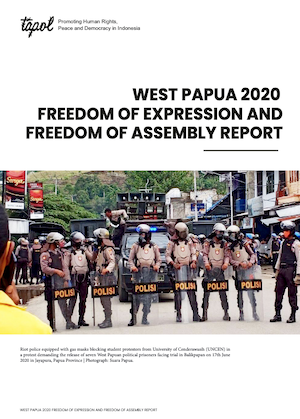
The Indonesian government has used the covid-19 pandemic as a pretext to crack down on West Papuan street protests and to impose online censorship, according to new research published by the human rights watchdog TAPOL. Covid-19 protocols have given more power to the police and military to crush protests but they are not fairly implemented across Indonesia in general. The findings are in a new study, the West Papua 2020: Freedom Of Expression And Freedom Of Assembly Report, in which TAPOL has collated and analysed incidents recorded by West Papuan and Indonesian civil society organisations.
The West Papua 2020 Report. Image: Tapol screenshot APR
Freedom on the Net 2021 finds that while some democratic governments have made good-faith attempts to regulate the technology industry, state intervention in the digital sphere worldwide has contributed to the 11th consecutive year of global decline in internet freedom.
Governments around the world are increasingly asserting their authority over technology platforms, forcing businesses to comply with censorship and surveillance and contributing to an 11th consecutive year of global decline in internet freedom, according to Freedom on the Net 2021, the annual country-by-country assessment of internet freedom released today by Freedom House.
Global norms shifted dramatically toward greater state intervention in the digital sphere over the past year. Of the 70 states covered by Freedom on the Net 2021, 48 pursued legal or administrative action against technology companies. Some measures reflected legitimate attempts to mitigate online harms, rein in misuse of data, or end manipulative market practices. Many governments, however, proposed new policies that obliged businesses to remove content and share personal data with authorities, at great cost to free expression, privacy, and public accountability.
This change in the balance of power between companies and states has come amid a historic crackdown on freedom of expression online. In 56 countries, officials arrested or convicted people for their online speech. Governments suspended internet access in at least 20 countries, and 21 states blocked access to social media platforms, most often during times of political turmoil such as protests and elections. Authorities in at least 45 countries are suspected of obtaining sophisticated spyware or data-extraction technology from private vendors.
“The rights of internet users around the world, especially the rights to free expression and privacy, are being massively violated as a result of recent state actions,” said Michael J. Abramowitz, president of Freedom House. “Instead of using regulation to curb the immense power of tech companies, many governments are wielding it for their own repressive purposes.”
The decision by several platforms to deactivate the accounts of outgoing US president Donald Trump—in the wake of the January 6 assault on the Capitol—intensified concerns about the arbitrary power of a few firms to shape political debate, as well as their responsibility to stem offline violence. The move sparked a plethora of new regulatory and legislative proposals, including bad-faith attempts to prevent companies from moderating the accounts of politicians and state-run media. Tech companies faced high-profile showdowns with illiberal and authoritarian leaders in India, Nigeria, Russia, and Turkey that will have global implications for the future of free expression online.
“In these high-stakes battles between governments and tech companies, human rights risk becoming the main casualties,” said Adrian Shahbaz, director for technology and democracy at Freedom House. “Given the examples to date, you can hardly blame people for being skeptical that government regulation will lead to greater protection of their rights online. Regulations should ensure that power does not accumulate in the hands of a few dominant actors, whether in government or the private sector.”
Internet freedom plummeted by 14 points in Myanmar—the largest annual decline ever recorded on Freedom on the Net’s 100-point scale—after the military refused to accept the results of the November 2020 general elections and launched a deadly coup in February 2021. Electoral disputes also led to major internet freedom declines in Belarus, where authoritarian incumbent Alyaksandr Lukashenka claimed victory in a fraudulent presidential election in August 2020, and Uganda, where authorities shut off the internet and blocked social media platforms during marred general elections in January 2021. In addition, officials in both Myanmar and Belarus sought to silence independent online media by shutting down news outlets and harassing, assaulting, and torturing online journalists.
“Governments everywhere are invoking a vague need to retake control of the internet—whether from foreign powers, multinational corporations, or even civil society,” said Shahbaz. “In the absence of a shared vision for a free and open internet, many states are imposing restrictions on the free flow of information across borders, denying people access to life-changing tools based solely on their location. This fragmentation is diminishing the emancipatory power of the internet.”
“The daunting complexity of internet regulation makes it all the more important for democracies to take the lead and set a high bar by introducing regulatory approaches that protect human rights online and preserve a free and open internet,” said Allie Funk, senior research analyst for technology and democracy at Freedom House. “The laissez-faire approach to the tech industry spurred some forms of innovation, but it has also created opportunities for authoritarian manipulation, data exploitation, and widespread malfeasance. Democratic governments should pursue well-crafted regulations that tackle these problems while protecting people’s rights to express themselves, share information across borders, and hold the powerful to account.”
KEY FINDINGS:
Global internet freedom declined for the 11th consecutive year. The greatest deteriorations were documented in Myanmar, Belarus, and Uganda, where state forces cracked down amid electoral and constitutional crises.
Governments clashed with technology companies on users’ rights. Authorities in at least 48 countries pursued new rules for tech companies on content, data, and competition over the past year. With a few positive exceptions, the push to regulate the tech industry, which stems in some cases from genuine problems like online harassment and manipulative market practices, is being exploited to subdue free expression and gain greater access to private data.
Free expression online is under unprecedented strain. More governments arrested users for nonviolent political, social, or religious speech than ever before. Officials suspended internet access in at least 20 countries, and 21 states blocked access to social media platforms. Authorities in at least 45 countries are suspected of obtaining sophisticated spyware or data-extraction technology from private vendors.
China ranks as the worst environment for internet freedom for the seventh year in a row. Chinese authorities imposed draconian prison terms for online dissent, independent reporting, and mundane daily communications. The COVID-19 pandemic remains one of the most heavily censored topics. Officials also cracked down on the country’s tech giants, citing their abuses related to competition and data protection, though the campaign further concentrated power in the hands of the authoritarian state.
The United States’ score declined for the fifth consecutive year. False, misleading, and manipulated information continued to proliferate online, even affecting public acceptance of the 2020 presidential election results. The new administration took promising steps to enforce stronger protections for internet users.
State intervention must protect human rights online and preserve an open internet. The emancipatory power of the internet depends on its egalitarian nature. To counter digital authoritarianism, democracies should ensure that regulations enable users to express themselves freely, share information across borders, and hold the powerful to account.
Freedom on the Net 2021 assesses internet freedom in 70 countries, accounting for 88 percent of internet users worldwide. The report focused on developments that occurred between June 2020 and May 2021. Detailed country reports, data on 21 internet freedom indicators, and policy recommendations can be found at freedomonthenet.org.
Freedom on the Net 2021: The Global Drive to Control Big Tech
In the high-stakes battle between states and technology companies, the rights of internet users have become the main casualties, according to Freedom on the Net 2021, the annual country-by-country assessment of internet freedom released by Freedom House. Read the Report
The sixth annual Aurora Prize for Awakening Humanity was awarded on 9 October 2021 to Julienne Lusenge, a human rights defender, co-founder of Women’s Solidarity for Inclusive Peace and Development (SOFEPADI) and Fund for Congolese Women (FFC), who has been helping the victims of wartime sexual violence for years. Her boundless courage and tireless activism have shone a light on the desperate plight of thousands of Congolese women subjected to horrific sexual abuse amidst the civil war in the country, exposing the perpetrators and bringing them to justice. She was named the 2021 Aurora Prize Laureate at the Ceremony titled “Reviving Together” that was held in Venice, Italy. For more on the Aurora Prize and its laureates, see: https://www.trueheroesfilms.org/thedigest/awards/35D4B5E3-D290-5DF9-08E1-14E6B3012FFA
“Julienne Lusenge’s exceptional achievements remind us of the impact one person can have, even when encountering the seemingly insurmountable pressure and risks. By recognizing her courage, commitment and selflessness, we are hopeful that she can also inspire each one of us to think about what we can do to stand up on behalf of those whose rights are abused and who are in dire need of our solidarity and support,” noted Lord Ara Darzi, Chair of Aurora Prize Selection Committee and Co-Director of the Institute of Global Health Innovation at Imperial College London. Julienne Lusenge won 4 earlier awards: see https://www.trueheroesfilms.org/thedigest/laureates/d373dbdb-b269-4ecd-810c-bfd05b18859c
As the 2021 Aurora Prize Laureate, Julienne Lusenge will receive a $1,000,000 grant and a chance to continue the cycle of giving by supporting organizations that help people in need. This year, considering the acute needs of the people of Artsakh (Nagorno-Karabakh) affected by the 2020 war, Aurora will recommend her to direct 25% of the award funds to addressing urgent humanitarian issues in Artsakh. The Aurora Co-Founders are committed to matching this contribution to bring the total amount to $500,000. Besides this, Ms. Lusenge has nominated three organizations that support grassroots women’s organizations, empower survivors of gender-based violence and reintegrate internally displaced persons:
Fund for Congolese Women;
League for Congolese Solidarity;
Association of Mothers for Development and Peace.
“The outstanding work carried out by Julienne Lusenge and her organizations that help women, as well as her courage and perseverance in going against powerful local forces to protect them, is an example of empathy, kindness and dedication. One of the most important goals of Aurora is empowering such heroes, and we are grateful for the opportunity to do just that,” said Hina Jilani, Aurora Prize Selection Committee member and Former United Nations Special Representative of the Secretary-General on Human Rights Defenders..
On 8 October 2021 the Norwegian Nobel Committee decided to award the Nobel Peace Prize for 2021 to Maria Ressa and Dmitry Muratov for their efforts to safeguard freedom of expression, which is a precondition for democracy and lasting peace. Ms Ressa and Mr Muratov are receiving the Peace Prize for their courageous fight for freedom of expression in the Philippines and Russia. At the same time, they are representatives of all journalists who stand up for this ideal in a world in which democracy and freedom of the press face increasingly adverse conditions.
Maria Ressa uses freedom of expression to expose abuse of power, use of violence and growing authoritarianism in her native country, the Philippines. In 2012, she co-founded Rappler, a digital media company for investigative journalism, which she still heads. As a journalist and the Rappler’s CEO, Ressa has shown herself to be a fearless defender of freedom of expression. Rappler has focused critical attention on the Duterte regime’s controversial, murderous anti-drug campaign. The number of deaths is so high that the campaign resembles a war waged against the country’s own population. Ms Ressa and Rappler have also documented how social media is being used to spread fake news, harass opponents and manipulate public discourse. Maria Ressa has received earlier recognition with 5 human rights awards [see: https://www.trueheroesfilms.org/thedigest/laureates/c048da20-ba0f-11ea-a77e-f524f6fc9aaa]
Dmitry Andreyevich Muratov has for decades defended freedom of speech in Russia under increasingly challenging conditions. In 1993, he was one of the founders of the independent newspaper Novaja Gazeta. Since 1995 he has been the newspaper’s editor-in-chief for a total of 24 years. Novaja Gazeta is the most independent newspaper in Russia today, with a fundamentally critical attitude towards power. The newspaper’s fact-based journalism and professional integrity have made it an important source of information on censurable aspects of Russian society rarely mentioned by other media. Since its start-up in 1993, Novaja Gazeta has published critical articles on subjects ranging from corruption, police violence, unlawful arrests, electoral fraud and ”troll factories” to the use of Russian military forces both within and outside Russia.
Novaja Gazeta’s opponents have responded with harassment, threats, violence and murder. Since the newspaper’s start, six of its journalists have been killed, including Anna Politkovskaja who wrote revealing articles on the war in Chechnya. Despite the killings and threats, editor-in-chief Muratov has refused to abandon the newspaper’s independent policy. He has consistently defended the right of journalists to write anything they want about whatever they want, as long as they comply with the professional and ethical standards of journalism.
Muratov dedicated his award to six contributors to his Novaya Gazeta newspaper who had been murdered for their work exposing human rights violations and corruption. “Igor Domnikov, Yuri Shchekochikhin, Anna Politkovskaya, Stas Markelov, Anastasia Baburova, Natasha Estemirova – these are the people who have today won the Nobel Prize,” Muratov said, reciting the names of slain reporters and activists whose portraits hang in the newspaper’s Moscow headquarters.
Free, independent and fact-based journalism serves to protect against abuse of power, lies and war propaganda. The Norwegian Nobel Committee is convinced that freedom of expression and freedom of information help to ensure an informed public. These rights are crucial prerequisites for democracy and protect against war and conflict. The award of the Nobel Peace Prize to Maria Ressa and Dmitry Muratov is intended to underscore the importance of protecting and defending these fundamental rights.
The government of Vietnam has admitted that it arrested an indigenous rights activist for possessing translated copied of the United Nations Declaration on the Rights of Indigenous Peoples. In an extraordinary statement, made to the United Nations High Commission on Human Rights on 20 September 2021 and just now made public, the government of Vietnam justified these arrests as being necessary to maintain national unity in Vietnam. In doing so, it has effectively sought to justify the criminalization of possession of a UN document that establishes core human rights belonging to indigenous people that the government of Vietnam itself voted to create.
The United Nations Declaration on the Rights of Indigenous Peoples (UNDRIP), in the words of the United Nations, “is the most comprehensive international instrument on the rights of indigenous peoples” and “establishes a universal framework of minimum standards for the survival, dignity and well-being of the indigenous peoples of the world and it elaborates on existing human rights standards and fundamental freedoms as they apply to the specific situation of indigenous peoples.” It was approved by the UN General Assembly on 13 September 2007. … Vietnam was one of the 144 countries to vote in its favor.
In April 2021, the Unrepresented Nations and Peoples Organization (UNPO) brought to international attention the case of Mr. Duong Khai, a Khmer Krom activist campaigning for recognition of the indigenous status of the Khmer Krom people in Vietnam, who was arrested and threatened for possession of translated copies of the UNDRIP. In June 2021, a team of UN independent experts wrote a Joint Allegation Letter to the governmment of Vietnam demanding an answer and expressing their “concern that these reported threats may be connected to his efforts to disseminate United Nations documents, in particular the promotion and translation of the UNDRIP, and may have chilling effect on any expression, by all those, including human rights defenders, who draw attention to minority and indigenous people’s issues in the country.”
On 20 September 2021, the government of Vietnam responded to the UN experts in a letter to the UN Office of the High Commissioner for Human Rights. The response is deeply troubling. Instead of denying that such repressive actions took place, or admitting that they did and outlining a process for redress, the government of Vietnam admitted Mr. Duong Khai was indeed arrested for possession of copies of the UNDRIP and claimed that the arrest was justified in order to maintain “national unity” because, according to the government of Vietnam, there are no indigenous peoples in the country.
It is well-settled that indigenous people make up approximately 15% of Vietnam’s population and that the Khmer Krom are one of the major indigenous communities. Yet Vietnam denies the existance of indigenous people, resulting in significant negative impacts on these communities. Mr. Duong Khai is one of many human rights defenders campaigning for recognition of indigenous status, and persecuted for doing so. In Vietnam, seeking indigenous status is so dangerous that an indigenous person wearing a T-shirt with the logo of the United Nations Sustainable Development Goals stating “Implementing the United Nations 2030 Agenda for Sustainable Development to ensure No Khmer-Krom are left behind” can be arrested.
This case presents a troubling baseline for the status of human rights in Vietnam. If, in Vietnam, a person can be criminalized merely for possessing and distributing UN human rights instruments that their own government has had a hand in creating, there can be no limit to the ability of the state to repress its citizens and eradicate freedom of expression and opinion.
Unfortunately, all too often today, Member States of the United Nations justify the worst repression under the guise of “national unity.” Indigenous communities and religious and ethnic minorities regularly bear the brunt of this fundamental perversion of the international system. Yet rarely do states so explicitly and openly violate these rights as the government of Vietnam has done in this case. By criminalizing the mere possession of a document that presents solely the text of a UN human rights instrument the government of Vietnam is openly repudiating the very foundations of the international order.
In light of the government of Vietnam’s admission in this case, the UNPO is calling on the entire international community to unequivocally condemn the government’s action in this case and to ensure that any aid or support to the country or trade with it is conditioned on the provision of adequate protection for human rights defenders, indigenous communities, and freedom of expression and opinion.