Archive for the 'human rights' Category

Shocking case of refoulement from Spain

March 31, 2022

On 30 March 2022, Statewatch along with 13 other human rights organisations condemned the deportation from Spain to Algeria of Mohamed Benhalima, a human rights activist who faces a serious risk of torture and other ill-treatment in the North African state.

The organisations strongly condemn the deportation by Spain of Algerian activist Mohamed Benhalima, in the evening of 24 March 2022, despite the risks of torture and serious human rights violations he faces in Algeria, and therefore in blatant violation of Spain’s international obligations on non-refoulement. The authorities had been made aware, through civil society and legal appeals, that Mr Benhalima faces a high risk of torture, arbitrary detention and unfair trial in Algeria, where such violations are increasingly common against prisoners of opinion and peaceful activists.

Mohamed Benhalima is an Algerian citizen and a former Army corporal turned whistleblower, who exposed corruption among Algeria’s high-ranking military officials in 2019. He left Algeria after receiving information that his name was on a list of wanted military officials at risk of detention by the Algerian army for their participation in the Hirak, a mass pro-democracy protest movement.

He sought asylum in Spain on 18 February 2020 and again on 18 March 2022; Spain refused him asylum both times. On 14 March 2022, authorities opened an administrative file of expulsion for infringement of Art. 54.1.a. of Immigration Law 4/2000, alleging that Mr. Benhalima took part in “activities contrary to public security or which may be harmful for Spanish relationships with foreign states”.

Spanish authorities justified the opening of an expulsion file based on Mr. Benhalima’s alleged association with political opposition group Rachad, which was listed as a terrorist group by Algeria on 6 February 2022. Spanish authorities claimed that Rachad’s objective was to infiltrate radical youth into Algerian society to protest against the Algerian government, and concluded that the activist was a member of a terrorist group.

Authorities did not provide any proof of violent action or speech or any other action taken by the activist that would fall under a definition of terrorism in accordance with the definition proposed by the UN Special Rapporteur on the protection of human rights while countering terrorism. Authorities also do not appear to have considered a context in which Algerian authorities have been increasingly levelling bogus terrorism and state security charges against peaceful activists, human rights defenders and journalists since April 2021. On 27 December 2021, UN Special Procedures warned that the definition of terrorism in the Algerian Penal Code was too imprecise and undermined fundamental rights. They stated that the procedure for registration on the national terrorist list did not comply with international human rights standards and expressed concern that it could give rise to abuse.

On 24 March around 7pm, Mr. Benhalima’s lawyers were notified of the resolution of expulsion and promptly filed a request for an interim suspensive measure at the National Court of Spain, which was rejected; however, it was revealed later that the activist was already on his way to Algeria at the time.

On 21 March 2022, the UN High Commissioner for Refugees (UNHCR) submitted a non-public report to the Spanish government stating that Mr. Benhalima’s asylum request should be studied thoroughly in a regular procedure and not rejected expediently, arguing that the fear of torture was credible and that Algeria’s criminalisation of peaceful opposition was internationally recognised.

On 27 March, Benhalima appeared in a video broadcasted on Ennahar TV, in which he “confesses” to the crimes of conspiracy against the state, and states that he was not treated badly in custody. However, the undersigned organisations call into question the reliability of such statements which might be the result of duress. In addition, Benhalima had himself released a video from the retention centre in Valencia, before his deportation to Algeria, in which he warns that such videos would not be genuine and would show that he “was subjected to severe torture at the hands of intelligence services.”

In January and March 2021, in Algeria, Mohamed Benhalima was sentenced in absentia to a total of 20 years in prison for charges including “participation in a terrorist group” (Article 87bis 3 of the Penal Code) and “publishing fake news undermining national unity” (Art.196 bis) among other charges. The overly broad formulation of both articles has been used by Algeria repeatedly to criminalise fundamental freedoms. In one of the verdicts, issued on 9 March 2021, the judge sentenced Benhalima to 10 years in prison for his online publications, including videos exposing corruption in the army, a form of peaceful expression, which is protected under the right to freedom of expression.

Spanish authorities additionally motivated the expulsion based on Mr. Benhalima’s close relationship with Mohamed Abdellah, another Algerian whistleblower and former member of the military, who also sought refuge in Spain in April 2019 and was forcibly returned on 21 August 2021 using Art. 54.1.a. of Law 4/2000, in similar circumstances and for the same motives.

Mohamed Abdellah, currently detained in the military prison of Blida, stated in court on 2 January 2022 that he had been subjected to various forms of torture and ill-treatment upon his return to Algeria, including prolonged solitary confinement in a cell with no light and physical abuse, according to a witness who attended the hearing. He was also deprived of access to a lawyer.

Despite the strong similarities between both cases providing a compelling precedent about the actual risk of torture and ill treatment of activists and whistleblowers, notably former members of the military, in Algeria, the Spanish government showed its determination to forcibly return someone where their physical and psychological integrity was not guaranteed. In doing so, Spain flouted critical international law obligations under which nobody should be returned to a country where they would be in danger of suffering torture or other cruel, inhuman or degrading treatment.

Signatures

  • MENA Rights Group
  • Justitia Center for legal protection of human rights in Algeria
  • World Organisation Against Torture
  • Red Jurídica
  • CIHRS
  • Amnesty International
  • Irídia, Center for Human Rights
  • Collectif des familles de disparus en Algérie
  • Al Karama
  • Statewatch
  • Spanish Commission for Refugees – CEAR
  • Euromed Rights
  • Alianza
  • ActionAid

https://www.statewatch.org/news/2022/march/spain-forsakes-international-obligations-in-appalling-refoulement-of-algerian-whistleblower/

https://www.aljazeera.com/features/2022/4/6/rights-defenders-slam-spains-deportation-of-algerian-dissident

Bolsonaro’s “indigenous medal” is giving awards a bad name.

March 26, 2022
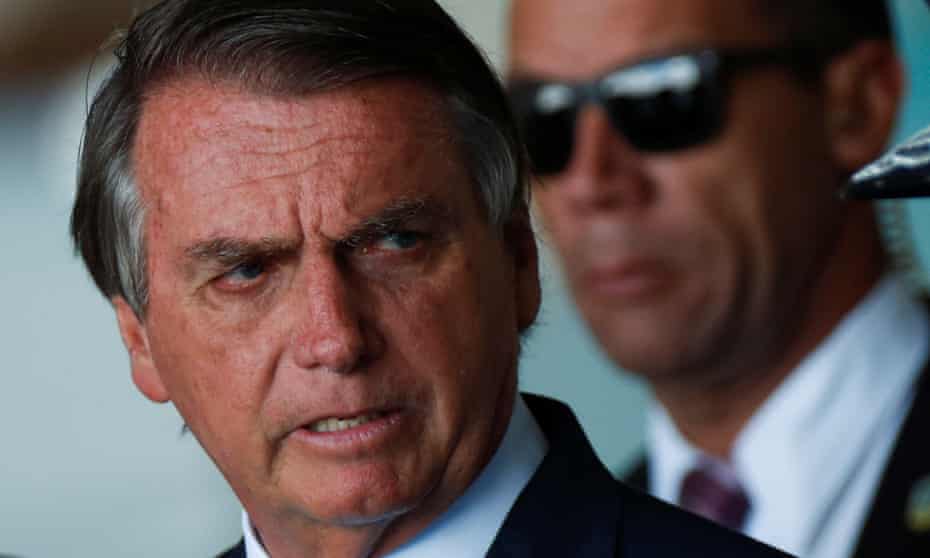
Jair Bolsonaro

Indigenous leaders said Jair Bolsonaro had spent three years promoting legislation that would open their territories to commercial development. Photograph: Adriano Machado/Reuters

Tom Phillips on 17 March 2022 reported how the Brazilian Government honours a president who activists accuse of undermining Indigenous protections.

Brazilian activists are outraged after Jair Bolsonaro – who has been accused of spearheading a cataclysmic attack on Indigenous rights – was honoured by his own government for his supposedly “altruistic” efforts to protect Indigenous lives.

Bolsonaro was granted the Medal of Indigenous Merit on Wednesday in recognition of what the justice ministry called his attempts to defend Indigenous communities in the South American country.

The same honour was bestowed upon key Bolsonaro allies, including his health, defence and agriculture ministers and the hardline institutional security chief, Augusto Heleno, who has accused Indigenous activists of committing crimes against the state by criticising the government’s policies overseas.

Indigenous leaders reacted to the award with disbelief and exasperation, noting how Brazil’s far-right president had spent three years undermining its Indigenous and environmental protection agencies, Funai and Ibama, and promoting legislation that would open Indigenous territories to commercial development.

The Articulation of Indigenous Peoples of Brazil criticised the government’s “contemptuous gesture”. “They want to destroy us at all costs and, as if that wasn’t enough, they now want to pay tribute to themselves in our name?” the group said, claiming Bolsonaro deserved only “the medal of Indigenous genocide”.

Alessandra Korap, an activist from the Amazon’s Munduruku people, said Bolsonaro needed to be arrested, not honoured “for all the destruction he has inflicted on Indigenous people and the forest”. [see also: https://humanrightsdefenders.blog/2020/10/14/brazilian-alessandra-korap-munduruku-wins-2020-robert-f-kennedy-human-rights-award/]

“Now he wants to use the Ukraine war [as justification] for allowing mining, oil and gas exploration, hydroelectric dams and soy plantations on Indigenous lands,” Korap added, in reference to recent moves to fast-track draft legislation allowing such activities.

Alessandro Molon, the lower house leader of Brazil’s opposition, urged Congress to strip Bolsonaro of the medal. “It’s a mockery that the same government that is trying to legalise mining on Indigenous lands – endangering the existence of these utterly persecuted and mistreated people – has the nerve to award itself medals of ‘merit’ for all of the harm it has caused over the past three years,” Molon told the magazine Veja.

“If Congress doesn’t overrule this absurdity it will be associating itself with this unprecedented assault on Indigenous people,” Molon said.

https://www.theguardian.com/world/2022/mar/17/contemptuous-anger-in-brazil-as-bolsonaro-given-indigenous-merit-medal

Sudanese Fadia Khalaf, Defender of the Month of March

March 25, 2022

DefendDefenders’ regulary chooses a Defender of the Month. Here an example:

Fadia Khalaf was not meant to be an activist. By her own admission, she was born into a conservative Muslim family – the first of six siblings. In Saudi Arabia where she was born and raised, the ruling ideology in the Kingdom was wahabbism – a puritanical version of Islam in which women are strictly expected to stay in the background and not play any public role. Yet even in that conservative setting, she managed to nurture a political consciousness:

“I think reading at young age helped build my awareness on concepts like justice and rights in general. I was exposed to concepts around human freedom, and that nurtured the rebel in me,” she says. Fadia Khalaf Tweet

Now aged 25, Fadia is the Co-founder of Missing Initiative, a volunteer, youth organization dedicated to documenting all persons that are reported missing during Sudan’s ongoing political crisis. The initiative was started in the aftermath of the Khartoum massacre, when armed forces of the Sudanese Transitional Military Council attacked a protest outside the country’s military headquarters, killing at least 127 people.

From the start of protests to remove Bashir (Sudan’s long-serving President deposed in April 2019), we would always report people who we would realize never returned home after the protests. This was our way of looking out for each other. But after 3 June 2021 (the day of the Khartoum massacre), the situation was terrible. People were killed, women were raped, while many others were disappeared. All of a sudden, because of our past work, I started getting tens of phone-calls of people letting me know that their persons were missing, asking me to do something about it. I had to post all these missing cases on my social media platforms(Twitter & Instagram via @SlayKaiii) in addition to reporting to police, to try to find them. It was from that crisis that I and five other friends decided to start Missing initiative to continue searching for these people,” Fadia Khalaf Tweet

The initiative helps document persons announced missing, liaises with the police to conduct a search process, follows up on those in police detention to ensure the progress of their cases and helps some of those arrested find legal representation. To date, Missing Initiative has documented over 100 cases of missing persons, and helped locate about 60, from prisons to hospitals. Among these, at least five were found dead in city morgues.

“It’s horrifying, the conditions in which we find some of these people, if we find them at all. Some are in urgent need of medical attention from all forms of torture, others are imprisoned without charge. Others, we find, have died. But at least, it gives closure to their families,” she says. Fadia Khalaf Tweet

As a result of their work, Fadia says that Sudanese now recognise forced disappearances as a state crime, and have gradually developed a consciousness and vigilance to look out for each other against state-inspired violence.

These efforts have not been without consequences. Fadia says she and her colleagues have been threatened together with their families, and that she continues to be randomly followed and her phones tapped. She says as women human rights defenders (WHRDs) in a deeply patriarchal society, they’re even more endangered because the society does not believe they should have any rights at all, much less a voice.

“The day women rise in Sudan, patriarchy will fall because it thrives on subjugating women. And that’s why those like us are harassed because the system fears that we will awaken and empower other women to rise up and refuse to be dominated,” she says. Fadia Khalaf Tweet

Nonetheless, Fadia is optimistic, the growing women and youth agitation is unstoppable: “This spirit and desire for change, I have never seen it before. Young people are willing to die for a better country every day!  It is inspiring. All they need is to be empowered more,” she notes.

Premier League Football and human rights: continuing saga

March 25, 2022
Newcastle United players warm up before the Premier League match at the Amex Stadium, Brighton, United Kingdom on July 20, 2020.
Newcastle United players warm up before the Premier League match at the Amex Stadium, Brighton, United Kingdom on July 20, 2020. © 2020 AP Images

The English Premier League should immediately adopt and implement human rights policies that would prohibit governments implicated in grave human rights abuses from securing stakes in Premier League clubs to whitewash their reputations, Human Rights Watch said 0n 23 March 2022. The ban should be extended to state entities that they control, abusive state leaders, and individuals funding or otherwise assisting in serious abuses. See also: https://humanrightsdefenders.blog/2020/08/07/human-rights-compliance-test-for-football-clubs/

On March 14, 2022, media reported that a consortium led by a Saudi media group closely connected to the Saudi government had expressed interest in purchasing Chelsea Football Club. This reinforces the urgent need for the Premier League to adopt policies to protect clubs and their supporters, before any sale takes place, from being implicated in efforts to whitewash rights abuses. The Premier League’s approval of the sale of Newcastle United to a business consortium led by the Saudi Arabia’s Public Investment Fund (PIF), a government-controlled entity implicated in serious human rights abuses, was conducted in an opaque manner and without any human rights policy in place. The Premier League should reconsider the approval of the Newcastle United sale. [see also: https://humanrightsdefenders.blog/2020/01/30/newcastles-takeover-bid-from-saudi-arabia-welcomed-by-many-fans-but-it-remains-sportswashing/]

Allowing Newcastle United to be sold to a business consortium led by Saudi Arabia’s sovereign wealth fund, an institution chaired by a state leader linked to human rights abuses, has exposed the farcical inadequacies of the Premier League’s Owners and Directors Test,” said Yasmine Ahmed, UK advocacy director at Human Rights Watch. “As another consortium with Saudi government links eyes acquiring Chelsea, the Premier League should move fast to protect the league and its clubs from being a fast-track option for dictators and kleptocrats to whitewash their reputations.”

Human Rights Watch wrote to the Premier League CEO, Richard Masters, on March 15, to express concerns over the Newcastle United decision and to raise further concerns about the involvement of Saudi Arabia’s Public Investment Fund in facilitating human rights abuses.

The October 7, 2021 Premier League statement announcing the sale said that the league had “received legally binding assurances that the Kingdom of Saudi Arabia will not control Newcastle United Football Club.” The league did not disclose what these assurances were, nor explain how they would be legally binding. Instead, the Premier League appears to have acquiesced to the notion that the Public Investment Fund is separate from the Saudi state, even though its chairman is the de facto Saudi ruler, Crown Prince Mohammed bin Salman, its board members are nearly all currently serving ministers and other high-level officials, and it is a sovereign wealth fund that reports to the government’s Council of Economic and Development Affairs…

Human Rights Watch has significant concerns around the role of the investment fund itself in facilitating human rights abuses. Human Rights Watch wrote to the fund’s governor, Yasir al-Rumayyan, who, according to a LinkedIn page attributed to al-Rumayyan and various media reports, was managing director of the fund between 2015 and 2019, on December 21, 2021, and again on March 15 requesting his response to allegations of serious human rights violations associated with the fund. He has not responded. Al-Rumayyan is also Newcastle United’s new nonexecutive chairman.

Human Rights Watch has reviewed internal Saudi government documents submitted to a Canadian court as part of an ongoing legal claim filed by a group of Saudi companies against a former intelligence official. The documents showed that in 2017, one of Mohammed bin Salman’s advisers ordered al-Rumayyan, then the fund’s “supervisor,” to transfer 20 companies into the fund as part of an anti-corruption campaign. There is a risk that these companies were “transferred” from their owners without due process.

..

The Premier League has a responsibility to respect human rights throughout all its operations. The UN Guiding Principles on Business and Human Rights sets out these responsibilities, including the expectation that businesses will adopt specific policies and conduct due diligence to identify any risks of contributing to human rights harm. Such harm may include conferring reputational benefits that help cover up human rights abuses. The Premier League’s handbook does not include human rights under its “owners and directors test,” even though ownership of prominent football clubs by state entities or individuals close to state leaders is on the rise throughout Europe. This gap has allowed Saudi Arabia to employ its “sportswashing” strategy in the Premier League.

On March 3, the Premier League said it was considering adding a human rights component to its owners’ and directors’ test as it reviews its governance and regulations, and Masters told the Financial Times that this had come under “a lot of scrutiny” and league officials were looking to see if “we need to be more transparent and whether those decisions should be approved by an independent body.” The Premier League should also investigate the allegations of involvement of the fund’s and al-Rumayyan’s involvement in abuses, including Khashoggi’s murder, and publish its findings.
 
Potential purchase of Chelsea FC by Saudi-led consortium
The Saudi-led consortium that has reportedly made a £2.7bn bid to purchase Chelsea is being spearheaded by the Saudi Research and Media Group (SRMG), one of the largest publishing companies in Middle East, headed by a prominent Saudi media executive, Mohammed al Khereiji. The company owns more than 30 media outlets including Asharq Al-Awsat, Asharq News, and Arab News – media outlets with an apparently pro-Saudi government bias – and has its headquarters in Saudi Arabia where there are almost no independent media. Al- Khereiji is the only name mentioned in any reports regarding the Chelsea bid, and it is unclear who else is involved in the consortium.

While the media company has reportedly gone out of its way to deny any direct links to the Saudi government, it has repeatedly been reported that the group has longstanding close ties to former and current Saudi rulers. Between 2002 and 2015, three of King Salman’s sons chaired it. The position was then filled by Prince Badr bin Abdullah bin Mohammed bin Farhan, who is reported to have close ties to Crown Prince Mohammed bin Salman, until 2018, when he was appointed culture minister. Prince Badr is also chairman of the Misk Art Institute, a subsidiary of the crown prince’s non-profit Misk Foundation.

In 2020, Al-Khereiji who holds several high-level positions, was appointed board chairman of MBC Media Solutions, a commercial advertising and sales unit created in partnership between MBC Group, a media conglomerate owned by the Saudi government, and Engineer Holding Group (EGH), the media company’s parent company which al-Khereiji also heads.

Given how closely connected the media company is to Saudi state-controlled entities, how little independence the Saudi-based media outlets under its control have, and how much influence it wields – it claims it has a combined monthly reach of 165 million people – it contributes heavily to promoting the image of the Saudi government.  

The Saudi government has gone all-out in the past years to bury its human rights abuses under public spectacles and sporting events,” Ahmed said. “Until there is real accountability for these abuses by the Saudi leadership, those silently benefiting from the kingdom’s largess risk being an accomplice in whitewashing their crimes.

https://www.hrw.org/news/2022/03/23/english-premier-league-urgently-adopt-human-rights-policy

Bangladesh: sanctions seem to work … at least for a while

March 21, 2022

It is rare to come across a piece that makes such a strong case that there is a causal link between sanctions and human rights improvement…..

Azad Majumder in Online News of 20 March, 2022 reports “No Bangladesh ‘gunfight’ deaths in 100 days after US sanctions”

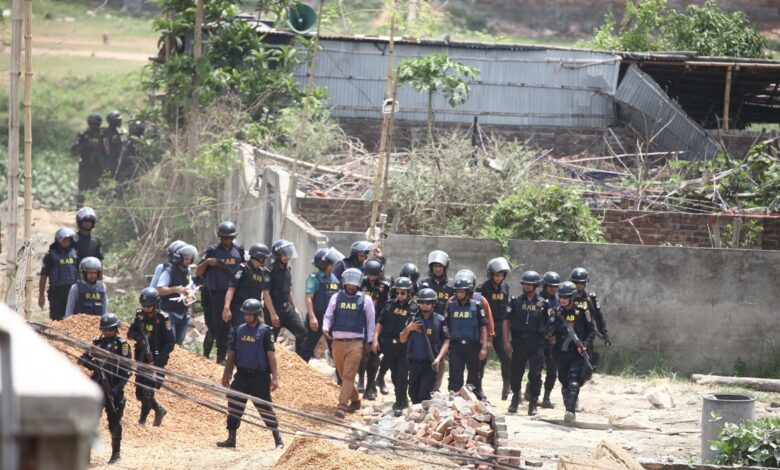
Bangladesh passed a rare 100 days on Sunday without any extrajudicial killing in the name of “gunfight” or “shootout” between law enforcers and suspected criminals. The unexpected pause in the frequent “shootout” incidents came after the United States on 10 December imposed sanctions on the country’s elite security force Rapid Action Battalion (RAB) and seven of its current and former officials, including police chief Benazir Ahmed for alleged human rights abuses.

Human rights defenders said the pause in killings in the so-called gunfights after the US sanctions showed law-enforcing enforcing agencies staged these incidents and provided false narratives.

However, see also: https://humanrightsdefenders.blog/2022/03/17/un-experts-urge-bangladesh-to-end-reprisals-against-human-rights-defenders/

A similar halt took place in 2020 after the killing of a retired army major in southern Cox’s Bazar district. The alleged murder sparked tension between the military force and police. The “shootout” or “gunfight” resumed slowly, causing the death of 51 people in 2021, said Bangladeshi rights group Ain o Salish Kendra (ASK).

The last such death was reported hours before the imposition of the US sanctions when a suspected “robber” was killed in a “gunfight” between RAB and “a gang of robbers” in southwest Barguna district.

It has also proven that these incidents were neither spontaneous nor sporadic, instead it was a well-coordinated tactic of the law enforcement agencies, presumably backed by a policy decision,” Ali Riaz, a professor at Illinois State University and non-resident senior fellow of Atlantic Council, told EFE.

Riaz led a research project for the non-profit Center for Governance Studies in Bangladesh, which analyzed 591 incidents of extrajudicial killings in the country between 2019 to 2021. The research, published on Mar.12, found “gunfights” constituted 86.63 percent of such killings.

At least 4,140 people were killed in Bangladesh between 2001 and 2021 in extrajudicial killings by security forces, said human rights group Odhikar.

Riaz said US sanctions had drawn international attention to the human rights records of Bangladesh. But he feared the current pause was unlikely to sustain for long.

There are three reasons that make it likely to resume. No punitive measures are attached to the sanctions, the US focus is likely to be shifted, and the institutional arrangements of impunity to the law enforcement agencies is not being addressed,” he said.

In the wake of UN sanctions on RAB, Bangladesh appointed a lobbyist firm in the US for a monthly fee of $20,000 with a target to remove the sanctions, deputy minister for Foreign Affairs Shahriar Alam told media in February.

Rights defenders criticized the move. They said appointing a lobbyist or public relations firm for a rosy picture of the human rights situation was not the way. “It is unfortunate that the government seems more focused on its reputation than to address the root problem robustly,” Meenakshi Ganguly, South Asia director at Human Rights Watch, told EFE.

The government should be committed to the protection of the rights of Bangladeshis to not be arbitrarily detained, tortured, forcibly disappeared, or killed,” she said.

India sinking in civic freedoms survey

March 21, 2022

While the world’s attention is understandably focused on the war in Ukraine, other major countries should not stay outside the limelight, e.g. India (conspicuously absent in the condemnation of the aggression) which continues to flaunt human rights. [See e.g. https://humanrightsdefenders.blog/2022/01/28/anti-terror-laws-in-india-keep-being-used-against-human-rights-defenders/].

On 10 March 2022, The Wire in New Delhi reported that India has been added to CIVICUS’ watchlist of countries that have seen a “rapid decline” in civic freedoms by an independent monitor, highlighting the drastic measures taken by Prime Minister Narendra Modi to silence critics of his Bharatiya Janata Party (BJP).

India and Russia were added to CIVICUS Monitor’s Watchlist. CIVICUS Monitor is an online platform that tracks the latest developments to civic freedoms, including the freedoms of expression, association and peaceful assembly, across 197 countries and territories.

India has remained a “repressed” nation in the ‘People Power Under Attack 2021’ report by the CIVICUS Monitor, along with 48 other countries including Afghanistan, Russia and Hong Kong. Its rating was first downgraded in 2019, “due to a crackdown on human rights activists, attacks on journalists and civil society groups, and the assault on civic freedoms in Indian administered Jammu and Kashmir”.

This rating is typically given to countries where civic space is heavily contested by power holders, who impose a combination of legal and practical constraints on the full enjoyment of fundamental rights.

In its report, CIVICUS highlighted several developments that it saw as cause for concern.

In January, the Central Bureau of Investigation conducted raids on Madurai-based human rights watchdog, People’s Watch. The raid came against the backdrop of 6,000 other civil society organisations, including Oxfam, losing their foreign funding licenses under the controversial Foreign Contribution (Regulation) Act. Greenpeace and Amnesty International are among the civil society groups that have had to close their offices in India.

Meanwhile, scores of human rights defenders and activists remain in detention under the draconian Unlawful Activities (Prevention) Act (UAPA) and other laws. They include the 15 human rights defenders linked to the 2018 Bhima Koregaon incident who have been accused of having links with Maoist organisations, based on evidence believed to be “fabricated”.

Waiting for bail, 84-year-old tribal rights activist Stan Swamy, who remained in custody since October 2020 in the Elgar Parishad case under UAPA, died in July last year. [Update on this case: The death of Jesuit priest and Adivasi rights activist Stan Swamy in judicial custody will “forever remain a stain on the human rights record of India”, says a new brief by the United Nations’ Working Group on Arbitrary Detention. The group had formally adopted its opinion on Swamy’s death during its 92nd session on November 16, last year but made its comments public just this week. The Working Group transmitted to the Indian Government a communication concerning Swamy on May 12 last year, but did not receive any response. India is a party to the International Covenant on Civil and Political Rights [ICCPR]. In its communication, the Working Group urged the Government to prioritize the use of non-custodial measures at all stages of criminal proceedings, including during the pretrial phase, in the current context of a global pandemic. Furthermore, its source submitted that placing Father Swamy in prison increased his risk of contracting COVID-19 and thus put his life at risk. The failure of the Government to heed these prescient warnings led to his avoidable death in custody, the opinion states.] [https://theleaflet.in/un-working-group-asks-india-to-accord-stan-swamys-family-with-compensation-and-reparations-under-international-law/]

Further, at least 13 activists who were arrested under the UAPA for their work against the Citizenship (Amendment) Act (CAA) 2019 remain in detention. The slow investigative processes and extremely stringent bail provisions ensure that those detained under the law are held in pre-trial detention for long periods.

“The office raids and foreign funding bans are part of the government’s strategy to harass and silence their critics,” said Josef Benedict, Civic Space Researcher for the CIVICUS Monitor. “The use of broadly worded anti-terrorism laws against activists, journalists, academics, and students, reflect a multi-year decline in the state of civic and democratic freedoms in the country.”

Journalists have continued to be targeted in India for their work in recent months and there have also been concerns about the widespread surveillance of activists, journalists and others critical of the Modi government following the Pegasus spyware expose.

The government must release all human rights defenders detained and come clean about its surveillance of activists and journalists as well as establish an independent and effective oversight mechanism to monitor all stages of interceptions of communications,” said Henri Tiphagne, national working secretary of HRDA – India.

In a letter addressed to Prime Minister of India Narendra Modi, 21 members of European Parliament stated, “We, the undersigned Members of the European Parliament, are writing to express our concern over the treatment of human rights defenders (HRDs) in India.” “We have followed cases of HRDs being jailed for their peaceful work, targeted under anti-terror laws, labeled as terrorists, and facing increasing restrictions on their ability to safely mobilize and access funds due to restrictive legislation. We are especially concerned about the safety of unjustly jailed defenders with emphasis on 15 HRDs accused in what is known as the Bhima Koregaon case and 13 defenders currently in jail for their campaign against the Citizenship Amendment Act (CAA).”

They expressed worry that the prominent human rights defender Khurram Parvez remained in detention under the UAPA in one of the most overcrowded and unsanitary prisons in the country for his documenting of rights violations in Indian-administered Kashmir.

Echoing calls by UN experts, they viewed their case as emblematic of the way the Indian government “continues to use the UAPA as a means of coercion to restrict human rights defenders’ fundamental freedoms in the country.” [see also: https://humanrightsdefenders.blog/2021/11/23/india-arrests-khurram-parvez-again/]

See also 31 March: https://www.hrw.org/news/2022/03/31/human-rights-watch-submission-universal-periodic-review-india

https://thewire.in/rights/for-rapid-decline-in-civic-freedoms-india-added-to-civicus-monitors-watchlist

Call for Nominations for the 2022 North-South Prize of the Council of Europe

March 18, 2022
Call for Nominations for the 2022 North-South Prize of the Council of Europe.

You can now propose nominations for the 2022 North-South Prize of the Council of Europe. For more on this and similar awards, see: https://www.trueheroesfilms.org/thedigest/awards/8FA97F67-9D63-4D8D-B00D-B260262A61E2

The candidates (activists, personalities or organisations) must have distinguished themselves in the following areas:
 protection of human rights,
 defence of pluralist democracy,
 public awareness raising on issues of global interdependence and solidarity.


Nominations can be submitted through the online form available on the North-South Prize webpage.
The deadline for presenting nominations is 15 September.
The Jury of the North-South Prize, composed by the members of the Bureau of the Executive Committee of the North-South Centre, will meet in the last quarter of 2022 to select this year’s Laureates.

https://www.coe.int/en/web/north-south-centre/-/call-for-nominations-for-the-north-south-prize-2022-


UN experts urge Bangladesh to end reprisals against human rights defenders

March 17, 2022

On 14 March 2022 a group of UN human rights experts today called on Bangladesh to immediately cease reprisals against human rights defenders and relatives of forcibly disappeared persons for their activism and co-operation with international human rights bodies and UN mechanisms.

Following the announcement of sanctions imposed by the United States of America against top Rapid Action Battalion (RAB) officials on 10 December 2021, Bangladeshi authorities have reportedly launched a campaign of threats, intimidation and harassment against relatives of forcibly disappeared persons, human rights defenders, and civil society actors. See also: https://humanrightsdefenders.blog/2014/05/12/bangladesh-chains-of-corruption-strangle-nation-asian-human-rights-commission/

In the period between December 2021 and February 2022, the homes of at least 10 relatives of forcibly disappeared individuals were reported to have been raided late at night.

During the raids, relatives were intimidated, threatened and forced to either sign blank sheets of paper or pre-written statements indicating that their family member was not forcibly disappeared and that they had deliberately misled the police. This is unacceptable,” the experts observed.

The experts noted with concern the increasingly challenging situation relatives, human rights defenders and civil society are facing in Bangladesh. Repeated accusations by senior Government officials against some civil society organizations of providing “false information” to the UN mechanisms risk undermining the civil society’s key role.

Bangladesh must ensure that relatives and human rights defenders are able to carry out their legitimate work in a safe and enabling environment without fear of threats, intimidation or reprisals of any kind,” the experts stressed. They expressed their concern that the reported reprisals may have a chilling effect and deter others from reporting on issues of public interest, including human rights, and from cooperating with the UN, its representatives and mechanisms.

Since 2009, the RAB has reportedly been involved in the perpetration of the majority of cases of enforced disappearance in the country, as noted in several reports by the UN Working Group on Enforced or Involuntary Disappearances.**

“Bangladeshi authorities are obliged under international law to promptly launch ex officio, independent, impartial and thorough investigations into these serious allegations, complemented by a thorough and comprehensive search for disappeared persons. At the same time, the RAB and other security agencies should not be shielded from scrutiny and criminal responsibility.”

The experts also reiterated their request to the Government of Bangladesh to take effective steps to protect and uphold the rights of victims and their families to truth, justice, reparation, and guarantees of non-recurrence.

On 17 March HRW stated that the Bangladesh government should meaningfully respond to United Nations concerns regarding grave allegations of torture, enforced disappearance, and extrajudicial killings in the country.

https://www.hrw.org/news/2022/03/17/bangladesh-stop-flouting-un-rights-concerns

100 NGOs join Amnesty International’s call for Biden to pardon Steven Donziger

March 16, 2022
Amnesty International Logotype

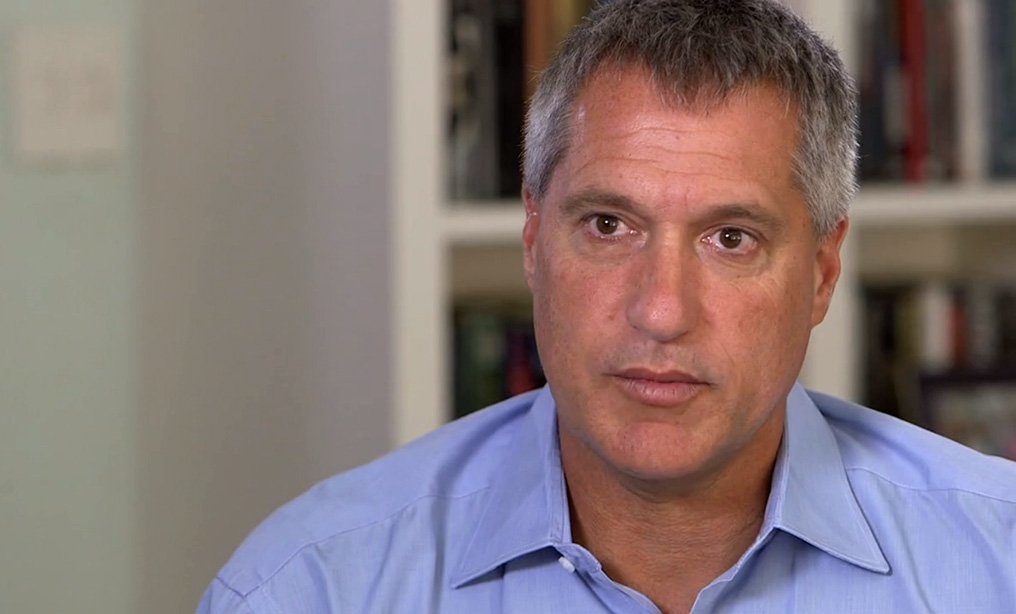
For more than two years, human rights lawyer Steven Donziger – currently serving the remainder of a six month sentence on house arrest – has been arbitrarily detained in apparent retaliation for his work to hold Chevron accountable for its deliberate dumping of more than 16 billion gallons of toxic oil waste into the Amazon rainforest. Despite repeated calls from human rights advocates and governmental authorities for Donziger’s release, the Department of Justice has refused to respond or take any action to remedy this human rights violation. Today, over 100 human rights and environmental organizations from around the world joined Amnesty International, Greenpeace USA, Amazon Watch, Global Witness, Rainforest Action Network, HEDA Resource Center, ReCommon, and the Pachamama Alliance to call on President Biden to exercise his clemency powers to pardon Steven Donziger as a way to ensure his immediate release.

In a letter to President Biden, the organizations state: “More than four months since a discerning opinion by the UN Working Group on Arbitrary Detention that found Steven Donziger’s detention to be arbitrary, U.S. judicial authorities have thus far failed to take any action to remedy the situation and implement the Working Group’s call to ensure Mr. Donziger’s  immediate release.”  See also: https://humanrightsdefenders.blog/2020/08/17/steven-donziger-speaks-out-himself-about-being-targetted-by-chevron

In a statement in October 2021, President Biden promised the U.S. would “stand in solidarity with, and continue to work tirelessly in support of, the activists, human rights defenders, and peaceful protestors on the front lines of the struggle between freedom and tyranny.”All the while, the administration has failed to side with the brave human rights defenders within the United States and respond to the demand of the U.N. Working Group on Arbitrary Detention, Congress, and the international community to free Steven Donziger. 

Steven Donziger is a human rights defender that bravely stood up against one of the most powerful corporations in the world,” said Daniel Joloy of Amnesty International. “In response, he has endured years of harassment, intimidation, smear campaigns and more than two years in arbitrary detention. President Biden must now listen to the over 100 human rights and environmental organizations calling to pardon Steven Donziger and ensure he is released immediately and unconditionally. Allowing this ordeal to continue only sends a chilling message that corporations around the world can continue attacking human rights defenders without consequences.”

Paul Paz y Miño of Amazon Watch said “Instead of supporting the people of Ecuador who were poisoned by Chevron’s admitted deliberate dumping of billions of gallons of toxic waste, Biden has turned a blind eye to the persecution of a key lawyer who worked to win a historic judgment against Chevron. The U.S. government’s responsibility should be to make Chevron clean up its waste and support efforts to hold the fossil fuel company accountable, not allow the appointment of a private prosecutor with ties to the very same oil company to imprison human rights lawyer Steven Donziger. This travesty has gone on for over two years, and Biden has ignored members of the E.U. parliament, members of the House and Senate, and even the United Nations High Commissioner for Human Rights. Well over 100 organizations are now demanding action, and Biden’s lack of action continues to be a dark stain on his alleged claims to respect human rights. Oil companies do not prosecute and imprison people in the U.S. This must end now.”

Chevron’s legal attack on Donziger is not the first, nor will it be the last case of its kind. Right now, the right to dissent is being repressed by both our government and corporations

Annie Leonard, co-Executive Director Greenpeace USA

Simon Taylor, Co-Founder & Director, Global Witness said “I have spent much of the past 25 years seeking accountability of the fossil fuel industry for its gross human rights abuses and other crimes. Amongst the judicial authorities we have liaised with during this time, the Southern District of New York has stood as a beacon in this fight against criminality. Shockingly, just as Biden gears up this struggle, New York’s judicial authorities seem instead intent on destroying their reputation, thanks to their apparent complicity in the unprecedented corporate prosecution and judicial harassment of Steven Donziger. These acts, in my experience, are more what I would expect from one of the ‘Banana Republics’ we have investigated around the world. These are shameful acts. If Biden is serious about tackling the climate crisis, he cannot allow the fossil fuel industry to weaponise the US judicial system to go after its detractors – Biden must act now and release Steven Donziger.”

https://www.commondreams.org/news/2022/03/15/100-groups-urge-biden-pardon-human-rights-lawyer-steven-donziger

Saudi human rights defender Raif Badawi freed after 10 years!

March 12, 2022

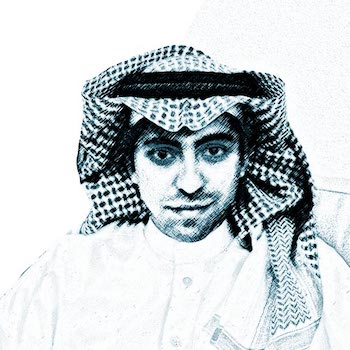
On Friday 11 March 2022, AFP reported that Saudi blogger Raif Badawi has been released from prison in Saudi Arabia after serving a 10-year sentence for advocating an end to religious influence on public life.

Raif called me. He is free,” his wife, Ensaf Haidar, who lives in Canada with their three children and had been advocating for his release, told AFP. Badawi’s release was also confirmed by a Saudi security official who said on condition of anonymity that Badawi “was released today”. “I jumped when I found out. I couldn’t believe it. I can’t wait to see my dad, I’m so excited,” one of his daughters, Nawja Badawi, 18, told AFP. Badawi’s son Terad Raif Badawi tweeted: “After 10 years my father is free!

Badawi won 5 international awards according to THF’s digest: https://www.trueheroesfilms.org/thedigest/laureates/33454B83-61A6-180A-27D6-7FFDEC25D330

Raif Badawi, human rights defender in Saudi Arabia, has finally been released!” Amnesty International tweeted. “Thousands of you have mobilized alongside us in the defense of Raif Badawi for 10 years. A big thank you to all of you for your tireless support.

Every Friday for almost seven years, Haidar – who fled to Canada after Badawi’s arrest and has since become a Canadian citizen – had held a public vigil for him. Quebec has paved the way for Raif Badawi to come to the country if he chooses by placing him on a priority list of possible immigrants for humanitarian reasons.

No details of his release conditions were immediately available. But Amnesty noted that the Saudi blogger could still face a 10-year ban on all travel outside Saudi Arabia following his release.

Raif Badawi’s sister, Samar Badawi, as well as activist Nassima al-Sadah, released in 2021, remain stranded in the kingdom. See also: https://humanrightsdefenders.blog/2016/01/13/saudi-arabia-arrest-of-human-rights-defender-samar-badawi/

https://www.theguardian.com/world/2022/mar/11/raif-badawi-saudi-blogger-freed

https://mailchi.mp/hrf.org/hrf-welcomes-release-of-saudi-writer-and-activist-raif-badawi?e=f80cec329e