Archive for the 'human rights' Category

#EndReprisals campaign continues throughout HRC 51

September 20, 2022

Human rights defenders promote dignity, fairness, peace and justice in their homes, workplaces, communities and countries. They challenge governments that fail to respect and protect their people, corporations that degrade and destroy the environment, and institutions that perpetuate privilege and patriarchy. For many, the United Nations (UN) is the last arena in which they can confront abuses. 

Human rights defenders must be able to share crucial information and perspectives with the UN safely and unhindered. Yet some States try to escape international scrutiny by raising obstacles – such as intimidation and reprisals – aimed at creating fear and systematically hindering defenders’ access to and cooperation with human rights mechanisms. See my post of today: https://humanrightsdefenders.blog/2022/09/20/human-rights-defenders-at-the-51st-session-of-the-un-human-rights-council/

This needs to change! Join the campaign of the International Service for Human Rights today so human rights defenders have a seat at the UN table.

What can you do? ISHR and partners have worked to support individual defenders and organisations that have endured multiple forms of reprisals and intimidation. Take action for them now and help #EndReprisals!

Here are two quick, impactful actions you can take:

Write to State representatives at the UN and urge them to take up cases from Belarus, Burundi, China, Egypt, and Venezuela
Click to tweet a message in solidarity with the individuals or groups described in a specific case:

 Tweet for Viasna in Belarus

Tweet for human rights lawyers in Burundi

Tweet for Jiang Tianyong in China

Tweet for Ibrahim Metwally Hegazy in Egypt

Tweet for NGOs in Venezuela

Join the campaign

Human rights defenders at the 51st session of the UN Human Rights Council

September 20, 2022

The 51st session of the UN Human Rights Council has started well and good on 12 September and will last until 7 October. I am awfully delayed in extracting from the – as always excellent – guide – produced by the team of the ISHR – the issues most directly affecting human rights defenders. Apologies.

Readthe full Alert to the session online here and to stay up-to-date, follow @ISHRglobal and #HRC51 on Twitter. See also: https://humanrightsdefenders.blog/2022/09/15/new-high-commissioner-for-human-rights-volker-turk-the-man-for-an-impossible-job/

Throughout the session ISHR is calling on States to #EndReprisals against human rights defenders and civil society groups who engage with the United Nations!

Some Thematic areas

Reprisals On 29 September, Ilze Brands Kehris, the Assistant Secretary-General for Human Rights will present the Secretary-General’s annual report on Cooperation with the United Nations, its representatives and mechanisms in the field of human rights (also known as ‘the Reprisals Report’) to the Council in her capacity as UN senior official on reprisals. The presentation of the report will be followed by a dedicated interactive dialogue, as mandated by the September 2017 resolution on reprisals. ISHR remains deeply concerned about reprisals against civil society actors who engage or seek to engage with UN bodies mechanisms. The dedicated dialogue is a key opportunity for States to raise concerns about specific cases of reprisals and demand that Governments provide an update on any investigation or action taken toward accountability. An increasing number of States have raised concerns in recent sessions about individual cases of reprisals, including in Egypt, Nicaragua, Cuba, Saudi Arabia, Malaysia, Bahrain, Yemen, Burundi, China and Venezuela, Egypt, Burundi, Lao and China, Belarus, Iran, Turkmenistan, and the Philippines. During its 48th session, the Council adopted a resolution on reprisals. The text, which was adopted by consensus, invited the UN Secretary-General to submit an annual report on reprisals and intimidation to the UN General Assembly. Once again, the resolution listed key trends including that acts of intimidation and reprisals can signal patterns, increasing self-censorship, and the use of national security arguments and counter-terrorism strategies by States as justification for blocking access to the UN. The resolution also acknowledged the specific risks to individuals in vulnerable situations or belonging to marginalised groups, and called on the UN to implement gender-responsive policies to end reprisals. The Council called on States to combat impunity by conducting prompt, impartial and independent investigations and ensuring accountability for all acts of intimidation or reprisal, both online and offline, by condemning all such acts publicly, providing access to effective remedies for victims, and preventing any recurrence.

Other thematic reports At this 51st session, the Council will discuss a range of civil, political, economic, social and cultural rights and issues through dedicated debates, including

Special Rapporteur on truth, justice, reparation and guarantees of non-recurrence

Special Rapporteur on contemporary forms of slavery, including its causes and consequences 

Working Group on Arbitrary Detention Independent Expert on the promotion of a democratic and equitable international order.

Working Group on Enforced or Involuntary Disappearances

Special Rapporteur on the implications for human rights of the environmentally sound management and disposal of hazardous substances and wastes 

In addition, the Council will hold dedicated debates on the rights of specific groups including with the: Special Rapporteur on the rights of indigenous peoples and the Expert Mechanism on the Rights of Indigenous Peoples

The Council will also consider various other reports, see the full list here.  

Country-specific developments
Afghanistan The Council will hold an interactive dialogue with the Special Rapporteur on Afghanistan and enhanced interactive dialogue on the human rights situation of women and girls in Afghanistan on 12 September. While a Special Rapporteur mandate is necessary to monitor and report on the human rights situation in Afghanistan, the dire situation in the country and the atrocities affecting women and girls warrant a more robust and systematic response. ISHR together with other NGOs call on the Council to establish in parallel an ongoing accountability mechanism with the specific mandate: To investigate all alleged violations and abuses of human rights law amounting to crimes under international law in Afghanistan, in particular against women and girls, To collect, consolidate and analyse evidence of such violations and abuses, including their gender dimension, and to systematically record and preserve all information, documentation and evidence, including interviews, witness testimony and forensic material, consistent with international law standards, in view of any future legal proceedings; To document and verify relevant information and evidence, including through field engagement, and to cooperate with judicial and other entities, national and international, as appropriate; To identify, where possible, those individuals and entities responsible for all alleged violations and abuses of human rights law amounting to crimes under international law in Afghanistan, in particular against women and girls, with a view to ensuring that those responsible are held accountable.

China  Despite significant pressure, the UN human rights office (OHCHR) has published its human rights assessment on the Uyghur region (Xinjiang). The report highlights ‘serious human rights violations’, including torture and sexual and gender-based violence, stressing that existing ‘highly securitised and discriminatory’ re-education camps ‘provide fertile ground for such violations to take place on a broad scale.’ The OHCHR found that the ‘arbitrary and discriminatory detention of members of Uyghur and other predominantly Muslim group […] may constitute international crimes, in particular crimes against humanity.’ It also warns that ‘conditions remain in place for serious violations to continue and recur’, calling for ‘urgent attention’ by the international community.  The Human Rights Council, and all governments that are genuinely committed to rights protection globally, cannot turn a blind eye to the severity and scale of evidence verified by the UN.  In line with ‘objective criteria’ for Human Rights Council action, ISHR calls on:  The Council to hold a formal discussion on China’s human rights crisis, including the human rights situations in the Uyghur region (Xinjiang), the Tibetan region, Hong Kong, and on human rights defenders;  States to initiate and support efforts to establish an independent international mechanism to monitor and report on the human rights situation in China, in line with the call by 50 UN Special Procedures experts. See also: https://humanrightsdefenders.blog/2022/09/01/finally-the-long-awaited-un-report-on-china/

Burundi The Council will hold an Interactive Dialogue with the Special Rapporteur on Burundi on 22 September.  Since the Special Rapporteur’s mandate was operationalised, the human rights situation in Burundi has not changed in a substantial or sustainable way. The limited improvements since President Évariste Ndayishimiye was sworn in, in June 2020, as well as the positive signals he sent, particularly with regard to freedom of the press and promises of justice, have not materialised into long-term reforms. All the structural issues the CoI and other human rights actors identified remain in place. These include arbitrary arrests of political opponents or those perceived as such, acts of torture and other cruel, inhuman or degrading treatment or punishment, enforced disappearances, extrajudicial killings, sexual and genderbased violence, undue restrictions to freedoms of expression, peaceful assembly and association, and violations of economic, social and cultural rights that are intertwined with the economic underpinnings of the State. In the absence of structural improvements and as grave human rights violations and abuses continue to be committed with impunity, the Council should adopt a resolution that reflects realities on the ground and ensures continued monitoring, reporting, and public debates on Burundi’s human rights situation. It should grant the Special Rapporteur the time he needs to fulfill his mandate and urge Burundi to cooperate with him, including by granting him access to the country. At its 51st session, the Council should adopt a resolution that extends the mandate of the Special Rapporteur on Burundi for a further year.

Egypt The continued silence of the Council on the critical human rights situation in Egypt is of great concern. As Egypt prepares to host COP27, it continues to carry out widespread and systematic violations of human rights, including freedom of expression and freedom of assembly and association against Egyptian and foreign nationals.

Egyptian authorities have for years employed draconian laws, including laws on counterterrorism, cybercrimes, and civil society in order to subdue the civilian populations and stifle all forms of peaceful dissent and mobilization. Under the current government, Egypt has become among the worst three countries in the world in the numbers of jailed journalists and almost all independent media has been forced to shut down or threatened into silence. Hundreds of websites continue to be banned. Scores of civil society and media representatives have been and continue to be disappeared, tortured and/or arbitrarily detained under the pretense of counter-terrorism and national security.

While the release of a few select arbitrarily-detained activists is a sign that international pressure works, the number of releases pales in comparison to the vast numbers of individuals newly detained by the National Security Prosecution, or whose arbitrary detention has been renewed in 2022. Amongst those still in prison is well known Egyptian-British human rights defender Alaa Abdel Fattah – recently sentenced to an additional 5 years in prison by an exceptional court.  He is on hunger strike for over 150 days. [see also: https://humanrightsdefenders.blog/2022/07/07/mona-seifs-letter-a-cry-for-help-for-alaa/]We urge the Council and its Special Procedures to take action to protect and ensure the release of all those arbitrarily detained in Egypt.

Russia  Together with Russian and international human rights organisations, ISHR continues to call on the Human Rights Council to establish a dedicated international mechanism to monitor and report on the dire human rights situation in Russia. As recognised by UN human rights experts, this situation includes: the stigmatisation and criminalisation of independent civil society; the persecution of human rights defenders, peaceful protesters and political activists, including through arbitrary arrest, detention, ill-treatment and torture; the banning of independent media and the silencing of journalists; attacks against women and LGBTI persons and activists; the propagation of massive disinformation; and the systematic erosion of any semblance of the rule of law or accountability mechanisms.  As further recognised by independent UN experts, by undermining and attacking independent civil society, persecuting human rights defenders, activists, and opposition and dissenting voices, banning independent media, silencing journalists, and effectively outlawing any form of peaceful protest, the Russian authorities have created an environment that, at least in part, facilitates its war in Ukraine. The war has led to an enormous loss of civilian life, displacement of millions of Ukrainian civilians, and contributed to a global food security and energy crisis, among other developments. A dedicated Special Rapporteur mandate would independently collect, analyse and present information on the human rights situation in Russia and make recommendations to the Council and the authorities on how to address it. It would serve as a crucial lifeline between Russian human rights defenders and the international community at a time when other bridges have been cut. [see also: https://humanrightsdefenders.blog/2022/04/26/lev-ponomarev-human-rights-defender-leaves-russia/] Finally, a Special Rapporteur could speak up authoritatively against the deepening restrictions on human rights in Russia and on behalf of those facing intimidation, harassment and reprisal for their human rights work.

Israel and oPT ISHR joined over 150 organisations from all world regions demand that the international community condemns and takes action to protect seven Palestinian civil society organisations that have been subject to illegal threats, raids and closure by Israeli authorities.

On the morning of 18 August 2022, the Israeli occupying forces (IOF) raided and sealed the doorways into the offices of the seven Palestinian organisations: Addameer Prisoner Support and Human Rights Association, Al-Haq Law in the Service of Man (Al-Haq), Bisan Center for Research and Development, Defense for Children International-Palestine (DCI-P), Health Work Committees (HWC), the Union of Agricultural Work Committees (UAWC), and the Union of Palestinian Women’s Committees (UPWC). We urge States to unequivocally condemn Israel’s targeting of Palestinian civil society and tactics to further repress of freedom of expression, and to take all necessary action to support and protect Palestinian human rights defenders and ensure the continuation of their invaluable work.

We call upon States to demand that Israel immediately revoke its designations of Palestinian human rights and civil society organisations as ‘terrorist organisations’, reverse the military orders designating the organisations and closing their offices, and repeal its Anti-Terrorism Law (2016) as it does not meet basic human rights standards. See also: https://humanrightsdefenders.blog/2021/12/15/human-rights-defenders-targeted-by-israel-launch-new-joint-website/

Venezuela The HRC’s fact-finding mission on Venezuela will present its final report under its current mandate to the Human Rights Council on 26 September, followed by an interactive dialogue with States. All eyes are on Latin American states, in particular, to see whether or not they will present a resolution to renew the mission’s mandate.  While there have been significant human rights changes in Venezuela – including a reduction in extrajudicial executions between 2020 and 2021 – the human rights situation in the country remains grim, with clear retrogression in some cases. This is not the time for States to end the work of the Mission, a key accountability mechanism which during its work to date has produced evidence of likely crimes against humanity.  Not only is its work on past violations far from over, but it could play a key role in the prevention of further violations, particularly at times of instability such as is possible during upcoming Presidential elections.   ISHR has worked as part of a Coalition of Venezuelan, regional and international organisations calling for the continuation of the mandate of the Mission. These demands were recently made in a letter to States, signed by 125 other Venezuelan and international organisations. The continuation of the Mission should be a key part of foreign policy aims of states of the region, and ISHR hopes to see States step up on this front in the coming days and weeks.

Yemen ISHR joined NGOs in urging States to work toward the establishment of an independent international criminally focused investigative mechanism on Yemen in the coming period, including at HRC51. While a Yemen truce hangs in the balance, little to no progress has been made by parties to the conflict to  address ongoing and widespread violations and abuses of international human rights and humanitarian law or remedy the harms they have inflicted on civilians throughout the conflict. The humanitarian situation in Yemen remains desperate, and, in recent weeks, armed clashes have once again increased. Civilians continue to fall victim to shelling, drone strikes and other attacks.These factors attest to the urgent and critical need to reinvigorate international accountability efforts on Yemen through the establishment of an independent international investigation. After its mandate ended in October 2021, members of the GEE called on the international community to take specific initiatives at the international level in pursuit of accountability.  Continued impunity will only increase the likelihood that more children will starve, more rights defenders and journalists will be imprisoned or executed, more homes and schools will be bombed, and the cycle of violence and suffering will continue. In this context, an international independent criminal accountability mechanism for Yemen can play a critical role to deter violence, protect civilians and promote a genuine and lasting peace.  In December 2021, nearly 90 civil society organisations called on member states of the UN to move quickly and establish such a mechanism in order to  investigate and publicly report on the most serious violations and abuses of international law committed in Yemen.

Other country situations These include: Interactive Dialogue with the Special Rapporteur on Afghanistan and Enhanced Interactive Dialogue on the human rights situation of women and girls in Afghanistan Interactive Dialogue on the report of the High Commissioner on Nicaragua Interactive Dialogue on the report of the OHCHR on Sri Lanka Interactive Dialogue on the report of the Independent Investigative Mechanism for Myanmar, Interactive Dialogue with the SR on Myanmar, Interactive Dialogue on the OHCHR report on Myanmar, Acting High Commissioner oral update on the human rights situation in Myanmar Interactive Dialogue with the Commission of Human Rights Experts on Ethiopia Interactive Dialogue on the oral update of OHCHR on technical assistance and capacity-building for South Sudan Interactive Dialogue with the Commission of inquiry on the Syrian Arab Republic  Interactive Dialogue on the interim oral update of the Acting High Commissioner on the situation of human rights in Belarus  Interactive Dialogue with the Commission of Inquiry on Ukraine and Interactive Dialogue on the Acting High Commissioner oral update on Ukraine Enhanced Interactive Dialogue on the report of the High Commissioner and experts on the Democratic Republic of Congo Interactive Dialogue with the Special Rapporteur on Cambodia and presentation of the Secretary-General’s report  Interactive Dialogue with the Independent Expert on Somalia Interactive Dialogue with the Independent Expert on the Central African Republic  Presentation of the High Commissioner’s report on cooperation with Georgia  Enhanced Interactive Dialogue on the report of the High Commissioner on the Philippines

Council programme, appointments and resolutions

States announced at least 29 proposed resolutions. Read here the reports presented this session. Appointment of mandate holders: The President of the Human Rights Council will propose candidates for:  Special Rapporteur on the human rights of internally displaced persons; Special Rapporteur on the independence of judges and lawyers; Working Group on Arbitrary Detention, member from Eastern European States; Special Rapporteur on contemporary forms of racism, racial discrimination, xenophobia and related intolerance.

Read here the three year programme of work of the Council with supplementary information. Read here ISHR’s recommendations on the key issues that are or should be on the agenda of the UN Human Rights Council in 2022.

Concerning side events, the Secretariat informed the Bureau that it had developed a way to organise the time slots for the three meeting rooms in order to allow for side events to take place in the Palais des Nations during the 51st session of the Council. The time slots for side events will be allocated according to availability and on a first-come, first-served basis. In order to accommodate as many requests as possible, only one side event per requesting organiser will be accommodated and each side event would be limited to one hour in duration. Organisers are requested to strictly respect the allotted time and to leave the room on time in order to ensure the smooth organisation of the following side event. NGOs will find additional information on the modalities and the criteria at the OHCHR NGO participation web page. The Secretariat underscored that these measures will be implemented during the 51st session on a pilot basis.

See also: https://humanrightsdefenders.blog/2022/09/20/report-on-the-50th-session-of-the-un-hrc/

https://ishr.ch/latest-updates/hrc51-key-issues-on-agenda-of-september-2022-session/
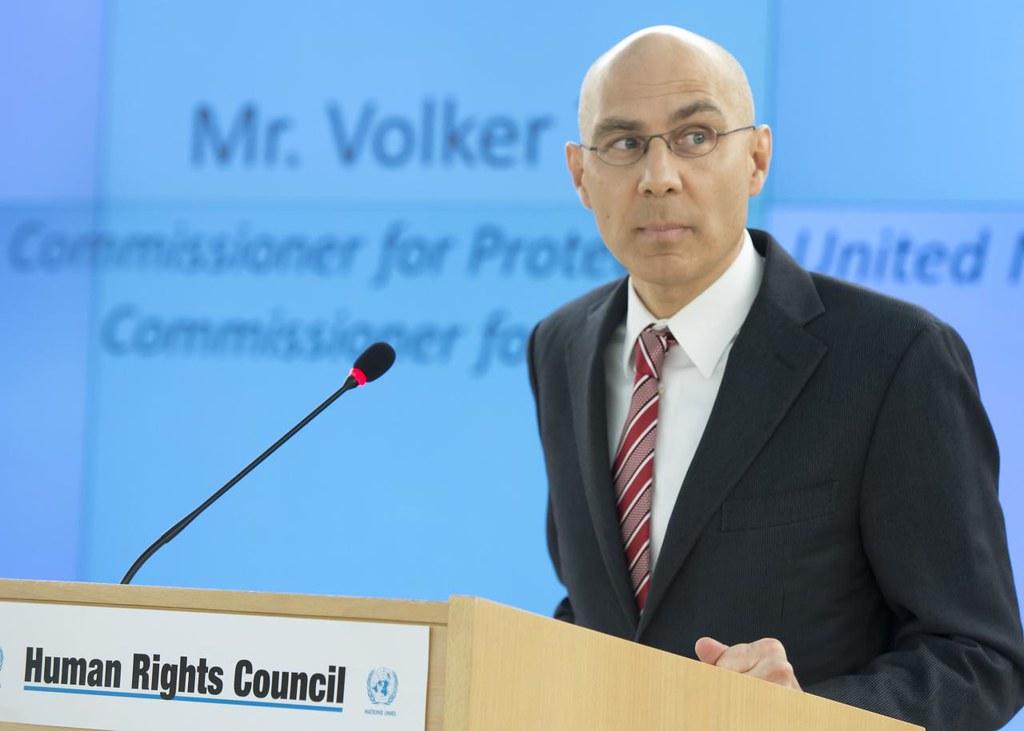
New High Commissioner for Human Rights Volker Turk – the man for an impossible job?

September 15, 2022

On 23 June 2022 Marc Limon, Executive Director of the Universal Rights Group posted a Blog: “Time to ask again: is being the UN High Commissioner for Human Rights an impossible job?”

In February 2018, he published a blog on the early departure of the previous High Commissioner for Human Rights, Zeid Ra’ad Al Hussein. The blog responded to David Petrasek’s article in OpenGlobaRights, entitled ‘Another one bites the dust’ (8 February 2018).

Limon argues that the High Commissioner position is, in fact, several jobs rolled into one. The mandate of the High Commissioner and his/her Office comprises inter alia:

  • Monitoring and speaking out about human rights violations around the world – ‘preventing the continuation of human rights violations throughout the world,’ (OP4f of GA resolution 48/141 of 7 January 1994).
  • Acting as the Secretariat to the ‘competent bodies of the United Nations system in the field of human rights and [making] recommendations to them,’ (OP4b of GA res. 48/141).
  • Providing capacity building, advisory services and technical assistance, at the request of the State concerned, ‘with a view to supporting actions and programs in the field of human rights,’ (OP4d, GA res. 48/141).
  • Engaging in human rights diplomacy (‘dialogue’) with governments and ‘enhanc[ing] international cooperation,’ in order to promote the implementation of international human rights obligations and commitments, and respect for human rights, (OP4g, OP5h, GA res. 48/141).
  • Coordinating human rights mainstreaming across the UN system, (OP4i, GA res. 48/141).
  • Making recommendations and driving efforts to ‘rationalize, adapt, strengthen and streamline the United Nations machinery in the field of human rights with a view to improving its efficiency and effectiveness,’ (OP4j, GA res. 48/141).

It is clear that, when held in the hands of a single human being, these different parts of the High Commissioner’s overall mandate operate in tension and are, perhaps, even mutually incompatible…

Is it possible for one person to wear all these hats at the same time? Can a single person publicly criticise States in one breath, then in the next reach out to them to forge agreement on reform of the UN human rights system or to provide human rights technical assistance?

Petrasek has made no secret of his belief (apparently shared by the UN Secretary-General, Antonio Guterres) that Zeid over-prioritised human rights monitoring and public advocacy, to the detriment of almost all other parts of his mandate. Yet for many other civil society representatives in Geneva and for many Western diplomats, this singlemindedness (together with Zeid’s natural eloquence) made the former High Commissioner something of a cult hero and the perfect High Commissioner,

Fast forward four and a half years and Zeid replacement as High Commissioner, the former President of Chile Michelle Bachelet, has also fallen on her sword – yet for precisely the opposite reasons as Zeid.

Bachelet was handpicked by Guterres to mark a clear break from Zeid by pursuing a more holistic and balanced approach to the role and mandate of the High Commissioner. In addition to public advocacy Bachelet tried to emphasise human rights diplomacy, international cooperation, support for the international human rights machinery, a focus on emerging thematic human rights concerns (e.g., climate change, the right to a healthy environment, prevention, digital technology), and the on-the-ground delivery of technical assistance and capacity-building support.

See: https://humanrightsdefenders.blog/2022/06/09/disappointment-with-un-high-commissioners-visit-to-xinjiang-boils-over/ and

In truth, the world needs a High Commissioner Zeid and a High Commissioner Bachelet. The question is: is that possible? Maybe other solutions might be considered? Might, perhaps, the High Commissioner focus on public advocacy, and the Deputy High Commissioner on the more cooperation-orientated aspects of the mandate? Maybe different Deputies could be appointed for each of the main ‘baskets’ of the High Commissioner’s overall mandate? Or maybe the parts of the mandate related to the human rights machinery could be ‘spun off’ – for example, into a new position of secretary-general of the Human Rights Council and its mechanisms, and of the Treaty Bodies?

These are difficult and sensitive questions, and yet it is surely important that they be asked and considered now rather than later. Perhaps today, as the Secretary-General ponders the appointment of the next High Commissioner, is an opportune moment to do so?

On September 7, 2022, the UN announced Secretary-General António Guterres’ decision to appoint Volker Türk, an Austrian national, to replace Michelle Bachelet.

Reactions were swift, most of them expressing the need for action, e.g. “The new UN high commissioner for human rights should neither seek nor expect a honeymoon period from UN member states,” said Tirana Hassan, interim executive director of Human Rights Watch on 8 September “What’s needed by the millions of people around the world whose rights are being violated every day is an advocate in their corner who will take on abusive governments large and small without fear and without hesitation.”

Yoni Ish-Hurwitz, Executive Director of Human Rights Likeminded Office was invited by the Universal Human Rights Group on 12 September, 2022, to contribute a Blog `’Who is Volker Türk?’:

Opinions have already begun forming about Volker Türk in the short time since the announcement of his appointment last week as the new UN High Commissioner for Human Rights. However, in the absence of a public competition, there was little opportunity to learn about Türk. He is also not well-known outside of the UN (and had few followers on twitter until last week). Therefore, in the absence of personal familiarity, it may be useful to focus on his biography, body of work and statements. This would lead to a better understanding of why he was selected for this role. [DISCLAIMER; I happen to know him personally from my days in UNHCR. He has always struck me as an honest and dedicated person with a pronounced interest in the human rights side of refugee work.]

Central to Türk’s biography is his long professional relationship with the Secretary-General Antonio Guterres. They worked together at UNHCR when Guterres led the agency as High Commissioner for Refugees. When Guterres became UN Secretary-General, Türk joined him in New York, to serve as Assistant Secretary-General for Strategic Coordination in the Executive Office. Guterres promoted him in January, to the rank of Under-Secretary-General for Policy, also in the Executive Office, perhaps setting him up to take the role of the High Commissioner for Human Rights.

Having a close confidant as the High Commissioner may be especially important for the Secretary-General at present, considering the significant current political challenges he faces. This is especially the case in the aftermath of the release of the long-awaited report on Xinjiang by the former High Commissioner, Michelle Bachelet. She spared Türk the need to continue holding this hot potato. However, China won’t let Türk off the hook, and will likely exert pressure on him, as it has done with Bachelet, to carefully weigh his words and the way he manages his Office’s work on China. In the meantime, Chen Xu, the Permanent Representative of China in Geneva, announced that ‘the Office closed the door of cooperation by releasing the so-called assessment.’ This means that this is one political crisis that will not end with Bachelet’s departure.

One key question is whether the new High Commissioner will prioritise engagement over speaking truth to power. Bachelet was criticised of doing just that following her recent statements on China, until she released her report at the 11th hour on the job. .. On the face of it, it may appear that Guterres selected a diplomat, rather than an advocate. Türk is a UN career officer through and through, and as such he is in a better position to offer ‘good offices,’ as the UN does, compared to any former Head of State that could have taken the High Commissioner’s post. Among his predecessors were two presidents, two supreme court judges, one foreign minister and one permanent representative to the UN headquarters. However, every day before walking into his new office, the face that Türk will see first is that of his predecessor Sérgio Vieira de Mello, who also spent most of his career in UNHCR. He was commemorated in a bust at the entrance to Palais Wilson, four years after his death in a bombing at UN headquarters in Iraq.

Türk worked in the UN refugee agency for over 30 years, including in the field. Coming from within the UN system is an asset for navigating organisational politics, fostering collaboration with other parts of the UN, enhancing the contribution of OHCHR to all relevant UN fora, and understanding how to engage with Member States to address the situation of the most vulnerable people. His intimate understanding of the UN system is manifested in two major initiatives he stewarded – the Secretary-General’s flagship report, Our Common Agenda, as well as the Secretary-General’s Call to Action for Human Rights. This may not be the place to analyse their successes or shortcomings, but it can be said that they were both well-received. Our Common Agenda offered a vision for mobilising the UN to address global challenges. OHCHR needs a manager with this kind of foresight to grasp the organisation’s structure, programmes and needs. The second initiative, the Call to Action for Human Rights, identified areas for action to advance human rights. As High Commissioner, perhaps Türk will be in a better position to support the implementation of the Call to Action.

This work demonstrates deep engagement on human rights. His legal background, holding a doctorate in international law, will support his role as an advocate. He can substantively articulate concerns and uphold norms based in international human rights law, humanitarian law and refugee law. He certainly appears as an advocate on twitter (@volker_turk). His tweets show his compassion, as he mostly addresses human rights concerns, with people at the centre.

Civil society was concerned about the selection process. Phil Lynch, Executive Director of the International Service for Human Rights (ISHR), said: ‘The lack of transparency and meaningful consultation with independent civil society in the selection process meant that the Secretary-General missed a key opportunity to build the legitimacy and authority of the next High Commissioner.’ The appointment of the Secretary-General’s confidant may have reaffirmed worries that the High Commissioner would prioritise diplomacy and engagement over advocacy for human rights. However, Türk appears to have the appropriate biography and a heart in the right place to fulfil both of the High Commissioner’s roles as an advocate and a diplomat. Hopefully he will be attentive to civil society and rights-holders, in line with his advice during his time as Assistant High Commissioner for Protection at UNHCR: ‘Listen to what refugees are telling us.’

After being appointed at the last minute as the next UN high commissioner for human rights, Volker Turk is not expected to be at the 51st session of the UN Human Rights Council, held from 12 September to 7 October. When he does, Turk will have to grapple among other challenges with his predecessor’s report on Xinjiang, but for the moment deputy high commissioner Nada Al Nashif is in charge of the UN rights office and will have to answer any questions about China that might come up during the first days of debate..

https://www.universal-rights.org/uncategorized/time-to-ask-again-is-being-the-un-high-commissioner-for-human-rights-an-impossible-job/

https://www.hrw.org/news/2022/09/08/un-new-rights-chief-should-speak-out-all-victims

What will happen to pending cases against Russia in the European Court of Human Rights?

August 24, 2022

By Kanstantsin Dzehtsiarou, of the University of Liverpool wrote 16 August 2022 a piece: stating that “the Range of Solutions to the Russian Cases Pending before the European Court of Human Rights [are]: Between ‘Business as Usual’ and ‘Denial of Justice’

Exactly in a month time, on 16 September 2022, Russia will no longer be a party to the European Convention on Human Rights (ECHR or Convention). See also: https://humanrightsdefenders.blog/2022/03/11/russia-refuses-to-further-participate-in-the-council-of-europe/. The European Court of Human Rights (ECtHR, Court) will have no jurisdiction over human rights violations that will happen after that. It does not mean that the ECtHR will stop accepting applications against Russia immediately on 16 September 2022 as often victims of human rights violations have to go through national legal remedies and this can take months or even years. It will be mostly for the Court to decide how to treat the applications against Russia both pending now and those arriving after 16 September 2022. The Court already had at least five months to clarify this, but no publicly available decision has been taken yet and it will perhaps be a last-minute compromise between judges. The reason for this delay is that this question is complex in terms of its consequences for the Court, for the victims of human rights violations and for the Council of Europe as a whole.

As of 30 June 2022, there were 17,550 pending applications from Russia. Although the vast majority of these cases are most likely repetitive or inadmissible, there are some complex and high-profile cases including over a dozen of inter-state applications. So, what should the Court ‘do’ with the pending applications? The ECtHR has a few plausible solutions to this challenging problem:

1. ‘Business as usual’

The Court can continue dealing with all pending Russian cases. ..However, dealing with more important meritorious applications will be much more difficult within the ‘business as usual’ model for the following reasons: first, it is clear that the Russian authorities will not collaborate with the Court. ….

There will be no sitting judge from Russia and it is highly unlikely that anyone from the list of ad hoc judges will be willing to sit. So, the Court will have to decide cases without the Russian judge and without the input from the respondent state. A one-of departure from the rule enshrined in Article 24(4) is not perhaps catastrophic but a systematic bypassing of this norm might undermine the legitimacy of the Court’s processes.

The second reason why the ‘business as usual’ model is suboptimal is that it will take a lot of resources from the Court in the circumstances when the budget of the organisation will be significantly reduced by the departure of Russia, who has been a major contributor to the budget of the Council of Europe. The resources spent on the cases from Russia will be arguably taken from other cases in relation to situations where the Court can make a significant and meaningful impact. And this leads me to the final and perhaps the most important reason. The Russian authorities will not implement any of the judgments that entered into force after 16 March 2022. The argument that execution of these judgments can be used as a condition for the return of Russia into the organisation is not particularly convincing as there is no indication that Russia is going to come back any time soon. Moreover, there are plenty of unenforced cases at the moment and the currently available unexecuted judgments pending before the Committee of Ministers can make a solid basis for a conditional return of Russia to the Council of Europe.

Finally, I have to mention that the victim-centric approach would perhaps support the ‘business as usual’ model as in this case the ECtHR will at least confirm that human rights violations have taken place. Having said that, this acknowledgement will not lead to any tangible changes: the applicants will not even receive the monetary just satisfaction from the respondent state. This might increase the feeling of frustration and hopelessness rather than provide any satisfaction.

2. ‘Pick and choose’

Another possible solution to the Russian docket of cases at the ECtHR can be a ‘pick and choose’ model. This way, the Court will select a number of leading cases which would perhaps include inter-state cases, sensitive political cases and the cases exemplifying the structural legal problems in Russia and deliver judgments in these cases.

Within this model the Court can use the so-called Burmych scenario. The judgment in Burmych v Ukraine was a follow-up judgment to the pilot case of Ivanov v Ukraine. In this case the Court ruled that non-execution of the final national judgments is a violation of Article 6 of the ECHR and that the delay in execution should be covered by an appropriate compensation. In Burmych the Court decided that there is no point in keeping producing judgments in clone cases and transferred all applications dealing with the same issue to the Committee of Ministers. Applying this approach to the pending Russian cases, the Court can pick the key complaints on broadly defined themes, then attach similar applications to this leading case and then transfer all of them to the Committee of Ministers without giving separate judgments in each individual case. One of the drawbacks of this approach is that it will cement the questionable principle applied in Burmych as a modus operandi of the Court.

This model would highlight the key problematic areas and give some satisfaction to some victims. It would also be a less resource-consuming than the ‘business as usual’ model but this approach would not be able to solve other problems highlighted in the previous paragraph such as lack of Russian engagement and probably total short-term ineffectiveness of such judgments. It also creates a new challenge: the Court can be accused of a selection bias. The ECtHR will perhaps have to justify why some cases are selected while some others are not.

3. ‘Total freeze’

Total freeze is one of the quicker and more radical solutions available to the ECtHR. The Court can suspend the adjudication of all applications against Russia until the situation changes. The President of the ECtHR has already briefly suspended examination of Russian cases before this suspension was lifted by the Plenary of the Court. This means that suspension is a possible avenue for the Court. This suspension can take at least two forms – either a total freeze of all pending applications or a rejection of all clearly inadmissible applications and then freezing of all meritorious ones. Both of these solutions would save a lot of resources for the Court, it will remove the need for a ‘deemed to fail’ collaboration with Russia and will not require the Court to select the ‘lucky’ applications to deal with. However, no victim will get even moral satisfaction from the fact that the ECtHR found their rights violated but one can argue that this moral satisfaction is not enough for an operation of a judicial organisation. The ECtHR is not an archive that systematises the human rights violations in Russia. It is a judicial institution. The legitimacy of the Court depends on the effective implementation of its judgments and no implementation can be expected from the judgments against Russia.

4. ‘Strike out’

The clearest and the most radical solution would be striking out all the applications against Russia pending before the ECtHR. Pursuant to Article 37(1)c ECHR, the ECtHR can strike out any application for any reason if it is no longer justified to continue the examination of the application. The Convention provides very wide discretion to the Court here. The ECtHR can decide that in the current situation the delivery of judgments will make no impact and therefore all of the applications should be excluded from the list of pending cases. However, this option is not very likely. It was just decided by the ECtHR that the Convention is applicable to Russia for 6 months after Russia ceased to be a member of the Council of Europe. This decision was not the only plausible interpretation of Article 58 ECHR that regulates the denunciation of the Convention. This would have been irrational if immediately after taking this decision, the Court disposed all applications, including of those which were submitted in relation to the violations that happened between 16 March and 16 September 2022. It is also unlikely that the Court would do it for political reasons – it can be seen as a complete denial of justice for a vast number of victims. So, this option is not plausible at least in the short run.

Conclusion

Neither ‘business as usual’ nor ‘strike out’ models are very plausible. It is more likely that the Court will chose some combination from the spectrum between the ‘pick and choose’ and ‘total freeze’ models. In making this decision, the Court will have to weigh the importance of symbolic judgments against Russia and the amount of resources and legitimacy that will be required to deliver these judgments. These resources might be needed in other areas and in relation to other situations.

https://www.echrblog.com/2022/08/the-range-of-solutions-to-russian-cases.html

and

https://www.echrblog.com/2022/09/russia-no-longer-party-to-echr-as-of.html

Human rights defenders in Greece, my adopted country: not doing well

July 28, 2022
OHCHR | Ms Mary Lawlor

Special Rapporteur on the situation of human rights defenders, Mary Lawlor, conducted an official visit to Greece from 13 to 22 June 2022, to assess the government’s efforts towards creating an enabling environment for those seeking to protect and promote human rights.

Human rights defenders in Greece, particularly those working on migration, operate in an environment of pervasive fear and insecurity, concluded Mary Lawlor. “I am concerned about the increasing criminalization of humanitarian assistance in Greece. Solidarity should never be punished and compassion should never be put on trial,” she said while presenting her preliminary findings at the end of a 10-day mission in the country.

With Greece facing intense international criticism over unlawful pushbacks of migrants at its borders and wider human rights concerns related to migration and asylum, the Greek government has moved to silence groups and individuals documenting these abuses. While acknowledging Greece’s migration challenges and government efforts to address them, Lawlor criticized burdensome rules for the registration of nongovernmental organizations working on migration, introduced in 2019, calling them discriminatory and in violation of Greece’s international human rights obligations. See my earlier: https://humanrightsdefenders.blog/2021/11/17/greeces-mistaken-deterrence-migrants-and-aid-workers-facing-heavy-prison-sentences/

The UN expert noted that human rights defenders not only face criminal sanctions for their activities, but are operating in an increasingly hostile environment where the general public is influenced by negative rhetoric from high-ranking officials and their unfavorable portrayal in the media, which often conflates their activities with traffickers and criminal networks.

Greece fell 38 positions within a year in Reporters Without Borders’ 2022 report on the Press Freedom Index, with the organization marking it the lowest-ranked European Union country for press freedom. “Journalists who counter the government’s narrative on the management of migration flows are often under pressure and lack access to mainstream media outlets.… Journalists reporting on corruption are sometimes facing threats and even charges,” Lawlor said. She noted that journalists have very limited or no access to facilities where migrants, refugees, and asylum seekers are being held, further contributing to a general lack of transparency regarding the government’s policies in this area.

See also: https://humanrightsdefenders.blog/2022/02/18/greek-court-fails-human-rights-defenders-on-antisemitism/

Lawlor will present a detailed report with her findings at the March 2023 session of the UN Human Rights Council. The government should listen to what the UN expert has to say and champion human rights defenders. The European Commission, which noted in July last year the narrowing space in Greece for groups working with migrants and asylum seekers, should step up its engagement on the issue and press Greece to stop harassing civil society groups and activists.

https://www.ohchr.org/en/media-advisories/2022/06/un-human-rights-expert-visit-greece-assess-situation-human-rights

https://www.ohchr.org/en/press-releases/2022/06/greece-migration-policy-having-suffocating-effect-human-rights-defenders

https://www.amnesty.org/en/location/europe-and-central-asia/greece/report-greece/

see also later:

https://www.theguardian.com/world/2022/aug/31/greece-should-face-more-checks-over-asylum-seeker-treatment-eu-official

https://www.theguardian.com/world/2022/aug/31/i-was-close-to-death-syrian-man-tells-how-greek-officials-pushed-refugees-back-out-to-sea

And on 7 November : https://www.hrw.org/news/2022/11/07/greeces-surveillance-scandal-puts-rights-risk

and then: https://www.hrw.org/news/2023/03/16/un-expert-slams-greece-over-civil-society-curbs

Kavala ruling of European Court of Human Rights – infringement procedure against Turkey

July 27, 2022
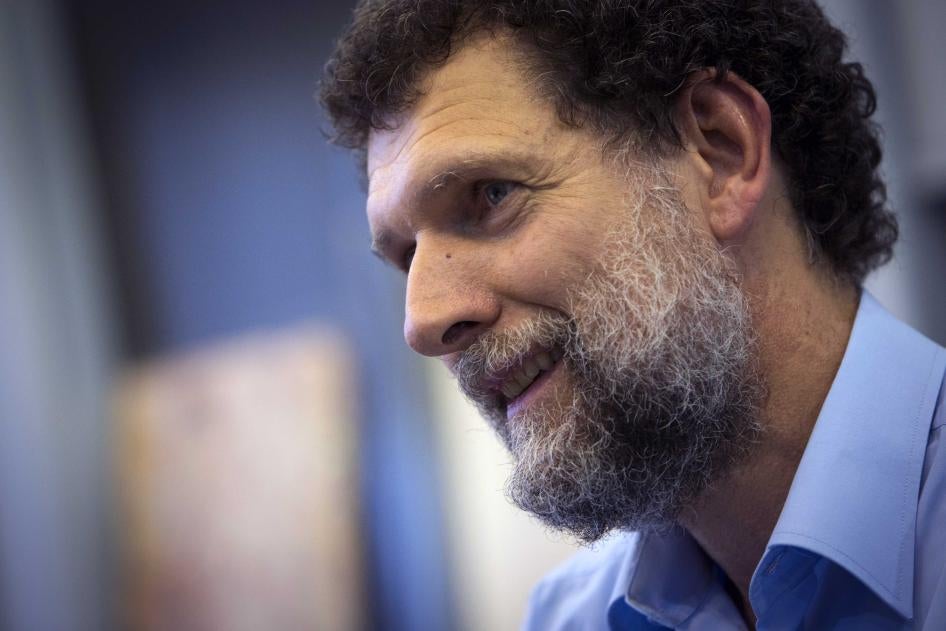
Osman Kavala © 2017 Private

Several sources (here HRW) reported on the European Court of Human Rights (ECtHR) handing down a landmark judgment (announced on July 11, 2022) against Turkey for its failure to carry out the court’s order to free the imprisoned human rights defender Osman Kavala. See: https://humanrightsdefenders.blog/2022/04/27/unexpected-in-its-harshness-kavala-gets-life-sentence-without-parole/

The court found in Kavala v. Türkiye, a case brought by the Council of Europe’s Committee of Ministers, that Turkey failed to fulfil its obligation under Article 46(1) of the European Convention on Human Rights to comply with its judgment issued on  December 10, 2019.  The judgment is an important step toward accountability for Turkey’s systemic disregard for the convention system and as recognition of the urgency of implementing the court’s order to release Kavala.

This is the only second time, after Mammadov v. Azerbaijan, that the ECtHR has ever conducted infringement proceedings and determined that a member state has not complied with a European Court judgment,” said Helen Duffy of the Turkey Litigation Support Project.

It is an acknowledgement of Turkey’s ever-deepening rule of law crisis, which has involved seriously undermining the Convention system and the escalating use of criminal law for political purposes.”

In its new judgment, the court held that “Türkiye has failed to fulfil its obligation under article 46§1 to abide by the Kavala v. Türkiye judgment of 10 December 2019.”

The European Court underlined that:

Its finding of a violation of Article 18 taken together with Article 5 in the Kavala judgment had vitiated any action resulting from the charges related to the Gezi Park events and the attempted coup. It is nonetheless clear that the domestic proceedings subsequent to the above judgment, which resulted first in an acquittal and then a conviction, have not made it possible to remedy the problems identified in the Kavala judgment (para. 172).

The Grand Chamber judgment addresses these practices of the Turkish authorities by stating that “the measures indicated by Türkiye do not permit it to conclude that the State Party acted in good faith,’ in a manner compatible with the ‘conclusions and spirit’ of the Kavala judgment, or in a way that would make practical and effective the protection of the Convention rights which the Court found to have been violated in that judgment” (para. 173).

Aisling Reidy, senior legal adviser at Human Rights Watch said: “As the European Court has now confirmed Turkey’s failure to execute the 2019 Kavala judgment, the Committee of Ministers needs urgently to take all feasible measures to ensure the judgement is respected and Kavala released“.

The Committee of Ministers is expected to resume its supervision process and take more robust steps to discharge its mandate of ensuring the necessary individual and general measures are taken by Turkey to implement the court’s ruling.

Now, it is up to the Committee of Ministers, which oversees the implementation of the ECtHR rulings, what measures to take against Turkey after the country failed to comply with the court’s ruling. This could lead to Turkey’s suspension from the Council of Europe. In anticipation, the Foreign Ministry of Turkey said they expected the Committee of Ministers “to act without bias and with common sense” in a statement.

However, see: https://stockholmcf.org/coe-fails-to-sanction-turkey-over-jailed-philanthropist-opts-for-dialogue-instead/

https://www.hrw.org/news/2022/07/12/landmark-judgment-against-turkey-ignoring-european-ruling

Genocide case against Rohingya population progresses

July 27, 2022

The International Court of Justice (ICJ) on 22 July, 2022, rejected Myanmar’s preliminary objections to the case brought by Gambia under the international Genocide Convention. The case concerns Myanmar’s alleged genocide against the ethnic Rohingya population in Rakhine State, with a focus on military operations launched in October 2016 and August 2017.

Gambia filed the case before the ICJ in November 2019 alleging that the Myanmar military committed the genocidal acts of “killing, causing serious bodily and mental harm, inflicting conditions that are calculated to bring about physical destruction, imposing measures to prevent births, and forcible transfers … intended to destroy the Rohingya group in whole or in part.”

The ICJ decision opens the door toward an overdue reckoning with the Myanmar military’s murderous campaign against the Rohingya population,” said Elaine Pearson, acting Asia director at Human Rights Watch. “By holding the military to account for its atrocities against the Rohingya, the World Court could provide the impetus for greater international action toward justice for all victims of the Myanmar security forces’ crimes.”

In February 2022, the ICJ heard Myanmar’s four objections challenging the court’s jurisdiction and Gambia’s legal standing to file the case, as well as Gambia’s response.

In response to Myanmar’s argument that Gambia has no standing to bring the case due to its lack of ties to Myanmar or the Rohingya, the court concluded, “All the States parties to the Genocide Convention thus have a common interest to ensure the prevention, suppression and punishment of genocide, by committing themselves to fulfilling the obligations contained in the Convention.”

By rejecting the preliminary objections, the ICJ is allowing the case to proceed on the merits to examine Gambia’s genocide allegations against Myanmar. Myanmar will now have to submit its response to Gambia’s main arguments filed in October 2020 detailing its case.

The ICJ case is not a criminal case against individual suspects, but a legal action brought by Gambia against Myanmar alleging that Myanmar bears responsibility for genocide as a state.

In December 2019, the court held hearings on Gambia’s request for provisional measures to protect the Rohingya remaining in Myanmar from genocide, which it unanimously adopted in January 2020. The provisional measures require Myanmar to prevent all genocidal acts against the Rohingya, to ensure that security forces do not commit acts of genocide, and to take steps to preserve evidence related to the case. The court also ordered Myanmar to report on its compliance with the provisional measures every six months.

Myanmar is legally bound to comply with the order. However, Human Rights Watch and other groups have continued to document grave abuses against the 600,000 Rohingya remaining in Myanmar, contravening the provisional measures.

The court’s decision on Myanmar’s preliminary objections should encourage the United Kingdom, Netherlands, Canada, and other concerned governments to support Gambia’s case through formal interventions to bolster the legal analysis on specific aspects of the Genocide Convention as it relates to the Rohingya, Human Rights Watch said.

Under article 41(2) of the ICJ Statute, the court’s order for provisional measures is automatically sent to the UN Security Council. As the fifth anniversary of the military’s atrocities against the Rohingya approaches, Security Council members should take steps to address the failure to secure justice and security for the Rohingya. Council members should work to adopt a resolution that gives the International Criminal Court (ICC) a mandate over the situation in Myanmar and severs the junta’s supply of arms and revenue, even if the resolution would be vetoed by Russia or China.

As the Myanmar armed forces continue to carry out atrocities against civilians and ethnic minorities, the ICJ remains one of the few available paths for holding the military to account. Ethnic groups and human rights defenders have aligned in Myanmar to push for the establishment of democratic rule, efforts that are amplified by the pursuit of justice at the ICJ.

“Concerned governments seeking to be leaders for accountability in Myanmar should formally intervene in the Genocide Convention case,” Pearson said. “The case provides an important opportunity to scrutinize the Myanmar military’s abusive policies and practices that have preserved its power over decades.”

https://www.hrw.org/news/2022/07/22/world-court-rejects-myanmar-objections-genocide-case

Al-Roken remains in UAE jail even after 1 his ten years have expired.

July 27, 2022

On 22 July 2022 Brian Dooley and Quinn Fulton wrote for Human Rights First a post: “Ten Years But Still Counting – UAE Fails To Release Jailed Activist Al-Roken

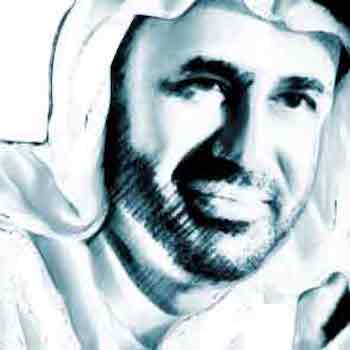
..Prominent Emirati human rights defender and lawyer Dr. Mohammed Al-Roken finished his ten-year sentence on July 17, but still hasn’t been released from jail. [see: https://www.trueheroesfilms.org/thedigest/laureates/7B69B1D9-E359-444A-B448-02E8B9C0750C]

Al-Roken practiced peaceful activism, looking for minimal reforms towards democracy and standing up for human rights. He and other peaceful activists, including Ahmed Mansoor and Nasser bin Ghaith, were given long sentences after unfair trials. [see also: https://www.trueheroesfilms.org/thedigest/laureates/074ACCD4-A327-4A21-B056-440C4C378A1A]

Human Rights First has covered their cases and others for many years, and urged a succession of U.S. administrations to use the influence they have accrued – not least through supplying the Emirates with billions of dollars of weapons – to push for the release of jailed human rights activists there.

The U.S. government knows exactly who Al-Roken is and what he stands for.  He has been featured in a succession of U.S. reports describing him as “a human rights activist” (2007), “a lawyer…reportedly held incommunicado and without charge for unknown reasons” (2012), and a “lawyer, academic and human rights defender” (2021).

In 2015, Human Rights First wrote about his wrongful imprisonment, and noted in a report that year on human rights in the Emirates that “Former heads of the Jurists Association are now political prisoners, including renowned constitutional scholar Dr. Mohammed Al-Roken. He is one of dozens serving long prison sentences after being convicted in mass trials.”

We have continued to raise cases through the media of human rights defenders wrongfully detained in the Emirates, and we successfully campaigned for the release of American citizens Mohammed and Kamal Al Darat when they were tortured and detained in the Emirates for over a year.

We are not alone in recognizing Al-Roken’s human rights work and wrongful imprisonment. Major international human rights organizations have campaigned for him for years, and in 2017 he was awarded the prestigious Ludovic-Trarieux International Human Rights Prize

When calling for Al-Roken’s release, the UN Special Rapporteur on Human Rights Defenders noted that he was jailed on charges of “plotting against the government,” and “subjected to intermittent periods in solitary confinement, allegedly without justification or explanation.” The UN Working Group on Arbitrary Detention said Al-Roken “is reportedly well known for defending victims of human rights violations in the United Arab Emirates,” and deemed his detention as arbitrary.

We know that getting people who have been wrongfully detained in the Emirates out of prison is difficult, but it sometimes can be done if there is substantial international public pressure – as with the Al Darats and the British academic Matthew Hedges.

That’s why it’s important that the Biden administration speaks out publicly about Al-Roken. Our years of advocacy experience tells us that behind-the-scenes diplomacy is unlikely to work..

https://www.humanrightsfirst.org/blog/ten-years-still-counting-uae-fails-release-jailed-activist-al-roken

Aarhus Convention on environmental information gets especially experienced rapporteur

July 22, 2022

Michelle Langrand wrote in Geneva Solutions of 20 July 2022 that the “Michel Forst was elected special rapporteur for environmental defenders in June by the Aarhus Convention on environmental information.”

The newly appointed special rapporteur on environmental defenders Michel Forst will be able to intervene when environmentalists in the pan-European region are at risk of being attacked or penalised.

Defending the planet’s health can be a dangerous line of work – at times deadly. Two thirds of defenders murdered worldwide are environmental advocates, with 227 killings reported in 2020. While attacks in Europe and Central Asia are not as frequent as in other parts of the world, industries and governments publicly exposed for polluting or turning a blind eye to environmental crimes have been known to retaliate with harassment, legal action and even violence.

Environmental defenders in Ukraine documenting the impacts of the war or campaigners in Switzerland practising civil disobedience to alert the public about the climate threat can now turn to a UN expert to rapidly intervene on their behalf.

Elected at the end of June by parties to the Aarhus convention on the right to information about environmental issues, Michel Forst is the world’s first UN special rapporteur on environmental defenders. The nomination follows a 2021 decision by European and central Asian countries to create a rapid response mechanism amid a rise in attacks against defenders. [see https://humanrightsdefenders.blog/2021/10/26/aarhus-convention-gets-new-mechanism-to-protect-environmental-defenders/]

The French 71-year-old was UN special rapporteur on human rights defenders from 2014 to 2020.

Forst’s plans for the next four years are still being concocted. “It’s a very new mandate,” he told Geneva Solutions. To develop the tools and mechanisms he’ll be using throughout his term, he won’t have to look very far.

“I’ll be looking at how the working methods developed by the Office of High Commissioner of Human Rights could be implemented in this mandate, for instance, receiving complaints, sending communications to states when we know that rights have been violated and issuing public statements as well,” he said.

The complaints system will be one of Forst’s flagship measures and a chance to take it one step further. When UN experts under the Human Rights Council receive a complaint and write to a state asking for an explanation, the government has 60 days to reply, rendering it ineffective when a person’s life or security is at risk, he noted.

“We need to understand how it could be made effective because rapid response means that the special rapporteur has the possibility to intervene immediately by different means.”

The expert will also resort to what he calls “quiet diplomacy”, meeting with ambassadors both in Geneva and abroad, where there might be “systemic attacks against defenders”.s

Forst was elected by consensus by the parties to the Aarhus convention – an encouraging start for the expert. But not all governments will be easy to approach when they’re the ones in the hot seat. The most notable one is Belarus, sanctioned last year by fellow party members for closing down an anti-nuclear NGO that was collaborating with an expert body of the Convention. The country has deployed one of the most severe crackdowns in recent years in the region against civil society, and is on Forst’s to-do list. The country did not support the idea of creating a mechanism in the beginning, according to observers, although it did not oppose the proposal during the formal adoption last year. Last week, it was a no-show for the French expert’s nomination.

“​​Belarus is one of the last countries that I visited as special rapporteur on human rights defenders and on that occasion I met with a number of environmental defenders. I also had lengthy discussions with both the minister for foreign affairs and the minister of justice about the cases and to look at how my mandate at that time could help support government efforts to convict the perpetrators of attacks against defenders,” he said.

“Security forces employed by companies are the main perpetrators against environmental defenders. Part of the mandate is not only to speak to states, but also to companies and to draw attention to them, and to the countries in which they have their seat, over cases of maladministration, corruption or acts against defenders,” Forst said.

His efforts could add pressure on European countries to toughen corporate responsibility laws that could help protect defenders in countries beyond the convention’s jurisdiction. Within the country borders of the agreement, campaigners would also like to see Forst tackle legal abuses against environmental defenders that fall in a grey zone.

Yves Lador, Geneva representative for EarthJustice, told Geneva Solutions: “We see a worrying trend in democratic countries of targeting environmental activists directly through laws through different levels.

https://genevasolutions.news/climate/threatened-environmentalists-have-a-new-protector

Musicians for human rights: 15 examples but not very complete

July 21, 2022

As a universal language that transcends cultural barriers, music is a medium where people and artists alike can have their voices heard in a manner that words alone cannot. Music has often been used to showcase pressing political and societal issues, including the promotion and protection of human rights. These 15 artists are listed in a post by Human Rights Carreers as examples of those who have used their musical talent and platform to share awareness of human rights issues across the world and bring a voice to marginalized members of society. Many readers will have their own preferences.

What shows a bit of sloppy research is that the winners of specific prizes for “human rights and music”, such as The High Note Award (see: https://www.trueheroesfilms.org/thedigest/awards/748829a0-11fb-11ea-a6e6-0b8b95100eab and the Beethoven Prize [see: https://www.trueheroesfilms.org/thedigest/awards/c05408e0-e598-11e7-a009-858a33846a9e) are not included. While also Rap Against Dictatorship would have deserved a mention [see: https://www.trueheroesfilms.org/thedigest/laureates/773b65e0-c50d-11ea-a32a-9fa810c9b180].

And then there is the aspect of stars who use their status for money and to shore up dictators.For more on this topic, see: https://humanrightsdefenders.blog/2014/02/10/star-power-and-human-rights-a-difficult-but-doable-mix/

Pete Townshend

Pete Townshend is an English musician, songwriter and vocalist of “the Who” rock band, one of the most influential rock ensembles during the 1960s and 1970s. Alongside his career in the rock music industry, Townshend has a long history of charity and philanthropic work for human rights issues, advocating for greater drug rehabilitation and activism for children’s rights. In 1979, Townshend was the first musician to perform for Amnesty International’s Human Rights Concerts and inspired other renowned rock musicians to support the human rights cause. Townshend is quoted saying, “Amnesty does things that I can’t do in my work. It deals with the specifics of injustice… It makes them public. It was 1979 that I appeared at ‘The Secret Policeman’s Ball’… It was amazing subsequently to see what ‘The Secret Policeman’s Ball’ triggered. Quite big names got involved in supporting Amnesty. And it became apparent that big names in music and Amnesty melded very well. It’s good to see that what I did kicked that off…”

Sting

Performing under the stage name, “Sting”, Gordon Sumner is a Grammy-Award winning guitarist, vocalist and songwriter who is renowned for his work as both a solo musician and an ensemble musician with the rock band “the Police” between 1977 – 1984. Sting is heavily involved in human rights activism, having written songs inspired by his concern for world hunger and oppressive political regimes, and has also extended his activism beyond music by writing an open letter for the decriminalization of drug possession in the United Kingdom in 2011. He has also signed several petitions against the death penalty in Belarus and has cancelled concerts in response to human rights issues in several countries. Sting’s humanitarian activism has been recognized by Amnesty International and he has performed for the NGO’s Human Rights Concerts on several occasions.

Bono

Described as the world’s best known philanthropic performers and most politically effective celebrity of all time by the National Journal, Bono (Paul Hewson) has worked extensively as a rock musician in the band U2, a philanthropist and human rights activist. Focusing much of his efforts into advocating the fight against AIDS and extreme poverty in Africa, Bono has lobbied governmental entities to adopt human rights-based policies under his positions as the co-founder of ONE, a global movement campaigning to end extreme poverty. More recently, Bono raised awareness of vaccination against COVID-19 and vaccine inequality around the world and in April 2022, Bono recorded an acoustic rendition of “Walk On” by his band, U2, for the Global Citizen’s Stand Up for Ukraine livestream, urging global leaders to support Ukrainian refugees. Bono was also invited by Ukrainian president Volodymyr Zelenskyy to perform in a metro station in Kyiv, showing his solidarity to Ukraine under invasion from Russia. See also: https://www.trueheroesfilms.org/thedigest/laureates/292E53F2-AE54-E5BA-BE5B-17ACD95D9B40

Peter Gabriel

Rising to fame as the lead singer of the rock band Genesis, Peter Gabriel has been an active rock musician, singer and producer whose music has been awarded nine MTV awards, Brit Awards and Grammy Awards throughout his musical career. Aside from his musical accomplishments, Gabriel is the co-founder of WITNESS, a human rights non-profit organization that supports local organizations document human rights issues and advocacy. [see also: https://humanrightsdefenders.blog/2020/05/21/tonight-witness-virtual-gala-with-peter-gabriel-kimberley-nichole-and-angela-davis/]In recognition of his humanitarian work, Gabriel was awarded a Nobel Peace Prize in 2006 and was named as one of the most influential people in the world in 2008 by Time Magazine. NOTE: he did not get the Nobel Peace prize, but the Peace Summit award, see: https://www.trueheroesfilms.org/thedigest/awards/6d3d8dd0-775d-11ea-9129-a566e6ffdb5f See also: https://www.trueheroesfilms.org/thedigest/laureates/D66097DB-BDC8-477A-BE56-FBB4793BBC52

Angélique Kidjo

Awarded “The Ambassador of Conscience Award” by Amnesty International in 2016, Angélique Kidjo is a Beninese singer-songwriter renowned for her creative music videos and unique musical style that integrates Afropop, Congolese rumba, jazz and Latin music genres. Within her 30-year musical career, Kidjo has been a prominent advocate for the expression of freedom, the education of girls in Africa and has expressed concerns regarding female genital mutilation and has worked as a UNICEF Goodwill Ambassador since 2002. Alongside her major ambassador roles, Kidjo is the founder of The Batonga Foundation, a non-profit organization that empowers women in Benin and upskills these women for socio-economic mobility. See also: https://www.trueheroesfilms.org/thedigest/laureates/B3AF6E27-B7AD-8D1D-C09E-B7EAA953F3C3

Lang Lang

Described as one of the most exciting and accomplished classical musicians in the world, classical pianist Lang Lang has not only revolutionized the classical music industry but has also used his music as a way to advocate for human rights globally. Appointed as a UNICEF Goodwill Ambassador and a Messenger of Peace, Lang Lang primarily advocates for children’s rights and access to education through concerts that raise funds for UNICEF and other humanitarian crises.

Buffy Sainte-Marie

As an Indigenous Canadian singer-song writer and composer, Buffy Sainte-Marie’s music primarily revolves around the issues faced by the Indigenous peoples of Canada and the United States. Buffy began her advocacy efforts for the protection of Indigenous artists, performers and their intellectual property by establishing the Nihewan Foundation for Native American Education in 1966 and has moved on to founding The Creative Native Project, an initiative which seeks to empower Indigenous youth in the performing arts. More recently, Buffy was awarded the Allan Slaight Humanitarian Spirit Award and was invited to the Canadian Music Week in 2020.

Maxim Vengerov

Hailed as one of the most talented violinists in the 21st century, Maxim Vengerov was the first classical musician to be appointed as a UNICEF Goodwill Ambassador in 1997. Alongside his musical accomplishments, Vengerov has focused much of his advocacy on the promotion of children’s education and rights and has visited countries such as Turkey, Uganda and Bosnia and Herzegovina representing UNICEF. Vengerov has also performed at #EndViolence events in Bucharest, Romania for UNICEF Romania.

Bruce Springsteen

Bruce Springsteen is an American singer-song writer, known as one of the original founders of the heartland rock genre, which combines elements of mainstream rock music with narratives of the American working class. Throughout his musical career, Springsteen has been a long advocate for LGBT rights, the empowerment of women and democracy, using his international platform to raise awareness of social issues. Springsteen was first invited to perform for Amnesty International in 1988 and has since continued his advocacy of human rights through his music.

Nadya Tolokonnikova

As the leader of the Russian feminist punk band Pussy Riot, Nadya Tolokonnikova uses her musical platform to spread awareness of human rights issues through her music. As a passionate feminist, Tolokonnikova delved into themes of sexism and rape culture in her newest EP, Panic Attack, and has agreed to donate a portion of the proceeds from her EP to a shelter for domestic violence in Russia. Tolokonnikova herself was recognized by a political prisoner by the Union of Solidarity with Political Prisoners and Amnesty International described her as a “prisoner of conscience” due to the “severity of the response of Russian authorities.”

Piera Van de Wiel

Piera Van de Wiel is a British singer and composer who uses her music as a platform for her human rights advocacy. During the COVID-19 pandemic, Van de Wiel released a single, “Used”, to raise awareness of the increase in domestic violence and abuse against women during the pandemic with the support of the United Nations Spotlight Initiative. Alongside her musical pursuits, Van de Wiel is the founder of the non-profit organization, Stronger With Music, a movement that works towards achieving the UN Sustainable Development Goals.

Evan Greer

Evan Greer is a trans/genderqueer artist based in Boston who composes acoustic songs that advocate technological security, LGBTQ rights and movements for justice and liberation. Alongside their musical accomplishments, Greer is the founder of a non-profit organization called Fight for the Future, which aims to secure digital rights and banning unethical technological practices.

Max Richter

German-British composer and pianist Max Richter is one of the most prominent composers of the 21st century, boasting over a billion streams of his music and a million album sales throughout his 25-year musical career. Richter has previously responded to the Iraq War, the 2005 London terrorist attacks and the Kosovo War through his music and his most recent album, “Voices” takes inspiration from the United Nations Declaration of Human Rights. All ten of the tracks (except for the final song) incorporate text from the 1948 UNDHR document and Richter himself has stated that the album is a response to the human rights abuses around the world and the need for social justice and equality of humans around the world. See: https://humanrightsdefenders.blog/2020/12/09/max-richters-voices-to-be-broadcast-for-human-rights-day-by-34-countries/

Hans Zimmer

Composer of award-winning films such as The Dark Night, The Lion King and The Rock, Hollywood composer Hans Zimmer has established himself as one of the most eminent film composers in history. Zimmer was invited to compose an anthem to celebrate Amnesty International’s 50th anniversary, titled “One More Voice for Freedom” in commemoration for International Human Rights Day. Zimmer himself is quoted saying “it was a privilege to create this piece of music for a cause which is so close to our hearts” and that it is my “hope that the anthem will inspire people to support Amnesty’s vision of a world where fundamental rights are protected for everyone. We should all join Amnesty in standing up for justice, freedom and human rights”.

Alicia Keys

Dubbed as the “Queen of R&B”, American singer-song writer Alicia Keys has intertwined her passion for music with human rights activism through her extensive philanthropic work in her musical career. Keys is the co-founder of the non-profit organization, Keep a Child Alive, that provides treatment and social support to children and families affected by HIV in Africa and India. As part of her work in Keep a Child Alive, Keys host an annual fundraising gala called the Black Ball, where she invites major musical artists to perform at the event to raise funds for HIV and AIDS activism. See: https://www.trueheroesfilms.org/thedigest/laureates/e062efc4-e1ca-47c7-b53d-ec1a018d3bb9