Archive for the 'human rights' Category

Foreign Agent law in Russia from bad to worse

December 12, 2022

A new law entered into force in Russia that drastically expands the country’s oppressive and vast “foreign agents” legislation, Human Rights Watch said on 1 December 2022. The law is yet another attack on free expression and legitimate civic activism in Russia, and should be repealed:

Adopted in July 2022, the law’s entry into force was delayed until December 1. The law expands the definition of foreign agent to a point at which almost any person or entity, regardless of nationality or location, who engages in civic activism or even expresses opinions about Russian policies or officials’ conduct could be designated a foreign agent, so long as the authorities claim they are under “foreign influence.” It also excludes “foreign agents” from key aspects of civic life. 

“For more than a decade, Russian authorities have used ‘foreign agents’ laws to smear and punish independent voices,” said Rachel Denber, deputy Europe and Central Asia director at Human Rights Watch. “This new tool in the government’s already crowded toolbox makes it even easier to threaten critics, impose harsh restrictions on their legitimate activities and even ban them. It makes thoughtful public discussion about Russia’s past, present, and future simply impossible.” See also: https://humanrightsdefenders.blog/2022/05/21/kasparov-and-khodorkovsky-are-now-also-foreign-agents/

In Russia, the term “foreign agent” is tantamount “spy” or “traitor.” The foreign agent designation remains extra-judicial, with no possibility to contest it in court before the designation is made. Those designated must comply with all requirements the day after the authorities add them to the registry, even if they challenge the designation in court.

When the first foreign agent law was adopted in 2012, only registered organizations could be designated “foreign agents.” Successive amendments gradually expanded the application from registered organizations, to media, to other categories of individuals, and to associations without legal entities.

The July law, On Control Over Activities of Entities/Persons Under Foreign Influence, replaces these with a consolidated, simplified, but endlessly broad definition to cover any person – Russian, foreign or stateless; any legal entity, domestic or international; or any group without official registration, if they are considered to have received foreign support and/or are considered to be “under foreign influence” and engaged in activities that Russian authorities would deem to be “political.” It also covers anyone who gathers information about Russia’s military activities or military capabilities, or creates or publicly disseminates information or funds such activities.

The law defines “foreign influence” as “support” from foreign sources that includes funding, technical assistance, or other undefined kinds of assistance and/or open-ended “impact” that constitutes coercion, persuasion, and/or “other means.”

Under this definition, any interaction with a foreign element can potentially be construed as “foreign influence,” Human Rights Watch said. There is also no requirement for any causal link between “foreign influence” and the “political” or other activities for the designation to be applicable.

Foreign sources include not only foreign states or foreign entities, but also international organizations, presumably including such multilateral organizations as the United Nations. The law considers Russian nationals or organizations “foreign sources” if they are respectively considered by the Russian authorities to be under “foreign influence” or to be beneficiaries of “foreign funding.”

To avoid the “foreign agent” label, an organization needs to ensure that no source of any donation was at any stage “tainted” by “foreign influence,” including indirectly.

In defining what constitutes “political” activities of a foreign agent, the law consolidates provisions of earlier iterations of “foreign agent” amendments to include “opinions about public authorities’ decisions or policies.” For example, a journalist who publishes a commentary about urban development plans could fall under the definition of foreign agent activity.

The new law also excludes “foreign agents” from key aspects of public life. These include bans on joining the civil service, participating in electoral commissions, acting in an advisory or expert capacity in official or public environmental impact assessments, in independent anti-corruption expertise of draft laws and by-laws, or electoral campaigns or even donating to such campaigns or to political parties.

Foreign agents are also banned from teaching or engaging in other education activities for minors or producing informational materials for them. They cannot participate in organizing public assemblies or support them through donations and are barred from a number of other activities.

The law expands the notion of a person or entity affiliated with a “foreign agent,” which was first introduced in 2021 in relation to electoral candidates. A person remains “affiliated” up to two years after they sever ties with the foreign agent, even if the “affiliation” started before the law entered into force, and even if the “affiliation” started before the entity was designated a foreign agent.

Since the adoption of the first “foreign agents” law, hundreds of civic groups and activists, including those that work on human rights, the environment, election monitoring, and anti-corruption, have been designated “foreign agents.” A large number of organizations had to close down because they either sought to avoid the toxic label or were unable to bear the hefty fines imposed for not complying with the law’s burdensome, arbitrary labelling and reporting requirements. The authorities used the “foreign agents” law as a legal pretext to close down other groups, such as the human rights group Memorial, one of the 2022 Nobel Peace Prize laureates. See also: https://humanrightsdefenders.blog/2021/12/29/russias-supreme-court-orders-closure-emblematic-memorial/

This new ‘foreign agents’ law is an unrestrained attack on Russian civil society aimed at gagging any public criticism of state policies,” Denber said. “It should be scrapped.”

https://www.hrw.org/news/2022/12/01/russia-new-restrictions-foreign-agents
HURIDOCS – who will continue Friedhelm Weinberg’s excellent leadership?

December 12, 2022

After more than 10 years, Friedhelm Weinberg will be leaving HURIDOCS in early 2023. Having worked with him in person on many occasions, I can testify that his leadership has been most impressive, for the NGO itself [see e.g. https://humanrightsdefenders.blog/category/organisations/huridocs/] and the in the area of networking with others, such as the MEA and THF [see e.g. his: https://youtu.be/zDxPbd9St9Y]. In his own announcement, he modestly refers to all his colleagues:

It has been an incredible decade with HURIDOCS, working with amazing colleagues and partners at the intersection of human rights and technology. Together, we have drastically increased support to activists to leverage technology for documentation, litigation and advocacy work. We have pioneered flexible, reliable and robust software tools such as Uwazi, while responsibly sunsetting the past generation of open source software.

None of this would have been possible without the team we have built, and that was collaborating remotely across the globe well before 2020. It’s a committed, humorous and professional bunch, and I have learned so much with every single one of them, as we made things happen and as we hit walls and then picked each other up. I am also grateful to our board that brings together wisdom from leading NGOs, technology companies, the financial sector, but, more importantly, people that were generous with guidance, encouragement and critique.

It has also been a decade of many heartbreaks. From partners whose offices have been raided, that have been declared foreign agents, threatened, attacked. From wars and conflicts breaking out, affecting people we work with. From the difficulties of all we’re doing sometimes not being enough. From worrying how to raise the money to sustain and grow a team that can rise to these challenges.

It is a bittersweet departure, because it has been life-affirming – and yet it is for a perspective that fills me with warmth and excitement. For a while, I will be with our children, with the second one due to arrive in early 2023. 

As I have made the decision to leave HURIDOCS, I also have felt really down and much of the stress built up over a decade manifested physically. Seeking treatment, I have been diagnosed with burnout and depression, and have been recovering with the support from specialists, friends and family. This is neither a badge of honor nor something I want to be shy about, it’s just the reason you haven’t seen much of me recently in professional circles. It’s getting better and I am grateful to have the time and space for healing.

Currently, Nancy Yu is leading HURIDOCS as Interim Executive Director, as Lisa Reinsberg as the Board Chair holds the space and directs the succession process. I am grateful to both of them to step up and step in, as well as the team, our partners and funders for a decade of working together to advance human rights.

As the search for his successor has started, please have a look at the recruitment announcement and consider applying or sharing it with suitable candidates: https://lnkd.in/e7Y7smqT

https://www.linkedin.com/feed/update/urn:li:activity:7005479545189322752/

Twitter’s dangerous new direction

November 30, 2022

Marc Limon, Executive Director of the Universal Rights Group – on 29 November 2022 – published a blog post,Twitter’s descent reminds us of the dangers of free speech absolutism” which is worth reading in full:

..A decade ago normative interpretations of freedom of expression under international human rights law and under relevant resolutions of the Human Rights Council were fairly finely balanced between the ‘anything goes’ ideology espoused by the United States (US) as well as by American human rights lawyers and experts (including several Special Rapporteurs) on the one hand, and those States and experts (especially from the Organisation of Islamic Cooperation – OIC) advocating a far more interventionist approach, on the other. However, over recent years the needle has shifted discernibly towards the latter view.

There are several reasons for this, but perhaps the most important are, first, a growing recognition, initially on the part of European countries but also increasingly in the US, of the growing threat posed by incitement to religious or racial hatred (i.e., ‘hate speech’) to human rights in the digital age, and second, a growing acknowledgement that disinformation (or ‘fake news’) spread online can no longer be held in check by societal checks and balances (i.e., the long-held American view that ‘best antidote to bad speech is more speech’) and thus poses a direct threat to democracy. In a stark example of the latter point, the administration of President Joe Biden has repeatedly acknowledged, and promised to respond to, the key role that disinformation about US elections (i.e., ‘stop the steal’) played in inciting the mob that attacked Congress in January 2021.

Today, the international community, including members of the Human Rights Council, while certainly not united on the thorny question of the threshold between speech that is ok and speech that is not, at least share something of a (albeit wide) common ground.

What is more, that growing intergovernmental consensus has been reflected in the operations of another former absolutist bastion of free speech: the social media giants. Meta (formerly Facebook) and Twitter have been at the forefront of this shift, bringing in increasingly sophisticated content moderation protocols heavily influenced by international human rights law and by guidance provided by Treaty Bodies, Special Procedures, and UN frameworks like the Rabat Plan of Action.

Is Larry soaring or hurtling towards the ground?

Which makes recent developments at Twitter (Larry is the name of the blue Twitter bird), following the company’s takeover by Elon Musk, all the more dispiriting – but also all the more instructive (i.e., demonstrating that the Human Rights Council and the wider UN have been moving in the right direction over the past ten years).

Elon Musk is a freedom of expression absolutist who, moreover, subscribes to the widely held view among such extremists that free speech is being threatened by a censoring ‘woke’ orthodoxy.

Musk arrived at Twitter with a hard-line approach based on a belief that the platform’s efforts over recent years to check hate speech and malicious disinformation is part of some left-wing plot to destroy free speech and thus, in his mind, to threaten democracy. That is why he is now on a crusade to allow suspended users back on to the platform. The accounts of Donald Trump, Kanye West, and Jordan Peterson have been reinstated, along with nearly all those that were suspended for falling foul of old Twitter’s content rules on abuse, disinformation, and hate speech.

This means that Twitter is about to turn into a very unpleasant and potentially dangerous experiment in the reality of free expression without limit.

See also: https://humanrightsdefenders.blog/2020/06/03/more-on-facebook-and-twitter-and-content-moderation/

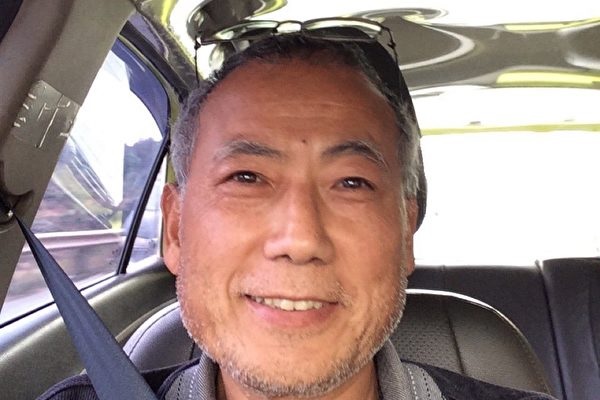
Where is Dong Guangping?

November 23, 2022

Disappeared Chinese human rights defender must be allowed to reunite with his family in Canada

After 31 months in hiding in Vietnam, on August 24, 2022 Chinese human rights defender Dong Guangping was arrested by Vietnamese police.  There has been no news of his fate since then. His wife and daughter, who live in Toronto, are fearful that he has been handed over to Chinese authorities. In China he would face a grave risk of once again being jailed for his human rights activism. He has previously served three prison terms there, simply because he believes in human rights and refuses to remain silent in the face of grave violations in the country.

Dong Guangping had been recognized by the UN High Commissioner for Refugees and accepted for resettlement to Canada as a refugee in 2015. He was in Thailand with his wife and daughter at that time. However, Thai police unlawfully handed him over to Chinese authorities before he was able to travel to Canada.  See also: https://humanrightsdefenders.blog/2015/12/08/thailand-returns-recognized-refugees-to-china-and-falsely-claims-they-did-not-know-about-their-status/

He was sentenced to 3 ½ years in prison in China. After he was released in 2019, Dong Guangping wanted to reunite with his wife and daughter in Canada. However, as China refused to issue him a passport, he was not allowed to leave the country through official channels. He first tried unsuccessfully to reach safety by swimming to a nearby Taiwanese island. In January 2020, he clandestinely crossed the border into Vietnam.

With backing from the Canadian government, Dong Guangping and his family had been hopeful that he would soon be allowed by Vietnamese officials to leave the country and travel to Canada. His arrest was unexpected and his subsequent disappearance has come as a crushing blow.

You can express Your Concern to the Embassies Please write, phone or send an email to Vietnam’s and China’s Ambassadors to Canada:

  • expressing your concern about Dong Guangping’s arrest in Vietnam on August 24, 2022 and the fact that there has been no news of his whereabouts or wellbeing since then;
  • asking them to immediately disclose where Dong Guangping is at this time and that Canadian officials be granted access to him; and
  • requesting that Dong Guangping be allowed to travel to Canada without any further delay, to join his wife and daughter.

His Excellency Cong Peiwu
Ambassador of the People’s Republic of China in Canada

515 St. Patrick Street
Ottawa, Ontario
K1N 5H3

Tel: 613-789-3434

Email: chineseembassy.ca@gmail.com

His Excellency Pham Cao Phong
Ambassador of the Socialist Republic of Viet Nam in Canada

55 Mackay Street
Ottawa, Ontario
K1M 2B2

Geneva: the base from where Qatar pursued its World Cup bid

November 11, 2022

With the football World Cup starting soon, Swissinfo published a timely overview of Qatar’s sports washing efforts, led from its hub in Geneva,: Sportswashing the World Cup from Geneva, published on 10 November 2022

Qatar chose Geneva to launch a massive public relations campaign in a bid to secure the World Cup and impose its narrative on sports. From there, the emirate could access FIFA, United Nation institutions, heads of state and diplomats…Perched just a few hundred metres above Geneva’s exclusive Nautique sailing club in the posh Cologny neighbourhood, the sprawling residence of the Qatari ambassador to the United Nations maintains a near-level view across Lake Geneva of the UN’s European headquarters.

The acquisition of the 550-square-metre home set on over two hectares of land came a year before then-FIFA boss Sepp Blatter announced, to the surprise of many, that Qatar had won the bid for the 2022 football World Cup. Zurich-based.

..

Advantages of autocracy: The United States and the United Kingdom, which had bid for the 2018 and 2022 World Cups together with Korea, Japan and Australia, had long been rumoured to be among the favourites. But intense lobbying by Qatar, FIFA’s arguable penchant for supporting authoritarian rule over democracy to get the job done, and hosting in a region where the sport could still grow, all ran in the emirate’s favour. Jérôme Valcke, FIFA’s former secretary-general, admitted in 2013 that “less democracy is sometimes better for organising a World Cup”. He has since been convicted in Switzerland for accepting bribes. Subsequently, investigations in the US and Switzerland culminated in 2015 with the revelation of a massive corruption scandal at FIFA, followed by arrests of high-ranking officials and an end to Blatter’s term.

Despite winning the bid, Qatar’s reputation as a credible and transparent sports host was severely damaged. Its reputation only worsened as the country eagerly embarked on a quest to make the World Cup bid a reality. Reports by human rights groups of abuses and deaths of migrant workers building the infrastructure for the World Cup became a growing liability to the upbeat narrative the country was eager to project. 

Even before the bid, Qatar, aware of its poor international image, looked to ramp up support among sport organisations, heads of state and diplomats. It chose Geneva as a location to lead a vast public relations campaign.

This three-part investigation shows the lengths to which the emirate went to whitewash its reputation, and the role Geneva played in this marketing stunt.:

More Qatar’s Swiss hub for foreign policy This content was published on Nov 10, 2022 In choosing Geneva as a hub to implement its foreign policy, Qatar gained access to NGOs, the UN and FIFA

More ICSS: Sports at the service of state security  This content was published on Nov 10, 2022 From the start, the agenda of the International Centre for Sports Security was tainted by a lack of transparency and links to Qatar.

More Promoting integrity without transparency This content was published on Nov 10, 2022 The Sports Integrity Global Alliance (SIGA) is another mitigated Qatari effort to boost its reputation.

See also earlier: https://humanrightsdefenders.blog/2019/03/12/if-qatar-has-to-share-world-cup-2022-fifas-ethical-standards-must-apply/

Vacancy: Legal Advisor in Business and Human Rights

November 11, 2022

The European Center for Constitutional and Human Rights (ECCHR) is an independent, non-profit organization dedicated to enforcing civil and human rights worldwide. They initiate, lead and support legal interventions to hold state and non-state actors accountable for human rights abuses.

ECCHR is looking for a candidate with an interdisciplinary profile and at least two years of relevant work experience. A deep understanding of the Business and Human Rights field and the political and legal debates around the German supply chain law is essential.

A deep understanding of Business and Human Rights discussions, especially possible
interventions and legal mechanisms under human rights due diligence and supply chain laws,
in particular the German supply chain law. Excellent written and spoken German and English skills are required, Spanish or French are a plusThe position is ideally to be filled by January 2023 and is limited to May 31st 2024.

Please send your written application in German or English until by email only in one attachment by 15, November 2022 to:

European Center for Constitutional and Human Rights, E-Mail: info@ecchr.eu
European Center for Constitutional and Human Rights
Zossener Str. 55-58, Aufgang D
10961 Berlin
http://www.ecchr.eu
E-Mail: info@ecchr.eu

Nigerian Mubarak Bala subject of BBC documentary

November 11, 2022

A recent BBC documentary is about the challenges faced by humanists and atheists in Nigeria. The film was released this week and focuses on Mubarak Bala, reporting on the events that took place in the run-up to his unjust and disproportionate sentencing in April 2022.Mubarak, who is the President of the Humanist Association of Nigeria, is currently serving a 24-year prison sentence, in connection with a series of Facebook posts that some deemed to be ‘blasphemous’ and ‘likely to cause a public disturbance’. See also: https://humanrightsdefenders.blog/2021/08/27/mubarak-bala-wins-humanist-international-2021-freedom-of-thought-award/

Leo Igwe, Humanists International Board Member & Founding member of the Humanist Association of Nigeria, has been spearheading the campaign for his release since he was first arrested in April 2020.: “The launch of the documentary marks more than 30 months since Mubarak was separated from his family. I’m so proud of his wife, Amina, for the strength she has shown, but you can see in her interview how hard this has been for her. Perhaps the most chilling part of the documentary is when the lawyer who brought about the complaint against Mubarak simply cannot hide his pleasure at the outcome of the sentence, despite the devastating impact on the family. He says: “I really feel bad for the wife and the little son” but the smile on his face tells a very different story.”

see also: https://humanists.international/civi/?civiwp=CiviCRM&q=civicrm%2Fmailing%2Fview&reset=1&id=1422&cid=12522&cs=4a8ba3875028250988e91d06b138a2c8_1680716745_168

Following this week’s decision, Mubarak now has one year left of his sentence to serve however our work is not over; the state still has the opportunity to appeal. We will continue to monitor the situation closely and will work to support Mubarak until his safe release.

The right to a clean, healthy, and sustainable environment (R2E) – further steps and historical decision in the Case of Torres Strait Islanders

November 9, 2022

Following the Human Rights Council and General Assembly resolutions recognising the right to a clean, healthy, and sustainable environment (R2E), adopted in 2021 and 2022 respectively (HRC/RES/48/13 and A/RES/76/300), people have started to consider appropriate next steps in advancing the legal recognition, implementation, and monitoring of this right. See also: https://humanrightsdefenders.blog/2021/10/11/new-right-to-healthy-environment-ngos-urge-action/

A blog post of the Universal Rights Group on 7 November 2022 reports on meeting on 18 October hosted by the Permanent Mission of Costa Rica in Geneva, UNEP, and the Universal Rights Group bringing together over 20 human rights experts from Geneva Permanent Missions in a non-attributable setting designed to promote open and forward-looking debate on appropriate next steps. The discussion was informed by an ‘options paper’ prepared by the Special Rapporteur on human rights and the environment, Dr David Boyd, detailing three possible ways to advance the R2E, which he argued can and should be carried out concurrently.

In the meantime, a more operational development was the historic decision, the United Nations (UN) Human Rights Committee found on Friday 23 September that Australia’s failure to adequately adapt to climate change violates the human rights of Torres Strait Islanders.   

Karin M Frodé, Andrea Olivares Jones and Joanna Kyriakakis reported on the case:

The Committee, which oversees the implementation of the International Covenant on Civil and Political Rights (ICCPR) received a complaint by eight Torres Strait Islanders and six of their children in 2019. The group called for the Committee to recognise that the Australian Government had violated their human rights by failing to reduce carbon emissions, and introduce measures to adapt to climate change.

The Committee’s decision makes clear that inadequate responses to climate change can result in the violation of human rights. It is a landmark victory worth celebrating as part of a broader trend in climate change litigation which has seen human rights arguments put forward to hold both states (ie, the NetherlandsPakistan and Belgium) and corporations (ie, Shell and other Carbon Majors) accountable. It is also an example of a rise in cases where Indigenous actors are central. 

The Committee’s decision: The Committee found that Australia has violated the Torres Strait Islanders’ rights to private life, home and family and their enjoyment of culture. In doing so, the Committee noted Australia’s efforts to construct a seawall, but found it to be an inadequate response to the alarming threats that had been raised by Torres Strait Islanders since the 1990s, due to its delay initiating the project ([8.12], [8.14]).

While decisions by UN bodies are not automatically binding in Australian law, they are persuasive opinions by independent experts that outline Australia’s international obligations and analyse whether they are complied with. The relationship between climate change impacts and human rights is an emerging area, so the clarity that decisions such as in the present case bring is critical. This decision is therefore important not only to the complainants but for other climate justice advocates. 

The present decision follows other climate related decisions by human rights bodies. In Teitiota, a case brought against New Zealand, the same Committee made important observations about state obligations and climate change in the context of asylum seekers and refugees, though it stopped short of finding a violation. Another complaint brought by young climate activists against five states for climate inaction before the Committee on the Rights of the Child, focused on child-centric impacts of climate change. Although dismissed for technical reasons, that decision made important findings that children fall within the jurisdiction of states where transboundary harm originates, following the approach of the Inter-American Court of Human Rights

See also: https://humanrightsdefenders.blog/2022/03/02/human-rights-high-commissioner-bachelet-urges-support-for-environmental-defenders/

https://www.ohchr.org/en/press-releases/2022/09/australia-violated-torres-strait-islanders-rights-enjoy-culture-and-family

Independent Commission of Inquiry hears Palestinian complaints

November 9, 2022
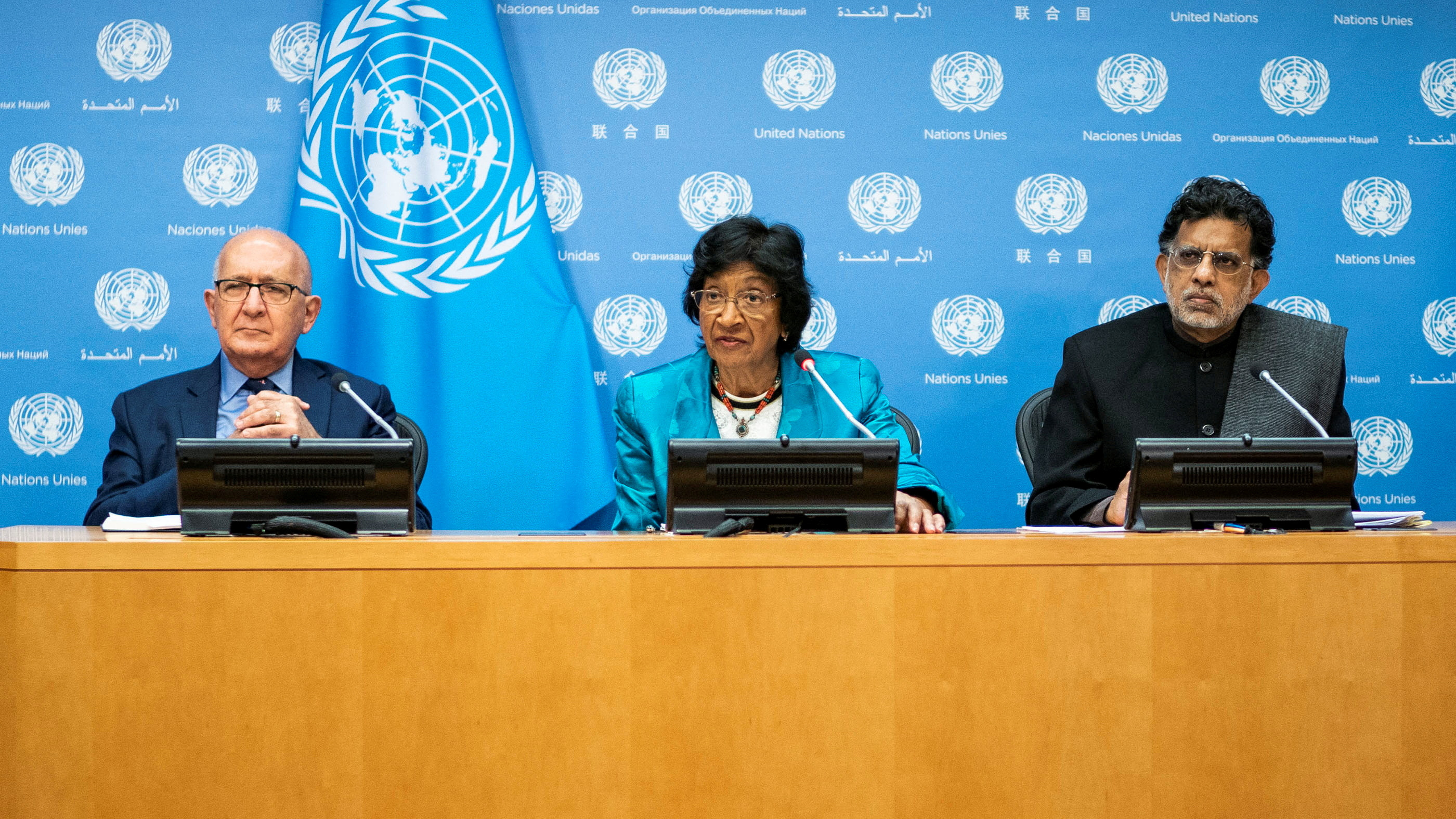
Members of the UN Independent International Commission of Inquiry attend a press briefing at the UN headquarters in New York

Members of the United Nations Independent International Commission of Inquiry on the Occupied Palestinian Territory and in Israel, Navanethem Pillay, Miloon Kothari and Chris Sidoti attend a press briefing at the United Nations headquarters in New York, U.S., October 27, 2022. REUTERS/Eduardo Munoz/File Photo

On 7 November 2022 Emma Farge reported for Reuters how a Palestinian human rights group told a U.N. panel on Monday 7 November it had been subject to threats and “mafia methods” during a campaign of harassment organised by Israel to silence groups documenting alleged Israeli rights violations.

The independent Commission of Inquiry, established by the Human Rights Council, the U.N. top human rights body, last year, plans five days of hearings which it says will be impartial and examine the allegations of both Israelis and Palestinians. Israel dismissed the process overseen by the panel as a sham while it declined comment on the specific allegations.

In the opening session, the commission heard from representatives of Palestinian organisations shuttered by Israel in August and designated as “terrorist” entities. See also: https://humanrightsdefenders.blog/2021/10/23/assault-by-israel-on-palestinian-human-rights-ngos/

Shawan Jabarin, General Director of human rights group Al-Haq, denied the terrorism charge and called the closure an “arbitrary decision“, saying Israeli security forces had used “mafia methods” against it in a years-long harassment campaign. See also: https://humanrightsdefenders.blog/2011/11/30/israel-refuses-to-let-hrd-shawan-jabarin-travel-to-receive-award-in-denmark/

They used all means, I can say. They used financial means; they used a smear campaign; they used threats,” he said, saying his office was sealed with a metal door on Aug. 18.

Asked to detail the threats mentioned to the panel, Jabarin told Reuters after the hearing that he had received a phone call from somebody he identified as being from “Shabak”, or the Israel Security Agency, two days after the raid. They threatened him with detention, interrogation or “other means” if he continued his work, he added.

https://www.reuters.com/world/un-hearings-probing-alleged-israeli-rights-abuses-open-geneva-2022-11-07/

Capacity Building for Human Rights Defenders (HRDs) Living in Exile – applications open for 2023 course

November 9, 2022

IDREAM:  Capacity Building for Human Rights Defenders (HRDs) Living in Exile

CVT is accepting applications from Human Rights Defenders (HRDs) living in exile to participate in a dynamic capacity development and mentoring fellowship called “IDREAM.”

IDREAM (Incubator for Defenders Remaining in Exile to Advance Movements) is a collaborative and global capacity development project designed to help address the unique needs of HRDs living in exile. IDREAM will provide training and networking activities with the goals of: advancing advocacy efforts, promoting HRD’s psychosocial resilience and well-being, and improving exiled HRD’s physical and digital security. At the end of the selection process, 10 partner HRDs living in exile around the world will be invited to join IDREAM. The project’s main capacity building activities will take place from approximately April 2023 through November 2024. HRDs selected for IDREAM will receive up to $31,000 in financial assistance to support their work in the project.

The Call for Applications is available in English, French, Mandarin, Arabic, and Spanish. All activities of the IDREAM project will take place in English, and applicants must be proficient in English.

IDREAM invites interested HRDs living in exile outside of their home country or internally displaced within their home country to apply online for this fellowship before the deadline at 11:00 pm CST on 30 November 2022.

Applicants are highly encouraged to read all background materials including the Call for Applications below, the Guidelines and Instructions for Applicants and Questions for Applicants.

For earlier course see: https://humanrightsdefenders.blog/2020/02/08/idream-project-training-support-to-displaced-or-exiled-human-rights-defenders/

GUIDELINES AND INSTRUCTIONS:

To apply to IDREAM, click “APPLY HERE.”

https://www.cvt.org/HRDapp