“If just a fraction of the global attention given to football could be given to securing human rights, we would all be celebrating victory.”
Front Line Defenders and Brazilian NGO partners Justiça Global and Terra de Direitos launched today an online and social media campaign to focus attention on the plight of 42 human rights defenders (HRDs) from each of the participating World Cup nations (www.sportshrd.org). The international campaign kicks off in a few hours just before the first World Cup match between Brazil and Croatia with an event in Dublin.
“Front Line Defenders draws attention to these heroes in our societies who work at great personal risk, against seemingly insurmountable odds to secure fundamental rights and freedoms for others,” announced Mary Lawlor, Executive Director of Front Line Defenders.
The campaign site allows visitors to send messages of solidarity, which will be delivered to the HRDs. On Twitter, please use #sportshrd to enlarge the reach of the campaign.
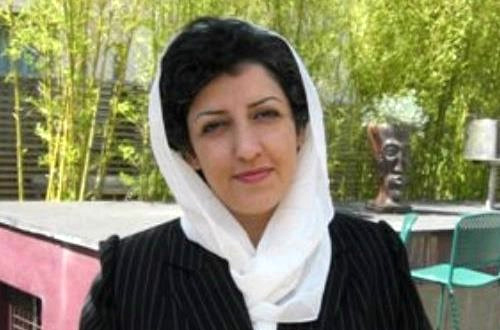
Reprisals are not limited to human rights defenders cooperating with the UN. Narges Mohammadi, a prominent human rights defender in Iran, told the NGO ‘International Campaign for Human Rights in Iran’ that new charges have been brought against her stemming from her March 8, 2014 meeting with the EU foreign policy chief Catherine Ashton. Mohammadi was charged with “propaganda against the state” and “collusion against national security” for her meeting with Ashton at the Austrian Embassy in Tehran. She was released on $10,000 bail. [Mohammadi was one of several women activists who accepted an invitation to meet the EU foreign policy head during her March visit to Tehran. The meeting took Iranian officials by surprise and unleashed a flurry of criticism by conservatives who described the meeting as “foreign interference in Iranian domestic affairs” and labeled the Iranian participants as foreign collaborators.]
Mohammadi stated: “I have been ‘charged’ with every single civil activity I have engaged in since my release from Zanjan Prison in August 2012, such as participating in gatherings on women’s rights, air pollution, and [Rouhani’s] Citizenship Rights Charter. I was also accused of honoring families of political prisoners at meetings, or attending a gathering with Gonabadi Dervishes in front of the Prosecutor’s Office, or giving interviews to media outside Iran. I told them there that when you fit all my civil activities into these two charges, it means that I must remain silent and still.”
Mohammadi was arrested in 2009 and charged with “assembly and collusion against national security,” “membership in the Defenders of Human Rights Center,” and “propaganda against the state.” She was first sentenced to 11 years in prison, but Branch 54 of the Tehran Appeals Court reduced her sentence to six years in prison. She was released in 2013 for medical reasons after a severe illness in Zanjan prison.
On 25 June 2014, Marilyn Carlson Nelson will receive The Advocates’ 2014 Don and Arvonne Fraser Human Rights Award in Minneapolis [see http://www.trueheroesfilms.org/thedigest/award/don-and-arvonne-fraser-human-rights-award]. The winner this year is an interesting choice as it is rare to give a human rights award to a corporate leader. Named as one of the “World’s 100 Most Powerful Women” by Forbes, Marilyn Carlson Nelson, the former CEO and chairman of Carlson, is an unusual human rights defender. Under her leadership, Carlson became the first major U.S.-based travel company to commit to training its hotel employees to watch for and report child sex abuse when she signed the travel industry’s International Code of Conduct to end sexual exploitation and trafficking of children. She also helped to defeat the Minnesota marriage amendment that was before the state’s voters in 2012. The op-ed she wrote for the Star Tribune went viral and encouraged other Minnesota business leaders to voice their support for LGBTI rights.
Didier Burkhalter (r), OSCE-Chairperson-in-Office and Swiss Foreign Minister, alongside Janez Lenarčič, Director of the OSCE Office for Democratic Institutions and Human Rights, at a conference on human rights defenders, Bern, 10 June 2014. (FDFA)
The two-day conference “The OSCE and Human Rights Defenders: The Budapest Document 20 Years On” brings together national human rights experts, human rights defenders and civil society representatives from across the OSCE region. Opening the conference, the OSCE Chairperson-in-Office and Swiss Foreign Minister Didier Burkhalter, stressed the role of political will in supporting the work of human rights defenders: “The implementation of human rights norms first and foremost needs one thing: political will … Allowing the voices of human rights defenders and civil society to be heard – even when these are uncomfortable voices – is at the basis of a well-functioning democracy,” .. “These men and women working to increase awareness and respect for human rights often take high risks to help their fellow citizens be able to live their lives in dignity. They need and deserve our support.” In his keynote address, Stavros Lambrinidis, the EU Special Representative for Human Rights, told participants that human rights have never been a battle between different cultures, but within them. He added that human rights have always been the universal language of the powerless against the relativism of the powerful: “Freedom of expression makes sense when we disagree, and especially when we strongly disagree,” Lambrinidis said. “Governments don’t have the obligation to agree with civil society; they have clear obligations, including providing human rights defenders with a safe and enabling environment. Strong confident countries speak to human rights defenders.” The first day of the conference saw the launch of the ODIHR Guidelines on the Protection of Human Rights Defenders, a publication designed to assist OSCE participating States in promoting security for human rights defenders, in light of the increasing risks they face in carrying out their work. Ambassador Janez Lenarčič, Director of ODIHR, stressed that the approach presented in the Guidelines to ensuring such protection has to be based on co-operation. “The Guidelines will only prove as effective as their implementation will be,” Lenarčič said. “I believe the key to success is precisely that genuine partnership that the Budapest Document spoke of 20 years ago. It has to include all those involved in efforts to protect human rights defenders – from States and civil society to regional and international governmental organizations. This remains as important today as it was two decades ago.”
Defenders of the environment often face terrible consequences for their actions, suffering rights violations and violence, according to a new report by Friends of the Earth International to be released on June 26, during the 26th Session of the U.N. Human Rights Council . “A new case of violence against environmental rights defenders and violations of their rights is reported to us on average once a week, and this is just the tip of the iceberg,” said Lucia Ortiz, of Friends of the EarthInternational. “Environmental defenders who uphold the right of communities to determine their own development path in opposition to corporate-driven mega projects are subject to many types of human rights abuses, often committed by corporations or on their behalf”.
Friends of the Earth International recorded more than 100 incidents of violence against environmental rights defenders and violations of their rights in 27 countries around the world in the period November 2011 – October 2013. More than half of the killings recorded were targeted assassinations of peasant leaders and deaths of peasants during violent confrontations regarding land disputes, often involving the protection of peasant territories from polluting development projects such as hydroelectric dams, monoculture plantations or the extraction of oil, gas and minerals.
The new report calls on the UN Human Rights Council to create an international treaty to address corporate human rights violations. [On may 7, 2014, a global alliance of civil society organizations known as the Treaty Alliance representing more than 500 groups called on UN Human Rights Council members to support an initiative in June that would begin a process towards creating an international legally binding treaty to address corporate human rights violations. For more information read: www.foei.org/news/groups-call-for-un-treaty-to-tackle-corporate-human-rights-violations/ – A regulatory and enforcement framework that is legally binding for corporations has been proposed at the Council by a group of 84 nations since September 2013]
The following environmental defenders will be in Geneva on June 23-27:
1) Micaela Antonio Gonzalez from Guatemala and Victor Barro from Friends of the Earth Spain will expose the human rights violations by the Spanish company Hidralia in Guatemala.
2) Abeer Al Butmah from Friends of the Earth Palestine will expose the human rights violations by Israeli water company Mekorot in Palestine.
3) Godwin Ojo from Friends of the Earth Nigeria and Paul de Clerck from Friends of the Earth Europe will expose the human rights violations by Royal Dutch Shell in the Niger Delta.
4) Alberto Villarreal will expose the violations of the human right to health posed by the Philip Morris International challenge to the tobacco control legislation in Uruguay.
Friends of the Earth International is critical of ‘voluntary mechanisms’ such as the Global Compact and Ruggie’s UN Guiding Principles on Business and Human Rights and believes they have not reduced attacks on human rights defenders and are thus insufficient to protect human rights.
80 human rights defenders from more than 40 countries gather in Montreal from 8 to 27 June for the International Human Rights Training program organized by Equitas, the Canadian not-for-profit organization founded in 1967. The program is being held on the campus of John Abbott College in Ste-Anne-de-Bellevue. Read the rest of this entry »
Yesterday, 6 June 2014, the UN and media reported that the U.N. Secretary-General Ban Ki-moon has proposed that Jordans U.N. ambassador, Prince Zeid Raad Zeid al-Hussein, as the new United Nations High Commissioner for Human Rights (to replace Navi Pillay who leaves in August after serving a second term). The General Assembly still has to approve, but usually no announcement is made unless there is already agreement.
Prince Zeid is generally well-liked as a diplomat and has established a solid reputation. He is a graduate of Johns Hopkins University and Cambridge University, has previously served as Jordans ambassador to the United States and Mexico. He was also a political affairs officer in UNPROFOR, the U.N. peacekeeping mission in the former Yugoslavia during the Balkan conflict.
Still, after a two women High Commissioners with broad experience in human rights and proven independence as judges before their appointments, it is fair to ask what human rights defenders can expect from this shift back towards a High Commissioner chosen for more diplomatic skills (as was the first one José Ayala-Lasso in 1994). Anyway, the only thing is to wait and see how he works out in practice. After all, another Prince, Sadruddin Aga Khan served as United Nations High Commissioner for Refugees from 1966 to 1978, and was excellent.
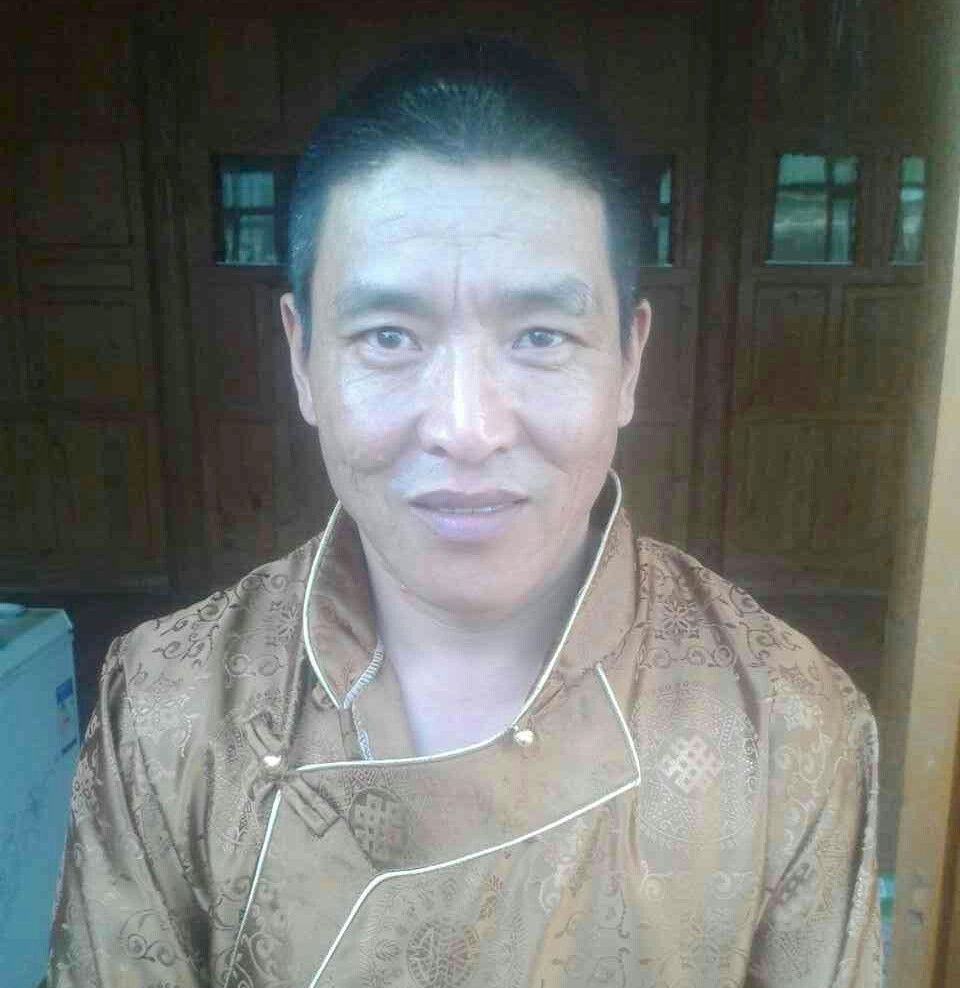
On 5 June 2014 Dhondup Wangchen, the imprisoned Tibetan video-activist, was released from prison in Qinghai’s provincial capital Xining, China, after serving a six-year sentence. In a phone call to Gyaljong Tsetrin, cousin and president of Filming For Tibet, living in Switzerland, a very emotional Dhondup Wangchen said: “At this moment, I feel that everything inside me is in a sea of tears. I hope to recover my health soon. I would like to express my feeling of deepest gratitude for all the support I received while in prison and I want to be reunited with my family.”
Lhamo Tso, wife of the imprisoned filmmaker who was granted US asylum in 2012 and now lives in San Francisco, is overjoyed: “Six years of injustice and painful counting the days ended today. It is a day of unbelievable joy for his parents in Dharamsala, our children and myself. We look forward to be reunited as a family.”
Gyaljong Tsetrin, his cousin and co-producer of “Leaving Fear Behind”, said after talking him to: “Though Dhondup is still under the control of the Chinese authorities I am very relieved that he finally could leave prison and has now the possibility to consult a doctor.” The self-taught cameraman and video-activist travelled across Tibet with his assistant Golog Jigme in 2007/2008. His film “Leaving Fear Behind” (28 min.) has been translated into a dozen languages and has been screened in more than 30 countries worldwide. Golog Jigme recently just arrived in India after a spectacular escape from Tibet. Dhondup Wangchen has been given awards by various NGOs, such as Committee to Protect Journalists, for his courageous work making the documentary “Leaving Fear Behind” and his case was the focal point of many campaigns of international human rights groups such as Amnesty International and Reporters without Borders. Government representatives around the world have brought up his case in their talks with their Chinese counterparts.
A court in Uzbekistan ordered the release of a human rights defender on medical grounds on 31 May 2014. The Uzbek government should now meaningfully investigate credible allegations that Abdurasul Khudoynazarov was tortured and denied appropriate medical care in prison, and allow him to resume his human rights work.
The ISHR Monitor of June 2014 contains a good wrap-up of the situation regarding reprisals against Human Rights Defenders written by Eleanor Openshaw under the title: “Reprisals: States must reduce unacceptable human cost of cooperating with UN”.
‘Regrettably, reprisals against persons cooperating with the United Nations, its mechanisms and representatives in the field of human rights continue. ...’ said UN Secretary-General Ban Ki-moon in 2013. In response, the UN Human Rights Council adopted a landmark resolution in September 2013 calling on the Secretary-General to designate a UN-wide senior focal point to combat reprisals. Regrettably, Human Rights Council resolution 24/24 was blocked by the UN General Assembly in New York in December 2013, but NGOs are now calling again on States to revisit the issue as a matter of priority. “The disappearance, arbitrary detention, ill-treatment and death of human rights defender Cao Shunli in retaliation for her efforts to hold China to account for its human rights record at the UN is just one example among many of the unacceptable human cost of cooperating with the UN,’ said Ms Openshaw.
A number of positive recent developments (referred to in earlier blog posts [https://thoolen.wordpress.com/tag/reprisals/]) include a May 2014 decision by the African Commission on Human and Peoples’ Rights in Angola to appoint its own focal point, and a joint statement delivered by Botswana on behalf of 56 States in Geneva in March 2014 recognising that ‘the current response by the UN and the member States in addressing reprisals is inadequate’ and calling on them to ‘address cases of reprisals through a more effective and coordinated approach.‘
‘With the opportunity for the General Assembly to revisit the issue in September, NGOs are urging States to transfer the political will shown on this issue in Angola and Geneva to New York, and achieve an outcome that challenges impunity for the perpetrators of reprisals and increases protection for human rights defenders and others who engage with the UN human rights system,‘ Openshaw said (Program and Advocacy Manager, e.openshaw[at]ishr.ch).



 Hans Thoolen on Human Rights Defenders and their awards