Archive for the 'human rights' Category

On 19 November seven Moroccan Human Rights Defenders go on trial

November 19, 2015

Hisham Almiraat (center) with friends at the Global Voices 2012 Summit in Nairobi. PHOTO: Ivan Sigal

Maâti Monjib, Hicham Mansouri, Samad Iach, Mohamed Elsabr and Hisham Almiraat are facing charges of “threatening the internal security of the State”, an offense that can lead to up to five years in prison. Rachid Tarek and Maria Moukrim are facing charges of “receiving foreign funding without notifying the General Secretariat of the government”, which if found guilty, can result in fines.

The trial for the case is scheduled for 19 November, 2015. Morocco has seen a dramatic increase in human rights violations and attacks against journalists in the past year. Crackdowns on independent media, human rights defenders and civil society have led to a stifling environment that limits freedom of expression and association in the country.

We call the international community’s attention to the continuous interrogations, harassment, threats and arrests, as a deliberate attempt by the Moroccan authorities to silence dissidents. Freedom of expression is a fundamental human right (Article 19 in the Universal Declaration of Human Rights). The Moroccan government violates this universal right with the charges.

16 international and regional NGOs concerned with freedom of expression urge the Moroccan authorities to drop all charges and end the harassment of human rights defenders and journalists.

Read the rest of this entry »

Defender Profile of Will McCallum, Greenpeace UK

November 16, 2015

On 28 October 2015, the Monitor of the International Service for Human Rights carried an interview with human rights defender Will McCallum who is a ‘Campaigner’ at Greenpeace in the United Kingdom.

I would say that it is the tactics we use are what provoke a backlash from the Government as much as the issues we work on. In the UK if you make full use of the freedom of information system or judicial reviews, then you are probably going to have speak out publicly about the failures of government policies. This is what puts you in the firing line’.

And as Greenpeace and other environmental groups have highlighted the risks to environmental rights implied by UK energy and climate policies, they have found themselves targets of derogatory statements from both authorities and the media, questioning the motives of their work. The previous Environment Secretary labelled them ‘self-serving’,highly paid globe-trotters’ ‘focusing on the wrong issues and doing real harm while profiting handsomely’.

Yet Will says that this is actually emblematic of a broader governmental intolerance of civil society advocacy. ‘There is a general background noise from the government which is anti-NGO; there’s a sense of disrespect and there’s been a marked difference since 2012. It’s as if the government see questioning by civil society as a pain which ought to be kept in check. But dissent has its rightful place in a democracy and, in fact, we can help ensure the government makes policies which respect rights and protect the environment. There is a sense that in the UK the government would like to see the role of NGOs as one of simply service providers’.

This attitude has manifested itself not only in the governmental discourse, but also in legislation limiting NGO activities. Will points to the 2014 Lobbying Act, which put strong financial and administrative limitations on the advocacy work NGOs could do around election periods. A recent letter by 150 NGOs called for the law’s repeal, following a recent independent inquiry into its impact.‘At least as concerning for us, however, is the current review of the Freedom of Information Act. Over 140 organisations spoke out last month in concern at apparent attempts to weaken the Act. The government has mandated a Commission to carry out the review, but almost all of its members are politicians and all have a track record of questioning the Act. Where’s the balance? Where’s the view of those of us who rely upon the Act to hold the government accountable?’

Will is concerned at suggestions that the Commission will recommend the implementation of fees for tribunal appeals against freedom of information decisions, currently free. ‘At Greenpeace we have a certain amount of resources we could invest in such appeals. But what’s the impact for smaller organisations and grass-roots human rights defenders? They rely on this Act to demand better from the State’. A lack of transparency and of proper consultation are two obstacles which make it difficult for organisations and communities to question the environmental impact of business projects, says Will. ‘On the one hand, there is a failure by the government to be transparent regarding who they are being lobbied by and how; there is no effective lobbying register. Yet on the other hand there is a reluctance on the part of the State to listen to those communities and activists who are asking for an environmental perspective to be taken into account. The government wants to expedite business projects at all costs, as shown by a recent change to planning guidance which will allow central government to circumvent local authorities in the approval of fracking projects if the latter has taken more than 16 weeks to evaluate a project proposal’.

In an echo of a disturbing global trend, another fear amongst environmental rights organisations in the UK, is the possible use of counter-terror and surveillance legislation to limit their activism… ‘The government has said that the Extremism Bill is to tackle what falls below the legal threshold for terrorist proscription. There needs to be a clear articulation of what this means to ensure the law cannot be abused. Meanwhile, the Policing and Criminal Justice Bill provides for 90-day pre-trail detention. Any law which gives authorities who are relatively intolerant to dissent the power to lock people up before they’ve been judged must be subject to proper consultation of local civil society and international human rights experts before it is passed’. It will also fall upon this government to make guarantees of no-repetition in the cases of police spying and surveillance of environmental groups which have led to a public inquiry into undercover policing…

Source: Defender Profile: Will McCallum, United Kingdom | ISHR

Bahama Human Rights Association scores in court

November 13, 2015

On 27 March 2015, I posted about the little known Bahamas [https://thoolen.wordpress.com/tag/grand-bahama-human-rights-association/]. So it is with pleasure that I can report that the Grand Bahama Human Rights Association has scored a victory in court re the controversial immigration law.

On 12 November it reported:  the Supreme Court’s decision to open the files on the controversial new immigration policy is a great victory for transparency and human rights in The Bahamas. For far too long in this country, the inner workings of government have been carried on behind a veil of secrecy, their rationale and ultimate ends remaining obscure. The time has now come to shed light on what is done in the public’s name and we applaud the court for leading the way in this regard. While praising this ruling as just, fair and in the service of the public interest, we must pause and lament the fact that the government found itself unable to act in an open and humane manner on its own, without the help of the court. In any event, we feel the decision sets a great precedent for future cases and sends a clear message that government business should be conducted neither in the dark, nor in violation of the fundamental rights and protections enshrined in our constitution. We look forward to the government’s prompt and full compliance with the ruling, and expect that a great deal of information will be presented to the court as a result. At the outset, the GBHRA had been of the view that the new immigration policy was the brainchild of a single minister, however we were told repeatedly that it is a creation of the cabinet as a whole. The court’s order, therefore, should turn up numerous reports, internal memorandums and other correspondence that will shed light on how this policy came to be, and which will be of use to both local and international human rights defenders in this and many similar cases.

Source: thebahamasweekly.com – GBHRA: A great victory for transparency and human rights

MEA Laureate Mbonimpa has message of hope at his son’s funeral

November 12, 2015

Since I published my post about MEA Laureate Pierre Claver Mbonimpa two days ago (https://thoolen.wordpress.com/2015/11/10/burundi-what-more-early-warning-does-one-need/) the situation has not improved and the hope is that the UN will find the muscle to impose itself. In the meantime, the Huffington Post of 12 November carries a long piece on Mbonimpa and his Burundi by Charlotte Alfred under the title “Burundi’s Human Rights Legend Urges Hope After His Son’s Killing“.

<span class='image-component__caption' itemprop="caption">Pierre Claver Mbonimpa is founder and president of the Association for the Protection of Human Rights and Detainees in Burundi.</span>

Pierre Claver Mbonimpa founder and president of the APRODH in Burundi (CARL DE SOUZA/AFP/GETTY IMAGES)

Pierre Claver Mbonimpa wasn’t able to attend his son’s funeral. Instead, he sent a message from Belgium, which was read out at the funeral of his son, Welly Nzitonda, on Tuesday, according to independent journalist network SOS Médias Burundi: “Do not lose courage … The tragedies we face will end with a resolution of the conflict in Burundi.

……..

“The problem that plagues the country is not ethnicity, but politics,” Mbonimpa told the Oslo Freedom Forum in 2010. “It is politicians who manipulate the population in pursuit of power.”

For the full article, worth reading, see: Burundi’s Human Rights Legend Urges Hope After His Son’s Killing

Filippo Grandi new United Nations High Commissioner for Refugees

November 12, 2015

On 11 November 2015 the Secretary-General of the United Nations, following consultations with the regional groups, announced that Filippo Grandi of Italy is to be the new United Nations High Commissioner for Refugees (UNHCR). filippo_portrait_lng

This is good news for the organization and the millions of refugees as Filippo brings enormous humanitarian experience with him: He was Commissioner-General of the United Nations Relief and Works Agency for Palestine Refugees in the Near East (UNRWA) from 2010 to 2014 and it’s Deputy Commissioner-General from 2005 until 2010.  He served as the Secretary-General’s Deputy Special Representative with the United Nations Assistance Mission in Afghanistan (UNAMA) and has a long-standing career with UNHCR (1988-2004), notably as Chief of Mission in Afghanistan and Chief of Staff in the High Commissioner’s Executive Office.  His vast field experience includes various positions in Sudan, Syria, Turkey and Iraq, having also led emergency operations in Kenya, Benin, Ghana, Liberia, the Great Lakes region of Central Africa, Democratic Republic of Congo and Yemen.

Filippo Grandi was born in Milan in 1957. He has a bachelor’s degree in philosophy from the State Universities of Venice and Milan, and from the Gregorian University in Rome.

Source: Secretary-General Nominates Filippo Grandi of Italy United Nations High Commissioner for Refugees | Meetings Coverage and Press Releases

No more ‘business as usual’ when it comes to business and HRDs

November 11, 2015

On 19 October Michel Forst, UN Special Rapporteur on Human Rights Defenders, wrote a piece for the Monitor of the ISHR under the title “No more ‘business as usual’ when it comes to business and human rights defenders”Read the rest of this entry »

Is there ANY way to engage people with human rights communication?

November 10, 2015

Yes there is!” according to True Heroes Films (THF)THF_SIMPLE

A recent assessment of the communication practice of Geneva-based human rights organisations carried out by THF showed that many of them face the same challenges.

In a newsletter (see link at the bottom of this post) and in the below guidelines, THF summarizes these challenges and the solutions identified together with communicators from the organisations assessed. There are some nice cartoons by © Hani Abbas.

The guidelines are by necessity of a general nature and are based on the experience of NGOs in the Geneva area, but they they may help also others in thinking about their communications problems: Read the rest of this entry »

EU Parliament says Snowden is human rights defender

October 30, 2015

Media reported on the EU Parliament’s vote to drop criminal charges against Edward Snowden and to encourage members to block his extradition Read the rest of this entry »

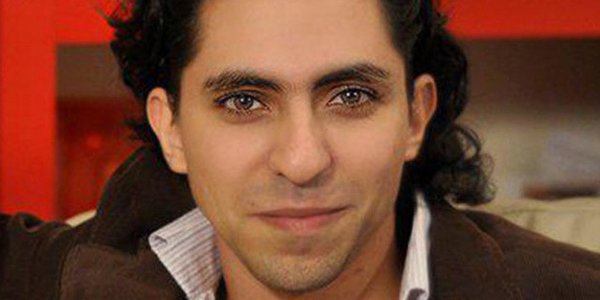
Saudi blogger Raif Badawi awarded Europe’s Sakharov prize

October 29, 2015

The Saudi blogger Raif Badawi, whose flogging sentence caused a global outcry, is awarded the 2015 Sakharov human rights prize. Mr Badawi was sentenced to 10 years in jail and 1,000 lashes in Saudi Arabia for “insulting Islam”[https://thoolen.wordpress.com/2014/05/08/the-middle-ages-are-back-10-years-prison-1000-lashes-for-saudi-human-rights-defender/].

Raif Badawi

European Parliament President Martin Schulz urged Saudi King Salman “to free him, so he can accept the prize“. Mr Badawi’s wife Ensaf Haidar, now living Canada with their children, told AFP news agency that award was a “message of hope and courage”.

For more on the prize: http://www.brandsaviors.com/thedigest/award/sakharov-prize-freedom-thought.

[Earlier this year Badawi also won the Pen Pinter Prize and the Moral Courage Award].

Badawi was one of three nominees for this year’s prize along with assassinated Russian opposition leader Boris Nemtsov and the Venezuelan opposition movement Mesa de la Unidad Democratica.

Source: Saudi blogger Raif Badawi awarded Sakharov human rights prize – BBC News

Mugabe wins Chinese peace prize – this time for real

October 23, 2015

When I wrote my 1 April 2013 post about President Robert Mugabe getting the revamped Gaddafi award [https://thoolen.wordpress.com/2013/03/31/gaddafi-human-rights-award-resurrected-mugabe-rumored-to-be-laureate/], I could not know that one day he would actually get an award. But according to the Guardian and other newspapers this what happened when he was given the “Confucius award“, which was set up in 2010 as a Chinese alternative to the Nobel peace prize after the Norwegian Nobel committee infuriated Beijing by handing its annual peace prize to the jailed dissident writer Liu XiaoboRead the rest of this entry »