Dunja Mijatović, the Council of Europe Commissioner for Human Rights, published on 18 December a piece stressing the importance of the so-called “Paris Principles” for having strong National Human Rights Institutions. Worth reading in toto:
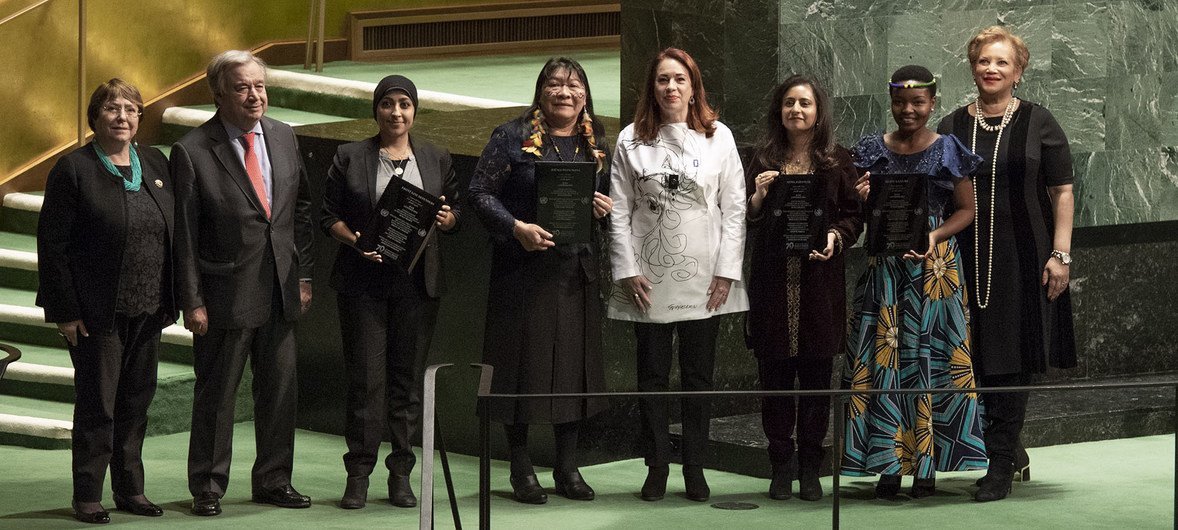
Secretary-General António Guterres (2nd left) and UN High Commissioner for Human Rights Michelle Bachelet (left) with winners of the UN Prize in the Field of Human Rights at the General Assembly’s commemoration of the 70th anniversary of the Universal Declaration of Human Rights. UN Photo/Evan Schneider
The “clear and profound” guidelines enshrined in the Universal Declaration of Human Rights, “have made it the world’s most widely translated document”, the UN Secretary-General told the General Assembly on Tuesday at an event to commemorate the Declaration’s 70th Anniversary, marked 10 December.
Rebeca Gyumi of Tanzania, for her work with women and girls. She lead a campaign that prompted the repeal of a Tanzanian law in 2016, which once permitted girls as young as 14 to be married off.
Asma Jahangir of Pakistan, a human rights lawyer – whose daughter, Munizae, received the award on her behalf. Mrs. Jahangir, who passed away in February of this year, fought against religious extremism and for the rights of oppressed minorities.
Joênia Wapixana (known also as Joenia Batista de Carvalho) of Brazil, who advocates on behalf of indigenous communities.
Front-Line Defenders, an Irish organization which works on the protection of human rights defenders.
The SG emphasized that “their work, and that of other human rights defenders around the world, is essential for our collective efforts to sustain peace and ensure inclusive sustainable development and respect for human rights for all.”
Tibetans in Sydney celebrate Nobel Peace Prize Day and Int’l Human Rights Day.
Hundreds of Tibetans and supporters across New South Wales gathered at Forestville to celebrate the 29th anniversary of the conferment of Noble Peace Prize to the spiritual leader of Tibet, His Holiness the 14th Dalai Lama….Speakers also reminded that 10 December is international human rights day. This must provide the opportunity for us to recall the continuing violation of human rights in Tibet.
2. In the Hong Kong Free Press of 16 December Kong Tsung-gan lists the best human rights books, October to December 2018: The 14 books are set in Argentina, China, Guatemala, India, Israel, Mexico, Niger, Northern Ireland, Palestine (3), Russia, South Sudan, the United States (4), and globally. They deal with the following human rights issues: activism and nonviolent struggle, arbitrary detention, censorship and propaganda, children’s rights, rights of civilians in conflict, corruption, democracy and dictatorship, right to education, enforced disappearance, equality, extrajudicial killings, genocide, human rights defenders, indigenous peoples’ rights, labour rights, land rights, the right to life, nonviolent protest, prisoners’ rights, racism and discrimination, the right of self-determination, sexual violence and harassment, slavery, torture, war crimes, and women’s rights.
3. “For People of Faith, 70-Year-Old Human Rights Document Holds Special Meaning“. Under this title Nelu Burcea, the Seventh-day Adventist Church’s liaison to the United Nations, reflects that “seventy years ago this week, the international community entered into a groundbreaking agreement to uphold a set of shared principles and values that would guide humanity as it moved into the future. …….For me, as a person of faith, Article 18 of the Declaration holds special significance……Although Article 18 deals specifically with religious freedom, it is not an isolated, stand-alone human right. It is inextricably bound up with many other fundamental freedoms, such as the freedom of assembly, freedom of thought, freedom of speech, and so on. As a Seventh-day Adventist I would suggest that there is an earlier, even more fundamental expression of Article 18. As I read the Bible, I learn that we are all born free and equal; that every human being is endowed with the spark of Divine by his or her Creator; that every man, woman, and child stands equal before God in value and dignity. Even more, Scripture teaches us that every person has the personal right—indeed, the obligation—to choose freely whether or not to worship God and follow His will.”
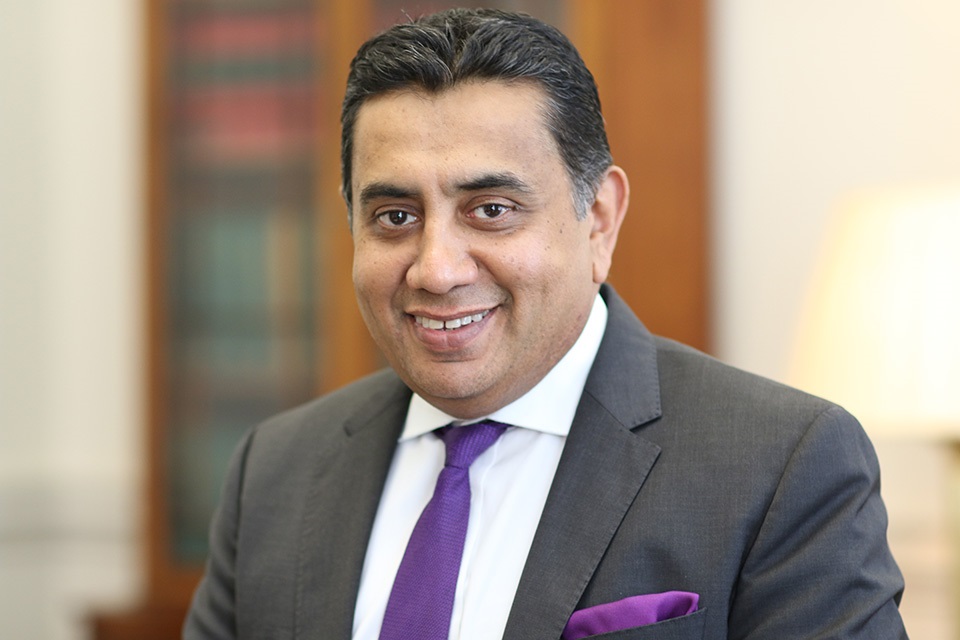
4. Lord Ahmad of Wimbledon delivered a speech at the Amnesty International Annual Human Rights Day Reception on 12 December 2018. Through the link below you can get the transcript of the speech, exactly as it was delivered.
….The area of Human Rights is something I believe in very passionately and take very seriously, and therefore not withstanding other events – and there are a few others going on today – it is important that we show our commitment, not just through events like this, but through collaborative and collective action on this important agenda. It should not matter who you are, where you are, what country, what age, what gender, what faith, what creed, what colour – no matter who you are, wherever you are our collective responsibility on this important agenda is clear. Therefore, I am delighted to support, amongst other human rights defender organisations, the sterling work done by Amnesty International around the world, and Kate, thank you for this opportunity to allow me to come and share some of my thoughts…
Threats to Human Rights Defenders
Indeed, as we look at 70 years on from the Human Rights declaration, there are 300 Human Rights Defenders have been murdered this year alone. Why? For defending the human rights of others – that is crucial. That is 300 families shattered. 300 communities shocked and living in fear. And many thousands of ordinary people robbed of a brave and committed advocates, close friends and family. For every one of those killed, there are many, many more thousands locked up, attacked and threatened. …These incredibly courageous people ..put themselves at risk to defend the rights that matter to us all, and that is why, here at the Foreign and Commonwealth Office, I and others that work with me make it a priority that we put human rights and Human Rights Defenders at the heart of our work. We learn from them. We not only advocate for them, we seek to also protect and strengthen the work they do – we must continue to strengthen the work we do in this area…. Over the past year, I have done this on many occasions during overseas visits, including in Iraq, Algeria, Egypt and Indonesia, to name but a few. It is so important, as we are defending the right to Freedom of Religion or Belief, we should not do so alone; it is the responsibility of us collectively, to promote and respect those who hold different religious beliefs, or no religious beliefs whatsoever, but collectively stand up for their right to do just that – not just internationally, but when we see challenges at home, we should stand up. As we approach Christmas in a year of goodwill – good to remember at this particular time. It is important that we do, and it is an area that I have been looking at very closely, and as we look at Freedom of Religion or Belief, we also recognise that there are many people, because of their Christian faith around the world who won’t be able to celebrate, who will not be able to have the family dinners, who will not be able to go to church to worship in the way they wish to do – a poignant moment to reflect on.
There Are No Dead Here is a deep dive into key human rights cases that exposed the murderous nexus between right-wing paramilitaries, drug lords, and Colombia’s military and political establishment. Through dogged reporting, in part as a Human Rights Watch researcher, McFarland unravels the links that led to the murders of Colombian rights investigators by powerful interests that reached as high as military leadership and even the Colombian presidency.
First awarded in 2008, the Méndez Human Rights Book Award honors the best current, fiction or non-fiction book published in English on human rights, democracy, and social justice in contemporary Latin America. The books are evaluated by a panel of expert judges drawn from academia, journalism, and public policy circles.
6. The Human Rights Centre held an event in Burao to observe Human Rights Day. Burao is the second largest city in Somaliland and is located in the eastern part of the country. Regional and district administration officials including the regional coordinator of ministries of Justice, Employment and Social Affairs, Religious Affairs, and Burao district officials attended the celebration with community members, IDPs, youth activist and civil society activists. ‘We warmly welcome the celebration. It is the first time such event is held in our city, Burao. We are thanking Human Rights Centre for coming to here,’ the secretary of Burao local government, Osman Shiekh, said. ‘Somaliland constitution upholds human rights. We have to all work toward its realization,…..At the same time, HRC celebrated with the law students of the University of Hargeisa. Human rights defenders and activists encouraged the students to advocate for human rights and raise awareness. Students, activists, academics and other members of the public attended the event…..This year also marks the 20-year anniversary of the United Nations Declaration on Human Rights Defenders. Human rights defenders endure tremendous pressure and intimidations. The marking will elevate their work and will call on the government of Somaliland to respect the work of human rights defenders as recognized in the United Nations Declaration on Human Rights Defenders.
The third annual Sporting Chance Forum brought together some 300 delegates from a broad range of stakeholders to drive progress toward a world of sport that fully respects human rights. Representatives of affected groups, sports bodies, governments, trade unions, sponsors, NGOs, broadcasters, NHRIs, and intergovernmental organisations gathered in Paris at UNESCO under the backdrop of the 70th anniversary of the Universal Declaration of Human Rights. Reports follow in early 2019.Hosted this year by the new Centre for Sport and Human Rights, UNESCO and Institute for Human Rights and Business, the Forum covered a diversity of geographies and issues including a special spotlight on survivors of sexual abuse, athletes’ rights, worker safety, fan monitoring, media freedom, child rights, and community wellbeing.
There was also a special session dedicated to Human Rights of Defenders, Activists, and Journalists with the following speakers:
Lene Wendland (Chief, Human Rights and Economic and Social Issues Section, Office of the UN High Commissioner for Human Rights)
Maryam Shojaei (Founder, My Fundamental Right)
Andreas Graf (Human Rights Manager, FIFA)
Courtney Radsch (Advocacy Director, Committee to Protect Journalists)
Moderated by: Piara Powar (Executive Director, FARE Network)
FIFA was one of the participants and reported as follows on its upcoming participation: FIFA is actively supporting the development of the Centre for Sport and Human Rights and we are glad to participate at the Sporting Chance Forum to share our experiences and best practices, and learn from stakeholders and other experts that are also dedicated to promoting human rights in sport. Since 2016, FIFA has strengthened and systematised its human rights work following guidance from the UN Guiding Principles on Business and Human Rights. Examples include:
Inclusion of an article on human rights in the FIFA Statutes in 2016 (see article 3)
Development of a Human Rights Policy in 2017 in accordance with principle 16 of the UN Guiding Principles on Business and Human Rights and international best practice
Systematic human rights due diligence checks and integration of human rights in the bidding and hosting requirements for its tournaments
Set up of an independent Human Rights Advisory Board which provides FIFA with independent expert advice on its efforts to implement article 3 of its statutes, with members from the UN system, NGOs, trade unions, FIFA sponsors and other relevant organisations, as well as regular consultation and cooperation with a large number of additional stakeholders.
The Human Rights Cities Networkpromotes the development of human rights in Europe and beyond. This online platform creates an interactive community of human rights cities practitioners. It is a team of like-minded people committed to acknowledge the vital role cities play in protecting, promoting and fulfilling human rights. Guest member cities and associate members are key actors, sharing new ideas and taking current concepts to their own cities.
Its mission is to create an information hub and support people to connect and scale up the successful expansion of human rights cities.
Its vision is to help make human rights a reality for every citizen, in every city; and in doing so to foster participatory democracy and social justice.
About the network
The Human Rights Cities Network is an info hub, where you will find information on what constitutes a human rights city and how existing cities can be developed further. The primary objective is to develop a network of like-minded people who can expand their knowledge and share their experiences, to significantly grow the number of Human Rights Cities around Europe. The Human Rights Cities Network acknowledges the vital role cities play in protecting, promoting and fulfilling human rights.
The network helps implement the full spectrum of human rights for people living in urban settings, by supporting cities and political decision-makers. It also connects them with Human Rights Cities practitioners, who can contribute to the development of concepts, guiding practices and operational strategies, to enhance human rights. Professionalism, inclusive governance and a clear human rights perspective are essential principles. Ultimately, the network promotes a model where human rights are used to redefine the city as a more livable space.
In response to the decree by Nicaragua’s National Assembly cancelling the legal registration of the Nicaraguan Centre for Human Rights (CENIDH) today, Erika Guevara Rosas, Americas director at Amnesty International, said: “Attacking the Nicaraguan Center for Human Rights (CENIDH) and cancelling its legal registration, is another repressive maneuver by President Daniel Ortega to try to cover up the serious human rights violations that his government has committed. Those who denounce the atrocities committed by his government are being punished in Nicaragua. President Ortega is wrong if he believes he will be able to evade justice by trying to silence CENIDH.”
“It’s extremely alarming that organizations with the trajectory and legitimacy of CENIDH are being persecuted. By cancelling their registration, the government leaves the people of Nicaragua defenseless, preventing organizations from representing victims or fighting for their demands for justice and accountability. Today is a very sad day for the defence of human rights in the region.”
Ana Zbona, Project Manager of Civic Freedoms and Human Rights Defenders at the Business & Human Rights Resource Centre writes about a primeur in her area: for the first time major companies have said that that human rights defenders and civic freedoms essential for profitable business,
The statement is the first of its kind, with supporters including Unilever,Adidas, Primark, ABN AMRO, Anglo American, Leber Jeweler, Domini and the Investors Alliance on Human Rights. It stresses that when human rights defenders are under attack, so is sustainable and profitable business….Human rights defenders, civil society organizations, international organizations and progressive governments have been insisting for years that if civic freedoms which allow citizens to propose solutions to social problems, and to push governments to respect and protect human rights, are eroded, so are any prospects for sustainable development and just and inclusive economic growth. Now, these voices have been joined by a group of well-known brands and investors who are vocal about how they, too, depend on the rule of law, accountable governance, stable investment environments and respect for human rights. Read the statement here.
“We live in dark times. It seems we are assailed daily with fresh atrocities. Welcome to a celebration of the courage of those who bring light and love to our world.” Andrew Anderson, Executive Director
Front Line Defendersis currently accepting nominations for the 2019 Front Line Defenders Award for Human Rights Defenders at Risk. As 2019 marks the 50th anniversary of the seminal Stonewall uprising which led to the global movement of LGBT+ Pride marches the 2019 Front Line Defenders Award will prioritise honouring the work of human rights defenders at risk working to defend and advance the rights of the LGBT+ community. [for more on this and other awards for human rights defenders, see: http://trueheroesfilms.org/thedigest/awards/front-line-defenders-award-for-human-rights-defenders-at-risk %5D
If you would like to nominate a HRD working on LGBT+ rights for the 2019 Front Line Defenders Award for Human Rights Defenders at Risk, please follow this link to the secure online nomination form: 2019 Front Line Defenders Award Nomination Form
Please note that the nomination process will remain open until 11:59pm GMT on Friday, 5th January 2019.
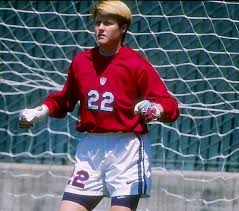
Sports writer Rob Harris wrote on 11 December 2018 in the News Tribune “Mary Harvey goes from soccer champ to human rights leader“. It concerns the parcours of Mary Harveya football player now becoming head of the Centre for Sport and Human Rights.
As goalkeeper she helped the U.S. team win the Women’s World Cup in 1991 and the Olympic soccer title five years later. “As a women’s national team, we didn’t set out to have wide scale impact, but we did,” Harvey recalled in an interview with The Associated Press and.. “that’s what I wanted my life to be about: the ability to impact others in a positive way.” Moving back to the USA she will head the Centre for Sport and Human Rights, hoping to make compliance on labor and discrimination issues central to whether a country can host a major event. After starting her career as a consultant in the private sector, Harvey led development work at FIFA from 2003-08, helping formulate a human rights strategy [see: https://humanrightsdefenders.blog/tag/fifa-human-rights-advisory-board/].
“The language of human rights it not certainly the language of sport,” Harvey said. “So I went through that personally and learned it… and so I think the center has an opportunity to provide that.” FIFA serves on the Centre for Sport and Human Rights’ advisory board among 41 organizations across sports, along with sponsors such as Coca-Cola and Visa. “In the future if people are bidding and they’re less than aggressive with what they want to do on the human right side, with maybe a smart box-ticking exercise,” Harvey said. “There should be accountability for that.”
Afghan authorities suspended the head of the soccer federation and other officials this month after media revelations of allegations of sexual and physical abuse of female players. Harvey hopes the Centre for Sport and Human Rights can be an outlet for athletes, officials or workers around sport to report wrongdoing and have their safety protected. “Human rights defenders are targets,” Harvey said.
“We can’t operate with any sort of fear of what we say or do and how that affects funding,” Harvey said by telephone. “We have to be able to operate independently and provide a free service.” The center was launched in June [see: [see: https://humanrightsdefenders.blog/2018/06/27/new-global-center-for-sport-and-human-rights-created-to-address-abuses/] and is chaired by former Irish President Mary Robinson, who has also served as UN High Commissioner for Human Rights.
“We need to bring human rights more centrally into sport and make people involved in sport realize that they have to take responsibility and they have to work on many issues at so many different levels from the big stadiums to discrimination or racism or trafficking,” Robinson told the AP.
in the UN family: ReliefWeb published an overview of how the UN family has been making sure that this year’s Human Rights Day succeeds in raising awareness of the principles enshrined in the document, which are as important and relevant today, as they were in 1948. It refers to SG António Guterres and UN High Commissioner Michelle Bachelet in Marrakesh for global migration pact on Monday…..
Threats to human rights were also being highlighted at UN headquarters in New York on Monday, where charities, non-governmental organizations and members of civil society were joined by Andrew Gilmour, UN Assistant Secretary-General for Human Rights, for a discussion about the ways that modern challenges, unforeseen 70 years ago, are impacting rights. The talk covered digital technologies, which have led to many benefits, but also brought about new risks which could replicate, and even exacerbate existing threats to human rights; and climate change, which risks making much of the planet uninhabitable.
Defending human rights in conflict zones:
..In Afghanistan, the UN Assistance Mission (UNAMA) renewed its call for human rights and fundamental freedoms to be respected in the country, welcoming breakthroughs such as the work of the Afghanistan Independent Human Rights Commission, new laws empowering the media, a new Penal Code reflecting the country’s commitment to promote fundamental freedoms, and the presence of women in civil service positions and in the private sector. Meanwhile, in South Sudan, commuters in the capital, Juba, got the chance to see their military in a different light on Monday: as athletes. Hundreds of military personnel – as well as police and prison officers, fire-fighters and members of the wildlife services – took part in a 10-kilometre race around the streets of the capital, organized by the United Nations Mission in South Sudan (UNMISS), to promote awareness of human rights and the need for peace in the conflict-affected country. Speaking on Monday, David Shearer, Special Representative of the Secretary-General and Head of UNMISS, said that “the only way that South Sudan is going to recover is by having peace and respect for human rights. If respect for human rights is there, then there is peace. If there is peace, it involves respect for human rights and people’s ethnicity and political persuasion. The two things go hand in hand.”
2. The Phnom Penh Post of 10 December (Niem Chheng) reports that the Cambodian authorities used the occasion to a ban march for Human Rights Day
Phnom Penh authorities have banned a planned march as local NGOs and workers’ unions gear up to celebrate the 70th anniversary of the signing of the Universal Declaration of Human Rights on Monday, with a youth group leader saying they would march nonetheless….In a letter issued on Saturday, Mean Chanyada, Phnom Penh’s deputy governor, said the NGOs concerned had been told that they could celebrate the anniversary at Freedom Park but marching was prohibited. “If [you] gather at a location outside the permitted area and continue to march on the street, which would affect security, safety and public order, the representatives will face the law,” Chanyada said. Sar Mory, the deputy chief of the Cambodian Youth Network (CYN) said on Sunday that he was concerned that important messages would not reach the public if they were to celebrate the anniversary without marching. “The reason we want to march is that we want to get our messages heard, ……
3. The winners of the “Kids for Human Rights” international drawing competition were announced on 10 December 2018. Nine young, creative artists from Australia, Bangladesh, Bolivia, Canada, Iran, Portugal, Thailand and the United States have won the top prizes in the “Kids for Human Rights” international drawing competition, launched earlier this year by the United Nations and the Gabarron Foundation. The call generated more than 17,000 entries. The full list winners is available here. The international jury was presided by internationally known Spanish artist Cristóbal Gabarrón and included Hani Abbas, a Syrian-Palestinian cartoonist who won the 2014 Editorial Cartoon International Prize awarded by Cartooning for Peace, Kate Gilmore, United Nations Deputy High Commissioner for Human Rights, Susanna Griso, Spanish journalist and television presenter, Jenna Ortega, a young American actress, Tomas Paredes, President of the Spanish chapter of the International Association of Art Critics, and Jayathma Wickramanayake, the United Nations Secretary-General’s Special Envoy on Youth.
4. The International Policy Digest used the occasion to draw attention to another international document that celebrates its 70th anniversary: the Genocide Convention which was signed into life a day before the UDHR, 9 December.,, It was the Polish-Jewish lawyer, Raphael Lemkin, who advocated for an international law for the crime of genocide. Before 1944, there was no law. However, in the wake of the Holocaust, the United Nations General Assembly adopted Resolution 260 (III) A on December 9, 1948 outlawing genocide. On January 12, 1951, the Convention came into force. …The UN’s High Commissioner for Human Rights, Michelle Bachelet, has argued that genocide continues to remain a “threat and reality.” She urged nations to act based on the “warning signs” often preceding genocide. She added that the crime of genocide is as real today as it was at the time of its signing. There are still 45 UN Member States who yet to ratify or agree to the Convention...
5. In Zimbabwe, a prominent human rights defender reminded Zimbabwean President Emmerson Mnangagwa that he had termed the abduction of journalist activist Itai Dzamara “barbaric” and called on him to follow his words with actions to prevent and punish rights abuses. [Dzamara has been missing since March 2015]. Zimbabwe Peace Project director Jestina Mukoko said: “With all due respect, I call upon the President to return to the words and show that it is barbaric. Such things are not expected from civilised people, inflicting pain on another person and the constitution clearly states that.”….Lawyer Jeremiah Bhamu, who has represented many abduction victims, called on the Zimbabwean government to ratify the convention on torture…The Zimbabwe Human Rights Association said while the adoption of the new constitution with a modern Declaration of Rights, enshrined in chapter four, in 2013 has been an important milestone, a lot needed to be done to align laws, respect its provisions and establish a culture of constitutionalism. [see also: https://humanrightsdefenders.blog/2018/10/08/jestina-mukokos-150-000-triumph-in-zimbabwe-gives-hope-to-all-torture-victims/]
6. “As human rights declaration turns 70, development banks have a way to go to respect and protect rights defenders” writes Olexi Pasyuk in Bankwatch. To coincide with this milestone, Bankwatch together with more than 200 organisations globally has called on international financiers to ensure that these institutions support the realisation of human rights, avoid causing or contributing to rights abuses, promote an enabling environment for public participation, and safeguard rights defenders.
7.
Today, on the occasion of the Human Rights Day – 20 years on from the first UN Declaration on Human Rights Defenders and on the 70th anniversary of the UN Universal Declaration on Human Rights – The Human Rights Defenders World Summit 2018published the final document of the action plan for the protection and the promotion of the work of human rights defenders. This action plan proposes a concrete set of measures and calls for a lasting commitment from States and other key actors to act to protect human rights defenders and to take concrete actions to offer better protection and create a more enabling environment for their work. We trust that this document will become a key reference for advocacy work at national, regional and international levels for the years to come. The action plan is available to download in five languages on the Summit’s website https://hrdworldsummit.org/action-plan/ It will be presented at the United Nations in New York on December 18th during the high level panel of experts on the situation of HRDs at the initiative of Norway. More information soon on the summit facebook page and website. See also Summit’s Facebook page, and on the website. [see also: https://humanrightsdefenders.blog/2018/07/24/announcement-of-the-human-rights-defenders-world-summit-in-paris-october-2018/]
8. Democracy without Borders writes on the occasion that Human rights defenders continue to face onerous challenges. In response to these challenges, Democracy Without Borders joined more than 900 other civil society organizations from across the world in supporting a global statement that urges governments “to create an enabling environment for HRDs to operate in line with regional and international human rights obligations and standards.”
Supporters of the Yellow Umbrella human rights and democracy movement in Hong Kong face state persecution. Source: Studio Incendo/Flickr
…..Unfortunately, as is evident from the monitoring of the situation of HRDs, those at the forefront of defending, promoting and protecting human rights are prime targets of attacks perpetrated by state and non-state actors. HRDs are often victims of physical assaults, and arbitrary and unlawful detention is the number one tactic of repression used by states. It is the increasingly threatening situation for HRDs that motivates the current global statement. [CIVICUS: World Alliance for Citizen Participation,. [see: https://humanrightsdefenders.blog/2018/12/07/global-statement-on-the-20th-anniversary-of-the-un-declaration-on-human-rights-defenders/]
9. In the Philippines, in line with the country’s celebration of Human Rights Day, the Commission on Human Rights (CHR) opened on Monday a freedom park to honor those who fought against human rights violation. Dubbed as the Liwasang Diokno, the CHR commemorated the heroic act of late Senator Jose ‘Ka Pepe’ Diokno, whom the agency tagged as a “symbol of freedom, democracy, and human rights.” Diokno was one of those individuals who fought to attain democracy in the country during the Martial Law era under the Marcos administration. a statue of Diokno was also installed inside the park with the approval of the National Historical Commission of the Philippines.With the opening of the Liwasang Diokno at the central office of CHR in Quezon City, the human rights group urged the public to continue to be more active in defending the human rights. The freedom park has a 30-tier fountain in its center, symbolizing the 30 articles of the Universal Declaration of Human Rights (UDHR).
10. A lights projection showing the faces of imprisoned, threatened and at-risk human rights defenders (HRDs) from around the world will shine at Dublin City Hall to mark the anniversary of the Universal Declaration of Human Rights. The faces will be projected on December 10th and 11th during a public reception, hosted by the Lord Mayor of Dublin Nial Ring with Front Line Defenders, Dublin City Council and the Department of Foreign Affairs.


 5. The




 Hans Thoolen on Human Rights Defenders and their awards