Archive for the 'Human Rights Defenders' Category

China goes after dissidents abroad

January 18, 2022

On 18 January 2022 a new report by Safeguard Defenders, inspired Al-Jazeera (Erin Hale) to write about how the Chinese authorities are trying to coerce critics thousands of miles from home into returning.

Wang Jingyou was living in Turkey last year when he found that the 7,000 kilometres (4350 miles) between him and his homeland was no obstacle to an offended Chinese state. Wang had left China after voicing his support on TikTok for Hong Kong’s democracy protests, but after he questioned the outcome of an Indian-Chinese border clash on social media in February 2021, mainland authorities sprung into action.

Within half an hour of the post, police in his hometown of Chongqing had visited his parents. Then they detained them. They said Wang, who is in his early twenties, had “slandered and belittled heroes” while also “picking quarrels”, two charges that in China are often used to silence government critics.

“I’m not in China, I’m in Europe,” Wang told Al Jazeera. “I just said something. I didn’t do anything and they put my (name) on a wanted (list) in the government website, in the official media, also in the Ministry of Foreign Affairs too.”

Wang soon found himself on a months-long journey of harassment that saw him detained while flying through Dubai in April 2021 and threatened with deportation to China – which he narrowly avoided when his story became international news. Wang and his fiancée travelled through several countries before they eventually claimed asylum in the Netherlands, but not before China had cancelled their passports.

“We are in the Netherlands, but they also have many, many ways to find us,” Wang said, alleging that even with a Dutch phone number he continues to receive threatening text messages and phone calls.
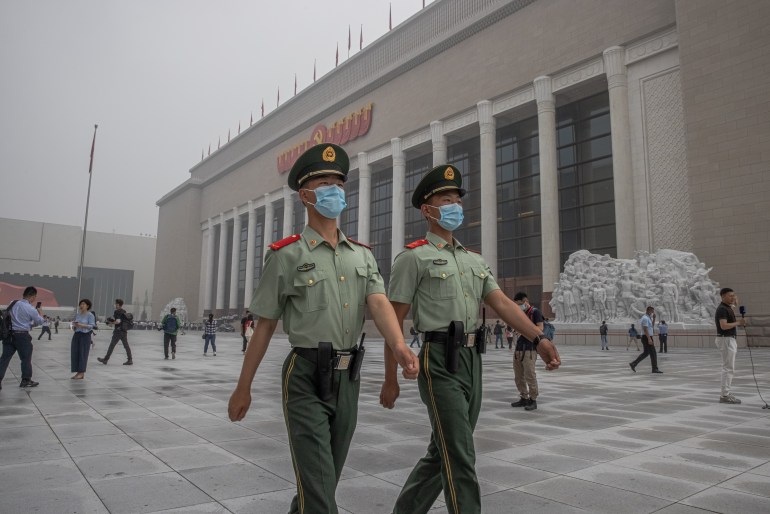
Chinese paramilitary police in summer unoforms march outside a new museum to the Chinese Commuist Party

Wang’s story may sound dramatic, but it is far from extraordinary in Xi Jinping’s China, according to human rights watchdog Safeguard Defenders, which released a new report on Tuesday on the country’s widespread practice of “involuntary returns”. Such pressure has been used on more than 10,000 alleged Chinese “fugitives” who since 2014 have been coerced into returning from abroad to face detention or prosecution for alleged corruption and other crimes, the report said citing official data.

Methods to “encourage” return can vary from harassment and coercion of friends and family online, to approaching a citizen overseas through Chinese or domestic security agents, and more “irregular” methods like state-sponsored kidnapping, Safeguard Defenders said. In some cases, authorities may freeze family assets or even threaten to remove children from families.

Kidnappings typically occur in countries with a strong relationship with China, like Thailand or Myanmar, but Safeguard Defenders said as many as 10 people may have been kidnapped from among Australia’s large Chinese diaspora in recent years.

The list also includes the 2015 disappearance of five staff members associated with a Hong Kong book store specialising in books banned in China. One bookseller, Gui Minhai, disappeared in Thailand while the others went missing on trips to China, only to later emerge in Chinese detention

China has also made use of Interpol “red notices“, which flag a citizen to police and immigration departments around the world so they can be deported back home, where they face a 99 percent conviction rate if prosecuted, the watchdog said.

“Involuntary returns” have become increasingly common since China first launched an ambitious anti-corruption campaign in 2012, followed by Operation Foxhunt in 2014 to repatriate Communist Party officials facing corruption charges who have fled abroad, and the broader Operation Sky Net in 2015 to target money laundering.

While nominally law-enforcement based, Operation Foxhunt has been described as a “campaign to enforce political loyalty, avoid in-Party factionalism and to more generally instil Party discipline”, Safeguard Defenders said in the report.

Both campaigns have corresponded to a 700 percent jump in Chinese people seeking asylum abroad between 2012 and 2020 as China’s already limited civil and political rights have been curtailed even further under President Xi, the rights group said.

That number does not include the 88,000 Hong Kong people who applied to resettle in the UK in 2021 under a new immigration scheme, after the imposition of a national security law for the Chinese territory that Amnesty says has “decimated” freedoms and rights that Beijing had promised to respect until at least 2047.

More than 175,000 people have been officially recognised as refugees, but that has not kept Chinese authorities from orchestrating “involuntary returns” whether they are government defectors, Falun Gong practitioners, human rights defenders, political dissidents, or even ordinary citizens like Wang who have fallen afoul of increasingly strict authorities.

Wang says he was just doing what millions of other people do everyday — sharing his views on social media.

“We didn’t do anything against China,” he said. “I wrote something. I never thought they would (begin to) watch me.”

https://safeguarddefenders.com/en/blog/involuntary-returns-report-exposes-long-arm-policing-overseas

https://www.aljazeera.com/news/2022/1/18/china-critics-overseas-feel-the-long-reach-of-beijing-report

https://www.theguardian.com/world/2022/jan/18/china-forced-2500-fugitives-back-from-overseas-during-pandemic-report-finds

Kavala saga continues: Turkish court keeps philanthropist in prison

January 18, 2022

A Turkish court ruled Monday that prominent Turkish civil rights activist and philanthropist Osman Kavala should stay in prison, despite his more than four years in pre-trial detention.
The hearing took place as a Council of Europe deadline that could trigger infringement procedures looms. The European Court of Human Rights ruled in 2019 that Kavala’s rights had been violated and ordered his release. But Turkey has repeatedly refused to do so.
Kavala, who is in Silivri prison on the outskirts of Istanbul, did not participate in the hearing in line with an October statement that he would no longer attend trials via video conference because he didn’t have faith the court would deliver a fair trial.

Kavala, 64, is accused of financing nationwide anti-government protests in 2013, attempting to overthrow the government by helping orchestrate a coup attempt three years later and espionage. He denies the charges, which carry a life sentence without parole.
He was acquitted in February 2020 of charges in connection with the 2013 Gezi Park protests. As supporters awaited his release, Kavala was rearrested on new charges. The acquittal was later overturned and linked to charges relating to the 2016 coup attempt, which the Turkish government blames on the network of US-based Muslim cleric Fethullah Gulen, who denies any ties to the coup.
That trial is now part of a merged case involving 51 other defendants, including fans of the Besiktas soccer club who were acquitted six years ago of charges related to the Gezi protests before that decision also was overturned. Kavala is the only jailed defendant.

His continued imprisonment for 1,539 days is the continuation of lawlessness identified by the European Court of Human Rights,” Bayraktar his lawyer said. “End this lawlessness today so our client gets his freedom.
In October, Kavala’s case also caused a diplomatic crisis between Turkey and 10 Western countries, including the United States, France and Germany, after they called for his release on the fourth anniversary of his imprisonment.
Turkish President Recep Tayyip Erdogan openly disdains Kavala, accusing him of being the “Turkish leg” of billionaire US philanthropist George Soros, whom Erdogan alleges has been behind insurrections in many countries. He threatened to expel Western envoys for meddling in Turkey’s internal affairs.
The European Court of Human Rights’ 2019 decision said Kavala’s imprisonment aimed to silence him and other human rights defenders and wasn’t supported by evidence of an offense.
The Council of Europe, a 47-member bloc that upholds human rights, notified Turkey in December that it intended to refer the case to the court to determine whether Turkey refused to abide by final judgments, which are binding. It called on Turkey to release Kavala immediately and conclude the criminal procedures without delay. It asked Turkey to submit its views by Jan. 19 before a Feb. 2 session of the council.
Kavala is the founder of a non-profit organization, Anadolu Kultur, which focuses on cultural and artistic projects promoting peace and dialogue. https://humanrightsdefenders.blog/2020/09/16/osman-kavala-and-mozn-hassan-receive-2020-international-hrant-dink-award/

The next hearing is scheduled for Feb. 21.

next: https://www.amnesty.org/en/latest/news/2022/03/turkey-osman-kavala-and-co-defendants-must-be-acquitted-of-all-charges/

https://www.arabnews.com/node/2006211/middle-east

https://www.whio.com/news/world/turkish-court-rules/GT56VN3YVPXZYAHFJ6FCKYKRE4/

Vincent Raj Arokiasamy wins Raoul Wallenberg Prize of the Council of Europe

January 18, 2022
Defender of disadvantaged population of “untouchables” in India receives Raoul Wallenberg Prize

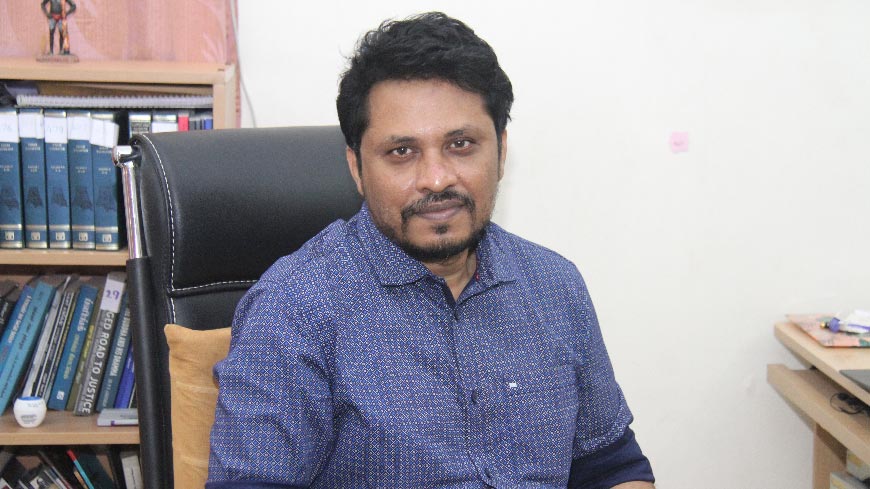
Vincent Raj Arokiasamy, founder of the organisation “Evidence” in India, has been awarded the Council of Europe’s Raoul Wallenberg Prize for his outstanding determination and persistence in bringing meaningful change to the lives of the Dalits, historically known as “untouchables”. For more on this award and its laureates, see: https://www.trueheroesfilms.org/thedigest/awards/730A3159-B93A-4782-830F-3C697B0EC7A0

“Vincent Raj Arokiasamy (better known as “Evidence” Kathir) has risked his life to help an exceptionally disadvantaged part of the Indian population whose plight is often ignored by national and international communities. In defending human rights with incredible commitment and resilience, his courageous actions for the so-called “untouchables” fully reflect the spirit and values of the Raoul Wallenberg prize”, said Marija Pejčinović Burić, the Secretary General of the Council of Europe.

Vincent Raj Arokiasamy has demonstrated enormous courage and taken grave risks regarding his own and his family’s lives. He has rescued some 25,000 victims in 3,000 incidents of human rights violations. As a result, he has to live apart from his family to protect them. He has devoted his life to the cause of promoting justice for Dalits and others whose voices are rarely heard.

The award ceremony will take place on Wednesday 19 January at 12h30 CET in a hybrid format. The event will be live streamed, and speakers include the Secretary General, the Chair of the Jury and the Laureate. A screening of József Sipos’s documentary on the life of Raoul Wallenberg “The Lost European” will follow the ceremony. The documentary can be streamed online, free of charge, until 23 January. The film streaming is made available with the support of the Permanent Representation of Hungary to the Council of Europe.

17 January marks the anniversary of Raoul Wallenberg’s arrest in Budapest in 1945. The Swedish diplomat used his status to save tens of thousands of Jews from the Holocaust. His actions show that one person’s courage and ability can really make a difference. Starting in 2014, at the initiative of the Swedish Government and the Hungarian Parliament, the Council of Europe has created the Raoul Wallenberg Prize to keep the memory of his achievements alive. The Prize, worth €10,000, is awarded every two years in recognition of extraordinary humanitarian achievements by a single individual, a group of individuals or an organisation.

https://www.coe.int/en/web/human-rights-rule-of-law/-/defender-of-disadvantaged-population-of-untouchables-in-india-receives-raoul-wallenberg-prize

2021 global data report from the CIVICUS Monitor

January 18, 2022

The new #PeoplePower2021 report shows where civil society conditions are improving and getting worse. A closer look at top violations & trends.

2021 global data report from the CIVICUS Monitor

  • 9 out of 10 people live in countries where civic freedoms are severely restricted 
  • Country downgrades include Poland, Singapore, Nicaragua, Jordan and South Africa
  • Detention of protesters is the top violation of civic freedoms in 2021
  • COVID-19 continues to be used as a pretext to restrict rights across the globe

The fundamental rights to freedom of expression, assembly and association continue to deteriorate year after year worldwide, according to a global report released by the CIVICUS Monitor, an online research platform that tracks fundamental freedoms in 197 countries and territories. The new report, People Power Under Attack 2021, shows that the number of people living in countries with significant restrictions on civic rights, including the freedoms of expression, association and peaceful assembly, amount to almost 89% of the population this year. See also: https://humanrightsdefenders.blog/2021/05/26/10th-edition-of-civicuss-state-of-civil-society-report-2021/

The CIVICUS Monitor data shows that year after year, there is significantly less space for people to exercise fundamental freedoms: only 3.1% of the world’s population lives in countries rated as ‘open’.

Nearly two billion people live in countries with the worst rating, ‘closed’, where the authorities are routinely allowed to imprison, injure and kill people for attempting to exercise their fundamental freedoms. China, Saudi Arabia, Turkmenistan and 21 other countries fall under this category – Nicaragua and Belarus joined their ranks this year. 

It is nearly two years since the start of the COVID-19 pandemic and the virus is having a dire impact on civic freedoms globally, one that will have lasting impact if remedial action is not taken. Our research shows the detention of protesters and the use of restrictive laws to muzzle dissent are becoming more prevalent, as governments use the pandemic to introduce or implement additional restrictions on civic freedoms. 

“Governments across the world are setting a very dangerous precedent by using the health emergency as a smokescreen to crack down on protests and enact or amend legislation that will further limit peoples’ rights. Specifically, disinformation legislation is being enacted and used to criminalise speech, a concerning practice that could become the new norm to crush dissent,” said Marianna Belalba Barreto, Civic Space Cluster Lead. 

This year, 13 countries have been downgraded and only one improved their rating.  The CIVICUS Monitor is particularly concerned about civic space restrictions in Europe, where four countries dropped a rating: Belarus, Belgium, Czech Republic, and Poland. Europe has the greatest number of ‘open’ countries, but year after year we continue to see signs of serious deterioration.

Also alarming is the deterioration of civic space conditions in Africa, where South Africa, Botswana, Mali and Mozambique all dropped ratings. In the Americas, Nicaragua joined Cuba in our worst category, ‘closed’. The Middle East and North Africa retained its status as the region with the worst civic rights record, with Jordan being downgraded to ‘repressed’. In Asia, Singapore also fell into the ‘repressed’ category, as a persistent clamp down on dissent and opposition voices continues. 

https://monitor.civicus.org/widgets/world

“What we are seeing is not a proportional reaction to a health emergency, where restrictions are meant to be extraordinary measures to deal with a crisis that is temporary. On the contrary, governments are using the pandemic as a pretext to further accelerate the crackdown on human rights that we have been documenting over the past years.” 

Although only one country – Mongolia – improved its rating in 2021, it is important to highlight the resilience of civil society. Governments have not been successful in silencing alternative voices or limiting their activism. Despite increasing restrictions, civil society has found ways to continue to speak up and claim their rights.  

Over twenty organisations collaborate on the CIVICUS Monitor, providing evidence and research that help us target countries where civic freedoms are at risk. The Monitor has posted more than 550 civic space updates in the last year, which are analysed in People Power Under Attack 2021. 

Civic freedoms in 197 countries and territories are categorised as either closed, repressed, obstructed, narrowed or open, based on a methodology that combines several data sources on the freedoms of association, peaceful assembly and expression.

As the climate crisis intensifies and the effects of the COVID-19 pandemic exacerbate social and economic inequalities, the efforts of civil society are fundamental to achieve tangible results and systematic change. However, a new report by CIVICUS shows how activists, human rights and environmental defenders face profound barriers: not only are governments and businesses failing to take urgent steps to mitigate the climate crisis; they are also actively trying to silence activists, disrupt and prevent climate actions and repress environmental, land and Indigenous rights defenders. In addition, companies play a crucial role in limiting human rights activism.

CIVICUS’ report highlights the role of companies across the world in perpetrating, contributing to, or allegedly benefiting from attacks on human rights defenders and rights groups, including: Feronia PHCFormosa Plastics GroupSOCFINNewmont Mining CompanyXiang Lin SI LtdGreat Season LtdChevron EnergySomkhele and Tendele Coal Mining, PanAust, Oxec, OCP Ecuador and Petroecuador, SG Interests, Celtejo, Mineral Commodities (Ltd) (MRC) and Mineral Sands Resources, PetroTal, Enbridge, Lydian Armenia, andthe RWE Group. The report also highlights positive developments from Chevron and the Mizuho Financial Group.

The Business and Human Rights Resource Centre (BHRRC) had already asked most of these companies to respond to the allegations included in the report, previously. Responses can be found in the companies’ dashboard. BHRRC asked RWE Group to respond to the allegations; RWE’s response is included below.

https://www.civicus.org/index.php/media-resources/reports-publications

https://www.business-humanrights.org/en/latest-news/civicus-report-highlights-role-of-companies-in-attacks-on-human-rights-defenders-amid-increasing-restrictions-on-civil-society/

Human Rights Watch World Report 2022: work to be done

January 18, 2022

Autocratic leaders faced significant backlash in 2021, but democracy will flourish in the contest with autocracy only if democratic leaders do a better job of addressing global problems, Kenneth Roth, executive director at Human Rights Watch, said today in releasing the Human Rights Watch World Report 2022.

From Cuba to Hong Kong, people took to the streets demanding democracy when unaccountable rulers, as they so often do, prioritized their own interests over those of their citizens, Roth said. However, many democratic leaders have been too mired in short-term preoccupations and scoring political points to address serious problems such as climate change, the Covid-19 pandemic, poverty and inequality, racial injustice, or the threats from modern technology.

In country after country, large numbers of people have taken to the streets, even at the risk of being arrested or shot, which shows the appeal of democracy remains strong,” Roth said. “But elected leaders need to do a better job of addressing major challenges to show that democratic government delivers on its promised dividends.

The Human Rights Watch World Report 2022, its 32nd edition, describes the human rights situation in nearly all of the approximately 100 countries where Human Rights Watch works.

World Report 2022, Human Rights Watch’s 32nd annual review of human rights practices and trends around the globe, reviews developments in more than 100 countries. READ IT HERE

In his introductory essay, Roth challenges the common view that autocracy is ascendent and democracy is on the decline. Many autocrats claim to serve their people better than democratically elected leaders, but they usually deliver mainly for themselves and then try to manipulate electoral systems so citizens cannot deliver a negative verdict. Autocrats typically try to divert attention with racist, sexist, xenophobic, or homophobic appeals, he said.

Covid-19 spotlighted this self-serving tendency, with many autocratic leaders downplaying the pandemic, turning their backs on scientific evidence, spreading false information, and failing to take basic measures to protect the health and lives of the public.

In an important and growing development that must worry some autocrats, a broad range of opposition political parties has begun to gloss over their policy differences to build alliances that prioritize their common interest in getting corrupt politicians or repressive leaders voted out of office, Roth said. 

In the Czech Republic, an unlikely coalition defeated Prime Minister Andrej Babiš. In Israel, an even unlikelier coalition ended the longtime rule of Prime Minister Benjamin Netanyahu. Similar broad alliances of opposition parties have formed for forthcoming elections against Viktor Orban in Hungary and Recep Tayyip Erdoğan in Turkey. A comparable tendency within the US Democratic Party contributed to the selection of Joe Biden to contest the 2020 election against Donald Trump.

Moreover, as autocrats can no longer rely on subtly manipulated elections to preserve power, a growing number, from Nicaragua to Russia, are resorting to overt electoral charades that guarantee their desired result but confer none of the legitimacy sought from holding an election. This growing repression is a sign of weakness, not strength, Roth said.

However, to persuade people to abandon the self-serving rule of autocrats, democracies need to do better in addressing societal ills, Roth said.

For example, the climate crisis poses a dire threat to humankind, yet democratic leaders are only nibbling at the problem, he said, seemingly incapable of overcoming national perspectives and vested interests to take the major steps needed to avert catastrophic consequences. The World Report 2022 includes assessments of the climate policies of the world’s top 10 greenhouse gas emitters, as well as more than a dozen other countries where there have been significant policy developments related to the climate crisis.

The Covid-19 pandemic also exposed weaknesses of democratic leaders. Democracies met the pandemic by developing highly effective mRNA vaccines with remarkable speed but have failed to ensure that the people of lower-income countries share this lifesaving invention. Some democratic governments took steps to mitigate the economic consequences of Covid-19 lockdowns, but have yet to tackle the broader and persistent problem of widespread poverty and inequality or to build adequate systems of social protection for the next inevitable economic disruption, he said.

Democracies regularly debate the threats posed by technology, he said. These include the dissemination of disinformation and hate speech by social media platforms, the large-scale invasion of privacy as an economic model, the intrusiveness of new surveillance tools, and the biases of artificial intelligence. But democratic leaders have taken only baby steps to address them.

Democracies fare no better when acting outside their borders. They frequently descend to the compromises of realpolitik, bolstering autocratic “friends” to curtail migration, fight terrorism, or protect supposed “stability” rather than defending democratic principles.

In contrast to Trump’s embrace of friendly autocrats when he was US president, Biden promised a foreign policy that would be guided by human rights. But the US has continued to provide arms to Egypt, Saudi Arabia, the United Arab Emirates, and Israel despite their persistent repression. In the face of an autocratic trend in Central America, Biden mainly prioritized efforts to curtail migration rather than autocracy.

Other Western leaders displayed similar weakness in their defense of democracy. Former German Chancellor Angela Merkel’s government helped to orchestrate global condemnation of the Chinese government’s crimes against humanity in Xinjiang. But while holding the European Union presidency, Germany helped to promote an EU investment deal with China despite Beijing’s use of ethnic Uyghur forced labor.

The government of French President Emmanuel Macron helped to coordinate broad condemnation of Beijing’s conduct in Xinjiang but was blind to the abysmal situation in Egypt.

If democracies are to prevail, their leaders must do more than spotlight the inevitable shortcomings of autocratic rule, Roth said. They must do a better job of meeting national and global challenges of making sure that democracy in fact delivers.

“Promoting democracy means standing up for democratic institutions such as independent courts, free media, robust parliaments, and vibrant civil societies even when that brings unwelcome scrutiny or challenges to executive policies,” Roth said. “And it demands elevating public discourse rather than stoking our worst sentiments, acting on democratic principles rather than merely voicing them, and unifying us before looming threats rather than dividing us in the quest for another do-nothing term in office.”

https://www.hrw.org/news/2022/01/13/future-autocrats-darker-it-seems

https://www.rferl.org/a/human-rights-watch-autocracy-democracy-rights/31652052.html

At least 78 human rights defenders killed in Colombia in 2021

January 17, 2022

On 13 January 2022, Reuters and others reported that at least 78 human rights defenders were killed in Colombia in 2021 according to the U.N. Office of the High Commissioner for Human Rights (OHCHR), adding that more cases were still being verified.

Violence against human rights defenders, environmentalists and community activists – known collectively in Colombia as social leaders – has become a big challenge for President Ivan Duque’s government amid international criticism and demands that it do more to stop the killings.

The government accuses left-wing guerrillas from the National Liberation Army, ex-members of the FARC rebels who reject a 2016 peace deal, and criminal groups, some comprised of former right-wing paramilitaries, of attacking activists as they seek control of drug trafficking networks and illegal mining areas.

The U.N. Office of the High Commissioner for Human Rights (OHCHR) said it received 202 reports human rights leaders killed in Colombia last year. Of these 78 were confirmed as killed, 39 cases were still being verified, and 85 were inconclusive.

The Colombian Ombudsman documented 145 murders of social leaders and human rights defenders during 2021. See: https://www.parisbeacon.com/29669/.

See also: https://humanrightsdefenders.blog/2021/09/13/global-witness-2020-the-worst-year-on-record-for-environmental-human-rights-defenders/

https://www.reuters.com/world/americas/about-80-rights-defenders-killed-colombia-2021-un-2022-01-13/

https://www.i24news.tv/en/news/international/latin-america/1642096591-un-78-human-rights-activists-killed-in-colombia-during-2021

Ground breaking conviction of Syrian torturer in Germany

January 17, 2022
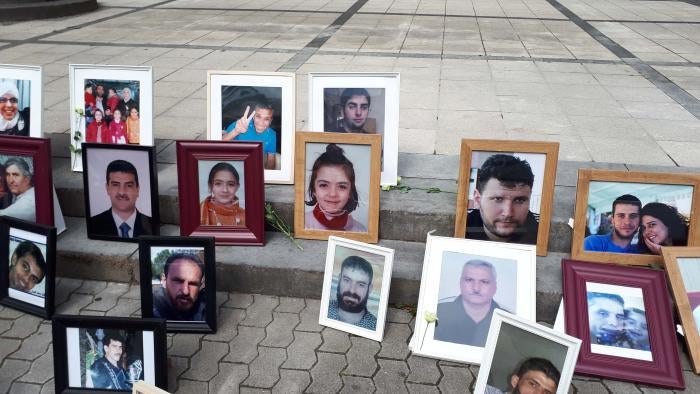
Group of framed portraits
Photos of Syrians who have been detained or disappeared set up by Families for Freedom, as part of a protest in front of the court in Koblenz, July 2, 2020. © 2020 Alexander Suttor

The conviction of a former Syrian intelligence officer for crimes against humanity by a German court is a ground-breaking step toward justice for serious crimes in Syria, Human Rights Watch said today. The judgment is a meaningful moment for civilians who survived torture and sexual abuse in Syria’s prisons.  

On January 13, 2022, a German court delivered its judgment in the trial of Anwar R., a former member of Syria’s General Intelligence Directorate, one of the country’s four main intelligence agencies commonly referred to collectively as the mukhabarat. Anwar R. is the most senior former Syrian government official to be convicted for serious crimes in Syria.  

German prosecutors accused Anwar R. of overseeing the torture of detainees in his capacity as head of the investigations section at the General Intelligence Directorate’s al-Khatib detention facility in Damascus, also known as “Branch 251.” 

The judges found Anwar R. guilty of committing crimes against humanity and sentenced him to life in prison. Following the verdict in the case, Anwar R. has one week to appeal.  

More than 10 years after the violations were committed in Syria, the German court’s verdict is a long-awaited beacon of hope that justice can and will in the end prevail,” said Balkees Jarrah, associate international justice director at Human Rights Watch. “Other countries should follow Germany’s lead, and actively bolster efforts to prosecute serious crimes in Syria.”  

Human Rights Watch issued a question and answer document and a feature article on the trial and how it is situated in the larger context of the Syrian conflict on January 6, 2022. The trial against Anwar R. and Eyad A., who was found guilty of aiding and abetting crimes against humanity in February, began in April 2020 and was the first anywhere in the world for state-sponsored torture in Syria. Eyad A.’s appeal against his conviction remains pending. 

Syrian survivors, lawyers, and activists have been central to making this trial a reality, not only pressing for justice but laying the groundwork that makes justice possible, Human Rights Watch said.  

More than 80 witnesses testified, including former detainees, former Syrian government employees, German police investigators, and experts in Syrian affairs. The testimony included well-documented accounts of torture and sexual abuse in Branch 251, descriptions of mass graves, and details of Syria’s government policy to violently crack down on peaceful protesters in 2011. Several of the witnesses were able to identify Anwar R. in the courtroom.  

One of the major challenges of this trial was witness protection. Several witnesses living in Germany and other European countries cancelled their appearance in court out of fear for their lives and safety, or that of their families. Several witnesses, some who were also victims, testified that they feared a risk to themselves and their families given their role in the trial. German authorities should ensure that witnesses and victims are sufficiently informed about their rights to protective measures, including to appear anonymously before the court. 

Tens-of-thousands of people have been detained or disappeared in Syria since 2011, the vast majority by government forces using an extensive network of detention facilities throughout the country. The Syrian government continues to detain and forcibly disappear thousands of people. 

Many of those detained have died from torture and horrific detention conditions. Comprehensive justice for these and other unchecked atrocities in Syria has been elusive. Syria is not a member of the International Criminal Court. And in 2014, Russia and China blocked efforts at the United Nations Security Council to give the court a mandate over serious crimes in Syria. 

The trial of Anwar R. and Eyad A. is possible because Germany’s laws recognize universal jurisdiction over certain of the most serious crimes under international law. That allows for the investigation and prosecution of these crimes no matter where they were committed and regardless of the nationality of the suspects or victims. Universal jurisdiction remains one of the few viable pathways to justice for crimes committed in Syria.  

Germany has several elements in place to allow for the successful investigation and prosecution of grave crimes in Syria. It has above all a comprehensive legal framework, well-functioning specialized war crimes units, and previous experience with prosecuting such crimes. Countries with universal jurisdiction laws should establish specialized war crimes units within law enforcement and prosecution services, and ensure that such units are adequately resourced and staffed. 

Germany’s trial against Anwar R. is a message to the Syrian authorities that no one is beyond the reach of justice,” Jarrah said. “The Koblenz case has shown that with other avenues blocked, national courts can play a critical role in combating impunity.” 

The first such reaction came immediately, see: https://www.ncr-iran.org/en/news/human-rights/after-german-conviction-of-syrian-official-focus-may-turn-to-swedish-trial-of-iranian/

https://www.hrw.org/news/2022/01/13/germany-conviction-state-torture-syria

https://www.fidh.org/en/region/north-africa-middle-east/syria/syria-landmark-ruling-offers-hope-to-regime-s-victims

https://www.ecchr.eu/en/case/first-criminal-trial-worldwide-on-torture-in-syria-before-a-german-court/

Front Line Defenders looking for Head of Protection

January 17, 2022

Front Line Defenders is looking for a Head of Protection.

The Head of Protection (HoP) is a critical senior leadership role in the organisation, managing a large global team and directing crucial organisations trategy on HRD protection in countries and regions. The HoP has overall responsibility for the management, sustainability, cohesion and well-being of the Protection Team. Together with Protection Team Managers, they provide and support the strategy and direction of timely and appropriate responses to human rights defenders at risk globally, ensuring holistic and effective protection support.

The HoP holds a strategic overview of the trends, challenges and responses for HRD protection, and shapes our organizational position through ensuring this is reflected in strategy, communication and representation, and our various holistic protection responses. The Head of Protection is also part of the organisation management team, directly supporting the Directors in the strategy, planning, management and evaluation of the all aspects of the organisation.

Deadline: 17th January 2022

Download the full advert here.

Follow the Announcement of the Martin Ennals Laureates 2022 on 19 January

January 17, 2022
Webinar banner

The 2022 Martin Ennals Award Laureate Announcement will be live-streamed at a press conference, announcing the 2022 Laureates on Wednesday 19 January at 11am CET. More on this awards and it laureates, see: https://www.trueheroesfilms.org/thedigest/awards/043F9D13-640A-412C-90E8-99952CA56DCE

Media requests can be shared at media@martinennalsaward.org. To register, follow link below:

https://us02web.zoom.us/webinar/register/WN_C–uTIoFQAumucPTbGOeeQ

You can follow the livestreaming on the MEF website for general audience: https://youtu.be/UgvIli5X-T8

Nominations for Rafto Prize 2022 now open

January 14, 2022
Raftoemblem Test

You can now nominate a candidate for the Rafto Prize, meant for a person or an organization who stands up for human rights and democracy. Annual deadline is 1 February. For more on this award and its laureates, see: https://www.trueheroesfilms.org/thedigest/awards/A5043D5E-68F5-43DF-B84D-C9EF21976B18

  • A candidate should be active in the struggle for the ideals and principles underlying the United Nations Universal Declaration of Human Rights.
  • A candidate’s struggle for human rights should represent a non-violent perspective.
  • A candidate may be a person or an organization, and two or more candidates may share the prize.

Deadline for nominations: 1 February 2022. Nominations received after 1 February will be taken into consideration for the Rafto Prize the following year.

For questions regarding nominations, please contact the Secretary of the Committee, Liv Unni Stuhaug, e-mail: livunni.stuhaug@rafto.no

Nominate a candidate