Archive for the 'Human Rights Defenders' Category

Civil Rights Defender of the Year 2022 to LGBTI defenders Xheni Karaj and Frank Mugisha

April 21, 2022

On 21 April 2022 LGBTI+ activists and human rights defenders Frank Mugisha from Uganda and Xheni Karaj from Albania were awarded the Civil Rights Defender of the year award 2022.  For more on this award and its laureates, see: https://www.trueheroesfilms.org/thedigest/awards/F2D9088D-2A4E-4FFF-8EC8-7AF252D5B5E7.  

“Xheni Karaj, from Albania, and Frank Mugisha, from Uganda, are two of the world’s most courageous LGBTI+ activists and human rights defenders. Despite working in environments where homophobia is widespread, they continue fighting with impressive resilience, for every individual’s right to have their own sexual orientation and gender identity. They have both been instrumental in building LGBTI+ movements in their countries and inspire LGBTI+ activists all over the Balkan region and the African continent,” the Civil Rights Defenders Board of Directors writes in the motivation for the award.  

The right to one’s own sexuality and gender identity is a human right, but violence and discrimination against people from the LGBTI+ community is still a problem globally. Xheni Karaj, founder and Executive Director of Aleanca LGBT in Albania and Frank Mugisha, Executive Director of Sexual Minorities Uganda (SMUG) are working for LGBTI+ and human rights in countries where violence, discrimination, and homophobia is widespread. Due to the situation in both Uganda and Albania, many LGBTI+ people keep their sexual identity hidden out of fear for the consequences they might face if coming out in public. Through education, advocacy, and building a community for LGBTI+ persons, Frank Mugisha and Xheni Karaj are contributing to improving the lives of thousands. Their commitment to LGBTI+ rights has played a huge part in the progress for human rights in their regions.   

I am excited and happy about the award. This prize shows that LGBTI+ rights are part of universal human rights. For us, it is a recognition that we are involved in advancing human rights work,” says Frank Mugisha. 

“The award made us all feel very happy and appreciated and motivates us to continue with the good work we are doing. To get this acknowledgment also helps me realise that we are making a revolution in Albania. From being invisible, we have showed people that we exist. That we are proud of ourselves, and we should have the right to be free and tell our stories,” says Xheni Karaj.

Green economy and human rights defenders: Provide data, denounce attacks

April 21, 2022

On 21 April 2022 Christen Dobson, Ana Zbona and Andrea Pelliconi of the Business & Human Rights Resource Centre wrote a piece entitled: “Safe, legitimate engagement between firms, human rights defenders key to a just transition

..Human rights defenders are vital leaders of a just transition to green economies. They are on the front lines of the climate crisis – and they hold essential information on the risks and harms associated with business actions, which can be used by companies and investors to conduct effective environmental and human rights due diligence to create long-term value.

Yet, these defenders are under sustained attack. In 2021, there were at least 615 attacks against people raising concerns about business-related harms, with nearly 70 per cent of attacks against climate, land and environmental rights defenders. Since January 2015, we have documented more than 3,870 attacks globally, including killings, death threats, arbitrary detention and strategic lawsuits against public participation.

Indigenous peoples, who are at the forefront of protecting biodiversity and our shared planet, experience a disproportionately high level of attacks. Although they comprise approximately 5 per cent of the world’s population, they faced 18 per cent of attacks globally in 2021. [see also: https://humanrightsdefenders.blog/2021/09/13/global-witness-2020-the-worst-year-on-record-for-environmental-human-rights-defenders/]

One of the main drivers of this violence is the failure of companies and investors to engage in safe and legitimate consultation with rights-holders and defenders. This failure stands to derail the fast transition to a zero-carbon economy that we urgently need.

If companies and investors do not listen to people highlighting risks related to their operations, investments, supply chains, and business relationships, or if it is not safe to raise these concerns, they will lose out on critical information needed to mitigate harm and achieving a fast and fair energy transition, essential for averting the climate crisis. [see also: https://humanrightsdefenders.blog/2021/09/07/un-experts-urge-eu-to-take-the-lead-on-protecting-human-rights-defenders-in-context-of-business/]

Renewable energy firms guilty too

While companies and investors are increasingly making welcome and necessary commitments to climate action, including promises to achieve net zero by mid-century, many do not have policies expressing zero-tolerance against reprisals, nor do they assess risks to defenders or engage in consultation with them. See: https://humanrightsdefenders.blog/2022/04/07/clean-energy-will-not-automatically-be-good-for-indigenous-land-defenders/

That’s the case even in the sector most crucial to the transition: our 2021 Renewable Energy Benchmark, we found that of the 15 of the largest global renewable energy companies evaluated, all scored zero on their commitment to respect the rights of human rights and environmental defenders.

The urgently needed global transition to green economies will only be successful if it is sustainable and just. This means respecting the rights of the people at the forefront of protecting our earth and raising the alarm about harmful business practices.

We have seen this failure to secure consent from affected communities prior to starting development projects lead to horrific outcomes. On 30 December 2021, police officers in the Philippines raided an Indigenous village, killing nine leaders. Local groups said that those killed were targeted and red-tagged because of their opposition to the Jalaur Mega Dam construction. Indigenous groups had challenged the project for years saying it would destroy their ancestral domain.

Meanwhile, in Mexico, an Indigenous Zapotec community has been raising concerns about wind farm construction not respecting their rights to self-determination and free, prior, and informed consent. Leaders have faced stigmatisation and harassment. In October 2018, a federal court in Mexico delivered a historic ruling in favour of the community, ordering the Mexican authorities to carry out a consultation at a wind farm operated by a state-owned company based in Europe. In October 2020, the community filed a civil lawsuit in Paris against the company.

Engaging with rights-holders and defenders early on is one of the most effective ways of identifying actual and potential human rights and environmental impacts, while also reducing business risks. It is also their responsibility under the United Nations Guiding Principles on Business and Human Rights.

For human rights due diligence processes to be effective, companies and investors can start by making clear they will not tolerate any attacks to defenders related to their operations, value chains or investments, communicating this publicly and to their suppliers and business partners. Companies should also conduct due diligence across their entire value chains, as the biggest risks and harms to people and planet occur in the lower tiers…

Throughout the entire due diligence process, companies should engage in ongoing consultation with rights-holders and defenders, including prior to and at every stage of business activity, and integrate their input into decision-making.

Effective due diligence also involves conducting human rights and environmental impact assessments. The assessments should map potentially affected rights-holders and land and resource conflicts and by informed by rights-holders and defenders’ expertise

This is not just nice to do. Conducting safe and legitimate human rights and environmental due diligence benefits everyone and will ensure companies are more effectively achieving their climate commitments. As the UN Working Group on Business and Human Rights says, defenders need to be seen as key partners who can help businesses identify their human rights impacts, rather than being seen as obstacles to be disposed of.

The urgently needed global transition to green economies will only be successful if it is sustainable and just. This means respecting the rights of the people at the forefront of protecting our earth and raising the alarm about harmful business practices.

https://www.eco-business.com/opinion/safe-legitimate-engagement-between-firms-human-rights-defenders-key-to-a-just-transition/
2021 ProtectDefenders.eu Annual Report

April 20, 2022

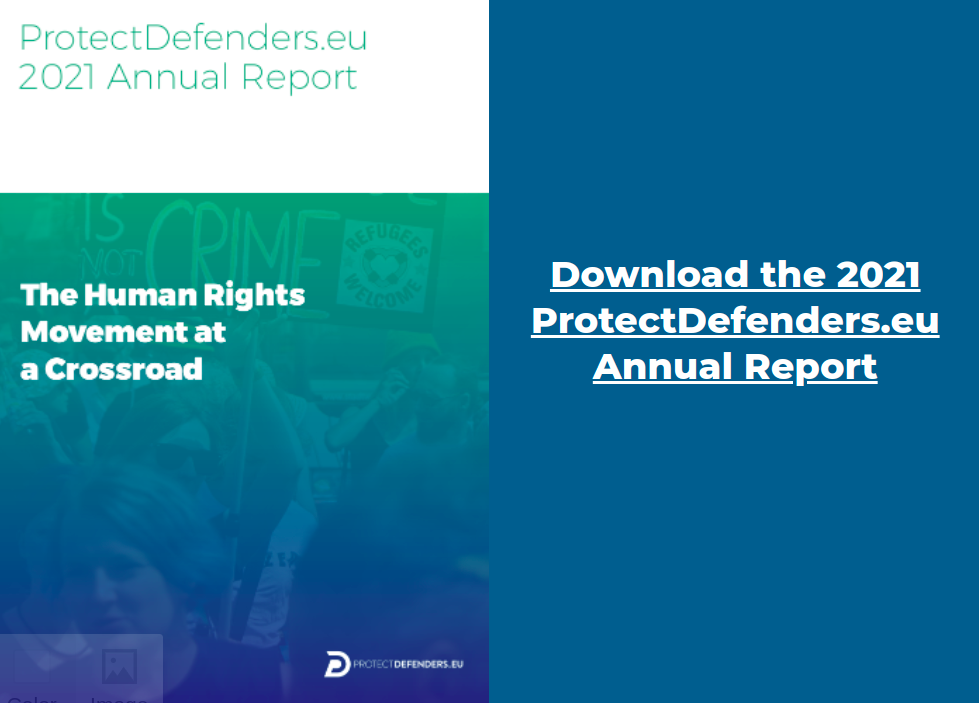
“The Human Rights Movement at a Crossroad”

On 14 April 2022, ProtectDefenders.eu published its 2021 annual report:

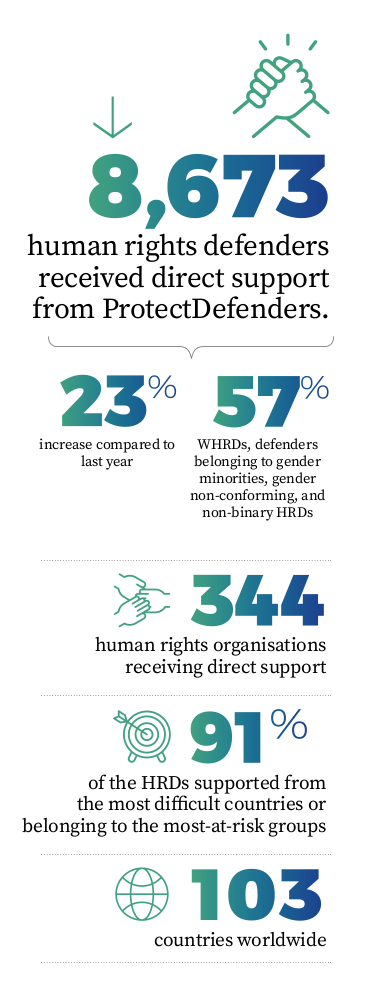
Throughout 2021, the EU human rights defenders mechanism, ProtectDefenders.eu, has delivered life-saving support and multi-faceted assistance to nearly 8,700 of the most at-risk human rights defenders and grassroots human rights organisations around the world – 23% more than in 2020. The EU HRD mechanism’s strategic, flexible, and efficient support has mitigated the ravages suffered by the human rights defence community last year, amid the pervasive impacts of the COVID-19 pandemic and the most critical global and geopolitical environment for human rights defence work reported since the creation of ProtectDefenders.eu in 2015.

Despite this extremely adverse situation, ProtectDefenders.eu has continued to mobilise protective support to individuals at risk, and to provide comprehensive assistance to organisations and movements confronting security threats. The support of ProtectDefenders.eu has helped human rights defenders and grassroots human rights groups to strengthen their resilience and protection globally, particularly in the most difficult contexts, making a significant contribution to their ability to continue their work.

Last year, the activities of the EU HRD mechanism have been impacted by an unprecedented increase in requests for urgent materially protective support from defenders and communities: ProtectDefenders.eu has had to respond to, among other severe crises, the dismantling and repression of civil society in Belarus, the consequences of the coup d’état in Myanmar on civil society and HRDs, and the collapse of Afghanistan as the Taliban took over its government. Thus, significant efforts were made to reach these most difficult countries and the most at-risk groups of defenders, who have absorbed an unprecedented level of the support delivered by the EU HRD mechanism. See also; https://humanrightsdefenders.blog/2019/05/28/the-eu-human-rights-defenders-mechanism-a-short-overview/

In a quickly evolving context, creative and flexible solutions and adaptations have been implemented, and this year the consolidation of the ProtectDefenders.eu consortium has given rise to new spaces to explore the privileged positioning of the EU HRD mechanism in the international community in support of defenders. This is illustrated by the launch of the first HRD resettlement stream by the government of Canada in partnership with ProtectDefenders.eu, the articulation of a comprehensive response in Afghanistan through new programmes in partnership with the EU, and the steps taken towards a more comprehensive and collective approach to advocacy on issues of common interest.

ProtectDefenders.eu has continued to provide a comprehensive, holistic and effective emergency protection for HRDs at the greatest risk, including 24/7 support, and to invest in the resilience and capacity of human rights organisations to continue their work in adverse environments – notably through lifeline and core-funding grant-making to local actors, including communities defending rights. ProtectDefenders.eu has also ensured that international temporary relocation capacities remain operational and accessible for HRDs and members of their families, and has taken a significant step in strengthening regional relocation structures through the Shelter Initiatives program. Furthermore, and despite the prevailing limitations created by the pandemic, capacity-building activities have continued to provide access to knowledge about reinforced protection strategies for the community of defenders. Similarly, ProtectDefenders.eu has strengthened its support to individual HRDs and NGOs through its reactive and protective advocacy work to HRDs at risk through urgent interventions, reports, and related proactive steps, mobilising the international community in an effort that has led to multiple success stories throughout the world.


This coordinated implementation, coupled with a holistic and complementary approach between partners, actions, strategies, and programmes, continues to step up the practical support available to HRDs at risk and local human rights NGOs in a timely and comprehensive manner; the vast majority of HRDs accessing ProtectDefenders.eu’s support have reported enhanced security and protection, and highly positive outcomes. Although the extreme situation in 2021 has pushed the mandate and resources of the EU HRD mechanism to the limit, ProtectDefenders.eu has managed to maintain and generate a consistently noticeable and positive impact on the HRD community at highest risk.

The 2021 ProtectDefenders.eu Annual Report is introduced by Victoria Fyodorova, a woman human rights defender from Belarus, Jamila Afghani, a WHRD from Afghanistan, Josep Borrell, Representative of the Union for Foreign Affairs and Security Policy/Vice-President of the European Commission, Jutta Urpilainen, Commissioner for International Partnerships, and Maria Arena, Chair of the European Parliament’s subcommittee on Human Rights.

Click to read and download the 2021 ProtectDefenders.eu Annual Report

EU’s Report on Human rights 2021

April 20, 2022

On 19 April 2022 the EU published its 2021 report on Human Rights and Democracy in the World.l

INTRODUCTION: In 2021, in a context characterised by a prevailing global pandemic and a sustained trend of rising authoritarianism, the EU stepped up its work to uphold human rights, democracy and the rule of law across the world and strengthened its tools.

On the eve of the Human Rights Day on 10 December 2021, the EU launched the Global Europe Human Rights and Democracy programme [see: https://humanrightsdefenders.blog/2021/12/17/eu-launches-a-e1-5-billion-6-year-plan-to-promote-human-rights-and-its-defenders/].

This annual report on human rights and democracy monitors the implementation of the EU Action Plan by presenting the progress achieved to date.

One landmark achievement is the EU Global Human Rights Sanctions Regime (EUGHRSR). In 2021, the EU adopted restrictive measures targeting persons and entities from China, the Democratic People’s Republic of Korea (DPRK), Libya, South Sudan, Eritrea and Russia, involved in serious human rights violations and abuses. The EU imposed sanctions in the case of Alexei Navalny’s arbitrary arrest and detention, as well as sanctions against the Wagner group and its members. In December, the Council adopted a decision prolonging for one year the existing sanctions.

Throughout the year, the EU took the lead in UN human rights fora on initiatives aimed at addressing human rights violations and abuses in Afghanistan, Belarus, Burundi, DPRK, Ethiopia, Eritrea and Myanmar. The first EU strategic dialogue with the Office of the UN High Commissioner for Human Rights (OHCHR) in October 2021 was an opportunity to share updates on global human rights issues, to discuss priorities and to build a stronger partnership for more effective multilateralism and rules-based international cooperation. As a staunch advocate of multilateralism, the EU also remains vigilant in the defence and advancement of universal human rights and the integrity and functionality of the global human rights system.

Pursuing its political priority towards achieving gender equality and women’s empowerment, the EU reinforced its ambition through the implementation of the EU Action Plan on Gender Equality and Women’s Empowerment in the EU External Action 2021-2025 (GAP III). The EU remained committed to preventing and combatting all forms of gender-based violence and engaged as an Action Coalition leader in the Generation Equality Forum, as well as in the Call to Action on Protection from Gender-Based Violence in Emergencies.

In 2021, the International Year for the Elimination of Child Labour, the EU Strategy on the Rights of the Child5 was also adopted. It was developed with contributions from over 10,000 children and proposed new actions to support children and contribute to the protection and promotion of their rights.

In 2021, the EU further expanded its concrete support to civil society organisations and human rights defenders, especially environmental, land and indigenous peoples’ rights defenders, women human rights defenders and labour rights defenders, who remained under severe pressure around the world. The 23rd EU-NGO Human Rights Forum organised on 7-8 December 2021 focused on ‘Rebuilding better: a human-rights based recovery from the pandemic’. The EU Human Rights Defenders Mechanism ProtectDefenders.eu (EUR 35 million for 2015-2022) has supported nearly 53,000 human rights defenders at risk and their families since its launch in 2015. [see: https://humanrightsdefenders.blog/2022/02/28/eu-by-far-biggest-funder-of-human-rights-defenders/]

In a global context of democratic backsliding, supporting democratic electoral processes remained a cornerstone of EU engagement worldwide. Despite the restrictions linked to the pandemic and political and security circumstances, in the second half of 2021 the EU successfully deployed Election Observation Missions to Zambia, Kosovo, Iraq, Venezuela, Honduras, and The Gambia.

Download document (PDF | 3.31 MB | Report of the EU High Representative for Foreign Affairs and Security Policy)Download document (PDF | 3 MB | Country Updates)

Save the date and come to the MEA ceremony 2022 or watch online

April 20, 2022

The Martin Ennals Award Laureates 2022 are leading architects of the human rights movement. Get inspired by their courage and unique contributions at the Award Ceremony on 2 June 2022

After a postponement due to the COVID-19 pandemic, registration for the Award Ceremony in person is now open. June 2nd, 18h00 at the Salle Communale de Plainpalais, Rue de Carouge 52, 1205 Geneva.

The Award Ceremony will also be live streamed on the MEA website and social media platforms: Instagram, Twitter, and Facebook. sign up

MEET THE LAUREATES of 2022

Dr. Daouda Diallo. Burkina Faso

A fearless activist, Dr. Daouda Diallo documents human rights abuses committed in the cross- fires of Burkina Faso’s violent conflict.

Pham Doan Trang. Vietnam

A leading journalist and champion of freedom of expression, Pham Doan Trang inspires others to speak up.

Abdul-Hadi Al-Khawaja, Bahrain

A champion of human rights and justice, Abdul-Hadi Al-Khawaja galvanized a new generation of activists in the Gulf region.

THE SPEAKERS include:

Catherine Sommer, Master of Ceremony, Journalist and Producer

Alfonso Gomez. Member of the executive – City of Geneva

Nada-Al Nashif

Haute-Commissaire adjointe des Nations Unies aux droits de l’homme

Fr. Xavier Soreng SJ

Watch the press conference below to get to know the three 2022 Laureates selected by the Jury.

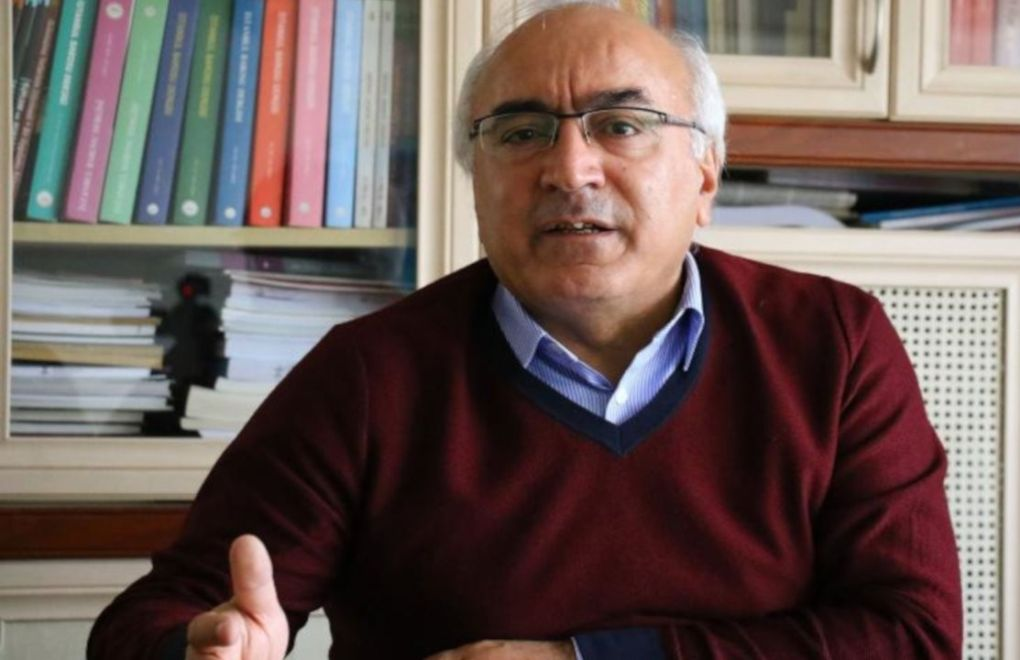
Öztürk Türkdoğan in Turkey acquitted!

April 20, 2022

A Turkish court has acquitted Öztürk Türkdoğan, co-chair of Turkey’s oldest human rights group, the Human Rights Association (İHD), of charges of membership in a terrorist organization. The ruling was issued by the Ankara 19th High Criminal Court on Tuesday 19 April 2022.

Türkdoğan was briefly detained in March 2021 after a police raid on his home in Ankara. He was questioned by the police without a lawyer present and released under judicial supervision. Türkdoğan was prohibited from travelling abroad and had to check in at a police station twice a month. See also: https://humanrightsdefenders.blog/2022/02/23/prosecution-of-human-rights-defender-ozturk-turkdogan-in-turkey-should-be-dropped/

Türkdoğan said he was targeted for urging authorities to carry out an investigation into the killing of 13 civilians on February 15, 2021 during a military operation in northern Iraq’s Gare province.

The Turkish state loves to accuse all citizens, human rights defenders, politicians, activists, union members and students of membership in a terrorist organization. There’s probably no other country in the world that accuses so many of its own citizens,” he added.

Announcing the court verdict in a statement, the İHD said, “We will not give up on defending human rights.

In his defense in the first hearing of the case at the Ankara 19th Heavy Penal Court, Türkdoğan had said the lawsuits were intended to intimidate rights advocates: “I know the lawsuit against me was filed by the ministry of Interior. I am a rights advocate. My legal activities were cited in the indictment“.

The other two lawsuits were filed for “insulting the Turkish nation” and “insulting Minister of Interior Süleyman Soylu.”

https://bianet.org/english/law/260706-human-rights-association-co-chair-ozturk-turkdogan-acquitted

Israeli Court backs Oded Goldreich who wants to donate Israel Prize money to human rights NGOs

April 15, 2022
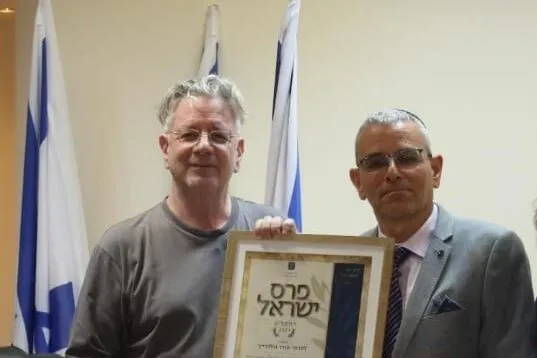
Israel Prize winner in mathematics and computer science Professor Oded Goldreich will be donating his prize money to five left-wing human rights organisations [@WeizmannScience/Twitter]

Times of Isrel (TOI ) on 14 April 2022 reports on Professor Oded Goldreich, a recent recipient of the Israel Prize in mathematics, wants to donate his NIS 75,000 ($23,350) in prize money to five human rights organizations, including Breaking the Silence and B’Tselem.

Goldreich, a professor of computer science at Israel’s Weizmann Institute, received the Israel Prize at the offices of the Education Ministry Monday, despite opposition from some government ministers and following a nearly year-long political saga over his alleged support for anti-Israel boycotts.

The five groups that will receive the prize money are Breaking the Silence, Standing Together, Kav LaOved, B’Tselem, and Adalah.

Breaking the Silence collects and publicizes mostly anonymous testimony of alleged IDF mistreatment of Palestinians. The organization has riled Israelis, and drawn ire from officials, who have challenged the authenticity of its anonymous claims and decried its work in international forums.

Standing Together supports and donates supplies to soldiers; Kav LaOved is a legal aid group for disadvantaged workers; B’Tselem documents alleged human rights violations in the West Bank; and Adalah is a legal center for Palestinians.

Last month, the High Court of Justice ruled that Education Minister Yifat Shasha-Biton must hand over the prize to Goldreich, following a petition against her refusal to give him the award filed by the members of the prize committee. The committee had initially awarded the honor to Goldreich last year.

The court ruling was a majority decision, with Justices Yael Willner and Yitzhak Amit siding with the appeal and Justice Noam Sohlberg opposing it.

Shasha-Biton had claimed that an academic boycott of Israel, which she said Goldreich supports, impacts freedom of speech. Amit ruled that “the harm to academic freedom of speech by withholding the prize from professor Goldreich is much worse.”

Denying the honor to a recognized academic over comments he made is “an invitation to monitor, track, and persecute academics in Israel,” Amit said. Shasha-Biton said at the time that she regretted the justices’ decision, but would respect it. She noted that since the court had previously said the education minister should decide the matter, it should have respected her decision.

“A person who calls for a boycott of an Israeli academic institution is not worthy of a state prize, no matter what his achievements or political views are,” she said.

Likud MK and former intelligence minister Eli Cohen tweeted that “Goldreich is the symptom. The root of the problem is the High Court of Justice.”

https://www.timesofisrael.com/controversial-israel-prize-winner-to-donate-grant-money-to-human-rights-ngos/

https://www.ynetnews.com/article/skrb3h4eq

https://www.middleeastmonitor.com/20220414-israel-prize-winner-to-donate-award-money-to-groups-fighting-to-end-the-occupation/

Why is the Harvard Administration so reluctant to speak up for Steven Donziger?

April 14, 2022

Rachel E. Carle, a second-year Master in Public Policy candidate at the Harvard Kennedy School, in an oped in the Crimson of 13 April 2022 (entitled Harvard Trains Human Rights Defenders and Then Abandons Them, wants to know why the Harvard Administration has not come out as fiercely to defend Steven Donziger as it has done for others. She makes a good point:

Harvard Law School alum Steven Donziger recently marked his 900th day in detention. Donziger represented victims of oil dumping in a landmark case against Chevron in Ecuador and has since faced serious intimidation and harassment, including mishandling of his trial. [I have written several posts about him, see: https://humanrightsdefenders.blog/tag/steven-donziger/]

Here at Harvard, Law Professor Charles Nesson has steadfastly spoken out in Donziger’s defense. Harvard Law students joined a letter signed by peers at 55 leading law schools, calling for Donziger’s prosecution to be reviewed. In Fall 2021, with the support of the Human Rights Profession Interest Council at Harvard Kennedy School, I coordinated a petition for Harvard students and alumni to support Donziger that more than 1,600 people have signed onto. This public support is overwhelming, and continued pressure is needed in order for Donziger to achieve justice. So why hasn’t the Harvard administration spoken up?

The school is quick to parade its most controversial alumni. They have no qualms honoring alum Henry A. Kissinger ’50, who orchestrated widespread war crimes in Cambodia. They were eager to invite Harvard drop-out Mark Zuckerberg to give the College’s 2017 Commencement speech, shortly after Facebook’s incriminating role in the 2016 U.S. Presidential election. Harvard has shown that it is willing to take risks for certain kinds of alumni.

This makes their silence on human rights defenders all the more deafening. Harvard trains students to be leaders and to act courageously to create a better world. Many students in my program at the Harvard Kennedy School graduate into high-risk careers, combatting authoritarianism, fighting for indigenous rights, or working on environmental accountability. Graduates have been detained for their work, from the 1992 imprisonment of HKS alum Jeffrey G. Kitingan in Malaysia to the 2012 imprisonment of HKS alum Bakhtiyar Hajiyev in Azerbaijan.

Just last year, HKS alum Erendro Leichombam was detained in India for a Facebook post criticizing Bharatiya Janata Party members’ approach to Covid-19. While Harvard alumni launched a petition for his release, and the Harvard Graduate Student Union lent its public support, these actions could only go so far.

Harvard alumni have been targeted for their human rights work in the past and will continue to be in the future. They deserve more than one-off petitions and scrambling students. Harvard is one of the most powerful educational institutions in the world; surely we can do more.

These targeted alumni are a part of a larger story. 2020 was the deadliest year on record for environmental activists around the world, particularly for Indigenous people and the Global South. Of course, those who graduate from Harvard schools have privileges and protections not afforded to many. Donziger is a white American man with a Harvard Law degree who benefits from respectability politics, and we should critically consider why his case has received more attention than most.

But that is just it. The more we understand and leverage the connections between these cases, the more human rights defenders can receive the attention and advocacy they deserve. These are not isolated incidents. When the next HKS or HLS alum is inevitably threatened or detained, I hope we remember they are connected to a long lineage of targeted alumni and a vast community of targeted activists around the world.

Harvard has taken an important step with the Scholars at Risk program, established more than 20 years ago to offer respite to persecuted scholars, artists, and writers from around the world. Harvard should expand this commitment, devoting significant resources to the defense of human rights, with particular attention to indigenous, women, queer, poor, and otherwise marginalized activists.

It is time to support our alumni at risk, too. Harvard should develop contingency plans that allow the administration to evaluate a situation, get in touch with the detained alum’s close contacts, and consider a range of private and public support measures. At the very least, the administration should be receptive to student campaigns that request the school to make a public statement or intervene in support of a member of our community.

Harvard needs to take responsibility for the human rights defenders it trains. It needs to create a real, ongoing, accessible infrastructure of support. And it needs to start today.

https://www.thecrimson.com/article/2022/4/13/carle-harvard-human-rights-defenders/

Human Rights Defender Angkhana Neelapaijit in Thailand harassed

April 14, 2022
Photo captured on a security camera of the alleged assailant, a woman wearing a mask and a black t-shirt.
Photo captured on a security camera of the alleged assailant, a woman wearing a mask and a black t-shirt. © 2022 Private

The authorities in Thailand should urgently investigate an incident intended to intimidate a prominent human rights defender, Human Rights Watch said on 13 April, 2022.

On April 12, 2022, at about 6 a.m., an unidentified assailant threw a pair of 9-inch-long scissors at the house of Angkhana Neelapaijit in Bangkok, making a hole in her front door. Security camera footage showed what appeared to be a woman wearing a face mask and a dark t-shirt with the Thai numeral 9 standing in front of the house, throwing the scissors, and then running away. Angkhana, 66, is a former commissioner of the National Human Rights Commission of Thailand and a newly appointed member of the United Nations Working Group on Enforced or Involuntary Disappearances. See: https://www.trueheroesfilms.org/thedigest/laureates/0D5DED3E-F79F-4AB4-8261-F6A19486F062

Violent acts intended to intimidate a well-known figure like Angkhana not only pose a threat to her and her family, but send a spine-chilling message to the entire Thai human rights community,” said Elaine Pearson, acting Asia director at Human Rights Watch. “The Thai government should respond immediately by undertaking a serious investigation to ensure that everyone responsible for this incident is held accountable.”

Angkhana told Human Rights Watch that she and her family felt vulnerable after the Justice Ministry canceled her protection under the government’s witness protection program on April 1. The authorities claimed the service was no longer needed because Angkhana’s life would no longer be in danger after the Department of Special Investigation ended its investigation of the enforced disappearance of her husband, the prominent human rights lawyer Somchai Neelapaijit. [See also: https://humanrightsdefenders.blog/2021/03/17/where-is-somchai-a-brave-wifes-17-year-quest-for-the-truth/]

The Thai government should not ignore this disturbing incident, which appears to be a response to Angkhana’s effective human rights advocacy,” Pearson said. “Foreign governments and the United Nations should press the Thai government to urgently act to protect Angkhana and other human rights defenders in the country.”

https://www.hrw.org/news/2022/04/13/thailand-prominent-rights-defender-harassed

US State Department’s report 2021 is out

April 14, 2022

On 12 April, 2022, the annual Country Reports on Human Rights Practices was made public. The Human Rights Reports 2021 cover internationally recognized individual, civil, political, and worker rights, as set forth in the Universal Declaration of Human Rights and other international agreements. The U.S. Department of State submits reports on all countries receiving assistance and all United Nations member states to the U.S. Congress in accordance with the Foreign Assistance Act of 1961 and the Trade Act of 1974. For nearly five decades, the United States has issued the Country Reports on Human Rights Practices, – in 2021, covering 198 countries and territories.  The preface states that: “The Biden Administration has put human rights at the center of U.S. domestic and foreign policy.  We have also recognized our nation has not always succeeded in protecting the dignity and rights of all Americans, despite the proclamations of freedom, equality, and justice in our founding documents.  It is through the continued U.S. commitment to advance human rights, both domestically and internationally, that we best honor the generations of Americans who are Black, Brown, or other people of color, indigenous peoples, persons with disabilities, LGBTQI+ persons, immigrants, women and girls, and other historically marginalized groups whose advocacy for their rights and for others has pushed America toward a “more perfect union.

President Biden has called the defense of democracy and human rights the defining challenge of our time.  By convening the first Summit for Democracy in December 2021 – bringing together representatives from 100 governments as well as civil society and the private sector – he sparked global attention and vigor toward democratic renewal and respect for human rights.  Participating governments made significant commitments to revitalize democracy at home and abroad at the first Summit on which we expect meaningful progress during the current Year of Action and before the time of a second Summit.

The reports paint a clear picture of where human rights and democracy are under threat.  They highlight where governments have unjustly jailed, tortured, or even killed political opponents, activists, human rights defenders, or journalists, including in Russia, the People’s Republic of China, the Democratic People’s Republic of Korea, Nicaragua, and Syria.  They document abuses of peaceful protestors demanding democracy and fundamental freedoms in countries such as Burma, Belarus, Cuba, Hong Kong, and Sudan.  They highlight worrying cases of transnational repression – where governments reach across borders to harass, intimidate, or murder dissidents and their loved ones – as exemplified in the dangerous forced diversion by Belarus of an international commercial flight for the sole purpose of arresting a critical independent journalist.

But they also contain signs of progress and glimmers of hope, as the indomitable will to live freely can never be extinguished.  In Iraq, people cast their votes to shape the future of their country in more credible and transparent parliamentary elections than in 2018.  In Botswana, a court advanced the human rights of LGBTQI+ persons by upholding the decriminalization of same-sex relations.  In Turkmenistan, all imprisoned Jehovah’s Witnesses conscientious objectors to military service were pardoned, a win for freedom of religion or belief.  The stability, security, and health of any country depends on the ability of its people to freely exercise their human rights – to feel safe and included in their communities while expressing their views or gender, loving who they love, organizing with their coworkers, peacefully assembling, living by their conscience, and using their voices and reporting from independent media to hold governments accountable.  There is much progress to be made, here in the United States and globally.  But I know that by working together in the Year of Action and using resources like the Country Reports on Human Rights Practices, we can come closer to building a world where respect for human rights is truly universal.

In a reaction on the report human rights activists focused on China said theat they want the State Department to reboot the report’s format to address documentation blind spots and connect it to policy and initiatives to stop the violations and provide accountability for victims.

“It’s a descriptive, objective document but largely of human rights developments that had been already extensively reported by the media, by NGOs, and by human rights bodies within the UN and in many cases at greater detail and length. … It is essentially a recap,” said Sharon Hom, executive director of the New York City-based nonprofit Human Rights in China. “Since it appears to take quite a bit of resources to produce each year, I’d say that going forward, they reference and aggregate some of the developments within three very important, bigger trends like digital authoritarianism, [foreign] influence operations, and [China’s] growing extraterritorial reach.” [from https://www.politico.com/news/2022/04/13/china-activists-state-dept-human-rights-00024876]

https://www.state.gov/reports/2021-country-reports-on-human-rights-practices/embed/#?secret=ICAePzAuB5#?secret=IVCGC9q7rK