Archive for the 'Human Rights Defenders' Category

Killing of trade union leader, Shahidul Islam, in Bangladesh

July 10, 2023

On 6 July 2023 Oxfam issued a statement that it stands in solidarity with the Bangladesh Garment and Industrial Workers Federation (BGIWF), trade union leaders and all human rights defenders who stand up for workers’ rights and protect human rights.

Oxfam learned of the horrific news of the brutal murder of Shahidul Islam, a union leader who was beaten to death on June 25th for his labour rights activism in Gazipur, a major garment industry hub on the outskirts of Dhaka, Bangladesh. He was an organizer of the BGIWF for 25 years advocating for workers’ rights as a trade union organizer, and was attacked and killed for standing up for basic human rights. We mourn not only the loss of an individual but also the loss of a powerful voice that championed the rights and well-being of workers, including the right to a living wage. We extend our sincere condolences to the grieving family, friends, colleagues and allies mourning his loss.

Kalpona Akter, the president of BGIWF, said: “Shahidul mobilised thousands of workers to join unions, empowering them to become solid factory-level trade union leaders. Throughout his life, he assisted thousands of workers in receiving arrears and severance pay wrongfully denied by their employers. With workers’ needs always in mind, Shahidul and three other union leaders met on the evening of his death to discuss a peaceful resolution to a wage dispute and the Eid-ul-Azha festival bonus. He met his fate due to the industry’s ill practice to promote yellow unionism for years and the neglect of workers’ voices. This needs to stop. Let our workers be free to organize and join unions. Shahid’s contributions to the labour movement were remarkable and will be sorely missed.”

Ahmed Sharif, a union organizer who was wounded in the attack, told the Guardian “As soon as we came out of the gate, a group of assailants grabbed Islam and separated him from us. They started cursing and randomly beating us, particularly Islam, some of them were kicking him mercilessly.”

As an organisation dedicated to the fight to end poverty and injustice, we are deeply concerned by the murder of Shahidul Islam. This tragic incident highlights the vulnerability of union leaders and activists fighting for workers’ rights. Oxfam joins BGIWF in demanding a thorough investigation and ensure justice is served for the death of Islam. We further call on all brands and stakeholders to conduct ethical purchasing practices upholding human rights within their supply chain and paying a living wage. We call on the government of Bangladesh to step up their protection of trade unionists who are exercising their fundamental human rights to freedom of association and collective bargaining.

Oxfam stands in solidarity with BGIWF, raising a resounding call for justice in the case of Shahidul Islam and demanding the unwavering safety of workers, union members and human rights defenders. We stand united in their relentless struggle to defend workers’ rights at Prince Jacquard Sweaters Ltd factory and in workplaces across Bangladesh. Together we demand accountability and an end to the systemic violations that perpetuate injustice.

Background

Shahidul and his colleagues were attacked after leaving the meeting with the management of a factory named Price Jacquard Sweaters Ltd to help the workers collect their due bonuses and wages. The factory management refused to comply despite being directed by the Deputy Commissioner’s (DC) office of Gazipur District to pay the workers’ salaries.

This is not the first time BGIWF has been the victim of such a fatal attack. Eleven years ago, in April 2012, another worker leader, Aminul Islam was tortured and murdered. Aminul was also an organizer with BGIWF, a vital contributor to the nation’s striving movement to advance workers’ rights. The murders of human rights defenders exemplify the extreme measures employed to suppress freedom of association in Bangladesh.

The tragic death of Shahidul, along with countless incidents of other workers being silenced by violence and fear, highlight the urgent need for change. Brands are responsible for ethical business practices and need to ensure that their purchasing practices are not leading to exploitation and deprivation of human rights. Brands must guarantee the right to a living wage and just, safe and healthy working conditions for garment workers.

Despite legal provisions, union leaders and activists face many challenges and restrictions such as anti-union discrimination, harassment, and retaliation against union leaders and members. Additionally, labour activists have raised concerns about the composition and independence of worker participation committees in factories. Labour activists argue that these ‘yellow unions’ are established by factory owners to exert control on workers raising concerns of workers’ rights to collective bargaining and discriminatory power dynamics.

Oxfam CanadaOxfam Australia and Oxfam Aotearoa’s What She Makes campaign aims to transform the fashion industry into a more just and equitable space by holding brands accountable for their purchasing practices and advocating for a living wage. A living wage is the minimum amount that a worker should earn in a 48-hour work week and adequately covers workers’ and their family’s basic needs, including food, water, housing, energy, healthcare, clothing, childcare, education, transportation and savings for unexpected events. We stand united with the women who make our clothes, advocating for their right to living wages, freedom of association and labour rights.
https://www.theguardian.com/global-development/2023/jun/28/shahidul-islam-bangladeshi-labour-leader-shahidul-islam-beaten-to-death-wages-dispute

Researcher puts bomb under ‘traditional’ protection of human rights defenders

July 7, 2023

On 6 July 2023 Janika Spannagel in Open Global Rights comes with a study of great importance to the work for human rights defenders. The researcher states that “focusing only on defenders’ physical integrity risks undermining the very idea of supporting agents of human rights change” and that there is a need to Rethink campaigns on human rights defenders

Spannnagel’s work featured in this blog before [see: https://humanrightsdefenders.blog/tag/janika-spannagel/] but this work questions more directly the core of HRD protection.

Instead of summarising I will provide large quotes:

,,,,The theory of change put forward by actors, including Front Line Defenders, International Service for Human Rights, and many others, claims that by protecting local human rights activists, international campaigns can support them in their work to advance human rights protection on the ground. This assumption appears plausible and aligns with prominent accounts in academic human rights literature, where domestic activists’ protection from repression is seen as a way to open spaces for them to challenge the regime and enact change.

That said, empirical evidence from UN casework and the experience of Tunisian defenders shows that this promise has not been fulfilled when it comes to human rights defenders in authoritarian regimes, as I show in my recent book. There, I argue that, while international attention can have important protective benefits, it does little to support individual human rights defenders as agents of change in repressive contexts. [Emphasis added]

The reason for this is that international casework on defenders, including urgent action–like campaigns or UN communications, maintain the traditional focus on physical integrity rights that has guided the long-standing casework on political imprisonment, torture, or enforced disappearances. In doing so, it overlooks the many administrative, discursive, and covert forms of repression that typically bypass international scrutiny more broadly but that often very effectively disrupt and thwart defenders’ work toward change.

The analysis of over 12,000 individual cases of human rights activists taken up by the UN special rapporteur on human rights defenders between 2000 and 2016 reveals that, in almost three-quarters of them, at least one of the violations described fell within the category of physical integrity violations. Detention cases alone made up 56% of all cases raised during that period. In contrast, only 4% of the cases dealt exclusively with softer types of repression, such as travel bans, bureaucratic issues, job dismissals, surveillance, or defamation.

This distribution far from represents the everyday experience of human rights defenders in authoritarian states—instead, it is reflective of a humanitarian instinct in human rights casework to privilege cases that are considered most severe. One could argue that UN communications, and perhaps attention-based campaigning more broadly, are inherently humanitarian, not transformative instruments. But one should ask: What, then, is the purpose of focusing on human rights defenders, as opposed to any victim of repression? [Emphasis added]

The priority given to physical integrity violations has two important adverse consequences. First, we can see that the data profoundly shape our understanding of what human rights defenders are struggling with. For example, on the basis of such data a CIVICUS report claims that in order to repress civic space, states resort “most often” to detention of activists, attacks against journalists, and excessive use of force against protesters. The human rights community’s own focus on violent repression thus paradoxically misleads us to believe that this is where most attention is needed.

Secondly, this focus reinforces a protection gap for violations that fall outside of the conventional notion of state repression as physically harmful and as undeniably politically motivated. Research on repression highlights that authoritarian states engage in repressive substitution, where they replace highly scrutinized coercive tactics—typically harder and overt types of repression—with softer and more covert measures. The case of Tunisia under Ben Ali aptly illustrates the strong impact of such tactics on defenders’ ability to carry out meaningful work.

When analyzing the further development of cases taken up by the UN, I also found that, while some positive effects of the UN’s attention could be identified for most of them, many did not see an actual improvement relative to the reported violations over the course of the next year; where they did, it was mostly an easing of harder repression. Ultimately, there is a real risk that governments continue to use hard repression to increase their bargaining power and then pass off a release from prison as a costly concession, while in reality imposing softer but equally effective measures against the activist in question.

With this problem in mind, what could be done differently? Casework that follows a transformative logic should not seek to maximize the reduction of physical harm—the humanitarian logic—but should define protection needs in terms of safeguarding a defender’s ability to do effective human rights work. 

Those engaging in casework and campaigns on human rights defenders should actively revisit their priorities in terms of the violations they tend to address. Far too often, softer repression remains unreported, unnoticed, and not acted upon, which effectively creates a twilight zone in which authoritarian states can comfortably stifle opposition voices without risking much pushback. We owe it to the countless number of human rights activists around the world to ensure that the label of “human rights defender” does not merely serve to laud their heroism and excite donors and the media, but that it is dedicated to fulfilling its promise of human rights change.

https://www.openglobalrights.org/rethinking-campaigns-human-rights-defenders/index.cfm

For the more traditional approach, see e.g. https://www.ipsnews.net/2023/07/recognising-human-rights-defenders-remarkable-agents-positive-change/

EU directives for SLAPPs and Media Freedom: a long journey

July 2, 2023
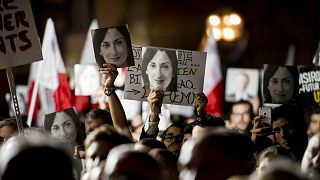
Protesters hold photos of slain journalist Daphne Caruana Galizia outside the office of the Prime Minister of Malta on Nov. 29, 2019

Maria Psara – writing for Euronews of 27June 2023 – says that European Union member States are trying to water down the directives for SLAPPs and Media Freedom…European lawmakers are accusing member states of trying to water down EU legislation aimed at strengthening protections for journalists and media freedom. 

The European Parliament’s Legal Affairs Committee (JURI) will on Tuesday vote on an anti-SLAPP directive first proposed by the Commission in April 2022 and that would enable judges to swiftly dismiss manifestly unfounded lawsuits against journalists and human rights defenders.  [see: https://humanrightsdefenders.blog/2022/04/28/eu-finally-moves-on-law-to-protect-media-from-legal-abuse-slapps/]

It would also establish several procedural safeguards and remedies, such as compensation for damages, and dissuasive penalties for launching abusive lawsuits. The JURI vote will form the basis of the Parliament’s position in negotiations with member states if it is also endorsed by the plenary in mid-July.

SLAPPs or Strategic lawsuits against public participation are a particular form of harassment used primarily against journalists and human rights defenders to prevent or penalise speaking up on issues of public interest. The Commission’s proposal has been dubbed as the ‘Daphne Law’ in honour of murdered Maltese journalist Daphne Caruana Galizia.

Member states, which together form the Council of the EU, have however sought to water down the text, drawing criticism for the Commission.

“I would like to express my regret concerning the weakening of the remedies against abusive court proceedings, in particular the deletion of the provision on compensation of damage and the weakening of the provision on award of costs,” Didier Reynders, Commissioner for Justice, said earlier this month after member states agreed on their negotiating position. 

Parliament is seeking to redress that with German MEP Tiemo Wölken (S&D), the rapporteur on the draft directive, telling Euronews: “We made it stronger and we also added other provisions such as a creation of an ‘one stop shop’ which the SLAPPs targets can contact to receive help by dedicated national networks of specialized lawyers, legal practitioners and psychologists.”

It is not the first time member states are accused of trying to water down a proposal on media freedom.  Earlier this month, a deal among the 27 member states on the European Media Freedom Act (EMFA) made a lot of eyebrows rise, because of a planned exemption to allow for the wiretapping of journalists. The regulation, first proposed by the Commission in September 2022, included safeguards against political interference in editorial decisions and against surveillance. The EU’s executive wanted to put focus on the independence and stable funding of public service media as well as on the transparency of media ownership and the allocation of state advertising.

“We have welcomed in particular as a political symbol the draft regulation for EMFA, as the Commission for the first time has adopted a legislative act dealing with all media, a traditionally sensitive subject dealt with at national level only,”  Renate Schroeder, director of the European Federation of Journalists (EFJ), told Euronews. Yet, the EPJ and other NGOs, still criticised the proposal as “not ambitious enough”.

“In particular we believed that Article 4 on the protection of journalists’ sources and protection from surveillance has not met Council of Europe standards. We also advocated for stronger binding rules on media transparency,” Schroeder added.

But member states are seeking to add an exemption to Article 4, introduced by France and opposed by Germany only, that would allow them to spy on journalists in the name of national security.

The original proposal sought to ensure that governments could not “detain, sanction, intercept, subject to surveillance or search and seizure” journalists in order to uncover their sources, unless “justified by an overriding requirement in the public interest” while the deployment of spyware was to be restricted only to “serious crimes”. 

The Council’s is hoping to broaden the number of offenses allowing such surveillance from 10 to 32.

“The text doesn’t protect journalists anymore and thereby makes the Act almost useless for journalists’ protection at least,” Schroeder said. 

“It still proposes useful tools when it comes to independence of public service media, transparency on state advertisement, some minimum rules on media ownership and on editorial independence. But yes, some member-states are afraid of journalism and thereby give hands to illiberal countries such as Hungary who oppose the Act. We hope the European Parliament will be firm, but we are not too optimistic,” underlined the director of EFJ.

However, on 12 July, with 498 votes to 33 and 105 abstentions, MEPs adopted their negotiating position on new rules to protect those working on matters of public interest like fundamental rights, the activities of public officials or corruption allegations.

On 27 February 2024, the European Parliament formally adopted that text, which has now been published. https://www.lexology.com/library/detail.aspx?g=105f78e8-27de-4fa3-99b1-6ed97c4d659f

See also: https://www.independent.com.mt/articles/2023-07-11/local-news/Protection-of-journalists-in-the-EU-MEPs-back-rules-to-stop-abusive-legal-cases-6736253272

for Latin America, see: https://www.article19.org/resources/inter-american-commission-on-human-rights-ensure-protection-against-slapps/

https://www.euronews.com/my-europe/2023/06/26/meps-accuse-eu-countries-of-undermining-attemps-to-protect-journalists

https://www.europarl.europa.eu/doceo/document/A-9-2023-0223_EN.html

https://www.euronews.com/my-europe/2023/08/23/record-number-of-abusive-slapp-lawsuits-filed-in-europe-in-2022-report

and then on 30 November 2023: https://www.consilium.europa.eu/en/press/press-releases/2023/11/30/council-and-eu-parliament-reach-provisional-agreement-on-eu-law-protecting-journalists-and-human-rights-defenders/

and on 29 April 2024 the UN came with: https://www.ohchr.org/en/documents/brochures-and-leaflets/impact-slapps-human-rights-and-how-respond

Finally:

https://commission.europa.eu/news/new-eu-rules-protect-against-strategic-lawsuits-against-public-participation-enter-force-2024-05-03_en

https://www.hrw.org/news/2024/05/07/joint-statement-civil-society-reaction-adoption-eu-directive-combating-violence

Tunisia no longer poster child of Arab spring

June 29, 2023

The Human Rights Council should urgently address the deterioration of the human rights situation in Tunisia, four human rights organizations said on 27 June 2023 as the 53rd Council’s session is underway.

In a letter sent to UN Member States’ Representatives on 5 June 2023, the four undersigned organizations warned against the rapidly worsening situation in Tunisia, and urged States to seize the opportunity of the ongoing Human Rights Council’s session to address it. The organizations called on the Council and Member States to press the Tunisian authorities to comply with their obligations under international human rights law particularly those guaranteeing the rights to fair trial, freedom of expression, freedom of peaceful assembly and association, and non-discrimination.

The Human Rights Council should urge Tunisia to end the ongoing crackdown on peaceful dissent and freedom of expression, and drop charges against, and release, all individuals being detained and prosecuted solely on the basis of their peaceful political activities and the exercise of their human rights. The Council should also call on Tunisia to conduct prompt, thorough, independent, impartial and transparent and investigation into a wave of anti-Black violence – including assaults and summary evictions – against Black African foreign nationals, including migrants, asylum seekers and refugees, and bring to justice anyone reasonably suspected to be responsible, and provide victims with access to justice and effective remedies.

Over the past two years, Tunisia has witnessed a significant rollback on human rights. Judicial independence guarantees have been dismantled and individual judges and prosecutors have been subjected to arbitrary dismissal, politicized criminal prosecutions and increased interference by the executive. Lawyers are being prosecuted for the discharge of their professional duties and exercise of their right to freedom of expression.

The Tunisian authorities’ interference in the judiciary and attacks on lawyers have greatly undermined the right to fair trial and public trust in the integrity of the justice system. The authorities must ensure that the courts are not weaponized to crush dissent and free expression,’ said International Commission of Jurists’ MENA director Said Benarbia. 

Under the guise of ‘fighting offences related to information and communication systems’,  punishable by up to a 10 years’ imprisonment and a hefty fine according to Decree Law 54, at least 13 individuals, including journalists, political opponents, lawyers, human rights defenders and activists, have been subject to police or judicial investigations and are facing possible prosecutions.

‘With Tunisia facing political uncertainty and economic crisis, it’s more important than ever that Tunisians be free to debate their country’s future without fear of reprisal. The authorities should strive to allow the effective enjoyment of the right to freedom of expression of everyone; instead, they are attacking it,’ said Rawya Rageh, Amnesty International’s acting deputy director for the Middle East and North Africa.

Last week, the UN High Commissioner for Human Rights called on the Tunisian authorities to stop restricting media freedoms and criminalizing independent journalism. In a statement published on 23 June, Volker Türk expressed deep concern at the increasing restrictions on the right to freedom of expression and press freedom in Tunisia, noting that vague legislation is being used to criminalize independent journalism and stifle criticism of the authorities. ‘It is troubling to see Tunisia, a country that once held so much hope, regressing and losing the human rights gains of the last decade,’ said the High Commissioner.

Since February 2023, a wave of arrests targeted political opponents and perceived critics of Tunisia’s President, Kais Saied. In the absence of credible evidence of any offences, judges are investigating at least 48 people, such as dissidents, opposition figures, and lawyers, for allegedly conspiring against the State or threatening State security, among other charges. At least 17 of them are being investigated under Tunisia’s 2015 counter-terrorism law.

‘By jailing political leaders and banning opposition meetings, the authorities are dangerously trampling on the fundamental rights that underpin a vibrant democracy. The democratic backsliding and the human rights violations, which are unprecedented since the 2011 revolution, require urgent attention from the Human Rights Council and Member States,’ said Salsabil Chellali, Tunisia director at Human Rights Watch.

Signatories:

  1. International Commission of Jurists (ICJ)
  2. International Service for Human Rights (ISHR)
  3. Amnesty International
  4. Human Rights Watch (HRW)

Download as PDF

MEA laureate 2012 Luon Sovath needs urgently your support

June 29, 2023

Currently living in exile in Switzerland, Luon Sovath finds himself in urgent need of financial support to cover his mounting medical bills.

Venerable Luon Sovath, a Buddhist monk since the age of 9, documented land grabs of vulnerable villages by big businesses in Cambodia before joining the movement for democracy, freedom, and governmental accountability in his country. His documentation work won him international recognition, including the Martin Ennals Award for Human rights defenders in 2012.

However, the journey towards justice has taken its toll on Luon Sovath, both physically and emotionally. He was forced to leave Cambodia in 2020 to escape government persecution. Currently living in exile in Switzerland, he finds himself in urgent need of financial support to cover his mounting medical bills. A recent dental procedure left him with a large invoice of 2,000.00 CHF, a burden that he cannot shoulder alone.

Luon Sovath has saved 900.00 CHF towards his medical expenses. However, he still requires further support to bridge the remaining financial gap and ensure that he receives the necessary healthcare to regain his strength.

Luon Sovath’s advocacy empowered marginalized communities and shed light on the injustices they face. His commitment to non-violence and his use of mediums such as videos, poems, and songs inspired thousands of other Cambodians to join the movement for democracy. Luon Sovath’s struggle is not only his own but a collective fight for justice and dignity.

On 21stJune 2023, The Martin Ennals Foundation decided to step in and organised this fundraiser for him.

If each of us makes a small contribution, we can help alleviate the burden of his medical bills and enable him to continue his crucial work in defending the rights of those who have been silenced. Together, we can make a difference in the life of this remarkable individual who has given so much to others.

Illustration of helping hands

Give CHF20 and be a founding donor

Your donation is the start of Martin Ennals Foundation’s journey to success. Your early support inspires others to donate.

Make a donation

https://www.gofundme.com/f/2012-mea-laureate-luon-sovath-needs-your-help

Martin Ennals Award moves to its 30th edition

June 29, 2023

The nomination process for this special year will open in the first quarter of 2024 and will remain live for two months, as done in the past.

A nomination form will be available in several languages. Any individual or organization can be nominated for the Award, keeping in mind these rules and criteria:  

  • Candidates must be currently active in the promotion and protection of human rights (the Award does not consider defenders who are deceased); 
  • The candidate should not employ or advocate violence;  
  • Candidates who are no longer in need of protection (e.g., because they are now in a safe environment) will normally not be considered;  
  • Self-nominations are not accepted.  

Once the nominations have been vetted by the Foundation and considered by our Jury of ten human rights organizations, the name(s) of the Laureate(s) will be released in the second quarter of 2024. 

Preparations are underway for a 30th-anniversary reunion of former winners of the Award in Geneva as well as a Ceremony, which would take place in the third quarter of 2024. 

https://www.martinennalsaward.org/martin-ennals-award-updates-on-the-2024-edition/tay tuned for more updates on our website and newsletter! 

Human Rights Watch addresses Spain’s Presidency of the EU

June 27, 2023

On 26 June 2023 HRW called on Spain use its six-month tenure as EU Presidency to translate into concrete and bold actions commitment to protect fundamental rights and the rule of law.

Spain holds the presidency as the world marks the 75th anniversary of the Universal Declaration of Human Rights (UDHR) on 10 December 2023. In anticipation of this pivotal moment Spain should make every effort to uphold the rights and values enshrined in this historic document.

HRW calls upon the Spanish government to consider the following priority issues and recommendations:

  1. Fundamental Rights and Rule of Law in EU member states

Two EU member states – Hungary and Poland – currently face scrutiny under Article 7 of the Treaty on European Union (TEU)…

The freezing of EU recovery and cohesion funds under the conditionality mechanism represents a welcome step but it is insufficient to address the gravity of the erosion of rule of law and human rights. While Hungary and Poland have adopted some limited measures in response to requirements under the mechanism, these have failed to address fundamental and long-standing concerns. ….We urge the Council to hold the Polish and Hungarian governments to account by using the powers conferred to it under the Treaties and to fulfil the strong mandate to act given to it by the European Commission and Parliament. The urgency of Spain’s leadership and responsibility cannot be overstated as it is one of only two remaining presidencies before Hungary and Poland in turn assume leadership of the Council. It is highly likely that during that time progress on rule of law will at best stall, and at worst Article 7 scrutiny will come to an end altogether…

  1. Rights-Respecting and Principled EU Migration Policy

Spain’s EU Council presidency comes at a critical time for the EU’s migration policy after the Council agreed on 8 June on a negotiating position on an EU-wide reform of its asylum and migration system. Given its mandate to lead on behalf of member states the negotiations with the European Parliament on a final agreement, Spain has an opportunity to broaden the scope for a rights-respecting approach.

We call on your government to:

  • Support the establishment of proactive, state-led SAR operations in the Mediterranean Sea that could involve expanding the mandates and capacity of existing initiatives like EUNAVFOR MED and Frontex, funding professional rescue NGOs and ensuring predictable disembarkation.
  • Promote a discussion on the critical role of NGOs to ensure that they are fully able to carry out their lifesaving SAR activities, instead of facing obstruction and criminal and administrative penalties; and provide platforms for discussion of cooperation between member state rescue coordination centers and NGOs.
  • Advocate for independent and effective border monitoring mechanisms to document human rights violations at EU external borders, such as unlawful pushbacks, to ensure accountability for those responsible for human rights abuses and access to justice for victims.
  • Ensure that migration cooperation with third countries, and all provision of financial, technical, and material assistance, are contingent on clear and verifiable human rights commitments. 
  • Enable a constructive trialogue on the asylum procedures regulation and the asylum and migration management regulation with a view to limiting the use of accelerated border procedures, the detention of asylum seekers including families with children, and discretionary use of the “safe third country” concept.
  • Promote a discussion on establishing more safe and legal pathways for migration as called for by EU Justice and Home Affairs Commissioner Johansson.[8]
  1. Human Rights as a Pillar of EU’s Foreign Policy

The EU is equipped with solid instruments to ensure that human rights protection remains at the centre of its external action. The EU has shown resolve in its response to Russia’s invasion of Ukraine and has led at the United Nations to address key human rights crises.

..

During its Presidency, we call on your government to:

  • Continue to combat impunity for crimes committed in Ukraine, including by providing adequate resources to the International Criminal Court’s (ICC) regular budget, advocating and supporting the implementation of ICC arrest warrants, pressing Ukraine to ratify the Rome Statute and supporting independent investigations and prosecutions under universal jurisdiction.
  • Continue to support Human Rights Defenders (HRDs) at risk and share your experience with other EU member states. Encourage other EU member states to learn from and replicate Spain’s forward-leaning approach with the Program for Support and Protection of Human Rights Defenders at Risk that provides dedicated one-year residential visas for HRDs. Advocate with EU member states to use their discretion and facilitate access by HRDs to multi-year multi-entry Schengen visas in line with EU guidelines.
  • Recalibrate EU’s engagement with China to address the government of China’s human rights record through measurable deliverables; counter the government of China’s flawed narratives on its own human rights record; reject efforts to undermine international human rights institutions; lead the creation of a UN investigative and monitoring mechanism for crimes against humanity committed in Xinjiang; sanction or hold accountable those responsible for such crimes; and make plans to reduce dependency on a government that assaults human rights both domestically and in its foreign policy.

see also: https://freedomhouse.org/article/media-freedom-and-journalists-groups-call-eu-prioritise-media-freedom-reforms-and-human

HRW Letter – Spain Presidency June 2023

Human Rights Measurement Initiatives – 2023 Human Rights Data Release on Asian countries

June 16, 2023

On 14 June 2023 FORUM-ASIA announced the upcoming 2023 Human Rights Data Release by affiliate member, the Human Rights Measurement Initiatives (HRMI) based in New Zealand. HRMI will this June unveil the latest findings on civil and political rights, economic and social rights (ESR), and human rights in East Asia. On June 22nd, HRMI will present the civil and political rights data, including the measurement of Freedom of Religion and Belief in nine countries, as well as scores for Bangladesh, Thailand, and the Maldives. On June 29th, they will reveal the economic and social rights data, highlighting the crucial role of ESR data in increasing investment in low-income countries and its correlation with wealth improvement. Furthermore, on June 28th, HRMI will delve into the human rights situation in China, Hong Kong, and Taiwan, exploring topics such as the evolving freedom of opinion and expression and the impact of Hong Kong’s National Security Law. Esteemed guest panelists will share their valuable insights and provide context to the scores.

For HRMI see: https://humanrightsdefenders.blog/2023/06/16/human-rights-measurement-initiative-hrmi-explained/

Civil and political rights data launch

June 22nd 2023 11pm NZ Standard Time

2023 civil and political rights data, including measuring Freedom of Religion and Belief in 9 countries, producing scores for BangladeshThailand, and the Maldives, producing people at risk data about sex workers, and much more.

You can register for the zoom webinar here, it will also be livestreamed on Youtube here.

Economic and social rights data launch

June 29th 2023 Every time zone

2023 economic and social rights (ESR) data, including the role of ESR data in increasing investment in low income countries, how improving ESRs increases wealth, and much more.

You can register for our zoom webinar here, it will also be livestreamed on Youtube here.

Human rights in East Asia data launch

June 28th Every time zone

China, Hong Kong, and Taiwan’s 2023 human rights data, including how freedom of opinion and expression are evolving in these countries, the impact of Hong Kong’s National Security Law on human rights, and much more.

You can join the zoom webinar here (no registration required), it will also be livestreamed on Youtube here.

See also: https://humanrightsdefenders.blog/2019/08/22/new-zealand-funds-much-needed-human-rights-monitoring-in-the-pacific/

Human Rights Measurement Initiative (HRMI) explained

June 16, 2023

The New-Zealand-based Human Rights Measurement Initiative tracks the human rights progress of countries, producing robust data that anyone can use to push for improvements in how governments treat people. They are independent and non-profit.

What gets measured gets improved: if something isn’t being systematically measured, it can be more easily overlooked and undervalued. HRMI data make it easier for decision-makers to monitor their progress, and prioritise human rights. Advocacy based on sound information is one of the key drivers of change.

Eventually, HRMI aims to measure all human rights as defined in international law but they have begun with two core sets of data measuring five economic and social rights and eight civil and political rights. The scores are published annually on the Rights Tracker. see: https://rightstracker.org. 

In this world, all governments seek advice not just on how to grow their economies and increase their GDPs, but also on how to improve people’s lives by better respecting, protecting, and fulfilling their human rights obligations. The main use is in the context of the Universal Periodic Review (UPR) of the UN.

HRMI’s mission: is to produce world-changing human rights data tools that track the human rights performance of countries. 

https://rightstracker.org/page/about

Winners of the Václav Havel International Prize for Creative Dissent 2023

June 12, 2023

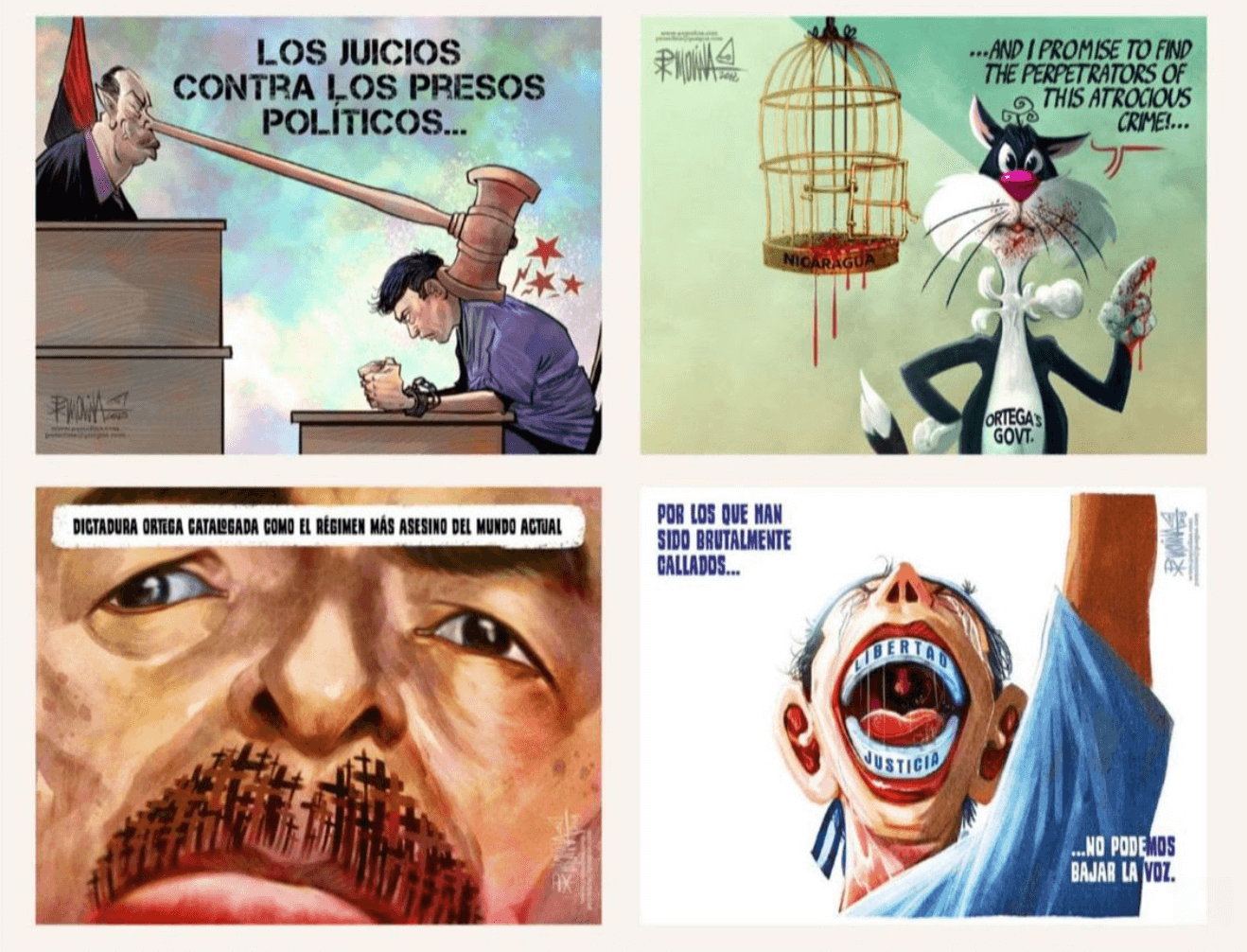
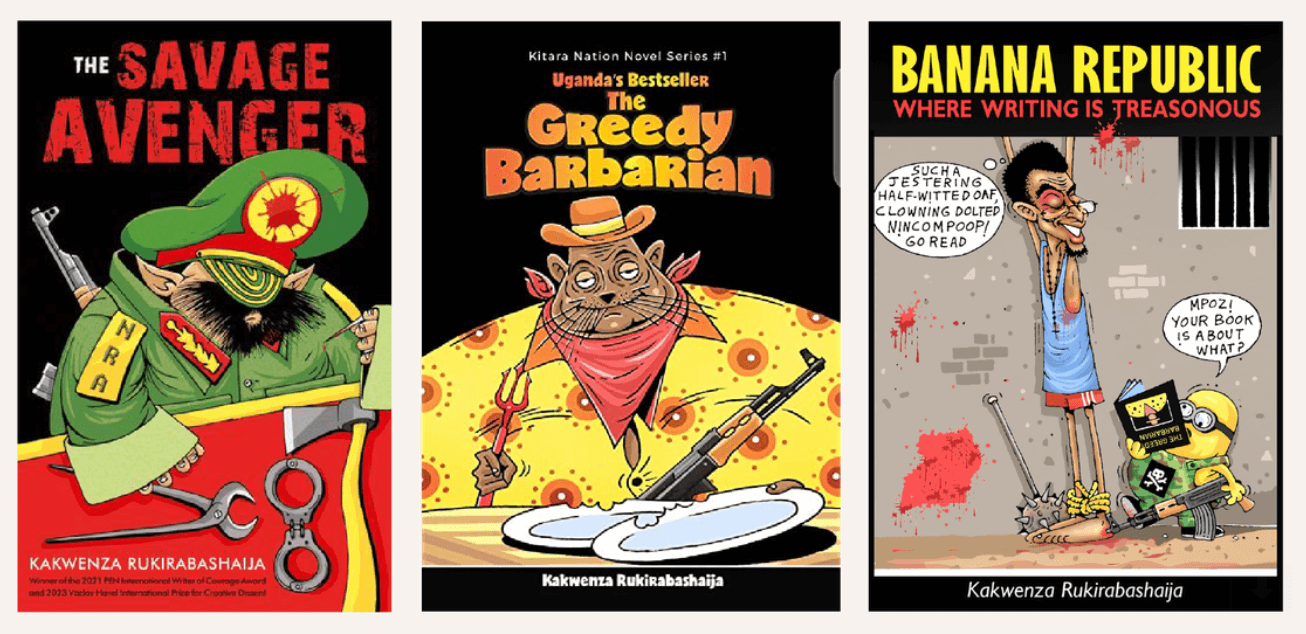
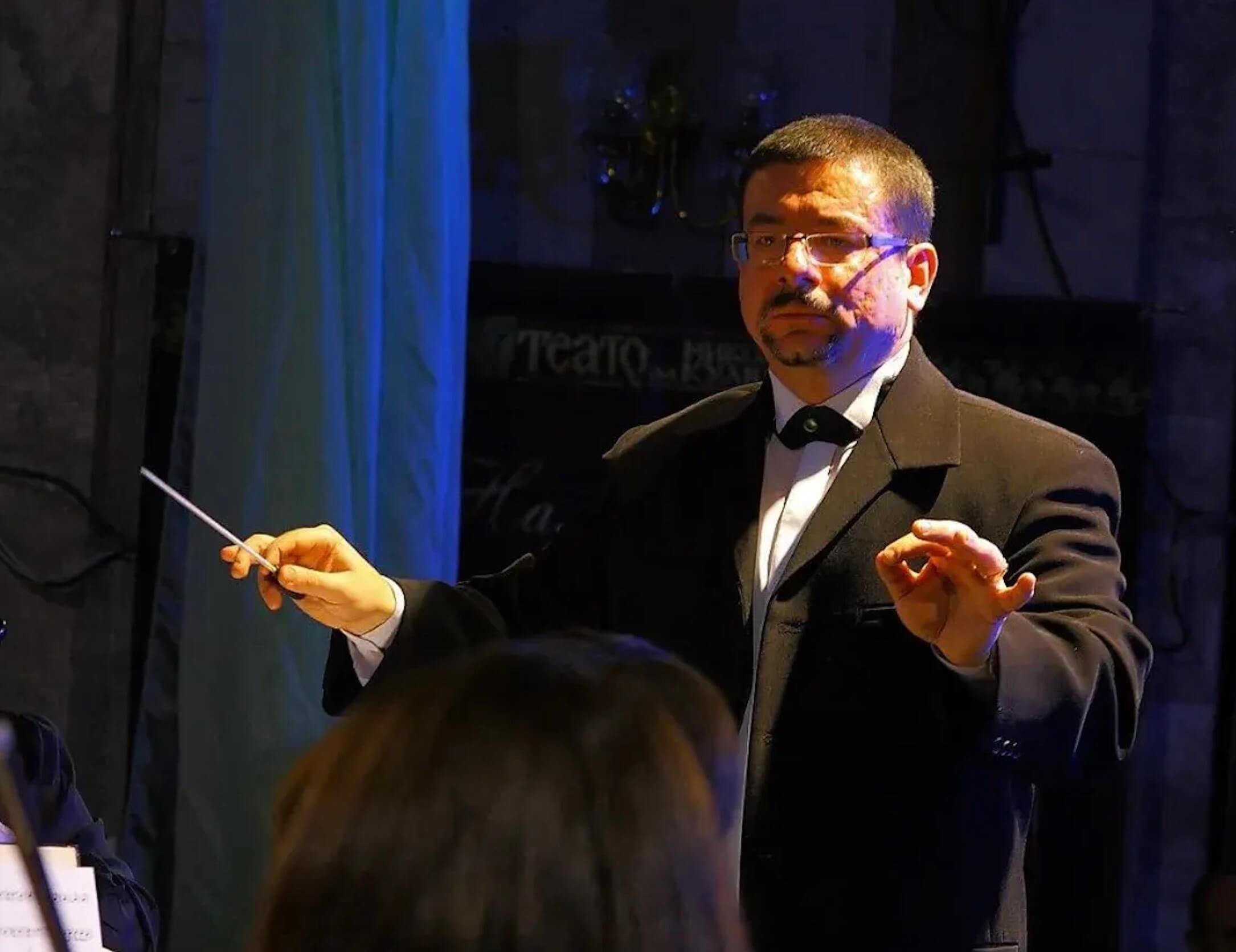
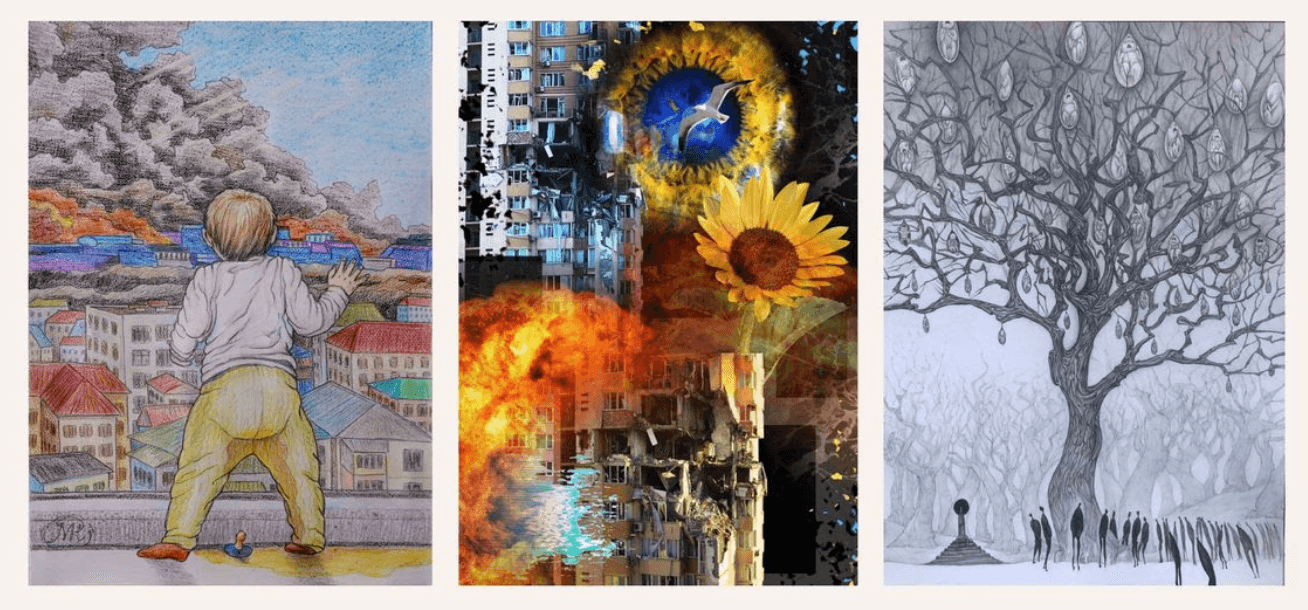
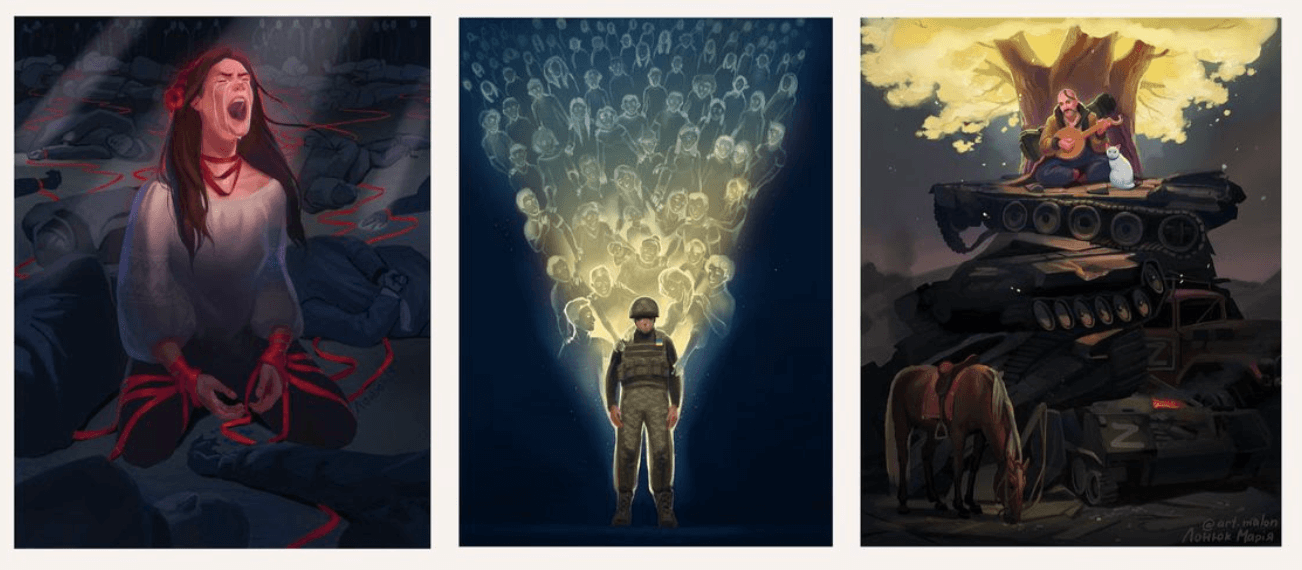
The Human Rights Foundation announced as recipients of the 2023 Václav Havel International Prize for Creative Dissent: Nicaraguan political cartoonist Pedro X. Molina; Ugandan novelist Kakwenza Rukirabashaija; and the third prize to be shared by four Ukrainian artists: the late conductor Yuriy Kerpatenko; the “Art Residency in Occupation” project; the illustrator Mariia Loniuk; and the “Stand Up for Ukraine” performance project.

In the face of oppression and stifling silence, this year’s laureates have chosen to speak the unspoken, echoing Václav Havel’s creativity and courageous spirit,” said HRF Chief Executive Officer Thor Halvorssen.

This year’s laureates will be recognized during a ceremony on Wednesday, June 14, at the 2023 Oslo Freedom Forum (OFF) in Oslo, Norway. The Havel Prize ceremony will also be broadcast live at oslofreedomforum.com.

Pedro X Molina is a Nicaraguan political cartoonist who was forced into exile on Christmas Day 2018 after Nicaraguan dictator Daniel Ortega’s political police killed a journalist, jailed two others, and ransacked the offices of El Confidencial — the digital newspaper that featured Molina’s biting caricatures of Ortega and his tyranny. Molina published his first two cartoons in Barricada in 1995, later becoming a cartoonist for the digital outlet El Confidencial. In 2019, he received the Maria Moors Cabot Prize, awarded by Columbia University. The same year he was recognized by Americas Quarterly as one of its Top 5 Latin American political humorists.

Kakwenza Rukirabashaija is a prominent Ugandan novelist recognized by English PEN in 2021 as a Writer of Courage and a fierce critic of the dictatorship of Yoweri Museveni. He has shown exceptional courage and defiance despite being imprisoned and tortured three times since 2020 for his irreverent writing and books, including “The Greedy Barbarian,” a satirical political fiction novel about corruption and dictatorship in a fictitious African country, and “Banana Republic: Where Writing is Treasonous,” an account of the torture he was subjected to while in detention in 2020 for the publication of his first book. In late December 2021, Rukirabashaija was kidnapped from his home and taken to an army base, where he was illegally detained for one month because of his tweets criticizing Museveni and his son.  Rukirabashaija was so severely tortured that he was released only on medical grounds. He was charged with “offensive communication” under Uganda’s repressive Computer Misuse Act. In February 2022, Rukirabashaija managed to flee to Germany for medical treatment, and he vowed to return to Uganda to face trial after his medical treatment.

Kerpatenko was a renowned Ukrainian musician and principal conductor of the Kherson Regional Philharmonic. In October 2022, Russian troops assassinated Kerpatenko in his home at point-blank range after he refused to conduct a concert under the rule of Russian invading forces in Kherson, Ukraine. The concert was meant to portray an “improvement of peaceful life” in the occupied city, but Kerpatenko “categorically refused to cooperate with the occupants,” the Ukrainian Ministry of Culture and Information Policy later confirmed. Kerpatenko led his hometown’s orchestra for more than  20 years before he was murdered. The Havel Prize will be presented posthumously to Kerpatenko for his courageous stance against the Russian forces’ repeated attempts at “artwashing” their illegal occupation of Ukraine.

Art Residency in Occupation is an underground art society created by curator Yuliia Manukian. During the occupation of Kherson, Ukraine, six resident artists secretly met in a basement studio at the initiative of Manukian to produce works that showcase the death and destruction in the southern city of Kherson, offering viewers an opportunity to understand the scope of the war. Through this residency, Manukian sought to provide shelter for artists and gave them the opportunity to tell stories of war through the language of art. While written journalism can distance an outsider from the reality of current life in Ukraine, Manukian believes that the group’s collection of drawings, paintings, photographs, diary entries, and videos convey the raw truth.

The Havel Prize will be presented to Manukian on behalf of the collective of artists who bravely united in wartime to create dozens of works that creatively document the horrors endured by millions of Ukrainians living under the Russian invasion.

Manukian is a curator, art critic, and journalist based in Odessa, Ukraine. She was shortlisted in the British Journalism Awards’ foreign affairs category for her vital, courageous, and deeply moving Kherson diaries for The Observer.

Mariia Loniuk is a Ukrainian freelance artist specializing in digital art. Since Vladimir Putin’s 2022 invasion of Ukraine, Loniuk has created vivid and touching illustrations about the war, conveying the feelings and images Ukrainians face. Her drawings capture the devastation of cities, homes, and human lives, the ubiquity of death and suffering, and the war’s destruction. Despite this, her illustrations also highlight the tremendous bravery and determination of the Ukrainian army and the courage and solidarity of the Ukrainian people as they defend their freedom.

Stand Up for Ukraine is a project that brings people together through the universal language of music, reminding us that art has the ability to transcend boundaries, challenge oppressive ideologies, and ignite a collective spirit of solidarity. The performance project, curated by Neringa Rekašiūtė, Eglė Plytnikaitė, and Elvina Nevardauskaitė, seeks to spark hope and empowerment and encourage people to stand united against a totalitarian regime that undermines human dignity. It consists of a live performance where the 22-year-old Ukrainian singer, Elizaveta Izmalkova, is joined by passersby singing along to the folk song, “Chervona Kalyna” — a symbol of Ukrainian resilience and freedom. Stand Up For Ukraine took the internet by storm, capturing the attention of more than five million viewers worldwide. The project serves as a call to action, urging people to set aside differences and come together in support of Ukraine.

Izmalkova is a 22-year-old Ukrainian singer based in Vilnius, Lithuania. She was born in the city of Pervomaisk in the Luhansk region. In her lifetime, Izmalkova’s family home in Ukraine was destroyed twice by Russian forces, first when Russia invaded Ukraine in 2014 and once again in early 2023.

For more on the Havel Prize and its many laureates, see: https://www.trueheroesfilms.org/thedigest/awards/438F3F5D-2CC8-914C-E104-CE20A25F0726