Archive for the 'Human Rights Defenders' Category

Environmental defenders call for better protection by the African Commission

November 11, 2023

The Environmental Rights Agreement Coalition called on the African Commission on Human and Peoples’ Rights to develop an environmental rights agreement to increase public participation and protect environmental rights defenders. The Environmental Rights Agreement (ERA) Coalition organised, on 21 October 2023, a side event on the margins of the 77th Ordinary Session of the African Commission on Human and Peoples’ Rights (African Commission).

Participants shared information on the movement for an environmental rights legal framework for Africa, lessons learned and generated wider support for the ERA movement. Joseph Burke, Head of Universal Rights Group Africa noted some progress in the protection of the environment globally such as the African Leaders Nairobi Declaration on Climate Change and Call to Action, Paris Agreement and the Regional Agreement on Access to Information, Public Participation and Justice in Environmental Matters in Latin America and the Caribbean (ESCAZU Agreement). However, environmental rights defenders continue to face significant barriers to the conduct of their activities. According to Global Witness, one environmental defender was killed every two days in 2022 while the rest were subjected to violence, harassment and criminalisation. In its statement before the African Commission, ISHR reiterated this worrisome trend on the African continent.

Rights of Indigenous communities not recognised

Two panellists reviewed national trends in Kenya and Tanzania on the protection of environmental rights and public participation. In Kenya, Emily Kinama, Research and Litigation Associate at Katiba Institute stated that there do not exist laws which cater for environmental rights in Kenya. Civil society organisations have used public interest litigation to challenge laws that criminalise environmental and land rights defenders but the impact of these actions has, at times, been marginal because of strategic lawsuits against public participation. ‘Indigenous peoples’ rights are not recognised despite the African Court on Human and Peoples’ Rights’ judgment in the Ogiek case reiterating the obligations of Kenya to promote and protect their rights. This judgement has not been implemented by Kenya, six years after it was handed down’, said Kinama. She concluded by stating that ‘Kenya should continue to recognise their rights and pass laws and processes following the historical injustice stage and ensure the participation of Indigenous population in the protection of the environment given that Indigenous peoples have been protecting it since time immemorial’. 

The relevance of inclusive participation

In her presentation, Miriam Tikoine, from the Maasai Women Development Organization, highlighted the necessity to involve the Maasai, and other pastoral communities in environmental and climate change debates, and to raise their awareness on environmental matters for them to understand the importance of protecting the environment.

Farmers should be trained on how to face climate change issues and adapt their farming practices; youth, traditional leaders and women should understand carbon credit-related concerns so that they can take action. If everyone is not involved, climate change and environmental concerns will remain a matter of just a few.

Litigating environmental rights

The African Commision’s Special Rapporteur on Human Rights Defenders and Focal Point on Reprisals, Commissioner Remy Lumbu, called on States to strengthen human and environmental rights education, transparency and accountability in extractive industries to prevent leonine contracts which only benefit powerful businesses and sacrifice the interests and rights of present and future generations. Environmental rights defenders raise their voices against such contracts and stand against State and business’ practices which endanger the planet. Commissioner Lumbu said that this role played by environmental defenders has been recognised by the African Commission which has established this mechanism to remind States of their obligations, send urgent appeal letters or publish press releases when environmental defenders are in danger. These efforts must be honed by increased litigation activism, before national and African human rights bodies, on the part of NGOs. 

We have not had enough communications on environmental rights concerns. NGOs must start challenging behaviours of States before the African Commission or the Court. If 40 NGOs decide to work on one case each, we will have 40 environmental rights-related cases before the African Commission in one year.

The need for an environmental rights instrument

The Coalition called the Special Rapporteur, and the African Commission as a whole, to champion a process geared towards the development and the adoption of an environmental rights instrument.

The impact of businesses has crossed on people leading them into poverty. As civil society organisations, we have realised we need to protect our resources and planet and those who put their lives at risk. Environmental rights defenders are at the forefront but have been victims of several human rights violations including arbitrary killings. With the massive onslaught of business in Africa, our resources and individuals protecting them must be protected by a tailor-made legal instrument as other regions have done.

https://ishr.ch/latest-updates/achpr77-environmental-defenders-call-for-better-protection-by-the-african-commission/
10th Asian Regional Human Rights Defenders Forum promotes Courageous Voices

November 10, 2023

On 3 November 2023 the 10th Asian Regional Human Rights Defenders Forum concluded:

  • Judicial harassment was the most common violation experienced by human rights defenders (HRDs) in Asia from 2021 to 2022.
  • State actors–such as the police–were the top perpetrators.
  • The forum coincides with the 25th anniversary of the UN Declaration on Human Rights Defenders, which requires states to protect HRDs. Nevertheless, violations against HRDs still persist in Asia.
  • HRDs call for stronger mechanisms for protecting and creating an enabling environment for human rights work.

This collective call echoed throughout the 10th Asian Regional Human Rights Defenders Forum, which brought together some of Asia’s most courageous voices. 

Held from 1 to 3 November 2023 in Kuala Lumpur, Malaysia, the forum provided a platform for over 200 human rights defenders (HRDs) to discuss their shared advocacies, struggles, and hopes for promoting and protecting fundamental rights and freedoms across Asia and beyond.  

The forum expressed deep concern on the situation in Occupied Palestine Territory and Israel, particularly the indiscriminate bombing and military operations in Gaza by Israel that bears hallmarks of genocide. Participants called for an immediate ceasefire and end to the ongoing siege of Gaza by Israel as well as for unfettered access for humanitarian aid to Gaza. Likewise, defenders called for accountability and an investigation into the alleged war crimes and crimes against humanity committed by both Israeli military forces and Palestinian armed groups.

The forum also celebrated the invaluable work of HRDs, emphasising the need for innovative ways of supporting them amid increasingly hostile environments in the region. 

In addition, an art exhibit was set up to commemorate the courageous acts of Asian human rights defenders while also showcasing the creativity of young Asian artists, highlighting the power of arts and storytelling as advocacy tools.

The three-day forum was organised by the Asian Forum for Human Rights and Development (FORUM-ASIA) alongside Pusat KOMAS and Suara Rakyat Malaysia (SUARAM). 

Violations against human rights defenders

This year’s forum coincided with the 75th anniversary of the Universal Declaration on Human Rights and the 25th anniversary of the UN Declaration on Human Rights Defenders. The latter requires states to protect HRDs in recognition of their crucial contributions to ‘peace, sustainable development, and human rights.’

Unfortunately, violations against HRDs still persist in Asia.
In 2021 and 2022 alone, FORUM-ASIA documented 1,636 cases of violations which affected 4,440 defenders–alongside their families, organisations, and communities–across 22 monitored Asian countries. The exact numbers, however, may be higher as cases often go unreported.

Judicial harassment was the most common violation, followed by arbitrary arrests and detention, physical violence, and intimidation and threats. At worst, such cases may result in enforced disappearances, killings, and deaths. Other violations included administrative harassment, restrictions on movement, surveillance, vilification, and abduction.
Among all HRDs, pro-democracy defenders were at most risk. Meanwhile, women human rights defenders and sexual orientation and gender identity rights defenders often experienced gender-based harassment. Community-based defenders–including land and environment defenders, indigenous peoples’ rights defenders, and grassroot activists were the third most affected group. Other targeted HRD groups included media workers, students and youth, non-governmental organisations, and minority rights defenders.

Most violations were committed by state actors, with the police topping the list of perpetrators.

Among those who have experienced judicial harassment are FORUM-ASIA members Khurram Parvez in Kashmir, Adilur Rahman Khan in Bangladesh, Cristina Palabay in the Philippines, among many others. FORUM-ASIA is in solidarity with all the defenders facing harassment.

I want to emphasise that the government recognizes that human rights defenders and civil society organisations play an indispensable role in advocating for the rights and concerns of marginalised communities. They act as watchdogs, exposing injustices, discrimination, and human rights violations that might otherwise go unnoticed,’ Malaysian Minister of Science, Technology, and Innovation YB Chang Li Kang said during the forum.

Despite the many challenges, HRDs in Asia are not giving up.

Indeed, we are stronger together. This year alone, human rights defenders and organisations have overcome tremendous challenges in the region. We are never keeping silent, we will continue to demand justice and accountability not only here in Malaysia but across Asia and beyond,’ said Jerald Joseph, Chairperson of FORUM-ASIA and Director of Pusat KOMAS. 

For the latest forum’s report, see: https://humanrightsdefenders.blog/2021/10/05/report-on-forum-asias-9th-asian-human-rights-defenders-forum/

www.forum-asia.org

Burkina Faso: Emergency Law Targets Dissidents

November 10, 2023

On 8 November, 2023 Human Rights Watch reported that Burkina Faso’s military junta is using a sweeping emergency law against perceived dissidents to expand its crackdown on dissent. Between November 4 and 5, 2023, the Burkinabe security forces notified in writing or by telephone at least a dozen journalists, civil society activists, and opposition party members that they will be conscripted to participate in government security operations across the country.

The transitional military authorities assert that the conscription orders are authorized under the April 13 “general mobilization,” part of a plan to recapture territory lost to Islamist armed groups, which control roughly half of the country. The plan seeks to create a “legal framework for all actions” to be taken against insurgents and gives the president extensive powers to combat the insurgency, including requisitioning people and goods and restraining civil liberties.

The Burkina Faso junta is using its emergency legislation to silence peaceful dissent and punish its critics,” said Ilaria Allegrozzi, senior Sahel researcher at Human Rights Watch. “The government should not respond to the abusive Islamist armed groups with further human rights abuses but should instead strengthen efforts to protect civilians and uphold basic rights to freedom of expression and speech.

By targeting individuals who have openly criticized the junta, the conscription undertaken in Burkina Faso violates fundamental human rights, Human Rights Watch said. The recent notifications for conscriptions targeted, among others, Bassirou Badjo and Rasmane Zinaba, members of the civil society group Balai Citoyen; Daouda Diallo, prominent rights defender, secretary-general of the Collective Against Impunity and Stigmatization of Communities (Collectif contre l’Impunité et la Stigmatisation des Communautés, CISC), and laureate of the 2022 Martin Ennals Award for Human Rights Defenders [see: https://www.trueheroesfilms.org/thedigest/laureates/ca7f1556-8f73-4b48-b868-b93a3df9b4e1]; Gabin Korbéogo, president of the Burkina Faso Democratic Youth Organization (Organisation Démocratique de la Jeunesse du Burkina Faso, ODJ); and the journalists Issaka Lingani and Yacouba Ladji Bama.

Domestic civil society groups, media organizations, and trade unions have strongly condemned what one called the “selective and punitive” application of the “general mobilization” decree. In a November 6 statement, the Burkinabe Movement of Human and Peoples’ Rights (Mouvement Burkinabè des Droits de l’Homme et des Peuples, MBDHP) said the general mobilization “has been specifically designed and adopted not to contribute to the fight against terrorism,” but to repress critical opinions.

Human rights activists and journalists told Human Rights Watch they feared being conscripted. “This wave of notifications is affecting people’s mental wellbeing,” said an independent journalist living in Ouagadougou, Burkina Faso’s capital. “I am asking myself if I will be next.”

Some said they decided not to publicly criticize the conscriptions to be able to continue their work. “A human rights defender is useful to others only if he is alive and free,” an activist from the North region said. “I need to keep working and serve my community, and I cannot do so if I am sent to the front.”

..

While governments are empowered to conscript members of the civilian population over age 18 for the national defense, there are limits that the junta has far overstepped. Human Rights Watch takes the position that conscription should not take place unless it has been authorized and is in accordance with domestic law. The conscription law needs to meet reasonable standards of fairness in apportioning the burden of military service. It needs to be carried out in a manner that gives the potential conscript notice of the duration of the military service and an adequate opportunity to contest being required to serve at that time. Conscription also needs to be carried out according to standards consistent with non-discrimination and equal protection under law.

Since it took power in an October 2022 coup, the military junta has increasingly cracked down on the media and peaceful dissent, shrinking the civic space in Burkina Faso.

National and international journalists face increasing harassment, threats, and arbitrary arrests. In April, the military authorities expelled two journalists working for the French newspapers Libération and Le Monde following their reports on human rights abuses by the army. In August, Burkinabe military authorities suspended the independent radio station Radio Omega for one month after it broadcasted an interview with supporters of Niger’s ousted president, Mohamed Bazoum. In September, the junta suspended the Paris-based news outlet Jeune Afrique, accusing it of publishing “misleading” articles seeking “to discredit” the national armed forces.

In late October, at least 15 civil society organizations and trade unions called for a mass meeting in Ouagadougou to commemorate the popular uprising of October 30 and 31, 2014, that ended the power of then-President Blaise Compaoré. The groups also challenged the transitional government about the deterioration of the security situation, high cost of living, poor governance, and corruption. On October 28, the Ouagadougou mayor called on the organizers to cancel their meeting due to potential “disturbances to public order.” The meeting did not take place.

“Providing security for the people of Burkina Faso demands a long-term commitment to promote respect for human rights,” Allegrozzi said. “Using conscription to silence dissent will neither advance the junta’s efforts against the Islamist insurgency nor improve the deteriorating rights situation in the country. The government should immediately end this misuse and abuse of conscription.”

https://www.hrw.org/news/2023/11/08/burkina-faso-emergency-law-targets-dissidents

https://reliefweb.int/report/burkina-faso/burkina-faso-emergency-law-targets-dissidents

Human rights NGOs use Financial Action Task Force (FATF) review to help human rights defenders in India

November 7, 2023

Amnesty International, C&SN and HRW accuse Indian government of harassing human rights activists and NGOs; the organisations seek FATF’s intervention days before the India’s performance with respect to action taken against money laundering and terrorist funding is up for review

On 6 November 2023, The Hindu newspaper (TH) reports that NGOs are accusing the Indian government of prosecuting, intimidating, and harassing human rights defenders, activists, and non-profit organisations on the pretext of countering terrorist financing, Thus Amnesty International, Charity & Security Network (C&SN), and Human Rights Watch (HRW) have sought the intervention of the Financial Action Task Force (FATF).

FATF mutual evaluations are in-depth country reports analysing the implementation and effectiveness of measures to combat money laundering, terrorist and proliferation financing. The reports are peer reviews, where members from different countries assess another country. Mutual evaluations provide an in-depth description and analysis of a country’s anti-money laundering and counter-terrorist financing system, as well as focused recommendations to further strengthen its system. During a mutual evaluation, the assessed country must demonstrate that it has an effective framework to protect the financial system from abuse.

The FATF conducts peer reviews of each member on an ongoing basis to assess levels of implementation of the FATF Recommendations, providing an in-depth description and analysis of each country’s system for preventing criminal abuse of the financial system.

The joint statement of the 3 NGOs came on November 3, days before the start of FATF’s periodic review of India’s performance with respect to the action taken against money laundering and terrorist funding. They have accused the authorities of exploiting FATF’s recommendations “to restrict civic space and stifle the rights to freedom of expression, association, and peaceful assembly”. “Draconian laws introduced or adapted to this end include the Foreign Contribution (Regulation) Act (FCRA), the Unlawful Activities (Prevention) Act (UAPA), and the Prevention of Money Laundering Act (PMLA)…,” the groups said. See also: https://wordpress.com/post/humanrightsdefenders.blog/22074

“During its third FATF review, in 2010, the Indian government itself recognised the risk posed by the non-profit sector as ‘low’. However, since the Bharatiya Janata Party (BJP) came to power in 2014, the authorities have used overbroad provisions in domestic law to silence critics and shut down their operations, including by cancelling their foreign funding licences and prosecuting them using counterterrorism law and financial regulations,” the groups alleged.

https://www.thehindu.com/news/national/amnesty-international-csn-and-hrw-accuse-indian-govt-of-harassing-human-rights-activists-and-ngos/article67504479.ece

https://www.fatf-gafi.org/en/topics/mutual-evaluations.html

Human Rights Defender Advocacy Programme 2024: applications now open

November 7, 2023

Are you a human rights defender keen to use the UN to push for change at home? If so, apply for the 2024 edition of ISHR’s flagship training, the Human Rights Defender Advocacy Programme (HRDAP)!

After a successful hybrid programme launched  in 2023, ISHR is pleased to launch the call for application for the 2024 edition of the Human Rights Defender Advocacy Programme (HRDAP), which will again take place both remotely and in Geneva! Below are some important dates to take into account before applying:

  • Mandatory distance learning course: 8 April – 3 June 2024 (part time)
  • In-person course in Geneva: 5- 15 June 2024 (full time)
  • Deadline to apply: 10 January 2024, midnight CET (Geneva Time)
  • Programme description with all the information can be downloaded here.
  • Application form can be found here.

The course equips human rights defenders with the knowledge and skills to integrate the UN human rights system into their existing work at the national level in a strategic manner, and provides an opportunity for participants to prepare for and engage in advocacy activities at the UN with the aim to effect change back home.

Defenders will complete a 10-week hybrid learning programme, online and offline, which will include:

  • Access to the HRDAP Platform, where they can complete e-learning courses on each key UN human rights mechanism and on advocacy strategies, access interactive learning materials and case studies on the ISHR Academy
  • Take part in live Q&A sessions with human rights experts
  • Receive a continuous advocacy support and coaching in order to develop concrete advocacy objectives to make strategic use of the international human rights system
  • Build networks around the world, and learn from peers from a range of regions working on a range of human rights issues
  • Apply their knowledge to case-studies scenarios and enhance their advocacy toolbox according to their specific needs
  • Receive support and advocacy accompaniment to conduct activities during the 56th and 57th Human Rights Council sessions and other relevant opportunities.

Participants will have the unique opportunity to apply their knowledge and skills while being in Geneva and practice, meet and share with their peers and experts. The blended format of the course allows defenders to continue their vital work on the ground, while diving into the inner workings of each key UN human rights mechanism, and gaining first-hand experience from advocates and UN staff on how civil society can strategically engage in the international human rights space.  

By participating in HRDAP, defenders:

  1. Gain knowledge and tools, which they can use to ensure their voice is central in international human rights decision-making
  2. Explore and compare the benefits of engagement with the Human Rights Council, the Special Procedures, the OHCHR, the Universal Periodic Review and the Treaty Bodies, and examine how they can use them to bolster their work at the national level
  3. Develop strategies and lobbying techniques to increase the potential of their national and regional advocacy work

Could you be one of our 2024 participants?

This programme is directed at experienced human rights defenders working in non-governmental organisations, with existing advocacy experience at the national level and some prior knowledge of the international human rights system.

ISHR supports, and promotes solidarity with and between, defenders working in the following areas or contexts, which we recognise as intersectional and interdependent:

  1. Equality, dignity and non-discrimination
  2. Environmental justice and sustainability
  3. International accountability for the repression of human rights defenders
  4. Transparency and rule of law

The hybrid programme will bring together around 16 committed human rights defenders from different backgrounds, who work on a wide range of areas that are linked with our programmes to ensure a sustainable collaboration. This can include, but is not limited to, defenders working on the following thematics: women rights; business, environment and human rights; the human rights of LGBTIQ+ persons; anti-racism; reclaiming civil society space and increasing protection of human rights defenders. 

What do former HRDAPers say?

16 human rights defenders from 15 countries took part in the last edition, HRDAP23. At the end of the training, 98% of the participants were either extremely satisfied or very satisfied with the programme and also felt that they would be able to apply what they learnt to their own day-to-day work. Find out more about the outcomes of HRDAP23 and where they are four months later, here.

See also: https://humanrightsdefenders.blog/2023/07/26/the-story-of-camila-zuluaga-hrd-from-colombia/. More testimonials from HRDAP23 here

How to apply?

First, download and read carefully the HRDAP 2024 Programme Description to find out more about modalities, requirements and funding. If you meet the criteria, take some time to apply using this online form before midnight Geneva time on Wednesday 10 January 2024!

As only a limited number of human rights defenders are able to participate in HRDAP each year, in addition to our range of guides and handbooks, ISHR has developed an e-learning space in English, French and Spanish to help human rights defenders strengthen their advocacy skills with the UN for greater impact on the ground: the ISHR Academy. The learning modules demystify the UN human rights system and build capacity to push for change. Discover new tools, insider tips, defender stories, and more!

For more information, please contact us : training@ishr.ch 

https://ishr.ch/latest-updates/hrdap-2024-apply-now-for-ishrs-hybrid-training-for-human-rights-defenders/

Tanzanian civil society validates a human rights defenders policy

November 7, 2023

On 19 October, with the support of ISHR, the Tanzanian Human Rights Defenders Coalition organised a one day event with defenders from all around the country to reflect on the 25th anniversary of the UN Declaration on human rights defenders and validate the civil society led draft on the promotion and protection of the rights of defenders in Tanzania.

The Tanzanian Human Rights Defenders Coalition (THRDC) gathered defenders from all regions of the country to celebrate the 25th anniversary of the UN Declaration, discuss its implementation in the country and the needs to strengthen their legal framework for the promotion and protection of the rights of defenders through the adoption of a policy on human rights defenders.  This is an interesting case as “human rights defenders policies” are usually to be found in the West; see: https://humanrightsdefenders.blog/2016/12/13/canada-joins-select-group-of-governments-with-guidelines-on-human-rights-defenders/.

The event was attended by Minister of Constitutional and Legal Affairs Hon. Dr. Pindi Chana who highlighted notable human rights achievements under the ongoing leadership of Honourable President Samia Suluhu Hassan such as the opening of legal aid services in all regions of the country and the establishment of a special commission which will work with various stakeholders to achieve the necessary reforms to better protect and promote human rights in the country. 

Discussing and reflecting on the advancement in Africa since the adoption of the UN Declaration on human rights defenders (‘the Declaration’), speakers highlighted the numerous legislative progress in some countries and the increase in legislative restrictions in others. 

The legal recognition and protection of human rights defenders is crucial to ensure that they can work in a safe, supportive environment and be free from attacks, reprisals and unreasonable restrictions. The legal recognition and protection of defenders also contributes to the broader goals of upholding human rights, and promoting democracy, good governance, sustainable development and respect for the rule of law. In Africa, in the past ten years, 5 countries adopted specific laws protecting the rights of defenders, recognising the need and obligations that follow the adoption of the UN Declaration.

Speakers also highlighted the importance to recognise that while the adoption of the Declaration was an incredible progress, defenders still face a high number of violations for enjoying their right to defend rights.  

It is not easy to be a defender, especially in Africa,’ said Washington Katema, Executive Director of the Southern Africa Human Rights Defenders Network. ‘Defenders must be safe and not silenced. Defending human rights is not a crime and, to our colleagues from the Government, defenders are not the enemy of the State, rather, they stand for those who can not stand for themselves. Defenders are everywhere, so as we reflect on the 25th anniversary of the UN Declaration on defenders, let’s also reflect on the Africa we want. An Africa where defenders are free from reprisals, arrests, intimidations and assassinations’ . 

The draft policy was then presented to the participants. Among other things, it includes important principles and rights such as the right to freedom of expression, freedom of peaceful assembly, ensuring that decisions on registration, suspension and de-registration of organisations are taken by a mechanism the majority of whose members are from civil society or that organisations shall be self-governing and free to determine their internal management structures. The policy also provides for State obligations such as the need to ensure an enabling environment for defenders or that laws and administrative measures adopted by the government should protect, not impede the peaceful activities of defenders. Furthermore, defenders discussed the importance of sensitising the authorities to the specificities of the violations faced by vulnerable groups such as Indigenous and LGBTIQ+ defenders. 

As Tanzania embarks on this journey, it is important that the ownership of this process goes beyond this assembly. It is important that marginalised and discriminated-against groups, such as women defenders, are included in this process.

Finally, the draft policy was adopted by civil society and a commitment was made by the office of the Minister of Constitutional and Legal Affairs to kickstart the process with a particular attention given to the needs expressed by defenders. 

https://ishr.ch/latest-updates/achpr77-tanzanian-civil-society-validates-a-human-rights-defenders-policy/

FIFA Broke Human Rights Rules: Saudi Arabia Shouldn’t be Rewarded for Its Repression

November 6, 2023

On 27 October, 2023 Human Rights Watch stated that FIFA has broken its own human rights rules in announcing a plan for hosting the next two men’s World Cups that effectively eliminates bidding and human rights due diligence.

Within hours after FIFA published its arrangements for the 2030World Cup, Saudi Arabia announced its ambitions to host the 2034 World Cup.  

Barely a year after the human rights catastrophes of the 2022 Qatar World Cup, FIFA has failed to learn the lesson that awarding multi-billion dollar events without due diligence and transparency can risk corruption and major human rights abuses,” said Minky Worden, director of global initiatives at Human Rights Watch “The possibility that FIFA could award Saudi Arabia the 2034 World Cup despite its appalling human rights record and closed door to any monitoring exposes FIFA’s commitments to human rights as a sham.” 

In February 2023, Human Rights Watch contacted FIFA to request details on its due diligence and stakeholder consultation for selection of future World Cup hosts and awarding commercial sponsorship contracts. FIFA has not responded.

Because of regional rotation requirements, the six-country 2030 World Cup means that FIFA will only accept bids from Asia or Oceania for 2034, opening the way for Saudi Arabia to be the host. FIFA instead needs to keep open bidding for the 2034 World Cup and apply the same human rights benchmarks to all bidders in advance of selection, Human Rights Watch said.

FIFA’s Human Rights Policy, adopted in 2017, outlines its responsibility to identify and address adverse human rights impacts of its operations, including taking adequate measures to prevent and mitigate human rights abuses. Article 7 of FIFA’s Human Rights Policy states that “FIFA will constructively engage with relevant authorities and other stakeholders and make every effort to uphold its international human rights responsibilities.” This should include consulting a wide range of stakeholders, including potentially affected groups, domestic human rights monitors, athletes, fans, migrant laborers, and unions, before making major hosting decisions. [see also: https://humanrightsdefenders.blog/2022/04/17/fifa-world-cup-the-human-rights-plans-of-host-cities/]

Under FIFA’s human rights policies, countries bidding to host games must commit to strict human rights and labor standards. In the introduction to FIFA’s “Key Principles of the Reformed Bidding Process,” FIFA President Gianni Infantino writes: “Whoever ends up hosting the FIFA World Cup must …formally commit to conducting their activities based on sustainable event management principles and to respecting international human rights and labour standards according to the United Nations’ Guiding Principles.” 

FIFA has so far failed to apply these principles in the award of the 2030 and 2034 World Cups. 

In June, FIFA cancelled its planned announcement about the bidding process for the 2030 World Cup, instead announcing that:

in line with the principle of confederation rotation and of securing the best possible hosting conditions for the tournaments, the bidding processes for both the 2030 and 2034 editions would be conducted concurrently, with FIFA member associations from the territories of the Asian Football Confederations and the Oceania Football Confederation invited to bid to host the FIFA World Cup 2034

FIFA’s Overview of the Bidding Processes document sets a deadline for any member associations to confirm bidding by October 31, 2023, an unreasonably tight deadline for the 2034 World Cup 11 years away that should include national stakeholder consultation and could ultimately cost billions of dollars. Saudi Arabia’s appalling human rights record has deteriorated under Crown Prince Mohammed Bin Salman’s rule, including mass executions, continued repression of women’s rights under its male guardianship system, and the killing of hundreds of migrants at the Saudi-Yemen border. Torture and imprisonment of peaceful critics of the government continues, and courts imposed decades-long imprisonment on Saudi women for tweets. Sex outside marriage, including same-sex relations, is a crime, with punishments including death. Lesbian, gay, bisexual and transgender (LGBT) people in Saudi Arabia practice extreme self-censorship to survive their daily lives. LGBT players and fans visiting Saudi Arabia could face censorship, stigma, and discrimination on the basis on their sexual orientation and gender identity. See e.g.: https://humanrightsdefenders.blog/tag/saudi-arabia/]

Independent human rights monitors, journalists, women’s rights activists, and other peaceful critics are jailed, under house arrest, and cannot safely work in Saudi Arabia. Saudi Arabia has severe restrictions on journalists and free expression, a basic requirement for World Cup hosts, Human Rights watch said. In October 2018, Saudi agents murdered and dismembered the Washington Post columnist Jamal Khashoggi, who had been critical of the Saudi government, an assassination apparently approved by the crown prince himself.

In Saudi Arabia, independent human rights monitoring is not possible due to government repression. This makes it effectively impossible for FIFA to carry out the ongoing monitoring and inspection of human rights its human rights policy requires,” Worden said. 

While welcoming the Saudi bid to host the World Cup in 2034, FIFA has not said anything about how it proposes to assess its human rights conditions.

“With Saudi Arabia’s estimated 13.4 million migrant workers, inadequate labor and heat protections and no unions, no independent human rights monitors, and no press freedom, there is every reason to fear for the lives of those who would build and service stadiums, transit, hotels, and other hosting infrastructure in Saudi Arabia,” Worden said.

“FIFA is failing in its responsibility to the world of football to conduct World Cup bidding and selection procedures in an ethical, transparent, objective, and unbiased way,” Worden said. “If there’s to be any integrity in what remains of this process, FIFA needs to immediately delay and open the bidding process for the 2034 World Cup, make public its labor, human rights, and environment policies, and then make sure protections are fully carried out.”

https://www.hrw.org/news/2023/10/27/fifa-broke-own-human-rights-rules-world-cup-hosts

https://www.forbes.com/sites/minkyworden/2023/11/02/rights-at-risk-as-saudi-arabia-sole-bidder-to-host-2034-world-cup/?sh=394e4fb123de

https://www.ft.com/content/7f86882f-6cc6-4259-9520-6fa07e9669be?segmentId=3f81fe28-ba5d-8a93-616e-4859191fabd8

40 years of HURIDOCS: a bit of history

November 6, 2023

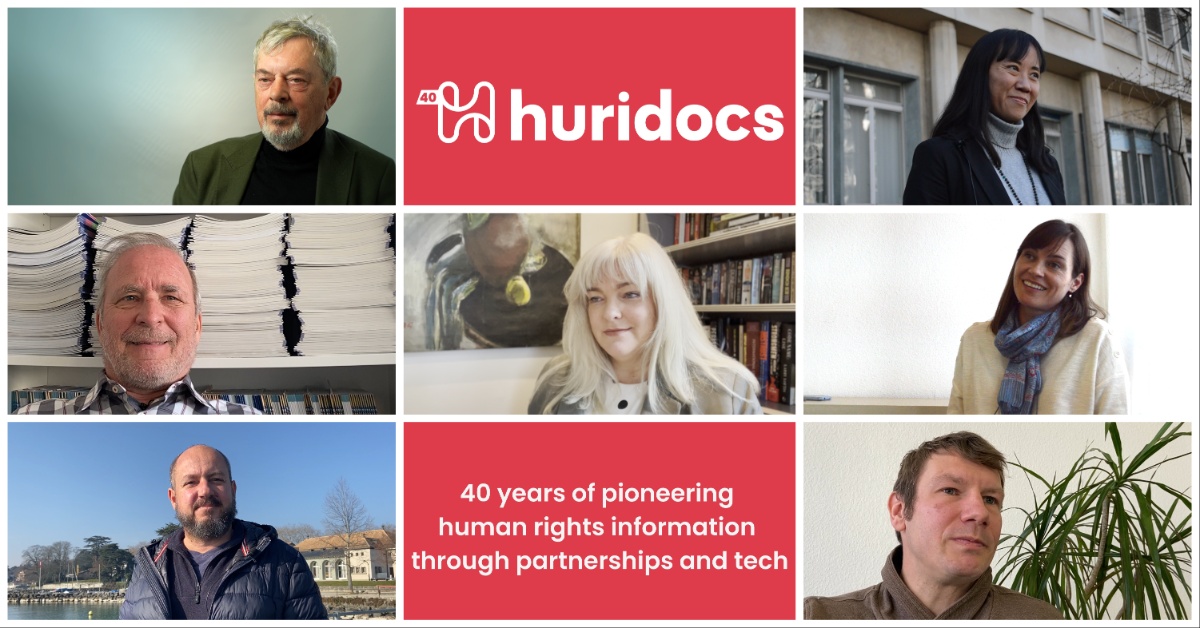
Join in exploring the vital role the NGO HURIDOCS plays in shaping the landscape of human rights today. Hear from past and present directors, board chair and senior documentalist about our ongoing impact (admittedly including my good self).

As HURIDOCS celebrates 40 years of commitment to human rights, it shared a video which is not only a retrospective, but a testament to its ongoing role and impact in the world of human rights information.

In this video, the HURIDOCS team sat down with individuals who have been instrumental in shaping HURIDOCS throughout its history. This includes our co-founder, our senior documentalist, a dedicated board member, and past and present directors, all sharing their unique insights.

“Information has always been the key to human rights work and that is still the case. Being organised, sharp, learning from our history and not being afraid to go into the future fighting for truth, justice and human rights with all of the tools that are available to us. That is the civil society we want to see, that is the civil society we want to support!”

Danna Ingleton, HURIDOCS Executive Director

https://www.youtube-nocookie.com/embed/8UArMYSaMx8

Find out more about HURIDOCS’ history here. See also: https://humanrightsdefenders.blog/category/organisations/huridocs/

EU observes International Day to End Impunity for Crimes against Journalists:

November 2, 2023

Ahead of the International Day to End Impunity for Crimes against Journalists on 2 November, and in the year that marks the 75th anniversary of the Universal Declaration of Human Rights, High Representative Josep Borrell and Vice-President Věra Jourová issued the following statement:

“In these difficult times, marred by wars*, conflict and terrorist acts, we recall and praise the essential role played by journalists and media workers in fighting for the truth and for human rights. Journalists contribute to counter disinformation and hate speech and to keep checks and balances on governments and public institutions. They shed light on war crimes and human rights violations, sometimes at the risk of their own lives.

We firmly condemn the killings, physical attacks, arbitrary detentions, online and offline intimidation, harassment, and surveillance, that journalists at times face while exercising their profession. Media worldwide continue to be raided or closed, and journalists are increasingly targeted by legislation that curtails freedom of expression, and by abusive litigation, thus limiting pluralism, editorial independence, and infringing freedom of expression.

The EU remains committed to support independent journalists and media workers everywhere. We will continue to mobilise all the diplomatic tools at our disposal to raise attention to individual cases of journalists in detention or at risk. We have also established ProtectDefenders.eu to provide journalists at high risk with physical and digital protection, legal support, and relocation.

Under the Global Europe Human Rights and Democracy programme, the EU provides €185 million for support to independent media, harnessing digitalisation worldwide.

Protecting journalists means protecting our own rights. Democracy cannot work without free and independent media. This is why the EU is also taking unprecedented steps at home to protect journalists.

We call on Member States to implement the Commission Recommendation on the safety of journalists. The proposal for a Media Freedom Act aims to safeguard their independence and media pluralism. The Commission also took action to fight strategic lawsuits against public participation, which put pressure on journalists and want to silence them. These legislative proposals should be adopted swiftly to improve the environment in which journalists and media operate and to set global standards. See also: https://humanrightsdefenders.blog/2023/07/02/eu-directives-for-slapps-and-media-freedom-being-weakened-european-parliament-should-come-to-the-rescue/

The European Union stands with journalists around the world who, each and every day, exercise their freedom of expression for the benefit of us all.”

https://ec.europa.eu/commission/presscorner/detail/de/statement_23_5447

Not the moment for Switzerland to Suspend Funding for Human Rights Defenders in Israel and Palestine

November 2, 2023

On 1 November 2023 Erin Kilbride for Human Rights Watch wrote critically about a rather weird decision by the Swiss Government namely to suspend funding to 11 respected human rights organizations in Israel and Palestine.

The Swiss government says it plans to “carry out a fresh, in-depth analysis of all financial flows” and assess the “relevance and feasibility of programmes.” Earlier this month, European governments suspended more than $150 million in development aid, as Israel cut access to food, water, electricity, fuel, and medicines to more than 2.2 million people in Gaza, an act of collective punishment, which is a war crime under international humanitarian law.

The affected groups are: Adalah; Al-Shabaka; Gisha; 7amleh; Hamoked; Jerusalem Legal Aid and Human Rights Centre; MIFTAH: The Palestinian Initiative for the Promotion of Global Dialogue and Democracy; Palestinian Center for Human Rights; the Palestinian NGO Network; Physicians for Human Rights, and Women’s Center for Legal Aid and Counselling.

The West Bank, home to several organizations whose funding has been suspended, has seen a significant spike in Palestinians killed or held in administrative detention without charge or trial.

International support for local human rights defenders is a clear way to support protecting rights, documenting atrocities, and securing justice.

Switzerland made unequivocal commitments to stand with defenders in the Swiss Guidelines on the Protection of Human Rights Defenders (2014, revised 2019), the EU Guidelines on Human Rights Defenders (2008), and the OSCE Guidelines on the Protection of Human Rights Defenders (2014). This decision is hard to reconcile with those commitments.

The Swiss guidelines instruct representatives to support defenders’ security through media work, emergency protection programs, and pushing for investigations into attacks. The EU Guidelines provide, “the EU’s objective is to influence third countries to carry out their obligations to respect the rights of human rights defenders and to protect them from attacks and threats.”

Today, the work of Israeli and Palestinian human rights defenders is more critical than ever. Instead of leaving them in limbo, the Swiss government should maintain its funding of defenders while it conducts its review.

https://www.hrw.org/news/2023/11/01/switzerland-decides-suspend-funding-rights-defenders-israel-palestine

see also: https://www.nytimes.com/2023/11/02/opinion/israel-free-speech-hamas-palestine.html