Protection International opened the photo exhibition, ‘For those who died trying’ on the Place des Nations in Geneva on Monday, 9 May 2016. The exhibition run from 9-11 May and presented the photographs of 37 murdered or abducted human rights defenders in Thailand. It has toured or will be touring various countries (e.g. Thailand, Brussels, Pamplona) and as from 22 January 2017 a small town in the Netherlands, Dordrecht (www.defendersindordrecht.org), houses the images.
The project looks to remember those who died defending human rights and protecting the environment by placing a portrait of the human rights defender, where possible, at the exact place he or she was murdered or abducted. It is vital, for the victims and their families, that their fight and their death is not forgotten and left un-recognised. Ultimately, those responsible must be brought to justice. Recognising those who died trying as HRDs and a better administration of justice are critical steps to end these killings.
This is the second item addressing the world of human right defenders in 2017. I do this with an ‘old piece’ by Chris Stone, President of the Open Society Foundations, dating back to 21 December 2015 saying that across the globe, governments are shutting down spaces for civic engagement. Something that indeed has become evident.
It starts with the short video clip above in which George Soros, Binaifer Nowrojee, Mburu Gitu, and other experts discuss why this is happening—and how civil society can unite to prevent it.
All around the world, active citizenship is under attack and the space for civic engagement is closing—not just in countries that have struggled under repressive or autocratic governments, but also in democracies with longstanding traditions of supporting freedom of expression. There are many different reasons for this shrinking of the public space.
In some countries, especially newer democracies or countries undergoing political transitions, those in power are fearful of civic activism. Seeing its power, officials in governments with no previous experience regulating political protests or public debates have come down with a heavy hand, erring on the side of preventing change rather than encouraging it.
In other countries, including France and the United States—partly in response to the fear of terrorism—well-established civil liberties have been suspended or cast aside in the name of security. Such measures, from mass surveillance to martial law, reduce the space for civic life, the space where citizens do the work of improving our communities and societies.
Civil society is enormous in its size and diversity. We are members of the media, for-profit businesses, volunteer associations, political parties, trade unions, faith communities, private foundations, and nonprofit organizations. If we are united at all, we are united by our work outside of government and the state to advance the common good—even though we have different ideas of what that looks like.
Because the space we need for this work is closing, we must come together, understand our mutual dependence and interrelatedness, and support each other in this work. We must forge a new solidarity.
Network World of 3 January 2017 carried an interesting piece on Claudio Guarnieri who launched Security Without Borders which offers free cybersecurity help to journalists, activists and human rights defenders.
Security researcher Claudio Guarnieri has experience working with journalists and human rights organizations that have exercised freedom of speech, reported on some form of corruption and wound up becoming targets because of it. Their computers may be compromised with spying malware such as those in the hands of the Hacking Team, FinFisher or NSA to name but a few. Their electronic communications also may be intercepted, and their messaging programs may be blocked.At 33rd Chaos Communication Congress, or 33C3, Guarnieri presented “Hacking the World,” which is actually not a technical talk; more about “security activism.”[see his 26-minute talk on You Tube:
For all the wonderful things that the internet has given us, the internet also has been turned into a tool for repression. Nation states have deep pockets and use the imbalance to their own advantage. Technology has been used “to curb dissent, to censor information, to identify and monitor people.” ..Billions of dollars have been poured into surveillance—both passive and active.”Sadly, electronic surveillance and censorship have become so commonplace that nowadays people can get arrested for a tweet. There are places were dissidents are hunted down, using crypto is illegal, where sites are blocked and even internet access can be cut off. “Those who face imprisonment and violence in the pursuit of justice and democracy cannot succeed if they don’t communicate securely as well as remain safe online.”
Security “is a precondition for privacy, which is the key enabler for freedom of expression.” He was not implying that the security should come from big firms, either, since big security businesses often need contracts with the government and are dependent on the national security sector. So, Guarnieri turned to the hacker community and launched Security Without Borders, which “is an open collective of hackers and cybersecurity professionals who volunteer with assisting journalists, human rights defenders, and non-profit organizations with cyber security issues.”
The website Security Without Borders has a big red button labeled “Request Assistance.” Activists, journalists and human rights defenders are encouraged to reach out for help. The group of “penetration testers, malware analysts, developers, engineers, system administrators and hackers” from all walks of life offer cybersecurity help. We can assist with web security assessments, conduct breach investigations and analysis, and generally act as an advisor in questions pertaining to cybersecurity. As security services are often expensive to come by, SWB offers these services free to organizations and people fighting against human rights abuse, racism, and other injustices.
When requesting help, you are asked to give your name or organization’s name, an email address, a description of the work you do and what kind of help you need. Hackers and computer security geeks who support freedom of speech are also encouraged to reach out and volunteer their skills.
On 6 January 2017 the International Secretariat of the World Organisation Against Torture (OMCT) requested urgent intervention in the following situation in Greece.
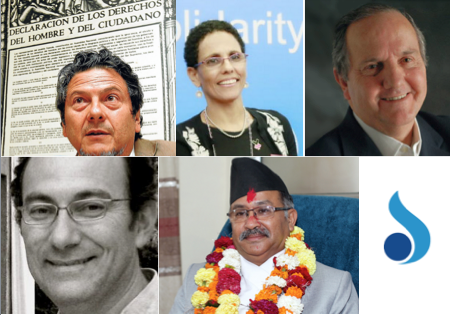
The following five new Commissioners have recently been elected: Mr Reed Brody (United States), Ms Roberta Clarke (Barbados/Canada), Professor Juan Mendez (Argentina), Mr Alejandro Salinas Rivera (Chile) and Justice Kalyan Shrestha (Nepal). It is an impressive list: Read the rest of this entry »
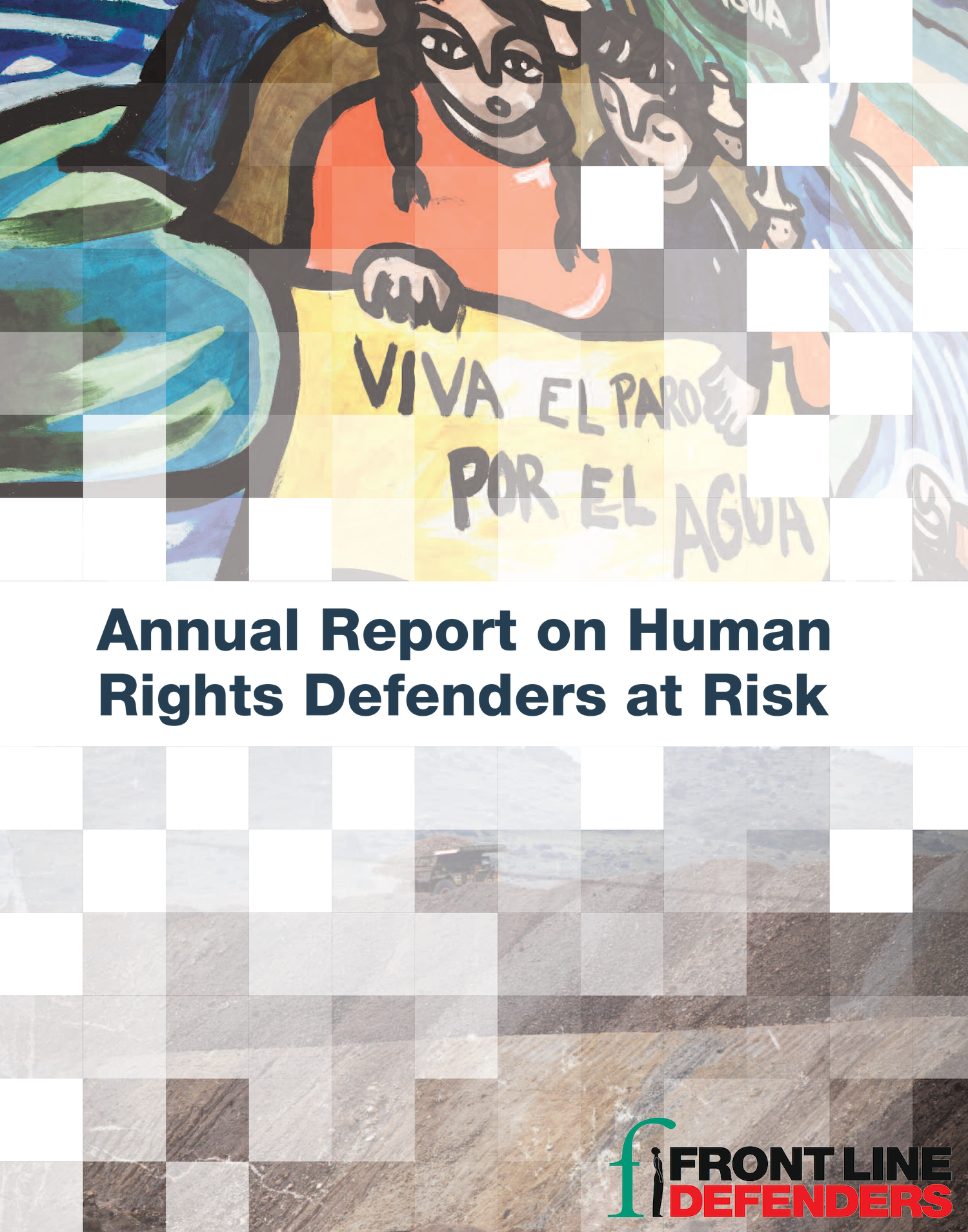
After a short break, this blog resumes its job of selecting and summarizing events related to Human Rights Defenders. 2016 was a horrible year for HRDs and the launch of the annual report of Front Line Defendersconfirms this by reporting that “more than 1000 human rights defenders were killed, harassed, detained, or subjected to smear campaigns and other violations in 2016″.
According to the report, 281 human rights defenders were murdered in 25 countries, 49 percent of whom were defending land, indigenous and environmental rights. Front Line Defenders found that in the vast majority of cases, killings were preceded by warnings, death threats and intimidation which, when reported to police, were routinely ignored. In addition to killings, over half of the cases reported by Front Line Defenders in 2016 concerned criminalisation, a tactic which the organisation calls “the first choice of governments to silence defenders and to dissuade others”.
Sam Berkhead of IJnet did on 21 December an interview with the Slovakian journalist and filmmaker Sara Cincurova to discusses her work to bring human rights to the forefront. She was chosen as Journalist of the month. In this context I draw attention to the “Speak Up, Speak Out: A Toolkit for Journalists Reporting on Gender and Human Rights Issues” which seeks to help journalists learn the basics of reporting on women’s and other human rights issues. It combines background information on international human rights mechanisms; guidelines on producing nuanced, objective reporting on rights issues; and practical exercises that walk users step-by-step through the production of a solid human rights story. The toolkit also helps journalists understand how international human rights mechanisms, laws and treaties work. Global in scope and written in an easy-to-understand language, the toolkit is intended to be used as a training aid in targeted journalism trainings around the world. It is available in English online as a free PDF download, with French, Arabic and Spanish language translations planned for the future. The toolkit is based on a series of trainings in human rights reporting that Internews conducted in several countries in Africa, Asia and the Middle East between 2009 and 2011. It was developed and produced by Internews’ Global Human Rights Program.
image courtesy of Sara Cincurova.
At age 26, the Slovakian journalist’s byline has appeared on sites like The Huffington Post, VoxEurop, Women’s WorldWide Web and openDemocracy. Her work has brought her to countries like the UK, France, Ukraine, Georgia, Burkina Faso and Indonesia, interviewing everyone from refugees at the “Jungle” refugee camp in Calais, France, to a Holocaust survivor. We spoke with her about her most noteworthy projects, finding the intersection between journalism and human rights and more:
IJNet: How did you get started as a journalist?
Cincurova: I have always been interested in human rights. I spent a year in Africa and in Asia, then I worked for a charity supporting women and children victims of domestic violence. I first started blogging in my home country, Slovakia. I remember that my first blog post about domestic violence had more than 10,000 entries within the first two days, and I also received a lot of emails from readers. So I started writing regularly for different media outlets, and that’s how it all started for me.
How has your work in advocating for victims of gender-based violence influenced the way you work as a journalist?
I think that trauma and abuse are always very difficult and intricate topics to report on. I have interviewed many experts on violence, and I try to use the skills that I have acquired whenever I’m interviewing victims of abuse, conflict, displacement, etc. I try to cover their stories as accurately and sensitively as possible. I also think that empathy is very important. Another thing is that I also try to focus on resistance and resilience, not just violence and victimhood.
What’s your favorite story you’ve worked on so far? What was challenging about it? How did you overcome those challenges?
Right now, I am working on an incredibly interesting article about Slovakians that hid Jewish families in their homes during World War II. I think it’s very important to share their stories today; they are a great inspiration for human rights defenders worldwide. Also, it’s very interesting to ask where their courage, kindness and motivation came from; many of them have risked their lives just to save another human being. To me, this project has been life-changing and changed the way I see human rights and resistance. I also think it’s important to share these stories today, in the current context.
The Office of the United Nations High Commissioner for Human Rights released a statement on Friday 16 December 2016 condemning the “daily violations” of human rights and international law faced by human rights defenders in the occupied Palestinian territory. A “worrying number of complaints” have been filed by human rights activists to the UN in recent months, which have highlighted in particular the Israeli government practice of arbitrarily detaining Palestinian activists “as a direct result of their important work in their communities.” The statement, which drew from the investigations of two UN special rapporteurs highlighted the cases of Issa Amro, founder of the Hebron-based group Youth Against Settlements, and Hebron-area lawyer Farid al-Atrash, who were both arrested for participating in a peaceful protest in February. [The march commemorated the 22 years since extremist American-born Israeli settler Baruch Goldstein opened fire on Muslim Palestinian worshipers killing 29 and injuring more than 120 in Hebron’s Ibrahimi mosque in 1994.]
Israeli officials later presented al-Atrash to the Ofer military court with charges amounting to “participating in an illegal demonstration” and “attacking soldiers”. Al-Atrash vehemently denied the charges, with video footage of the arrest corroborating his account, showing that he was standing and holding a poster peacefully in front of Israeli soldiers when he was pushed, dragged, and then violently arrested by a number of soldiers.
Meanwhile, Israeli authorities handed Amro 18 charges, ranging from “insulting a soldier” to “assault,” and “participation in a rally without a permit,” with some of the charges dating back to 2010. … “This relatively unusual practice of bringing up stale charges, which were not pursued many years ago, strongly suggests that Mr. Amro is being unfairly targeted due to his legitimate and peaceful human rights work,” the UN experts noted in Saturday’s statement. The UN experts said Amro’s current trial was part of a “concerted pattern of harassment and intimidation by the Israeli authorities aimed at inhibiting his work as a human rights defender.” Amro faces up to three years in prison. His attorney, Gabby Lasky, has submitted a motion to have 14 of the 18 charged dismissed on the grounds that those charges are several years old and in some cases the charges were already investigated and closed without indictment. Issa Amro’s arrest has garnered international attention—many see it as one of the most serious examples of Israel’s intent to clamp down on all forms of resistance—violent or non-violent. The hearings promise to be a landmark legal battle over what Israel will permit in terms of peaceful protest and the consequences that face those who engage in it. In 2010 he was named Human Rights Defender of the Year for Palestine by the Office of the United Nations High Commissioner for Human Rights (OHCHR), in 2011 he was a guest of the US State Department as part of their International Visitor Leadership Program. In a 2015 op-ed he wrote for The Guardian, Amro explained how he became involved in activism:“I read books by Martin Luther King, Mahatma Gandhi and Nelson Mandela. I became convinced that their non-violent method was the best strategy for community resistance.” Magdalena Mugrabi, Amnesty International’s Deputy Regional Director for the Middle East and North Africa says “Issa Amro has faced a sustained campaign of harassment and assault at the hands of the Israeli military and settlers because of his activism. His case is emblematic of the climate of increasing hostility towards activists who protest the settlements, which are illegal under international law.” She added, “The deluge of charges against Issa Amro does not stand up to any scrutiny. In their determination to silence him and stifle his human rights work, the Israeli authorities have apparently even reopened a closed case file. If he is convicted we will consider Issa Amro a prisoner of conscience.”
Palestinian journalist, human rights defender and Addameer media coordinator Hasan Safadi
The Special Rapporteurs also recalled the case of Hasan Safadi, media coordinator for Addameer human rights organization, whose three-month administrative detention order was renewed for an additional six months on 8 December. On 13 December Front Line issues an update on the extension of his administrative detention with an additional six months [Hasan Safadi was due to be released on 10 December 2016 from the Negev Desert (Ktziot) prison – where he is currently being held. Hasan Safadi has been in detention since 1 May 2016. – https://www.frontlinedefenders.org/en/profile/hasan-safadi]. On 27 October 2016 Hasan Safadi was sentenced to three months and one day imprisonment for visiting Lebanon, a country that is considered an enemy State under Israeli law. He had been placed in administrative detention on 1 May 2016 upon returning from an Arab youth conference in Tunisia.
The UN statement 0f 16 December went on to mention the case of Salah Khawaja, a member of the Stop the Wall Campaign, who was arrested in October and remains in detention without charges.
Human rights awards – one of my favorite topics [https://humanrightsdefenders.blog/?s=human+rights+awards] – come in many shapes and forms. Here two special ones: the first concerns a handicapped swimmer from Syria and other refugee related recipients (in Madrid) and the second a Turkish pianist (in Bonn).
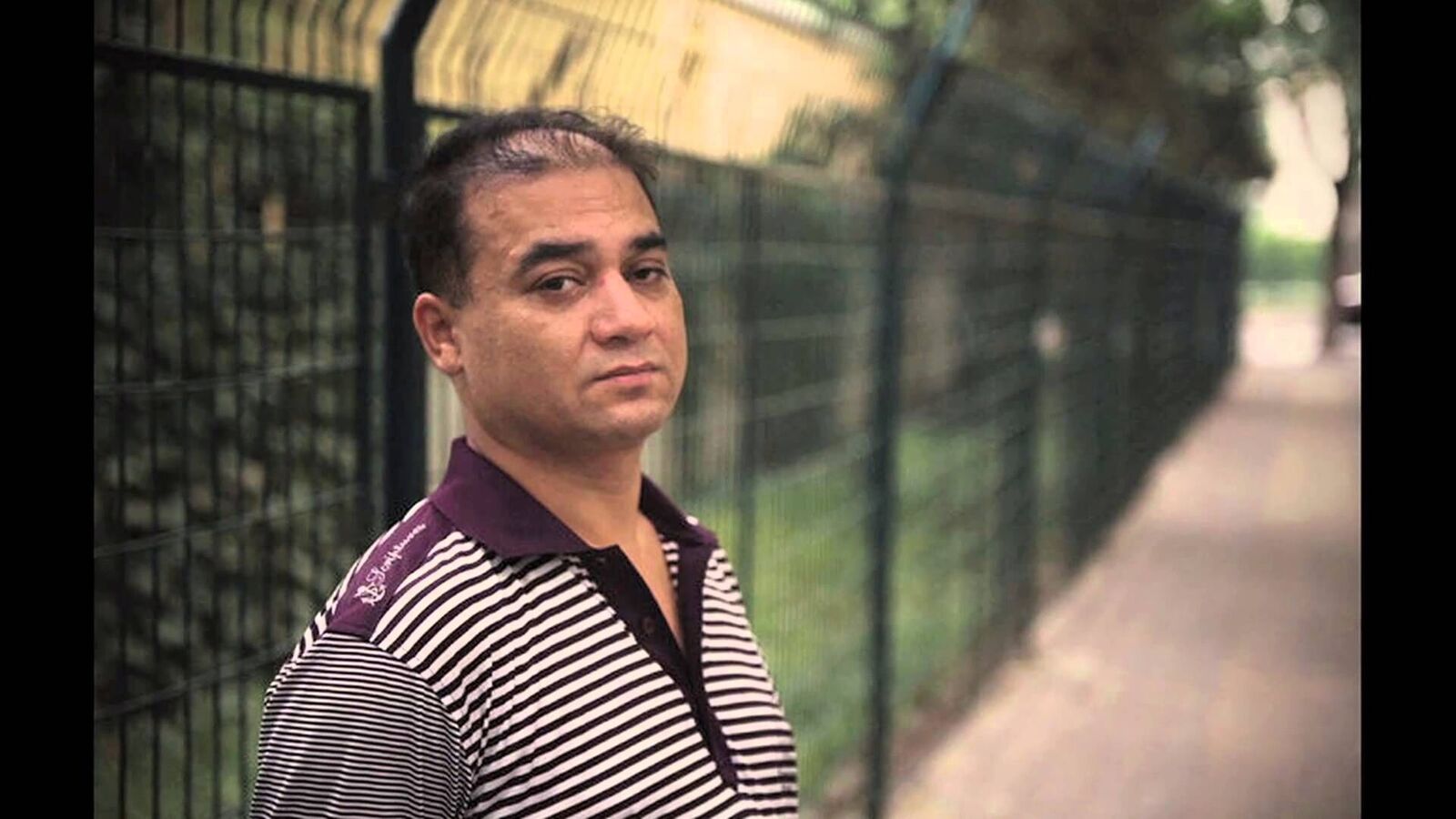
Just now, on 15 December 2016, the European Parliament adopted an urgent and substantive resolution on breaches of human rights, democracy, and rule of law in China. The resolution condemns in particular exactions committed in East Turkestan and Tibet against the Uyghur and Tibetan populations respectively and addresses the cases of the imprisonment of economics professor Ilham Tohti (MEA Laureate 2016) and the dismantling of Larung Gar, the largest Buddhist institute in the world. The EU demands Tohti’s immediate and unconditional release, recalling his scholarly work on Uyghur-Han relations. [https://humanrightsdefenders.blog/2016/10/11/hot-news-ilham-tohti-chinas-mandela-wins-2016-martin-ennals-awad/]




 Hans Thoolen on Human Rights Defenders and their awards