Human rights Lawyer Veysel Ok, who is also the Co-Director of the Media and Law Studies Association, will be awarded the Thomas Dehler Medal 2019 “for his work in advocating for freedom of speech and the rule of law in Turkey.”
The medal will be awarded to Ok in a ceremony to be held in Munich on April 5. Ok will receive his medal from Sabine Leutheusser-Schnarrenberger, the former Minister of Justice of the Federal Republic of Germany. In an announcement made by the Thomas Dehler Foundation, it has been stated, “Human rights lawyer Veysel Ok fights for the rule of law in Turkey like no other. He became known in Germany above all because he represented Welt correspondent Deniz Yücel in court. He also defends many other lesser known journalists. Veysel Ok fights fearlessly and also faces consequences, now he himself has been indictment.”
About Veysel Ok
Formerly a lawyer for many journalists in Turkey, including imprisoned former Taraf Editor-in Chief Ahmet Altan and columnist Şahin Alpay, Veysel Ok currently faces “denigrating the Turkish judiciary system” charges as per the Article 301 of the Turkish Penal Code (TCK) for an interview that he gave in 2015. As part of the Media and Law Studies Association’s (MLSA) work, where he is a co-founder and currently co-director, Ok continues to defend 11 imprisoned journalists including Nedim Türfent, Ziya Ataman, Salih Turan, İdris Yılmaz and İdris Sayılgan and many other journalists and academics.
The OSCE Office for Democratic Institutions and Human Rights(ODIHR) is pleased to offer a five-day training event on human rights monitoring and safety and security for human rights defenders (HRDs) working in three thematic areas: 1) human rights of Roma and Sinti, 2) human rights of people of African descent, and 3) environmental protection issues.
The objective of the training event is to enable human rights defenders (HRDs) to independently carry out quality and objective human rights monitoring activities in a safe and secure manner and taking into account relevant gender considerations. The event will take place in Montenegro from 27 to 31 May 2019, and will cover the human rights monitoring cycle and principles; physical safety and security of human rights monitors; and digital security, including secure information management. The language of the event will be English. The training will be based on interactive learning methods and requires a high level of active participation by all participants. During group exercises, participants will be divided based on their field of work/interest and coached by a senior professional expert. ODIHR will select up to eight participants per group.
The size of the entire group will be limited to 25 participants, selected according to the following criteria:
• Citizenship or residence in one of the OSCE participating States;
• Involvement as a human rights defender in one of the specified fields: environmental protection, human rights of Roma and Sinti, or human rights of people of African descent;
• Limited or no experience on human rights monitoring and reporting;
• No or limited previous training in safety and security (including digital security);
• Relevance of the training for future human rights activities in OSCE the region;
• Computer literacy;
• Fluency in English.
The OSCE/ODIHR recognizes as a human rights defender any person promoting and striving for the realization of human rights regardless of profession, age or other status. Human rights defenders carry out their human rights activities individually or jointly with others, as part of an informal group or as a non-governmental organization (NGO), and act in a voluntary capacity or professionally. ..The workshop is designed for activists with limited or no skills who can benefit fully from receiving the training. Accommodation and travel for the selected human rights defenders to attend the event will be covered by ODIHR.
Deadline for submission: 29th March 2019. If you have any questions about the content or the selection procedure of the training, please do not hesitate to contact David Mark david.mark@odihr.pl and Marine Constant at marine.constant@odihr.pl.
The ISHR reports that on 21 March 2019 the UN Human Rights Councilhas adopted a strong consensus resolution recognising the critical role of environmental human rights defenders in protecting vital ecosystems, addressing climate change, attaining the sustainable development goals (SDGs) and ensuring that no-one is left behind. [See also: https://humanrightsdefenders.blog/2019/01/09/front-line-defenders-says-record-number-of-activists-killed-in-2018/].
The resolution meets many of the civil society demands ISHR expressed in a joint letter along with more than 180 groups (see reference below). By formally acknowledging the important role of environmental human rights defenders, the Council highlights the legitimacy of their work, helps counter stigmatisation and can contribute to expanding their operating space. Though the resolution falls short in some key areas, its adoption by consensus is a positive step towards better protection of environmental human rights defenders. It must now be followed by implementation at the national level by all relevant stakeholders, including States, UN agencies, businesses and development finance institutions….
The resolution was led and presented by Norway, on behalf of 60 States from all regions. In particular, many Latin American States strongly supported the resolution, which is significant given the dangerous situation for defenders in many of those countries. The consensus on the protection of environmental human rights defenders is a welcome sign of unity by the international community in recognising their vital contribution to a biodiverse and healthy environment, to peace and security, and to human rights.
‘We now look to States, business enterprises and development finance institutions to take rapid and decisive steps to address the global crisis facing environmental human rights defenders’, said Michael Ineichen, Programme Director at the International Service for Human Rights. ‘This means States need to create protection mechanisms which guarantee the security of defenders. States must also ensure that businesses put in place specific policies and processes allowing for the inclusion of human rights defenders and their concerns in due diligence processes’, Ineichen said.
Expresses alarm at increasing violations against environmental defenders, including killings, gender-based violence, threats, harassment, intimidation, smear campaigns, criminalisation, judicial harassment, forced eviction and displacement. It acknowledges that violations are also committed against defenders’ families, communities, associates and lawyers;
Recognises that the protection of human rights defenders can only be achieved through an approach which promotes and celebrates their work. It also calls for root causes of violations to be addressed by strengthening democratic institutions, combating impunity and reducing economic inequalities;
Pays particular attention to women human rights defenders, by stressing the intersectional nature of violations and abuses against them and against indigenous peoples, children, persons belonging to minorities, and rural and marginalised communities;
Urges States to adopt laws guaranteeing the protection of defenders, put in place holistic protection measures for and in consultation with defenders, and ensure investigation and accountability for threats and attacks against environmental human rights defenders; and
Calls on businesses to carry out human rights due diligence and to hold meaningful and inclusive consultations with defenders, potentially affected groups and other relevant stakeholders.
While the resolution was adopted by consensus, the unity came at the price of a lack of specificity in certain areas. For instance, the resolution does not clearly recognise all of the root causes of the insecurity facing environmental human rights defenders, as documented by UN experts, nor comprehensively name the perpetrators or the most dangerous industries. It also fails to clearly spell out the human rights obligations of development finance institutions, and to detail the corresponding necessary steps to consult, respect and protect the work of environmental human rights defenders.
In two statements delivered to the 40th Session of the Human Rights Council, ISHR and Amnesty International reacted to the latest Joint Communications Report of the UN Special Procedures – independent human rights experts, appointed to monitor and report on human rights violations and to advise and assist in promoting and protecting rights. The report cites nine cases of reprisals against human rights defenders cooperating with the UN, and reveals that 95 states have not responded to letters from the UN experts concerning human rights violations.
There are two, related issues at stake here: (1) non-response to letters from the UN, and even worse (2) reprisals against human rights defenders who cooperate with the UN.
As Helen Nolan of ISHR explains, 35 States have recently failed to respond to two or more of these letters. 13 of these nations are members of the Council. ‘Repeat offenders are a particular concern,’ says Nolan. ‘India has failed to reply to a staggering 8 communications, Mexico 6, Italy 5, and Bangladesh and Nepal 4 each.’ Nolan emphasises that a failure to reply is a failure to cooperate, and welcomes the fact that the recently published report of the Annual Meeting of Special Procedures focuses on non-cooperation, including ‘more subtle forms’, such as selective cooperation with particular mandates. ‘To encourage cooperation, the Council must make non-cooperation more costly,’ says Nolan. ‘We urge the President of the Council to work closely with the Coordinating Committee of the Special Procedures to find ways to do this,‘ adds Nolan.
ISHR and Amnesty International’s second statement noted that under GA Resolution 60/251, Council members must ‘fully cooperate with the Council.’ Yet, the report cites nine cases of reprisals involving these members:
China sought to revoke the Society for Threatened Peoples’ ECOSOC status after vexatiously alleging that a person accredited by them, Dolkun Isa, participated in incitement and funding of separatism and terrorism, in retaliation for cooperation with the UN;
Egypt carried out forced evictions, and violations of the rights to physical integrity, liberty and security against individuals who cooperated with the Special Rapporteur on the right to adequate housing during her recent visit;
Iraq carried out unlawful arrest, enforced disappearance and torture against Imad Al Tamimi and intimidated and threatened Israa Al Dujaili for cooperating with the UN;
Libya arrested an individual in retaliation for taking steps to clarify the fate and whereabouts of his father, including with UN mechanisms;
The Philippines labeled defenders “terrorists” in reprisal for their engagement with the UN;
Russia surveilled, intimidated and harassed Yana Tannagasheva and her husband, for speaking out about impacts of coal mining on indigenous people in Siberia and in possible reprisal for their communication with UN mechanisms;
Turkmenistan carried out reprisals against a defender and her husband for her cooperation with the UN; and
In Yemen, forces loyal to President Hadi and the Saudi-led coalition detained human rights defenders Radhya Al-Mutawakel and Abdulrasheed Al-Faqih for cooperating with the UN.
Nishita, JhaBuzzFeed, reports on 20 March 2019 that many women who were slated to participate in the UN Commission on the Status of Women have been denied visas, especially lawyers, activists, and women who deliver reproductive health care services from African and Middle Eastern countries that fell under Donald Trump’s travel ban.
The International Service for Human Rights said it was aware of at least 41 women who have been denied visas to attend the conference this year — but this figure is said to be only “the tip of the iceberg” and likely to increase.
Women who wanted to attend CSW this year from countries like Iran, Sudan, Zimbabwe, and Syria were asked to provide supporting documents like marriage certificates, proof of property ownership, letters stating employment status, proof of finances, and even proof of birth certificates or proof showing that they have children, according to the petition.
Lyndal Rowlands, advocacy officer with the UN-accredited organization CIVICUS, told BuzzFeed News that among all the people that were denied visas, women from countries that fell under the Trump administration’s travel ban were disproportionately affected. “Last year and this year we have also heard of women from Pakistan and Nepal who were denied visas,” she said. …Most of the women applying for visas, Rowlands said, had not traveled to the US before — a deliberate decision by organizers who wanted a diverse range of women present at the United Nations, not just pundits and experts who travel all the time but women who work at the grassroots.
“It’s essential that women who are at the front lines working on women’s rights are present when their rights and the rights of the women they serve are being discussed,” she said. “Governments and UN officials that attend the conference can make better policies when they are informed by the experiences of women who face some of the biggest uphill battles when it comes to fighting for gender equality — for example, delegates who were unable to attend include lawyers and advocates who represent women who have been imprisoned for their activism, [and] women who deliver reproductive health care services.”
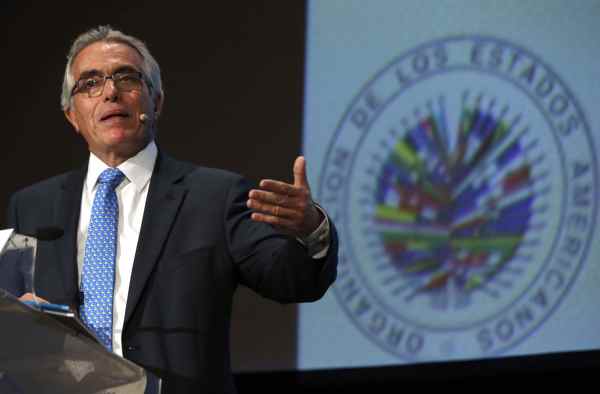
Morocco World News reports on 20 March 2019 that Morocco deeply regrets and denounces UN special rapporteur on the independence of judges and lawyers Diego Garcia-Sayan’s decision to cancel his official visit to the country. The Moroccan government addressed Garcia-Sayan’s statement, published Tuesday, 19 March, on the United Nations High Commissioner for Human Rights (OHCHR) website, in which he declared that he would not visit Morocco on an official trip set for March 20-26.
Garcia-Sayan said he canceled the visit because the “government of Morocco has not been able to ensure a programme of work in accordance with the needs of the mandate and the terms of reference for country visits by special procedures.” In response, the Moroccan government stated that Garcia-Sayan’s decision contradicts his earlier stand when he first began preparations for the visit on June 16, 2017, at the invitation of Morocco.
According to the government, Morocco has been keen on ensuring all the necessary “guarantees” for the success of Garcia-Sayan’s visit by including all the suggested places for him to visit to exercise his mission, contrary to what the rapporteur stated. Garcia-Sayan stated: “It is most regrettable that the suggestions of places to visit and schedule of work were not fully taken into consideration by the Government. It is an essential precondition for the exercise of the mandate of Special Rapporteur that I am able to freely determine my priorities, including places to visit.” Morocco stressed the country’s readiness to make any amendments Garcia-Sayan requested to enable him to exercise his mandate as required.
Garcia-Sayan’s visit was to examine the independence and impartiality of judges and prosecutors and the independence of lawyers.
The HRW festival in London is still running (https://ff.hrw.org/london) but others have finished and here is a selection of the wining films:
ONE WORLD FESTIVAL
The film Heart of Stone has taken the Best Film prize at this year’s edition of the One World festival of human rights documentaries in Prague. The winning documentary is about an Afghan refugee in France. The Best Director award went to Denmark’s Mads Brugger, maker of Cold Case Hammarskjold.
Endowed with CHF 10,000 – Offered by the City and State of Geneva: Delphine et Carole, Insoumuses, by Callisto McNulty Learn more
Gilda Vieira de Mello Prize in tribute to her son Sergio Vieira de Mello
Endowed with CHF 5,000 – Offered by the Barbara Hendricks Foundation for Peace and Reconciliation: On her Shoulders, by Alexandria Bombach Learn more
Youth Jury Prize
Endowed with CHF 500 – Offered by Peace Brigades International (PBI): Still Recording, by Ghiath Ayoub and Saeed Al Batal Learn more
Endowed with CHF 500 – Offered by the Eduki Foundation: Carmen y Lola by Arantxa Echevarría Learn more
Grand Prize for Fiction
Endowed with CHF 10,000 – Offered by the Hélène and Victor Barbour Foundation: The Boy Who Harnessed the Wind, by Chiwetel Ejiofor Learn more
Prize of OMCT
Endowed with CHF 5,000 – Offered by the World Organization Against Torture: Congo Lucha, by Marlène Rabaud Learn more
——-
And there is an award-winning Bahamian film “Cargo” which is being shown in cinemas: At the age of 9, Bahamian writer/director Kareem Mortimer saw haunting images of the bloated bodies of Haitian would-be migrants washed up on a beach. Apparently they were trapped and locked in the hold of a ship by a smuggler who did not have the decency to set them free. It was this experience that inspired him to make the drama/thriller feature film Cargo. The film previously debuted in Aruba, Bahamas, Barbados, Curacao, Jamaica, Guyana, Grenada, Suriname and St Lucia and will be released in the Trinidad, US and Canada in the summer. It has won five awards: Best Feature, Silicon Valley African Film Festival; Bahamian Icon Award; Best Film, Haiti International Film Festival, Los Angeles; Trident Award, Barbados Independent Film Festival; and Amnesty International Human Rights Prize for Film, TT Film Festival in 2017.
On 18 March, 2019 it was announced that the Equal Justice Initiative and its founder Bryan Stevenson will be awarded the Thomas J. Dodd Prize in International Justice and Human Rights at the University of Connecticut’s Thomas J. Dodd Research Center on 6 November. For more information on this and other human rights awards, see: http://www.trueheroesfilms.org/thedigest/awards/thomas-j-dodd-prize-in-international-justice-and-human-rights
“The selection committee was singularly impressed by the commitment, courage, and creativity of Bryan Stevenson and his colleagues at the Equal Justice Initiative,” said Glenn Mitoma, Director of the Thomas J. Dodd Research Center. “I look forward to welcoming Bryan and Equal Justice Initiative to UConn, both to honor them and to draw inspiration for our own work at the Dodd Center.”
Stevenson, the founder and executive director of the Equal Justice Initiative, has successfully argued cases before the U.S. Supreme Court, including a recent historic decision that found mandatory life-without-parole sentences for children 17 or younger are unconstitutional.
Under Stevenson’s direction, the organization has won major legal challenges to excessive sentencing and illegal convictions, including reversals, release, or relief for over 145 wrongly condemned prisoners on death row. The group’s education and advocacy efforts include the Community Remembrance Project, which seeks to recognize the victims of lynching by erecting historical markers at lynching sites, and the opening of the National Memorial for Peace and Justice and the Legacy Museum. The museum and memorial are part of Equal Justice Initiative’s work to advance truth and reconciliation around race in America and to more honestly confront the legacy of slavery, lynching, and segregation.
For details about the arrest, please see the link below to HRW
AnEU spokesperson on 19 March stated:
“We believe that the sentencing of Oyub Titiev is directly connected to his human rights work for Memorial, an organisation that has been the subject of ongoing intimidation and harassment in the North Caucasus and beyond. We also believe that Mr Titiev has not received a fair trial. His sentencing continues a trend of arrests, attacks and discrediting of human rights defenders and journalists who work in that region of the Russian Federation. Mr Titiev’s predecessor as head of Memorial in Chechnya, Ms Natalia Estemirova, was killed in 2009 and, almost ten years later, not a single person has yet been brought to justice for this crime,”.
“The European Union expects Mr Titiev to be released immediately and unconditionally. The Russian Federation freely entered into commitments, first in Helsinki in 1975 and later in Copenhagen in 1990, to ensure “the right of everyone, individually or in association with others, to seek, receive and impart freely views and information on human rights and fundamental freedoms, including the rights to disseminate and publish such views and information.” We expect these commitments to be upheld”.
On 17 March 2019, the New York Times reported that the Crown Prince (MBS) authorised a clandestine campaign against Saudi dissenters and human rights defenders well before Jamal Khashoggi’s murder.
The Rapid Intervention Group was authorised by Crown Prince Mohammed bin Salman US officials told the NYT [File: Reuters]
More than a year before the killing of journalist Jamal Khashoggi, Saudi Arabia’s powerful Crown Prince Mohammed bin Salman, also known as MBS, approved a secret campaign to silence dissenters, the New York Times has reported. The campaign included surveillance, kidnapping, detention and torture of Saudis, said the report published on Sunday citing the US officials who have read classified intelligence reports about the effort. American officials referred to it as the Saudi Rapid Intervention Group, the Times said. [see also: https://humanrightsdefenders.blog/2019/03/08/saudi-arabia-for-first-time-openly-criticized-in-un-human-rights-council/]
…..At least some of the clandestine missions were carried out by the members of the team that killed and dismembered Khashoggi in October at the Saudi consulate in Istanbul, suggesting his murder was part of a wider campaign against dissidents, the report said, citing the US officials and associates of some Saudi victims. These members were involved in at least a dozen operations beginning in 2017, the officials said, including forcibly repatriating Saudis from other Arab countries.
According to the New York-based newspaper, the Rapid Intervention Group has been involved in the harassment of arrested prominent human rights activists and women’s rights defenders, including Loujain al-Hathloul, Aziza al-Yousef and Iman al-Najfan.
Alia al-Hathloul says that al-Qahtani attended several such sessions to torture her sister. He also threatened to kill Loujain and throw her body into the sewers, Alia says. According to the newspaper, the women were beaten, subjected to electric shocks, waterboarding, and threatened with death and rape during the interrogations. Loujain’s sister says that at first the Saudi authorities did not send the arrested women to jail, but in a secret location in the Red Sea city of Jeddah. According to US intelligence assessment, the brutal interrogations prompted university professor al-Najfan to attempt suicide. [see also: https://humanrightsdefenders.blog/2019/03/13/saudi-arabia-persist-with-trial-for-women-human-rights-defenders/]
Saudi officials declined to confirm or deny that such a team existed, or answer questions from the Times about its work.


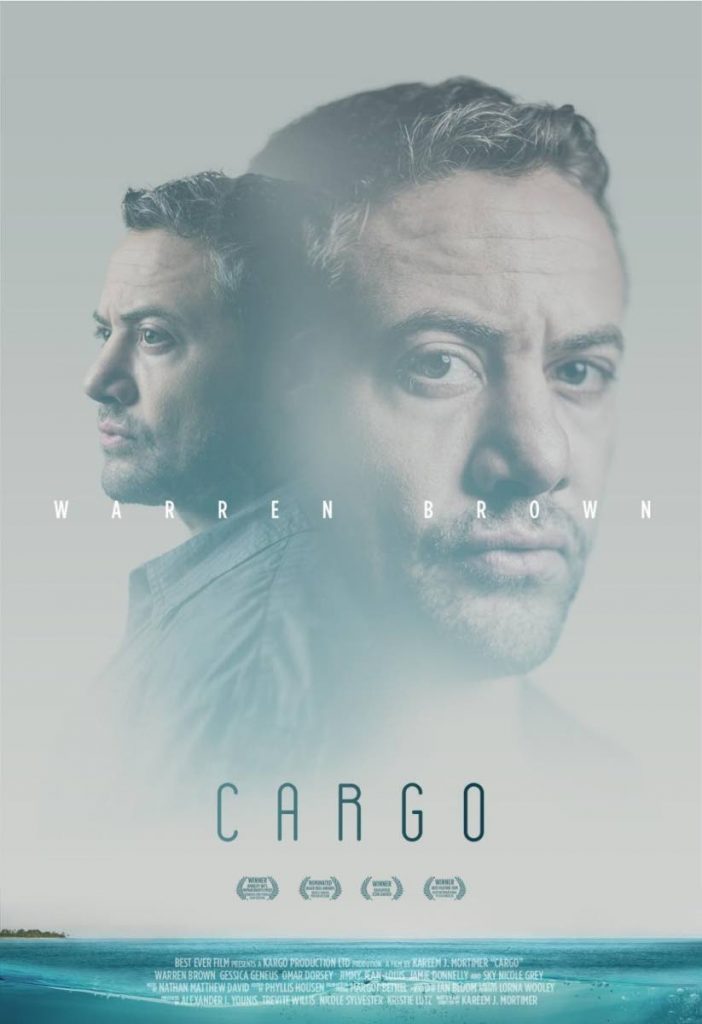 The poster for the film Cargo.
![The Rapid Intervention Group was authorised by Crown Prince Mohammed bin Salman and overseen by Saud al-Qahtani, a royal court insider, US officials told the NYT [File: Reuters]](https://www.aljazeera.com/mritems/imagecache/mbdxxlarge/mritems/Images/2019/3/18/0c7afea9191a495d897a8c10cb213cc4_18.jpg "MBS approved 'intervention' against dissidents: NYT report")
 Hans Thoolen on Human Rights Defenders and their awards