Archive for the 'Human Rights Defenders' Category

Victor Madrigal-Borloz, the U.N. independent expert on sexual orientation, speaks out

October 31, 2019
Victor Madrigal-Borloz
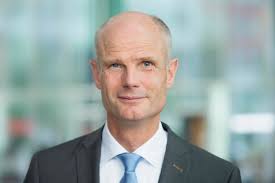
Victor Madrigal-Borloz, the U.N. independent expert, is now in residence at Harvard Law School. Kris Snibbe/Harvard Staff Photographer

Costa Rican magistrate Victor Madrigal-Borloz has served for the past 21 months as the U.N. independent experton protection against violence and discrimination based on sexual orientation and gender identity. The Gazette interviewed Madrigal-Borloz, who is the Eleanor Roosevelt Senior Visiting Researcher with the Human Rights Program at Harvard Law School, to talk about his work and his hopes for the future:

GAZETTE: Why did you decide to take on this role?

MADRIGAL-BORLOZ: I have been working in the field of human rights for over 20 years and I saw the possibility to bring about substantial change. The topic bears a lot of significance to me, as a gay man myself. I have been working on these issues for over a decade, first at the Inter-American Commission [on Human Rights] and now at the global level. I have seen many people suffer as a result of stigma and discrimination, and this was a once-in-a-lifetime opportunity to do something about it and put my skills at the service of a cause.

GAZETTE: What did your report find in terms of the root causes of violence and discrimination against LGBT people?

MADRIGAL-BORLOZ:There are primary and secondary root cases. First, there is the notion that societies are structured around certain power relations, which have been designed in relation to a person’s sex. Your role in society is determined by your genital configuration. That’s a very basic construction, and all forms of violence and discrimination come from a defense of those power relations. The other factors come from mechanisms that aim to protect those power relations, such as the idea that gay, lesbian, or trans people don’t exist, and the stigma around them, which is enabled through the message that gay, trans, bisexual, and lesbian people are sick or mentally ill. The other aspect is criminalization. Same-sex relations are still criminalized in 69 countries, which means that, as of today, over 2 billion people live in countries where being gay or lesbian is illegal. Another factor is demonization expressed in the notion that somehow LGBT lives are sinful, immoral; that gays or lesbians cannot be good citizens. The idea is that at the end of the day, there’s something immoral about our existence, and that’s what all of us need to fight against.

GAZETTE: Of your findings, which ones struck you the most?

MADRIGAL-BORLOZ:What disturbs me is that in 2019 there are countries that are considering bringing back the death penalty for same-sex relations. There was a discussion in Uganda about it, and early this year Brunei Darussalam enacted legislation allowing the stoning of gay men. That, to me, is shocking. What I also find surprising is that there are environments that are actually extremely progressive when it comes to gender identity, but can be very restrictive when it comes to sexual orientation and vice versa. In Pakistan, for example, there is an extremely forward legislation on the recognition of gender identity, but sexual orientation is very much criminalized. Sexual orientation has always been a more challenging notion for societies, which in general have used the notion of a traditional binary, hetero-parental family as the nucleus of society, and this has been recognized in public discourse and in the law. But what we also know is that homosexuals, lesbians, and bisexuals have existed and sought happiness all throughout history.

GAZETTE: What policies or practices have been the most successful in the protection of LGBT rights?

MADRIGAL-BORLOZ: Anti-discrimination legislation with the words sexual orientation and gender identity is very important because it allows for all actors in the system to understand that a red line has been drawn and that shouldn’t be crossed. This creates the belief that lesbian, gay, trans, bisexual, or gender-diverse people are entitled to protection. Other good practices are policies aiming at promoting integration of LGBT people in society and campaigns to change hearts and minds.

Let me give you an example. About a year ago, the Inter-American Court of Human Rights issued an advisory opinion, OC-24, which determined that Costa Rica and other countries in the continent must implement same-sex marriage, and it gave a time frame for that. Despite the fact that this created great polarization in Costa Rica, the Costa Rican state has now put together a campaign called “Yes, I do,” or in Spanish, “Si, Acepto,” which focuses on the parents of gay and lesbian children and their reasons why they support gay marriage and why their children are entitled to happiness.

Another good measure is access to justice, and this means that judges have to actively seek to implement the principle of nondiscrimination when it comes to LGBT rights. That’s what the Supreme Court of India, the Supreme Court in Botswana, and the High Court in Trinidad and Tobago did when they voted to decriminalize gay sex in their respective countries.

GAZETTE:How do you explain the dramatic advances in the protection of LGBT rights in regions such as Latin America, where same-sex marriage is now legal in five countries?

MADRIGAL-BORLOZ:It’s the work of civil society and human-rights defenders and advocates who have fought relentlessly for their rights. I began working on these issues over a decade ago, and at that time the trans movement in South America was strong. An extraordinary trans activist in Argentina, Lohana Berkins, used to say that trans women must expose the audacity of their bodies to the society that fails to understand the fragility of their lives. The average life expectancy of a trans woman in Latin America is 35 years, and that’s what Berkins was talking about. It was her voice and those of other great fighters in the LGBT movement that forced people to see their humanity, and ensured that Argentina, Uruguay, and other countries in the continent have the most advanced legislation on legal recognition of gender identity.

GAZETTE:Which countries are the worst and best performers in terms of LGTB rights?

MADRIGAL-BORLOZ:I have a lot of resistance to ranking countries, because things change very fast. Most of these rights are not necessarily enshrined or written in stone; there are forces in societies that are quite keen on seeing them taken back. We live in times in which rising populism uses certain categories of people, such as LGBT communities, as pawns for their political objectives. But I can say that the most problems arise in the countries where gay sex is criminalized, and they are roughly distributed along the Caribbean, sub-Saharan Africa, some regions of Asia, and the Middle East. It’s not a small part of the world. Criminalization forces people to live underground, and often the situation of those whose existence is considered criminal is devastating. The killing of trans women, for example, has been invisible from public records because they are classified as men. And the levels of violence against lesbian women and gay men all over the world is worrisome.

GAZETTE: Why have there been more gains in protection of sexual orientation than gender identity, and what does it say about the possibility of social change?

MADRIGAL-BORLOZ:There is a certain concentration of power and influence within gay and lesbian, or cisgender, urban populations. They have been able to represent their valid agendas in the political debate. On issues of concern for the gay and lesbian urban upper and middle class, there has been more progress than on those concerning trans women or trans men coming from the countryside. But those gains show that social change is possible within one generation. Those of us who were born in the ’60s have seen the world change from a majority of countries criminalizing and pathologizing LGBT identities to a majority of countries embracing the richness that comes from diversity.

Social change is possible when the prime minister of Luxembourg speaks at the General Assembly last week, and declares “I was never hoping to be the gay prime minister. I just happen to be the gay prime minister.” When political leaders take part in a pride parade, they are changing the views that people have about LGBT people. I’ve had the honor of marching alongside Justin Trudeau in Vancouver, and the first lady of Costa Rica in pride parades. That makes me hopeful, but also the fact that the new generations have changed their paradigm of thinking; they embrace the notion that their existence is not determined by rigid notions of gender. That is a great source of inspiration.

But I worry that for some, the change will not come fast enough. Elderly LGBT people are suffering enormous health disparities, and after living their lives in inclusive environments, they are being forced to go back into the closet as they move to retirement communities that are not prepared to cater for their needs. They deserve happiness now.

GAZETTE: What would you like to see happening before your tenure as the U.N. independent expert ends in 2020?

MADRIGAL-BORLOZ:My dream is to see a world free of criminalization of same-sex relations by 2030. Given the fact that international human rights law considers criminalization of same-sex relations a violation of human rights, I see no reason why states would actually get away with continuing this practice past 2030. That’s what I like to dream about.

A global look at LGBT violence and bias

Human Rights and Counter-Terrorism issues at the UN

October 31, 2019

and in JustSecurity of 30 October 2019 publilshed a long article on the travails of the mandate “Human Rights and Counter-Terrorism” in the United Nations.

The authors then try to explain why other countires went along with Egypt’s intention to divert attention and resources from addressing human rights violations. [see e.g. https://humanrightsdefenders.blog/2019/10/19/egypt-all-you-can-think-of-widespread-arrests-torture-allegations-cyber-attacks/]

..

For states to treat Egypt as a reliable partner by allowing it joint leadership on the UN resolutions on human rights and terrorism only helps to provide cover for and perpetuate this egregious pattern, with serious consequences for the lives and dignity of Egyptians seeking to exercise their fundamental rights. The 74th session of the UN General Assembly Third Committee is an important opportunity for states to not only end their misguided acquiescence in Egyptian efforts to undermine UN work on terrorism and human rights, but also to restore the long legacy of Mexican leadership on the resolutions. In addition to the reasons identified in Saul’s Lawfare piece (which we won’t repeat here), several factors make this particular General Assembly resolution potentially an even more impactful moment.

In this moment, member states should recognize that a continuation of a Mexico-Egypt merged resolution on “terrorism and human rights” holds no promise of positive results for human rights. Now is the time for UN members to turn the tables and take a principled and strategic position: if Egypt will not agree to restoring key normative provisions previously lost, vigorously reinforcing rather than eroding support for the existing focus of the Special Rapporteur mandate, and laying the appropriate groundwork for a strong GCTS review in 2020, then states should insist that the merger be brought to an end and go back to the consensus text of resolution A/72/180.

Keeping Human Rights and Counter-Terrorism in Focus at the UN

NSO accused of largest attack on civil society through its spyware

October 30, 2019
I blogged about the spyware firm NSO before [see e.g. https://humanrightsdefenders.blog/2019/09/17/has-nso-really-changed-its-attitude-with-regard-to-spyware/], but now WhatsApp has joined the critics with a lawsuit.

On May 13th, WhatsApp announced that it had discovered the vulnerability. In a statement, the company said that the spyware appeared to be the work of a commercial entity, but it did not identify the perpetrator by name. WhatsApp patched the vulnerability and, as part of its investigation, identified more than fourteen hundred phone numbers that the malware had targeted. In most cases, WhatsApp had no idea whom the numbers belonged to, because of the company’s privacy and data-retention rules. So WhatsApp gave the list of phone numbers to the Citizen Lab, a research laboratory at the University of Toronto’s Munk School of Global Affairs, where a team of cyber experts tried to determine whether any of the numbers belonged to civil-society members.

On Tuesday 29 October 2019, WhatsApp took the extraordinary step of announcing that it had traced the malware back to NSO Group, a spyware-maker based in Israel, and filed a lawsuit against the company—and also its parent, Q Cyber Technologies—in a Northern California court, accusing it of “unlawful access and use” of WhatsApp computers. According to the lawsuit, NSO Group developed the malware in order to access messages and other communications after they were decrypted on targeted devices, allowing intruders to bypass WhatsApp’s encryption.

NSO Group said in a statement in response to the lawsuit, “In the strongest possible terms, we dispute today’s allegations and will vigorously fight them. The sole purpose of NSO is to provide technology to licensed government intelligence and law enforcement agencies to help them fight terrorism and serious crime. Our technology is not designed or licensed for use against human rights activists and journalists.” In September, NSO Group announced the appointment of new, high-profile advisers, including Tom Ridge, the first U.S. Secretary of Homeland Security, in an effort to improve its global image.

In a statement to its users on Tuesday, WhatsApp said, “There must be strong legal oversight of cyber weapons like the one used in this attack to ensure they are not used to violate individual rights and freedoms people deserve wherever they are in the world. Human rights groups have documented a disturbing trend that such tools have been used to attack journalists and human rights defenders.”

John Scott-Railton, a senior researcher at the Citizen Lab, said, “It is the largest attack on civil society that we know of using this kind of vulnerability.”

https://www.newyorker.com/news/news-desk/whatsapp-sues-an-israeli-tech-firm-whose-spyware-targeted-human-rights-activists-and-journalists

https://uk.finance.yahoo.com/news/whatsapp-blames-sues-mobile-spyware-192135400.html

After two years, justice for 14 woman human rights defenders in Poland

October 30, 2019

It was 11 November 2017 at the Independence Day march in Warsaw. For some years now this annual event, organised to mark Poland’s independence, had been tainted by the presence of some nationalist groups advocating “Europe will be white or deserted,” displaying racist and fascist symbols, while marching holding flares and throwing firecrackers on the streets of Warsaw. In 2017, these women decided it was time to act. As they unfurled a banner reading “Fascism Stop,” their peaceful protest against hate caused fury among the marchers. Video footage shows people reacting by kicking, spitting and screaming at them. They were called “sluts,” “lefty scoundrels” and “whores.” They were pushed, jostled, grabbed by the neck and dragged onto the pavement, suffering bruises and cuts. One of the women lost consciousness after being dropped on the ground and needed medical help. The authorities initially closed the investigation into the attacks with an absurd justification. But after the women appealed in February 2019, a judge ordered the investigation into the violence to be re-opened. However, adding insult to injury, the women were themselves charged with obstructing a lawful assembly and fined. And so their battle for justice began…..

Tomasz Stepien
The women being attacked at the Independence Day march in 2017.Tomasz Stepien

One by one the women stood up, said their full names and stated proudly that they wanted to be found ‘not guilty.’ Kinga, the last of them to speak, explained bluntly and movingly what compelled her to stand against hate on that night: ‘My grandfather was wounded in the battle of ’39. My mother went to the Uprising. My stepfather was in the home army in Kielce. My grandmother worked in a hospital. They are now dead and I am happy because I would not like them to see what is happening today.’

As the judgement was announced, suddenly I heard relieved sighs around the room. I turn to my colleague asking “what did he say?” and she confirmed: “They are not guilty! They are not guilty!” The judge upheld their rights to freedom of expression and freedom of assembly and, significantly, he told the women, “You were right.” As he finished, the room burst into a round of applause in celebration.

This case started with injustice but has finished with justice, and a message that fascism and hatred will not be tolerated in Poland.

https://www.euronews.com/2019/10/29/the-day-justice-was-finally-served-in-poland-for-vindicated-anti-fascist-campaigners-view

FIDH makes fresh start with Congress in Taiwan and new Board and President

October 28, 2019

Botswana human rights defender Alice Mogwe, newly elected president of the FIDH, says: “The universality of human rights is under attack – we must fight back!

The member organisations of the International Federation for Human Rights (FIDH) elected their new president during its 40th Congress in Taiwan. Alice Mogwe, will lead the Federation for the next three years, ushering in its 100th anniversary in 2022. In December 2018 Alice Mogwe was the first civil society leader to address the United Nations General Assembly on behalf of over 250 human rights defenders from around the world. [https://humanrightsdefenders.blog/2018/12/17/tuesday-18-december-first-time-a-human-rights-defender-addresses-un-general-assembly/] As founder and director of DITSHWANELO – the Botswana Centre for Human Rights – she has spearheaded efforts to advance human rights in Botswana and its Southern African neighbours.
Our fellow human rights defenders the world over are criminalised, disappeared, threatened, and even killed. The space given to us to express ourselves is shrinking. It is thus more important than ever to emphasize that our values are universal and that we must fight back!” declared Alice Mogwe. Ms. Mogwe’s academic background in law, public policy, African studies, and mediation has served her well in advocating for the rights of indigenous peoples, women, LGBTI+ communities, children, migrants and refugees. She also fought for the abolition of the death penalty in Botswana and Africa, and for demanding accountability from the extractive industry in her native country. “We must amplify local voices at regional and international levels. Member organisations are the lifeblood of FIDH; our strength lies in our diversity.

During her three-year mandate, Ms. Mogwe’s priorities will include:
• Strengthening the work of FIDH to raise attention and protect human rights defenders, who face an unprecedented wave of attacks all over the world. Responding to the closure of civic space through programmes providing rapid and practical support for human rights defenders;
• Protecting human rights defenders from digital surveillance and tracking, fostering safe and effective use of technology by human rights defenders, indigenous communities, ethnic, religious, linguistic minorities, and others;
• Strengthening horizontal cooperation between the Federation’s members, both intra- and inter-regionally, to fully utilise their collective power and capabilities. During the Congress, 16 new organisations were approved to join FIDH, increasing its membership to 192. The newly elected International Board is composed of 22 activists from 21 countries.

Composition of the new FIDH International Board:

President
Alice MOGWE

Treasurer
Dominique LEDOUBLE

Secretaries General:
Kaari MATTILA
Gloria CANO
Shawan JABARIN
Adilur RAHMAN KHAN
Drissa TRAORE

Vice Presidents
Sheila MUWANGA
Sandra CARVALHO
Alexis DESWAEF
Reinaldo VILLALBA VARGAS
E-Ling CHIU
Juan Francisco SOTO
Tola Thompson ADEBAYOR
Paul NSAPU MUKULU
Guissou JAHANGIRI
Reyhan YALCINDAG BAYDEMIR
Nedal AL SALMAN
Tolekan ISMAILOVA
Maryse ARTIGUELONG
Artak KIRAKOSYAN
Valiantsin STEFANOVIC

https://www.fidh.org/en/region/asia/taiwan/botswana-activist-alice-mogwe-elected-new-fidh-president-the

Universal human rights apply to Ilham Tohti? China and EU: disagree

October 26, 2019
Chinese Foreign Minister Wang Yi met his EU counterpart Federica Mogherini in Beijing on Tuesday. Photo: Xinhua

Keegan Elmer  in the South China Morning Post of 25/26 October 2019 reports that Chinese officials have told their European counterparts that human rights should be measured by the people’s well-being and rejected the EU’s support for the “universal” values enshrined in the United Nations Charter. The statements issued by both sides after a meeting between the EU’s foreign affairs chief and Chinese foreign minister Wang Yi underlined their disagreements on human rights by recording their discussions on the topic in markedly different ways. While the Europeans focused on Mogherini’s support for “universality”, the Chinese statement emphasised her call for mutual respect and comments that there were “different approaches” to the issue.

According China, Mogherini had acknowledged that there are “different approaches to safeguarding and promoting human rights” and accepted that there were “problems with the human rights situation in European countries”. It continued that she had agreed to continue cooperation and exchanges with China “on the basis of mutual respect”, adding: “The EU does not intend to act as the ‘teacher’ of other countries on human rights issues.”

But the EU’s account of the meeting did not refer to Wang’s comments and said Mogherini had “underlined to the Chinese leadership that the EU will continue to stand up for the universality, interdependence and indivisibility of human rights based on the UN Charter and standards”.

China extraordinary sensitivity to ‘interference’ of any level into what it considers its domestic affairs is well-known. I touched upon this hot’ topic’ in my own 2011 article “The international human rights movement: not perfect, but a lot better than many governments think” in the book ‘NGOs in China and Europe’ (exceptionally also published in Chinese!): Yuwen Li (ed), Ashgate, 2011, pp 287-304 (ISBN: 978-1-4094-1959-4).

On the same day that the pair met in Beijing, the European Parliament awarded its 2019 Sakharov Human Rights Prize to human rights defender Ilham Tohti, who is serving a life sentence. The statement announcing the award called for his immediate release and said “for over two decades, he has worked tirelessly to foster dialogue and understanding between Uygurs and other Chinese people”. [see: https://humanrightsdefenders.blog/2019/10/24/lham-tohti-now-also-awarded-the-2019-sakharov-prize/]. Predictably, during a press conference on Friday, Chinese foreign ministry spokesman Hua Chunying said the parliament had “given a prize to a criminal”. “I don’t know how much meaning, value or influence [the prize] has,” said Hua. “I only know Tohti is a criminal that has been sentenced by a Chinese court.

Neither the Chinese nor the EU have said whether Tohti’s case or the situation in Xinjiang – where Beijing is accused of detaining a million mainly Uygur Muslims in re-education camps – had been discussed.

Celebrity endorsements and the Dubai Expo: on the one hand and the other

October 26, 2019
Why will.i.am and Mariah Carey should say 'no' to Dubai Expo 

Serial sinner, Mariah Carey [see e.g.: https://humanrightsdefenders.blog/2019/07/10/nicki-minaj-did-the-right-thing-and-cancelled-her-performance-in-saudi-arabia/] performed this week at the one-year countdown to Dubai Expo 2020.  Lyndon Peters argues that celebrities, businesses and governments still have time to take a stand against UAE’s human rights record, and pull their support from Dubai Expo 2020.

Sheikh Khalifa bin Zayed Al Nahyan proclaimed 2019 as the ‘Year of Tolerance’, but for many it has been the Year of Intolerance. So far this year, the situation for human rights defenders and political prisoners in the UAE has deteriorated. Over 135 human rights organisations issued a joint call last week for the release of human rights defender Ahmed Mansoor in solitary confinement at Al-Sadr prison, Abu Dhabi [https://humanrightsdefenders.blog/2019/10/01/ahmed-mansoor-goes-on-second-hunger-strike-after-severe-prison-beating/ ].

Nevertheless it seems “The World’s Greatest Show” will go on and with the help of Mariah Carey, will.i.am and Lionel Messi; Dubai Expo 2020 is not short of celebrity endorsements!

That the issue of celebrity endorsements is not an easy is clear [see also: https://humanrightsdefenders.blog/2019/07/11/star-power-and-human-rights-food-for-thought-by-kate-allen/] is clear considering that:
The rapper will.i.am provides the voiceover on an Expo 2020 promotional video in which he reels off a series of great accomplishments in the history of human civilisation. On the other hand, in 2007 ‘will.i.am’, as part of the Black Eyed Peas, recorded a song for a charity album called Instant Karma: The Amnesty International Campaign to Save Darfur. Darfuris suffered massacres at the hands of Janjaweed militias. Rebranded as the RSF, former Janjaweed militias, are now a key ally of the UAE within Sudan itself, and have fought as mercenaries for the UAE and Saudi Arabia in Yemen and Libya.

– Meanwhile Lionel Messi is “Proud to be an Expo 2020 Dubai ambassador” and he features in a promotional video for the event. Still, in 2016 he donated $72,000 to the NGO Medicins Sans Frontieres (MSF). MSF have provided medical services in various parts of Yemen during the ongoing conflict, and their hospitals have been hit by the airstrikes of the Saudi coalition of which the UAE is a member.That Lionel Messi and will.i.am would promote an event on behalf of the UAE government is unfathomable, especially considering their previous support for Medecins Sans Frontieres and Amnesty International respectively, states Peters.

….

With one year until Dubai Expo 2020, there is still time for trade delegations to reconsider their attendance and for businesses to consider their human rights policies. There is also time for the UAE to stop violating the rights of their own citizens, enforce protections for migrant workers and cease the harmful interventions in Yemen, Libya and Sudan.

https://www.alaraby.co.uk/english/comment/2019/10/24/will-i-am-mariah-carey-should-say-no-to-dubai-expo

lham Tohti now also awarded the EU’s 2019 Sakharov Prize 

October 24, 2019

Ilham Tohti, renowned Uyghur economist fighting for rights of China’s Uyghur minority, awarded 2019 Sakharov Prize      

Ilham Tohti, renowned Uyghur economist fighting for rights of China’s Uyghur minority, awarded 2019 Sakharov Prize © AP Images/Andy WONG  

It was just accounced that Uyghur human rights defender Ilham Tohti has been awarded this year’s European Parliament Sakharov Prize for Freedom of Thought. European Parliament President David Sassoli announced the laureate in the Strasbourg chamber at noon on Thursday, following an earlier decision by the Conference of Presidents: “I am very pleased to announce that the European Parliament has chosen Ilham Tohti as the winner of the 2019 Sakharov Prize for Freedom of Thought. Tohti has dedicated his life to advocating for the rights of the Uyghur minority in China. Despite being a voice of moderation and reconciliation, he was sentenced to life in prison following a show trial in 2014. By awarding this prize, we strongly urge the Chinese government to release Tohti and we call for the respect of minority rights in China”. The Sakharov award ceremony will be held in the European Parliament’s hemicycle in Strasbourg on 18 December. For more on the Sakharov Prize for Freedom of Thought and similar awards, see: http://www.trueheroesfilms.org/thedigest/awards/sakharov-prize-for-freedom-of-thought.

This is the 6th major human rights award that Ilham Tohti has picked up:

2014   Freedom to Write Award (PEN)

2016   Martin Ennals Award for Human Rights Defenders

2017   Prize for Freedom (Liberal Int’l)

2017   Weimar Human Rights Award

2019   Vaclav Havel Prize for Human Rights (PACE)

2019   Sakharov Prize for Freedom of Thought

It will be interesting to see how the Chinese government is going to react as it tends to be very sensitive on awards for its human rights defenders, think of the Nobel Peace Prize for Liu Xiaobo on 2010 or the reaction of the Chiane government against the former UN High Commissioner for Human Rights giving the MEA in 2016 [https://www.reuters.com/article/us-china-rights-un-idUSKCN12C0X2]. Another example is: https://humanrightsdefenders.blog/2017/11/11/cyber-attacks-on-city-of-weimar-for-awarding-ilham-tohti/

Indonesian human rights defender Veronica Koman receives Sir Ronald Wilson Human Rights Award

October 24, 2019

The Australian Council for International Development (ACFID) has awarded the Sir Ronald Wilson Human Rights Award to Indonesian lawyer and human rights defender Veronica Koman for her courageous work in exposing human rights violations in the Indonesian Provinces of Papua and West Papua. [https://humanrightsdefenders.blog/2019/09/17/un-experts-urge-indonesia-to-protect-human-rights-defender-veronica-koman/]

Amid the recent internet blackout and mass demonstrations in West Papua Ms Koman disseminated information about the escalating situation on social media and functioned as a key source of information to the outside world. It honours the courage she has shown to continue to stand up for the human rights of West Papuans, and their right to self-determination, despite intensifying harassment and intimidation. Ms Koman has received death threats and accusations of being a traitor and has had charges brought against her for spreading false information and provoking unrest, with penalties of up to 6 years in prison. There are reports that Indonesian authorities have requested Interpol to put Ms Koman on a ‘red notice’ to locate her and enable her extradition. ACFID presented the award to Ms Koman at its annual conference on Wednesday 23 October 2019, in Sydney.Ms Koman said: “I dedicate this award to the victims of the crackdown which began in late August in West Papua, especially the dozens who have died at the hands of security forces, and the 22 political prisoners charged with treason. I hope this year’s award will raise awareness in Australia about human rights abuses suffered by West Papuans and the decades-long denial of their fundamental right to self-determination.

ACFID CEO, Marc Purcell, said: “We call on the Government of Australia to provide Ms Koman the protection to which she is entitled as a human rights defender. In line with recommendations from the UN Office of the High Commission of Human Rights, the Australian Government should also encourage Indonesia to drop all charges against Ms Koman and to protect the freedom of expression of all people reporting on the protests in West Papua.

For the Sir Ronald Wilson Human Rights Award see: http://www.trueheroesfilms.org/thedigest/awards/sir-ronald-wilson-human-rights-award

https://acfid.asn.au/media-releases/veronica-koman-receives-sir-ronald-wilson-human-rights-award?utm_source=miragenews&utm_medium=miragenews&utm_campaign=news

Winners of the 2020 Andrei Sakharov Prize (of the APS) announced:

October 23, 2019

The American Physical Society (APS) on 22 october 2019 announced the Society’s Spring 2020 prize and award recipients. This includes the 2020 Andrei Sakharov Prize [see: http://www.trueheroesfilms.org/thedigest/awards/andrei-sakharov-prize-aps] which goes to:

Ayşe Erzan, Istanbul Technical University
For her lifelong commitment to human rights, especially for her steadfast defense of the rights of citizens to criticize those in power, even at great personal cost.

Xiaoxing Xi, Temple University
For his articulate and steadfast advocacy in support of the US scientific community and open scientific exchange, and especially his efforts to clarify the nature of international scientific collaboration in cases involving allegations of scientific espionage.

https://www.aps.org/publications/apsnews/updates/spring-prizes20.cfm