Hans Thoolen on Human Rights Defenders and their awards

share information on human rights defenders, with special focus on human rights awards and laureates


Archive for the 'Human Rights Defenders' Category

« Older posts
Newer posts »

Oleg Sentsov received the Magnitsky Human Rights Award in person

November 18, 2019
On 14 November 2019 Ukraine’s film maker Oleg Sentsov received the Magnitsky Human Rights Award in person [for more this award: http://www.trueheroesfilms.org/thedigest/awards/sergei-magnitsky-human-rights-awards]. The prize was awarded last October, but Sentsov was in jail in Russia. The award was presented in London by Meghan McCain, the daughter of 2008 presidential candidate and U.S. Senator John McCain. Her father was also posthumously given the award in 2018.

In 2018 he also received the EU’s Sakharov prize, see: https://humanrightsdefenders.blog/2018/10/27/ukrainian-filmmaker-sentsov-wins-eus-sakharov-prize-for-human-rights/

https://112.international/video/ukraines-oleg-sentsov-gets-magnitsky-human-rights-award-1332-1332.html

https://www.unian.info/society/10756338-sentsov-gets-magnitsky-human-rights-award-in-person-photo-video.html

Posted in awards, EU, films, Human Rights Defenders | Leave a Comment »
Tags: ceremony, digest of human rights awards, filmmakers, Magnitsky Human Rights Award, Oleg Sentsov, Ukraine, You Tube

Amnesty’s Write for Rights Campaign 2019 – launched today – focuses on youth activists

November 18, 2019
On 18 November 2019 Amnesty International launched its Write for Rights campaign which this year champions children’s rights and youth activists. “This year Write for Rights, Amnesty’s flagship human rights campaign, champions youth activists who are taking on the world’s biggest crises,” said Kumi Naidoo, Secretary General of Amnesty International. “From those campaigning for climate and environmental justice, to those challenging inequality, poverty, discrimination and political repression, young people have emerged as a powerful force for change who deserve the world’s support.”

Every December people around the world write millions of letters, emails, tweets, Facebook posts and postcards for those whose human rights are under attack, in what has become the world’s biggest human rights event.  Amnesty International is hoping to break last year’s Write for Rights record of nearly six million messages of support for activists and individuals from 10 countries whose human rights are under attack. [for last year’s campaign see: https://humanrightsdefenders.blog/2018/11/24/amnesty-starts-again-its-write-for-rights-campaign/]

Write for Rights 2019 features youth human rights defenders and individuals from in Belarus, Canada, China, Egypt, Greece, Iran, Mexico, Nigeria, Philippines and South Sudan.

Launching two days ahead of Universal Children’s Day on 20 November, a day to promote children’s rights, several of the featured activists had their rights violated as children.

They include José Adrián, who was 14 when he was brutally beaten by police on his way home from school in Mexico. He is now demanding reparations for his treatment and for the police to stop arbitrary detentions in the state of Yucatán. Among the other cases are:

  • Grassy Narrows Youth, a group of youth activists from an Indigenous community in north-western Ontario who have suffered one of Canada’s worst health crises. Their community has been devastated by 50 years of mercury contamination of their fish and river system. The Grassy Narrows youth are urging the government to address the mercury crisis once and for all, including by providing specialized health care and compensation for all;
  • Sarah Mardini and Seán Binder, two volunteer rescue workers from in Lesvos, Greece, who face up to 25 years in prison for their humanitarian work helping spot refugee boats in distress;
  • Yasaman Aryani, who defied her country’s discriminatory forced veiling laws and now must serve 10 years behind bars. Amnesty is campaigning for her immediate release;
  • Marinel Ubaldo, a youth activist from the Philippines who is urging her government to declare a climate emergency and protect future generations from the devastating impacts of climate change after her home was destroyed by typhoon Haiyan.

“The Write for Rights campaign epitomizes the ideals that Amnesty International was founded on – it’s about individuals helping other individuals. We are urging people to get behind these incredible young people who are campaigning for justice, equality and freedom,” said Kumi Naidoo.

“As we know from our work over the past five decades, writing letters works. Not only can it help free prisoners of conscience, but it makes a huge emotional difference to the people we support and to their loved ones.”

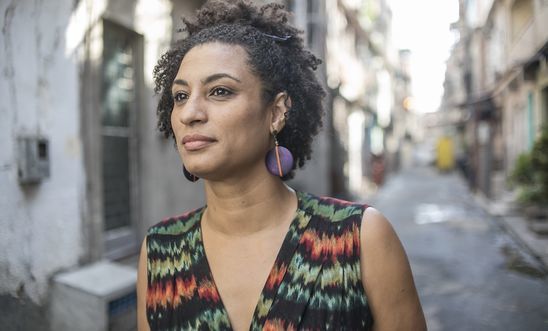
Monica Benício, the partner of Marielle Franco, a local politician in Brazil who was killed last year and was featured as part of the last Write for Rights, said of the campaign: “It helps me to get up in the morning and see some meaning, knowing that there is this big global network of affection.  All these demonstrations of love and affection are helping us to mobilize, to demand justice, to pressure for investigation and above all to fight so that there will be no more Marielles.”

https://www.amnesty.org/en/latest/news/2019/11/write-for-rights-2019-puts-youth-activism-in-the-spotlight/

Posted in AI, Amnesty international, Human Rights Defenders | 2 Comments »
Tags: Amnesty International, Canada, children, Grassy Narrows Youth, international campaign, José Adrián, Kumi Naidoo, Marielle Franco, Marinel Ubaldo, Mexico, Monica Benício, Philippines, Universal Children’s Day, Write for Rights campaign, Yasaman Aryani, youth

Six HRDs from Latin America on PBI’s European tour

November 18, 2019
Whilst the European Union continues to express concern for the increased impact of climate change on the planet, those defending their territories and the environment continue to be attacked for their activism across the world. This alarming trend is present in Latin America where the women defenders of land, territory and the environment are particularly vulnerable. [see e.g. https://humanrightsdefenders.blog/2019/08/06/environmental-human-rights-defenders-more-deadly-than-being-a-soldier-in-a-war-zone/] With this in mind, PBI will be accompanying five women and one man from Mexico, Guatemala, Honduras and Colombia to different parts of Europe in order to exchange experiences and perspectives about protection and self-protection from a holistic perspective. These defenders will share information about their own situation of risk, as well as the cases they are working on.

Sandra.png

Telma.png

Nora.png

Olga.png

Emily.png

Franklin.png

https://www.peacebrigades.org/en/news/women-human-rights-defenders-latin-america-come-europe

Posted in Human Rights Defenders | 1 Comment »
Tags: accompaniement, Emilie Dewolf, environmental defenders, Europe, Franklin Alvarez, Indigenous rights, Latin America, Nora Ramirez, Olga Aroujo, PBI, Sandra Camuec, Telma Perez, women human rights defenders

Rescuing Human Rights – another way of re-assessing human rights

November 17, 2019

I wrote abut Hurst Hannum’s book ‘Rescuing Human Rights’ earlier [https://humanrightsdefenders.blog/2019/04/20/hurst-hannum-wants-a-radically-moderate-approach-to-human-rights/]. On 30 July 2019, Peter Splinter wrote for ISHR a book review “Rescuing Human Rights – Making the case for a reassessment of the scope of human rights advocacy”

 
Hurst Hannum, Rescuing Human Rights: A Radically Moderate Approach, Cambridge University Press, 2019. 223 pp.

Hannum argues the case for a hard-headed reassessment of what human rights are and what they can achieve, done with the aim of preventing unrealistic expansion or overreach that undermines their legitimacy and universal acceptance.

Hannum expresses a firm conviction in the durable value of human rights. He brings to Rescuing Human Rights a lifetime of rich and diverse experiences as an observer, teacher and practitioner of human rights in numerous capacities and settings. While conservative, Hannum’s thesis does not hark back to a golden age of human rights. He recognises that human rights law has evolved and will continue to evolve. He also accepts that “pushing the envelope of human rights norms may sometimes be a legitimate [advocacy] tactic.”

Hannum’s principal concern is with human rights ‘overreach’ – efforts to resolve contentious political issues by trying to make them into technical human rights matters that they are not. He is not a fan of a widespread inclination to advocate for human rights of the next good cause.

“Attempting to regulate ever more narrow slices of life under ever more diverse circumstances through promoting new human rights runs a serious risk of undermining both the legitimacy of human rights and their universality. The result may be to simply expand the number of rights that are routinely ignored rather than to bring real help to those whose rights, no matter how narrowly construed, are already being violated.” (p. 79)

He perceives that human rights activism based on an expansive concept of rights as the primary means to effect domestic social and political change is feeding a global backlash against human rights. He is concerned that this will undermine the legitimacy and effectiveness of human rights advocacy to protect universally recognised rights, which “facilitate the development and influence of other socio-economic-political-moral change agents in ways that are likely to respond to the needs of most people of the world.” (p. 10) While acknowledging that human rights are inherently political, as they constrain government behaviour, Hannum suggests that the more that human rights advocacy approximates politics, the less rights will be able to effectively set the boundaries for the open, inclusive, democratic politics required to effectively address major contemporary social, political and economic issues by ensuring that political decision-making takes account of the needs and preferences of all relevant parts of society.

“This book is an appeal for radical moderation, which values and promotes human rights norms without distorting or deifying them. …  Underlying many of the book’s arguments is the belief that human rights cannot provide dispositive answers to all of the world’s problems, although they may be a necessary precondition for resolving many of them.” (p. 157)

Rescuing Human Rights focusses on human rights as universal legal norms embodied in public international law, particularly universal and regional treaties. Hannum assumes a universal consensus over the core content and legitimacy of most human rights. He distinguishes human rights from moral and political standards, while acknowledging their complementarity as forces that shape societies.

While Rescuing Human Rights discusses human rights primarily as they are shaped and invoked at the international level, Hannum emphasises that they are applied in national contexts where the relationship of the State and rights-holders is played out. Human rights promotion and protection are essentially a national project that is shaped and constrained by national governments’ voluntary acceptance of universal legally binding human rights standards. An important chapter is devoted to arguing for flexibility in the application and prioritisation of human rights norms on the grounds that universality is not uniformity. This recognition points to the need for further examination of Hannum’s thesis in specific national contexts. Are the dangers of human rights expansion and overreach at the international level mirrored by developments at the national level in individual countries?

Rescuing Human Rights focusses largely on what human rights are not and should not be made out to be. Hannum’s thesis would also benefit from further exploration of how human rights can be used better to contribute to efforts to address major contemporary social, economic and political issues at the international and national levels. If one accepts that human rights cannot determine the outcomes for issues such as development, climate change and corruption, then what are the contributions that specific rights make in specific contexts to political, economic, cultural, moral and technological efforts to meet those and other challenges? Any recalibrating of human rights promotion and advocacy in accordance with the approach Hannum proposes would benefit from robust exploration of the important contributions that human rights do and can make, such as ensuring that climate change policies are developed in consultation with representatives of all persons whose rights might be affected and have regard to their human rights impacts, including for the most marginalised communities and groups.

Today, while human rights are increasingly invoked in connection with efforts to address a growing range of global and national challenges, they are also increasingly flouted or questioned in many parts of the world. This includes in some countries where until recently human rights appeared largely beyond challenge. Many governments are demonstrating a renewed brazenness in violating their international human rights obligations. In many countries, there is widespread apathy, popular disillusionment and even hostility for human rights. This current state of human rights has led to calls from civil society organisations, academics, governments and inter-governmental organisations for urgent stocktaking about what is to be done to defend and reinforce the post-1945 human rights achievement. Some call into question the human rights project, and others call for its reinvention. Some appeal to humanity’s better angels, and others buckle down on business as usual. Some pursue novel organisational approaches to human rights advocacy, and others look to human rights to provide solutions for ever more matters of concern.

The way forward is not clear. However, Hannum’s lucid argument for greater focus and humility in recourse to human rights and his call for the recalibration of the scope of human rights advocacy should form part of any discussion about the future of human rights. Rescuing Human Rights merits reading and reflection by all who study, defend or promote human rights.

Peter Splinter is an international human rights consultant and was Amnesty International’s Representative in Geneva from 2004 to 2016. Follow him on Twitter at @pgsplinter.

http://www.ishr.ch/news/book-review-i-rescuing-human-rights-making-case-reassessment-scope-human-rights-advocacy

Posted in books, human rights, Human Rights Defenders, ISHR | Leave a Comment »
Tags: book review, Hurst Hannum, international human rights mechanisms, international human rights movement, ISHR, Peter Splinter, Rescuing Human Rights: A Radically Moderate Approach, universality of human rights

Shelter City Netherlands: call for temporary relocation in 2020

November 15, 2019

Justice and Peace Netherlands is launching a new call for human rights defenders at risk to participate in the Shelter City initiative around March 2020. The deadline to apply is 29 November 2019.   Shelter City offers human rights defenders (HRDs) at risk a possibility for rest and respite by letting them escape temporarily from a threatening situation. The initiative can benefit human rights defenders that are threatened or under intense pressure due to their work. Shelter City is an initiative coordinated by Justice and Peace Netherlands together with  municipalities in the Netherlands, local partners, and the Dutch Ministry of Foreign Affairs.

How does Shelter City work? Through temporary relocation, human rights defenders will be offered a shelter for 3 months in one of the Shelter Cities in the Netherlands, during which they can rest, continue their work in safety, build up capacity (including compulsory training on holistic security), extend their network and raise awareness about the situation in their country. Activities can include meetings with NGOs and public officials, public lectures, rest or leisure, treatment for work-related problems, continuing working remotely on human rights in their country, raising awareness of human rights with the Dutch public or participating in local initiatives organised by the municipality and/or the host organisation. At the end of the programme, participants are expected to return with new tools and energy to continue their work at home. A monthly stipend sufficient to cover costs of living, accommodation, health insurance, visa and return flight tickets to the Netherlands are provided. In addition, participants receive personal accompaniment throughout their stay in the Netherlands.
Who can apply for Shelter City?
For the purposes of Shelter City, the term HRD is intended to refer to the broad range of activists, journalists, scholars, writers, artists, lawyers, civil rights defenders, independent media professionals, civil society members, and others working to peacefully advance human rights and democracy around the world.

In order to be eligible to the Shelter City programme, HRDs must meet the following conditions:

  1. They implement a non-violent approach in their work;
  2. They are threatened or otherwise under pressure due to their work;
  3. They should be able to be relocated for a period of maximum 3 months. Limited spots are available for people who are not able to stay for the full 3 months;
  4. They are willing and able to return to their country of origin after 3 months;
  5. They are willing to speak publicly about their experience or about human rights in their country to the extent that their security situation allows;
  6. They have a conversational level of English (limited spots are available for French or Spanish speaking HRDs);
  7. They are willing and able to come to The Netherlands without accompaniment of family members;
  8. They have a valid passport (with no less than six months of validity) or be willing to carry out the procedures for its issuance. Justice and Peace covers the costs of issuing a passport and / or visa (if applicable);
  9. They are not subjected to any measure or judicial prohibition of leaving the country;
  10. They are willing to begin their stay in The Netherlands around March 2020. .

Note that additional factors will be taken into consideration in the final round of selection, such as the added value of a stay in The Netherlands as well as gender, geographic, and thematic balance. Please note that we can only accept HRDs currently residing in a third country under exceptional circumstances. To apply or submit the application of a human rights defender, please fill in the form by clicking ‘Apply Now’ below.. An independent commission will select the participants.

Apply Shelter City 2020 <https://form.jotformeu.com/93072618843361>

Note that the selected human rights defenders will not be automatically allowed into the Shelter City programme as Justice and Peace is not in control of issuing the required visas to enter the Netherlands.

For previous call, see: https://humanrightsdefenders.blog/tag/shelter-city-netherlands/
For more information, please contact us at sheltercity@justiceandpeace.nl

Posted in Human Rights Defenders | 1 Comment »
Tags: call for applications, Human Rights Defenders, outreach, Pax Christi International, Pax Christi Netherlands, relocation, security, Shelter City program, training

71 countries make first joint statement on reprisals at the Third Committee

November 14, 2019

which followed the GA, reported this unprecedented move: a cross-regional group of countries called on all States and the UN to prevent, respond to, and ensure accountability for cases of intimidation and reprisals against those who engage or seek to engage with the UN. In this joint statement presented to the Third Committee of the General Assembly in Octber 2019, 71 countries (listed below) highlighted that the UN must ensure that civil society organisations and human rights defenders who wish to engage with the UN are able to do so without fear of reprisal or intimidation. That same week the Assistant Secretary-General in his mandate as the senior official on reprisals held an event to discuss the annual reprisals report of the Secretary General.

This welcome move led by the Permanent Mission of the United Kingdom to the UN is in line with the call made, just last month, in resolution 42/28 at the Human Rights Council for the General Assembly to remain seized of all work in this area. ‘The statement highlighted that beyond the immediate impact on victims, these acts of intimidation and reprisals undermine the credibility and effectiveness of the UN as a whole, including the human rights system,’ said ISHR’s Tess McEvoy.

The integral role played by civil society and human rights defenders in encouraging openness, transparency and dialogue between people and those in power was also acknowledged. While highlighting positive steps that have been taken by the UN, including the Secretary-General’s annual report on reprisals and the work done by the Assistant Secretary-General in his mandate as the senior official on reprisals, the 71 countries strongly condemned any act of intimidation and reprisal, whether online or offline, against individuals and groups who cooperate or seek to cooperate with the UN, and expressed alarm about the growing number of cases.

‘While positive responses by some States to cases of reprisals were acknowledged, critically, the statement acknowledged the primary obligation of States to prevent and address reprisals. Moreover, all States were called on to prevent and ensure adequate protection against such acts by raising awareness, investigating and ensuring accountability and effective remedy by both State or non-State actors,’ added McEvoy. The statement also made clear the duty of the UN to address reprisals and called on the UN to strengthen the collective response to reprisals.

While we welcome this statement and the leadership of the United Kingdom as a step towards enhanced dialogue on the issue of reprisals at the General Assembly, more needs to be done to protect the right of everyone to communicate with the UN. We echo previous calls for States to step up efforts to address reprisals, including by referring to  specific cases during future dialogues at the UN. [see also my ‘old’: https://humanrightsdefenders.blog/2014/03/13/zero-tolerance-for-states-that-take-reprisals-against-hrds-lets-up-the-ante/]

The full statement as delivered is available here. The statement was made by the United Kingdom on behalf of Afghanistan, Albania, Andorra, Australia, Austria, the Bahamas, Belgium, Bosnia and Herzegovina, Bulgaria, Canada, Chile, Colombia, Costa Rica, Croatia, Cyprus, the Czech Republic, the Dominican Republic, Denmark, Ecuador, El Salvador, Estonia, Fiji, Finland, France, Georgia, Germany, Greece, Guatemala, Iceland, Ireland, Italy, Japan, Jordan, Latvia, Lebanon, Liechtenstein, Lithuania, Luxembourg, Malta, the Marshall Islands, Mexico, Monaco, Mongolia, Montenegro, the Netherlands, New Zealand, North Macedonia, Norway, Panama, Poland, Portugal, the Republic of Korea, the Republic of Moldova, Romania, Samoa, San Marino, Seychelles, Slovakia, Slovenia, South Africa, Spain, Sweden, Switzerland, Tunisia, Turkey, Tuvalu, Ukraine, the United States, Uruguay and Vanuatu.

https://www.ishr.ch/news/unga74-71-countries-make-first-joint-statement-reprisals-third-committee

Posted in human rights, Human Rights Defenders, ISHR, UN | Leave a Comment »
Tags: 2019, annual Report of the Secretary General on Reprisals, intimidation, ISHR, joint statement, reprisals, Tess McEvoy, Third Committee of the GA, UN General Assembly

Meet Marisa Hutchinson of the Association EQUALS in Barbados

November 10, 2019

On 22 October 2019 ISHR published this interview with Marisa Hutchinson, Board member of the Association EQUALS in Barbados

Posted in films, Human Rights Defenders, ISHR | Leave a Comment »
Tags: Association EQUALS, Barbados, interview, ISHR, LGBTI, Marisa Hutchinson, profile, video clip

Prominent Russian human rights defender Sergei Sharov-Delone dies at 63

November 10, 2019
Sergei Sharov-Delone
RFE/RL’s Russian Service reported on 8 November 2019 that one of Russia’s most prominent human rights defenders, Sergei Sharov-Delone, has died at the age of 63. Sharov-Delone’s son, Aleksandr Sharov, and the chairwoman of the Russia Behind Bars rights organization, Olga Romanova, said that Sharov-Delone had died late in the night on November 7 after suffering from cancer. Sharov-Delone was a member of the May 6 Committee that investigated police brutality against protesters during demonstrations in Moscow in May 2012 ahead of Vladimir Putin’s inauguration for a third term as president.

He actively assisted imprisoned activists via the Russian Behind Bars group and coordinated operations of the Moscow-based Public Defenders’ School. Sharov-Delone was a cousin of Soviet-era dissident Vadim Delone — one of seven Soviet dissidents who openly protested on Moscow’s Red Square against the Soviet-led Warsaw Pact invasion of Czechoslovakia in August 1968.

In 2017, RFE/RL released a documentary about Sharov-Delone’s life and activities entitled Defender.

https://www.rferl.org/a/sergei-sharov-delone-/30260023.html

https://www.bignewsnetwork.com/news/263008507/prominent-russian-rights-defender-sergei-sharov-delone-dies-at-63

Posted in human rights, Human Rights Defenders | Leave a Comment »
Tags: Defender (film), Human rights defender, in memoriam, May 6 Committee (Russia), national NGO, obituary, RFE/RL, Russia, Russian Behind Bars, Sergei Sharov-Delone

Michel Forst in last address to General Assembly pleads to fight reprisals

November 8, 2019
On 18 October 2019 the International Service on Human Rights (ISHR) reported on Special Rapporteur, Michel Forst, last appearnace before the UN General Assembly  making key recommendations to State and non-State actors and called for human rights defenders to be protected, and for authors of attacks and reprisals to be brought before justice.

On 15 October 2019, the Special Rapporteur on Human Rights Defenders Michel Forst presented his report (A/74/159) to the UN General Assembly’s Third Committee on the issue of impunity for attacks and reprisals against human rights defenders. This was followed by an interactive dialogue with States. This is the last time Forst will address the Third Committee in the capacity of Special Rapporteur. Forst voiced specific concern about digital attacks against youth and women human rights defenders, and expressed the need to protect them. He also expressed concern at specific attacks on human rights defenders living in isolated environments, as well as those working on sexual and reproductive rights and on sexual orientation and gender identity issues.

‘Impunity is used as a weapon by those who wish to undermine the rule of law and silence those struggling to uphold human rights. I echo Forst’s comment that impunity is a political choice, otherwise how do we explain that around 98 percent of killings of human rights defenders in certain countries remains unpunished?’ asked ISHR’s Tess McEvoy.

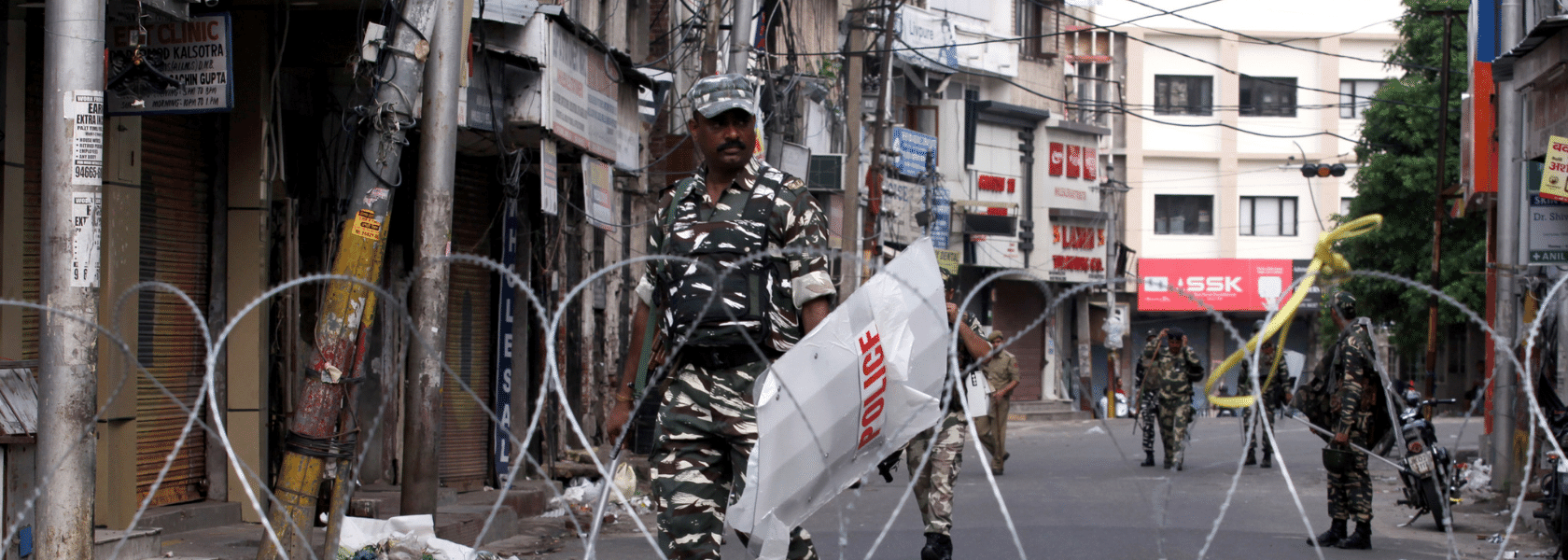
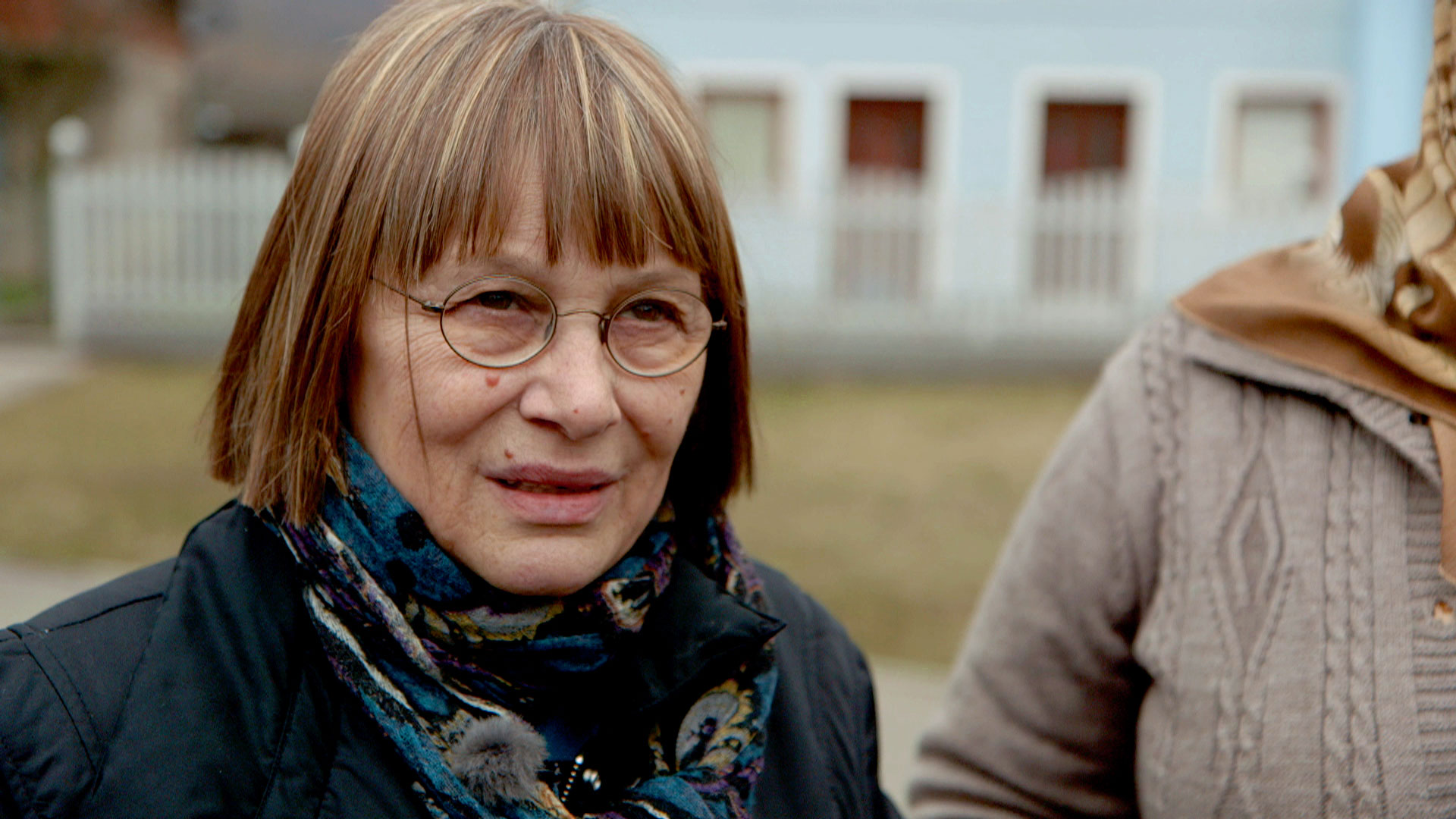
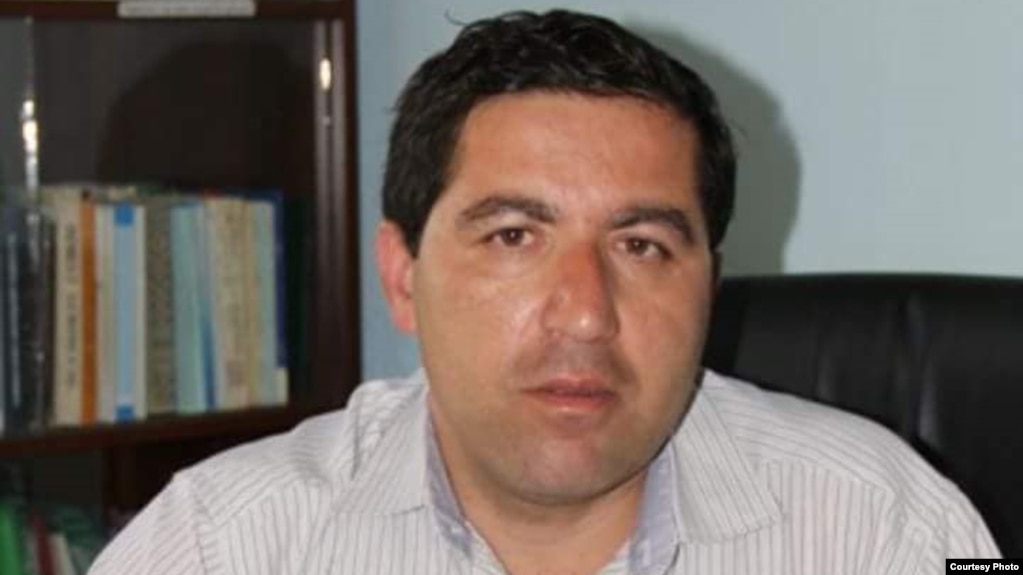
The Special Rapporteur – and the United States – highlighted individuals and groups from various countries who are victims of reprisals. These included:

The Special Rapporteur’s report made recommendations to States on ways to effectively combat impunity. These included:

  • Strengthening mechanisms for the protection of human rights defenders;
  • Criminalising acts of violence against human rights defenders; and
  • Adopting policies that protect the right to defend human rights whilst also recognising the obstacles that certain groups such as women human rights defenders and those protecting the rights of LGBTI and indigenous persons face.

These recommendations were echoed in a side event organised by ISHR and Amnesty International on 16 October, where women human rights defenders from Yemen and Myanmar provided harrowing accounts of attacks they face in their respective contexts.

Several States voiced their support for the report and the mandate, including Norway who called on all States to support this year’s resolution on Human Rights Defenders currently being negotiated. Notwithstanding the adoption by consensus of a definition of human rights defenders in the 1998 Declaration on Human Rights Defenders, the usual detractors – including Russia and China – sought to delegitimise the work of human rights defenders by questioning whether the term is universally recognised. China went further to suggest that individuals were using the ‘flag of defending human rights’ to violate the law.

Notwithstanding the primary responsibility of States to combat impunity for attacks against defenders, the Special Rapporteur again emphasised his call for non-State actors to protect human rights defenders, and concluded by referencing his 2017 report on Business and Human Rights (A/72/170).

https://www.ishr.ch/news/unga-74-states-must-put-end-impunity-reprisals-against-defenders

Posted in Human Rights Defenders, ISHR | 2 Comments »
Tags: ISHR, Michel Forst, report, reprisals, UN General Assembly, UN Rapporteur on the situation of human rights defenders

Guatemalan human rights defender Abelino Chub Caal wins Trócaire human rights award

November 8, 2019

Abelino Chib Caal from Guatemala in Dublin after he was awarded the Romero International Award by Trócaire, for his work defending human rights. Photograph: Dave Meehan

Abelino Chib Caal from Guatemala in Dublin after he was awarded the Romero International Award by Trócaire. Photograph: Dave Meehan

On 26 April, 2019 Abelino Chub Caal walked free after spending 813 days in prison. Less than six months later, the Guatemalan human rights defender stood before a large Irish audience at the Riddel Hall in Belfast to accept the Trocaire Romero Award. This was the second edition of the award [see: http://www.trueheroesfilms.org/thedigest/awards/trocaire-romero-award]. The inaugural award in 2018 went to Sr Bridget Tighe in recognition of her humanitarian work in Gaza and the Middle East (for more on her click here)

The following week Sorcha Pollak of the Irish Times sat in a small meeting room in the Irish Times building with the Guatemalan teacher who has dedicated his life to fighting for the environmental and cultural rights of the indigenous people of his home country. A few days later, the 35-year-old flew back to Guatemala, unsure of the reception he will receive in a country which has an extremely poor international reputation for its treatment of community leaders who call for greater equality and recognition of human rights.

“This has been the struggle of the indigenous people throughout our lives,” explains Caal in Spanish. “We’ve been completely rejected by the state. On the one hand the government says we’re the pride of Guatemala and they get millions of dollars in tourist money but at the same time we’re being repressed. They criminalise and persecute us; they send people to their deaths. They harass men and women who raise their voices against the injustice.”

Caal first became involved in the campaign for equal land rights aged 14 when his family’s community, in the department of Izabal in eastern Guatemala, was suddenly taken over by the cattle farm of a French woman operating in the area. “She had about 1,000 cattle just roaming around the community. They slept under our roof and ate all our crops.” He was deeply shocked when a community leader, who had come to the town to educate locals about their rights and the international treaties they could cite as protection, was thrown in jail for eight years.

After school, having graduated with a diploma in sustainable tourism, Caal began working for the Guillermo Toriello foundation which promotes local development. He also trained as a teacher but never got the chance to use his qualification. “I’ve dedicated myself to the community struggle and to becoming a mediator between state institutions and communities on land issues. It’s a legitimate and true struggle, the land for us is like our mother.”

The mining industry along with the rapidly growing production of palm oil, fruit, sugar cane and rubber by multinational companies is being carried out at the expense of local communities, says Caal. “They’ve accumulated all the land they can. All areas of flat land have been declared private property for palm plantations but not for the production of food.

“The state’s intention is to dispossess and exterminate the life of the indigenous communities. The communities are being expelled from their land and left without any alternatives. They just treat them as if they were toys.”

Caal cites examples of fellow human rights activists who were jailed for their work defending local communities, including Bernardo Caal Xol who was sentenced to eight years for his efforts to halt the development of a hydroelectric project along the Cahabon river by the Spanish ACS construction group which is chaired by Real Madrid president Florentino Pérez.

In February 2017, Caal was arrested and charged for alleged aggravated land grabbing, arson, coercion, illicit association and belonging to illicit armed groups. He spent the following two years in prison in Guatemala city.

While former government officials, locked up on corruption charges, made his life in prison difficult, he was surprised by the reception from gang members. “They were actually really respectful to me and called me profe [teacher]. They said I didn’t deserve to be there.”

During his two years behind bars, Caal witnessed hitmen inside the jail killing other prisoners and frequently worried for his safety. Despite being released earlier this year, after he was absolved of all charges, he knows that many other land rights defenders continue to face similar treatment. “The president is attacking human rights defenders, insinuating they have connections to drug trafficking. I wasn’t the first person to go to prison and I certainly won’t be the last. Our economic powers, they either send you to prison or send you to the grave.”

Upon his release, Caal spent one month in a safe house in Guatemala city and another three months in Costa Rica before travelling to Ireland to accept the Romero International Award presented by Irish NGO, Trócaire. He hopes his time in Ireland will raise awareness around the daily struggles faced by indigenous people across Guatemala in their attempts to hold on to their land. “We have been completely rejected by the state, we can’t be at peace. We just ask that people continue to show their solidarity with us.”

Caal is conscious that the Guatemalan public prosecutor’s office has not accepted his release and is appealing the decision. We part with uncertainty as to what will happen when he arrives home.

Gary Walsh of Trócaire says the voices of land rights defenders like Caal should put pressure on countries worldwide, including Ireland, to sign an international treaty on business and human rights which would help protect indigenous peoples around the globe.

“Land grabs, environmental damage and violent attacks, including murder, are all too common features of how big business interacts with communities in the developing world,” says Walsh. “This has been facilitated by the absence of any global framework governing how businesses impact the human rights of the communities they engage with.” A binding international treaty is needed to ensure businesses operating outside the EU respect human rights, and that vulnerable people are protected, says Walsh. Recent negotiations held in Geneva around the revised draft of a legally binding treaty showed some progress despite insufficient engagement from EU member states including Ireland, said a spokeswoman for Trócaire

https://www.irishtimes.com/news/world/guatemalan-activist-abelino-chub-caal-wins-tr%C3%B3caire-human-rights-award-1.4076152

Posted in awards, human rights, Human Rights Defenders | Leave a Comment »
Tags: Abelino Chub Caal, digest of human rights awards, Guatemala, human rights awards, Indigenous rights, Ireland, Middle East, profile, Sorcha Pollak, Sr Bridget Tighe, Trocaire Romero Award

« Older posts
Newer posts »
  • Enter your email address to subscribe to this blog and receive notifications of new posts by email.

    Join 1,784 other subscribers
  • Recent Posts

    • Results of the 61st Human Rights Council as seen by NGOs
    • Cuba: Human Rights Watch claims none of those released were political prisoners
    • The “Italian Protection Hub” Recognized as a European Model for the Protection of Human Rights Defenders
    • Women Human Rights Defenders on Ukraine’s Frontline
    • Strategy 2030: ISHR’s new Strategic Framework
    • HRF/HRW Webinar on Egypt’s repressive practices re the Egyptian diaspora in America – 1 May 2026
    • Today, 16 April 2026, the Four Freedoms Awards are awarded in Middelburg
    • UN experts condemn murder of human rights defender Zweli ‘’Khabazela’’ Mkhize’ in South Africa
Blog at WordPress.com.
Entries and comments feeds.Valid XHTML and CSS.
  • Subscribe Subscribed
    • Hans Thoolen on Human Rights Defenders and their awards
    • Join 439 other subscribers
    • Already have a WordPress.com account? Log in now.
    • Hans Thoolen on Human Rights Defenders and their awards
    • Subscribe Subscribed
    • Sign up
    • Log in
    • Report this content
    • View site in Reader
    • Manage subscriptions
    • Collapse this bar
 

Loading Comments...