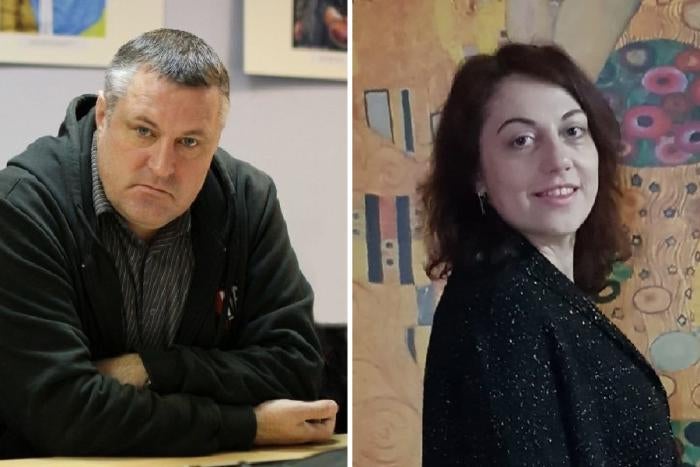
Reacting to the news that LGBT-Network, a prominent Russian group defending the rights of lesbian, gay, bisexual, transgender and intersex (LGBTI) people, and five human rights lawyers from Komanda 29 have been added by the Ministry of Justice to its list of “foreign agents”, Natalia Zviagina, Amnesty International’s Moscow Office Director, said:
“Beyond shameful, the justice ministry’s decision reveals that committed, principled lawyers defending the rights of people targeted in politically motivated cases and frontline LGBTI rights defenders are unwelcome and “foreign” in Putin’s Russia.
“LGBT-Network has exposed heinous crimes against gay men in Chechnya and helped evacuate people at risk to safety where they can speak about these atrocities. Now LGBT-Network is, itself, a victim of the persecution that is being increasingly targeted at all human rights defenders – openly, viciously and cynically.
“The authorities cite the need to protect “national interests” and resist “foreign influence” in their incessant destruction of Russia’s civil society. But what’s really in the national interest is to protect, uphold and respect all human rights for everyone. These reprisals against human rights defenders and civil society organizations must stop, and the ‘foreign agents’ and ‘undesirable organizations’ laws must be repealed immediately.”
Late on 8 November, the Russian Ministry of Justice included the LGBT-Network and five lawyers from the recently dissolved human rights group, Komanda 29 (Team 29), including its founder Ivan Pavlov, a prominent lawyer, on the list of “foreign agents.” Ivan Pavlov and his colleagues have courageously provided help to civil society and political activists and groups that have been targeted by the authorities, including Aleksei Navalny’s Anti-Corruption Foundation. See also: https://humanrightsdefenders.blog/2019/11/19/russias-foreign-agents-bill-goes-in-overdrive/
The Russian LGBT-Network played a crucial role in the exposure of a brutal “anti-gay” campaign in Chechnya during which dozens of men were abducted, tortured and several believed to have been killed for their real or perceived sexual orientation. The group also provided shelter for victims of homophobic attacks from Chechnya and elsewhere around the country, and helped with their relocation to safer locations within and outside Russia.
Scholars at Risk (SAR) announced on 9 November 2021 that Dr. Ahmadreza Djalali is the recipient of its Courage to Think Award for 2021. Dr. Djalali, a prominent scholar of disaster medicine sentenced to death in Iran, is being recognized for his struggle for academic freedom and connection to the international academic community. For more on the Courage to Think Award see: https://www.trueheroesfilms.org/thedigest/awards/165B4CC5-0BC2-4A77-B3B4-E26937BA553C.
Dr. Djalali’s wife, Vida Mehrannia, will accept the award on Dr. Djalali’s behalf at SAR’s virtual symposium, Free to Think 2021, on December 9. Information and registration for the free, online event is available here <https://www.scholarsatrisk.org/event/free-to-think-2021-and-courage-to-think-award/> . Dr. Djalali is an Iranian-Swedish scholar who has held academic positions at Karolinska Institute, in Sweden; the Università del Piemonte Orientale, in Italy; and Vrije Universiteit Brussel, in Belgium. In December 2020, he was awarded a Scholars at Risk Fellowship at Harvard University, in the United States. “The continued imprisonment, extreme sentence, and mistreatment of Dr. Djalali in custody should be of grave concern for anyone who cares about the ability of scholars to work safely,” said Rob Quinn, executive director of SAR. “No scholar should face a death sentence, solitary confinement, and withholding of medical care for their academic or scientific work.” Not only has Dr. Djalali helped the development of the field of disaster medicine at higher education institutions, but he has also put his expertise into practice by supporting communities impacted by crises. Dr. Djalali provided medical aid, health services, and education to communities impacted by floods, earthquakes, and other disasters in Iran, including the 2003 Bam earthquake. While at the Center for Research and Training in Disaster Medicine, Humanitarian Aid, and Global Health (CRIMEDIM), in Italy, Dr. Djalali dedicated his research to resilience and performance of health systems, hospitals, and medical and rescue staff, and trained hundreds of humanitarian and medical staff around the world. Dr. Djalali was arrested in April 2016 during a trip to Iran to participate in a series of academic workshops. It is strongly believed that he was targeted because of his ties to the international academic community, and the belief that he might trade his freedom in exchange for working for the Iranian intelligence service. On October 21, 2017, Dr. Djalali was sentenced to death for “corruption on earth,” based on unsubstantiated allegations that he had provided intelligence to a foreign government. Dr. Djalali was denied the right to appeal the conviction and sentence and has suffered from torture, ill-treatment, and a growing number of medical complications while in state custody. On November 24, 2020, Iranian authorities moved Dr. Djalali to solitary confinement in preparation to carry out his death sentence. Dr. Djalali spent five nightmarish months in solitary confinement, awaiting imminent execution, until April 14, 2021, when authorities transferred him to a multiple-occupancy cell. See also: https://humanrightsdefenders.blog/2020/11/26/as-iran-prepares-to-execute-ahmadreza-djalali-the-world-reacts/ For years, Dr. Djalali has been denied access to appropriate medical care for numerous health complications that worsened while he was in solitary confinement. These include leukemia, severe weight loss, chronic gastritis, low heart rate, and hypotension, gallstones, partial paralysis of the right foot, indirect inguinal hernia, hemorrhoid and fissures, low blood cell count, low levels of calcium and vitamin D, malnutrition, dyspepsia, and depression. Authorities continue to deny Dr. Djalali access to his lawyer and his family in Iran, and from making calls to his wife and children in Sweden.
Dublin-based Front Line Defenders (FDL) examined 75 phones belonging to Palestinian human rights workers and detected that six were infected with Pegasus spyware between July 2020 and April 202. Four out of the six phones belong to staff members at NGOs that were blacklisted last month for alleged ties to a group labelled by some states as a “terrorist organisation”, a move that has sparked international condemnation.
Those alleged to have been hacked include US citizen Ubai al-Aboudi, who heads the Bisan Center for Research and Development, and French national Salah Hammouri, a researcher at Addameer.
At a press conference in Ramallah on Monday, representatives of the six organisations called for the international community to take action. “We call on the United Nations to launch an investigation to disclose the party that stood behind using this programme on the phones of human rights activists, a move that put their lives at risk,” Tahseen Elayyan, a legal researcher with Al-Haq, told Reuters.
FDL’s findings, which were reviewed and confirmed by Citizen Lab and Amnesty International Security Lab, will raise further concerns about Pegasus, the controversial spyware alleged to have been used to hack heads of state, journalists and activists in a series of explosive stories published this summer.
NSO Group, the Israeli-based tech firm behind Pegasus, only licences the product to sovereign states or the law enforcement or intelligence agencies of those states.
Haaretz reported on Monday that the export licence issued by the Israeli defence ministry to NSO Group only permits Israeli security services to monitor Israeli phone numbers.
An FDL spokesperson told Middle East Eye on Monday that the organisation does not know which state was behind the hacking it uncovered, but believes that the timeline of events over the past month may be critical in answering that question.
On 16 October, three days before the organisations were designated, Al-Haq approached FDL, suspecting that a staff member’s phone had been hacked. The same day, an FDL investigator found initial traces of Pegasus on the phone.
The following day, on 17 October, FDL said it held a meeting with all six organisations to inform them of the initial findings and see if others would want their phones investigated. NSO Group: US blacklists Israeli firms for harming ‘national security interests’.
On 18 October, Israel’s interior ministry notified Hammouri of its decision to revoke his permanent residency in Jerusalem and deport him on the basis of his alleged “breach of allegiance to the State of Israel”.
Then on 19 October, Israeli Defence Minister Benny Gantz designated all six organisations which had gathered with FDL as “terrorist organisations.”
At this point, the organisations were reportedly only considered “terrorist” groups in Israel. But on 3 November – just ahead of the release of FDL’s findings – Israel’s commander-in-chief of the Central Command issued an order to outlaw the organisations in the West Bank.
“It seems to us that [Israeli officials] were slow to react to what was transpiring and they were unprepared,” FDL spokesperson Adam Shapiro told MEE. “It suggests we caught them doing something they didn’t want us to.”
However, Shapiro emphasised that FDL could not say definitively what state was behind the hacking, a comment echoed by Addameer’s director, Sahar Francis.
“We don’t have evidence. We can’t accuse a certain party since we don’t have yet enough information about who carried out that action,” she told Reuters, calling on the UN to launch an investigation.
Israeli officials have not made a public statement yet about FDL’s findings. NSO Group told Reuters the company “does not operate the products itself … and we are not privy to the details of individuals monitored”.
The US government last week blacklisted the NSO Group and a second Israeli spyware firm, Candiru, saying their activities are contrary to US foreign policy and national security interests.
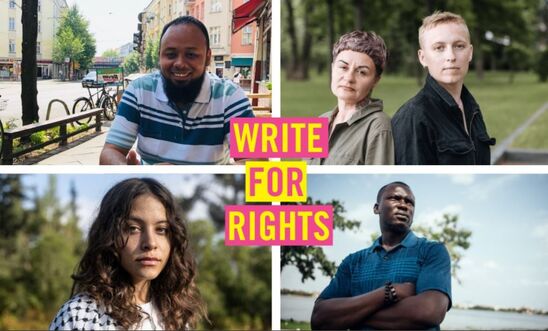
AI has launched the world’s biggest letter writing campaign to help 10 human rights defenders around the world facing.
Millions of letters, emails and texts will be sent to support people who have been jailed, attacked or disappeared
Amnesty International has launched its flagship annual letter-writing campaign, Write for Rights to support 10 activists from around the world who have been attacked, jailed, harassed or disappeared for standing up for their rights.
This year, Write for Rights – which is funded by players of the People’s Postcode Lottery – will be supporting ten individuals, including:
Imoleayo Adeyeun Michael from Nigeria, who faces years behind bars for joining the #EndSARS protests against the notorious Special Anti-Robbery Squad last year;
Janna Jihad, a 15-year-old journalist from Palestine, who faces harassment and death threats for reporting on the racist brutality her community experiences;
Mohamed Baker, an Egyptian human rights lawyer denied a trial and put behind bars for his work supporting people who have been imprisoned unjustly; and
Ciham Ali Ahmed, a US-Eritrean national, who was arrested nine years ago at the Sudanese border when she was trying to flee Eritrea aged 15 and has not been seen since.
Sacha Deshmukh, CEO of Amnesty UK, said:
“These individuals have been thrown behind bars, attacked, harassed or disappeared just for standing up for their rights. By coming together, people around the world have the power to raise their profile and increase their chances of protection or release.
“Sending a letter or email might seem like a small act, but when sent in their thousands they can have a huge impact. People in power are forced to listen.
Amnesty International’s Write for Rights campaign: Write for Rights goes back to the very roots of Amnesty International, which was founded in 1961, with Amnesty’s early campaigners writing letters of support to those affected by human rights abuses, as well as letters of concern to governments around the world.
More than 360,000 actions were taken for Algerian journalist Khaled Drareni, who was imprisoned for his reporting on the Hirak protest movement. He was provisionally released in February 2021.
Over 300,000 messages were sent to and on behalf of Paing Phyo Min, a satirical poet and student leader jailed for criticising the military in Myanmar. He was freed early in April 2021.
More than 777,000 actions were taken for Saudi women’s rights campaigner Nassima al-Sada. As a result, a G20 summit hosted by Saudi Arabia was overshadowed by international calls to free Nassima and other women human rights defenders. Nassima has since been conditionally released.
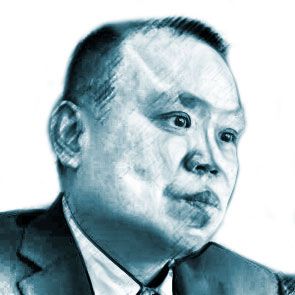
The wife of Yu Wensheng, a jailed human rights lawyer, has set up a legal firm to help persons struggling with China’s justice system. Xu Yan’s husband is currently serving a four-year sentence on the charges of ‘incitement to subvert state authority.’ “My husband will be allowed to return home in around four months, but his law licence will be cancelled. This will have a significant impact on his profession as well as our family,” Yan was quoted as saying by Radio Free Asia. [see also: https://humanrightsdefenders.blog/2021/06/24/martin-ennals-foundation-reaches-out-today/] Notably, he had received the Martin Ennals Award 2021 for his work as a human rights defender earlier this year. [see: https://www.trueheroesfilms.org/thedigest/laureates/69fc7057-b583-40c3-b6fa-b8603531248e]
According to Radio Free Asia, the Martin Ennals Foundation labelled Yu “one of the best-known and most intrepid human rights campaigners” in China, noting that he had been subjected to arbitrary arrest, a secret trial, and the revocation of his law licence.
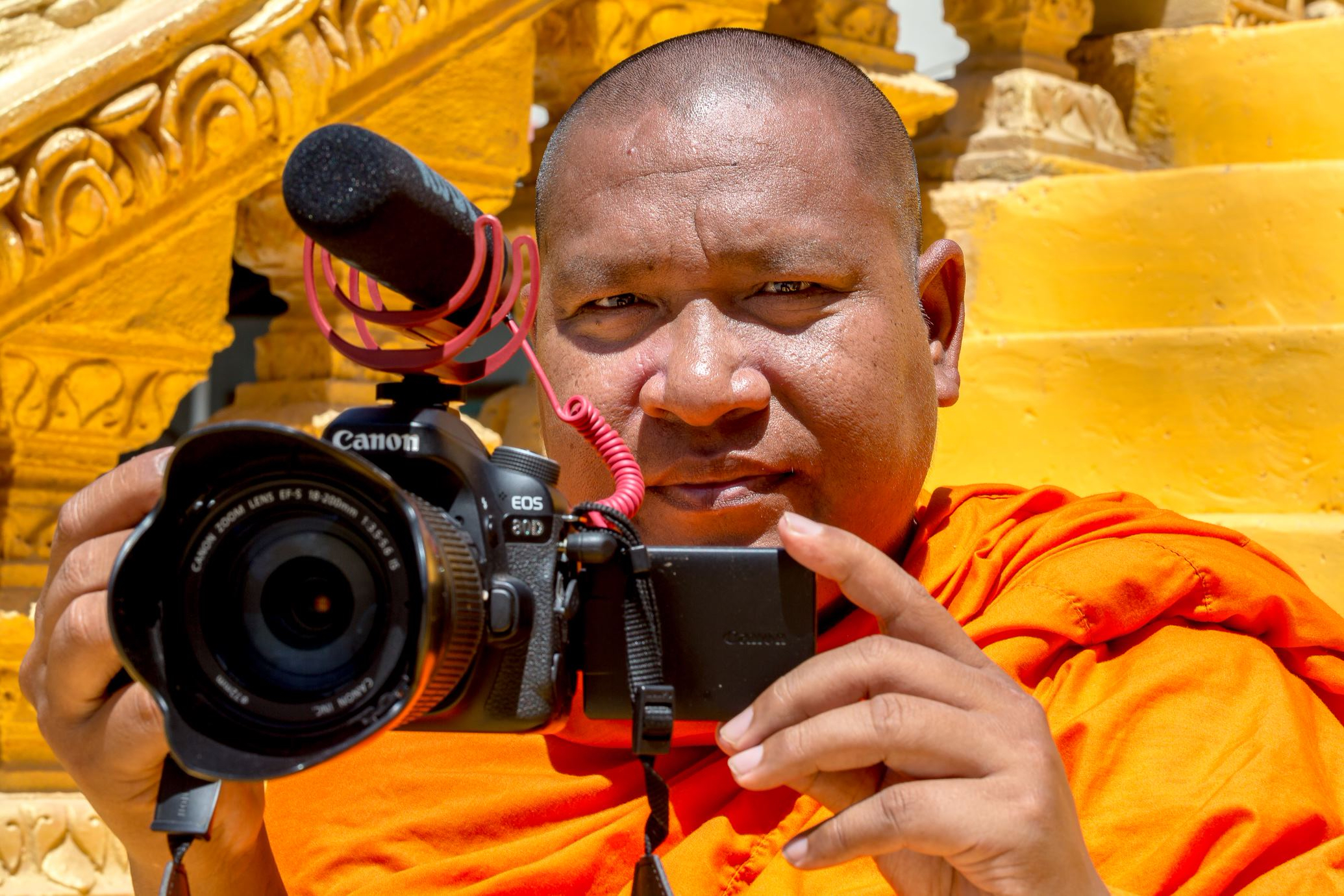
Venerable Sovath is a Buddhist monk and human rights activist from Siem Reap, Cambodia. In March 2009 he witnessed the forced eviction of his family and fellow villagers from their homes, without reason and in most cases without compensation. This unfortunate event pushed him towards human rights activism.
Venerable Sovath was compelled to flee his native Cambodia in May of 2020, after fake videos and accusations appearing on Facebook served as the bases for a decision to ‘de-frock’ him of his monk’s robes. In retaliation for his advocacy against land grabbing and in favour of human rights, Venerable Sovath and his loved ones have suffered years of threats and reprisals by the authorities of Cambodia. Finally, the prospect of losing his religious freedom convinced Venerable Sovath that his position in Cambodia was untenable and he sought a temporary safe haven in Switzerland.
Because the fake evidence used against Venerable Sovath circulated on Facebook, the case also has critical lessons for the role of social media in upholding human rights. During his segment, he will discuss the story of how he became a human rights activist, and how social media can be a double-edged sword in the fight for human rights; as it gives visibility to the defenders but also puts them at risk. He will focus on social media as a tool of liberation and repression; and also discuss how a lack of accountability by these social media companies can play a role in the repression of human rights defenders. See also: https://humanrightsdefenders.blog/2020/11/02/bbc-podcast-on-the-framing-of-video-monk-luon-sovath/
This master class is hosted by the Martin Ennals Foundation and the Geneva Center for Business and Human Rights.
Date: Tuesday, November 23, 2021 Time: 12:30 – 14:00 Location: UniMail, MS 150
Registration for this master class will open on November 11 with limited places available. COVID certificate is required.
On 4 November 2021 the Observatory for the Protection of Human Rights Defenders, a partnership of the World Organisation Against Torture (OMCT) and FIDH, has received new information and requests your urgent intervention in the following situation in China.
New information:
The Observatory has been informed by the Network of Chinese Human Rights Defenders (CHRD) about the imminent risk of death of freelance journalist Zhang Zhan, who has been detained since May 2020 as a reprisal for her coverage of the Covid-19 pandemic from February 2020 until her arrest. Ms. Zhang is a former lawyer whose licence was suspended in retaliation for her activism and a well-known and outspoken journalist on the situation of human rights in China. See also: https://humanrightsdefenders.blog/2021/01/06/china-eu-deal-what-about-human-rights/
According to the relatives of Zhang Zhan, the journalists’ life is at imminent risk of death as a result of the partial hunger strike she started in June 2020 to protest her arbitrary detention and later her sentencing. The mother of Zhang Zhan was allowed to have a videocall with her daughter on October 28, 2021, after which she reported that the journalist weights less than 40 kg, is unable to walk unassisted and cannot raise her head without assistance. Her health is extremely poor, as she suffers from severe malnutrition, a gastric ulcer and swollen legs and feet. During her detention, she has been restrained and force-fed via a nasal tube.
The relatives of Zhang Zhan have been consistently denied their right to visit the journalist and only been allowed to communicate with her by video calls on two occasions, on October 28 and February 2021, and by a phone call on August 2021. Moreover, Zhang Zhan’s mother requested the Chinese security police the permission to visit the journalist in prison to persuade her to abandon the hunger strike. At the time of publication of this Urgent Appeal, she had not received a reply.
The Observatory recalls that Zhang Zhan was hospitalised in a prison hospital between July 21 and August 11, 2021 due to her deteriorating health conditions. During her hospitalisation, she was tied to a hospital bed and force-fed by prison authorities. On August 11, she was transferred back to the Shanghai Women’s Prison, where she remained detained at the time of this Urgent Appeal.
The Observatory further recalls that on May 14, 2020, Zhang Zhan went missing in Wuhan, Hubei Province, one day after releasing a video that criticised the government’s measures to contain the virus, claiming the authorities were being negligent. Zhang Zhan had travelled to Wuhan from her home in Shanghai in early February 2020 to report from the epicenter of the Covid-19 pandemic. She reported numerous stories, including the detention of other independent reporters and harassment of families of victims seeking accountability, via her WeChat, Twitter, and YouTube accounts.
After seven months of pre-trial detention, on December 28, 2020, the Shanghai Pudong People’s Court found Zhang Zhan guilty of “picking quarrels and provoking trouble” (Article 293 of China’s Criminal Law) and sentenced her to four years in prison. The court rejected the application filed by Zhang Zhan’s lawyers to request bail, live streaming of the trial, and a time extension of the proceedings. Their requests to have the defense witnesses appear in court to present exculpatory evidence was also rejected by the court. Zhang Zhan attended her trial in a wheelchair because of her poor health.
The Observatory is deeply concerned about the health conditions and risk of death of Zhang Zhan and urges the Chinese authorities to immediately and unconditionally release her and grant her immediate access to adequate and comprehensive medical treatment.
On 9 November 2021 at 2pm CET, the Unrepresented Nations and Peoples Organization (UNPO) will be co-organizing with MEPs an event in the European Parliament presenting its report on third country reprisals against human rights defenders in Europe. With growing threats from China, Russia, Iran and Pakistan on European soil, UNPO wants greater action taken against their reprisals on minority rights diaspora in Europe. Our report can be found here. [see also: https://humanrightsdefenders.blog/2021/04/22/unpo-reprisals-on-the-rise/]
Event information :
Format : Webinar, with Presentation of report and testimonies
UNPO has been working hard to expose the difficulties activists for self-determination and minority rights face due to reprisals by state actors. These can range from intimidation and threats to murder. As part of our broad Compromised Spaces campaign we wanted
Schedule and Panelists :
Moderator : Shima Silavi, Program Officer, UNPO
Hosts as MEPs : Jordi Sole MEP, Heidi Hautala MEP, Ignazio Castaldo MEP, David Lega MEP.
14.00 Opening Remarks
14.20-14.40 Presenting the Report : “Compromised Space: Foreign State Reprisals against Unrepresented Diplomats in Europe” Shima Silavi.
14:40 – 14:55 Ahwazi Arab Witness – Iran. Hawra Nissi, Daughter of Ahmad Mola Nissi, an Ahwazi Arab political activist who was shot dead in front of his home in the Hague in 2017
14:50 – 15:10 Uyghur Witness – China, Dolkun Isa, President of the World Uyghur Congress
15:10 – 15:25 Crimean Tatar Witness- Russia. Ayla Bakkalli, Representative of the World Congress of Crimean Tatars, Mejlis of Crimean Tatars People – UN Permanent Forum on Indigenous Issues
15: 25 – 15:40 Expert – Oxford University Dr. Fiona McConnell, Associate Professor in Human Geography. Fellow and Tutor at St. Catherine’s College, Oxford, recipient of the Philip Leverhulme Prize for Geography in 2019.
On Wednesday, November 3, the Centraĺny District Court in Homieĺ delivered the verdict in the politically motivated criminal case against two human rights defenders with the Homieĺ branch of Viasna, a leading Belarusian human rights group. The court sentenced the head of Viasna’s Homieĺ office Leanid Sudalenka and Viasna’s volunteer Tatsiana Lasitsa to three and two and a half years in prison, respectively.
18 international and Belarusian organizations call on Belarusian authorities to immediately annul the outrageous verdict and drop all charges against Sudalenka and Lasitsa, as well as five other members of Viasna who are currently in jail on politically motivated charges.
“Politically motivated prosecutions of Viasna members and volunteers are part of the ‘purge’ of Belarusian civil society declared by Aliaksandr Lukashenka and his government. Belarusian authorities’ targeting of Viasna in particular is no doubt designed to punish the organization for its outstanding and courageous human rights work over the course of 25 years.”
On October 14, the prosecutor’s office requested three years’ imprisonment for Sudalenka and Lasitsa on charges of “organizing, financing, training, and preparation of actions grossly violating public order and financing such activities.” The charges were backed by absurd “evidence,” such as Sudalenka’s Facebook post offering to buy firewood for the family of someone accused of “mass rioting” in connection with the peaceful protests of 2020.
Sudalenka and Lasitsa have been in pretrial detention for over nine months, having been arrested on January 18 and 21, respectively. Their trial began in early September and was held behind closed doors.
On January 18, authorities also detained Viasna’s volunteer Maryia Tarasenka in connection to Sudalenka and Lasitsa’s case. She was released under her own recognizance three days after the arrest. Tarasenka left Belarus after prosecutor’s office requested two and a half years imprisonment for her in October.
The other five Viasna members currently behind bars on politically motivated criminal charges are Ales Bialiatski, the founder and chairman of Viasna, Valiantsin Stefanovic, Viasna deputy chairman, Uladzimir Labkovich, a lawyer and coordinator of the group’s campaign “Human rights defenders for free elections,” Marfa Rabkova, coordinator of Viasna’s network of volunteers, and Andrei Chapyuk, a volunteer for Viasna in Minsk.
Around 100 Viasna human rights defenders and volunteers, as well as their family members, have also been interrogated and designated witnesses in criminal cases against their colleagues. At least seven have been designated suspects.
Belarusian law enforcement continues regular interrogations in connection with the criminal cases against Viasna employees, including activists of other civil groups and initiatives.
On September 17, 23 international and Belarusian human rights groups launched a campaign #FreeViasna, demanding the immediate release of the jailed Viasna human rights defenders. We continue calling on the Belarusian authorities to:
Fully abide by their international human rights obligations as a party to the International Covenant on Civil and Political Rights to respect the rights to freedom of association, peaceful assembly, and expression of all people in Belarus.
Fully respect the work of human rights defenders and lawyers and ensure that everyone can complain without fear of retaliation about actions and policies of individual officials and governmental agencies.
In line with these obligations, release Tatsiana Lasitsa, Leanid Sudalenka, Ales Bialatski, Valiantsin Stefanovic, Uladzimir Labkovich, Marfa Rabkova and Andrei Chapyuk immediately, drop all charges against Viasna staff and volunteers, including Maryia Tarasenka, and other human rights defenders, and ensure their right to a remedy for arbitrary detention and malicious prosecution.
Also woth mentioning is that on 4 November 2021 in response to the Belarusian authorities’ failure to respond satisfactorily to the 5 November 2020 Moscow Mechanism report, 35 OSCE states invoked the Vienna (Human Dimension) Mechanism and Belarus’ commitments under that Mechanism.
Signed:
Amnesty International
Article 19
Barys Zvozskau Belarusian Human Rights House
Belarusian Helsinki Committee
Center for Civil Liberties
Civil Rights Defenders
FIDH, within the framework of the Observatory for the Protection of Human Rights Defenders
Front Line Defenders
Helsinki Foundation for Human Rights
Human Rights Center Viasna
Human Rights House Foundation
Human Rights Watch
International Partnership for Human Rights
Libereco – Partnership for Human Rights
Norwegian Helsinki Committee
Östgruppen – Swedish Initiative for Democracy and Human Rights
Right Livelihood
World Organisation Against Torture (OMCT), within the framework of the Observatory for the Protection of Human Rights Defenders