See what has motivated Gladys Acevedo, a Colombian mother who has lost her son in the war, to become a human rights activist and help other victims.
Archive for the 'Human Rights Defenders' Category
Gladys Acevedo, a Colombian mother who has lost her son, became a human rights defender
December 13, 2021Apply now for ISHR’s Human Rights Defender Advocacy Programme 2022
December 10, 2021If you are you a human rights defender keen to use the UN you would do well to apply to the 2022 edition of ISHR’s flagship training the Human Rights Defender Advocacy Programme (HRDAP).
After two successful online editions in 2020 and 2021, ISHR has launched the call for applications for the third online edition which will take place remotely between 4 April and 24 June 2022. [for last year’s see: https://humanrightsdefenders.blog/2019/11/07/applications-now-open-for-ishrs-2020-training-for-human-rights-defenders/]
The course equips human rights defenders with the knowledge and skills to integrate the UN human rights system into their existing work at the national level in a strategic manner, and provides an opportunity for participants to prepare for and engage in lobbying and advocacy activities at the UN with the aim to effect change back home.
Applications for HRDAP22 will remain open until Monday 3 January 2022.
The 12-week course allows defenders to continue their vital work on the ground, while diving into the inner workings of each key UN human rights mechanism, and gaining first-hand experience from advocates and UN staff on how civil society can strategically engage in the international human rights space.
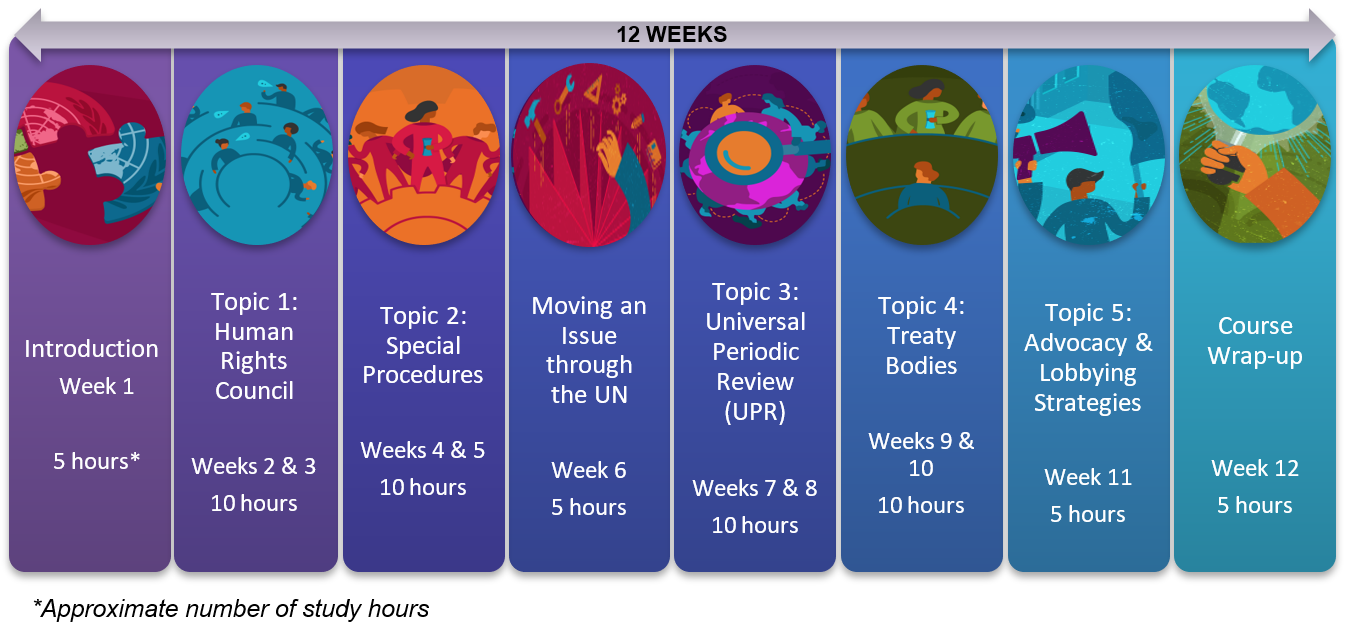
By participating in HRDAP, defenders:
- Gain knowledge and tools, which they can use to ensure their voice is central in international human rights decision-making
- Explore and compare the benefits of engagement with the Human Rights Council, the Special Procedures, the OHCHR, the UPR and the Treaty Bodies, and examine how they can use them to bolster their work at the national level
- Develop strategies and lobbying techniques to increase the potential of their national and regional advocacy work
During the last training, 19 human rights defenders from 17 countries took part in the programme. At the end of the training, 100% of those surveyed were satisfied with the programme, with 82% indicating they were “very satisfied”. Find out more about what they learnt here.
This programme is directed at experienced human rights defenders in non-governmental organisations, with existing advocacy experience at the national level and some prior knowledge of the international human rights system. ISHR supports, and promotes solidarity with and between, defenders working in the following areas or contexts, which we recognise as intersectional and interdependent:
- Equality, dignity and non-discrimination
- Environmental justice and sustainability
- International accountability for the repression of human rights defenders
- Transparency and rule of law
Download the HRDAP22 Programme Description to find out more and apply before Monday 3 January 2022!
https://ishr.ch/latest-updates/hrdap-2022-apply-now-for-ishrs-training-for-human-rights-defenders/
Human Rights Day 2021
December 10, 2021The United Nations has chosen for Human Rights Day 2021: the theme “All human, all equal” [for some action last year, see: https://humanrightsdefenders.blog/tag/international-human-rights-day-2020/]
At the heart of human rights lie the principles of equality and non-discrimination. Equality has the power to help break cycles of poverty; it can give young people the world over the same opportunities; it can help in advancing the right to a healthy environment; it can help tackle the root causes of conflict and crisis.
Equality “means that we embrace our diversity and demand that all be treated without any kind of discrimination,” says UN Human Rights High Commissioner Michelle Bachelet. On Human Rights Day, we are calling for a new social contract. This means addressing pervasive inequalities and structural discrimination with measures grounded in human rights. It requires renewed political commitment, the participation of all, especially the most affected, and a more just distribution of power, resources and opportunities.
Equality and non-discrimination are the key to prevention of some of the biggest global crises of our time. Human rights have the power to tackle the root causes of conflict and crisis, by addressing grievances, eliminating inequalities and exclusion and allowing people to participate in decision-making that affects their lives. Societies that protect and promote human rights for everyone are more resilient and sustainable, and stand better equipped to weather unexpected crises such as pandemics and the impacts of the climate crisis. As we continue on the path towards the 2030 Agenda for Sustainable Development, and countries’ commitments to leave no one behind, we must strive for a world where a life of equality in dignity and rights is a lived reality for all.
—–
Bertrand G. Ramcharan on this occasion wrote for the Universal Human Rights Group in Geneva a blog post: Human Rights Day 2021: protect the right to be as well as the right to become
..What the Universal Declaration sought to do, seventy-three years ago, was to invite all governments to pursue human rights strategies of governance. That is to say, government policies and laws should take the precepts of the Universal Declaration as their basic starting point, and governments should be held accountable against those standards.
Human Rights Day this year is being commemorated at a time when the present and the future are joined together as perhaps at no other time in the history of the UN. The world is simultaneously facing a range of critical human rights crises, including a global pandemic, a biodiversity crisis, a pollution crisis, and a climate crisis. The human rights challenges presented by these crises overlay existing discrimination and inequality.
Regarding climate change, the recent Glasgow conference witnessed the tensions between those who fervently believe that the use of fossil fuels must be halted and those who equally fervently plead that they cannot feed and take care of their peoples if they precipitously stop the use of fossil fuels.
The Universal Declaration of Human Rights provides the reference points, the frame of principles, for thinking through, formulating, and implementing policies on challenges such as these. It is a crucial document for every country.
The fourth principle is the rule of law, enshrined, among others, in article 10 of the Universal Declaration: ‘Everyone is entitled in full equality to a fair and public hearing by an independent and impartial tribunal.’ The rule of law must be respected everywhere. In many countries it is not.
He then describes and discusses 8 cardinal principles and ends by quoting a leading drafter of the Universal Declaration, the Lebanese Philosopher Charles Habib Malik [see: https://www.trueheroesfilms.org/thedigest/laureates/b5b948da-a4a2-45d7-9ccc-6fd4d938fb24] ‘The very essence of freedom is the right to become, not only the right to be.’
In our times, both the right to be and the right to become are under serious threat. On this Human Rights Day, the eight principles of the Universal Declaration enumerated above can help humanity protect the right to be as well as the right to become.
———-
For Human Rights Day 2021, award-winning filmmaker Shred Shreedhar has planned to release his animated short Reena Ki Kahaani which talks about human trafficking. The short is made for all age groups and is based on a real-life incident. Directed by Shreedhar, animation and creative direction was done by Ashish Wagh and PS Jayahari took care of the music.
“Reena Ki Kahaani is based on the true story of Reena (name changed), a survivor of human trafficking. She got sold into the market of flesh trade on grounds of false promises only to be rescued later by Vihaan, the anti human trafficking NGO,” Shred Creative Lab director Shreedhar told AnimationXpress in an email interview.
He revealed that they chose ‘folk as an art style to connect to the region from where the story originated’. “It helped in making the story more relatable. The former National Geographic Channel India creative VP hopes that with this film, a heinous crime like human trafficking gets talked about more in the mainstream media.
About choosing animation as a medium, Shreedhar said, “Animation as a format is visually appealing to children as well as adults. The purpose was for the film and its message to reach out to not only adults and caregivers but children as well; so a difficult topic was made palatable for all age groups through an animated film so that the dangers are understood.”

According to him, there wouldn’t have been a better day to highlight this reassuring story of courage and human grit in the face of a brutal violation of human rights and spirit. “Nothing celebrates Human Rights Day as the rise and triumph of the human spirit in Reena’s story,” he concluded.
Reena Ki Kahaani, the animated short film of nearly 10 minutes will be released on Shred Creative Lab’s YouTube Channel and other social media handles.
https://www.standup4humanrights.org/en/2021/highlights_09.html
Nicholas Opiyo Laureate of the 2021 Tulip award
December 7, 2021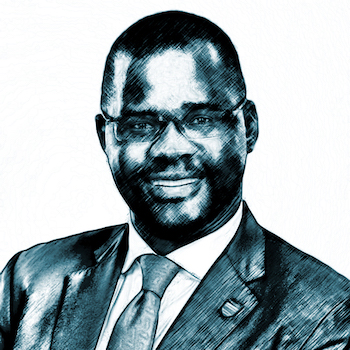
Ugandan human rights lawyer Nicholas Opiyo was awarded the 2021 Human Rights Tulip. The Dutch Ministry of Foreign Affairs awards the honour, which is accompanied by a cash prize of 100,000 euros to help the recipient continue or expand their work. For more on this award and its laureates, see: https://www.trueheroesfilms.org/thedigest/awards/D749DB0F-1B84-4BE1-938B-0230D4E22144
Opiyo opposed a controversial anti-gay law that included a life sentence for homosexuality. According to the ministry, the human rights defender also played an important role in criminalizing torture in his country. His work often leads to him being accused of criminal violations with no evidence to back up the charges, and he is often closely monitored by security forces. “Human rights activists see the charges against Nicholas as a way to hinder his work as a human rights lawyer. Even in jail, he used his time to talk to prisoners who sought advice,” the ministry stated. [see also: https://humanrightsdefenders.blog/2020/12/23/ugandan-human-rights-defender-nicholas-opiyo-arrested-like-a-criminal/]
“His work has made the LGBTI community in Uganda feel stronger, knowing that there are allies who support them,” said caretaker Foreign Minister Ben Knapen.
Opiyo beat out two other finalists for the prize. Nunca Más and Russian lawyer Mari Davtyan. See: https://humanrightsdefenders.blog/2021/11/22/the-3-nominees-for-the-2021-tulip-are-known/
Last year the Human Rights Tulip went to Lilit Martirosyan [see: https://humanrightsdefenders.blog/2020/12/11/armenian-lilit-martirosyan-receives-human-rights-tulip-2020/] who said: “Since winning the Human Rights Tulip in 2020 I’ve felt stronger and more protected, knowing that the Dutch government is on my side and that I’m no longer on this journey alone“.
https://nltimes.nl/2021/12/06/ugandan-lawyer-receives-dutch-human-rights-prize
https://chimpreports.com/ugandas-nicholas-opiyo-wins-global-human-rights-award/
NGOs demand EU to impose sanctions on NSO Group
December 7, 2021Dozens of rights groups are urging the European Union to impose sanctions on the Israeli NSO Group to ban the company’s Pegasus surveillance technology. The letter sent to the EU was signed by 86 rights groups and independent experts, including Reporters Without Borders, Amnesty International, Human Rights Watch, the Electronic Frontier Foundation and Privacy International, among others. A consortium of media revealed that this powerful spyware was used extensively by several governments to spy on lawyers, journalists, political opponents and human rights activists.
Several victims of illegal surveillance have been identified in Hungary, where the government initially denied being a client of NSO Group, before admitting to having purchased the software. See also: https://humanrightsdefenders.blog/2021/11/10/palestinian-ngos-dubbed-terrorist-were-hacked-with-pegasus-spyware/
A good resource is here: https://www.haaretz.com/israel-news/MAGAZINE-nso-pegasus-spyware-file-complete-list-of-individuals-targeted-1.10549510
Several victims of illegal surveillance have been identified in Hungary, where the government initially denied being a client of NSO Group, before admitting to having purchased the software. See also:
“There is overwhelming evidence that Pegasus spyware has been repeatedly used by abusive governments to clamp down on peaceful human rights defenders, activists and perceived critics,” Deborah Brown, senior digital rights researcher and advocate at Human Rights Watch, said in a statement. “The EU should immediately sanction NSO Group and ban any use of its technologies.”
The EU’s global human rights sanctions would allow the EU to adopt “ “targeted sanctions against entities deemed responsible for violations or abuses that are “of serious concern as regards the objectives of the common foreign and security policy”, including violations or abuses of freedom of peaceful assembly and of association, or of freedom of opinion and expression,” the letter read.
According to Human Rights Watch, these rights have been “repeatedly violated using NSO technology,” and, as highlighted by the UN Special Rapporteur on freedom of opinion and expression, “the use of spyware by abusive governments can also facilitate extrajudicial, summary or arbitrary executions and killings, or enforced disappearance of persons.” See also: https://humanrightsdefenders.blog/2021/10/04/big-coalition-urges-un-to-denounce-abuses-facilitated-by-spyware-technologies/
NSO Group was blacklisted by the US State Department at the beginning of November, and slapped with a sanction that drastically limited the business relationships the US company had with US customers or suppliers, according to the French newspaper Le Monde. “The EU should unequivocally close its doors to business with NSO Group,” Brown said.
“Targeted sanctions are necessary to that end, and to add to growing international pressure against the company and the out-of-control spyware industry.”
In Europe, several investigations are ongoing, but no sanctions have been formally imposed on the company. In addition to Hungary, several other countries are, or have been, customers of NSO Group – although this does not mean that all these countries have made illegal use of Pegasus.
In addition to Germany, several EU countries have purchased access to the software, according to Le Monde.
https://slate.com/technology/2021/12/apple-lawsuit-nso-group-q-cyber-pegasus.html
And the latest: https://marketresearchtelecast.com/spyware-sale-at-nso-group-the-end-of-pegasus/226205/
as well as
in 2022 the following items can be added:
https://www.hrw.org/news/2022/01/26/human-rights-watch-among-pegasus-spyware-targets
https://thewire.in/tech/nso-chairman-quits-says-departure-unrelated-to-recent-scandals
International Women Human Rights Defenders Day: Dalit Women Fight
December 7, 2021
Rudrani Gupta on 29 November 2021 invites you to meet 8 Exceptional Women at the occasion of International Women Human Rights Defenders Day 2021.
November 29 is globally recognised as International Women Human Rights Defenders Day.[see also: https://humanrightsdefenders.blog/2021/11/25/today-international-day-for-the-elimination-of-violence-against-women/]. As the name suggests, the day is used to celebrate women who invest themselves in defending the human rights and rights of women and LGBTQI across the world.
Let’s take a moment to recognise some of the widely known activists. But before starting, let me tell you that the list isn’t exhaustive. Every woman who speaks up for her or others’ rights at home or in public places is an activist. Being an activist requires the perspective to look beyond the given and seek that which is deliberately made invisible.
1. Cynthia Stephen
An independent researcher on gender, poverty, development and policy, Cynthia Stephen has worked as an activist and writer for over 30 years. Stephen is a champion of equality and has supported the cause and rights of Dalit women often. In an article published on SheThePeople, Stephen said, “The life of a human being varies with their position in the caste hierarchy. Women are only objects who fulfil domestic, ritual and reproductive roles in a patriarchal family. The untouchables don’t even figure in the law book as they are outside the pale of the four castes. Women and Dalits are non-citizens, non-people as far as it (the Indian state) is concerned”
- Kiruba Munusamy
Munusamy is an advocate at Supreme Court and a prominent anti-caste and equality activist. She is also a writer, research and a founder of many organisations that promote equality. Speaking to SheThePeople, she said, “All of us need to stand against women’s oppression, Islamophobia, violation of the LGBTQIA community. This has to become an anti-status quo revolutionary movement. It has to have leadership from the oppressed community.”
3. Shruti Kapoor
After the Nirbhaya gangrape case shook the world, Shruti Kapoor took the initiative of empowering girls and not letting the incident happen again. Kapoor founded the organisation named Sayfty to educate and empower girls. The organisation also aims at providing knowledge about legal rights and laws to women. It trains girls in self-defence to make them self-sufficient in fighting against crime in India. Kapoor is widely known for her phenomenal work and has been awarded a couple of times. Apolitical named her one of the most influential people in global policy in 2019. In the same year, the Indian Ministry of Women and Child Development recognised Kapoor as one of the 30 #WebWonderWomenwho have been using social media to drive a positive change.
- Preeti Singh
Preeti Singh is a prominent disability activist. She often speaks about the stigma that further disables disabled people and advocates the importance of building disability-friendly infrastructure. She was born with Cerebral Palsy, which is a congenital disorder of movement, muscle tone or posture. Being a young child, she received a lot of negative comments like she’s burden, she should die and many other hurtful things.
- Sister Lucie Kurien
Sister Lucie Kurien was initially working at HOPE, an organisation founded by Holy Cross Convent that works for abused women. At that time, she was approached for help by a pregnant woman who was constantly abused by her alcoholic husband. But Kurien was unauthorised to invite the woman to spend the night in the organisation. So she told the woman to come next day so that she can arrange alternate accommodation for her. But that night, the pregnant woman was attacked by her husband who set her and her unborn child ablaze. Kurien was devastated and that’s when she thought about opening a shelter home for abused and deserted women. Hence Maher was founded. Maher is an organisation that provides shelter to women and underprivileged children. It has branches in Maharashtra, Kerala and Jharkhand. It not only helps the survivors of domestic violence but also educates the poor and underprivileged. Many villagers were provided with knowledge about rights, duties and responsibilities in society.
- Naseema Khatoon
At the age of 28, Naseema Khatoon , daughter of a sex worker, hailing from Muzaffarpur, Bihar founded the organisation named Parcham. The organisation rehabilitates sex workers and their children and protected them from police atrocities. It also educates and employs them by starting a small scale manufacturing business of bindis, candles and incense sticks.
- Shweta Katti
Born and raised n Kamathipura, Asia’s most infamous red-light area, Shweta Katti is known for her work towards empowering marginalised girls. At the age of 16, she joined Kranti, an NGO that empowers girls from the red-light area and makes them agents of social change., Katti was included in the Newsweeks-25-Under-15 Women to Wach list in 2013. She also received UN Youth Courage Award. Katti received a scholarship from Bard College hence becoming the first woman from the red-light area to study abroad.
- Riya Singh
A doctoral researcher at Delhi’s Ambedkar University, Riya Singh plays a vital role in empowering Dalit voices. She works at the Research and Advocacy Officer at Dalit Women Fight which is India’s largest Dalit women-led organisation to tackle caste based violence and discrimination. She has actively worked with survivors of caste atrocities. Speaking with SheThePeople about the caste-based violence like Hathras gangrape case, she said, “I’ve never understood the need of explaining why caste is important in a caste-based crime. Caste is right in front of our eyes… The first thing people ask is what is your name? If you give your first name, they’ll ask you – aage kya hai? (for surname). But Indian society is hesitant about claiming caste pride when it is about bad things.”
It is important to note that women to defend our rights are at great risk of being deprived of their own rights. In 2015, a report by The Guardian revealed that human rights activists are constantly being targeted around the world. “Women are in a really very bad position in the whole world but in countries like Honduras where we actually no rights all, we may have the worst part. And the women who speak up in a worse [position.]” said Daysi Flores, JASS Honduras country director, in Guardian’s Global Development Podcast.
We have often come across cases of murder, sexual crime and abuse against women activists. A prominent example from India is the reported molestation against female students in Jamia Milia Islamia during the CAA-NRC protest which became a reason for bringing together many women activists. Gladys Lanza Ochoa, a feminist and human rights activist from Honduras was illegally imprisoned for defending the rights of women in the country and fighting against the imprisonment she died due to health problems.
Arundhati Roy was charged with sedition for her comment on the CAA-NRC protest. Aishe Ghosh was brutally hurt during a breakthrough in the college. Many marches for women’s safety and crime against them is shadowed by the danger of being harassed by men involved in the protest or those dressed up as police. Cases of sexual misconduct were reported by women protestors from the Singhu Border too. A woman was reported to have been stalked by a man who took pictures of her at the protest site. Another woman reported that a prominent male protestor from Singhu Border would propose to her each time she bumped into her and touch her face a few times.
As far as India is concerned the major reason for the unaddressed issues of women is their lack of representation in law and government. The representation of women in the Indian judiciary dwindles at 12% which is lower than in Afghanistan (27.6 %). India ranks at 146th in women’s representation in the national Parliament. In Lok Sabha, only 14 per cent of seats belong to women.
If the judiciary and parliament involve fewer women, how can we be assured of the safety of women activists on the ground? How can we be assured that the safety of women activists is a concern of the government? So on this international woman human rights defenders day, let us pledge the safety and security of women who fight for our rights.
https://www.shethepeople.tv/dalit-women-india/this-international-women-human-rights-defenders-day/
Humaira Rasuli is the recipient of the 2021 Asia Democracy and Human Rights Award
December 7, 2021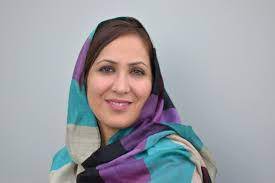
The Taiwan Foundation for Democracy (TFD) has named Afghan human rights lawyer and feminist Humaira Rasuli as the recipient of the 2021 Asia Democracy and Human Rights Award. [For more on this award and its laureates, see: https://www.trueheroesfilms.org/thedigest/awards/607BB850-4813-489B-A47D-3965F2078E1F]
It is hoped that the award will “further inspire the world to pay closer attention to human rights in Afghanistan, especially women’s rights” and “encourage human rights defenders and those who have been deprived of human rights,”
According to the TFD, Rasuli has been actively involved in social activism and the promotion of women’s rights at a young age and thorough her years of work, “Afghan women have gradually been able to receive justice from judicial procedures.”
As the co-founder and executive director of the Women for Justice Organization, Rasuli has led lawyers, gender experts and activists in efforts to increase women’s access to justice, uphold the rule of law in Afghanistan, and investigate some of the most emblematic sex crime cases in the country over the years, the TFD said in its statement.
She also previously served as director of Medica Afghanista, another organization that provides psychosocial counseling and legal support to female survivors of sexual violence. However, in an interview with the European public broadcaster, Arte, aired in September, Rasuli revealed that she has relocated to the U.S. following the U.S. military pull-out from Afghanistan.
The TFD on Tuesday declined to confirm Rasuli’s current whereabouts, but said she would deliver her acceptance speech in a pre-recorded video that would be published on its website on 10 December.
The foundation said it would not host a physical award ceremony this year due to COVID-19.
TODAY: International Day for the Elimination of Violence against Women,
November 25, 2021Women and girls everywhere continue to be subjected to multiple forms of gender-based violence, including femicide, online violence and domestic violence, UN and regional experts (for impressive list see below) said today. They call on States to exercise due diligence and to fight pushbacks on gender equality.
On the International Day for the Elimination of Violence against Women, they issue the following statement: [see also: https://humanrightsdefenders.blog/2019/11/19/16-days-of-activism-against-gender-based-violence-start-on-25-november-2019/]
“Although they represent more than half the world’s population, women and girls the world over are still at risk of being killed and subject to violence, intimidation and harassment when they speak out – for the simple fact of being women and girls. Violence against women and girls is the result of intersectional forms of social, political, economic, racial, caste and cultural discrimination perpetrated daily against women and girls in all of their diversity, including in the context of armed conflict, and States and the international community have the obligation mandated by international human rights law and standards to address this violence. Together, these forms of discrimination not only aggravate the intensity and frequency of violence but also sharpen the impunity that exists against it and increase societal and individual readiness to allow it.
Of particular concern is the fact that not only women and girls continue to be subjected to multiple manifestations of violence but that the spaces where this violence takes place have also multiplied. Nowhere is this more apparent than within online spaces, including social media. Governments, private companies and others may seek to hide their responsibilities behind the seemingly “borderless” nature of the internet. But human rights are universal and, as such, there is one human rights regime that protects the rights of women and girls offline as well as online, and that demands zero tolerance for violence against women and girls in the digital space. Violence against women and girls flourishes because those who seek to silence women and girls and facilitate their exploitation, abuse, maiming and killing are not firmly prevented from and held accountable for their actions.
It is unacceptable that in today’s world where humanity and life on this planet faces the existential threats of climate change and toxic pollution amidst a proliferation of conflict; the COVID-19 pandemic has killed at least 5 million people and infected at least 250 million worldwide in less than two years, also causing an increase in domestic violence against women, that women and girls are unable to participate fully in responding to these threats or in the search for solutions because they are discriminated, abused and continue to suffer violence, including sexual violence, exploitation and death on the basis of their sex, gender, sexual orientation and gender identity. These global crises interact with and further deepen pre-existing inequalities as well as legal, institutional and policy gaps to eliminate gender-based violence against women and girls, which in many cases, worsen them. Indigenous women, internally displaced women, women with disabilities, lesbian and transgender women and women belonging to other vulnerable or marginalized groups are particularly affected by the failure of these policies to prevent such violence, as well as protect and assist survivors.
While a number of States, non-state actors and other stakeholders have stepped up their interventions and resource allocations to prevent and respond to gender-based violence against women and girls, more effort in terms of both financial and non-financial interventions is needed to make these approaches truly transformative, particularly with regards to prevention, to avoid that policies remain ‘gender blind’, ‘gender exploitative’ or ‘race neutral’. Many of these policies do not disaggregate data based on social and racial constructs which discriminate, marginalize, exclude, and violate women and girls. These policies need to transform the prevailing social, economic and political systems that produce, nurture, and maintain gender inequality and drive violence against women and girls everywhere, through increased investment in their education and skills development, access to information, social services and financial resources, and support for positive representation and images in public discourse and social media. Collectively, they need to do more to challenge the patriarchal social norms and constructs of masculinity, femininity, racism and casteism that are based on extremely harmful stereotypes and which can cause psychological, physical, emotional and economical harm, including for women of colour, including those of African descent. These stereotypes pervade state institutions as evidenced by the lack of accountability for many cases before law enforcement and justice systems. States must also ensure access to comprehensive physical and mental care for survivors of gender-based violence, as part of the full range of quality sexual and reproductive health care that must be available for all.
Collective effort is required to stop the reversal of progress made in ending violence against women across the world and to counter the backlash against gender equality and the tenets of human rights-based legislation and governance. Those responsible for these regressive steps often begin by attempts to co-opt the justice system, change or issue new legislation and curtail fundamental rights and freedoms for women and girls, such as their freedom of thought, expression and association, their right to peaceful assembly, freedom of association, freedom of thought and, in particular, their sexual and reproductive rights. All human rights are inalienable, interdependent and exist without a hierarchy, despite the efforts of some actors to sacrifice some of these rights at the expense of others, often in the name of their own cultural or religious norms and their particular perception of societal harmony.
Women and girls around the world need to be heard; their voices should not be silenced nor their experiences go unnoticed. Women will never gain their dignity until their human rights are protected. Women’s rights are human rights. Women and girls’ agency and participation in all processes that affect their rights and lives need to be promoted and protected at all costs. States should ensure and create an enabling environment for women to exercise their fundamental freedoms of expression, association, peaceful assembly and public participation free from intimidation and attacks. States must exercise their due diligence obligation and protect women human rights defenders, activists and women’s organizations who are regularly harassed, intimidated and subjected to violence for defending their rights and promoting equality. The level and frequency of violence against them should raise alarm bells everywhere. It is, and should be, a public policy and a human rights priority.
If we want to gauge the underlying health, security and prosperity of a society, we all need to address our duty to play a part in the respect and furtherance of women and girls’ rights. There will be no prosperity without ending violence against women and girls in the public as well as in the private sphere.
There will be no ending of violence against women and girls if we don’t recognize and protect the dignity, rights and security of women and girls everywhere and at all times.” ENDS
*The experts:
Platform of independent expert mechanisms on the elimination of discrimination and violence against women (EDVAW Platform): Reem Alsalem*, Special Rapporteur on violence against women, its causes and consequences; ****Melissa Upreti ****(Chair), **Dorothy Estrada Tanck **(Vice-Chair), Elizabeth Broderick, Ivana Radačić, and **Meskerem Geset Techane, ***Working Group on discrimination against women and girls*; ****Gladys Acosta Vargas, ***Chairperson of the UN Committee on the Elimination of Discrimination against Women;* Margarette May Macaulay******, ****Rapporteur on the Rights of Women of the Inter-American Commission on Human Rights**; Iris Luarasi, President of the Group of Experts on Action against Violence against Women and Domestic Violence of the Council of Europe; Tatiana Rein Venegas**, President of the* Committee of Experts of the Follow-up Mechanism to the Belém do Pará Convention*; Maria Teresa Manuela, Special Rapporteur on the Rights of Women in Africa.*
Obiora Okafor*, Independent Expert on human rights and international solidarity; Javaid Rehman, Special Rapporteur on the situation of human rights in the Islamic Republic of Iran; Fabian Salvioli, Special Rapporteur on the promotion of truth, justice, reparation and guarantees of non-recurrence; Marcos A. Orellana, Special Rapporteur on the implications for human rights of the environmentally sound management and disposal of hazardous substances and wastes; Francisco Cali Tzay, Special Rapporteur on the rights of indigenous peoples; Vitit Muntarbhorn,*Special Rapporteur on the situation of human rights in Cambodia*; Mama Fatima Singhateh, Special Rapporteur on the sale and sexual exploitation of children; Mary Lawlor, Special Rapporteur on the situation of human rights defenders; **Victor Madrigal-Borloz, ***Independent Expert on Protection against violence and discrimination based on sexual orientation and gender identity*; ****Alioune Tine****, Independent Expert on the situation of human rights in Mali; **Sorcha MacLeod (Chair-Rapporteur), Jelena Aparac, Ravindran Daniel, Chris Kwaja, ***Working Group on the use of mercenaries*; Gerard Quinn****, ****Special Rapporteur on the rights of persons with disabilities*; Livingstone Sewanyana*, Independent Expert on the promotion of a democratic and equitable international order; ****Fionnuala Ní Aoláin****, Special Rapporteur on the promotion and protection of human rights while countering terrorism; Cecilia Jimenez-Damary, Special Rapporteur on the human rights of internally displaced persons;** Saad Alfarargi, Special Rapporteur on the right to development; **Tomoya Obokata, Special Rapporteur on contemporary forms of slavery, including its causes and consequences; Fernand de Varennes****, Special Rapporteur on minority issues; Yao Agbetse, Independent Expert on the situation of Human Rights in the Central African Republic; **Nils Melzer, ***Special Rapporteur on torture and other cruel, inhuman or degrading treatment or punishment*; Felipe González Morales, Special Rapporteur on the human rights of migrants; Balakrishnan Rajagopal, Special Rapporteur on the right to adequate housing; Tlaleng Mofokeng, Special Rapporteur on the right to health; Attiya Waris, Independent Expert on debt, other international financial obligations and human rights; Pedro Arrojo Agudo, Special Rapporteur on the human rights to safe drinking water and sanitation;****Elina Steinerte**** (Chair-Rapporteur), ****Ms. Miriam Estrada-Castillo**** (Vice-Chair), ****Ms. Leigh Toomey****, ****Mr. Mumba Malila****, ****Ms. Priya Gopalan****, Working Group on arbitrary detention;** Michael Fakhri, Special Rapporteur on the right to food; Ahmed Shaheed, Special Rapporteur on freedom of religion or belief; Muluka Anne Miti-Drummond,Independent Expert on the enjoyment of human rights by persons with albinism; Siobhán Mullally, Special Rapporteur on trafficking in persons, especially women and children; Clément Nyaletsossi Voule, Special Rapporteur on the rights to freedom of peaceful assembly and of association**; **Isha Dyfan, ***Independent Expert on the situation of human rights in Somalia* ; ****Luciano Hazan (****Chair-Rapporteur),**** Aua Balde ****(Vice-Chair),**** Gabriella Citroni, Henrikas Mickevicius**** and ****Tae-Ung Baik, ***Working Group on Enforced or Involuntary Disappearances*; ****Alexandra Xanthaki, ***Special Rapporteur in the field of cultural rights;* **Morris Tidball-Binz ***Special Rapporteur on extrajudicial, summary or arbitrary executions*; Anais Marin, Special rapporteur on the situation of human rights in Belarus; Surya Deva (Chairperson), Elżbieta Karska (Vice-Chairperson), Githu Muigai, Fernanda Hopenhaym, and Anita Ramasastry, Working Group on Business and Human Rights; David Boyd, Special Rapporteur on human rights and the environment; Ms. Dominique Day (Chair), Ms. **Catherine S. Namakula (Vice-Chair), Ms. Miriam Ekiudoko,** Mr. Sushil Raj, Ms. Barbara G. Reynolds Working Group of Experts on People of African Descent; **Irene Khan, ***Special Rapporteur on the right to freedom of opinion and expression.
See also:
“We Will Stop Femicide” winner of gender equality award 2021
November 23, 2021
On 23 November, 2021 urdupoint.com reported that the Turkish human rights Platform “We Will Stop Femicide” has received the international prize for gender equality (IGEP), the Finnish Cabinet said on Monday. For more on this and similar awards, see: https://www.trueheroesfilms.org/thedigest/awards/ef066ac0-e59c-11e7-8845-81361f38ae62
We Will Stop Femicide was founded in 2010 to provide legal help to Turkish women facing abuse at home. It has been chosen as the winner out of about 400 applicants.
“We are proud to announce the winner of the #IGEP 2021, WE WILL STOP FEMICIDE PLATFORM, a non-governmental organization that does groundbreaking work combating violence against women in Turkey and whose work has a global relevance. Congratulations!” the award’s organizers posted on Twitter.
The prize was awarded in the Finnish city of Tampere to the founder of the organization, Gulsum Onal, by Finnish Prime Minister Sanna Marin.
“The work of the We Will Stop Femicide Platform includes decision meetings, educational activities, informative seminars, mass protests, and a variety of correspondence meetings. The association seeks to work with provincial and district assemblies to ensure gender equality nationwide in Turkey,” Marin said.
She further stressed the importance of a global effort to end violence against women and called on the international community to ensure protection of women‘s rights in all countries.
Nobel Peace Laureate Nadia Murad also attended the ceremony.
https://www.urdupoint.com/en/world/turkish-human-rights-activists-awarded-finnis-1407890.html
India arrests Khurram Parvez again
November 23, 2021
The National Investigation Agency (NIA) of India arrested on Monday, 22 November 2021 prominent human rights defender Khurram Parvez after a day of extensive searches at his residence and office in Jammu and Kashmir capital Srinagar. He is an internationally recognized human rights defender, see: https://www.trueheroesfilms.org/thedigest/laureates/81468931-79AA-24FF-58F7-10351638AFE3
A family member told The Wire that Khurram’s residence in the city’s Sonawar locality was raided by NIA officials who were accompanied by local police and paramilitary troopers, on Monday morning. Another raid was carried out later in the day at his office in the Amira Kadal locality.
The raids were carried out in connection with a case (RC 30/2021) filed by the agency earlier this year.
Sources said the investigators confiscated Khurram’s mobile phone, laptop, some books and documents from his office and residence before taking him to the agency’s camp office in Srinagar’s Church Lane on Monday afternoon. “In the evening, we got a call to bring his clothes,” said a family member, adding that his wife and their son went to the office and handed his clothes to the officials there.
The NIA has not so far issued any statement on the arrest of Khurram, who is also the chairman of Asian Federation Against Involuntary Disappearances. Sources said his family was handed the arrest memo on Monday evening and he is likely to be flown to New Delhi on Tuesday.
The United Nations said it was disturbed by the reports of Khurram’s arrest, “I’m hearing disturbing reports that Khurram Parvez was arrested today in Kashmir & is at risk of being charged by authorities in #India with terrorism-related crimes. He’s not a terrorist, he’s a Human Rights Defender,” Mary Lawlor, UN Special Rapporteur on Human Rights Defenders, tweeted. David Kaye, a former UN Special Rapporteur, said Khurram’s arrest under terrorism charges was “yet another extraordinary abuse in Kashmir.”
World Organisation Again Torture (OMCT), a Geneva based non-profit which works with groups across the world to fight for human rights, said it was “deeply concerned” by Khurram’s arrest, “We are deeply concerned about the high risk of torture while in custody. We call for his immediate release,” OMCT said in a tweet.
One of the most prominent rights defenders from Kashmir, Khurram has extensively worked on documenting the abuses allegedly committed both by security forces and militants in Kashmir as coordinator of Jammu Kashmir Coalition of Civil Society (JKCCS), a rights group based in Srinagar. See also: https://humanrightsdefenders.blog/2016/12/01/human-rights-defender-khurram-parvez-reluctantly-released-in-india/
The JKCCS has published more than a dozen reports on human rights abuses in Kashmir and its last report, ‘Kashmir’s Internet Siege’ focused on the mass detentions and the reported breakdown of the judicial system in Jammu and Kashmir in the aftermath of the reading down of Article 370. See also: https://humanrightsdefenders.blog/2020/02/09/forgotten-kashmir-something-has-to-be-done/
Khurram’s last tweet on August 30 this year was about a programme organised by Asian Federation Against Involuntary Disappearances and its members countries across Asia who pledged “that truth will not be buried, disappeared won’t be ever forgotten & perpetrators will never be forgiven.”
However, India’s government resists any notion of having acted wrongly:
Ministry of External Affairs (MEA) spokesperson Arindam Bagchi said that the [UN] statement makes “baseless and unfounded allegations” against Indian security forces. “It also betrays a complete lack of understanding on the part of the OHCHR of the security challenges faced by India from cross-border terrorism and its impact on the most fundamental human right ‘the Right to Life’ of our citizens, including in Jammu and Kashmir,” he said.
Asserting that all actions are undertaken in accordance with the law, he said, “We urge the OHCHR to develop a better understanding of the negative impact of terrorism on human rights.”
https://thewire.in/rights/khurram-parvez-nia-arrest
https://thewire.in/diplomacy/un-ohchr-khurram-parvez-arrest-india-dismiss

