Human rights defender Mary Aileen Bacalso in the Philippines published a blog post in La Croix International of 3 August 2017 entitled “The imperative of more shepherds for the Lord’s flock“. It describes the case of Redemptorist Father Rosaleo Romano who disappeared 3 decades ago and makes the point that pastors like him are now needed more than ever.
Victims of enforced disappearances in the Philippines, including Redemptorist Father Rosaleo Romano, are remembered during a memorial in Manila. (Photo by Rob Reyes)
The Philippine human rights community has not forgotten Father Rosaleo Romano more than three decades after his disappearance during the dark years of the dictatorship. A “man of the cloth”, Father Romano, “Rudy” to his friends, one of the staunchest human rights defenders during those years, was forcibly made to disappear by the military…Father Rudy did not live his spirituality in the confines of convent walls. He meaningfully lived it out through his apostolate with poor farmers, with striking factory workers, with the poor whose shanties were demolished in the name of development, and with students struggling for academic freedom. The priests consequently suffered persecution during that most obscure time of the dictatorship of Ferdinand Marcos.
In his white cassock, Father Rudy would confront soldiers with their batons and shields. He would link arms with protesters, and suffered arrest and stayed behind the bars of prisons several times. The persecutions did not cow him from following the footsteps of the “Most Holy Redeemer”. It strengthened his resolve to fully embrace the consequences of his actions. “If I die, you will know who killed me,” he told his parents from the province of Samar. He paid the price for concretizing the church’s teaching of preferential option for the poor. He became, and remains to be, one of the more than 2,000 documented cases of disappearances during the Marcos years. The disappearance of the Redemptorist priest brought thousands of people in the central Philippine province of Cebu out in the streets during those years. The perpetrators’ act of cowardice of abducting a committed pastor resulted in an outrage not only among the organized masses in the country but even among international solidarity groups.
More than three decades have passed. There is no trace of Father Rudy’s whereabouts. In a country battered by burning human rights issues, and with the silence of Filipinos who continue to place their trust in a president who openly attacked human rights defenders, the Catholic Church in the Philippines needs to relive the example of Father Rudy. It is sad that there seems to be a dearth of people with the Redemptorist’s zeal and commitment these days. Have we given justice to Father Rudy’s very ideals that earned for him the status of one of the most well-known desaparecidos during the Marcos era? Have his sacrifices in opting for the poor, the deprived, and the oppressed borne fruits for freedom and democracy? Has his exemplary life multiplied a hundredfold through the proliferation of people who are following his footsteps?
Father Rudy’s name is carved on the “Flame of Courage” built by the Redemptorist congregation in Manila in 1994. With hundreds of names of Filipino desaparecidos, the monument of a mother holding a torch and a child holding a picture of his disappeared father manifests the never-ending hope against hope that one day, the long-awaited reunification of families will be realized.
The dream of a “new heaven and a new earth” is far from being realized in this predominantly Catholic country where the teachings of love and justice are blatantly ignored. The “people of God” need, more than ever, pastors who are willing to offer their lives so that others may live.
On 3 July 2017 the Right Livelihood Foundation made public the list of Grantees of its 2017 Reporting Right Livelihood journalism programme. Journalists will receive grants to shine the light on ‘under-reported‘ stories linked to the work of ‘Alternative Nobel’ Laureates. The grantees of the inaugural Reporting Right Livelihood journalism programme were selected from among 93 applicants from 48 countries. The grants, ranging from €200 to €5,000, cover essential travel, subsistence and communication costs to enable reporting on the selected stories over the next six months. The decision was made by a committee comprised of journalists and media experts from Germany, Sweden, Switzerland, Turkey, and the UK.
This year’s grantees are:
Ms Aissatou Barry (Guinea), to produce a multimedia report on fighting impunity in Chad, Senegal and Burkina Faso, linked to the work of Laureate Jacqueline Moudeina (€ 4,800)
Mr Bikash Bhattacharya (India), to report on Indonesia’s logging sector corruption, an issue constantly raised by late Laureate Munir Said Thalib (€4,500)
Ms Fabiola Ortiz (Brazil), to provide a multimedia report on how Brazilian martial art Capoeira became a powerful tool to promote peace among men, women and children in the Democratic Republic of Congo, linked to the work of Dr Denis Mukwege (€5,000).
Ms Mervis Elebe (Nigeria) and Mr Ray Mwareya (Zimbabwe) will share a grant to report on the current situation with maternal health in Nigeria and Zimbabwe, linked to Dr Catherine Hamlin’s work on eliminating obstetric fistula in Ethiopia (€ 2,500 each, €5,000 in total).
Mr Philipp Lichterbeck (Germany) to report on the ’slow genocide’ of a little known Guarani-Kaiowa indigenous group in Brazil, linked to Laureate Survival International‘s work (€ 1,500).
Mr Roger Anis (Egypt), to produce a photo report on Egypt’s current housing crisis, linked to the legacy of Right Livelihood Award’s inaugural Laureate Hassan Fathy (€4,000).
In addition, the selection committee made a discretionary allocation of €200 to Ms Zofeen Ebrahim (Pakistan) who applied for a grant of US $57 to cover fuel costs in order to report on Pakistan’s home-based workers rights, linked to the work of Laureate Asma Jahangir.
The announcement comes with quotes from grantees and selection committee members. Such as:
“I was impressed by the variety, the creativity and relevance of proposals which made our decision so challenging and difficult. The projects we chose show a strong commitment to report on under-covered issues addressed by the Right Livelihood Award Laureates through their personal engagement. This shows how important it is to support journalistic coverage of these issues in order to improve the lives of people who suffer because of injustice, poverty, sickness or political pressure,” Adelheid Feilcke, Deutsche Welle, selection committee member
“Partout dans le monde des femmes et des hommes courageux se battent contre les injustices. L’engagement des journalistes est indispensable, pour faire echo à ces combats. Ces bourses vont pouvoir faire avancer les causes défendues et honorer les lauréats du Prix Right Livelihood,” Romaine Jean, Radio Télévision Suisse (RTS), selection committee member
Photo: Leader of Peru’s Ashaninka indigenous people, Ruth Buendia, was handed over the Bartolome de las Casas Prize from the Government of Spain. ANDINA/Difusión
Granted already in 2014, King Felipe VI of Spain presented the 23rd Bartolome de las Casas Award on Tuesday 4 July to Ruth Buendia, for her leadership skills as chairwoman of the Central Ashaninka del Rio Ene (CARE), a local organization in Peru that gathers 17 indigenous communities and works to defend the rights of the Ashaninka people in the Ene River Valley.the award honors her significant contribution to human and sustainable development, as well as her environmental protection work. The jury acknowledged Buendia’s efforts to provide access to public health and education services across the communities. Also, she managed to stop the construction of the Patizipatango hydroelectric dam, which prevented arable lands of 10 communities from being flooded.
The Bartolome de las Casas Award was also granted to Colombia‘s Fundacion Caminos de Identidad —FUCAI (Roads to Identity Foundation) for its constant work strengthening identity and autonomy of indigenous peoples in different fields: education, food sovereignty, family, childhood and youth.
Responding to the news that Nobel Peace Prize Winner Liu Xiaobo has passed away, Salil Shetty, Secretary General of Amnesty International commented on 13 July 2017 : “Today we grieve the loss of a giant of human rights. Liu Xiaobo was a man of fierce intellect, principle, wit and above all humanity…..For decades, he fought tirelessly to advance human rights and fundamental freedoms in China. He did so in the face of the most relentless and often brutal opposition from the Chinese government. Time and again they tried to silence him, and time and again they failed. Despite enduring years of persecution, suppression and imprisonment, Liu Xiaobo continued to fight for his convictions. Although he has passed, everything he stood for still endures. The greatest tribute we can now pay him is to continue the struggle for human rights in China and recognize the powerful legacy he leaves behind. Thanks to Liu Xiaobo, millions of people in China and across the world have been inspired to stand up for freedom and justice in the face of oppression… [https://humanrightsdefenders.blog/2017/06/26/breaking-liu-xiaobo-released-from-chinese-prison-with-late-stage-cancer/]
USA AI then mentions some of the many other HRDs who under the leadership of President Xi Jinping have suffered persecution:
The reaction of the Chinese government to criticism from abroad over Liu Xiaobo’s treatment is by the way typical. See e.g. in the Strait Times of 14 July: “Foreign ministry spokesman Geng Shuang also said China had lodged protests with “certain countries” for interfering in its “judicial sovereignty”…….”Conferring the prize to such a person goes against the purposes of this award. It’s a blasphemy of the peace prize”. [https://humanrightsdefenders.blog/2012/12/06/china-and-its-amazing-sensitivity-on-human-rights-defenders/]
AFP reported on 10 July from Khartoum that a court found that the journalist Amal Habani, winner of Amnesty International’s Ginetta Sagan Award, was ordered to pay 10,000 Sudanese pounds ($1,430) or face a jail term of four months. The court found her guilty in a case filed by a security officer who accused her of preventing him from doing his job during the March trial of three rights activists. “This is injustice. I was covering a trial of human rights activists when the security officer beat me,” Habani told AFP by telephone from the court on Monday. “When I complained against him, he filed a case against me. I will not pay the fine but rather go to jail.”
Her lawyer Ahmed Elshukri said he will file an appeal against the court’s order. Habani, who writes for online Sudanese newspaper Al-Taghyeer, said the incident with the security officer occurred when she was taking pictures on her mobile phone outside a court during the March trial.
An even more serous case is that of Dr. Mudawi Ibrahim Adam[https://www.frontlinedefenders.org/en/profile/dr-mudawi-ibrahim-adam] an internationally recognised human rights defender who was the winner of the inaugural 2005 Front Line Defenders Award for human rights defenders. Ibrahim Adam Mudawi and his colleague Idris Eldoma Hafiz face six serious charges such as “undermining the constitutional system” and “waging war against the state”. Rights groups have denounced the allegations as trumped up and linked to their human rights advocacy. The trial is underway in the capital Khartoum. “Human rights work is not a crime, so Dr Mudawi and Hafiz must be immediately and unconditionally released,” said Muthoni Wanyeki, Amnesty International’s regional director. “Their arrest and continued incarceration is a miscarriage of justice, plain and simple.” Mudawi has continuously been harassed for his human rights work in Darfur and across Sudan for more than a decade. See also: https://www.defenddefenders.org/2017/07/sudan-human-rights-defenders-detained-face-death-penalty/
Sudan regularly ranks near the bottom of international press freedom rankings. International NGOs have accused Sudan’s powerful National Intelligence and Security Service (NISS) of detaining human rights workers, opposition politicians and journalists.
Farah Jamil published on 10 July 2017 a blog post “The Richest Poor Man” recalling the life of the great humanitarian Abdul Sattar Edhifrom Pakistan. Leading humanitarian and the most endearing person in the country. ‘Edhi’ left us at the age of 88 last year on July 8. He had been suffering from kidney failure since 2013 and was on dialysis. Edhi dedicated his life for the welfare of the poor irrespective of their caste, class and creed and that’s what makes him an asset for the whole universe. “He was not only an asset for this country but for the whole humanity because of his selfless work”.
It was in 1974 when a formal institution by the name of Edhi Foundation was set up. …..with more than 1,800 ambulances stationed across Pakistan, the Edhi Foundation is Pakistan’s largest welfare organization. In 1997, the foundation entered the Guinness World Records as the “largest volunteer ambulance organization”. The Edhi Foundation’s slogan is: “Live and help live”.….
Edhi Sahab received many national and international awards included the Ramon Magsaysay Award for Public Service, Lenin Peace Prize, Hamdan Award for volunteers, Peace and Harmony Award (Delhi), Peace Award (Mumbai), Gandhi Peace Award (Delhi), UNESCO-Madanjeet Singh Prize.
Throughout his life, Edhi sahab set examples for the world to follow through his actions. He was a simple man with a heart of gold. He slept in a windowless room adjoining the office of his foundation furnished with just a bed, a sink and a hotplate.…..
His last words were:
–Bury me in same clothes, donate all my body parts, and make sure my clothes are distributed among others.
—Take care of the poor people of my country.
…….Edhi sahib, you indeed were the richest poor man!
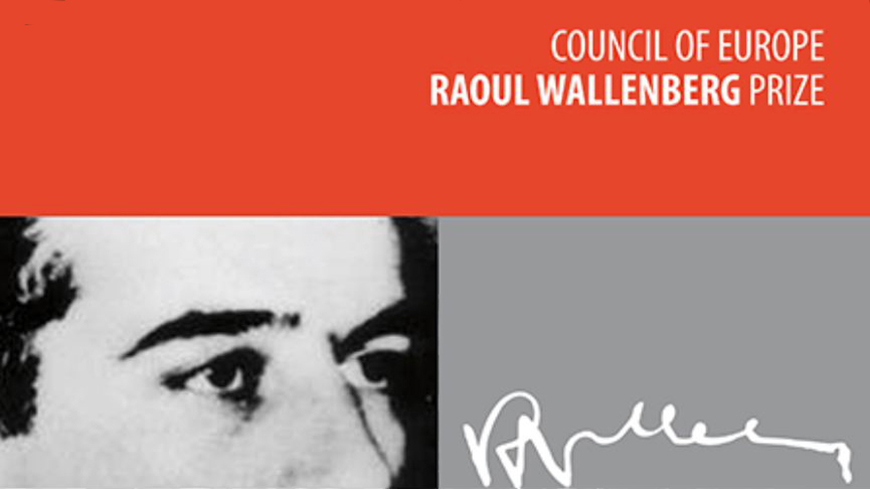
Since 2014, the Council of Europe Raoul Wallenberg Prize is awarded every two years in order to reward extraordinary humanitarian achievements by a single individual, a group of individuals or an organisation. The prize consisting of 10.000 € is awarded at a ceremony at the Council of Europe on 17 January – the date of Raoul Wallenberg’s arrest in Budapest in 1945.
The Jury consists of seven independent persons with recognised moral standing in the field of human rights and humanitarian work, appointed by: the Secretary General of the Council of Europe, the Swedish Ministry of Foreign Affairs, the municipality of Budapest, the Raoul Wallenberg Institute in Lund, the International Committee of the Red Cross, the United Nations High Commissioner for Refugees (UNHCR) and the Raoul Wallenberg family.
The deadline for submission of candidates for the “Raoul Wallenberg” prize 2018 is set for 31 October 2017.
Uyghur scientist and human rights activist Ilham Tohti – laureate of the 2016 Martin Ennals Award – was awarded the Weimar Human Rights Prize by the Weimar city council for his commitments to the rights of Uyghurs in the Xinjang autonomous region of China. On 30 June 2017, the City Council made the decision following to the recommendation of the Advisory Committee on the Award of the Weimar Human Rights Award, which had voted for a proposal from the Ilham Tohti Initiative and the Society for Threatened Peoples of Germany. The justification of the City Council states: “As a renowned professor of economic and social issues at the Central Nationalities University of Beijing, Ilham Tohti has been tirelessly trying to point out to a broad public the serious economic and social dilemmas of the Uyghurs in Xinjiang. He has always advocated a peaceful coexistence between the ethnic groups of the Uyghurs and Han Chinese, as well as other minorities, and has only observed compliance with the existing autonomy law by the Chinese government. In September 2014, the ethnic bridge builder and inconvenient advisor, who always claimed that Xinjiang Autonomous Province remained an integral part of the People’s Republic of China, was sentenced to life imprisonment by the Urumchi Middle People’s Court for separatism. The City Council hopes that the award will spread Tohti’s message of peace and dialogue and the efforts for his release. ”
The award ceremony will take place on 10 December 2017 on the occasion of the International Day of Human Rights.
Lim Mony (first from left), Nay Vanda (third from left), Ny Sokha (fourth from right), and Yi Sokan (first from right) speak to the media in Phnom Penh after their release from pre-trial detention, June 29, 2017. RFA
Many media outlets [here Radio Free Asia] and social media reported on the conditional release of the ‘ADHOC5′ (https://humanrightsdefenders.blog/2017/04/29/the-adhoc-five-in-cambodia-continue-to-linger-in-shameful-pre-trial-detention-for-more-than-a-year). On 29 June 2017, Phnom Penh Municipal Court Judge Theam Chan Piseth concluded his investigation and issued a court order to send their case to trial, conditionally freeing the five from detention and placing them under court supervision. According to the ruling, the five cannot change their residence or leave the country without court permission and must answer to any court summons. Following their release, the former detainees traveled to a nearby temple, where a Buddhist monk performed a cleansing ceremony to “wash away all evil.” The four active ADHOC officials then gathered at their organization’s office for an hour before returning to their homes.
[ADHOC officials Lim Mony, Ny Sokha, Yi Soksan, and Nay Vanda, and National Election Committee (NEC) deputy secretary-general Ny Chakrya, had been held for 427 days amid a wide-ranging probe into a purported affair by opposition Cambodia National Rescue Party (CNRP) president Kem Sokha. Authorities have charged the ADHOC officials with bribery and the NEC official—who is also a former ADHOC official—with accessory to bribery for attempting to keep Kem Sokha’s alleged mistress quiet. The five are collectively known as the “ADHOC 5.”]
Ny Chakra’s lawyer Som Sokong told RFA’s Khmer Service that he welcomed the provisional release of the ADHOC 5, but said the court should have thrown out their cases. “We are not satisfied with the court for not dropping all charges against them,” he said. “This release was done through a closing order by the investigating judge, who has forwarded the case to trial while releasing the charged persons provisionally. Their provisional detention has never been justified, which means it was a violation of their rights.”
Speaking to RFA after his release, Ny Sokha said that despite the hardships of his time in prison, he was encouraged by the support he and the other four detainees received from the local and international community, adding that he is committed to continue campaigning for human rights. “Even as a human rights defender, I was still badly mistreated, so I cannot imagine how ordinary people would have been treated,” he said.
Nay Vanda thanked the media for its coverage of his case, as well as NGOs and local supporters for pushing for the release of the ADHOC 5, while Ny Chakra pledged to return to his work at the NEC as soon as possible.
Yi Sokan embraces his daughter in Phnom Penh after his release from prison, June 29, 2017. Credit: RFA
ADHOC director Thun Saray, who fled to Canada last fall amid the charges against his four colleagues, told RFA he was pleased to learn that they had been released, but added that a provisional release was not enough to bring them and Ny Chakra justice. “I’m afraid they will be imprisoned again if their activities upset their arrestors.”
In response to an April court ruling to extend the pre-trial detention of the ADHOC 5, the United Nations Human Rights Office of the High Commissioner (OHCHR) called for Cambodian Prime Minister Hun Sen’s government to “release without delay” the five rights defenders, while the U.N. Working Group on Arbitrary Detention recommended last November that they be freed. On April 26, the detainees were collectively named as a finalist for the 2017 Martin Ennals Award https://humanrightsdefenders.blog/2017/04/26/breaking-news-three-human-rights-defenders-selected-as-finalists-for-the-2017-martin-ennals-award/.
Nominations are Open for the 2018 Aurora Prize for Awakening Humanity. The Aurora Prize is seeking the stories of selfless individuals who demonstrate exceptional courage and commitment, whose work has evidence of significant impact, and who do so at great personal risk. Each year the Aurora Prize honors someone who will receive a $100,000 grant, as well as the unique opportunity to continue the cycle of giving by nominating organizations that inspire their work for a $1,000,000 award.
Anyone can nominate a candidate who they believe has risked their life, health, freedom, reputation or livelihood to make an exceptional impact on preserving human life and advancing humanitarian causes. Nominations for the 2018 Aurora Prize can be submitted before September 8, 2017 at http://www.auroraprize.com.
The 2017 Aurora Prize went to Dr. Tom Catena, a Catholic missionary from Amsterdam, New York who has saved thousands of lives as the sole doctor permanently based in Sudan’s war-ravaged Nuba Mountains where humanitarian aid is restricted. Dr. Catena named the African Mission Healthcare Foundation (U.S.), the Catholic Medical Mission Board (U.S.), and Aktion Canchanabury (Germany) as the beneficiaries of the $1 million award.
The Aurora Prize Selection Committee includes Oscar Arias, Shirin Ebadi and Leymah Gbowee; former UN High Commissioner for Human Rights, Mary Robinson; former Foreign Minister of Australia, Gareth Evans; President of the Carnegie Corporation of New York, Vartan Gregorian; former UN Special Representative of the Secretary-General on Human Rights Defenders, Hina Jilani, former President of Mexico Ernesto Zedillo, and actor and philanthropist, George Clooney.
The Aurora Prize was founded on the principle of Gratitude in Action—those who have been victimized and survived express thanks in a concrete way, by daring to offer help and hope to those in urgent need, and thus initiating a cycle of giving that transforms the saved into saviors. The Aurora Humanitarian Initiative is represented by three organizations—Aurora Humanitarian Initiative Foundation, Inc. (New York), the 100 Lives Foundation (Geneva, Switzerland) and the IDeA Foundation (Yerevan).