It is rare to come across a piece that makes such a strong case that there is a causal link between sanctions and human rights improvement…..
Azad Majumder in Online News of 20 March, 2022 reports “No Bangladesh ‘gunfight’ deaths in 100 days after US sanctions”
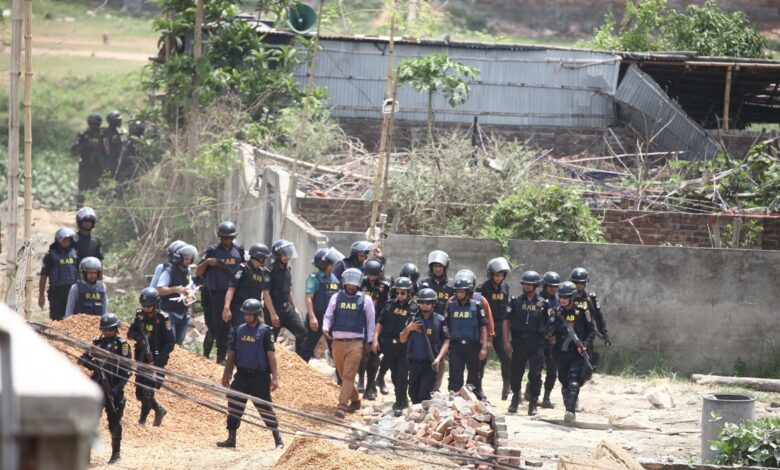
Bangladesh passed a rare 100 days on Sunday without any extrajudicial killing in the name of “gunfight” or “shootout” between law enforcers and suspected criminals. The unexpected pause in the frequent “shootout” incidents came after the United States on 10 December imposed sanctions on the country’s elite security force Rapid Action Battalion (RAB) and seven of its current and former officials, including police chief Benazir Ahmed for alleged human rights abuses.
Human rights defenders said the pause in killings in the so-called gunfights after the US sanctions showed law-enforcing enforcing agencies staged these incidents and provided false narratives.
A similar halt took place in 2020 after the killing of a retired army major in southern Cox’s Bazar district. The alleged murder sparked tension between the military force and police. The “shootout” or “gunfight” resumed slowly, causing the death of 51 people in 2021, said Bangladeshi rights group Ain o Salish Kendra (ASK).
The last such death was reported hours before the imposition of the US sanctions when a suspected “robber” was killed in a “gunfight” between RAB and “a gang of robbers” in southwest Barguna district.
“It has also proven that these incidents were neither spontaneous nor sporadic, instead it was a well-coordinated tactic of the law enforcement agencies, presumably backed by a policy decision,” Ali Riaz, a professor at Illinois State University and non-resident senior fellow of Atlantic Council, told EFE.
Riaz led a research project for the non-profit Center for Governance Studies in Bangladesh, which analyzed 591 incidents of extrajudicial killings in the country between 2019 to 2021. The research, published on Mar.12, found “gunfights” constituted 86.63 percent of such killings.
At least 4,140 people were killed in Bangladesh between 2001 and 2021 in extrajudicial killings by security forces, said human rights group Odhikar.
Riaz said US sanctions had drawn international attention to the human rights records of Bangladesh. But he feared the current pause was unlikely to sustain for long.
“There are three reasons that make it likely to resume. No punitive measures are attached to the sanctions, the US focus is likely to be shifted, and the institutional arrangements of impunity to the law enforcement agencies is not being addressed,” he said.
In the wake of UN sanctions on RAB, Bangladesh appointed a lobbyist firm in the US for a monthly fee of $20,000 with a target to remove the sanctions, deputy minister for Foreign Affairs Shahriar Alam told media in February.
Rights defenders criticized the move. They said appointing a lobbyist or public relations firm for a rosy picture of the human rights situation was not the way. “It is unfortunate that the government seems more focused on its reputation than to address the root problem robustly,” Meenakshi Ganguly, South Asia director at Human Rights Watch, told EFE.
“The government should be committed to the protection of the rights of Bangladeshis to not be arbitrarily detained, tortured, forcibly disappeared, or killed,” she said.
On 10 March 2022, The Wire in New Delhi reported that India has been added to CIVICUS’ watchlist of countries that have seen a “rapid decline” in civic freedoms by an independent monitor, highlighting the drastic measures taken by Prime Minister Narendra Modi to silence critics of his Bharatiya Janata Party (BJP).
India and Russia were added to CIVICUS Monitor’s Watchlist. CIVICUS Monitor is an online platform that tracks the latest developments to civic freedoms, including the freedoms of expression, association and peaceful assembly, across 197 countries and territories.
India has remained a “repressed” nation in the ‘People Power Under Attack 2021’ report by the CIVICUS Monitor, along with 48 other countries including Afghanistan, Russia and Hong Kong. Its rating was first downgraded in 2019, “due to a crackdown on human rights activists, attacks on journalists and civil society groups, and the assault on civic freedoms in Indian administered Jammu and Kashmir”.
This rating is typically given to countries where civic space is heavily contested by power holders, who impose a combination of legal and practical constraints on the full enjoyment of fundamental rights.
In its report, CIVICUS highlighted several developments that it saw as cause for concern.
In January, the Central Bureau of Investigation conducted raids on Madurai-based human rights watchdog, People’s Watch. The raid came against the backdrop of 6,000 other civil society organisations, including Oxfam, losing their foreign funding licenses under the controversial Foreign Contribution (Regulation) Act. Greenpeace and Amnesty International are among the civil society groups that have had to close their offices in India.
Meanwhile, scores of human rights defenders and activists remain in detention under the draconian Unlawful Activities (Prevention) Act (UAPA) and other laws. They include the 15 human rights defenders linked to the 2018 Bhima Koregaon incident who have been accused of having links with Maoist organisations, based on evidence believed to be “fabricated”.
Waiting for bail, 84-year-old tribal rights activist Stan Swamy, who remained in custody since October 2020 in the Elgar Parishad case under UAPA, died in July last year. [Update on this case: The death of Jesuit priest and Adivasi rights activist Stan Swamy in judicial custody will “forever remain a stain on the human rights record of India”, says a new brief by the United Nations’ Working Group on Arbitrary Detention. The group had formally adopted its opinion on Swamy’s death during its 92nd session on November 16, last year but made its comments public just this week. The Working Group transmitted to the Indian Government a communication concerning Swamy on May 12 last year, but did not receive any response. India is a party to the International Covenant on Civil and Political Rights [ICCPR]. In its communication, the Working Group urged the Government to prioritize the use of non-custodial measures at all stages of criminal proceedings, including during the pretrial phase, in the current context of a global pandemic. Furthermore, its source submitted that placing Father Swamy in prison increased his risk of contracting COVID-19 and thus put his life at risk. The failure of the Government to heed these prescient warnings led to his avoidable death in custody, the opinion states.] [https://theleaflet.in/un-working-group-asks-india-to-accord-stan-swamys-family-with-compensation-and-reparations-under-international-law/]
Further, at least 13 activists who were arrested under the UAPA for their work against the Citizenship (Amendment) Act (CAA) 2019 remain in detention. The slow investigative processes and extremely stringent bail provisions ensure that those detained under the law are held in pre-trial detention for long periods.
“The office raids and foreign funding bans are part of the government’s strategy to harass and silence their critics,” said Josef Benedict, Civic Space Researcher for the CIVICUS Monitor. “The use of broadly worded anti-terrorism laws against activists, journalists, academics, and students, reflect a multi-year decline in the state of civic and democratic freedoms in the country.”
Journalists have continued to be targeted in India for their work in recent months and there have also been concerns about the widespread surveillance of activists, journalists and others critical of the Modi government following thePegasus spyware expose.
“The government must release all human rights defenders detained and come clean about its surveillance of activists and journalists as well as establish an independent and effective oversight mechanism to monitor all stages of interceptions of communications,” said Henri Tiphagne, national working secretary of HRDA – India.
…
In a letter addressed to Prime Minister of India Narendra Modi, 21 members of European Parliament stated, “We, the undersigned Members of the European Parliament, are writing to express our concern over the treatment of human rights defenders (HRDs) in India.” “We have followed cases of HRDs being jailed for their peaceful work, targeted under anti-terror laws, labeled as terrorists, and facing increasing restrictions on their ability to safely mobilize and access funds due to restrictive legislation. We are especially concerned about the safety of unjustly jailed defenders with emphasis on 15 HRDs accused in what is known as the Bhima Koregaon case and 13 defenders currently in jail for their campaign against the Citizenship Amendment Act (CAA).”
They expressed worry that the prominent human rights defender Khurram Parvez remained in detention under the UAPA in one of the most overcrowded and unsanitary prisons in the country for his documenting of rights violations in Indian-administered Kashmir.
On Monday, 14 March, 2022 Secretary of State, Antony J. Blinken, hosted the annual International Women of Courage (IWOC) Awards in a virtual ceremony at the U.S. Department of State. The 2022 IWOC Award ceremony honours a group of twelve extraordinary women from around the world. The First Lady of the United States, Dr. Jill Biden, delivered remarks in recognition of the courageous accomplishments of this year’s IWOC awardees. For more on this award and its laureates, see: https://www.trueheroesfilms.org/thedigest/awards/A386E593-5BB7-12E8-0528-AAF11BE46695
Out of an abundance of caution due to the COVID-19 pandemic, and in order to practice safe social distancing, the ceremony was live streamed on www.state.gov.
Now in its 16th year, the Secretary of State’s IWOC Award recognizes women from around the globe who have demonstrated exceptional courage, strength, and leadership in advocating for peace, justice, human rights, gender equity and equality, and the empowerment of women and girls, in all their diversity – often at great personal risk and sacrifice. U.S. diplomatic missions overseas nominate one woman of courage from their respective host countries and finalists are selected and approved by senior Department officials. Following the virtual IWOC ceremony, the awardees will participate in an International Visitor Leadership Program (IVLP) Virtual exchange to connect with their American counterparts and strengthen the global network of women leaders. The 2022 awardees are:
The candidates (activists, personalities or organisations) must have distinguished themselves in the following areas: protection of human rights, defence of pluralist democracy, public awareness raising on issues of global interdependence and solidarity.
Nominations can be submitted through the online form available on the North-South Prize webpage. The deadline for presenting nominations is 15 September. The Jury of the North-South Prize, composed by the members of the Bureau of the Executive Committee of the North-South Centre, will meet in the last quarter of 2022 to select this year’s Laureates.
Zinaida Muradova, Head of Rapid Response at Civil Rights Defenders
Defending human rights has become increasingly dangerous in many parts of the world. Many of those who do, face numerous risks and threats on a daily basis. When a threat towards a human rights defender escalates, Civil Rights Defenders’ Emergency Fund provides rapid assistance to strengthen the defender’s security as quickly as possible.
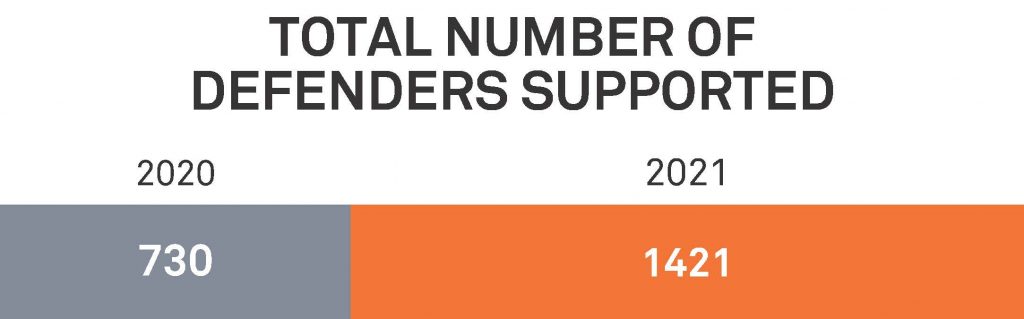
On 7 March 2022 it provided a breakdown of its use. The fund can, for example, provide legal aid or temporarily relocate people who suffer persecution, as well as provide preemptive efforts such as security trainings and digital security solutions. In 2021, the fund supported a total of 1421 human rights defenders in 30 countries.
Emergency support doubled in 2021
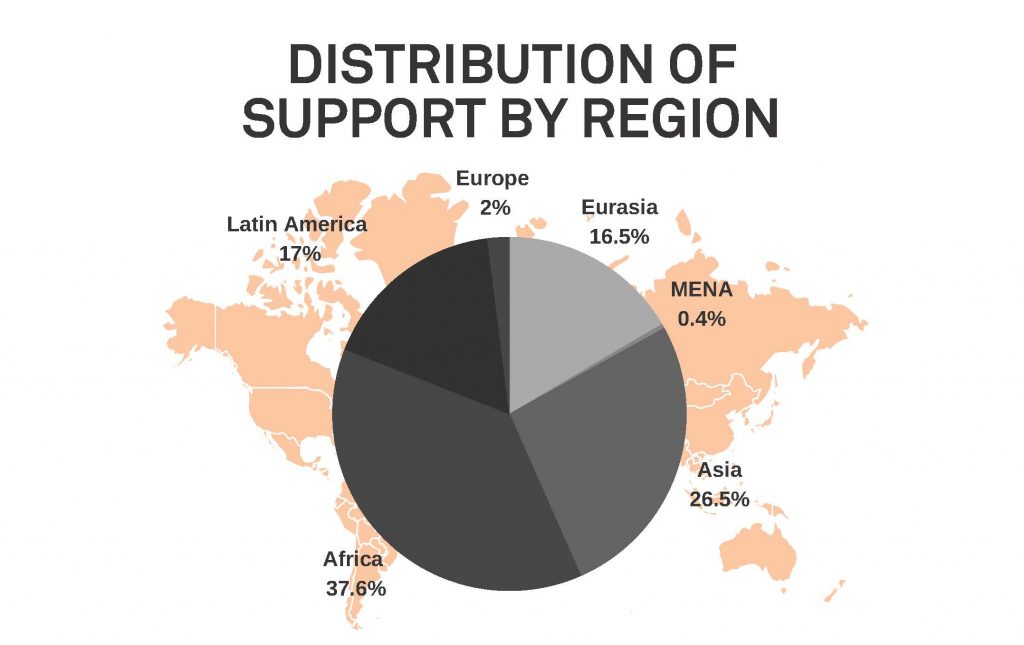
In 2021, Civil Rights Defender’ Emergency Fund has received and processed the largest number of applications since the inception of the fund in 2012. We have supported a total of 1.421 Human Rights Defenders (HRD:s) and/or members of their families at risk through a total of 171 grants in 30 countries. The number of applications and granted support have thus both doubled compared to 2020.
The world is becoming an increasingly dangerous place for human rights defenders, which is a significant explaining factor behind this increase. The CRD Emergency Fund has seen and reacted to the global backsliding of democracy and a number of emerging conflicts in 2021. The aftermath of the war between Armenia and Azerbaijan, the military coup in Burma, the spring protests in Colombia, the witch-hunt on civil society in Belarus, the civil war in Ethiopia and the Taliban’s takeover in Afghanistan are only a few of the conflicts that have deteriorated the security situation for human rights defenders in 2021. Many human rights defenders cannot continue their work for human rights and democracy without the support of the outside world.
Although the number of applications has doubled, so has the number of Emergency Fund applications granted. This increase is much thanks to the additional resources that Civil Rights Defenders has been able to put into processing fund applications.
“We are humbled to have been able to support so many human rights defenders in 2021. The need for emergency support is greater than ever, with the war in Ukraine the number of applicants is likely to keep increasing in the immediate future”, says Zinaida Muradova.
Emergency support to Burma and Asia has significantly increased in 2021, although the majority of human rights defenders who received emergency support continued to be from Africa. Additionally, the Emergency Fund continued to expand its global reach in five more regions – Eurasia, Europe, Africa, Latin America and MENA. In total, support was provided to human rights defenders in 30 countries during the course of 2021.
Further advancing gender sensitivity
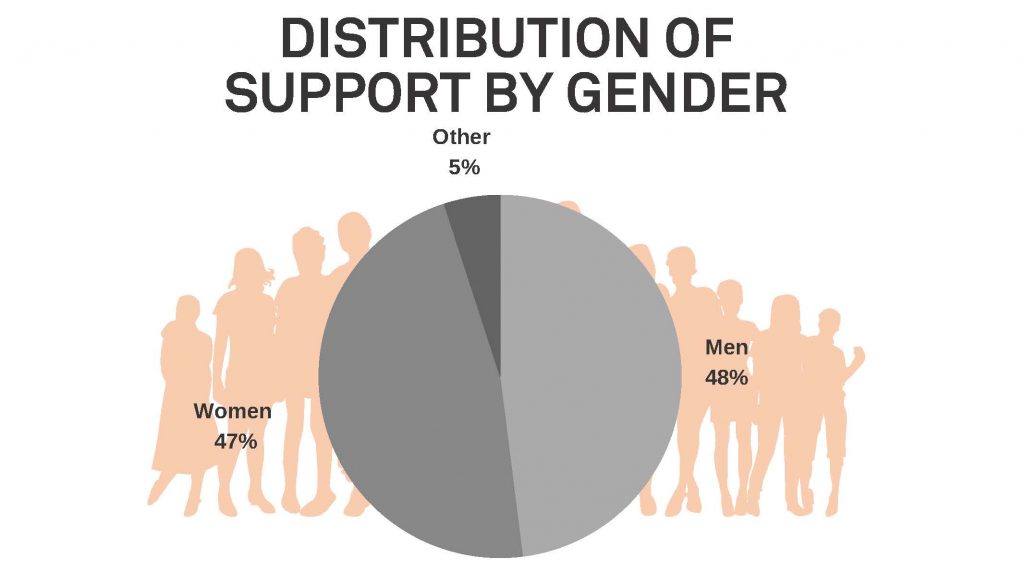
The Emergency Fund continued to build on gender work started in 2019 to ensure a good gender balance and representation amongst the beneficiaries of support. We have been working to increase the accessibility of the mechanism for the most vulnerable groups. We see an improvement in gender balance, for example the percentage of non-conforming people supported doubled compared to 2020.
An increasing demand for legal aid and psychological support
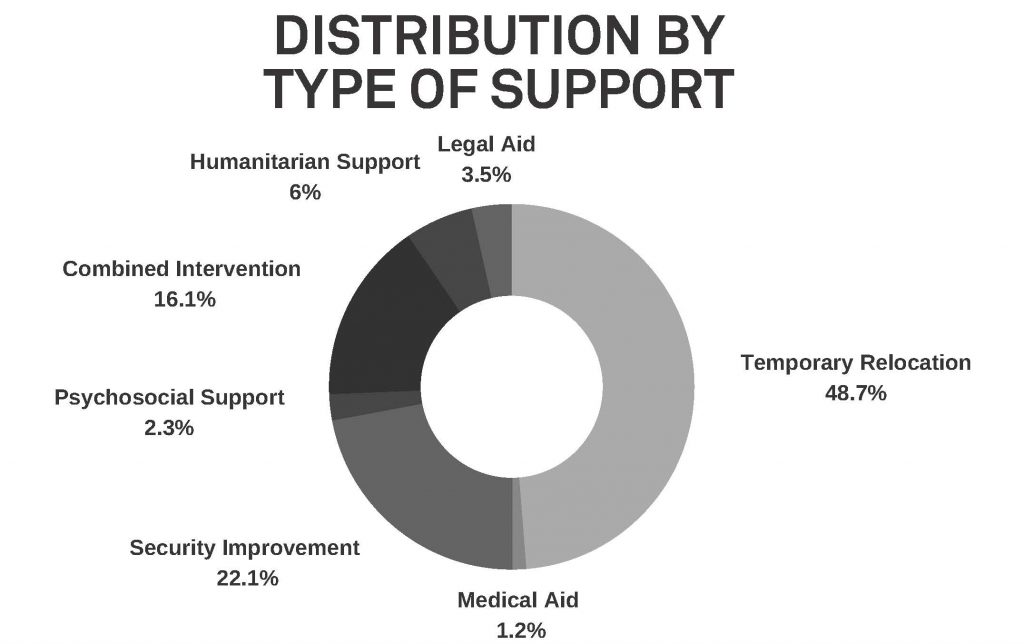
Despite the Covid 19 pandemic and continued strict restrictions on travel around the world, temporary relocations, where human rights defenders can reside safely for a short period, remained by far the most requested type of support in 2021. The majority of relocations were related to the major crises in countries mentioned above. Requests for preventive security measures to improve home, office or digital security, such as installing security cameras or digital security software, remained to be in high demand as well. Many HRD:s needed so called combined interventions, meaning a combination of several of the above mentioned support types.
In 2021 The Emergency Fund has seen a noteworthy increase in requests for humanitarian and psychological support. Many HRDs also request legal aid due to an increasing trend of arbitrary arrests and charges.
“Democracy and human rights cannot be achieved without human rights defenders. Through the Emergency Fund we ensure that they feel safe enough to continue their work which ultimately helps ensure that the fight for democracy can continue worldwide”, says Zinaida Muradova.
On 14 March 2022 a group of UN human rights experts today called on Bangladesh to immediately cease reprisals against human rights defenders and relatives of forcibly disappeared persons for their activism and co-operation with international human rights bodies and UN mechanisms.
In the period between December 2021 and February 2022, the homes of at least 10 relatives of forcibly disappeared individuals were reported to have been raided late at night.
“During the raids, relatives were intimidated, threatened and forced to either sign blank sheets of paper or pre-written statements indicating that their family member was not forcibly disappeared and that they had deliberately misled the police. This is unacceptable,” the experts observed.
The experts noted with concern the increasingly challenging situation relatives, human rights defenders and civil society are facing in Bangladesh. Repeated accusations by senior Government officials against some civil society organizations of providing “false information” to the UN mechanisms risk undermining the civil society’s key role.
“Bangladesh must ensure that relatives and human rights defenders are able to carry out their legitimate work in a safe and enabling environment without fear of threats, intimidation or reprisals of any kind,” the experts stressed. They expressed their concern that the reported reprisals may have a chilling effect and deter others from reporting on issues of public interest, including human rights, and from cooperating with the UN, its representatives and mechanisms.
Since 2009, the RAB has reportedly been involved in the perpetration of the majority of cases of enforced disappearance in the country, as noted in several reports by the UN Working Group on Enforced or Involuntary Disappearances.**
“Bangladeshi authorities are obliged under international law to promptly launch ex officio, independent, impartial and thorough investigations into these serious allegations, complemented by a thorough and comprehensive search for disappeared persons. At the same time, the RAB and other security agencies should not be shielded from scrutiny and criminal responsibility.”
The experts also reiterated their request to the Government of Bangladesh to take effective steps to protect and uphold the rights of victims and their families to truth, justice, reparation, and guarantees of non-recurrence.
On 17 March HRW stated that the Bangladesh government should meaningfully respond to United Nations concerns regarding grave allegations of torture, enforced disappearance, and extrajudicial killings in the country.
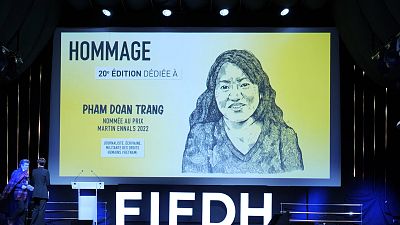
Over ten days, the 20th International Film Festival and Forum on Human Rights brought together artists, activists, journalists, and the public in Geneva for film and debate. After two pandemic-enforced digital editions, this year was also a chance for the festival to finally get back to some form of normality by meeting in person and welcoming back live audiences. The Grand Prize for Fiction was awarded to two films – Freda, by Haitian director Gessica Généus, and Vera Dreams of the Sea by Kosovan filmmaker Kaltrina Krasniqi.
“Freda” Devastated by earthquakes, Haiti is a country buried under corruption, violence and colonial legacy. Freda lives with her mother and sister in Port-au-Prince and, at the age of 20, she refuses to give up and wants to believe in the future. But how can she stay when everything compels her to leave? Spotted in 2017 with The Sun Will Rise, Gessica Généus directs her debut feature film, shot in Creole and carried by extraordinary actresses. She tells the story of her country with love, sings its courage and celebrates the deep joy that persists despite the heartbreaking reality.
“Vera Dreams of the Sea” tells the tale of a widow, forced to take on a ruthless rural patriarchy to claim an inheritance, for her, and her daughter and granddaughter. The film also won the Festival’s Youth Prize, an award Krasniqi told Euronews has particular significance. “You know, when you make a movie you think about audiences, of course, and then you think that people of a certain generation who resonate with issues but then getting a prize from youth meant quite a lot to me because that means the story resonates with other generations as well.”
White Torture directed by Iranian lawyer and human rights activist Narges Mohammadi won the festival’s Grand Reportages category. It focuses on psychological torture and its destructive effect on victims. Mohammadi is currently imprisoned in Iran. Her friend, Nobel Peace Prize winner Shirin Ebadi, is the film’s ambassador. Sitting down with Euronews, she said: “In my opinion, this film represents the state’s repression of prisoners of conscience and political prisoners in Iran. But at the same time, it represents resistance, because the repression continues, but the resistance of the people also continues.“
On the 20th anniversary of Guantanamo Bay Kasmira Jefford of Geneva Solutions looks at the legacy of the so-called “war on terror”. She does so in conversation with UN special rapporteur Fionnuala Ní Aoláin on the promotion and protection of human rights and fundamental freedoms while countering terrorism. From camps in north-eastern Syria, where thousands are detained without legal processes, to China where detention camps are posing under the guise of “education facilities” – secret detentions and enforced disappearances are still happening every day under the banner countering terrorism. Here some lengthy extracts:
In 2010, UN experts from four different working groups and special procedures joined forces to produce one of the most comprehensive studies to date on widespread systematic torture, enforced disappearances, arbitrary detention and secret detentions taking place across the world and condemning the wide range of human rights violations committed by countries.
In a follow-up report presented on Wednesday at the Human Rights Council 49th session, the special rapporteur said 10 years on, these practices are still rife and deplored the “abject failure” by states to implement the recommendations of the 2010 study.
GS News: In 2010, UN experts published a milestone study on secret detentions. What does your follow-up report show?
Fionnuala Ni Aolain: The 2010 report was unusual because it involved… four special procedure mechanisms coming together and identifying each in their collective way the scale of the problem of systematic torture and rendition of persons across borders, and systematic disappearances, arbitrary detention, and secret detentions. The [follow-up] report we’ve just published does a stock-taking and assesses whether or not the recommendations of the special experts were implemented. And possibly the single most depressing thing about that review is that the annex lists every single person who was named in the 2010 report – hundreds of names who were rendered, tortured, or both – and not a single individual received an adequate remedy [for the violation of human rights they experiend]. There was no accountability, no person was ever charged with crime for any of those acts.
The second part of the follow up report focuses on what that culture of impunity enabled. And what I find is that the culture of impunity, fostered and enabled by the “war on terror” as it was called essentially has created and enabled the conditions in which other places of mass detention have emerged. The report focuses on two of them : Xinjiang, China, and the situation in [in detention camps] in northeast Syria.
One of the observations you make is that ‘secret’ detention has evolved in the past two decades to encompass more complex forms of “formally lawful” or legalised transfer. Can you explain?
In the evolution that we’ve seen…dark-of-night arrivals into places like Poland and Lithuania and other countries that were accepting these rendition flights stopped because the global heat, if you want, on that kind of rendition was simply too high. It just became intolerable and unacceptable for states who were cooperating in enabling torture and rendition to continue to do it. But there’s been this transition into this ‘lawful transfer’. These are diplomatic assurances, [for example], where one state offers an assurance to another state that they will not torture the person who’s transferred into their custody.
But as the report makes clear, if you have to provide an assurance that you’re not going to do that, it tells you that there’s something fundamentally dysfunctional about the legal system that’s producing the assurance – and there’s a fundamental question about the trustworthiness of the assurance if it happens. And what we know in practice is that so many of those assurances are not worth the paper they are written on. People have had the worst kinds of practices meted out to them under the cover of diplomatic assurance. And there have been no consequences for states in breaking those assurances.
One of the issues you raise in the report is the lack of a globally agreed definition on terrorism or acts of terrorism. Why has it been so complex to agree upon a definition?
Part of what happened is that 9/11 spawned this culture where everybody agree that terrorism was a bad thing but nobody ever defined it. …What we see in practice is the systemic abuse of counterterrorism across the globe. We see it in multiple countries. Over 67 per cent of all the communications the mandate has sent since 2005 have involved the use of a counterterrorism measure against a civil society actor. So this tells you that actually, they’re doing really bad counterterrorism.
We have to understand that, in fact, there’s a structural endemic problem. And in many countries, states’ security is governed by counterterrorism. The example I often use is the Kingdom of Saudi Arabia, when women’s rights activist Loujain al-Hathloul was jailed on terrorism charges and processed through a Special Criminal Court. So this shows terrorism being everything and nothing.
…….
In your annual report presented to the General Assembly in October last year, you said that efforts to improve counter terrorism measures are in fact damaging human rights. Would you say that counterterrorism is incompatible with the respect of human rights?
Security is a human right. It’s found in the Universal Declaration on Human Rights. Our most fundamental right that enables us to have other rights is the right to be secure. So I don’t think they’re incompatible and I don’t think the drafters of the Universal Declaration thought they were incompatible. I grew up in Northern Ireland in a society which was, in many ways, defined for decades by counterterrorism law. The problem is that expansive counterterrorism law, which is what we have, is imprecise – and vague counterterrorism law is fundamentally incompatible with the rule of law.
The fundamental idea contained in the rule of law is that if you are to be charged with an offence by the state, that you know precisely what acts you engaged in that are likely to make you subject to the course of power of the state. And the fundamental problem with terrorism is that it really, in so many countries, kind of injures that the concept of the rule of law, because it’s not precise. A reasonable individual could not know what kind of actions they would engage in would implicate the use of a state or measure against them. So I don’t think it’s incompatible but unfortunately, we have very few examples of good practice.
One of the key examples you highlight in your report are the camps in northeast Syria where thousands of people – the majority women and children – are being detained. You describe this as “a human rights black hole”. What can or should be done immediately for these people who are living in desperate situations?
You have thousands, almost over 60,000 men and women being held in detention centres, prisons, who have never been through any legal process; the idea that we would hold people in these conditions is simply abhorrent. And then we turn to look at the conditions in those camps. The special rapporteur on torture and I have found that the conditions in the camps reach the threshold of torture, inhumane, and degrading treatment under international law. So the fact that they are there is also unacceptable. But the bottom line is that we have states, mostly western states, who simply will not take back their nationals including children, who refuse.
So, there’s a large-scale political solution that’s required to fix the challenge in northeast Syria, which involves all of the significant parties to the conflict. However, in the short run, the only international law compliance solution to the situation in these camps is the return of women and children to their countries of nationality. We have some states who have made active and ongoing efforts to do so and some who have made no effort.
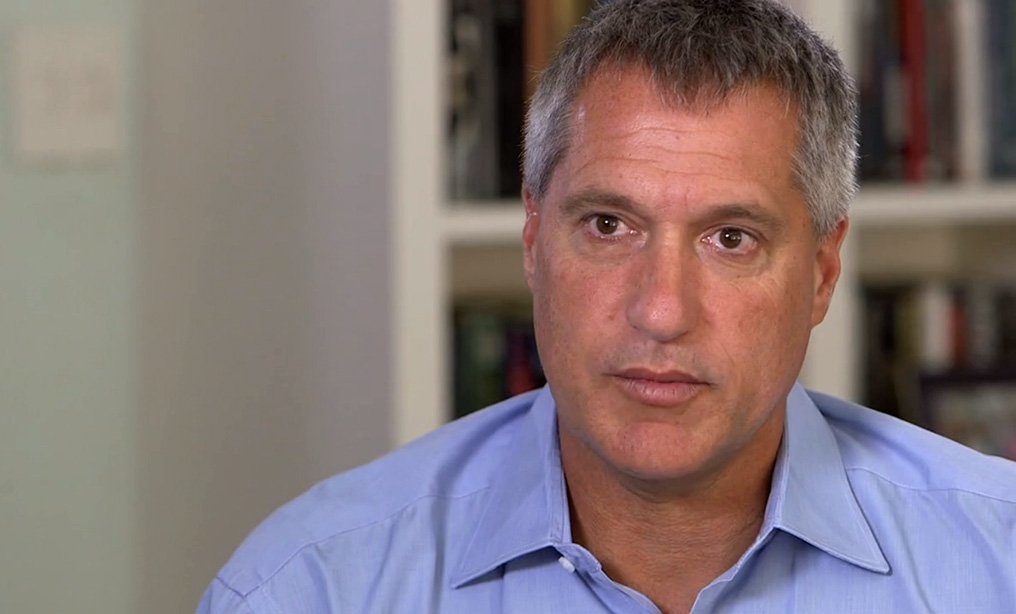
In a letter to President Biden, the organizations state: “More than four months since a discerning opinion by the UN Working Group on Arbitrary Detention that found Steven Donziger’s detention to be arbitrary, U.S. judicial authorities have thus far failed to take any action to remedy the situation and implement the Working Group’s call to ensure Mr. Donziger’s immediate release.” See also: https://humanrightsdefenders.blog/2020/08/17/steven-donziger-speaks-out-himself-about-being-targetted-by-chevron
In a statement in October 2021, President Biden promised the U.S. would “stand in solidarity with, and continue to work tirelessly in support of, the activists, human rights defenders, and peaceful protestors on the front lines of the struggle between freedom and tyranny.”All the while, the administration has failed to side with the brave human rights defenders within the United States and respond to the demand of the U.N. Working Group on Arbitrary Detention, Congress, and the international community to free Steven Donziger.
“Steven Donziger is a human rights defender that bravely stood up against one of the most powerful corporations in the world,” said Daniel Joloy of Amnesty International. “In response, he has endured years of harassment, intimidation, smear campaigns and more than two years in arbitrary detention. President Biden must now listen to the over 100 human rights and environmental organizations calling to pardon Steven Donziger and ensure he is released immediately and unconditionally. Allowing this ordeal to continue only sends a chilling message that corporations around the world can continue attacking human rights defenders without consequences.”
Paul Paz y Miño of Amazon Watch said “Instead of supporting the people of Ecuador who were poisoned by Chevron’s admitted deliberate dumping of billions of gallons of toxic waste, Biden has turned a blind eye to the persecution of a key lawyer who worked to win a historic judgment against Chevron. The U.S. government’s responsibility should be to make Chevron clean up its waste and support efforts to hold the fossil fuel company accountable, not allow the appointment of a private prosecutor with ties to the very same oil company to imprison human rights lawyer Steven Donziger. This travesty has gone on for over two years, and Biden has ignored members of the E.U. parliament, members of the House and Senate, and even the United Nations High Commissioner for Human Rights. Well over 100 organizations are now demanding action, and Biden’s lack of action continues to be a dark stain on his alleged claims to respect human rights. Oil companies do not prosecute and imprison people in the U.S. This must end now.”
Chevron’s legal attack on Donziger is not the first, nor will it be the last case of its kind. Right now, the right to dissent is being repressed by both our government and corporations
Annie Leonard, co-Executive Director Greenpeace USA
Simon Taylor, Co-Founder & Director, Global Witness said “I have spent much of the past 25 years seeking accountability of the fossil fuel industry for its gross human rights abuses and other crimes. Amongst the judicial authorities we have liaised with during this time, the Southern District of New York has stood as a beacon in this fight against criminality. Shockingly, just as Biden gears up this struggle, New York’s judicial authorities seem instead intent on destroying their reputation, thanks to their apparent complicity in the unprecedented corporate prosecution and judicial harassment of Steven Donziger. These acts, in my experience, are more what I would expect from one of the ‘Banana Republics’ we have investigated around the world. These are shameful acts. If Biden is serious about tackling the climate crisis, he cannot allow the fossil fuel industry to weaponise the US judicial system to go after its detractors – Biden must act now and release Steven Donziger.”
A recent case study by Freedom House focuses on programming that offers holistic protection, support, and services, tailored to the needs of human rights defenders in their host country. This case study focused on the most current wave of migration of HRDs and CSOs who were forced to flee after anti-government protests in April 2018.
The Nicaraguan government continues to violate freedoms of expression, assembly and information and thwart the work of HRDs, including journalists and CSOs. Ortega-Murillo’s recent actions against potential presidential candidates and opposition figures demonstrate that the country will continue to see an outpouring of critics, activists, and HRDs to Costa Rica, among other countries. Nicaraguans continue to flee based on the attacks and harassment they face as HRDs and members of CSOs that champion democracy and human rights. See also: https://humanrightsdefenders.blog/2022/02/21/nicaragua-death-in-detention-and-sham-trial/
Of those 20 Nicaraguan HRDs who were surveyed, almost 90% stated that harassment and surveillance was a primary reason for leaving Nicaragua, followed by violence (65%) and threats (50%). Costa Rica provides comparatively ample protection for migrants, and recently launched a new asylum category for those fleeing from authoritarian regimes in Venezuela, Cuba, and Nicaragua. The flow of migration since 2018 has persisted until March 2020 when the border shut due to the COVID-19 pandemic. Yet, migrant flows have begun to increase in recent months. However, Costa Rica is struggling to recover economically from the pandemic, particularly within the tourist, service, and commercial industries where most migrants and refugees find work. Most Nicaraguan refugees find themselves in a precarious economic situation, unable to find steady work, forcing many to resort to informal work with low salaries. HRDs are often not recognized as having different needs or characteristics from the larger refugee population, either by organizations or the Costa Rican population in general. Even for those who continue to work in human rights describe their ability to continue work is difficult, and many express experiencing severe trauma as an exile, with remorse for not being able to stay and remain fighting for human rights at home. [see also: https://humanrightsdefenders.blog/2021/12/24/vilma-nunez-human-rights-defender-who-stays-in-nicaragua/] However, many Nicaraguan HRDs try to carry out their work by investigating the laws and procedures in Costa Rica, accompanying their compatriots in their efforts, sharing knowledge, and giving advice. There are support and protection options for HRDs and CSOs in exile in Costa Rica, including a network of organizations and institutions facilitated by the United Nations High Commissioner for Refugees (UNHCR) that provide access to vital services.
All available support and protection options for Nicaraguan HRDs are operating at full capacity and cannot keep pace with the growing demand. We believe that it is necessary to seek support and accompaniment mechanisms for HRDs that facilitate their subsistence and enhance the implementation of their work to defend the human rights of exiles and other Nicaraguan migrants who lack mechanisms for complaint and demand for their rights in Costa Rica.

 protection of human rights,


 Hans Thoolen on Human Rights Defenders and their awards