Author Archive
December 15, 2016

TWEETING IS NOT A CRIME – RETWEET FOR FREEDOM
Bahrain, the United Arab Emirates, Malaysia and many other countries have no respect for freedom of speech: they imprison activists who tweet their support for human rights. Nabeel Rajab, President of the Bahrain Centre for Human Rights (BCHR) is being tried for tweeting in March 2015 ‘Save the Children, Women & civilian from the war in Yemen – war brings hatred, miseries & blood but not solutions’. For this tweet, and another one denouncing torture in the Jaw prison of Bahrain, he faces up to 15 years in jail. Read the rest of this entry »
Posted in FIDH, human rights, Human Rights Defenders | Leave a Comment »
Tags: #IRunNabeelAccount, Bahrain, Bahrain Center for Human Rights, campaign, FIDH, freedom of expression, Gulf Centre for Human Rights, Human rights defender, MEA final nominee 2012, Nabeel Rajab, tweets, twitter
December 15, 2016
 publishes a series of 10 profiles human rights defenders to commemorate International Human Rights Day, 10 December 2016. Here two women HRDs from Mexico: Olga Guzmán and Stephanie Brewer: Read the rest of this entry »
Posted in human rights, Human Rights Defenders, OMCT | Leave a Comment »
Tags: Centro Prodh, Comisión Mexicana de Defensa y Promoción de los Derechos Humanos, Human Rights Defenders, impunity, international human rights day, Mexico, Olga Guzmán Vergara, OMCT, profiles, Stephanie Brewer, torture, war on drugs, women human rights defenders
December 15, 2016
On 13 December 2016 Human Rights First convened its annual Human Rights Summit: American ideals. Universal values, at the Newseum in Washington D.C. in the context of International Human Rights Day. During the Summit Human Rights First awarded the 2016 Roger N. Baldwin Medal of Liberty to anti-slavery activist Janvier Murairi Bakihanaye of the Democratic Republic of Congo (DRC). Murairi was selected for his work on behalf of vulnerable rural populations to combat contemporary forms of slavery in the mining sector in the DRC. (The Roger Baldwin Medal is given in alternating years by the ACLU to US citizens). 
It also presented the 2016 Beacon Prize, awarded annually to an individual or organization whose work embodies the best in the tradition of American leadership on human rights, to Marilyn Carlson Nelson, former CEO of Carlson Inc., in recognition of her pioneering leadership in the fight to end modern slavery.
Source: Human Rights First Hosts Annual Human Rights Summit | Human Rights First
Posted in awards, HRF, human rights, Human Rights Defenders | 1 Comment »
Tags: anti-slavery, Beacon Prize, Democratic Republic of Congo, DRC, human rights awards, Human Rights First, Human Rights Summit, international human rights day, Janvier Murairi Bakihanaye, Marilyn Carlson Nelson, Roger Baldwin Medal, slavery, USA, Washington DC
December 14, 2016
A bit belatedly here is the ‘news’ that on 17 November 2016, Andrea James and Glenn E. Martin, leading human rights defenders working to reform the criminal justice system in the United States, received the 2016 Robert F. Kennedy Human Rights Award. “Andrea and Glenn are precisely the moral leaders our country needs to solve one of our most pressing human rights problems here at home: a broken criminal justice system that unjustly targets communities of color and the poor,” said Kerry Kennedy, President of Robert F. Kennedy Human Rights. “This is the civil and human rights issue of our time. Robert F. Kennedy Human Rights is proud to recognize Andrea’s and Glenn’s remarkable achievements with this award, and to partner with them moving forward on this important work.”
Read the rest of this entry »
Posted in awards, Human Rights Defenders | 1 Comment »
Tags: Andrea James, Criminal justice, Glenn E. Martin, human rights award, human rights lawyers, incarcerations, law reform, prison, Robert F. Kennedy Human Rights, Robert F. Kennedy Human Rights Award, USA
December 14, 2016
Deadline for nominations: 1 February 2017
———–
Front Line Defenders Award for Human Rights Defenders at Risk.
Established in 2005 the award is to honour the work of a human rights defender who, through non-violent work, is courageously making an outstanding contribution to the promotion and protection of the human rights of others, often at great personal risk to themselves. A cash prize of €15,000 is awarded to recipient and his/her organisation in an effort to support the continuation of this important work. Individual nominees may not play a prominent role in a political party and must be currently active in human rights work (no posthumous contribution). Nominees must not be living in exile. For 2016 award see: https://humanrightsdefenders.blog/2016/06/10/ana-mirian-romero-environmental-activist-from-honduras-wins-2016-front-line-award/
Deadline: Friday, 3 February 2017
https://www.frontlinedefenders.org/secure/nomination.php (English)
Posted in awards, Front Line, Human Rights Defenders | 1 Comment »
Tags: awards, call for nominations, Front Line Defenders Award for Human Rights Defenders at Risk, human rights awards, Human Rights Defenders, international protection, Ireland, Norway, Rafto award
December 13, 2016
On 7 December 2016 the Government of Canada published Guidelines on Human Rights Defenders. It joins a limited number of Governments with a specific policy on human rights defenders (not just human rights in general) such as Norway, the Netherlands, Ireland, Switzerland and Austria, although they differ a bit in the degree of detail. And there are of course the EU Guidelines.[https://humanrightsdefenders.blog/2012/01/13/quick-reminder-of-the-eu-guidelines-on-human-rights-defenders/] and those of the OSCE: Read the rest of this entry »
Posted in awards, human rights, Human Rights Defenders | 4 Comments »
Tags: Canada, foreign policy of Canada, guidelines, human rights award, Human Rights Defenders, international human rights instruments, John Diefenbaker Defender of Human Rights and Freedom Awards, policy, UN
December 13, 2016
Human Rights Day was the occasion for the Indonesian Government – together with the National Commission on Violence Against Women (Komnas Perempuan) – to honor six women with posthumous Women Human Rights Defenders Awards for their fight against inequality and for the human rights of women. On 10 December 2016 officials from the Law and Human Rights Ministry and the National Development Planning Board handed the awards to the activists’ families, as part of the global 16 Days of Activism against Gender-based Violence Campaign:
- Siti Latifah Herawati Diah
- Lily Zakiyah Munir
- Zohra Andi Baso,
- Mientje DE Roembiak,
- Darmiyanti Muchtar
- Theresia Yuliawati Sitanggang.Komnas Perempuan chairman Azriana said the awards were presented to remind the nation that these women fought to promote gender equality. “They never once asked to be awarded, but they dedicated their lives to help Indonesian women”.
Source: Six women get posthumous awards for fight against inequality – Sat, December 10 2016 – The Jakarta Post
Posted in awards, human rights, Human Rights Defenders | Leave a Comment »
Tags: 16 Days Campaign Against Gender Based Violence, equality, human rights awards, Human Rights Day, human rights of women, in memoriam, Indonesia, international human rights day, Komnas Perempuan, national award, women human rights defenders
December 12, 2016
“Almost 20 years ago the UN adopted the Declaration on Human Rights Defenders, but they face more danger than ever“, say Iva Dobichina and James Savage (resp. of the Open Society Foundations and the Fund for Global Human Rights) in a post on 10 December 2016 in the Guardian. “We must find new ways to protect human rights defenders” say the authors in an excellent article so rich and – in my view correct – in its analysis of the current climate that I reproduce it below in full. What is perhaps missing from the piece is a call for more sustained action by the worldwide human rights movement to improve its ‘performance’ in the battle for public opinion. A lot of the regression in the situation of human rights defenders seems to go hand-in-hand with an increase in public support for rights-averse policies (“Around the globe, a tectonic shift towards autocratic and semi-authoritarian rule by law, and the pernicious influence of corporate, criminal and fundamentalist non-state actors, has put human rights activists on the defensive and let rights violators go on the offence” state the authors correctly). To counter this we have to come up with equally convincing use of the modern media, especially through professional-level visualisation and ideas for campaigns that can broaden and galvanize the human rights movement. Read the rest of this entry »
Posted in human rights, Human Rights Defenders | 2 Comments »
Tags: enabling environment, Fund for Global Human Rights, funding, Human Rights Defenders, images, Iva Dobichina, James Savage, Open Society Foundations, Protection of Human Rights Defenders, public relations campaign, the Guardian, THF, UN Declaration on Human Rights Defenders, visualisation, worldwide human rights movement
December 12, 2016
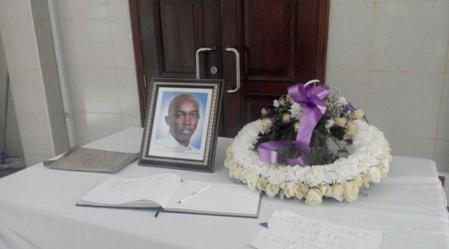
Willie Kimani, the Kenyan human rights lawyer who was murdered this year [https://humanrightsdefenders.blog/2016/07/03/body-of-disappeared-human-rights-lawyer-kimani-client-found-kenya-impunity/], was honoured with an award for his bravery in defending the poor and oppressed in Kenya. While receiving the award, Kimani’s widow Hannah Kimani said she had never imagined that his standing up for justice would eventually amount to his death. “No amount of words can explain who Willy was. He was one of a kind… with this award, it shows that his work was not in vain,” she said.
Executive Director Samwel Mohochi of the Kenyan chapter of the International Commission of Jurists said “We give it to him as recognition for the ultimate price he paid in performing his work as human rights defender and as a reminder to the risks that face all other human rights defenders”…“This will renew our commitment to all human rights defenders. It is an appreciation of the work he did”.
Source: Slain lawyer Willie Kimani honoured with yearly title
https://www.capitalfm.co.ke/news/2016/12/murdered-lawyer-willie-kimani-named-jurist-of-the-year/
https://www.frontlinedefenders.org/en/case/case-history-willie-kimani
Posted in awards, Front Line, human rights, Human Rights Defenders, ICJ | 1 Comment »
Tags: human rights award, Human rights defender, human rights lawyer, in memoriam, International Commission of Jurists, Jurist of the Year (Kenya), Kenya, killed, Samwel Mohochi, social economic and cultural rights, Willie Kimani
December 9, 2016
International Human Rights Day commemorates the day on which, in 1948, the United Nations General Assembly adopted the Universal Declaration of Human Rights. In 1950, the Assembly passed resolution 423 (V), inviting all States and interested organisations to observe 10 December as Human Rights Day. The theme this year is: Stand up for someone’s rights today, in other words: be a human rights defender. .
There is a lot going on during this period, so I just give a small sample (10!) from different parts of the world: Read the rest of this entry »
Posted in awards, human rights, Human Rights Defenders, UN | 1 Comment »
Tags: 10 December 2016, Adilur Rahman Khan, Baroness Anelay, events, Human Rights Day, Human Rights Defenders, international human rights day, Jamaica, Mauritius, Myanmar, Philippines, Renato Reyes, Zimbabwe


 Hans Thoolen on Human Rights Defenders and their awards