Author Archive

Antoine Bernard, former head of FIDH, joins Reporters Without Borders (RSF)

November 18, 2017
I was slow in announcing the departure of Antoine Bernard as head of the FIDH [https://humanrightsdefenders.blog/2017/10/12/antoine-bernard-has-left-fidh-after-26-years/] but am glad to be more on the ball for his next position: On 14 November 2017 Reporters Without Borders (RSF) announced that Antoine Bernard has been appointed RSF’s deputy director-general in charge of programmes. He will start in January 2018.

Bernard, 51, will help RSF secretary-general and director-general Christophe Deloire to consolidate and develop RSF’s work of defending journalistic freedom and independence at a time of great dangers for journalists.

Bernard said: “In a world dominated by opaqueness, propaganda and impunity for the powerful, journalism is in danger and, with it, human rights and democracy. RSF is waging a fight that is absolutely essential and Christophe Deloire has managed to put RSF at the international forefront of the defence of the freedom to inform and the protection of journalists. I am honoured to join Christophe and his team.

[The past five years have seen very rapid growth in RSF’s activities and influence and enhancement of its image. It has launched major campaigns at the UN and in the field, reinforced and professionalized its headquarters in Paris, doubled its personnel worldwide, developed its bureaux in Washington and Tunis, and created new bureaux in Rio de Janeiro, London and Taiwan. It plans to open two new bureaux in 2018, one in San Francisco and one in Africa.]

https://rsf.org/en/news/former-head-fidh-appointed-rsf-deputy-director-general

UN Rapporteurs urge ASEAN summit to address regional human rights concerns

November 11, 2017

Four UN human rights experts*(including Michel Forst, the Rapporteur on Human Rights Defenders) have called on states to address pressing human rights issues during the 31st ASEAN Summit being held from 10-14 November in the Philippines. Recognising the important work of the many active civil society organisations across the region, the experts expressed concern about “a worrying deterioration in the environment in which they operate.

Human rights defenders, social activists, lawyers, journalists, independent media and even parliamentarians trying to speak out and protect the rights of others, increasingly face a multitude of risks ranging from judicial harassment and prosecution to threats, disappearances and killings,” said the experts. They observed rising numbers of cases of serious human rights violations affecting among others, people working on women’s rights, environmental and land issues and lawyers dealing with drug cases.

The experts called on the 10 ASEAN Member States to amend or repeal existing legislation and to reconsider draft laws that are being or could be applied to criminalize or restrict the vital work of civil society.  “We condemn the public vilification, harassment, arrests and killings of members of civil society, and call on Member States to rigorously uphold their duty to ensure the freedom and protection of those exercising their fundamental rights to freedom of expression, association and peaceful assembly,” the experts said. “Independent media, members of civil society and human rights defenders should be viewed as partners and as an essential element of democracy.


This summit should be seen as an opportunity to make real progress on these issues and to show the world that the Member States of ASEAN are fully committed to securing the human rights of all in the region,” the group said.

(*) The UN experts are: Ms. Annalisa Ciampi, the Special Rapporteur on the rights to freedom of peaceful assembly and of association; Ms. Agnes Callamard, Special Rapporteur on extrajudicial, summary or arbitrary executions;  Mr. Michel Forst, Special Rapporteur on the situation of human rights defenders;  Ms. Yanghee Lee, Special Rapporteur on the situation of human rights in Myanmar

http://www.ohchr.org/EN/NewsEvents/Pages/DisplayNews.aspx?NewsID=22380&LangID=E

Cyber attacks on City of Weimar for awarding Ilham Tohti

November 11, 2017
9 November, 2017 Photo courtesy of World Uyghur Congress

The website of the German city of Weimar – since the announcement that they would award this year’s Human Rights Prize to Ilham Tohti – continues to face attacks (likely) by Chinese hackers who, among other things, deleted all of the website’s content on Ilham Tohti. [https://humanrightsdefenders.blog/2017/07/05/uyghur-human-rights-defender-ilham-tohti-wins-also-weimar-human-rights-prize/]

(The information below is based on an article published by ChinaChange.org) 

 The city of Weimar announced on June 30 2017 that they were awarding this year’s Weimar Human Rights Prize to Ilham Tohti in recognition of his work upholding the rights of the Uighur people and promoting understanding between Uighurs and Han Chinese. In accordance with tradition, the Prize is awarded every year on December 10—International Human Rights Day. In September 2014, Ilham Tohti was sentenced to life in prison for “separatist activities,” and his real “crimes” though were his efforts to build bridges between different ethnic minorities and his speaking out bluntly about China’s draconian, unproductive policies in Xinjiang. The Weimar City Council hopes that by awarding the Human Rights Prize to Ilham Tohti, “his advocacy for peace and dialogue will not be forgotten, and support for his release will be strengthened.”

Mr. Oehme is in charge of the Weimar Human Rights Prize. He told Radio Free Asia that, starting in early July and shortly after the prize was announced, the city’s official website was attacked and continues to be until now. All news about the award and the December 10 prize ceremony has been removed. Mr. Oehme said that the Weimar government deeply regrets that hackers have deleted the content from the webpage that has been three years in the making. Mr. Oehme also revealed that the City Council’s Human Rights Prize Committee received a telephone call in July from a self-identified “Ms. Li” from the Chinese Embassy in Berlin, alleging that Ilham Tohti’s work had nothing to do with human rights and freedom of speech. She protested Weimar giving the human rights prize to a “Chinese criminal.” The Weimar municipal government also learned that, after the announcement of the prize, Beijing had protested to Berlin through diplomatic channels.

The Weimar government asked the police to conduct a criminal investigation into the hacking. It’s not yet clear where the cyber attacks originated. But Isa Dolkun, current General Secretary of the World Uyghur Congress based in Munich, believes that this attack is undoubtedly being carried out by China.

Mr. Oehme said that no matter what happens, there will be no change in awarding this year’s human rights prize to Ilham Tohti.

In 2016 Ilham Tohti was nominated for the European Parliament’s Sakharov Prize for Freedom of Thought, and he won the Martin Ennals Award for Human Rights Defenders, known as the “Nobel Prize for Human Rights.” The United Nations High Commissioner for Human Rights Zeid Ra’ad Al Hussein gave the award to Ilham Tohti’s daughter. The Chinese government subsequently attacked the High Commissioner for “interfering with China’s internal affairs and judiciary sovereignty.”

see also: https://humanrightsdefenders.blog/tag/ilham-tohti/


http://unpo.org/article/20443

Interview with Karla Avelar, human rights defender from El Salvador

November 10, 2017

A former ISHR trainee, Karla Avelar defends the rights of LGBTI people. She is a finalist of this year’s Martin Ennals Award for Human Rights Defenders. In an exclusive interview with ISHR, on 6 November, she talked about her award nomination and what it means to be a trans woman and human rights defender in El Salvador. See also the THF film on her work:


see also: https://humanrightsdefenders.blog/2017/05/16/trans-defenders-karla-avelars-life-is-under-constant-threat/

Mexican Graciela Pérez Rodriguez to receive 2017 Human Rights Tulip

November 10, 2017

The 2017 Human Rights Tulip has been awarded to Mexican human rights defender Graciela Pérez Rodriguez. Foreign minister Halbe Zijlstra will present her with the prize on Friday 8 December in The Hague, two days ahead of Human Rights Day. The Human Rights Tulip is an annual prize awarded by the Dutch government to human rights defenders who take an innovative approach to promoting human rights. The prize consists of a bronze sculpture and €100,000, which is intended to enable recipients to further develop their work. See: http://trueheroesfilms.org/thedigest/awards/tulip-award

Graciela Pérez Rodriguez defends the rights of family members of disappeared persons in Mexico. Through her work she attempts to break through the taboos surrounding this issue. The human rights defender is herself searching for her disappeared daughter, brother and three nephews. Graciela Pérez Rodriguez, a non-professional who has immersed herself in forensic science, is a founding member of the Forensic Citizen Science project. This national collective of disappeared persons’ family members in various Mexican states helped establish the Mexican National Citizen Registry of Disappeared Persons and a DNA database run by and for citizens, which facilitates the identification of victims’ remains at a late stage.

Despite the difficult circumstances in which she works, Graciela remains committed to searching for disappeared persons in Mexico,’ Mr Zijlstra said. ‘Human rights defenders like Graciela are indispensable in the fight for a better world. It takes pressure from the inside to achieve real change.’ Disappearances are a serious problem in Mexico. Between January and August this year over 2,400 people were reported missing. In mid-October the Mexican Congress passed a new law to combat disappearances, which provides for longer prison sentences and a committee tasked with finding disappeared persons. The Dutch government sees this law as an important step forward in dealing with this problem.

see also https://humanrightsdefenders.blog/tag/mexico/

https://www.government.nl/latest/news/2017/11/09/graciela-perez-rodriguez-to-receive-2017-human-rights-tulip

Patrick Desbois, French priest who uncovered Nazi killings, awarded Lantos prize

November 10, 2017

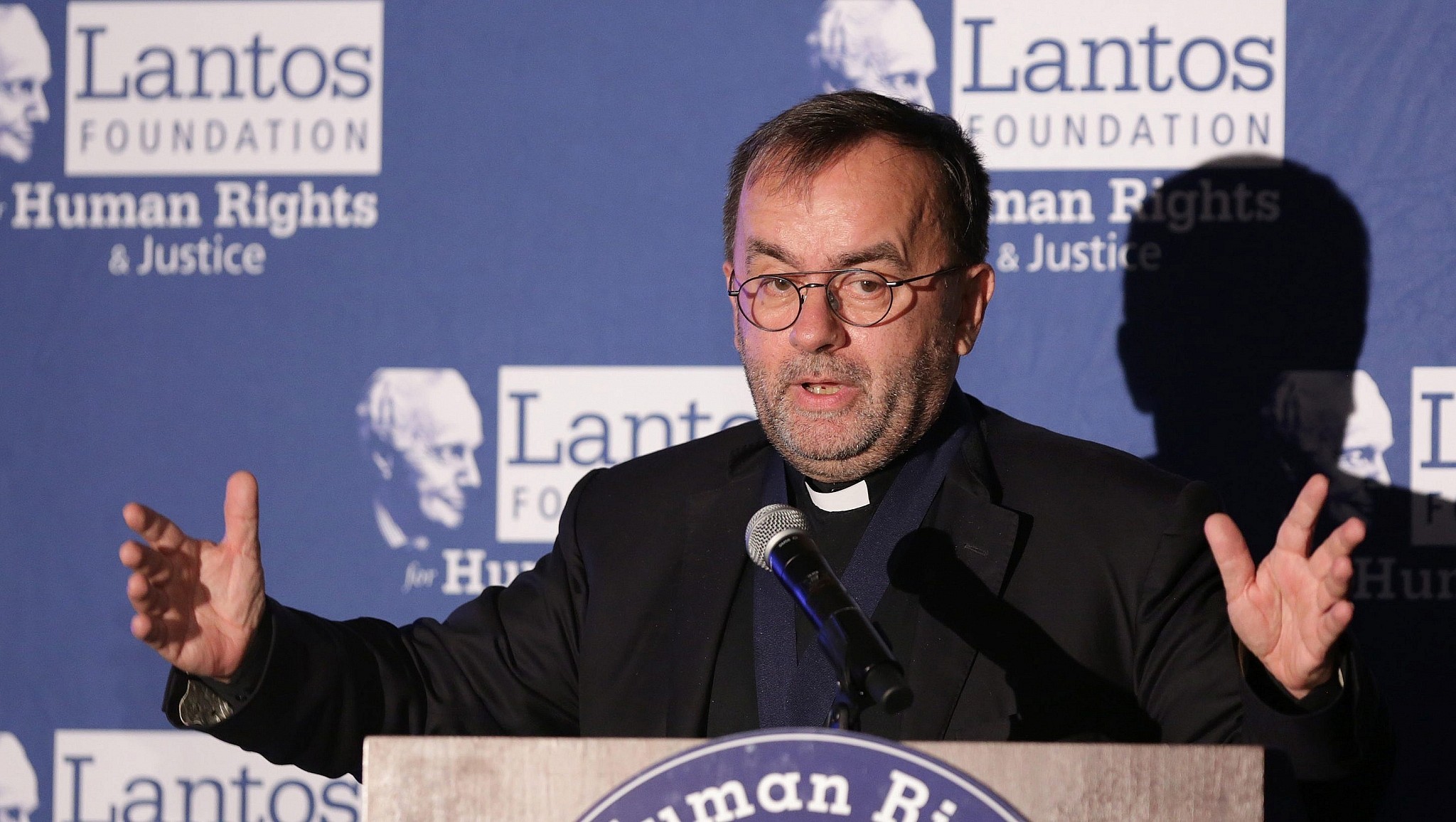
Father Patrick Desbois speaks after being awarded the Lantos Human Rights Prize on Capitol Hill in Washington, DC, on October 26, 2017. (Chris Kleponis)

Father Patrick Desbois speaks after being awarded the Lantos Human Rights Prize on Capitol Hill in Washington, DC, on October 26, 2017. (Chris Kleponis)

Father Patrick Desbois, a Roman Catholic clergyman, whose work has uncovered millions of previously unknown victims of the Nazi genocide was awarded the Lantos Foundation’s Human Rights Prize. The Lantos Human Rights Prize is an annual award given by the Lantos Foundation for Human Rights and Justice, an organization founded by Tom and Annette Lantos, who were both Holocaust survivors. For more on the award see: http://trueheroesfilms.org/thedigest/awards/lantos-human-rights-prize.

Father Patrick Desbois, who teaches at Georgetown University’s Program for Jewish Civilization, was recognized during a reception on Capitol Hill as a “vital voice standing up for the values of decency, dignity, freedom, and justice.” His scholarly reportage on the Holocaust has focused on the Jews who were killed by mass shootings by Nazi units in Russia, Ukraine, Belarus, Poland, Moldova and Romania between 1941 and 1944. In 2004, Desbois founded Yahad-In Unum, a French organization whose sole mission was to locate the mass graves of Jewish victims from Nazi paramilitary death squads. These regiments were responsible for the mass killings of Jews, often by shooting and primarily in the former Soviet Union.

His first book, “Holocaust by Bullets: A Priest’s Journey to Uncover the Truth behind the Murder of 1.5 Million Jews,” was based on that work and the culmination of its discoveries. Desbois has another book — a memoir on his life as an anti-genocide activist and Holocaust scholar — due for publication in 2018.

Other than uncovering unknown truths about the Nazi’s killing operation, Desbois has also been working on collecting evidence of the Islamic State’s massacre of the Yazidi people in parts of Iraq and Syria. [see also: https://humanrightsdefenders.blog/2017/02/09/collecting-human-rights-prize-yazidi-lawmaker-calls-trumps-travel-ban-unfair/]

Source: French priest who uncovered Nazi killing sites awarded Lantos rights prize | The Times of Israel

African human rights defenders were trained in Banjul on effective monitoring

November 10, 2017


Human rights defenders from across Africa were in The Gambia undergoing a three-day training to consolidate their knowledge and skills on relevant human rights instruments for effective monitoring at the continental and international levels. The training on international and regional human rights mechanisms, was held from 25 – 29 October 2017, was organised by the African Commission on Human and People’s Rights, CIVICUS, ISHR, ACHPR and the United Nations Human Rights Council. The training was held on the margins of the Forum on the Participation of NGOs in the 61st Ordinary Session of the African Commission on Human and Peoples’ Rights and 36th African Human Rights Book Fair.

The training was designed to sharpen the knowledge and skills on the procedures for the promotion and protection of human rights in Africa. It was divided into three main parts: the international and the regional systems and mechanisms for the two days, and freedom of association and assembly, the SDGs, and human rights monitoring. Hannah Forster of the African Centre for Democracy and Human Rights Studies (ACDHRS – http://www.acdhrs.org) said: “This, we believe, will enable us to better understand opportunities available as we engage governments in the fulfillment of their mandates to promote and protect human rights and it will equip us with the knowledge and skills to lobby our governments to domesticate and implement their commitments while assisting participants to frame a strategy as they seek redress for violations of human rights”.


Source: African human rights defenders train on effective monitoring – The Point Newspaper, Banjul, The Gambia

Helen Hunt joins list of celebrities that show insensitivity on human rights

November 10, 2017

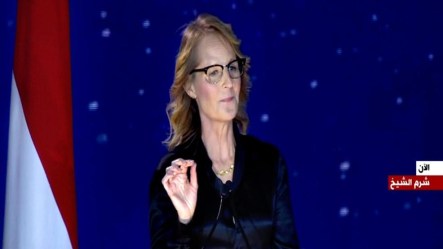
Celebrity support for human rights can do much good but there are still too many who simply do not study the issue before accepting. [see: https://humanrightsdefenders.blog/2014/02/28/and-the-nominees-are-oscars-for-human-rights/]. Two days ago Brian Rohan of Associated Press, reported that actress Helen Hunt just added her name to the list of ignoramuses (“Egyptian activists pan US actress Helen Hunt in open letter”  – 7 November, 2017).

5  November 2017: image taken from video, showing actress Helen Hunt speaking during a government-organized youth conference in the Red Sea resort of Sharm el-Sheikh, Egypt. (AP Photo /CAPITAL BROADCAST CENTER)
Egyptian activists condemned American actress Helen Hunt on Tuesday for her participation in a government-organized youth conference they say is whitewashing authorities’ appalling human rights record and suppression of free speech. The open letter by Mona Seif and other well-known human rights advocates gained nearly 300 signatures by Tuesday afternoon. They included Mohamed Zaree, who last month won the Martin Ennals Award, and Aida Seif el-Dawla, whose Nadeem Center treats victims of torture and trauma and was shuttered by the government earlier this year.

The letter follows a flurry of online criticism against this week’s “World Youth Forum,” hosted under the patronage of President Abdel-Fattah el-Sissi, 62, in the Red Sea resort of Sharm el-Sheikh. Hunt, 54, was a keynote speaker at the opening ceremony. The event’s official Twitter hashtag #WeNeedToTalk has become a battleground for opposing viewpoints, with critics overwhelming the thread with images of Egyptian police beating and chasing down youths during el-Sissi’s rule alongside portraits of young jailed activists.

This isn’t just any forum that you chose to endorse,” the letter to Hunt read. “This is a youth forum with the slogan ‘We Need To Talk’ called for by a dictator who cannot stand any form of opposition or real criticism. He jails journalists for doing their jobs, youth for expressing their opinions, writers for writing fiction that violates ‘public morality,’ gays for coming out, supporters of LGBTQ for daring to support diversity, and he has blocked more than 400 different websites and media platforms.

Human rights defenders and their organizations such as Human Rights Watch and Amnesty International have documented enforced disappearances, widespread torture and a recent arrest campaign targeting people authorities believe are gay. The authorities have blocked hundreds of independent news and critical websites.[see also: https://humanrightsdefenders.blog/tag/egypt/]

The forum, which lasts until Nov. 10, has been broadcast nearly all day long on state and private television since its opening ceremony Sunday night. It has been widely promoted with slick television ads in Egypt, where several major Western PR firms advise and work for the government. A giant billboard hovers over Cairo’s Tahrir Square, epicenter of the youth-led 2011 uprising.

Hunt, an Academy Award-winning actress who now directs films, delivered a speech Sunday in which she criticized the U.S. justice system for its high incarceration rates and voiced support for the online anti-sexual harassment movement #MeToo. That, however, did not deflect criticism from Seif and other Egyptian feminists. “Unbelievable Hypocrisy! @Helenhunt speaks of “Women Rights” in a PR circus for a general who justified forced virginity tests,” Seif tweeted, referring to the military’s “virginity tests” conducted on a group of women protesters detained in 2011. El-Sissi, who was the chief of military intelligence at the time, was quoted then as saying the tests were necessary to head off possible allegations that the women were sexually assaulted by soldiers.

Others accused Hunt, the most famous Western celebrity at the event, of selling out to el-Sissi, pointing out a string of websites that advertise her as a for-hire speaker with fees between $50,000 to $1 million. Hunt did not respond to a social media request to discuss her efforts in Egypt.

http://ktul.com/news/entertainment/egyptian-activists-pan-us-actress-helen-hunt-in-open-letter

https://egyptianstreets.com/2017/11/08/egyptian-rights-activists-slam-us-actress-helen-hunt-in-open-letter/

Full Trailer for the documentary ‘Quest’ – A Portrait of an American Family

November 6, 2017
Quest Documentary Trailer

“All we can do is roll with the punches…” First Run Features has unveiled a trailer for a documentary titled Quest, described as a “portrait of an American family” filmed over the course of almost a decade. This “epic in scope” documentary follows a couple in North Philadelphia – Christopher “Quest” Rainey, and his wife, Christine’a “Ma Quest” Rainey – as they raise a family in a poverty stricken neighborhood. This premiered at Sundance and has played at tons of festivals all year, picking up numerous awards including Human Rights awards, Jury Prizes, Audience Awards. Not to be confused with the feature film also titled Quest, about the graffiti-loving youngster.  Here’s the official trailer (+ poster) for Jonathan Olshefski’s documentary Quest, in high def on Apple:

https://player.vimeo.com/video/240185573?title=0&byline=0&portrait=0

Quest Documentary Poster


Source: Full Trailer for ‘Quest’ Documentary – A Portrait of an American Family | FirstShowing.net

Don’t Shoot the Messenger – also valid in Africa

November 6, 2017
In a new report launched at the 61st session of the African Commission on Human and Peoples’ Rights, DefendDefenders (the East and Horn of Africa Human Rights Defenders Project) finds that amid growing restrictions on civic space in the sub-region, journalists play a critical role in exposing human rights violations and providing vital information and analysis of current events. Simply documenting and sharing information can simultaneously place them at risk and at the forefront of human rights defence.
In “Don’t Shoot the Messenger! Journalists as Human Rights Defenders in the East and Horn of Africa”, DefendDefenders examines the challenges journalists face, and provides an overview of the various strategies they have used to circumvent and continue their work amid these restrictions. Overall trends, legal frameworks, and case studies from 11 countries in the East and Horn of Africa provide an understanding of the capacity, risks, and needs of journalists reporting on human rights issues. Over 60 journalists, bloggers, and media professionals from the sub-region were interviewed, in addition to significant input from civil society organisations dedicated to free expression and the protection of journalists.
Central to the report is the question of whether journalists, by nature of their work, should be considered HRDs. Nearly all journalists interviewed for this report considered themselves to be HRDs, but many had doubts over whether this also applied to all their colleagues. Some interviewees claimed to actively seek out human rights stories, especially in conflict situations, while others also advocated for freedom of expression, often from exile.
Journalists are increasingly faced with new threats to their work and security, including harassment, arbitrary detentions, and imprisonments and prosecutions under spurious laws, both online and offline. These threats intensify amid violent conflicts and political crises, and often force journalists into exile, where they face new challenges. The report offers concrete solutions to online and offline challenges and makes key recommendations to governments and civil society to ensure that a free media environment in the region is protected and promoted.
Download “Don’t Shoot the Messenger!” here.