Author Archive

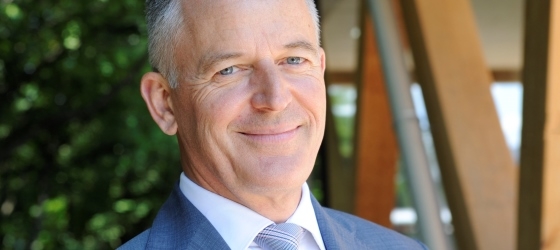
Mark Thompson – old hand in APT – leaves in 2018

December 15, 2017
Thursday, 14 December 2017, the Association for the Prevention of Torture (APT, founded in 1977 by the Swiss banker and lawyer Jean-Jacques Gautier) announced that its Secretary-General, Mark Thomson, will retire on the 31st of July 2018. Mark, who has served as Secretary General since 2001, says that this is the right time for him to hand over the reins to someone else and that, whilst he intends to remain active in torture prevention and access to justice issues, this will be on a voluntary and ad hoc basis and that his main goal is to seize the opportunity to focus his time and energy on his young family. The President of the APT, Martine Brunschwig Graf expressed her own and the Board’s sincere appreciation for the work Mark has done over the past seventeen years, stating that: “Mark has provided first-class leadership to the APT and during that time he has played a guiding role in some immensely important developments in torture prevention across the globe. He is held in high esteem by public oversight bodies and governmental and non-governmental partners in many countries who will be as sorry as we are to see him move on.” Before 2001 Mark Thompson worked at the International al Service for Human Rights (ISHR)

The APT’s Board, taking into account the quality of the existing team, has chosen not to make a public call and will instead appoint his successor at the next board meeting, on the 13th of April 2018.

https://www.apt.ch/en/news_on_prevention/upcoming-change-in-apt-management/

9 December, Human Rights Defenders Day, ‘celebrated’ in Uganda

December 13, 2017

In an article in the Ugandan paper The Independent entitled “Activists mark Human Rights Defenders day” (13 December 2017), Robert Kirenga, the Executive Director of the National Coalition of Human Rights Defenders in Uganda spoke to Flavia Nassaka about his perspective on international human rights defenders day and the general human rights situation in the country. He made some interesting points such as (excerpts):  Read the rest of this entry »

Malta’s Aditus foundation urges Government to improve relationship with human rights defenders

December 11, 2017

In commemoration of International Human Rights Day, the Aditus foundation (a non-governmental organisation established in 2011 by a group of young lawyers who monitor, report and act on access to human rights by individuals and groups; the focus is primarily Malta, but also covers the regional & international dimensions of human rights in Malta) noted the precarious situation of Malta’s human rights defenders and called for a broader respect for their central role in promoting and contributing towards Malta’s overall well-being. [see also: https://humanrightsdefenders.blog/2017/12/04/the-new-normal-rising-attacks-on-human-rights-defenders/]

In a statement released to the media, the foundation said that Malta’s human rights defenders are …are present where State interventions are either absent or insufficient, where the risk of human rights violations is high. It continued to say that without human rights defenders, Malta would probably not be able to boast today’s’ levels of social wellbeing. As activists dedicated to ensuring human rights enjoyment for all persons, most of us push for stronger legal and policy standards, support the training of public officials, provide public information, support victims of violations and strive to hold the State accountable and responsible for its failures. “In return, many of us are bullied, harassed, insulted, threatened and stigmatised. Many of us are denied access to important dialogue with State entities, or exploited by the State as we provide those public services the State refuses or is unable to provide. As the community of Malta’s human rights defenders is still mourning the brutal assassination of Daphne Caruana Galizia, we are uncertain of the security of our working environment and are concerned for the physical and psychological safety of our staff and volunteers.”

“We are not satisfied that our concerns are being taken seriously by the competent authorities, especially in view of the fact that we are often victims of hatred perpetuated by those entities responsible for our protection.”

“Understanding the importance of human rights defenders is fundamental for the fostering of a society that is geared towards respecting, protecting and fulfilling everyone’s human rights.”

“By tolerating this on-going abuse of its human rights defenders, Malta is not only offending the principles human rights embody – equality, non-discrimination, individual and social empowerment – but it is also further marginalising those communities and themes human rights defenders so vehemently stand up for.”

“On International Human Rights Day, we therefore urge Malta to rethink its relationship with human rights defenders. This means to not merely refrain from activities that instil fear and insecurity, but to take steps towards actively supporting human rights defenders.”

http://www.independent.com.mt/articles/2017-12-09/local-news/Adutis-foundation-urges-Malta-to-rethink-relationship-with-human-rights-defenders-6736182455

http://aditus.org.mt

Good introduction to the Anniversary of the UN Declaration on HRDs in 2018

December 11, 2017

COMMENTARY 05 December 2017

In “Defending Rights, Fighting Fatalism Janika Spannagel makes the point that we should take a long-term view in assessing human rights progress.  I plead guilty by having started 2017 with a series of ten posts on the indeed gloomy outlook for human rights (e.g. https://humanrightsdefenders.blog/2017/02/24/2017-10-need-to-reset-for-human-rights-movement/). Perhaps it is fitting to end the year with a bit more ‘optimistic’ long term view:

In 2017, both activists and political pundits embraced a rhetoric of doom and gloom about the global state of human rights. But faced with a world painted in ever darker colors, we risk losing sight of the bigger picture. This month marks 19 years since the UN Declaration on Human Rights Defenders was adopted. Its troubled story can teach us something about the long arc of history when it comes to the advancement of human rights worldwide.

There is no doubt that human rights defenders are under attack today. But that is not new. Defending human rights is and always has been a highly political and often dangerous undertaking. People who have raised their voices against injustice, from totalitarianism and colonial oppression to capitalist exploitation, have been persecuted and silenced throughout human history. Repressive regimes and groups in power seem just as quick and clever in adapting methods of control as their opponents are in carving out new spaces.

However, rather than giving in to fatalism we should learn from history that counter-discourse and pushback is an inevitable part of the human rights success story. On December 9, 1998, the United Nations (UN) member states unanimously declared that everyone has a right to defend human rights. This consensus in the UN General Assembly, however, did not mean that states were in wide agreement. Born out of a context of intense persecution of dissidents in the late 1970s, the lengthy negotiation process for what eventually became the Declaration on Human Rights Defenders was at the verge of collapsing time and again over surprisingly topical issues like foreign funding, supremacy of domestic law, or national security.

Stories like that of the Declaration illustrate how writing human rights history requires both perseverance and the prompt use of political windows of opportunity. These stories teach us not to submit to pessimistic rhetoric that can easily cloud our judgment, but to remain committed to multilateral cooperation on rights issues, particularly during challenging times. 

To learn more about how the Declaration on Human Rights Defenders was adopted against all odds, what difference it has made and why the term “human rights defenders” was omitted from the document, see my recent analysis of the 1998 Declaration on Human Rights Defenders. (http://www.geschichte-menschenrechte.de/en/schluesseltexte/erklaerung-zu-menschenrechtsverteidigern-1998/ in english, in spite of title)

With the 20th anniversary of the UN Declaration on Human Rights Defenders coming up on 9 December 2018 [https://humanrightsdefenders.blog/2017/11/01/20th-anniversary-of-un-declaration-on-human-rights-defenders-starts-with-crucial-draft-resolution-in-the-ga/], the article above makes good reading.

———-

http://www.gppi.net/publications/human-rights/article/defending-rights-fighting-fatalism/

Human Rights Day 2017 in Asia: MIND THE GAP

December 11, 2017
International Human Rights Day 2017 was celebrated all over the world by governmental and non-governmental entities alike. Here some cases of MIND THE GAP as reported in the media in Asia:

Cambodia:

The government celebrated Human Rights Day under the theme of ‘peace’, but 103 civil society groups spoke out against state ‘attacks’. KT/Mai Vireak

The government yesterday celebrated the 69th anniversary of International Human Rights Day under the theme of peace, while 103 civil society groups called for more protection for human rights defenders. Prime Minister Hun Sen posted on his Facebook page to say how the rights and freedoms of Cambodian people have been restored since the end of the Khmer Rouge regime in 1979: “December 10 is International Human Rights Day, which people all over the world celebrate. On January 7, 1979, the rights and freedoms of the Cambodian people were restored and have been until this day.”

Civil society meanwhile marked the day at different locations around Phnom Penh and in other provinces. A group of 103 civil society organisations issued a joint statement calling for justice and respect for human rights from the government. “On the occasion of International Human Rights Day, we, the undersigned members of Cambodian civil society, call for an end to government attacks on human rights defenders and civil society groups and the lifting of unjustifiable restrictions on fundamental freedoms,” the statement said.

Philippines:

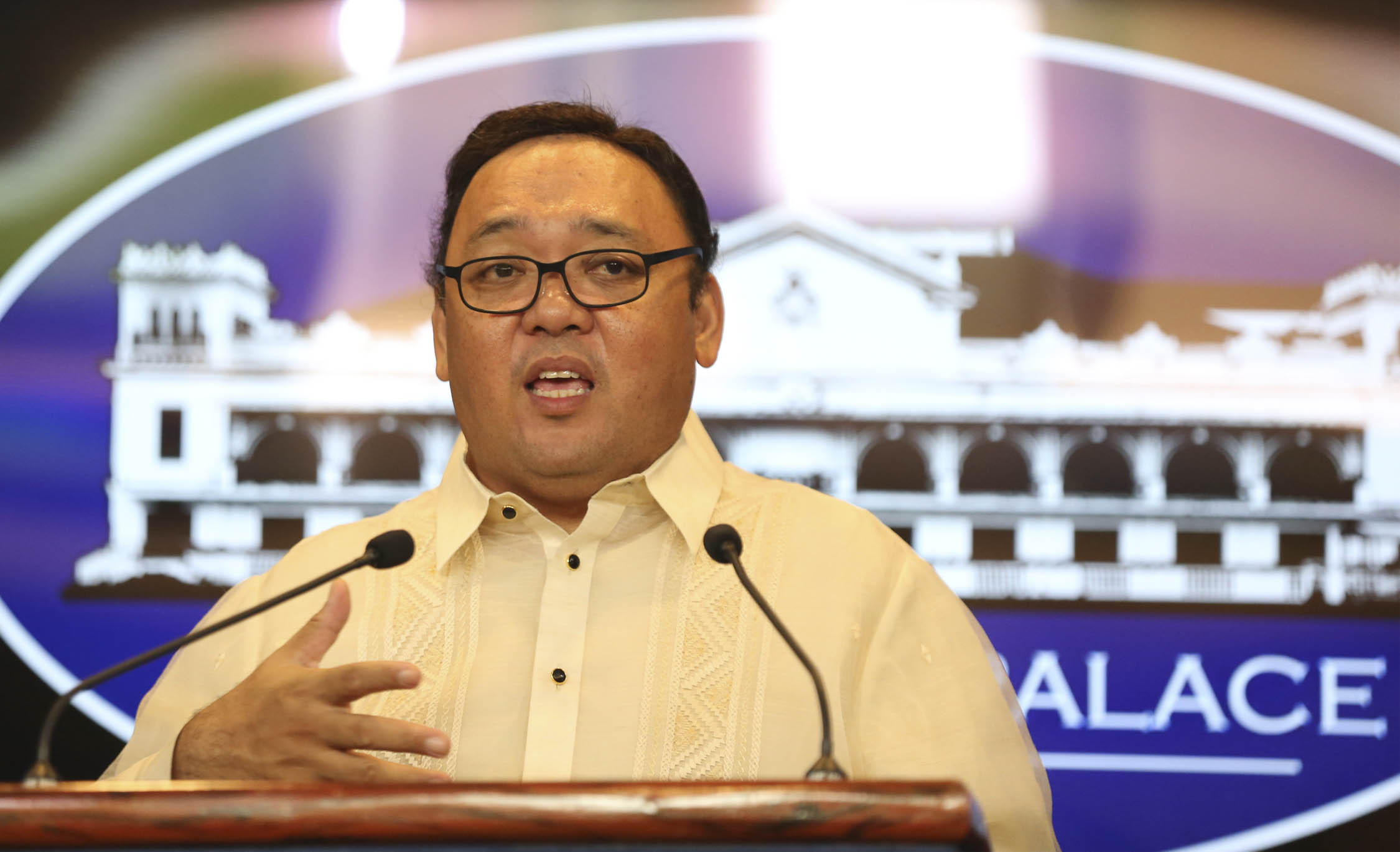
Presidential spokesperson Harry Roque INQUIRER PHOTO/JOAN BONDOC


On the observance of the International Human Rights Day, Presidential Spokesperson Harry Roque reiterated President Rodrigo Duterte’s commitment to uplift the lives of Filipinos, especially the poor, marginalized and vulnerable. Noting that the Philippines is an active member of the United Nations Human Rights Council and that respect for human rights is enshrined in the 1987 Constitution, Roque assured that the Duterte administration “works hard with the best interest of every Filipino.” ..“That direction is what inspires the government’s compliance with its human rights obligations. As a Nobel Peace Prize winner once said, ‘poverty is the absence of human rights” .

The Philippines has experienced a precipitous drop in basic human rights standards since President Rodrigo Duterte came to power last year, resulting in large, mass mobilizations across the country for the occasion of December 10, Human Rights Day. At least 12 rallies were held across the archipelago on Sunday, with human rights group KARAPATAN and progressive alliance BAYAN taking the lead alongside a range of like-minded groups calling for an end to what they describe as the U.S.-Duterte regime. In addition to over 13,000 small-time drug dealers and addicts killed during Duterte’s “war on drugs,” Karapatan has documented 113 victims of political killings, 81 victims of torture, 54,573 victims of threat, harassment, and intimidation, 364,617 who have suffered due to indiscriminate firing and aerial bombing, and 426,170 internally displaced who were subject to forced evacuation.  

Turkey:

Turkish President Recep Tayyip Erdogan. Photo: AA

Respect for human rights based on the principles of equality and non-discrimination of individuals before the law is the irreplaceable nature of the Republic of Turkey,” said Erdogan, according to state-run Anadolu Agency, on the occasion of Human Rights Day on Sunday. Erdogan specifically referenced Turkey’s commitment to “all oppressed people and victims from Palestine to Syria and Asia to Africa.”

Turkey has been cited by several international organizations for human rights violations, namely in its justice system, freedom of speech and Internet communications, treatment of minorities, and political censorship. See inter alia: https://www.amnesty.org/en/countries/europe-and-central-asia/turkey/report-turkey/and https://humanrightsdefenders.blog/2017/11/22/celebrities-come-out-to-support-taner-kilic-amnesty-turkeys-chair-on-trial-today/.

Thailand:

National Human Rights Commission (NHRC) commissioner and human rights defender Angkhana Neelaphaijit said that despite the government’s claim that it cherished human rights and had made them a priority, in reality it had done nothing to do so.
Angkhana Neelaphaijit
Thailand is still far from its goal of valuing human rights since the junta’s policies and actions have eroded rights, while many people do not even understand the principle. Prominent Thai campaigners marked Human Rights Day yesterday to lament that the country was still far from its professed goal of ensuring everyone was accorded the freedoms they deserve. The nation’s most severe human rights violation was the lack of freedom of expression, they said in an appeal to the National Council for Peace and Order (NCPO) to restore democracy to truly guarantee human rights for every citizen. They also said Thailand faced many serious human rights crises. For instance, social movements across the country continued to be suppressed by authorities, the justice system was being used against human rights defenders, and many people in society still did not understand human rights and harmed others. National Human Rights Commission (NHRC) commissioner and human rights defender Angkhana Neelaphaijit said that despite the government’s claim that it cherished human rights and had made them a priority, in reality it had done nothing to do so. On the contrary, Angkhana said the government was doing the very opposite, enforcing many laws and regulations that violated human rights and curbing the activities of campaigners, both through law enforcement and by force. In effect, the regime was deepening Thailand’s human rights crisis, she said.

Pakistan:

Message by Foreign Minister of Pakistan : ”On behalf of the people and Government of Pakistan, I wish to reiterate our strong commitment to promote and protect human rights and fundamental freedoms, as well as needs. Pakistan has demonstrated its resolve by enacting wide ranging legislation, establishing strong institutional machinery and putting in place robust policy measures in the field of human rights. Pakistan’s Constitution serves as an anchor and guarantor of fundamental freedoms and human rights of all Pakistanis.  The Government of Pakistan accords high priority to advancing mutually reinforcing objectives of development, human rights and democracy…This year is also significant for Pakistan in the field of human rights. Pakistan actively engaged with the UN human rights institutions and partners through regular submission of national reports, participation in review processes and implementation of recommendations arising from such mechanisms. Pakistan filed reports and participated in the review mechanism of three international treaty bodies, namely CAT, ICESCR and ICCPR. Pakistan also successfully presented its third national report on Universal Periodic Review (UPR) on 13 November 2017. This level of engagement, participation and contribution demonstrates Pakistan’s commitment as well as actions to advance the cause of human rights.  Pakistan’s success as the newly elected member of the Human Rights Council (HRC) this year is a testimony to the confidence reposed in Pakistan by the international community as a consensus builder within the international human rights policy framework.

The struggle against enforced disappearance was seen in Sindh alone while though there have been cases of missing persons in other provinces but Sindh has dared to raise voice against such violations of human rights.  These views were expressed at a seminar on occasion of Human Rights Day organized here by SAFWCO and Social Change. Noted Human Rights activist and lawyer Faisal Siddiqui said only voice against forced disappearances was being heard from Sindh while voice of Balochistan has been crushed with force. Though many persons were missing in KPK and Punjab but from there no voice is heard.  He said our judiciary has come out of colonization era and was giving right decisions. He said it was he who had filed petition in SHC for IG Sindh A.D.Khwaja. He said he was harassed for being advocate against Baldia Factory burning of 258 persons, Shahzeb Jatoi case and other cases for which he was harassed and could not open his office for many months. He said now powerful forces were active human rights.  The gathering paid tributes to Pubhal Saryo, convener of missing persons forum who was whisked away by agencies and released after more than 2 months. Punhal Saryo said it has become very difficult to work for human rights in situation where human rights defenders were also not safe.
—————–

http://www.khmertimeskh.com/5095119/civil-society-decries-attacks-nation-marks-human-rights-day/

https://www.telesurtv.net/english/multimedia/Human-Rights-Day-Marked-In-Philippines-Amid–All-Out-Repression-Drug-War-Martial-Law-20171210-0021.html & https://newsinfo.inquirer.net/951114/human-rights-day-roque-duterte-palace-poor-marginalized-un-rights-council

http://www.rudaw.net/english/middleeast/turkey/101220171

http://www.nationmultimedia.com/detail/national/30333640

http://www.mofa.gov.pk/pr-details.php?mm=NTY5Mw,, and http://www.pakistanchristianpost.com/detail.php?hnewsid=6705

Films on and for human rights defenders

December 9, 2017

true heroes films (THF) published on 3 December 2017, an updated version of its trailer.

The will of the people or ‘democracy under the rule of law’ in Europe ?

December 9, 2017

It is not often that I recommend the reading of long ‘governmental’ documents, but this time it do without hesitation. The Dutch Advisory Council on International Affairs published on 4 October 2017 its 104th thoughtful report, entitled: “The will of the people? The erosion of democracy under the rule of law in Europe”. Below I reproduce the Conclusions and recommendations, but reading only these you miss out on gems such as the section on Media page 27:

“Until the end of the twentieth century the media landscape was dominated by newspapers, radio and television. However, the advent of the internet in the early 1990s and social media in the early 2000s brought about a radical change. The low cost of accessing the internet means that everyone is now, in principle, able to generate journalistic content (through blogs, websites, YouTube videos, live streaming, etc.). This has resulted in democratisation of the media and diversification of the media landscape, but has also had negative effects.

The independence of the media is crucial for the credibility of reporting. But on the internet this seems to be largely immaterial: media that focus on a specific political or ideological niche are highly successful online. Besides the role of the internet, another factor instrumental in undermining media independence is the concentration of media ownership in the hands of just a few companies..The income of the traditional news media is being squeezed by greater competition.


Online media are often funded from advertising revenue. Consequently, the facts are no longer necessarily central; what counts is attracting as many visitors as possible to the site, relying on the speed of posting news online, sensational content and the ideological message. This undermines the reliability of the media. As everyone is now potentially able to generate news and the quantity of media content has risen explosively, it is becoming ever more difficult to check the content, sender and sources. So it is easy, for example, for populist movements to claim that the traditional media, especially newspapers, are biased and mendacious. This problem is exacerbated by the phenomenon of ‘fake news’, which is disinformation generally intended to substantiate one’s own political positions or undermine the positions and reputation of political opponents.

Whereas at the time of the Arab Spring there was much praise for the positive impact of social media (Facebook, Twitter, Instagram, etc.) on the democratic process, there is now greater awareness of its darker side.61 First, social media contributes to the formation of ‘ lter bubbles’. Informational bubbles of this kind are created by the user personally (self-selection) and strengthened by search and personalisation algorithms (pre-selection). This hyperpersonalisation of news and opinion has created a situation in which people are shielded from conflicting positions and isolated from people who think differently. In addition, social media tends to polarise social debate. Although social media undeniably facilitates and intensifies political debate and discussion, the nature of reactions on social media (fast, brief, simplistic, one-sided and often anonymous) has made the tone of the social debate considerably more strident. Finally, social media makes individuals more transparent. Connections, posts and likes help to create a more complete picture of individuals, who they are and what they think, believe and want. Within a democracy under the rule of law this picture can be used, for example, to microtarget voters with a view to influencing their political choice. But social media is also a powerful tool for monitoring individuals and identifying political opponents.”

—————————–

Conclusions and recommendations

‘The rule of law is not a peaceful property, a house in which we can sleep serenely.’160

This statement, made by the late senator Willem Witteveen in a parliamentary debate on the rule of law in 2014, remains as relevant as ever. Democracy under the rule of law needs constant maintenance, in Europe as elsewhere. Since the turn of the millennium, the increasingly apparent alienation between the institutions of democracy under the rule of law and sections of the population whose circumstances and prospects have become precarious and/or who feel that the nation’s cultural identity is under threat, has created an environment fraught with risk. In several European states, movements with varying degrees of influence have emerged that want to use democratically acquired power to limit the political status and legal safeguards of other population groups. This indicates that, to a large extent, they do not feel that constitutional democracy, i.e. democracy under the rule of law, is in everyone’s interest, including their own.

As pointed out in the introduction to this advisory report, it is an essential but delicate task, when standing up for the rule of law in the international arena, to respect the democratic character of the states concerned and enhance their democratic quality. As societies become ever more complex, rights, obligations and diverse social interests must constantly be weighed against one another and conflicts resolved. This means that all levels of government need to strike a balance between catering to the public’s wishes and making an independent assessment based on the general interest. Due to a large number of developments and factors, which have been described in this report, this balance has gradually been disturbed in recent decades. Many people across Europe now feel that the institutions of democracy under the rule of law mainly benefit others, including ‘the establishment’ or minority groups. This dissatisfaction is fuelling alternative political movements that promise more consultation and more effective government.

In Europe, a broad effort is required to restore and strengthen public support for democracy under the rule of law. It should be clear to all that the rule of law does not hamper democracy but rather bolsters it. There needs to be greater awareness that democracy only benefits all citizens if it is accompanied by rule-of-law safeguards. Citizens also need to know that their voices are being heard at international level. EU institutions must serve the public visibly and tangibly. That is not sufficiently the case at present.

All member states of the Council of Europe and the European Union are responsible for maintaining democracy under the rule of law in Europe. The fact that national governments working together in the EU appear unwilling to call one another to account for the erosion of democracy, the rule of law and human rights does nothing to enhance the EU’s credibility in the eyes of its own citizens. It merely confirms the widespread perception that the EU promises human dignity but does not effectively protect it.

This does not just undermine norms and values that are a key part of the European identity; the stability of Europe, too, is at stake. If the protection of individual rights and minorities is eroded, this rapidly generates domestic tensions, bilateral conflicts and, inevitably, migratory flows that can sometimes assume unmanageable proportions.

And if the erosion of democracy under the rule of law goes hand in hand with the undermining of common EU institutions, as is often the case, those institutions will increasingly be incapable of taking effective action to resolve such crises.

Even if no large-scale escalation occurs, the erosion of democracy under the rule of law eats away at the foundations of interstate cooperation that are important in Europe. Police cooperation, the European arrest warrant, the transfer of asylum seekers under the Dublin system – all these forms of cooperation are based on mutual trust in the quality of legal systems and the protection of the core values of the rule of law. But if the factual basis for that mutual trust disappears, mutual recognition and solidarity will sooner or later also be put in jeopardy.161

In addition to these considerations, a deficient democracy under the rule of law creates an unattractive investment climate. Confidence in constitutional stability and in the fair and effective public administration of justice is, after all, essential. Without such confidence, investors will be forced to resort to arbitration and other forms of investment protection; they will then have to contend with both increasingly critical public opinion and legal objections.162

Recommendations

Below the AIV will make a number of policy recommendations concerning how the Netherlands can work in the appropriate international bodies and bilaterally to preserve the constitutional structures of democracy under the rule of law from (further) erosion. The Netherlands must be prepared to swim against the tide and continue its engagement on this issue, with a view to preventing the operation of the democratic system from eroding its own principles.

It needs to be completely clear, of course, that such efforts should support states’ democratic functioning – taking account of their historically acquired characteristics; a democracy’s procedural and substantive features must not be further torn apart, but rather woven together in a more convincing manner. This requires respect for the diversity that can exist among the member states of the Council of Europe and the European Union. Alignment should constantly be sought with the common fundamental values of democracy and the rule of law as accepted by all the nations concerned. The recommendations made here therefore build on what has been agreed with and by the other states.

There is a need for caution here. For various reasons, there is bound to be some discrepancy between the complexity of the problems described in this report and the recommendations presented below. First, there is no magic bullet that will halt the erosion of democracy under the rule of law in Europe in a simple manner, because numerous complex factors are involved (see chapter II). What is needed is a differentiated approach at various levels: national, international, governmental, societal, etc. Second, a society can only achieve democracy under the rule of law from within. Individuals and organisations from other countries can merely play a supporting role. It stands to reason that the Dutch government – to which many of the recommendations relate – can mainly offer support in the realm of social developments and their anchoring in the rule of law. Third, the political balance of forces in Europe, especially in the European Union, currently offers limited scope for voicing a powerful counter-message. Only a limited number of European countries are firmly committed to defending the principles of the rule of law. Finally, account must be taken of the increased public scepticism towards EU cooperation that has developed in the Netherlands, as in other countries.

1. Increasing institutional responsiveness

Council of Europe

The Council of Europe is the most important organisation in Europe when it comes to setting standards for human rights and monitoring how they are reflected in member states’ legislation, policy and practices. Nevertheless, there appears to be little awareness in Europe of the Council’s importance in this regard. The Netherlands could take the lead in a political re-evaluation of the Council’s importance. This could be done in the following ways:

  1. Working with like-minded countries to secure a greater political role for the Committee of Ministers in monitoring the implementation of judgments of the European Court of Human Rights in the member states. The Committee of Ministers should not restrain the Council of Europe’s independent institutions (the European Court of Human Rights and the European Committee of Social Rights), but support and encourage them.
     
  2. Promoting the implementation of the Brussels Declaration and the Plan of Action on Strengthening Judicial Independence and Impartiality by entering into a twinning relationship with certain countries and helping them to increase knowledge about the Council of Europe and the European Court of Human Rights within government and the judiciary, and among the legal profession and NGOs, to expand national parliaments’ role in implementing judgments by the European Court of Human Rights in the member states and to create an independent national human rights institute.
     
  3. Taking the initiative to expand the Committee of Ministers’ traditional focus on civil and political human rights to include the social rights laid down in the European Social Charter. The Netherlands could highlight this by providing extra support for the HELP programme.
     
  4. At set times, the government should provide the Permanent Parliamentary Committees on Foreign Affairs and Justice with confidential information about the deliberations in the Committee of Ministers, especially as regards the implementation of judgments by the European Court of Human Rights.
     
  5. The Netherlands can support reciprocity within the Council of Europe by asking the Venice Commission for advice on Dutch legislation in the event of dilemmas like those concerning the judicial review of legislation and the consequences of referendums.

European Union

  1. Within the EU, the Netherlands must continue its efforts to strengthen the annual rule of law dialogue, as a stepping stone towards a peer review mechanism,163 for which there is still insufficient support in the Union.
     
  2. The Netherlands can join with like-minded countries to form a (possibly informal) group of ‘trailblazers’ that launches a peer review. Such a group can set a positive example of European cooperation for EU citizens, including people in countries that do not yet want to participate. It will show them that ideas on the rule of law can be exchanged in an atmosphere of openness and mutual trust.
     
  3. Some EU member states, notably Poland and Hungary, are currently firmly opposed to the notion that membership of the Union entails certain responsibilities in terms of democracy and the rule of law. At the same time, these countries receive substantial amounts in EU subsidies. In the upcoming negotiations on the EU budget (multiannual financial framework) and how to reform it, the Netherlands should seek to link receipts from the cohesion and structural funds to success in satisfying the original Copenhagen criteria for EU accession.
     
  4. The Netherlands can express support for the European Parliament’s proposal for an    EU Pact for Democracy, the Rule of Law and Fundamental Rights.
     
  5. The Senate and the House of Representatives can play a constructive role in promoting the principles of democracy under the rule of law in Europe by raising this issue with other European national parliaments. Consideration could be given to creating a parliamentary network focusing on practical cooperation and knowledgesharing on linking democracy and the rule of law. This could be done bilaterally, but also, for example, by setting up a trilateral partnership among a number of parliaments. In addition, like-minded leaders of European political parties should enter into a dialogue in their own political group in the European Parliament with those parties that approve measures at national level that undermine democracy under the rule of law.
     
  6. Dialogue should always be preferred over confrontation in international diplomacy. The same applies when addressing the issues of democracy, the rule of law and human rights. Where dialogue repeatedly fails, however, the international community should be willing, as a last resort, to draw a line in the sand. In concrete terms, this means that the Netherlands and its EU partners should make clear that there can be no room for Turkey in the Council of Europe and the European Union if it decides to reintroduce the death penalty.
     
  7. Legislation like Russia’s ‘foreign agent’ law and its abuse of general legislation in respect of NGOs should consistently be condemned by the Netherlands, both bilaterally and internationally, in cooperation with like-minded countries.

OSCE

The Netherlands could in the near future consider launching a candidacy for the Chairmanship of the Organization for Security and Co-operation in Europe (OSCE). This would give it the opportunity to put democratisation and the principles of the rule of law more emphatically on the organisation’s agenda, including in the field of human rights.

G20/OECD

The Netherlands is currently taking part in the G20 at the invitation of Germany, which now holds the Presidency. The Netherlands should strive for ongoing participation in this forum, which is ideally suited for working with like-minded countries to address the adverse consequences of globalisation. As in the OECD, a discussion on this subject should focus not only on trade, investment and development but also on socioeconomic rights, environmental rights and the relationship between government and citizens. The Sustainable Development Goals could provide a useful tool for this purpose.

2. Social diplomacy

The above recommendations are aimed mainly at governments and multilateral institutions. Earlier in this report, however, the AIV stated that international political pressure by governments, however essential, is not sufficient to safeguard democracy, the rule of law and human rights in Europe. Above all, there should be broad support in society for these values, and the public should have confidence in the institutions of democracy under the rule of law. This requires a long-term dialogue with civil society organisations, opposition movements and institutions that can translate international human rights to the national level. The AIV would make the following recommendations for this purpose.

  1. As part of its human rights policy, the Ministry of Foreign Affairs should set up a democracy and rule of law programme that focuses on the member states of the Council of Europe where democracy under the rule of law is in danger. It should also draw on the expertise of other relevant ministries (e.g. the Ministries of Education, of Security and Justice, and of Economic Affairs).

    To support this programme, a rule of law fund should be created. During the next government’s term of office, around €2.5 million per year should be set aside for this purpose in the Ministry of Foreign Affairs budget. The existing MATRA programme, which focuses exclusively on strengthening democracy and the rule of law in candidate and potential candidate countries of the EU and the countries of the Eastern Partnership, can be integrated into this broader rule of law fund. The MATRA programme budget is set to decline from €13.7 million in 2017 to €9.1 million in 2018 and 2019. The AIV recommends that, at the very least, this reduction should be reversed.

    The rule of law fund will support civil society organisations with a regional focus on areas such as the following:

    • People-to-people and profession-to-profession contacts. Through placements and exchanges, knowledge and experience can be shared between socially relevant professional bodies, like the judiciary and legal profession, the ombudsman, educational, knowledge and cultural institutions and the media.
    • Raising public awareness of the value and importance of democracy under the rule of law. This can be achieved, for example, by promoting education in citizenship, democracy and human rights, especially among young people. The expertise of the Council of Europe’s Directorate of Democratic Citizenship and Participation can be used for this purpose.
    • Supporting citizen and other initiatives aimed at research and quality journalism in vulnerable democracies.
     

  2. In international forums dealing with internet freedom and governance (e.g. the World Summit on the Information Society/Internet Governance Forum and the Freedom Online Coalition), the Ministry of Foreign Affairs can devote more attention to the internet’s potential role in strengthening the principles of democracy under the rule of law where they are under threat.
     
  3. The Ministry of Foreign Affairs can work with the private sector (e.g. via major social media platforms and the Global Network Initiative) and NGOs in organising projects on digital citizenship, democracy and human rights. A concrete example is the organisation of a Democracy Hackathon, where European software programmers and website developers work together on ICT products (e.g. an app) that can improve trust between citizens and government (both local and national). This ‘hackathon’ could focus on a different theme every year, such as the internet and privacy, social media etiquette, fake news and fact-checking, as well as services provided by local and national government, migration and election observation.

3. Strengthening the capacity of the Ministry of Foreign Affairs and its missions

  1. The AIV strongly recommends that the policy capacity of the Ministry of Foreign Affairs and Dutch missions in Council of Europe member states be evaluated and, where necessary, expanded with local knowledge. This will enable the ministry and missions to identify and respond quickly to local initiatives and opposition movements in the fields of democracy, the rule of law and human rights. Missions will need to have sufficient funds at their disposal for this purpose.164
     
  2. In its strategic secondment policy, the Ministry of Foreign Affairs could focus more explicitly on both non-governmental and multilateral organisations that exert influence, directly or indirectly, on democratisation and the principles of the rule of law, for example the G20, the OECD and the World Summit on the Information Society/Internet Governance Forum and the Freedom Online Coalition.

__________________________________________________

160 From senator Willem Witteveen’s contribution to the debate on the rule of law, Proceedings of the Senate 2013-2014, 22-5-1 (March 2014).
161 For example, Germany will no longer be able to avoid the decision not to send asylum seekers back to Hungary. See Politico, 11 April 2017, ‘Germany suspends migrant returns to Hungary – Hungary’s been criticized for detaining migrants in camps on its border with Serbia’, <http://www.politico.eu/article/ germany-suspends-migrant-returns-to-hungary/>.
162 See case C-284/16 (Achmea), now pending before the EU Court of Justice, which, among other things, revolves around the question of whether the Dutch-Czech arbitration agreement is compatible with EU law.
163 See the earlier recommendation for a peer review in AIV advisory report no. 87, The Rule of Law: Safeguard for European Citizens and Foundation of European Cooperation, The Hague, January 2014, pp. 35-37.
164 See also AIV advisory letter no. 32, Representing the Netherlands Throughout the World, The Hague, May 2017.

New human rights award: music to our ears!

December 8, 2017

The annual award will be presented in fall 2018 during the High Note Honors Concert in London. Proceeds from the concert and its worldwide broadcast will benefit the UN Office of the High Commissioner for Human Rights, the Grammy Museum and the prize winner’s social justice charity of choice. The award will soon be added to THF’s Digest of Human Rights Awards: http://trueheroesfilms.org/thedigest.

Courtesy of High Note Project

The High Note Music Prize is part of the High Note Project, a new global social justice initiative launched by philanthropic producer David Clark. Clark previously collaborated with Nelson Mandela on the 46664 series of charity concerts in support of HIV/AIDS, featuring performances by the likes of Bono, Beyoncé, Queenand The Eurythmics. Clark is an executive producer of the project as is Chantel Sausedo, whose other credits include producing the Grammy Awards for TV, the Laureus World Sports Awards and In Performance At The White House specials. 

Stuart Galbraith, CEO and founder of Kilimanjaro Live — the U.K. promoter behind heavy metal festival Sonisphere and the U.K. and European legs of the Vans Warped Tour — will be co-producing the Honors Concert in London. “We’re both pleased and proud to have been selected as the promoter of the High Note Honors Concert, which will be a significant global event for music and the artists of our time that are passionate about making a difference in the lives of others,” Galbraith said in a statement.

During the concert broadcast, the prize winner’s selected charity will also benefit from a Cause Flash social media campaign that aims to reach over 1 billion people worldwide. Conceived by Clark, Cause Flash was the digital platform behind Water Now, a social media campaign in support of UN World Water Day in 2015 that reached over 800 million people in seven days, marking the largest such campaign in history.

The High Note Project is supported by the UN Human Rights Office, which is launching a yearlong campaign on UN Human Rights Day to commemorate the 70th anniversary of the adoption of the Universal Declaration of Human Rights in 1948. As this anniversary approaches, “the need for people to stand up to protect human rights is more vital than ever,” Laurent Sauveur, director of external affairs for the Office of the UN High Commissioner for Human Rights, said in a statement. “Music is also a force to be reckoned with, and musicians have the power to mobilize. We are proud to help launch The High Note Project and High Note Music Prize in an effort to galvanize global awareness of the importance of human rights, and at the same time honor artists who passionately use their work to promote and protect the rights of others.

GRAMMY-nominated singer and social justice advocate Andra Day, whose song “Rise Up” became an anthem for the Black Lives Matter movement, has also voiced her support for the Project: “I admire the mission of High Note and its decision to recognize musicians for their contributions through song”.

See also: https://humanrightsdefenders.blog/2014/02/28/and-the-nominees-are-oscars-for-human-rights/

https://www.billboard.com/articles/news/8062606/united-nations-high-note-music-prize-human-rights-award

University of New South Wales adds to its human rights institute

December 8, 2017

UNSW’s new centre of innovation on human rights is taking shape as the world marks Human Rights Day on 10 December.

eleanor_roosevelt.jpg

Former US First Lady Eleanor Roosevelt with the United Nations Universal Declaration of Human Rights. Photo: Wikimedia Commons

Announced by UNSW President and Vice-Chancellor Professor Ian Jacobs earlier this year, the Australian Human Rights Institute will further the interdisciplinary aims of the University’s 2025 Strategy  UNSW’s investment in the institute of $13 million to 2025 will allow research to be applied to real-world human rights violations, making an impact on communities in Australia and around the world when they are most in need of innovative responses.

Research will be focused on three areas: human rights and business, human rights and health, and gender justice. Australian Human Rights Institute Director Professor Louise Chappell says the new work will build on the strong foundations of the Australian Human Rights Centre, established in the Faculty of Law in 1986 and led for the past 13 years by Professor Andrea Durbach.

A cross-cutting theme emerging for the institute is the rapid advancement in technology, which has some negative human rights implications but also offers interesting new solutions. “It’s really clear that AI could create further frightening aspects of violence such as remotely controlling what’s happening in someone’s house,” Professor Chappell says. “But that same technology could also be turned around by victims of domestic violence, in this case, so that they’re able to protect themselves and link to support networks faster than ever before.”

Another aim of the Institute is to mentor the next cohort of rights defenders, linking emerging scholars with senior experts and UNSW’s deep networks in the human rights field.

The Institute will launch in early 2018 and is planning a program of lectures and other events to mark the 70th anniversary of the Universal Declaration of Human Rights.

If you like to get updates about the Australian Human Rights Institute, sign up for emails here.

https://newsroom.unsw.edu.au/news/business-law/new-unsw-institute-takes-shape-world-marks-human-rights-day

Women Human Rights Defenders Day 2017: an anthology

December 7, 2017

When the UN adopted a landmark Resolution on the Protection of the Women Human Rights Defenders in 2013, the international community committed itself to supporting them and recognising the indispensable role they play in society. But instead of being applauded and recognised for their achievements, human rights defenders are increasingly being threatened and attacked, and portrayed as ‘criminals’, ‘terrorists’ or a ‘threat to traditional values’. In the worst cases, they’re imprisoned and killed. Women human rights defenders are attacked because they challenge injustice and break traditional gender norms and stereotypes in their societies.

To mark international Women Human Rights Defenders’ Day on Wednesday 29 November, I already posted AWID’s list of women who have been killed this year [https://humanrightsdefenders.blog/2017/12/04/remembering-women-killed-fighting-for-human-rights-in-2017/].

However there is a plethora of other sources on the issue of women human rights defenders issued around this international day and here follows ‘unfortunately’ just a (big) selection:

——-

Kate AllenDirector of Amnesty International UK, wrote in the Huffington Post (5 December 2017) under the title “Women Human Rights Defenders: Time To Speak Up For The Those On The Frontline Of Human Rights“.

Amnesty International has released a new report that lays bare the shocking threats that activists face around the world. It shines a light on the plight of women who’ve been killed or forcibly disappeared as a result of their campaigning work over the past 20 years….Berta Cáceres, for example, an indigenous and environmental rights defender in Honduras, was murdered in March last year after being threatened for opposing a hydroelectric project. Her daughter, Bertha Zuñiga, survived an armed attack in July this year, just weeks after being named the leader of the Civic Council of Popular and Indigenous Organisations of Honduras, the organisation her mother previously led. Justice is yet to be served……And what is so utterly frustrating is that most of these attacks could have been prevented if countries had taken their human rights obligations seriously. When crimes are not investigated and punished, a chilling message is sent out, leaving many women human rights defenders fearing for their lives or too scared to stand up for what is right. This is why we need governments to take heed of our report. They must publicly acknowledge the enormous contribution of women activists in the advancement of human rights, and take steps to prevent any further attacks on them by ensuring they’re adequately supported….In the face of rising populism, fundamentalism, inequality, and a backlash against women’s human rights, voices of women human rights defenders and the communities and movements they represent are now more important than ever.

Rohit David, in the Time son India (5 December 2017) wrote “Women who have been tortured for the environment

The year 2017 has been a tough year for women environment activists and environmental defenders, protecting their indigenous land and resources as they face increased crackdowns, violence, threats, intimidation and murder by state and non-state actors. At the UN environment assembly in Nairobi the women’s rights organisations held a tribute ceremony on Monday. They highlighted the important role of women human rights defenders for a pollution-fr ..  Read more at: //economictimes.indiatimes.com/articleshow/61926819.cms?utm_source=contentofinterest&utm_medium=text&utm_campaign=cppst

Pratch Rujivanarom wrote in The Nation of 4 December 2017 about women in Thailand: “Hardships for female rights activists highlighted”

8b1dee1fdfc9479adc4f929e5e898bda.jpeg

FEMALE ACTIVISTS from every corner of Thailand have been victims of discrimination, lawsuits and threats to their families, Protection International has revealed.

Being a human rights activist was harder for women, as many of them had to look after their families and make a living while maintaining an active role campaigning for justice and basic human rights, the organisation’s coordinator, Pranom Somwong, said to mark International Day for Women Human Rights Defenders last Wednesday. “From the stories of women human rights activists across the country, we found that they are living in great distress,” Pranom said. “Not only do they have to face danger from their activism, they have to take care of their family. In the meantime they have a duty to go to court, gather evidence for their cases and earn money for litigation. ..“Moreover, we have found that since the National Council for Peace and Order (NCPO) came to power in 2014, 179 women have been sued for their activities to defend their rights. They were discriminated against and branded as criminals, and it is common for many of them to be a defendant in more than five cases at the same time.”

c059086e8d6085ffe3be86002e8ff522.jpg

At an event titled “Side by Side WHRD (Women Human Rights Defenders) 2018” last Wednesday at the Bangkok Art and Culture Centre, Protection International disclosed the latest statistics on lawsuits against female human rights activists. They showed that most female activists were sued over the forest-encroachment issue and that the Northeastern Region had the highest number of cases against women activists. A land-rights activist from Chaiyaphum in the northeastern region, Oranuch Phonpinyo, said that poor people of every gender and age were most likely to be victims of unfair government policies, so many women also took on the considerable role of campaigning for their basic rights and justice. Oranuch said the statistics showed that the land-rights issue was the most prominent problem. Since the NCPO proclaimed its forest reclamation policy and enforced orders to take back forestland from encroachers, poor people across the country had been affected severely – especially in the Northeast.

Vishal Gulati (in Nairobi at the invitation of United Nations Environment to cover its third annual session) wrote about: “200 environmental women defenders killed in 2017: Activists”.

This year has been the deadliest for environmental women defenders, with 200 assignations reported across the globe, and most of them were killed over land and forest conflicts, rights activists said on Monday. Paying a tribute on the inaugural day of the three-day third UN Environment Assembly here, they highlighted the important role of women human rights defenders for a pollution-free future. “Two hundred environmental and women human rights defenders have been assassinated this year, mostly killed over land and forest conflicts. Only last week, we lost Elisa Badayos from the Philippines. But these conflicts are greatly aggravated by pollution,” Priscilla Achakpa of the Women’s Major Group (WMG) said.

US NEWS on 30 November 2017 carried the Reuters story “Killing of Mexican Prosecutor of Crimes Against Women Sparks Outcry”

Wee on 29 November wrote in The MarySue: “5 Women To Remember on International Women Human Rights Defenders Day”

International Women Human Rights Defenders Day was created by the UN as a way of giving thanks and paying tribute to the women who have worked to increase women’s access to education, safety, and general independence around the world. So today at TMS we are going to talk about 5 women (2 historical and 3 modern women) who worked to ensure equality for women.

(1) Tawakkol Karman: the Yemeni journalist who became the face of the 2011 Yemeni uprising. In 2005 she, along with seven other female journalists, formed the human rights group Women Journalists Without Chains (WJWC).

(2) Sophia Duleep Singh: Goddaughter to Queen Victoria and exiled Indian royalty, Sophia Duleep Singh could have lived a life filled with royalty and opulence, but instead found herself called to the Suffragette movement in the United Kingdom.

(3) Peris Tobiko: Peris Tobiko was the first female Maasai member of Parliament to be elected in Kenya and was re-elected in 2017.

(4) Aida Kasymalieva: The youngest ever female member of the Kyrgyzstan parliament has made child marriage, domestic violence, and bride kidnapping an issue in her country, even when it causes other male members of parliament to walk out.

(5) Matilda Joslyn Gage: Considered too radical by many other suffragettes at the time, Gage was an unapologetic free thinker who supported not only just women’s right to vote but also provided her home as a stop on the Underground Railroad, supporting Civil Rights for African-Americans and Native peoples.

Indigenous Voices of Asia (IVA) published on 29 November “Philippines: CPA Statement on the Occasion of International Women Human Rights Defenders Day”

Today, in commemoration of the International Women Human Rights Defenders Day, the Cordillera Peoples Alliance (CPA) pays its highest tribute to all women activists who valiantly fight for women’s human rights against all forms of discrimination, inequality, and economic and political oppression. We especially honor women human rights defenders who work tirelessly and selflessly to promote indigenous peoples’ collective rights to our lands, territories and resources against land grabbing and plunder by the state and private corporations……There is a growing peoples’ resistance on state fascism and tyranny, which was seen in the series of protest caravans during the past three months, including the protest caravan led by indigenous peoples and Moro people in September. In response, President Duterte plans on a crackdown against left-leaning organizations on the basis of their alleged conspiracy with communists, and arresting not only communist rebels but also “all legal fronts aiding the left”. Duterte also issued Proclamation 360 on November 23, which terminated the peace negotiations between the Government of the Philippines and the National Democratic Front of the Philippines. Peace has become obscured and human rights have lost meaning and force under the current regime…..

Also in the Philippines the Women’s rights group Tanggol Bayi on Wednesday said women human rights defenders are facing “graver challenge” under the Duterte administration. In a press statement, Tanggol Bayi, in which name translates to Defend Women in English, convenor Gerifel Cerillo said Duterte’s words and actions are inciting state forces to commit further violence against human rights defenders, most of whom are women. “Duterte’s words and actions do not only smack of machismo and sexism. These are words and actions of an avowed fascist, one who flaunts state violence and terror on the poor majority to maintain a status quo that is inimical to the interests of the Filipino women and people,” Cerillo said as their group celebrated the International Women Human Rights Day on Wednesday.

On 29 November, 2017, to mark International Women Human Rights Defenders Day 2017, the Business & Human Rights Resource Centre made public a short video about women human rights defenders working on business and human rights – includes statistics from their database

On International Women Human Rights Defenders (WHRDs) Day, marked every year on 29 November, the Gulf Centre for Human Rights (GCHR) calls upon governments and armed groups in the MENA region to free all detained WHRDs.

In Saudi Arabia,  GCHR welcomed this news [re women being allowed to drive] with great enthusiasm, however unfortunately the precedent of arrest is stronger than the precedent of freedom when it comes to issues related to women in Saudi Arabia….It’s not possible for human rights defenders to work freely in Saudi Arabia right now, with almost all of them in jail or ceasing work. Most recently, on 10 November 2017, the Specialised Criminal Court (SCC) in Riyadh sentenced woman human rights defender and Internet activist Naima Al-Matrood to six years in jail followed by six years of a travel ban. Al-Matrood was arrested on 13 April 2016 at the Directorate of Public Investigation in Al-Dammam. She was charged with allegedly participating in a number of anti-state demonstrations and rallies, being linked to a media cell, and violating public order by creating two social networking accounts on Twitter and Facebook to demand the release of some detainees. Al-Matrood has actively contributed to the peaceful human rights movement in the Eastern Province. Her health is deteriorating because of anemia, which has caused her vision to weaken.

In Iran, many people who campaign for women’s rights have been jailed and the country treats WHRDs more harshly than others, jailing them for lengthy sentences despite illness and separating them from their families.
Atena Daemi, who has campaigned for women’s rights and against the death penalty, has been imprisoned since November 2016 after being convicted of charges that were based solely on her peaceful human rights activities……..Narges Mohammadi, former Vice-President of the Defenders of Human Rights Centre (DHRC) and President of the Executive Committee of the National Council of Peace in Iran, remains in prison….
Even after their release, WHRDs remain imprisoned in their country, unable to leave due to travel bans. Iranian human rights lawyer Nasrin Sotoudeh ..continues to be banned from travelling. She was released in September 2013 after having spent over three years in prison. She was given a 20-year travel ban.

In Syria, Razan Zaitouneh and Samira Al-Khalil were kidnapped from the Violations Documentation Center (VDC) offices with two male colleagues by armed, masked gunmen in Douma on 9 December 2013 and have been held ever since. There has been no word of their health or circumstances since they were abducted almost four years ago. …

(see also GCHR’s 2016 report Before It’s Too Late: Tangible Protection Mechanisms for Women Human Rights Defenders in the MENA Region and Beyond).

On 29 November the Inter-American Commission on Human Rights (IACHR) called on States to Recognize and Protect the Work of Women Human Rights Defenders

The IACHR observes with great concern that in recent years defending human rights in the Americas has become an extremely dangerous activity. Human rights defenders are regularly victims of criminalization, arbitrary detentions, killings, attacks, and threats, among other acts of violence. The information received by the IACHR demonstrates the seriousness of the situation in the region: in 2016 three quarters of all killings of human rights defenders in the world occurred in the Americas. Women human rights defenders face specific challenges in carrying out their defense of human rights, including the discrimination they are subject to because of gender stereotypes ascribed to their sex.

The IACHR notes that a context of structural violence and discrimination against women continues to exist in the region. In this context and while defying macho stereotypes that disapprove their participation in public life, women human rights defenders face a situation of particular vulnerability. They are exposed to misogynistic attitudes, threats of sexual aggression, gender-based defamation and questioning their “femininity” or sexuality. In this respect, the stigmatization and delegitimization have a different impact on women human rights defenders, given that many of these acts cause harm and violence to their gender condition. Additionally, in several occasions there is an intersection with racial discrimination when women defenders are indigenous or Afrodescendent.

Open Democracy of 29 November carries AWID’s “This is why we fight: Interview with Isabel Flota Ayala

AWID spoke with Isabel Flota Ayala, an indigenous activist from the International Indigenous Women’s Fund (IIWF) about people who fought bravely for her communities.

Isabel Flota Ayala, indigenous activist from the International Indigenous Women’s Fund (IIWF). Photo: AWID.

AWID spoke with Isabel Flota Ayala, an indigenous activist from the International Indigenous Women’s Fund (IIWF). She spoke lovingly about people who fought bravely for her communities, including Griselda Tirado Evangelio, a human rights lawyer and part of Oganización Independiente Totonaca (OIT) a group that was defending the land rights of indigenous people in Mexico, and Alberta “Bety” Cariño Trujillo, who was a human rights defender and director of CACTUS (Centro de Apoyo Comunitario Trabajando Unidos), a community organization in Oaxaca, Mexico, through which she fought for the right to resources and autonomy of indigenous people in her community. Griselda was assassinated just outside her family home in 2003. Bety was killed by gunfire during a peaceful solidarity caravan, in a case that still remains “unsolved.”

The International Service for Human Rights (ISHR) focused on Bahrain: “Interrogation, travel bans, arrest, and torture are but some of the challenges routinely faced by women humanrights defenders in Bahrain. On the International Women Human Rights Defenders Day we reiterate the call fortheir protection.

Just days ago, Nedal al-Salman was advised that a travel ban prevented her leaving Bahrain. Al-Salman is the Head of International Relations and Women & Children’s Rights Advocacy at Bahrain Centre for Human Rights, and is active in the promotion of women’s rights in Bahrain…This is the second travel ban al-Salman has received in two years; a restriction imposed simply due to her legitimate work in defence of human rights….Zainab Al-Khamees – a woman human rights defender and member of the Bahrain Human Rights Society – was prevented from traveling and summoned to Court in October this year …Jalila al-Salman – a teacher and the former vice president of the (now dissolved) Bahraini teachers’ association– also faces a travel ban. She was previously arrested and detained and tortured for her alleged role in coordinating a teachers’ strike following protests calling for government reform. Jalila al-Salman and her colleagues faced charges of ‘calling for and inciting the overthrow and hatred of the ruling system, possessing anti-political system pamphlets, spreading malicious and fabricated news and taking part in illegal gatherings.’ Nazeeha Saeed – correspondent for Radio Monte Carlo Doualiya and France24 – has been charged with ‘unlawfully working for international media.’ Saeed has previously been detained, and subjected to torture, ill-treatment, and humiliation by police. She as well is banned from travel. These women human rights defenders are subject to reprehensible treatment in response to their activism and commitment to human rights issues.

IPS has a special series of articles that cover the 16 days activism that start on 25 November, the International Day for the Elimination of Violence against Women.   “Women Activists are Targets of Gender-Biased Violence”

Fanny Kaekat, indigenous leader of the Shuar Arutam people, has spent her life defending the territories of indigenous communities in southeastern Ecuador from the threat of mining. She poses at the 14th Latin American Feminist Meeting, in Montevideo, in front of a poster that reads: "my body, my territory", a slogan of women human rights defenders. Credit: Mariela Jara / IPS

Fanny Kaekat, indigenous leader of the Shuar Arutam people, poses at the 14th Latin American Feminist Meeting, in Montevideo, in front of a poster that reads: “my body, my territory”, a slogan of women human rights defenders. Credit: Mariela Jara / IPS

Veiled and direct threats, defamation, criminalisation of activism, attacks on their private lives, destruction of property and assets needed to support their families, and even murder are some forms of gender violence that extend throughout Latin America against women defenders of rights. They want to throw us off our land, they do not leave us alone. The helicopters fly at midnight, there are rumours that they are going to attack us,” Fanny Kaekat, an indigenous leader of the Shuar Arutam people in Ecuador, who for decades have been resisting the harassment of mining companies interested in the gold in their territories in the southeast of the country.

The violence against women rights activists was one of the main topics discussed at Eflac, which brought together some 2,000 feminists between Nov. 23 and 25, the International Day for the Elimination of Violence against Women, which marks the start of 16 days of activism to eradicate a problem that is growing rather than declining in the region. This is shown by the report “Commitment to Action: Public Policies to Eradicate Violence against Women in Latin America and the Caribbean”, launched on Nov. 22 by UN Women and the United Nations Development Programme (UNDP), which stresses that the region has the highest rates of gender violence not perpetrated by a partner and the second highest committed by an intimate partner……

The local newspaper of Krugersdorp in South Africa (24 November 2017) must be representative of a host of articles on this topic: “#Count me in: together moving a non-violent SA forward”

The white ribbon is the symbol of support for the 16 Days of Activism campaign. It symbolises peace, and the commitment to never commit or condone violence against women and children. Photo: bigissue.org.

…In 1998, South Africa nominated the 16 Days of Activism campaign as the blue-print for curbing violence in the country, and uses it as a time to educate communities about abuse, which includes rape, murder, assault, financial abuse, starvation, emotional abuse, physical abuse, abduction, sexual harassment, human trafficking, incest, child labour and any act of doing something against the other person’s will. The 16 Days of Activism campaign also tells people how to get help when you or someone you know has been abused. The campaign has seen various governmental departments involved in acting against abuse, as well as initiatives, themes, talks, organisations and activities helping to eradicate abuse by providing information. As one of the strategic ways of fighting abuse and inequality, the government went so far as to establish a ministerial portfolio, the Department for Women, Children and Persons with Disabilities in May 2009, to put emphasis on not only equality but also the access to development opportunities for vulnerable groups in South African society. The Department aimed to steer the equity, equality and empowerment agenda of the government with regard to groups of people who are treated as insignificant, and previously disadvantaged communities in each of the three sectors.

Finally, although technically not issued in the context of the Women Human Rights Defenders Day, I refer to the piece by Aynslee Darmon in ET Canada of 6 December 2017 entitled  Angelina Jolie Is Fighting For Female Empowerment Through Art: ‘Help Them Tell Their Stories’

At The Hollywood Reporter‘s annual Women in Entertainment breakfast on Wednesday, Angelina Jolie delivered a powerful speech calling for female empowerment. Calling it an international battle, Jolie is encouraging female empowerment through art…“We don’t have to keep our heads down, we don’t have to think that the film we make or our comment on politics, or a joke we tell on stage could land us in prison where we might be tortured or punished,” Jolie, 42, added. “We don’t have the censorship. We don’t have to worry what acting in a play or singing on television will bring violence or dishonour to our families. We don’t have to tailor our clothes or our opinions to when it’s acceptable to religious authorities or violent extremist groups. We are not shunned and considered immoral because we dare to speak our mind about why we consider to be wrong as a society. We have the right to think thoroughly and to speak freely and to put forward our ideas on equal terms. There are women across the world who face serious danger and get hurt just trying to have a voice and an opinion.”


sources:

http://www.huffingtonpost.co.uk/entry/women-human-rights-defenders_uk_5a2692dce4b087120d865f21

https://economictimes.indiatimes.com/news/environment/developmental-issues/women-who-have-been-tortured-for-the-environment/articleshow/61926819.cms

http://www.business-standard.com/article/news-ians/200-environmental-women-defenders-killed-in-2017-activists-117120401285_1.html

http://www.nationmultimedia.com/detail/national/30333107

https://www.usnews.com/news/world/articles/2017-11-30/killing-of-mexican-prosecutor-of-crimes-against-women-sparks-outcry

https://www.themarysue.com/5-women-to-remember/

https://iva.aippnet.org/philippines-cpa-statement-on-the-occasion-of-international-women-human-rights-defenders-day/

http://www.philstar.com/headlines/2017/11/29/1763688/women-human-rights-defenders-say-they-face-graver-challenge-under

https://ifex.org/middle_east_north_africa/2017/11/29/women-rights-defenders/

https://reliefweb.int/report/world/iachr-calls-states-recognize-and-protect-work-women-human-rights-defenders

https://www.opendemocracy.net/democraciaabierta/isabel-flota-ayala-awid/this-is-why-we-fight-interview-with-isabel-flota-ayala

http://www.ishr.ch/news/bahrain-women-human-rights-defenders-must-be-protected

https://www.awid.org/whrd-tribute

http://www.ipsnews.net/2017/11/women-activists-targets-gender-biased-violence/

https://krugersdorpnews.co.za/340928/count-me-in-together-moving-a-non-violent-sa-forward/

https://etcanada.com/news/278063/angelina-jolie-is-fighting-for-female-empowerment-through-art-help-them-tell-their-stories/