Author Archive

Profile of Yaxue Cao of ChinaChange.org

February 9, 2018

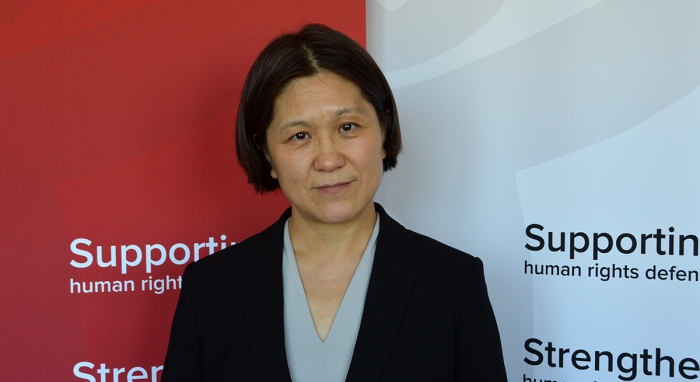
On 9 November 2017 ISHR met Yaxue Cao, the founder and editor of ChinaChange.org, an English-language website devoted to news and commentary related to civil society, rule of law, and human rights activities in China. She works to help the rest of the world understand what people are thinking and doing to effect change in China. Reports and translations on China Change have been cited widely in leading global news outlets and in U.S. Congressional reports. Yaxue Cao grew up in northern China during the Cultural Revolution and studied literature in the US. She lives in Washington, DC.

The saga of the “anti-NGO” committee in the UN continues

February 9, 2018

This blog has several times paid attention to the rather weird situation that the UN “NGO Committee” (at NY level) has a rather negative attitude towards the very NGOs that it is supposed to assist. See e.g.:

https://humanrightsdefenders.blog/2016/06/01/ngo-committee-of-the-un-shows-its-bizarre-bias-against-human-rights-ngos/

https://humanrightsdefenders.blog/2016/05/04/ishr-starts-campaign-to-monitor-committee-that-throttles-ngo-access-to-the-un/

https://humanrightsdefenders.blog/2016/02/08/un-committee-on-ngos-denies-ngo-the-right-to-speak/

https://humanrightsdefenders.blog/2015/06/07/uns-ngo-committee-seems-not-very-fond-of-ngos/

https://humanrightsdefenders.blog/2015/05/04/jean-daniel-vigny-hopes-to-improve-ngo-participation-at-the-un/

Now, on 29 January 2018, the International Service for Human Rights (ISHR) came out with the video above as well as the following statement:

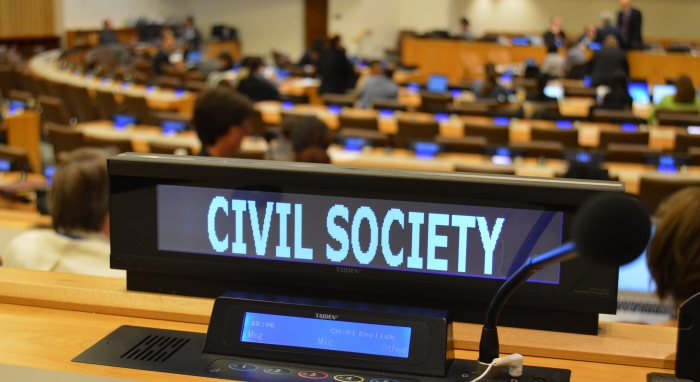
A group of regional and international human rights NGOs was blocked from making a statement at the UN NGO Committee session today.  Despite a precedent set two years ago for the delivery of a general statement, all requests since have been refused.  Read here the NGOs’ call for leadership and reform:

Today a group of NGOs sought to deliver a general statement  urging the Committee to embrace the principles of transparency, accountability and accessibility in its work to ensure its practice is fair, expeditious and apolitical. The ECOSOC NGO Committee reviews applications for accreditation, providing a gateway for NGOs into the UN.  It has been much criticised – by States, UN officials and NGOs – for practices including repeated questioning of applicants and multiple deferrals of applications for no good reason. The NGOs’ attempt to speak was blocked.

ISHR along with Amnesty International, Civicus, Conectas Diretos Humanos, Human Rights Watch, Jacob Blaustein Institute for the Advancement of Human Rights, International Commission of Jurists and Outright Action International came with two key calls for Committee and observer States, related to participation and membership.

1/  The NGO Committee must provide for remote participation by accredited NGOs:

ECOSOC recently requested the NGO Committee to institute regular meetings with accredited NGOs in regard to the ‘evolving relationship’ between NGOs and the UN. Despite the fact that these have been required since 1996, the meeting scheduled to take place in the next months, will be the first. The NGOs urge that provision be made for remote participation by accredited NGOs unable to travel to New York for the meeting. ‘Clearly, access to UN conversations should not be limited to those who have resources to travel to New York or Geneva or other major UN hubs.  A diversity of voices should be heard,’ they note.  ‘We hope that States will ensure that the principle of accessibility to UN processes will be applied when defining working methods for the upcoming meeting.’

2/  States with good records on key freedoms should stand for membership of Committee:

Safeguarding civil society space at the UN is an essential component in the struggle to protect civil society space globally.  With this in mind, the NGOs call on all States with a commitment to defending the work of civil society to put themselves forward as candidates for the elections to the Committee in April. ‘Action to defend civil society space at the UN starts here at this very Committee’, say the NGOs.

Uruguay invokes ‘right to be heard’ as statement is blocked:

In response to China and Russia’s objections to the presentation of the NGO statement, Uruguay spoke forcefully in favour of hearing from civil society.  Opposition to the NGOs’ ‘right to be heard’ went against the principle of transparency in Committee practice, Uruguay said.  It also represented a step back by a Committee whose very mandate speaks to strengthening links between NGOs and the UN system.

Through their statement, civil society could provide insights that contribute to improving the work of the Committee,’  Uruguay noted. Hearing the statement ‘would allow the Committee to understand civil society’s ideas, experiences and expectations.’ The EU, UK and US also made statements of support.  These were not enough to overcome the opposition.

As we were not permitted to deliver our statement to the Committee today, we shall now request a written version be circulated to all ECOSOC members,‘ said ISHR’s Eleanor Openshaw, reflecting on the morning’s events. ‘We shall also look into ways to ensuring NGOs can make general statements at the Committee in future.

https://www.ishr.ch/news/ngo-committee-ngos-blocked-delivering-statement

5th Werner Lottje lecture in Berlin focuses on Cambodia

February 8, 2018

On 21 February 2018, Bread for the World and the German Institute for Human Rights organise for the 5th time the Werner Lottje Lecture [the lecture is named after the German activist who was a major force in the international human rights movement [see https://humanrightsdefenders.blog/2013/11/16/and-a-lot-more-about-werner-lottje-the-great-german-human-rights-defender/].

This year the focus is on human rights defenders in Cambodia.

For last year’s lecture see: : https://humanrightsdefenders.blog/2017/01/26/the-4th-werner-lottje-lecture-showcases-the-zone-9-bloggers-from-ethiopia-15-february/.

Programme:

Cornelia Füllkrug-Weitzel; President Bread for the World

Naly Pilorge; Acting Director, LICADHO, Cambodian League for the Promotion and Defense of Human Rights

Julia Duchrow; Head Human Rights and Peace, Bread for the World

Michel Forst; UN Special Rapporteur on Human Rights Defenders

19:00 panel discussion with Gyde Jensen; MP, chair of the Bundestag Committee on Human Rights and Humanitarian Assistance; Michel Forst; Naly Pilorge; and Dr. Julia DuchrowModerated by Michael Windfuhr; acting Director German Institute for Human Rights


Date and place: 21/2/2018, 17:30 – 20:00 at Brot für die Welt, Caroline-Michaelis-Straße 1, 10115 Berlin.

To attend please contact eimear.gavin@brot-fuer-die-welt.de (+49 (0)30 65211 1811) before 15 February.


There will be German – English interpretation.


Architect Teddy Cruz: “Can we design human rights?’

February 7, 2018

Teddy Cruz. Photo: The Aspen Institute Central Europe.
The Vilcek Foundation announced on 5 February the winners of its 2018 prize in the arts and humanities, which celebrates the breadth of immigrant contributions to the American arts and sciences. Focusing on the field of architecture, this year’s $100,000 award went to Teddy Cruz, a professor at University of California in San Diego and the director of design at Estudio Teddy Cruz + Fonna Forman, a research-based political and architectural practice.

Marica Vilcek, cofounder and vice chairman of the Vilcek Foundation, said: “With the Vilcek Prizes in Architecture, we are pleased to recognize the many ways in which they have shaped its physical landscape as well—through bold, original designs, and through research that challenges the status quo, both in the building arts and in society.”

Born in Guatemala, Cruz immigrated to California when he was twenty years old…Among his most recent projects completed with his partner Fonna Forman, are cross-border community spaces that host a variety of arts and educational programming on both sides of the US-Mexico border.

Today, we must expose rather than mask the institutional mechanisms driving uneven urban development,” Teddy Cruz and Fonna Forman wrote in the 2016 summer issue of Artforum. “Such a revelation requires a corresponding expansion of our understanding of the scope of architecture itself—can we design human rights, for example? Can social justice become an architectural protocol? In other words, the most important materials with which architects must learn to work are not steel and concrete but critical knowledge of the underlying conditions that produce today’s urban crises.

Established in 2000 by Jan and Marica Vilcek, immigrants from the former Czechoslovakia, the Vilcek Foundation aims to honor the contributions of immigrants to the United States and to foster appreciation of the arts and sciences. The foundation awards annual prizes to prominent immigrant biomedical scientists and artists working in the disciplines of music, film, culinary arts, literature, dance, contemporary music, design, fashion, theatre, and fine arts.

https://www.artforum.com/news/architect-teddy-cruz-wins-100-000-vilcek-prize-74148

Amnesty UK’s Suffragette Spirit campaign deserve replicating in other countries

February 7, 2018

In then clip above Juliet Stevenson (one of many) makes her nomination for A’ UK’s Suffragette Spirit campaign. People who know women human rights defenders today in the UK. can nominate. Visit https://www.amnesty.org.uk/suffragett…


Will Pakistan pass again the human rights progress test in the EU parliament?

February 6, 2018
, in a piece in The News on Sunday (TNS) refers to the upcoming debate in the European Parliament about whether or not Pakistan will get a prolongation of its ‘Generalised Scheme of Preferences (GSP) Plus status‘ by the EU (giving easy access to the EU market for textile). The second periodic review has been done and the report will be discussed in the EU Parliament shortly. The continuation or discontinuation of the status for Pakistan is crucial:

Some of the important observations made by the EU team:

It points out the government of Pakistan has established a system of Treaty Implementation Cells (TICs) at federal and provincial levels, tasked with coordinating the implementation of treaty obligations between different line ministries and departments and between the federal and provincial levels. The National Commission of Human Right (NCHR) has been established though its functional and budgetary autonomy is yet to be fully materialised. Besides, it says, the federal and provincial Commissions on the Status of Women have also played an important role in promoting human rights in Pakistan. It also praises the government’s intention “to improve data collection by establishing a Human Rights Management Information System, which will be anchored in a National Human Rights Institute.”

On the other hand, it identifies outstanding issues and points out that the right to a fair trial remains a major concern, stemming from weaknesses of the judicial system. “A large backlog of cases resulting in defendants spending years in jail before their case is heard continues to be a problem. The registration process of international NGOs (INGOs) continues to be slow and nontransparent.” The issues of forced marriages, forced conversions, forced disappearances, custodial deaths, death penalty etc have been taken up in the report as well. The concerns about freedom of expression, freedom of association and assembly, the situation of human rights defenders and civil society activists, and the overall ‘shrinking civil society space’ are also there.

Regarding the eight conventions on labour rights, the review report talks about the formation of a national labour protection framework by the federal and provincial authorities, the ongoing labour force and child labour surveys, improvements in the area of tripartite dialogue, formation of trade unions in the informal sector etc but calls upon the government to address the persistent obstacles for the registration and functioning of trade unions. The issues of child labour and bonded labour have also been discussed along with the efforts to curb these…

Ume Laila Azhar, Executive Director Homenet Pakistan, says it is a mix picture and the report seems to have categorically analysed the present situation of Pakistan’s executive and legislature. She finds the review report an eye-opener and urges the government functionaries to do the needful. For example, she says, “The number of labour inspectors has been stagnating countrywide and the whole labour inspection system is in need of reform, which is essential to improve the enforcement of labour rights and working conditions. Without an effective labour inspection system it is impossible to ensure labour rights.”

Zulfiqar Shah, Joint Director Pakistan Institute for Labour Education & Research (PILER), hopes the GSP Plus status will continue as the report seems to be appreciative of the pro-rights legislation done by the government. “Though it highlights human rights violation in Pakistan, it appreciates the measures taken for improvement as well.” However, he says, the review appears to be biased in favour of the government in terms of labour rights in a scenario where only one per cent of the workforce is unionised.

Bushra Khaliq, Executive Director Women in Struggle for Empowerment (WISE), shares it with TNS that the second review is different from the first because this time the third party evaluation has also been done on the behest of EU. Due to this, she says, the findings cannot be termed biased as happens when the civil society of the country gives its input. The government shall seek guidelines from the report and its recommendations for the sake of its citizens as well as the continuation of GSP Plus status. Khaliq appreciates the fact that the government has recently submitted its reports to the UN regarding compliance with its certain conventions, terming it a positive trend. Earlier, there would be reluctance and delays in this regard. Lastly, she thinks even the EU Parliament is answerable to the highly vigilant civil society in Europe and cannot ignore it while deciding on the continuation of this preferential status. “So, it is equally important to convince the civil society that we are taking these issues seriously.”
Call for Nominations 2018 Right Livelihood Award

February 6, 2018

Do you know any brave person or organisation who works in a visionary and exemplary manner to solve global problems? Take the chance to propose a candidate for the 2018 Right Livelihood Award, widely known as the “Alternative Nobel Prize” The Right Livelihood Award is not an award for the world’s political, scientific or economic élite, but an award for the people and their work and struggles for a better future. [http://trueheroesfilms.org/thedigest/awards/right-livelihood-award] Everyone is welcome to propose candidates for the Right Livelihood Award and four recipients are chosen each year by an international jury after extensive research work. The deadline is 1 March 2018.

See also: https://humanrightsdefenders.blog/2017/10/04/2017-right-livelihood-lau…

For the 170 previous Laureates from 69 countries click here.


Read more about the nomination process here. If you want to propose a candidate (preferably in English), please follow these guidelines.

Call for Nominations for the 2018 Lorenzo Natali Media Prizes

February 6, 2018

Applications for the European Commission‘s 2018 Lorenzo Natali Media Prize, which recognises journalists doing outstanding reporting on development topics, are open from 5 February to 9 March for online, print and audio-visual works.

Commissioner for International Cooperation and Development Neven Mimica said: “In an era of disinformation, fake news and digital algorithms, we need professional and fact-based journalism more than ever. The important work of journalists is not only crucial for democracy across the globe, but also gives visibility and a voice to those who would otherwise not be heard. Through their stories they inform, inspire, and call for much-needed change. With this prize, we thank them for their determination and encourage them to keep up the fight.”

The Lorenzo Natali Media Prize is awarded to journalists reporting on issues such as poverty eradication and the economic, social and environmental dimensions of sustainable development. Journalists are invited to submit their work, be it in print, digital, radio or TV broadcast format. Deadline: 9 March 2018. Detailed information on the specific rules and criteria are available online. The prize has two categories based on age groups: 21 to 26 years, and 27 years plus. For each category there will be a winner from each region: Africa; the Arab World and the Middle East; Asia and the Pacific; Latin America and the Caribbean; and Europe.

A “Grand Winner” will be selected among the regional winners [this is the award listed in the Digest: http://trueheroesfilms.org/thedigest/awards/lorenzo-natali-grand-prize-for-development-and-human-rights] and an additional thematic prize will be awarded for work focused on the elimination of violence against women and girls.

The selection will be carried out by a “Grand Jury” composed of renowned journalists from across the world. This year’s jury members include Bruce Shapiro from the Columbia School of Journalism, Peruvian reporter and founder of “Panorámica Lationamericana” Isabel Recavarren, New Delhi-based journalist and President of the Commonwealth Journalists Association Mahendra Ved, Le Soir’s Maroun Labaki, and Mary Harper, the BBC World Service’s Africa Editor.

All 11 winners will receive their awards at a ceremony during the 2018 European Development Days in Brussels this June.

Application

Oslo Freedom Forum now also in Johannesburg (26 March 2018)

February 3, 2018

...

HRF and Nelson Mandela Foundation Will Produce OFF in Johannesburg this March

On 26 March, 2018, the Human Rights Foundation (HRF) will bring the Oslo Freedom Forum experience and community together for the first-ever Oslo Freedom Forum in Johannesburg (OFFinJoburg). In 2017, HRF established a collaboration with the Nelson Mandela Foundation to bring the Oslo Freedom Forum to South Africa in 2018, the 100th anniversary of Mandela’s birth. OFFinJoburg will be held in Bryanston, Johannesburg, and live-streamed. You can register for the event here.

Speakers at OFFinJoburg will include Zimbabwean civil rights activist and #ThisFlag movement leader Evan Mawarire, former Maldivian president Mohamed Nasheed, Moroccan-born French free expression advocate and journalist Zineb El Rhazoui, Arab Spring writer and journalist Iyad el-Baghdadi, Chinese-Canadian actress and human rights activist Anastasia Lin, Angolan investigative journalist Rafael Marques de Morais, and Eritrean information activist and refugee rescuer Meron Estefanos, among others.

https://mailchi.mp/hrf/hrf-and-nelson-mandela-foundation-will-produce-off-in-johannesburg-this-march?e=f80cec329e

Publication “Sur 26: Reclaiming Civic Space” focuses on local human rights defenders

February 2, 2018

This weekend I would like to share some new research on issues of civic space and human rights defenders (HRDs). The Fund for Global Human Rights has collaborated with Conectas to produce Sur 26: Reclaiming Civic Space, the 26th edition of Sur – International Journal on Human Rights. This is a special edition of the journal, authored predominantly by activists for activists. It documents the resistance of human rights groups during a time of increasing repression and restrictions on civil society, and offers key insights on the strategies frontline activists are using to reclaim civic space.

As you know, research about the global crackdown on civil society often focuses on how the crisis has manifested and its impacts. Little has been documented about the ways national-level civil society groups are responding to closing civic space, or the effectiveness of these responses. Moreover, international actors conduct much of the current research, and when frontline activists do produce analysis, it is often to inform the work of larger groups or to feature as case studies. Sur 26: Reclaiming Civic Space  helps change this. The research documents the learning of activists from 15 countries, how they have evolved their strategies to reclaim civic space, and the challenges they experienced along the way.

A letter to readers http://sur.conectas.org/en/sur-26-letter-to-the-readers/, authored by Juana Kweitel (Executive Director, Conectas Human Rights), Oliver Hudson (Editor, Sur Journal) and James Savage Program Officer of the Fund for Global Human Rights, provides insight into the special issue.

This collaboration with Conectas is a component of the Fund’s Enabling Environment for Human Rights Defenders Program <http://globalhumanrights.org/issues/activism-under-threat/> , a global initiative that supports human rights activists to resist the crackdown on civic space. A cornerstone of the program is to support documentation by and learning between activists.

Prior to the publication of Sur 26, with support from the Fund, Conectas brought together a dozen of the Sur 26 author-activists at a writers’ retreat in Sao Paulo. This opportunity helped the author-activists examine global and regional trends in closing space, discuss and share their strategies, review and provide feedback on each other’s texts, and reflect together on the importance of writing and documentation. The retreat enhanced and helped shape the final texts of Sur 26 while also providing a valuable space for frontline human rights defenders to collaborate on their work.

A video essay <https://youtu.be/fou-M3tb7WQ> , which was produced at the writers’ retreat, and offers a glimpse into the work explored throughout the 26th edition of Sur. Sur 26 is published in English, Spanish and Portuguese.

[see also: https://humanrightsdefenders.blog/2017/12/04/the-new-normal-rising-attacks-on-human-rights-defenders/]

http://sur.conectas.org/en/strategies-to-resist/

http://globalhumanrights.org/sur-international-journal-human-rights-issue-26/