“Migration is not a crime. Defending the rights of migrant people should not be criminalised,” said Azadi (pseudonym) in her interview with ISHR. Today, more than 68 million people around the world are refugees or internally displaced as a result of conflict or persecution. They seek a safer life and better future. “Migrant rights defenders want to show people on the move that another Europe exists: it’s the Europe of the civil society that tries to welcome them. The Europe of solidarity”, Azadi concluded.
A group of 18 NGOssent a joint letter to US ambassador to the United Nations Nikki Haley in response to a letter sent by Haley to the organisations after the US withdrawal from the UN Human Rights Council. On 17 May 2018, 18 NGOs had sent private letters to Member States urging them to not support the US proposal to reopen the Council’s institutional framework at the General Assembly. Read the joint letter below.
Although the Human Rights Council is not perfect, it does play an essential role. It makes a significant contribution to strengthening human rights standards, providing protection and justice to victims, and promoting accountability for perpetrators. The Council and its mechanisms have played a key role in securing the freedom of detained human rights defenders, and investigating rights violations in Syria, Yemen, Burundi, Myanmar, South Sudan, Sri Lanka and North Korea, to name but a few. It continues to address thematic issues of global concern including non-discrimination, freedom of expression online and offline, freedom of assembly, housing, migration, counterterrorism, and the protection of the rights of women, rights of LGBTI people, and rights of people with disabilities.
As you know, we are independent organizations that do not work on behalf of any government. We focus on building support for policies we believe will better the lives of those most affected by abuse – which does mean we are sometimes opposed to proposals laid out by certain governments, or the proposed means of pursuing them, especially when we believe such an initiative could be more harmful than not. With regard to the Council, our goal continues to be strengthening and supporting reform efforts that are ongoing in Geneva to ensure that they are informed by the experience and expertise of national and regional level actors, including rights-holders, human rights defenders and other civil society actors, victims, survivors (and their representatives).
We are committed to the international system, including the Human Rights Council, and to ensuring the system is fit for the purpose of promoting and protecting human rights. We will continue to work towards those goals.
Signatories:
Amnesty International
ARTICLE 19
Asian Forum for Human Rights and Development (Forum-Asia)
Asian Legal Resource Centre (ALRC)
Cairo Institute for Human Rights Studies
Centro de Estudios Legales y Sociales (CELS)
Child Rights Connect
Conectas Direitos Humanos
DefendDefenders (the East and Horn of Africa Human Rights Defenders Project)
Human Rights Watch
International Commission of Jurists (ICJ)
International Federation for Human Rights (FIDH)
International Humanist and Ethical Union (IHEU)
International Lesbian, Gay, Bisexual, Trans and Intersex Association (ILGA)
A global cooperation platform has been launched to advance the fight against torture and ill-treatment worldwide: https://www.startnext.com/atlas-of-torture. The Atlas of Torture – developed by Ludwig Boltzmann Institute of Human Rights in Austria together with HURIDOCS– aims at providing the largest database on torture and ill-treatment, a map of organisations and activities as well as a learning and exchange platform for states, researchers, human rights defenders and the general public. Thereby they want to raise awareness, improve the access to information, strengthen cooperation and empower people worldwide. The project has already been endorsed by many human rights experts (from the UN SPT, Council of Europe, NGOs, academics and medical professionals). You will be able to view their testimonials over the coming weeks on the project’s Facebook <https://www.facebook.com/Atlas-of-Torture-115526871812308/> and Twitter <https://twitter.com/AtlasofTorture> channels.
A concept note with more details is available from: contact@atlas-of-torture.org
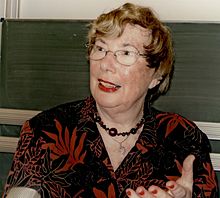
Felicia Langer (born 9 December 1930 ) died on 21 June 2018. She was a German-Israeli attorney and human rights defender known for her defence of Palestinian political prisoners in the West Bank and Gaza Strip. She authored several books alleging human rights violations on the part of Israeli authorities. She lived in Germany from 1990 and acquired German citizenship in 2008.In her writings, lectures and interviews she criticized the Israeli policy in the occupied Palestinian territories, which she considered equivalent to an annexation. Langer furthermore considered the construction of Israeli settlements in the West Bank as undermining the possibility of a two-state solution and demands the complete and unconditional retreat of Israel from the territories conquered in 1967 and a right to return for any descendant of the Palestinian refugees. In 1990, Langer received the Right Livelihood Award ” for the exemplary courage of her struggle for the basic rights of the Palestinian people.” In 1991, she was awarded the Bruno Kreisky Award. In July 2009, President of Germany awarded her the Federal Cross of Merit. The bestowal triggered a public controversy because of her attitude towards the Israeli-Palestinian conflict. For more on human rights awards see: http://trueheroesfilms.org/thedigest/
Ludwig Watzal on 23 June wrote in an Op ED in EurAsia Review “Felicia Langer is highly respected and revered by the Palestinians like no other Israeli-German citizen. Only Yasser Arafat is more adored. Both the Palestinian Authority and the city of Tübingen, where she lived in exile, should set up a memorial place for this great German-Israeli woman…Felicia Langer is one of the few outstanding Israeli-German personalities who have sacrificed themselves to the legitimate concerns of the Palestinian people to the last breath, and whose memory should remember by all three peoples. Their tireless commitment to Palestinian justice and human rights should always be considered an inspiration and a societal obligation to their political actions.”
The Geneva Human Rights Platform (Geneva HRP), hosted by the Geneva Academy and supported by the Federal Department of Foreign Affairs of Switzerland, provides a dynamic forum in Geneva for all stakeholders in the field of human rights – experts, practitioners, diplomats and civil society – to discuss and debate topical issues and challenges. Relying on academic research and findings, the Geneva HRP aims at enabling various actors to become better connected, break down silos and, hence, advance human rights.
‘The objective is to foster interactions and discussions on topical issues and challenges through regular events, conferences, expert roundtables and private meetings’ stresses Felix Kirchmeier, Director of Policy Studies at the Geneva Academy. ‘The Geneva HRP aims to increase sharing, exchange and collaboration among different actors by means of its independent, neutral and academic status’ adds Robert Roth, Director of the Geneva Academy.
The Geneva HRP is up and running since the beginning of the year, but now has a dedicated online presence, on the Geneva Academy website, which provides information about activities, events and related research.
The Council of Europe’s Democratic Governance Department has been working for some time to put into practice the recent Committee of Ministers Guidelines for civil participation in political decision-making . Now it is again turning to supporters of participatory democracy and to anyone with fresh ideas to help find a unifying visual symbol, an original design for a logo or emblem.
The logo should highlight, in a symbolic way, the importance of public/civil participation in decision-making at all levels of government. It should be very simple and expressive, while appealing to both sides in the democratic decision-making process – the public authorities and civil society. The logo is meant to appear on all that will be done by the partners – news items, video clips, reports, meeting programmes, etc. Ideally, people will gradually start associating it with our joint work on civil participation.
We are looking for a small graphic symbol, preferably without text. The logo of the No Hate campaign of the Council of Europe could serve – very approximately – for orientation.
Three winning entries will be selected by the group of partners involved in promoting civil participation. Modest prizes (but eternal glory) will be awarded to the winners. Please send your entries in a free format (a scanned drawing would also do) before 1 August 2018, together with your personal details including a mobile phone number, to the following e-mail: ellsworth.camilleri@coe.int
…“civil society at large”: the ensemble of individuals and organised, less organised and informal groups through which they contribute to society or express their views and opinions, including when raising issues regarding human rights violations, corruption and other misconduct or expressing critical comments. Such organised or less organised groups may include professional and grass-roots organisations, universities and research centres, religious and non-denominational organisations and human rights defenders;..
On Wednesday 20 June 2018, Dublin based international human rights organisation, Front Line Defenders along withthe HRD Memorial Network, launched a major new report on the killing of human rights defenders (HRDs) at the UN Human Rights Council in Geneva. The report,Stop the Killings,analyses the root causes of killings of HRDs in 6 countries: Brazil, Colombia, Guatemala, Honduras, Mexico and the Philippines, which between them have accounted for 80%HRDs killed in the last three years.
In its Annual Reports for the last 4 years, Front Line Defenders has reported the killing of 879 HRDs. These were not random killings but the targeted elimination of those working to improve their own communities.The use of lethal violence to silence those who defend the rights of the most vulnerable has become widespread, and is endemic in a number of countries. In its 2017 Annual Report, Front Line Defenders reported the killing of 312 HRDs in 27 countries; the true figure is certainly higher. Two-thirds of those killed were working on the environment, land rights and indigenous peoples’ rights, often in remote, rural areas.
Among the key drivers of killings and violence against HRDs detailed in the report are::
state failure to recognise the legitimacy and importance of the work of HRDs;
smear campaigns against HRDs by the state and/or its agents;
economic policies which prioritise the ruthless exploitation of natural resources over the protection of the environment and the land;
rights of peasant communities and indigenous peoples;
lack of effective systems to document and investigate attacks on HRDs and provide protection;
collusion by the state and/or its agents in the killing of HRDs.
The report was launched by United Nations Special Rapporteur on Extrajudicial, Summary or Arbitrary Executions, Agnes Callamard, at a special side event duringHuman Rights Council proceedings on Wednesday 20 June 2018.
“How to Respond to Challenges Facing Civil Society Organisations Working on Human Rights?” is the topic of a side event on Monday, 25 June 2018(12:30 – 14:00) at the Palais des Nations, Room XXIII.
Challenges to the work of civil society organisations exist in every part of the world and take a variety of forms. Based on recent reports on civil society space of the OHCHR and the EU Fundamental Rights Agency, this event gathers various stakeholders, including NGOs, governments, UN agencies and other intergovernmental organizations, to reinforce the importance of civil society engagement, and address the many challenges which hinder its effective functioning. This surely will include the question of reprisals against HRDs cooperating with the UN. Questions to be addressed include: What are the major challenges facing civil society organisations? What are some examples of emerging good practices? How can we ensure that the needs of underrepresented parts of civil society are taken into account? What is the role of the Human Rights Council in ensuring a safe and enabling environment? Can we identify ways forward and concrete next steps?
SPEAKERS
Ambassador Michael Gaffey, Permanent Representative of Ireland to the UN in Geneva
Michael O’Flaherty, Director of the European Union Agency for Fundamental Rights (FRA)
Lopa Banerjee, Director of UN Women’s Civil Society Division
Peggy Hicks, Director of the Research and Right to Development Division of the Office of the High Commissioner for Human Rights (OHCHR)
Phil Lynch, Director of International Service for Human Rights (ISHR)
Euromed Rights [formerly known as the Euro-Mediterranean Human Rights Network (EMHRN)]announced that on 23 and 24 June, 2018, more than a hundred representatives from 80 organisations working on Human Rights on the two shores of the Mediterranean are expected to head to Brussels to attend the 11th General Assembly of EuroMed Rights. As the Euro-Mediterranean region is consumed by the migrants’ impasse, a deep social-economic crisis, the deterioration of international conflicts and the restauration of authoritarian regimes, meetings like this one are more meaningful than ever. Being the only regional organisation that gathers human rights defenders and organisations from both sides of the Mediterranean, EuroMed Rights has a crucial role to play in order to tackle the deterioration of human rights in the region with a strong, common voice.
{The General Assembly is the supreme body of EuroMed Rights and gathers every three years to elect the new President and the new Executive Committee members. The President and the Executive Committee are elected for a period of three years which could be renewed for two further terms. The Executive Committee members are also appointed as political referents for different focus areas.}
Iranian lawyer Nasrin Sotoudeh next to her husband Reza Khandan | Behrouz Mehri/AFP via Getty Images
On 13 June 2018, Nasrin Sotoudeh, the human rights defender was arrested at her home in Tehran, Iran. She was transferred to prosecutor’s office of Evin prison.Nasrin Sotoudeh https://www.frontlinedefenders.org/en/profile/nasrin-sotoudehis a prominent human rights lawyer who in recent months has acted as the lawyer for women’s rights activists who protested against the compulsory veiling in Iran and were subsequently prosecuted. According to her husband, Reza Khandan, Nasrin Sotoudeh was informed that she will be imprisoned for five years, however neither of them are aware of the charges against her.
In 2010, Nasrin Sotoudeh was given a prison sentence of eleven years and banned from working as a lawyer or leaving the country for twenty years. Nasrin Sotoudeh remained in prison for three years under charges of ‘spreading propaganda’ and ‘conspiring to harm state security’, designed to force her to stop her legitimate and peaceful human rights activities. Nasrin Sotoudeh was finally released in September 2013after receiving a pardon. Prior to her detention, Nasrin Sotoudeh represented many human rights defenders opposed to the current regime in Iran, and worked extensively with young prisoners who had been sentenced to death for crimes they committed when they were under 18. In 2012 she won the EU’s Sakharov award {http://thedigestapp.trueheroesfilms.org/publicpage#/awards/BDE3E41A-8706-42F1-A6C5-ECBBC4CDB449/Sakharov-Prize-for-Freedom-of-Thought]



 Hans Thoolen on Human Rights Defenders and their awards