Over 50 NGOs have signed a joint letter to Aung San Suu Kyi requesting the immediate and unconditionally release of Wa Lone and Kyaw Soe Oo.
TO: Aung San Suu Kyi, State Counsellor, Myanmar
share information on human rights defenders, with special focus on human rights awards and laureates
Over 50 NGOs have signed a joint letter to Aung San Suu Kyi requesting the immediate and unconditionally release of Wa Lone and Kyaw Soe Oo.
TO: Aung San Suu Kyi, State Counsellor, Myanmar

Chinese authorities must immediately and unconditionally release citizen journalist and human rights defender Huang Qi, a group of 14 NGOs (and not the least, see below) said on November 5, 2018. Huang Qi (黄琦), the founder and director of 64 Tianwang Human Rights Center, is not receiving adequate medical care in detention and his health has seriously deteriorated, according to his lawyer who visited him on October 23. Huang’s condition is so serious that there is an immediate threat to his life. [see also: https://humanrightsdefenders.blog/2016/12/01/rsfs-press-freedom-prize-2016-goes-to-the-64-tianwang-website-in-china/]
The Chinese government must immediately and unconditionally release Huang, who has been detained solely for the peaceful exercise of his right to freedom of expression, and end its policy of denying prompt medical treatment to prisoners of conscience. Several human rights defenders and ethnic and religious minorities have died in detention in recent years due to a lack of prompt medical treatment, including Liu Xiaobo, Cao Shunli [see: https://humanrightsdefenders.blog/2015/03/27/china-or-the-un-must-ensure-independent-investigation-into-death-of-cao-shunli/], Yang Tongyan, and Tenzin Delek Rinpoche, intensifying fears that Huang Qi might suffer the same fate without urgent intervention.
Authorities have repeatedly rejected applications for release on medical bail despite Huang’s heath condition continuing to deteriorate. He faces charges of “illegally providing state secrets to foreign entities” and “leaking state secrets” due to his work with 64 Tianwang Human Rights Center, which documents and publishes reports on enforced disappearances, trafficking, human rights violations and complaints against government officials. Huang faces the possibility of life imprisonment. His 85-year-old mother has been campaigning for his release, fearing he may die in prison. Last month two of his associates received suspended prison sentences and were released, but authorities have continued to hold Huang. The UN Working Group on Arbitrary Detention issued an opinion in April 2018 that declared Huang’s detention arbitrary, but the Chinese government continues to ignore the Working Group’s recommendation that Huang be released and compensated.
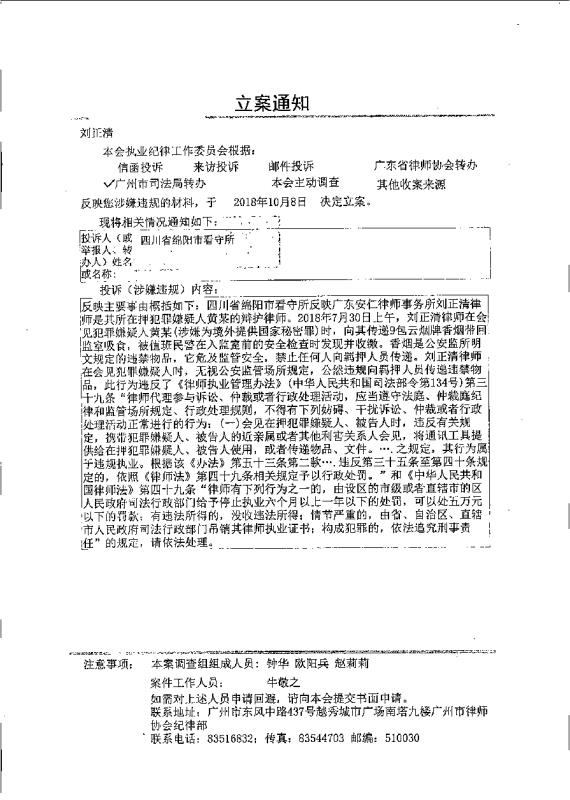
Lawyers representing Huang Qi have also faced retaliation. One of his lawyers, Sui Muqing, was disbarred in February 2018 for defending human rights defenders, such as Huang. [https://www.frontlinedefenders.org/en/case/human-rights-lawyer-sui-muqing-disbarred] Huang’s current lawyer, Liu Zhengqing, received a notice in October that he is under investigation for giving Huang cigarettes during a meeting in July. Liu faces suspension of his law license or a large fine.

http://rsdlmonitor.com/immediately-unconditionally-release-huang-qi/
In this context also relevant is: https://mailchi.mp/ishr/alert-to-the-human-rights-councils-35th-session-31901?e=d1945ebb90


Fears grow for 19 missing human rights defenders in Egypt. Hoda was one of 19 activists – eight women and 11 men – swept up Thursday 1 November as the regime escalates pressure on human rights NGOs. Four days later the location and fate of these activists is still unknown. One of the organisations hit hard by this crackdown is the ECFR, which documents enforced disappearances and the expanding use of the death penalty.
A number of prominent members of the group have been targeted before. In September, Executive Director of ECFR, Ezzat Ghoneim, was forcibly disappeared despite being released from Tora prison after serving a six-month prison sentence there. In October Egyptian authorities issued an arrest warrant for Ghoneim for failing to adhere to the terms of his release despite the fact that his family say he is still being held in secret detention.
Along with Ghoneim the group’s co-founder Azzouz Mahgoub was also forcibly disappeared in March. Last Thursday the ECFR announced the suspension of its work citing the current climate in Egypt as “incompatible with human rights work”. “The human rights situation in Egypt, especially with regard to the rights of detainees and human rights defenders, has been the worst in Egypt’s history in the past five years” ECFR said in a statement.
“Furthermore, the Egyptian authorities have committed the most serious violations beyond all humanitarian norms including the storming of women’s homes, their detention and the arrest of their families over the past three months alone.”
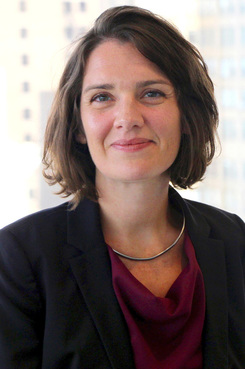
Since joining McCarter & English as pro bono director two years ago, Michelle Movahed has helped bring about increases in firmwide pro bono hours (by 3,000 hours annually) and in pro bono-to-billable hours ratio (even as billables increased, according to the firm). The program also has taken up a broader range of cases under Movahed, including immigration detainee asylum matters. And she recently saw through the firm’s creation of a pro bono fellowship to benefit the city of Newark, which includes a full-time attorney position. David Gialanella interviewed her on November 2018 for the New Jersey Law Journal:
What’s your single best piece of advice for handling a crisis?
Focus on what you can control, take ownership of all of it, and move forward.
Name a mentor or someone you admire, and why.
I deeply admire my clients. I’ve been very lucky to work for human rights defenders, for individuals who have stepped up to right a wrong, and, most recently, for asylum-seekers who have made harrowing journeys to escape truly horrendous trauma.
Best advice you ever got…
I’ve never been as nervous as I was the night before my first big oral argument, on our motion for a TRO to keep the doors open at the last comprehensive reproductive health clinic in Mississippi. By around 10 p.m., everyone I worked with was telling me to go to sleep and stop preparing so I’d be well-rested. I just didn’t feel like it was time yet, but I also knew I didn’t know enough to make that judgment call. So I asked for help: I wrote to the judge I’d clerked for, whose opinion I value more than almost anyone, to ask for words of wisdom. The advice he gave me was incredible, and I must have read his email a hundred times over the next 12 hours until I went in to the courthouse. He reminded me that I couldn’t lie to myself about how nervous I was, how high the stakes were, and how hard my case was. So, he said, “don’t f— it up.” If I could have that embroidered on a pillow, I would. I stayed up late, prepared until I knew I had done everything I could to avoid f-ing up, and was completely on my game at the argument. (We got the TRO, and the clinic stayed open.)
What has the #MeToo movement meant to the legal profession?
The hashtag is new, but the issues aren’t. #MeToo, #BlackLivesMatter, and #TimesUp are reminders that lawyers have a responsibility to use our privilege to challenge oppression wherever it appears. Our professional obligations include the duty to speak up when we know another lawyer has violated the rules of professional conduct; but our ability to promote justice is much broader, and we should use it.
In 50 words or less, what does the legal profession need to do to improve opportunities for women lawyers?
Every lawyer should seek out opportunities to teach, mentor, and otherwise make space for lawyers with less privilege: not only women, but also lawyers of color, who are LGBTQIA, who have disabilities, who are from other traditionally marginalized groups, and who are at the intersections of those identities.

Şebnem Korur Fincancı, a Turkish human rights defender and forensic doctor, was on Friday awarded the Hessian Peace Prize, given each year to an individual who rendered outstanding service to furthering mutual understanding among countries and peace. Korur Fincancı was granted the award for her efforts for the rehabilitation of torture victims as well as for the research and documentation of torture, a statement from the award committee said.
Korur Fincancı is chairwoman of the Human Rights Foundation of Turkey (TİHV), one of the first human rights organizations established in the country following the 1980 military coup. She is also a leading international expert on torture documentation and a former member of the executive committee of the International Rehabilitation Council for Torture Victims (IRCT). She is also co-writer of “Istanbul Protocol,” a universal work on standardizing investigation and documentation of traces of torture.
Turkish authorities on June 20, 2016, arrested her on charges of disseminating propaganda for a terrorist organization, along with the Reporters Without Borders (RSF) representative Erol Önderoğlu and author Ahmet Nesin. The three had joined a solidarity campaign defending the editorial independence of Özgür Gündem, a paper aligned with Turkey’s Kurdish minority and frequently critical of the Turkish government. Korur Fincancı and Önderoğlu were released after 10 days. [https://humanrightsdefenders.blog/2016/07/03/two-of-three-turkish-human-rights-defenders-released-awaiting-trial/]
Korur Fincancı was earlier awarded the “Human Rights Prize” of the Physicians for Human Rights (PHR) in 2017 and the Hrant Dink Prize in 2014.
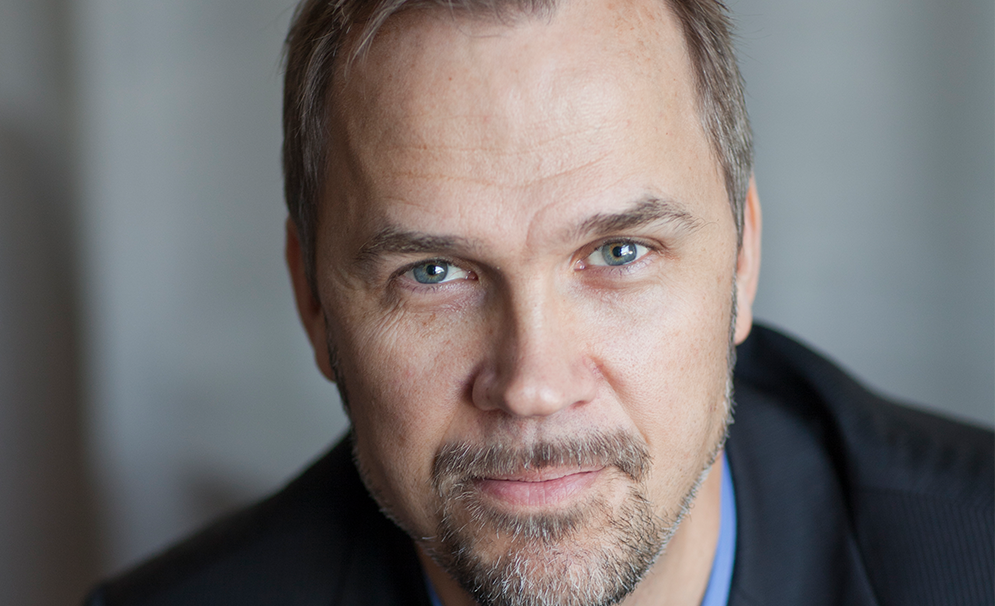
Already on 9 March 2018 Robert Hårdh was succeeded as Executive Director of the Stockholm-based NGO Civil Rights Defenders [see e.g.: https://humanrightsdefenders.blog/tag/civil-rights-defenders/] by Anders Pettersson. An oversight on my part that I am glad to correct. Anders has had a variety of international jobs of which the latest was head of Ecpat Sweden.
https://novare.se/anders-l-pettersson-ny-chef-civil-rights-defender/
The European Parliament on Thursday awarded the Sakharov human rights prize to Ukrainian filmmaker Oleg Sentsov, jailed in Russia for opposing its annexation of Crimea and described as a “symbol of the struggle” to free political prisoners. {https://humanrightsdefenders.blog/2018/09/30/nominees-for-the-2018-sakharov-prize-announced-by-european-parliament/}
“Through his courage and determination, by putting his life in danger, the filmmaker Oleg Sentsov has become a symbol of the struggle for the release of political prisoners held in Russia and around the world,” European Parliament President Antonio Tajani said.
Sentsov, is serving a 20-year sentence in a Russian penal colony north of the Arctic Circle. The 42-year-old was convicted of an alleged arson plot in Crimea, which Russia annexed from Ukraine in 2014 and triggered sanctions from the European Union.
Sentsov’s cousin Natalya Kaplan, who lives in the Ukrainian capital Kiev, said she hopes the prize will raise his morale when he finally hears about it. “I hope (this) will help Oleg to further stay strong and of course I am happy for him. He deserved this,” Kaplan told AFP in written remarks.
Sentsov started a hunger strike on May 14 demanding the release of all Ukrainian prisoners in Russia, and his deteriorating health provoked an outcry from the international community. Sentsov called off the protest after 145 days to avoid being force-fed.
On Friday 26 October 2018 the President of the UN General Assembly announced – in a rather summary and informal tweet:
This is the tenth time that these awards were since the prize was established in 1968, coinciding this year with the 70th anniversary of the Universal Declaration of Human Rights and the 20th anniversary of the UN Declaration on Human Rights Defenders. For more on this award: http://trueheroesfilms.org/thedigest/awards/united-nations-prizes-in-the-field-of-human-rights
It is probably for that reason that one of the winners is the outstanding Ireland based NGO Front Line Defenders (regularly quoted in the blog, see e.g. https://humanrightsdefenders.blog/tag/front-line-ngo/). The Director Andrew Anderson promptly replies with: “Profoundly honoured that @FrontLineHRD has been named as one of 4 winners of the UN Human Rights Prize. We dedicate this to the courageous & dedicated human rights defenders we work to support.”
Three other winners of the prize are
——–
https://www.newstalk.com/Irish-organisation-wins-United-Nations-Human-Rights-Prize
https://www.girlsnotbrides.org/high-court-tanzania-child-marriage/
On 25 October the laureates of the 2018 OXI Day awards were honored at the US Institute of Peace. The award with the quirky name recalls the Greek Oxi Day, (pronounced OH-hee). OXI means “no!”, NO to invading Axis forces during World War II.”. For more information see: http://trueheroesfilms.org/thedigest/awards/oxi-day-courage-awards.and https://humanrightsdefenders.blog/2015/10/29/today-was-oxi-day-in-greece-worth-an-award-or-two/.
Vladimir Kara-Murza is Vice President of Open Russia and leading activist for a civil society and democracy in Russia, Kara-Murza has been poisoned twice by his enemies and survived against all odds. He was elected to the Coordinating Council of the Russian Opposition in 2012, and served as deputy leader of the People’s Freedom Party from 2015 to 2016. The author of two documentaries, They Chose Freedom and Nemtsov, Kara-Murza started his career as a journalist. He currently acts as Senior Fellow to the Raoul Wallenberg Centre for Human Rights and recently served as a pall bearer at Senator John McCain’s funeral.
Liu Xia is the widow of China’s Nobel Laureate, Liu Xiabo. Liu Xia was recently freed in July 2018 after serving 8 years of confinement on house arrest despite having no charges leveled against her. She is a Chinese painter, poet and photographer. [
“These are exemplary stories of the modern day David vs Goliath,” said Andy Manatos, Founder and President of the Oxi Day Foundation. “Our honorees are heroes who stood up to crimes against humanity and through their tireless efforts, they shone a spotlight on injustices. Historically, the Oxi Courage Awards event has brought to light the brave actions of these valiant revolutionaries before they are recognized by an even larger audience.”
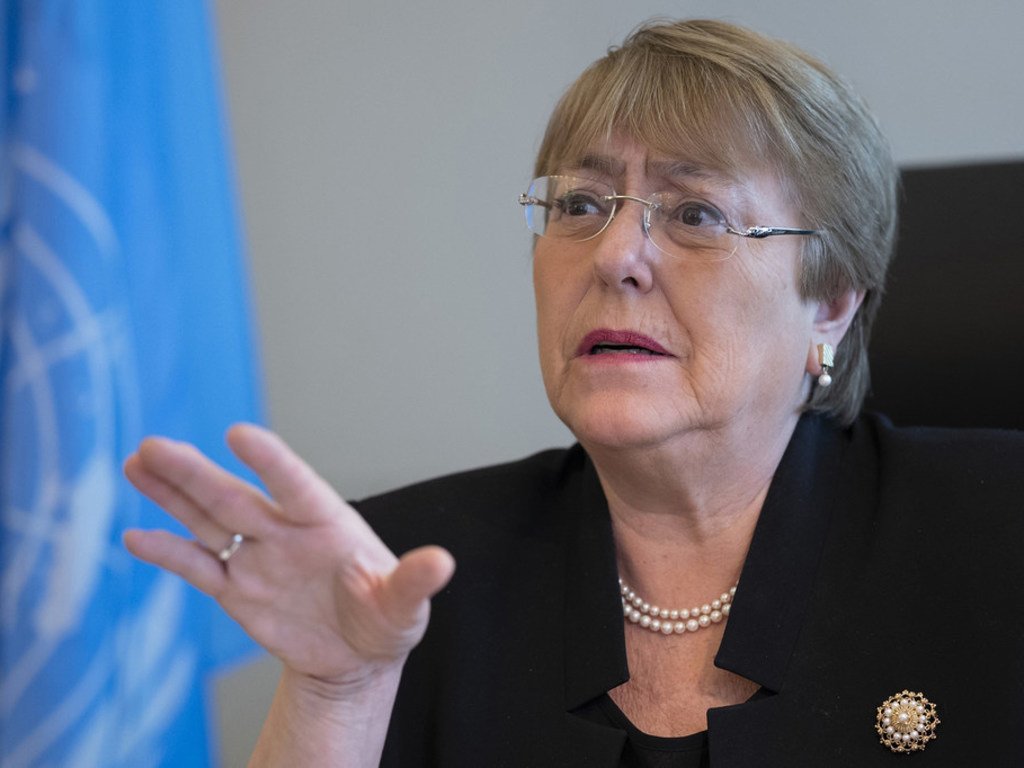
High Commissioner for Human Rights, Michelle Bachelet, said on Thursday 25 October that comments made by Burundi’s UN ambassador the previous day, were “deeply regrettable in both tone and substance” and demanded that it “immediately retracts” its threat to try and prosecute members of a UN Commission of Inquiry into rights abuses in the central African nation.
She also raised concern over the Burundian Government’s “complete failure” to address the very serious findings of the Commission of Inquiry. On Wednesday, the Ambassador and Permanent Representative of Burundi to the UN, Albert Shingiro, had attacked this independent international inquiry team, threatening to prosecute its members and compared Commission Chair, Doudou Diène, to a participant in the slave trade [SIC].
Amazingly Burundi is also a current member of the Geneva-based Human Rights Council [see: https://humanrightsdefenders.blog/2016/02/08/what-is-burundi-doing-in-the-un-human-rights-council/].
“I urge the Government of Burundi to issue an immediate retraction of this inflammatory statement and to offer a full apology to Mr. Diène and the other Commissioners, as well as to the Human Rights Council, which created the Commission, and its President who selected and appointed the three Commissioners,” she said.
 Hans Thoolen on Human Rights Defenders and their awards