Author Archive

70th Anniversary of ACANU: focus on journalists under attack and creation of new human rights award

March 5, 2019

To celebrate its 70th anniversary, the Geneva Association of United Nations Correspondents (ACANU) organised a public lecture, panel discussion and award presentation in partnership with the Graduate Institute and the Club Diplomatique de Genève on “Press Freedom and Journalists Under Attack” on 25 February 2019.

Photo credit: Magali Girardin

The lecture, delivered by António Guterres, Secretary-General of the United Nations, addressed issues on the physical attacks and growing number of assaults on the credibility of journalists and media organisations, which are taking a heavy toll on media freedom. It also sought to answer what is spurring the growing hostility and violence and what can be done to protect professional journalists.

Journalists are on the front lines, sounding the first alarm, questioning official accounts, looking into difficult and dangerous issues and – at their best – asking questions that demand an answer and telling truths that must be heard. […] In the face of this sustained campaign of harassment, intimidation and lack of accountability, we – the international community – cannot remain silent. […] I call on Governments and the international community to protect journalists and media workers, and to create the conditions they need to do their essential work, and to investigate and prosecute the perpetrators of attacks on them.

Nina Larson, President of ACANU, then moderated a panel discussion on the situation facing journalists, which included Peggy Hicks, Director Thematic Engagement, Special Procedures and Right to Development Division, UN High Commissioner for Human Rights; Christophe Deloire, Secretary-General, Reporters Without Borders and David Sylvan, Professor, International Relations/Political Science, the Graduate Institute.

During the discussion, Ms Hicks pointed out that “one of the [phenomena] that’s really important for us to look at in this context is the extent to which we have a whole new world of threats in terms of how some of these [attacks] happen online as opposed to offline”. Mr Deloire found that oligarchical control of the media and restrictive laws were like invisible prisons, where “there is no visible victim, there is no blood, no people in jail, but the information can be controlled”. Citing ways that state entities falsely present themselves as independent journalists, Professor Sylvan added that “there are so many alternatives – “fake” or otherwise – to regular news media that the problem now for many journalists is just to try to distinguish what they are doing from the hundreds and hundreds of things that appear similar but are not. So on the one hand, there are many more means – quite apart from physical violence […] of putting sharp restrictions on press freedom, but also there is a much greater demand for this.”

In the final segment of the event, ACANU presented two new international journalism awards, created for the 70th anniversary celebration and to recognise journalists for outstanding work in the face of growing hostility. Jennifer O’Mahony, a British freelancer, was awarded the prize for “Excellence in Reporting” for her article published in The Telegraph: “Algeria dumps thousands of migrants in the Sahara amid EU-funded crackdown”. The ACANU award for “Best Journalistic Coverage of Human Rights” was given to two Geneva journalists, Adrià Budry Carbó of Le Temps and Camille Pagella of L’illustré, for their article, “Piège en haute mer”, published in Le Temps.

For more on this new award and others for the protection of journalists, see: http://www.trueheroesfilms.org/thedigest/awards/acanu-prize-for-reporting-on-human-rights-issues

http://graduateinstitute.ch/home/relations-publiques/news-at-the-institute/news-archives.html/_/news/corporate/2019/press-freedom-and-journalists-un

https://www.unog.ch/unog/website/news_media.nsf/(httpNewsByYear_en)/E955F9CF21E417CDC12583AC006920E4?OpenDocument

http://www.acanu.ch/prize_concept.html

Inter-American Commission and Oxfam sign cooperation agreement on human rights in Latin America

March 5, 2019

On 4 March 2019 it was announced that Oxfam and the Inter-American Commission on Human Rights (IACHR) signed a cooperation agreement on February 25, 2019 to promote and protect human rights in Latin America and the Caribbean, with special emphasis on economic, social, cultural and environmental rights and on the crucial role of human rights defenders. The agreement is for five years, to implement a plan including projects on research and the exchange of information linked to the situation of human rights in the region, the protection of human rights defenders and the provision of joint training processes targeting civil society organizations.

Cooperating with the IACHR offers Oxfam a great opportunity to strengthen democracy in our countries and to weakening the current pattern of closing spaces for civil society,” said Simon Ticehurst, Oxfam’s Regional Director for Latin America and the Caribbean.

We are very excited about signing this agreement. The excellent work Oxfam does to find lasting solutions to poverty is extremely interesting for the IACHR and for its Special Rapporteurship on Economic, Social, Cultural and Environmental Rights. Based on that, we will be developing high-impact joint projects to fight that scourge,” said IACHR Executive Secretary Paulo Abrão.

Over the past year, the IACHR has expressed its concern about the lack of guarantees for the exercise of human rights in several countries in the region. The Commission has also held hearings on issues like Central American migrant caravans, legal proceedings on the murder of human rights defender Berta Cáceres in Honduras, and the growing safety problems faced by defenders in Latin America.

In the context of this new deal, Oxfam will join forces with the IACHR to ensure the exercise of human rights.

See also: https://humanrightsdefenders.blog/2019/02/20/human-rights-defenders-in-latin-america-under-constant-attack/

and https://humanrightsdefenders.blog/2019/01/09/front-line-defenders-says-record-number-of-activists-killed-in-2018/

http://www.oas.org/en/iachr/media_center/PReleases/2019/057.asp

UN Human Rights Office in Burundi formally closed

March 5, 2019
As foreseen in December 2018 [https://humanrightsdefenders.blog/2018/12/07/final-step-burundi-closes-down-un-office/] the UN office in Burundi was closed formally on Thursday 28 February at the insistence of the Government.

It is with deep regret that we have had to close our office in Burundi after a 23-year presence in the country,” High Commissioner Bachelet said. “Since the UN Human Rights Office in Burundi was established in 1995, for many years we worked with the Government on peacebuilding, security sector reform, justice sector reform and helped build institutional and civil society capacity on a whole host of human rights issues.”..“Unfortunately, many of these human rights gains have been seriously jeopardized since 2015”…

Our reports on the human rights situation in Burundi have always been developed in a constructive spirit, intended to support the promotion and protection of human rights in the country. But I am disappointed by Burundi’s lack of cooperation in recent years with UN human rights mechanisms – which even went so far as to include threats to prosecute members of the independent international Commission of Inquiry established by the UN Human Rights Council,” High Commissioner Bachelet said.

Bachelet paid tribute to the many human rights defenders and civil society actors in Burundi who have worked with inspiring dedication, perseverance, courage and expertise through many political and social crises in the country, while noting with concern that in recent years, many of them have been detained or forced into exile.

https://www.ohchr.org/EN/NewsEvents/Pages/DisplayNews.aspx?NewsID=24254&LangID=E

Shawkan released in Egypt after 5 years jail for taking pictures

March 4, 2019

Reuters reports that on Monday 4 March 2019 Egypt released photojournalist Mahmoud Abu Zeid, also known as Shawkan who spent more than five years in jail after covering a 2013 sit-in that ended with security forces killing hundreds of protesters. “I can’t describe how I feel … I am free,” he told Reuters by phone after being released at dawn on Monday. [see also: https://humanrightsdefenders.blog/2018/05/04/world-press-freedom-day-a-good-time-for-honoring-journalists/]

Shawkan was released because he had served out his term before being sentenced. But he must still spend his nights for the next five years at a police station, a penalty he said he would challenge. He vowed to continue with his work, saying: “All journalists are at risk of being arrested or killed while doing their work. I am not the first and I will not be the last.

(Shawkan was charged with belonging to a banned group and possessing firearms. He was sentenced to five years in prison last September in a mass trial which saw 75 people sentenced to death and more than 600 others to jail terms. Shawkan denied the charges against him, saying he was simply providing freelance coverage of the protest for a British-based photo agency.)

UNESCO awarded him its 2018 Cano Press Freedom Prize and said his detention was an abuse of human rights. See: http://www.trueheroesfilms.org/thedigest/awards/unesco-guillermo-cano-world-press-freedom-prize

The U.N. Hates Hate Speech More Than It Loves Free Speech

March 4, 2019

In a blog post in Foreign Policy of 28 February J (Executive director of Justitia, a Copenhagen based think tank) tackles the thorny issue of hate speech versus freedom of speech: “The U.N. Hates Hate Speech More Than It Loves Free Speech – The U.N. Secretary General is going soft on one of the most fundamental human rights“. It is an excellent read! Read the rest of this entry »

China’s freedom of expression subject of side event on 13 March

March 4, 2019


In November 2018, China underwent its Universal Periodic Review and received many recommendations on freedom of expression, both online and off. This side event will elevate the views of civil society actors who are committed to seeing improvements in the protection of freedom of expression in China.

13 March 2019 , 13h30-14h30, in Room XXIII, Palais des Nations, Geneva

Panelists:

  • Judith Lichtenberg, Director of Lawyers for Lawyers
  • A 1989 democracy activist
  • Uyghur PEN representative
  • Steven Butler, Asia Program Coordinator, Committee to Protect Journalists
  • Sarah M Brooks, Asia Advocate, International Service for Human Rights.

Event co-organised by:

Download the event flyer

For some of my earlier posts re China: https://humanrightsdefenders.blog/tag/china/

Join the conversation on Twitter: #ChinaUPR

https://mailchi.mp/ishr/749qlxejj6-32025?e=d1945ebb90

Duterte: there is no ‘war’ on human rights defenders – only on criminals

March 2, 2019

Gillan Ropero, ABS-CBN News, reported on 28 February 2019 that the Malacañang Palace on Thursday slammed as a “rehash of old issues” the latest report of The Observatory for the Protection of Human Rights Defenders alleging that President Rodrigo Duterte was waging war against human rights defenders: While it is true that the President’s words may be hurtful to some quarters, including human rights defenders, they are actually zeroed in on those who mock and derail the President’s efforts towards creating a society free from drugs, crime and corruption,” ,,,,”We reiterate that there is no such thing as a war against human rights defenders. There is only one against criminals, including drug pushers, and their protectors.”

In its 40-page report, the Observatory said at least 76 land and environmental rights defenders, 12 journalists, and 8 labor rights activists were murdered from July 2016, when Duterte ascended to power, to November 2018. The title is: “Philippines: I’ll kill you along with drug addicts – President Duterte’s war on human rights defenders in the Philippines”. [see also https://humanrightsdefenders.blog/2018/03/10/there-seems-to-be-no-limit-to-what-duterte-is-willing-to-say-and-may-get-away-with/]

The report also cited government’s alleged harassment of the Commission on Human Rights and the justice department’s pursuit of criminal charges against a number of Duterte’s political opponents who have taken strong pro-human rights views, such as Sen. Leila de Lima, currently detained on drug charges.

Spokesperson Panelo urged the International Federation for Human Rights (FIDH) and World Organization Against Torture (OMCT) to file their cases against the Philippine government to “settle this matter once and for all.” “File all cases and let’s be done with it. In the absence of this, the allegations will remain unfounded and politically motivated untruths aimed at shaming the Philippine government before the international community,” he said. “Sans this, the report is but recycled rubbish based on information peddled by the usual critiques of government, such as Karapatan, who must do so to remain relevant and to generate funds to exist from gullible sources abroad.

The President is facing complaints at the International Criminal Court over the drug war killings. He has ordered the country’s withdrawal from the tribunal.

http://www.omct.org/human-rights-defenders/reports-and-publications/philippines/2019/02/d25257/

:https://thedailyguardian.net/opinion/red-tagging-a-vicious-form-of-fake-news/

https://news.abs-cbn.com/news/02/28/19/palace-no-such-thing-as-war-vs-human-rights-defenders

https://aliran.com/civil-society-voices/casualties-rise-in-dutertes-war-on-rights-defenders-new-report/

MEA laureate Abdul Aziz addresses UN Human Rights Council on off-shore refugee policy

March 2, 2019
Abdul Aziz Muhamat.
Abdul Aziz Muhamat. Source: UN

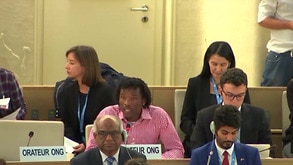
SBS news reports that award-winning Manus Island detainee Abdul Aziz Muhamat has spoken before the United Nations Human Rights Council over Australia’s ‘cruel’ asylum seeker policy. Speaking on behalf of the Human Rights Law Centre, the 25-year-old said: “After 6 years, we deserve our lives back and a future. We urge your mandates to take this up with the Australian government, which deserves to be held accountable by this Council.” [see also: https://humanrightsdefenders.blog/2019/02/18/aziz-thank-you-for-the-attention-but-now-i-have-go-back-to-detention/]

https://www.facebook.com/plugins/video.php?href=https%3A%2F%2Fwww.facebook.com%2FHumanRightsLawCentreHRLC%2Fvideos%2F2138107972933595%2F&show_text=0&width=560

We have no rights. We are not safe. We cannot go to Australia, or elsewhere, because the Australian Government will not allow it. We cannot go home, as it is unsafe. We are all sick and we have lost hope. We are in limbo.” He said the impact of six years of Australia’s offshore detention policy had exacted a physical and mental toll.

As the Australian Government sits on the UN Human Rights Council, professing its commitment to human rights, it is indefinitely imprisoning nearly 1000 men and women in offshore refugee camps on Nauru and Manus,” said HRLC Legal Director Edwina MacDonald.

CIVICUSat the 40th Human Rights Council: counter-terrorism, environmental defenders and more

February 28, 2019
During the 40th session of the UN Human Rights Council, the NGO CIVICUS will be presenting research and conducting advocacy activities and is organising a number of side events, issuing advocacy statements and supporting our members engage in official proceedings, where they can inform government and UN officials on the state of civic space conditions in their countries.

Panel discussions CIVICUS will be co-organising:

Friday, 1 March, 13:00-14:00 (Room XXVII) | The Role of Counter-Terrorism Laws in the Closing of Civic Space | Civic Space Initiative (Article 19, CIVICUS, ECNL, ICNL, World Movement for Democracy)

This event will examine the misuse of counter-terrorism laws by States to target government critics and human rights defenders. The panel will look at how states are abusing security legislation to curtail civic freedoms. See full invitation. Speakers include:

Tuesday,  5 March, 13.00-14:00 (Room XXVII) | Escazú and Beyond: Strengthening the Global Normative Framework on Protecting Environmental Defenders | Article 19, Centre for Environmental Rights, CIVICUS, Defend Defenders, Frontline Defenders, Global Witness, Ground Work, Human Rights Watch,  International Land Coalition

This side event will review State obligations for protecting the rights of environmental defenders and how the recently adopted Escazú Agreement can inform the work of the Human Rights Council. The panel will look at how the standards of the regional Escazú Agreement in Latin America and the Caribbean can support global efforts to end the widespread attacks against environmental and land rights activists. See full invitation. Speakers include:

  • Leiria Vay, Comité de Desarrollo Campesino, CODECA Guatemala
  • Matome Kapa, Attorney, Centre for Environmental Rights, South Africa
  • Marcos Orellana, Director Human Rights and Environment Division, HRW
  • David Boyd, UN Special Rapporteur on Human Rights and the Environment
  • Moderator: Natalia Gomez, Advocacy & Network Engagement Officer, CIVICUS

Other events that CIVICUS is co-sponsoring at the 40th Session of the Human Rights Council, include:

  • 5 March (10:00-11:00) | The case for international action on Bahrain | Room XV
  • 6 March (11:00-12:00) | Women Human Rights Defenders: Local Realities & Shared Global Challenges | Room XXI
  • 8 March (12:00-13:00) | East and Horn of Africa Human Rights Defenders Project – Human Rights in South Sudan | Room XXVII

CIVICUS will be live-streaming events through its Facebook page and posting updates on Twitter.

https://www.civicus.org/index.php/media-resources/news/united-nations/geneva/3753-civicus-at-the-40th-human-rights-council

International Women’s Human Rights Week: two events in Geneva along UN Human Rights Council

February 28, 2019

During International Women’s Week there are two events focusing on Women Human Rights Defenders:


March 1, 2019
 11:30-13:00 Room XXV Palais des Nations, Geneva

Women human rights defenders are on the front lines of struggles to attain peace, security, dignity and sustainable development for all. They work diligently to advance justice, freedom and equality to meet the ultimate goals of the Universal Declaration of Human Rights. Yet, State and non-State actors, in the majority of cases involving violations against these defenders, have experienced widespread impunity including at the international level. Women human rights defenders met in New York at a high-level event at the UN Headquarters in July 2018 to send a strong message: “we’ve had enough!”

Join us in Geneva parallel to the 40th session of the UN Human Rights Council where women human rights defenders will present how the shortcomings and gaps of the UN system with regards to women human rights defenders protection can be filled.

Panellists: 

  • Michel Forst, UN Special Rapporteur on the situation of human rights defenders
  • Rogeria Ferreira Peixinho, WHRD from Brazil
  • Brenda Valladares, WHRD from USA
  • Lucy Mazingi, WHRD from Zimbabwe
  • Cindy Aung, WHRD from Myanmar
  • Alda Facio, member of the UN Working Group on discrimination against women in law and practice

Moderator :

Veronica Vidal, Association for Women’s Rights in Development (AWID)

Cosponsors: ISHR, Amnesty International, Asian Forum for Human Rights and Development (FORUM-ASIA) Association for Women’s Rights in Development (AWID), Gulf Centre for Human Rights, Mesoamerican Initiative for Women Human Rights Defenders (IM-Defensoras), Urgent Action Fund for Women’s Human Rights and Just Associates (JASS). All are members of the Women Human Rights Defenders International Coalition. (https://mailchi.mp/ishr/749qlxejj6-32017?e=d1945ebb90)

For some of my older posts on WHRDs: https://humanrightsdefenders.blog/tag/women-human-rights-defenders/page/5/


The Geneva Gender Debate: 6 March 18h30 – 20h00 Auditorium Ivan Pictet, Maison de la Paix, Geneva

In the tradition of the Oxford Union debates, the Graduate Institute and the International Gender Champions are hosting their 3rd Annual Geneva Gender Debate during International Women’s Week.

This year’s topic: Gender & Language

The motion: This house believes gender neutral language is not a necessity for gender equality.

Introductory remarks: Philippe Burrin, Director, the Graduate Institute, Geneva

The debaters for the House:

  • Arancha Gonzalez, Executive Director, International Trade Centre
  • Michael Gaffey, Ambassador, Permanent Mission of Ireland to the UN and other International Organizations in Geneva

The debaters against the House Motion:

  • Inger Andersen, Director General, International Union for Conservation of Nature
  • Elhadj As Sy, Secretary-General, International Federation of Red Cross and Red Crescent Societies

Moderator: Caitlin Kraft-Buchman, Executive Director and Founder, Women@theTable

This debate is organised in partnership with the International Gender Champions and the Gender Centre of the Graduate Institute. To register: http://graduateinstitute.ch/events/_/events/corporate/2019/the-geneva-gender-debate-2019