Author Archive

Human Rights Education courses also exist in Europe!

February 28, 2019
2019 COMPASS National Training Courses on Human Rights Education with Young People

For those who think that human rights education work is done only in developing countries, here some information from the Council of Europe. The 2019 call for COMPASS National and Regional Training Courses in Human Rights Education for young people generated 45 projects proposals submitted by youth NGOs from 24 Council of Europe member states. The 2019 programme of Compass courses includes activities in Azerbaijan, Greece, Ireland, Italy, Lithuania, the Republic of Moldova and Serbia (see list below). Proposals from Norway, Slovenia and Portugal are on a reserve list pending further availability of funds.

Read the rest of this entry »

Call for nominations for the Lorenzo Natali prize

February 27, 2019

Submit your entry for the 2019 Lorenzo Natali Media Prize between 18 February and 14 April via the online platform here (link is external).

By clicking on the registration button, you will be redirected to the website of a third party service called Jotfrom. If you do not wish to continue on Jotfrom you can send you application to info@nataliprize.eu(link sends e-mail)All information about the application process can be found in the Terms and conditions.

For more information on the Lorenzo Natali Media Prize and similar awards for journalists: http://www.trueheroesfilms.org/thedigest/awards/lorenzo-natali-grand-prize-for-development-and-human-rights

Today, the Lorenzo Natali Media Prize’s community of past winners, jury members and partners have created a platform supporting reporting on development. The Prize also gives a voice to those whose vital message is often overlooked or ignored.

The overarching theme of the 2019 Lorenzo Natali Media Prize is journalism for development. Entries to this year’s competition should relate to to development cooperation issues such as, but not limited to, youth, gender equality, health, climate change, etc.

CATEGORIES AND PRIZE

The 2019 Lorenzo Natali Media Prize will be awarded in the following three categories: 

  • Grand Prize: open to journalists whose media headquarter is located in one of the more than 160 partner countries* with which the European Union engages on development and cooperation.
  • Europe Prize: open to journalists whose media headquarter is located in one of the countries of the European Union.
  • Best Emerging Journalist Prize: open to journalists under 30 whose media is headquartered  in any country where DG DEVCO and DG NEAR provide development assistance*, as well as in the EU Member States.

The winner in each category will receive €10,000. The winner of the Best Emerging Journalist Prize category will also be offered a work experience with a media partner.

Winning journalists will receive their award at the Lorenzo Natali Award Ceremony at the 2019 European Development Days, which take place in Brussels on June 18-19, 2019. For more information on how to apply, click here.

THE JURY

Entries will be pre-evaluated by three journalism schools: the Vrije Universiteit Brussel (VUB) Vesalius College, Ecole Supérieure de Journalisme PRO Montpellier, and Universitat Pompeu Fabra of Barcelona, and supervised by Dr. Georgios Terzis, Communication Professor at VUB. A final pre-selection of nominated pieces of journalism will be put forward for further evaluation by the Grand Jury, composed of journalism experts working in different areas of development.

https://ec.europa.eu/europeaid/lnp_en

UN Panel debated death penalty with focus on human rights

February 26, 2019

Today, 26 February 2019, the UN Human Rights Council held its biennial high-level panel discussion on the question of the death penalty, with a focus on human rights violations in the context of the death penalty, in particular with respect to the rights to non-discrimination and equality.  A report was distributed by the APO Group on behalf of Office of the UN High Commissioner for Human Rights (OHCHR). Here some highlights:

..In her opening statement, Michelle Bachelet, United Nations High Commissioner for Human Rights, reminded that death rows were disproportionately populated by the poor and economically vulnerable; members of ethnic minorities; people with psychosocial or intellectual disabilities; foreign nationals; indigenous persons; and other marginalized members of society.  Condemning people to death for conduct that should not be criminalized in the first place was never compatible with a State’s human rights obligations.  The High Commissioner encouraged all States to take a stand on the right side of history and join the international trend towards abolition.  

The panellists were Pradeep Kumar Gyawali, Minister of Foreign Affairs of Nepal; Melinda Janki, Director of the Justice Institute Guyana; and Fatimata M’Baye, Lawyer and Co-Founder of the Mauritanian Human Rights Association.  Yuval Shany, Chair of the Human Rights Committee, acted as the discussion moderator.

Mr. Shany drew attention to the adoption by the Human Rights Committee of the General Comment No. 36 on the right to life, according to which the death penalty could not be “reconciled with full respect for the right to life.”  The General Comment made particular reference to the problem of inequality in the application of the death penalty.  

….

FATIMATA M’BAYE, Lawyer and Co-Founder of the Mauritanian Human Rights Association, said that there had been a moratorium on the death penalty in Mauritania since 1987, though there were still death penalty rulings handed down.  She drew attention to the case of Mohamed Ould Mkheitir, a blogger who had posted an article about social discrimination in Mauritania, which meant he was accused of blasphemy.  When he was arrested, he was asked to repent and quickly withdraw the article, but unfortunately, he was still prosecuted quickly by the police.  This case had given rise to a great deal of violence and hatred within the local community.  Mohamed was sentenced to death in 2015 by the penal court of the country, which was confirmed in 2016.  There was an appeal launched, and a two-year sentence was later handed down.  Ms. M’Baye said that the blogger was currently being held in a secret location.  The source of law in Mauritania was Islamic law, and women were often sentenced to the death penalty, many times accused of infanticide.  The death penalty was an egregious practice that was humiliating and degrading.  The United Nations could play a role in ending the death penalty by asking those States that still practiced it to abandon this punishment in the name of the right to life. [see also: https://humanrightsdefenders.blog/2016/04/08/us-state-department-international-women-of-courage-awards-2016-yulan/]

In the ensuing discussion, speakers expressed belief that the abolition of the death penalty and torture had elevated human dignity and advanced human rights.  The death penalty was a human right violation.  They hailed the adoption in the United Nations General Assembly of a resolution on a moratorium on the death penalty in December 2018, but noted that around the world capital punishment continued to be imposed in violation of major international standards.  Speakers expressed deep concern that the death penalty was imposed in a disproportionate and discriminatory manner to juvenile offenders, women victims of domestic violence, minorities, foreign nationals, persons with disabilities, and poor and economically vulnerable populations.  Some, however, noted that every State had the right to choose its legal and criminal justice systems, without external interference, and that the rights of defendants always had to be weighed against the rights of victims and their families, and the broader rights of the community and society.    

Speaking were Iceland on behalf of a group of countries, Montenegro, Luxembourg, Italy, Mexico, Singapore on behalf of a group of countries, Chile on behalf of a group of countries, Brazil on behalf of a group of countries, European Union, New Zealand, Pakistan, Australia, Malaysia, Fiji, Slovenia, Ecuador, France, Iraq, Iran, Bangladesh, Argentina, India, Saudi Arabia, and Greece. 

Also taking the floor were the following civil society organizations: Friends World Committee for Consultation, Centre for Global Nonkilling, International Lesbian and Gay Association, Together against the death penalty, and International Federation of ACAT (Action by Christians for the Abolition of Torture), and the National Human Rights Institution: Commission on Human Rights of the Philippines. ….. 

Iran respected those who had abolished the death penalty, but it could not accept any universal prescription to that effect.  Iran remained committed to observing the rule of law and due process in the criminal justice system, while continuing to study the best ways to serve justice.  Bangladesh stressed that its application of the death penalty was restricted to very selective cases of the most heinous crimes.  No child or pregnant woman could be sentenced to death.  Argentina believed that the abolition of the death penalty and torture had elevated human dignity and advanced human rights.  The death penalty was a human rights violation.

India reiterated its stance that it was a simplistic approach to characterize the death penalty as a human rights issue in the context of the right to life of the convicted prisoner.  This approach was deeply flawed and controversial.  There should be no external interference in the criminal justice system of any sovereign State. ….  Saudi Arabia stated that it used the death penalty for only for most serious crimes and in the most serious circumstances, after a fair trial had been guaranteed.  All procedures were in accordance with international standards as Islamic Sharia lay down the provisions of the punishments to guarantee the supreme rights of the people.  All States had the sovereign right to bring justice through their own procedures.  Greece opposed the death penalty in all cases and circumstances and highlighted the death penalty’s negation of the reformative function that any punishment should bare.  It was particularly concerned that the death penalty disproportionately affected women, lesbian, gay, bisexual, transgender and intersex persons, and human rights defenders and therefore urged States to do their utmost to ensure a fair trial. ..

YUVAL SHANY, Chair of the Human Rights Committee, noted that many delegates had commended the trend towards the abolition of the death penalty.  However, a concern around what some had termed as a backlash against abolition in this field was also noted.  A number of representatives had also noted the irreversibility of the death penalty.  It was also noted that there was an increasing consensus that the death penalty if applied should only be applied for the most serious crimes.  There was also a strong concern from all corners of the room about the problem of discrimination in regard to poverty, sexual orientation, women, psychosocial disability and other issues.  The panel was asked: how could all address biases, racial biases, gender biases and other biases in the application of the death penalty, and identify good practices so the death penalty was applied in a non-discriminatory fashion? 

…..
WEBINAR: the “events” method for documenting human rights violations on 7 March

February 26, 2019
Are you an organisation, human rights group, or activist registering, documenting, analysing human rights cases? HURIDOCS invites you to join this webinar and discussion of the events method for documenting human rights violations!

  • What: Presentation and discussion on the events method for documenting human rights violations
  • Who: Bert Verstappen, Senior Documentalist at HURIDOCS
  • When: Thursday, 7 March 2019 from 14:00 to 15:30 UTC/GMT
  • Where: https://www.youtube.com/watch?v=bFzIp9u-nsg

Data is like water – it needs a container to make it useful. The beginning of a human rights documentation projects often starts with containers like lists and spreadsheets. But at some point, the information will outgrow these containers – both in terms of quantity and complexity.

The way you design these containers will have an impact on what information you will gather, how you organise the information, and the kind of analysis you can carry out. HURIDOCS and its network developed the Events Standard Formats methodology (we now call the events method) – to provide a container specifically for organisations documenting human rights violations.

The purpose of the events method is to capture essential information with regard to individual cases of human rights violations in order to better understand patterns of violence, including “who did what to whom”. It involves gathering information about:

  • facts: what happened, where, and when
  • the possible human rights violations that were committed
  • the persons involved: which alleged perpetrator did what to which victim, what are the sources of information and which interventions were made.

For some of my earlier posts on HURIDOCS, see: https://humanrightsdefenders.blog/category/organisations/huridocs/

https://www.huridocs.org/2019/02/community-discussion-the-events-method-for-documenting-human-rights-violations/

Son of Maltese journalist Daphne Caruana Galizia tells UN impunity continues

February 26, 2019
Andrew Caruana Galizia

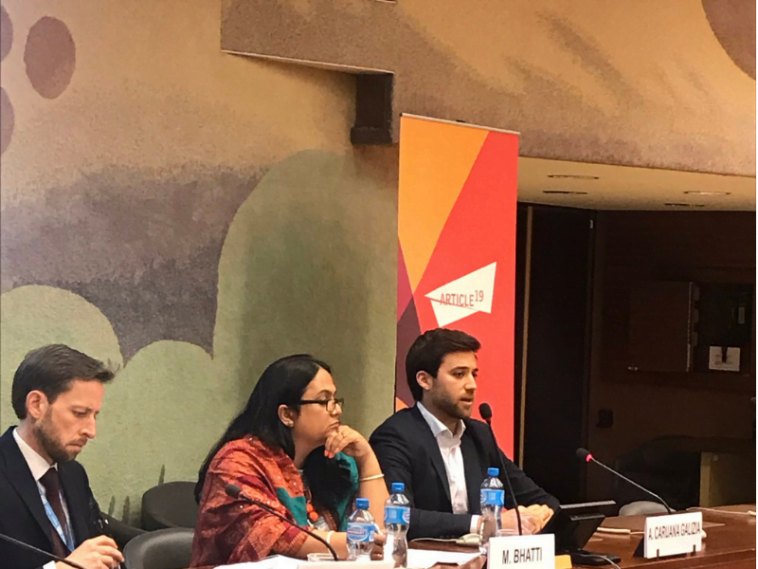
As the UN Human Rights Council (HRC) began its 40th session in Geneva, the son of journalist Daphne Caruana Galizia, Andrew Caruana Galiziasaid her targeted assassination was a culmination in failures of government protection, followed by libel suits against her estate, as reported by  on 25 February 2019. See also: https://humanrightsdefenders.blog/2019/02/20/human-rights-defenders-issues-in-the-40th-session-of-the-un-human-rights-council/

Caruana Galizia spoke of the difficulty in maintaining international media and political attention around cases, and how weakening multilateralism made that even harder. It has fallen on her family and her children to sustain that, he said. He spoke at HRC urging them to ensure Malta accepts specific recommendations made at the UN Universal Periodic Review (UPR) five months ago for an independent public inquiry into his mother’s death. [see also: https://humanrightsdefenders.blog/2017/12/11/maltas-aditus-foundation-urges-government-to-improve-relationship-with-human-rights-defenders/]

The NGO Article 19, which organised the panel, stressed that impunity for attacks against journalists must end. It listed worrying trends of human rights violations, all of which pose a major threat to freedom of expression globally:

  • Continued impunity for attacks against journalists;
  • Failures by States to combat religious intolerance, while also failing to secure the rights to freedom of religion or belief and freedom of expression;
  • The abuse of counter-terrorism laws to target civil society and dissenting voices;
  • Attacks against women human rights defenders and environmental and land defenders.

https://theshiftnews.com/2019/02/25/impunity-persists-son-of-murdered-journalist-tells-un-human-rights-council/

The UN Environmental Rights Initiative interviews Donald Hernández Palma

February 26, 2019

On 26 February 2019 the UN Environmental Rights Initiative (launched in Geneva last year during the UN Human Rights Council). The aim is to ensure that human rights defenders can carry out their activism safely, defend their local environments and the planet. 

However, alarming statistics on killings have been reported over the past few years—especially regarding the targeting of indigenous groups. Latin America has seen the highest number of murders in recent years, accounting for almost 60 per cent of the global total in 2016. In Honduras, 128 defenders are estimated to have been murdered since 2010—the world’s worst rate. UN Environment reached out to Donald Hernández Palma, a Honduran lawyer and human rights defender, for his take on the situation facing environmental and human rights defenders. [see also: https://humanrightsdefenders.blog/2014/11/28/peace-brigades-international-officially-launches-its-country-chapter-in-ireland/ ]

Donald specializes in criminal and environmental law, with a particular focus on mining. He is a member of the Latin American Lawyers’ Network, which works against the negative impacts of transnational extractive companies in Latin America. Since 2010, Donald has worked for the Honduran Centre for the Promotion of Community Development as coordinator of its legal department. He is also the coordinator of the Human Rights and Environmental Department.

Could you tell us a little about yourself, where you come from and how you became part of the environmental advocacy movement?

I am the son of peasant parents who cultivated coffee. I grew up in a remote village in Honduras. I studied in a school that only went up to sixth grade and had to walk almost 20 kilometres a day to go to class. Later, I studied agronomy, a profession I practiced for more than 10 years, in direct contact with peasant families across Honduras. I have directly witnessed the serious subsistence difficulties faced by my countrymen far from government aid.

Since graduating in criminal law in 2007, have been working on environmental protection issues in rural communities. In 2010, I began my work at the Honduran Centre for the Promotion of Community Development, allowing me to work in the defence of human rights for the same populations I had known for many years before.

What situations help explain the kinds of challenges environmental human rights defenders face in Honduras?

Different forms of political and economic corruption in Honduras have compromised – and in some cases denied – local communities’ access to natural resources. Many people have resisted mining, hydro and logging projects, and because of this resistance, have found themselves criminalized and harassed—even killed. Honduras is today considered one of the most dangerous countries for those who defend their land and territories.

What kind of resources are being exploited in your country and how is it affecting land, water, air and biodiversity?

Currently, 302 mining concessions have been approved by the Honduran Government for open-pit mining. Projects are awarded to national and international businesses on thousands of hectares of land, affecting populations that are rarely consulted. Meanwhile, rivers are being appropriated in many regions of the country to generate electricity. Projects are also often granted without consultation to business families, as a payback for favors made for political campaigns.

Also, thousands of hectares of land are being used to plant African palm, transgenic corn and sugar cane for biofuels. This is displacing traditional agriculture, and also causing displacement of populations from their territories to urban centres within and outside the country. Laws have also been passed in Congress to privatize criollo seeds, removing the right of indigenous peoples and peasant peoples to trade their seeds as they have been doing for thousands of years.

What has been done to address these problems?

Organizations like ours do permanent research on the concessions of common goods. This information is very difficult to obtain because it is hidden from the people. There is a law on access to public information that is not respected. We give this information to the affected peoples, whom we also organize and train on human rights and indigenous law, among other issues. We also carry out public protests, present unconstitutionality appeals before the Supreme Court of Justice and carry out legal defence actions when the leaders are criminalized for defending their territory.

What kind of national laws have been enacted? Do international laws help you in any way?

We have a mining law that is highly harmful to the population, a plant breeders’ law that harms people’s rights over seeds, and energy laws that facilitate the implementation of electrical projects that avoid environmental impact prevention processes. In addition, the modification of the criminal code criminalizes public protest. It is precisely international law that allows us to exercise defensive actions in favor of indigenous peoples and peasants, since Honduras has been found not to comply with the international treaties that bind the Honduran state to respect human rights defenders.

Are you working with any NGO groups? 

I am the facilitator at The National Coalition of Environmental Networks and Organizations Honduras (CONROA), a joint space that brings together more than 30 organizations.

Has the newly-signed treaty by 24 Latin American and Caribbean countries, formally called the Regional Agreement on Principle 10, provided any protection on people’s rights in Honduras

Unfortunately, the Honduran state was one of the countries in the region that did not sign this important treaty.

Have you encountered any successes, and is attention increasing on this issue on the ground? 

Unfortunately, an advocate such as Bertha Cáceres, our comrade in this struggle, had to die so that the eyes of the world could return to the terrible situation due to the contempt of the state against those who defend common goods. The visits of the rapporteurs (Michel Fort) and the rapporteur of indigenous peoples have been very important in forcing the Honduran State to respect human rights defenders.

Opening Statements at 40th session of UN Human Rights Council

February 25, 2019

Also the UN High Commissioner for Human Rights, Michelle Bachelet, gave an opening statement which was of a remarkably ‘soft’ tone.  Here some excerpts:

..Today, we sometimes hear human rights being dismissed as supposedly “globalist” – as opposed to the patriotic interest of a sovereign government. But how can any State’s interests be advanced by policies that damage the well-being of all humans?….

Human rights-based policies are effective. They deliver better outcomes for people – people across the social and economic spectrum, and beyond borders. They prevent grievances, conflicts, inequalities, and suffering and discrimination of all kinds….Steps to ensure the authorities engage in respectful dialogue with civil society make for much better, broader development – and I want to emphasise this point: there cannot be optimal, sustainable or inclusive development when the voices of civil society are absent.

…..In today’s currents, in this uncharted storm of heavy winds and rising seas, careless leadership could carry our countries into catastrophe. Or we can use fundamental principles to steer our vessels to safety in more peaceful waters. Every day, we deal with many challenges across the planet. The world’s eyes have been on Venezuela, especially in the last few days. Just yesterday my Office issued a statement regarding the situation: we hope violence will end, and that respect for human rights will be part of the solution.

This Council, the Treaty Bodies and my Office, including its 72 field presences around the world, are honoured with the mandate to stand up for human rights. I want to emphasise my admiration for the Council’s record in effecting early warning, and in naming experts to issue detailed guidance. The Special Procedures and Universal Periodic Review have become essential human rights tools. We need now to ensure not just early warning, but early action to prevent conflict and human rights violations.

I also take this opportunity to emphasise the importance of the Treaty Bodies, whose recommendations are often profoundly relevant.  Mindful of the need to avoid overburdening States with numerous and overlapping recommendations, we will continue working to help decision-makers devise appropriate policy responses.

My Office is sustained by the United Nations principles of impartiality, independence and integrity, and I view it as an essential springboard for the well-being and freedom of women and men across the world.

We will continue to engage with States and forge partnerships with UN agencies, regional and global bodies, business and other stakeholders. We will do our best to strengthen all the international human rights institutions with a sense of common purpose, and coordinated action.
And we will continue to amplify the needs and demands of civil society, to advance the principles of dignity, equality and justice.

——–

https://www.bostonglobe.com/news/world/2019/02/25/chief-warns-that-human-rights-are-losing-ground-world/BrFFZ4IXPpiN4QMc4j6TWO/story.html

https://www.ohchr.org/EN/NewsEvents/Pages/DisplayNews.aspx?NewsID=24203&LangID=E


Human Rights Defender Jolovan Wham in Singapore sentenced – NGOs dismayed

February 24, 2019

The five undersigned human rights organisations, strongly condemn the prosecution of Singaporean human rights defender Jolovan Wham. After convicting Wham in January 2019 of “organising a public assembly without a permit,” the State Court sentenced him, on 21 February, to a fine of S$3,200 (US$2,367), or by default, 16 days in prison.  [see: https://humanrightsdefenders.blog/2018/01/05/international-commission-of-jurists-joins-criticism-of-singapore-for-harassment-of-human-rights-defender-jolovan-wham/]

Big Brother Awards try to identify risks for human rights defenders

February 24, 2019

Angela Davis and Birmingham human rights award: reversal reversed…

February 22, 2019
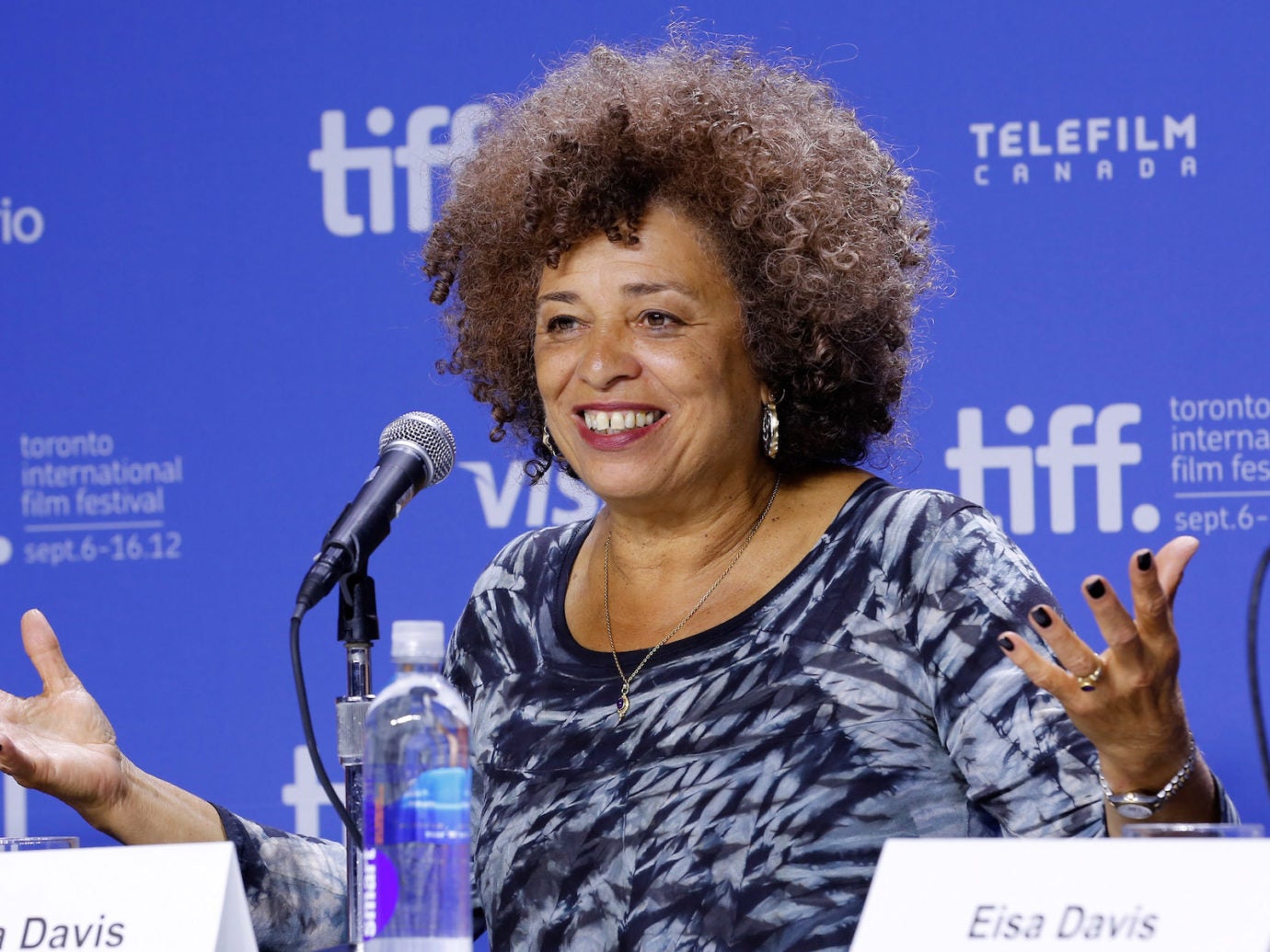
Angela Davis speaks at press conference during the 2012 Toronto International Film Festival, Sept. 10, 2012. (Jemal Countess/Getty Images)

The Jewish Telegraphic Agency reports on 25 January 2019 that Angela Davis will in the end be honored by the Birmingham Civil Rights Institute (Fred Shuttlesworth Human Rights Award), after first rescinding its award to Davis allegedly due in part to complaints from Jewish leaders. [https://humanrightsdefenders.blog/2019/01/08/birmingham-civil-rights-institute-in-alabama-rescinds-honor-for-political-activist-angela-davis/]

“This update follows a BCRI Board of Directors January 14 public apology for its missteps in conferring, then rescinding, its nomination of Dr. Angela Y. Davis in early January,” the institute said Friday in a statement.

(Davis wrote that her pro-Palestinian activism was the reason for the original withdrawal, as did Birmingham Mayor Randall Woodfin. But local Jewish leaders declined to comment, and no concrete evidence emerged that Jewish complaints were the deciding factor. Three BCRI board members resigned over the controversy. On Friday, Richard Friedman, the executive director of the Birmingham Jewish Federation, told JTA he was “digesting the implications” of the reversal. His federation had previously praised the decision to rescind the award.)

Davis also is controversial for declining to speak out on behalf of dissidents in communist-era Europe.

https://www.jta.org/quick-reads/angela-davis-will-get-award-as-birmingham-civil-rights-body-reverses-course-again