Author Archive

UN Human Rights Council renews mandate on sexual orientation and gender identity!

July 14, 2019

On 12 July the ISHR reports with gusto the renewal of the crucial mandate for protection against violence and discrimination based on sexual orientation and gender identity

It calls it “another historic victory, not only for communities of diverse sexual orientations and gender identities, but for humanity as a whole: In a defining vote, the United Nations Human Rights Council adopted a resolution to renew the mandate of the Independent Expert focusing on the protection against violence and discrimination on the basis of sexual orientation and gender identity.

The resolution was adopted by a vote of 27 in favour, with 12 voting against and 7 abstentions.
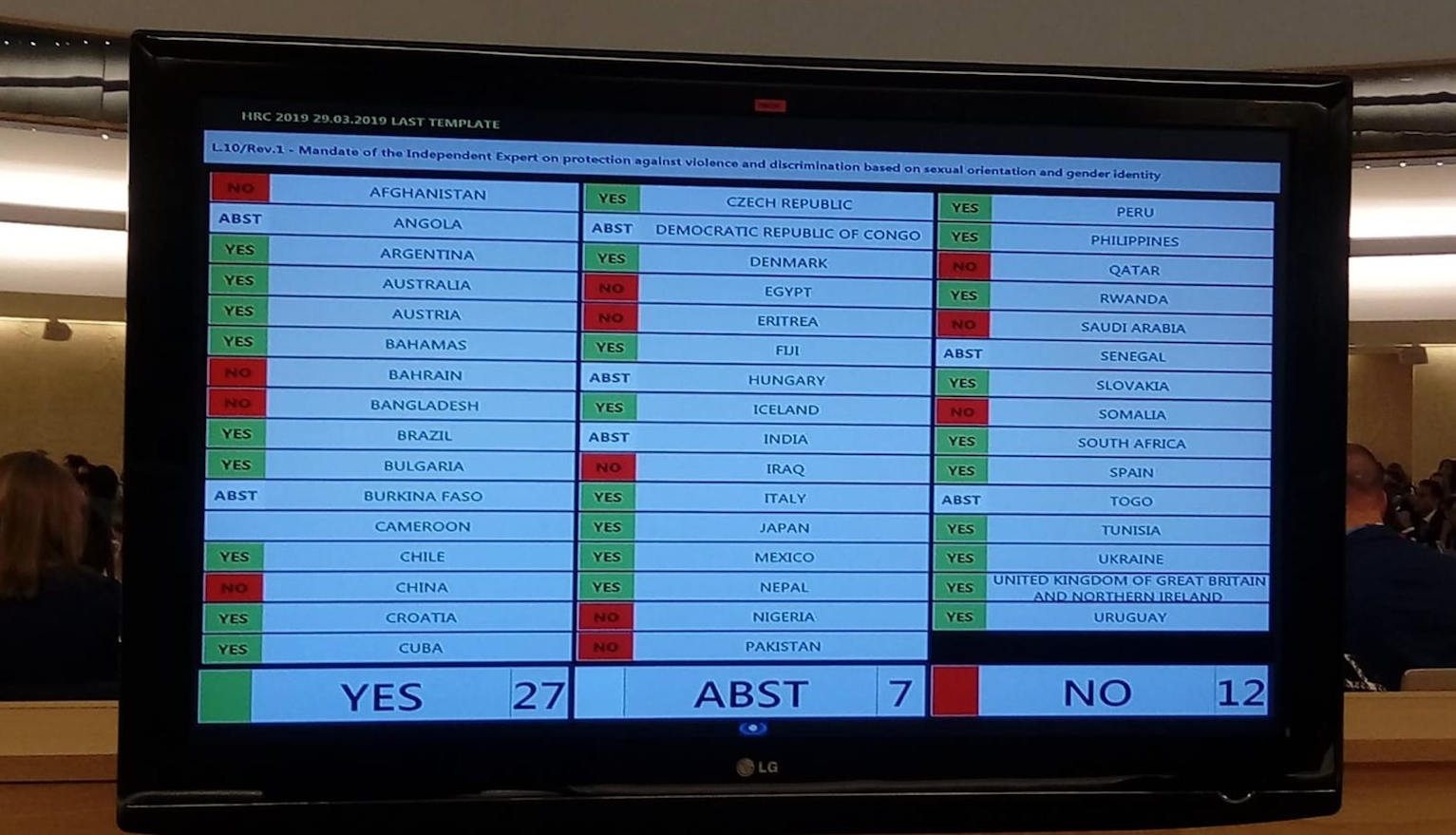
The campaign calling on the Council to renew the mandate of the UN Independent Expert on SOGI was supported by 1,312 non-governmental organisations from 174 States and territories.

Created in 2016, the UN Independent Expert on SOGI has been supported by an ever-growing number of States from all regions of the world. The resolution to create and renew the mandate was presented by a Core Group of seven Latin American countries – Argentina, Brazil, Chile, Colombia, Costa Rica, Mexico, and Uruguay. “The renewal of this mandate demonstrates how United Nations States’ support for tackling violence and discrimination against people of diverse sexual orientations and gender identities has grown tremendously,” said UN Trans Advocacy Week campaigners. “The Independent Expert is crucial in bringing international attention to specific violations and challenges faced by trans and gender-diverse persons in all regions.”

Although the renewal process had to overcome 10 hostile amendments, the core of the resolution in affirming the universal nature of international human rights law stands firm.

”A record number of organisations from every region imaginable has been calling for the renewal of the mandate of the Independent Expert,” said Tess McEvoy, Programme manager at ISHR. “His vital work will now continue and help make our societies more fair, equal and inclusive. We at ISHR are very proud to have been part of this process, along with several of our alumni,” continued Helen Nolan, Programme Manager at ISHR.

For more information, please contact Tess McEvoy at t.mcevoy@ishr.ch or Helen Nolan at h.nolan@ishr.ch

See also: https://humanrightsdefenders.blog/2019/06/14/guide-to-human-rights-defenders-issues-at-the-41st-human-rights-council-starting-on-24-june/

Malawi: threats against human rights defenders

July 14, 2019

This is to draw attention to a long-runing battle between civil society and the authorities in Malawi.

The Human Rights Defenders Coalition (HRDC) says it will not be intimidated by arrests of its members. The coalition said on Friday it will continue demanding the resignation of Malawi Electoral Commission Chairperson Justice Dr Jane Ansah. Speaking at a press briefing at the HRDC Offices in Lilongwe, Vice Chairperson for HRDC Gift Trapence said his arrest has reinvigorated the coalition. “We will continue to fight for justice. They are not going to win and suppress this justice,” he explained. Trapence who was arrested for K7 million fraud on Tuesday and released on bail on Friday refused to comment on the case saying it is in court. The activist was arrested together with HRDC member Macdonald Sembereka. Trapence revealed that that HRDC members have been receiving threats from people who say they will torch the activists’ houses. He however stated that the HRDC will continue with plans to demonstrate two days a week until Ansah resigns. The coalition therefore encouraged people to join the protests in large numbers on Tuesdays and Fridays.

HRDC wants Ansah to resign saying she mismanaged the 2019 presidential elections in which President Peter Mutharika was declared winner.

See also: https://www.frontlinedefenders.org/en/cases/location/malawi


We will not be intimidated – HRDC  

Court releases Malawi activists Trapence and Sembereka on bail

HRDC women says anti-Ansah demos not gender issue

Third Anniversary of Kem Ley’s Murder in Cambodia: the real culprit?

July 12, 2019

Mourners observe Kem Ley's funeral procession in Phnom Penh, July 24, 2016.

Mourners observe Kem Ley’s funeral procession in Phnom Penh, July 24, 2016.- AP Photo

Two dozen nongovernmental organizations on Tuesday 9 jult 2019 demanded that Cambodia’s government establish an independent and impartial commission to investigate the murder of prominent political commentator and rights campaigner Kem Ley, a day ahead of the third anniversary of his death. Kem Ley was shot to death in broad daylight on July 10, 2016 while having a morning coffee at a Caltex gas station in the capital Phnom Penh, days after publicly criticizing Prime Minister Hun Sen and his family for abuse of power.

Authorities charged a former soldier named Oeuth Ang with the murder and sentenced him to life in prison in March 2017, but many in Cambodia do not believe the government’s story that Kem Ley was killed by the man over a debt. In May, Cambodia’s Supreme Court rejected Oeuth Ang’s appeal for reduction of sentence and upheld his life imprisonment term. The day of Oeuth Ang’s sentencing, Geneva-based International Commission of Jurists (ICJ), New York-based Human Rights Watch and London-based Amnesty International highlighted multiple issues they said had not been adequately investigated during his trial and called for a probe into Kem Ley’s killing that adheres to international standards.

On Tuesday, 21 other groups joined the three NGOs in reiterating that call and questioning why the government had failed to take meaningful action in the case. “It has been three years since significant gaps were highlighted in the investigation and trial of Kem Ley’s case, which need to be remedied through an independent, impartial and effective investigation,” said Frederick Rawski, ICJ’s director for Asia and the Pacific.

The 24 NGOs noted in Tuesday’s statement that 164 organizations had signed a joint letter to Cambodia’s Deputy Prime Minister Sar Kheng calling for the creation of an independent Commission of Inquiry into Kem Ley’s case, citing the “flawed investigation” into his killing and “lack of progress in subsequent investigations” of suspected accomplices.

Soon after Kem Ley’s funeral, and fearing for their safety, his wife Bou Rachana—then pregnant—fled with her children from Cambodia to neighboring Thailand to seek asylum in a third country. They spent over a year and a half in Thailand before being granted permission to settle in Australia in February last year.

Debbie Stothard, the secretary-general of Paris-based International Federation for Human Rights (FIDH), said: “The Cambodian authorities’ ongoing failure to identify and prosecute the masterminds behind Kem Ley’s murder shows that an independent investigation is urgently needed to deliver justice to his family and to make progress towards ending impunity for the killing of human rights defenders in Cambodia,” she said.

Tuesday’s statement called Kem Ley’s killing “an alarming reminder of Cambodia’s culture of impunity” in cases of killings and harassment of rights defenders, labor leaders, journalists, members of the political opposition and others critical of Hun Sen’s regime.

Sok Ey San, spokesman of Hun Sen’s ruling Cambodian People’s Party (CPP), dismissed Tuesday’s statement as “politically motivated” and said it was “filled with groundless allegations.”

The call by the 24 NGOs came as police in Phnom Penh charged youth activist Kong Raiya and three of his family members with “incitement of social unrest” after arresting them for selling T-shirts bearing Kem Ley’s portrait and urging people to wear them on Wednesday to mark the anniversary of his murder. Am Sam Ath, deputy director of the Cambodian rights group LICADHO, told RFA’s Khmer Service that police arrested Kong Raiya, his wife and his parents-in-law on Tuesday along with his six-month-old baby, who was later released to family members.

See also Global Voices of 17 July: : https://globalvoices.org/2019/07/17/cambodian-activists-arrested-for-commemorating-the-anniversary-of-political-analyst-kem-leys-death/

https://www.rfa.org/english/news/cambodia/probe-07092019170518.html

Nelson Mandela Human Rights Lecture in Geneva on 18 July 2019

July 12, 2019

On the occasion of Nelson Mandela International Day, Albie Sachs, Former Judge of the South African Constitutional Court, and Michelle Bachelet, United Nations High Commissioner for Human Rights, will reflect on today’s challenges to human rights and how to move the human rights agenda forward based on their personal experiences.

THURSDAY 18 JULY 2019, 18:00 – 19:30  AUDITORIUM IVAN PICTET | MAISON DE LA PAIX, GENEVA

Welcome remarks:

  • Andrew Clapham, Professor of Public International Law, the Graduate Institute, Geneva
  • Nozipho Joyce Mxakato-Diseko, Ambassador, South African Permanent Mission to the United Nations Office in Geneva

Keynote speech:

  • Albie Sachs, Former Judge, Constitutional Court of South Africa

Discussion with:

  • Michelle Bachelet, United Nations High Commissioner for Human Rights
  • Christof Heyns, Professor of Human Rights Law, University of Pretoria (moderator)
  • Nozipho Joyce Mxakato-Diseko, Ambassador, South African Permanent Mission to the United Nations Office in Geneva
  • Albie Sachs, Former Judge, Constitutional Court of South Africa

Closing remarks:

  • Frans Viljoen, Director, Centre for Human Rights, University of Pretoria

The Nelson Mandela Human Rights Lecture is presented by the Centre for Human Rights of the University of Pretoria, the Washington College of Law at the American University, the Human Rights Council Branch at the Office of the UN High Commissioner for Human Rights and the Geneva Academy of International Humanitarian Law and Human Rights in collaboration with the South African Permanent Mission to the United Nations.

This lecture is part of the Nelson Mandela World Human Rights Moot Court Competition and will be followed by a reception.

https://graduateinstitute.ch/communications/events/nelson-mandela-human-rights-lecture

Joint letter by 22 States to Human Rights Council re China’s Uighurs

July 12, 2019
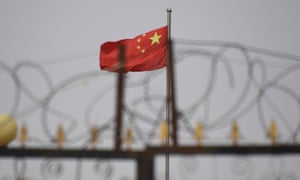
A Chinese flag behind razor wire at a housing compound in Yangisar, south of Kashgar, in China’s western Xinjiang region
China is reportedly holding one million people, mostly ethnic Uighurs, in internment camps in Xinjiang Photograph: Greg Baker/AFP/Getty Images

UN ambassadors  – including Australia, Britain, Canada, France, Germany and Japan – co-signed the letter released Wednesday and sent to the Human Rights Council president, Coly Seck, and the High Commissioner for Human Rights, Michelle Bachelet.

Rights groups and former inmates describe them as “concentration camps” where mainly Muslim Uighurs and other minorities are being forcefully assimilated into China’s majority ethnic Han society. The letter expresses concern “about credible reports of arbitrary detention… as well as widespread surveillance and restrictions, particularly targeting Uighurs and other minorities in Xinjiang.” It calls on China to stop arbitrary detention and allow “freedom of movement of Uighurs and other Muslim and minority communities in Xinjiang.” The authors, who include ambassadors from across the EU as well as Switzerland, requested that the letter become an official document of the Human Rights Council, which ends its 41st session in Geneva on Friday. Chinese officials describe the camps as voluntary “vocational education centres” where Turkic-speaking Uighurs receive job training.

The letter may have been the only available option with China having enough support in the UN Council to vote down a formal resolution. See also: ttps://www.reuters.com/article/us-china-xinjiang-rights-idUSKCN1U721X?utm_campaign=trueAnthem:+Trending+Content&utm_content=5d28c3e00ca7240001cb2eef&utm_medium=trueAnthem&utm_source=twitter

On the same day Human Rights Watch commented: Most importantly, the joint letter sends a strong message that we are moving beyond the era of selectivity, and that no country, large or small, is exempt from the scrutiny of this Council. We understand that the joint letter remains open for additional signatures, and we encourage those delegations that have not yet signed to do so. We are particularly disappointed that OIC member states have not yet engaged meaningfully or credibly with the human rights situation affecting Muslims in Xinjiang, while they have spoken out on other situations. This risks fueling perceptions of double standards and politicization; supporting the constructive joint statement would be a useful step towards addressing such perceptions.

We also welcome China’s acceptance of a UPR recommendation to respond positively to a country visit request by the UN Special Rapporteur on freedom of religion or belief.

We would suggest that China could benefit from technical assistance by drawing on the expertise of other UN Special Rapporteurs, such as the Special Rapporteur on the promotion of human rights while countering terrorism. Given that China has advanced the need to counter terrorism as its rationale for mass programs directed at Uyghurs and others in Xinjiang, the Special Rapporteur could offer useful guidance on whether there are more rights-respecting ways to counter terrorism than mass surveillance, detaining over a million Muslims, and stripping an entire population of its rights to freedom of religion, privacy, culture and expression.

See also: https://humanrightsdefenders.blog/2016/10/11/hot-news-ilham-tohti-chinas-mandela-wins-2016-martin-ennals-awad/

https://www.theguardian.com/world/2019/jul/11/more-than-20-ambassadors-condemn-chinas-treatment-of-uighurs-in-xinjiang

https://www.hrw.org/news/2019/07/11/independent-reporting-xinjiang-abuses-requires-unfettered-access-not-stage-managed

InSPIREurope: new EU-Funded Initiative to Support Researchers at Risk to be launched in September

July 11, 2019

Ten European partner organizations announce an ambitious new initiative to be launched this September to support researchers at risk. The initiative – InSPIREurope – is a ten-partner project funded under the European Commission’s Marie Skłodowska-Curie Actions and coordinated by Scholars at Risk Europe at Maynooth University, Ireland.

InSPIREurope will forge a coordinated, cross-sectoral, Europe-wide alliance for researchers at risk. InSPIREurope project partners include: Scholars at Risk Europe, hosted at Maynooth University, Ireland (Project Coordinator) • Alexander von Humboldt-Stiftung, Germany • European University Association • Jagiellonian University, Poland • University of Oslo, Norway • University of Gothenburg, Sweden • PAUSE program, hosted by the Collège de France • Stichting voor Vluchteling-Studenten UAF, Netherlands • Aristotle University of Thessaloniki, Greece • Scholz CTC GmbH, Germany.

InSPIREurope begins from the view that excellence in research depends upon open scientific debate, and is driven by a multiplicity of ideas, cultures, people, and perspectives. When researchers are at risk and excluded from participating in the global research circuit, whether due to discrimination, persecution, suffering, or violence, not only are individual lives and careers at risk; the quality, the very future of research is also at stake. With record numbers of researchers at risk reaching out, there is no one country, government, NGO, or enterprise that can meet the scope of the challenge alone; an ambitious and concerted approach is required. Toward this goal, and in recognition of a shared commitment to excellence in research and to the principles of freedom of inquiry and academic freedom that are essential pre-conditions for world-class research, the InSPIREurope project will facilitate transnational cooperation between European and national initiatives and programs in support of researchers at risk. Further information, including project webpages, will be available when the project begins in September.

Trump marches on with “Commission on Unalienable Rights”

July 11, 2019

Secretary of State Mike Pompeo announced the creation of the Commission on Unalienable Rights, saying the country must be “vigilant that human rights discourse not be corrupted or hijacked or used for dubious or malignant purposes.” As human rights claims have “proliferated,” he said, nations have grown confused about what constitutes a human right and which rights should be respected and treated as valid.

“I hope that the commission will revisit the most basic of questions: What does it mean to say, or claim, that something is in fact a human right?” Pompeo said. “How do we know, or how do we determine that this — or that — is a human right. Is it true, and therefore ought it to be honored?”

The commission will be chaired by Harvard Law School professor Mary Ann Glendon, a former U.S. ambassador to the Vatican.

Amnesty International USA said there was no reason for such a review given the decades-old protections in place. “This administration has actively worked to deny and take away long-standing human rights protections since Trump’s inauguration,” Joanne Lin, the group’s national director of advocacy and government affairs, said in a statement.

“If this administration truly wanted to support people’s rights, it would use the global framework that’s already in place. Instead, it wants to undermine rights for individuals, as well as

A group of Democratic senators said in a letter last month: “We believe the extent to which this administration has undermined American leadership and credibility on promoting fundamental human rights is of historic proportions,” the senators wrote. “The department’s proposed Commission on Unalienable Rights must not serve as a platform to further erode U.S. leadership and undercut U.S. interests.”

Glendon, who joined Pompeo at the State Department for the announcement, said she was honored to do the job at a time when “basic human rights are being misunderstood by many, manipulated by many and ignored by the world’s worst human rights violators.”

https://bayareane.ws/2LFUzpz

NGOs in June 2020 filed an amicus curiae brief: https://democracyforward.org/wp-content/uploads/2020/06/URC_51_Amicus-Brief-human-rights-orgs-06.09.20.pdf

Star power and human rights: food for thought by Kate Allen

July 11, 2019

The issue of star power for or against human rights has been referred to regualry in this blog. See e.g. my older post: https://humanrightsdefenders.blog/2014/02/10/star-power-and-human-rights-a-difficult-but-doable-mix/ and the recent: https://humanrightsdefenders.blog/2019/07/10/nicki-minaj-did-the-right-thing-and-cancelled-her-performance-in-saudi-arabia/

On 11 july 2019 Kate Allen, Amnesty International UK Director, published a thoughtful piece on this topic in Metro:

Nicki Minaj’s on-off concert in Jeddah, Saudi Arabia, has once again shone a spotlight on the thorny business of artists who agree to perform in countries with abysmal human rights records. Was she right – finally – to call it off? Should she ever have agreed to play in a country where women are treated as second-class citizens, where same-sex relations are forbidden, and where a whole host of other basic rights are denied? It sounds like a no-brainer – don’t go. But I don’t think it’s as simple as that. Musicians like Minaj are understandably keen to play in front of their fans in all sorts of countries, including Saudi Arabia. After all, they’re in the entertainment industry. If the popular demand’s there, you satisfy the demand. And ordinary Saudi fans of Minaj’s raunchy brand of pop (of which there are apparently a surprising number) aren’t themselves the people responsible for institutional human rights abuse in Saudi Arabia, so why punish them? Artists – and their management and publicity teams – will very likely go back and forth on this. Do we play? Is it worth the reputational risk? At Amnesty, we don’t believe in telling artists to ‘boycott’ this or that country.

Instead, number one, we say: ensure you are not, in any way, contributing to existing human rights violations through a specific performance. Madonna’s dancers at Eurovision Madonna’s dancers wore Israel and Palestine flags. If, for example, you’re a singer asked to play a concert in a stadium that’s just been built on land which has seen local people’s houses illegally destroyed, then playing there would be a form of complicity in the act of forced dispossession. Similarly, if the catering company at one of your foreign shows is an abusive employer, then you shouldn’t be party to this abuse by using them.

Number two: when agreeing to play in a country with a very poor human rights record (and we’re talking about scores of countries, not just obvious ones like Saudi Arabia, China or North Korea), you should be prepared to use your influence for good. Raise human rights issues directly where you can. Speak about cases publicly. Advocate for them after you’ve left the country. While the match was never played due to injury, tennis stars Rafael Nadal and Novak Djokovic agreed to play in Jeddah last year and we asked them to tweet their support for human rights defenders who’d recently been jailed in the country. Similarly, this May, we called on the boxer Amir Khan – also hired for a well-paid exhibition bout in Jeddah – to go with his eyes firmly open and with a preparedness to speak about human rights issues wherever possible. There’s often a degree of fuzziness – perhaps unavoidable – in this. Madonna was criticised by some people for agreeing to perform at the recent Eurovision in Tel Aviv. For sure, Israel’s human rights record is dire, not least through its half-century military occupation of the West Bank. But others praised her for including both Palestinian and Israeli flags in her show.

At the end of the day, it’s unrealistic to expect singers or sports stars to act as celebrity arms of the United Nations. That’s not their job. But they don’t operate in a vacuum either. They need to understand the reputational risk of accepting big money from hosts with dire human rights records. And that risk is compounded if they make no effort to address some of the grim realities of where they go. Nicki Minaj says she’s now ‘educated’ herself about how women and LGBTI people are oppressed in Saudi Arabia, and how basic freedom of expression is denied. Minaj is an expressive performer free to speak her mind. It would be great if she continues speaking out on Saudi human rights issues.

https://metro.co.uk/2019/07/11/celebrities-arent-the-un-but-can-use-concerts-to-defend-human-rights-10176034/?ito=cbshare

UN Council agrees action on Philippines in spite of vehement objection

July 11, 2019

On 11 July 2019 the United Nations Human Rights Council’s approved the resolution initiated by Iceland by a vote of 18 to 14, that requests the UN human rights office to present a comprehensive report on human rights in the Philippines to the council next June. [see also: https://humanrightsdefenders.blog/2019/06/07/philippines-labour-rights-defender-dennis-sequena-shot-dead-while-meeting-with-workers/]. The resolution also expresses concern about the range of rights violations in the country and calls on the government to cooperate with UN human rights mechanisms and experts. The Philippine government earlier denounced the resolution as a “divisive motion” and sought to block it. The Philippines rejected the resolution, with Foreign Affairs Secretary Teodoro Locsin Jr. calling it a “travesty” in a statement a representative read on his behalf.

(A total of 14 countries, meanwhile, voted no, including China; fifteen countries abstained, including Japan, Pakistan, and Brazil.

https://news.abs-cbn.com/news/07/11/19/un-rights-body-oks-investigation-on-ph-drug-killings-rights-situation

https://www.hrw.org/news/2019/07/11/philippines-un-takes-critical-step-toward-accountability-0

New website: Keep the Volume up for Rights Defenders in Turkey

July 11, 2019

Three human rights organizations, Association Monitoring Equal Rights, Netherlands Helsinki Committee and Truth Justice Memory Center, have created the website “Keep the Volume up for Rights Defenders in Turkey.” Sharing up-to-date information on the trials of rights defenders in Turkey, the website will also share the recent development under the title of “News”.

In the “About Us” part of the sessizkalma.org website, the objective and content of the website are explained in following words:

Human rights defenders from different corners of society – lawyers, teachers, journalists, scientists, union activists – face serious pressures in doing their work in Turkey. Their aim is to protect fellow citizens from unjust and inhumane policies; they speak up and act when people’s human rights are being infringed upon. Yet in Turkey rights defenders are increasingly being intimidated, detained and imprisoned.

“Their struggle deserves more visibility and national and international solidarity. …

“We created this online resource to bring together updates and information on the situation in Turkey. It is meant for all those interested to support or understand human rights defence in Turkey better: civil society, journalists, international organisations and citizens who care about the Rule of Law and democracy in Turkey.

“We are monitoring court cases where Defenders are prosecuted. You will find a calendar for important trial dates, overview and news on individual cases, our statements well as information on possibilities for actions. We also provide other Defenders with important resources as well as a list emergency support options for when you, as a human rights advocate, need assistance.”

http://bianet.org/english/human-rights/210315-keep-the-volume-up-for-rights-defenders-in-turkey-website-opens