The 3-day 2019 Dublin Platform for Human Rights Defenders at Risk was opened on 2 October by Irish Foreign Minister, Simon Coveney, and UN High Commissioner for Human Rights, Michelle Bachelet. Over 120 human rights defenders (HRDs) from more than 80 countries are attending. Front Line Defenders Executive Director, Andrew Anderson, said that five human rights defenders were prevented from traveling to Dublin – Khadija Ismayilova (Azerbaijan), Oyub Titiev (Russia), Said Boudour (Algeria), Michel Matos (Cuba) and Marivic Danyan (Philippines). See more below.
The opening ceremony featured a testimony by Bahraini woman human rights defender (WHRD) Ebtisam Alsaegh, who was finally able to leave Bahrain and attend Dublin Platform years after first being invited. Speaking in Dublin, she called for an immediate end to gendered and sexualized attacks against women human rights defenders around the world.
Over three days, human rights defenders will share tactics and strategies for their protection and security, while learning from each other about their struggles, protests, resistance movements and victories. On Thursday evening, the HRDs will march in a procession to Christchurch Cathedral as part of the “Set Them Free” campaign, calling for the release of HRDs facing multi-decade prison sentences around the world. The campaign includes former Front Line Defenders Protection Coordinator for the Middle East and North Africa, Bahraini HRD Abdulhadi Al-Khawaja, now serving a life sentence for his role in the peaceful pro-democracy uprising of 2011.
On 26 September, Cuban cultural rights defender Michel Matos was banned from travelling from José Martí International Airport in Havana while en route to attend the event in Ireland. Michel is an activist for cultural rights in Cuba. He, along with other artists, musicians and performers, has taken a stand against the controversial Decree 349, signed by Cuba’s President Miguel Díaz-Canel in April 2018, which grants the Ministry of Culture disproportionate power to control, cancel and sanction artistic expression, while containing vague and overly broad restrictions. While being processed at passport control, officials informed him he was not permitted to board the plane as he is on an automatic travel ban list. He was not shown any documents or given any further details on the ban, other than being told that the officials “were following orders”.
Due to his work advocating for the rights of political prisoners in Algeria, Said Boudour has been informed that he is currently being sought by the Algerian authorities. As he prepared to travel to Ireland to attend the Platform, he received advice from his lawyer that should he attempt to leave the country he would almost certainly be arrested at the airport. Said is a member of the Algerian League for Human Rights. He works on a range of civil and political rights in Algeria, with a particular focus on the rights of prisoners in the context of the ongoing anti-government demonstrations, and on democracy in Algeria. The human rights defender has been frequently harassed by the Algerian authorities; he has been previously detained three times and has been under regular police surveillance.
Khadija Ismayilova, a woman human rights defender and journalist from Azerbaijan, was also unable to accept her invite to the Dublin Platform due to a travel ban imposed against her following her release from prison in 2016. In 2018 the Baku Court of Appeal refused for the third time to lift the ban. Khadija is well known for her investigative reports on corruption in Azerbaijan, including the President’s family’s involvement.
Oyub Titiev, a human rights defender from Chechnya, was similarly prevented from travelling due to a travel ban stemming from his conditional release from prison in June 2019. He was detained in January 2018 on fabricated drug charges in retaliation for his work with Human Rights Center Memorial in Chechnya. Both Oyub and Front Line Defenders had written without success to the Russian authorities seeking permission for him to allowed travel to attend the Dublin Platform.
The Guardian, Hong Kong, reported on 28 September 2019 that human rights defenders are calling for an investigation into the death of the Chinese democracy activist who was arrested for holding up a placard calling for Chinese President Xi Jinping to step down. Wang Meiyu, 38, was detained in July after he stood outside the Hunan provincial police department holding a sign that called on Xi and Chinese Premier Li Keqiang to resign and implement universal suffrage in China. He was later charged with “picking quarrels and provoking trouble,” a vague offense often given to dissidents.
According to Wang’s mother and lawyer, he died on Monday. Wang’s wife, Cao Shuxia, received a call from police notifying her that her husband had died at a military hospital in the city of Hengyang, where he had been held. The police officer on the telephone did not offer any explanation of the cause of death. According to Minsheng Guancha, a Chinese human rights group, Cao was later able to see Wang’s body and saw that he was bleeding from his eyes, mouth, ears and nose, and that there were bruises on his face. According to Radio Free Asia, Cao said police pressured her to accept their statement that Wang’s death had been an accident, but she refused. “The Chinese government must investigate allegations of torture and the death in detention of human rights activist Wang Meiyu and hold the perpetrators of torture and extrajudicial killing criminally accountable,” Chinese Human Rights Defenders (CHRD) said in a statement.
Since Monday, Wang’s family has been placed under house arrest, CHRD said. He has two young children. Others connected to his case have also come under pressure. Late on Wednesday, six armed police detained Xie Yang, a rights lawyer, and Chen Yanhui, an activist, who had met at a hotel to discuss Wang’s case. They were released on Thursday. See also: https://humanrightsdefenders.blog/2017/12/30/rsdl-chinas-legalization-of-disappearances/
Wang, who began his work as an activist when his home was forcibly demolished, had been detained and claimed to have suffered torture before. After he held up the placard calling for Xi’s resignation, he wrote online of how police stormed into his home, ordering him to write a confession letter and a statement promising he would stop. “These idiots. They can’t understand that even after these years of persecution, including being deprived of water for three days or suffering two hours of electrical needles that caused me to vomit blood, I won’t surrender,” he wrote.
Azizbek Ashurov, a lawyer, whose work has supported the efforts of the Kyrgyz Republic in becoming the first country in the world to end statelessness, has been selected as the 2019 winner of the UN Refugee Agency’s Nansen Refugee Award. Through his organization Ferghana Valley Lawyers Without Borders (FVLWB), he has helped well over 10,000 people to gain Kyrgyz nationality after they became stateless following the dissolution of the Soviet Union. Among them, some 2,000 children will now have the right to an education and a future with the freedom to travel, marry and work.
After the dissolution of the USSR in 1991 and the formation of new states, many people became stranded across newly established borders, often with now invalid Soviet passports or no means to prove where they were born. This left hundreds of thousands of people stateless throughout the region, including in Kyrgyzstan. Motivated by his own family’s difficult experience of achieving citizenship after arriving from Uzbekistan in the aftermath of the dissolution, Ashurov helped to found FVLWB in 2003 to offer free legal advice and assistance to vulnerable displaced, stateless and undocumented people in the southern part of Krygyzstan.
Ashurov and FVLWB formed mobile legal teams which travelled to remote areas of the south of the country to find vulnerable and socially marginalized groups. In their mountainous country, the mobile legal teams relied on a battered four-wheel drive or travelled on horseback. This work in collaboration with the Kyrgyz government resulted in the country announcing in in July this year that it had ended statelessness.
Venezuelan singer Danny Ocean is one of the performers who will be honouring the winner of the 2019 UNHCR Nansen Refugee Award at a ceremony in Geneva on 7 October. “I know how hard it is to leave behind family, friends and everything you know to build a life again somewhere new,” said Ocean, who rose to global fame with his hit Me Rehuso, in which he sings about the love he left behind when he moved from his native Venezuela to the United States of America. “Millions of people each year are forced into making this decision to protect themselves and their families. For those refugees who have lost everything, the humanity and support of others is their only lifeline. For many years the winners of the Nansen Refugee Award have been that lifeline. It is an honour for me to play a part in celebrating their extraordinary achievement.”
The ceremony will also feature a keynote address by Nadine Labaki, the Lebanese director of the Cannes Jury Prize winner, and Oscar-nominated film, Capernaum, and will be hosted by award-winning South African TV presenter Leanne Manas. Other performers joining them on the night will be Swiss musician Flèche Love and German poets and stage performers Babak Ghassim and Usama Elyas.
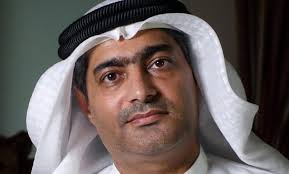
Due to the closed conditions in the UAE and the lack of human rights organisations, it is not possible for GCHR to verify whether he remains on hunger strike. He was reported to be in very bad physical and mental shape earlier this month. It appears that Mansoor was badly beaten as a result of his protests about the poor conditions in which he has been held, and his ongoing detention, which violates international standards. He was beaten badly enough to leave a visible mark on his face, indicating he may have been tortured. He remains in solitary confinement in the isolation ward of Al-Sadr Prison in Abu Dhabi, where he is being held in a small cell with no bed or running water, which he is never allowed to leave. GCHR issued a special report on his medieval prison conditions.
On 7 May 2019, the United Nations Special Rapporteur on Torture and six other UN human rights experts condemned Mansoor’s conditions of detention, noting that “the poor conditions of his detention in the United Arab Emirates, including prolonged solitary confinement, may constitute torture.”
Mansoor, who is also on the Advisory Committee of Human Rights Watch’s Middle East and North Africa Division, is the 2015 winner of the Martin Ennals Award for Human Rights Defenders. He is serving a 10-year sentence handed down on 29 May 2018 for the “crime” of speaking out about grave human rights violations in the UAE. For more info, click here.
GCHR and partners worldwide are planning a week of action to help free Mansoor surrounding his 50thbirthday on 22 October 2019. More information will be published soon at https://www.facebook.com/FriendsofAhmedMansoor/ and on GCHR’s platforms.
GCHR is concerned that Ahmed Mansoor’s life is at risk and calls on:
The UN mechanisms to act quickly to help protect and free Ahmed Mansoor;
The UAE authorities to release Ahmed Mansoor immediately and unconditionally, put a stop to torture and reprisals against him; and allow international observers to visit him in prison and check on the conditions; and
All supporters to tweet at UAE’s Vice President and Prime Minister @HHShkMohd to #FreeAhmed.
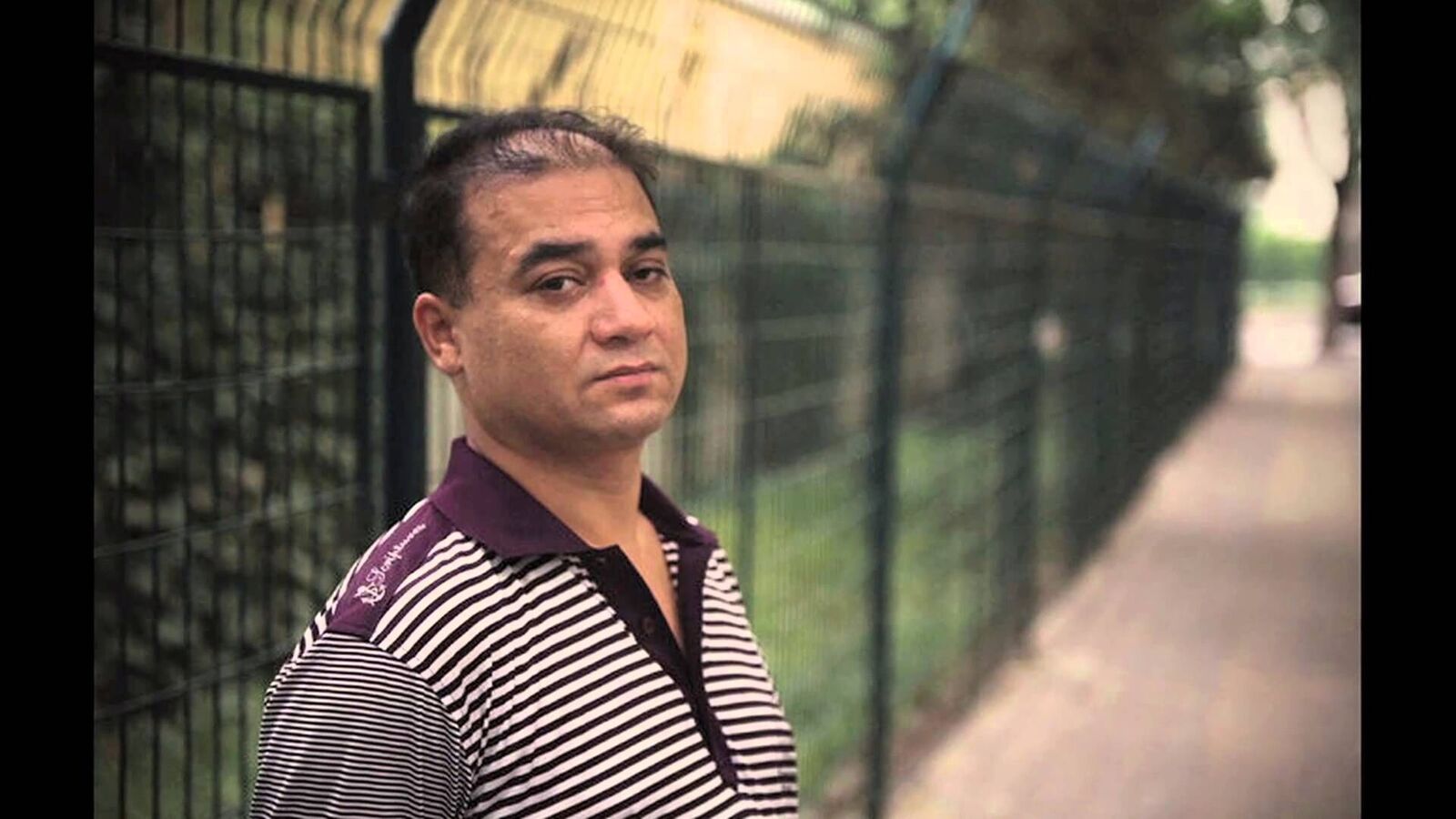
The Parliamentary Assembly of the Council of Europe (PACE) has awarded jailed Uyghur scholar Ilham Tohti the 2019 Vaclav Havel Human Rights Prize, making him the first dissident from China to receive the prize. Tohti, 49, shares the prize with the Youth Initiative for Human Rights (YIHR) – a group that brings together youths from across the Balkans to promote reconciliation – on Monday at ceremony in Strasbourg, France on the opening day of PACE’s autumn plenary session.
PACE said in a statement after a live broadcast on September 30 that actions taken by the two prize winners carry “a message of hope for all those who aspire to build a better world, one where the dignity, rights, and basic liberties of everyone are respected and guaranteed.”
Tohti is an advocate for China’s Uyghur Muslim minority who was sentenced to life in prison by Beijing in 2014 on separatism charges. YIHR is a Balkan-based group promoting reconciliation through building connections between young people from different ethnic groups, regions, and countries.
The award was accepted on Tohti’s behalf by Enver Can of the Ilham Tohti Initiative, who said that while the prize honors individuals and organizations, “it also recognizes a whole population in giving the entire Uyghur people a voice,” and vowed to continue efforts to free the jailed professor. Speaking to RFA’s Uyghur Service on Monday, Tohti’s daughter, Jewher Ilham, welcomed the award and expressed appreciation to Europe-based rights groups—particularly the Ilham Tohti Initiative—for advancing her father’s case.
Enver Can called the Vaclav Havel Prize “tremendous recognition of Ilham Tohti’s efforts to help his people.”
Tohti was awarded the PEN/Barbara Goldsmith Freedom to Write Award in 2014, the Martin Ennals Award in 2016, the Liberal International Prize for Freedom in 2017, and Freedom House’s Freedom Award in 2019. The jailed professor is also a nominee for the 2019 Nobel Peace Prize.
——–
[In 2008, Sergei Magnitsky, a young Russian lawyer who uncovered massive tax fraud perpetrated by Russian officials, was charged with the very offenses he had uncovered. In an effort to cover up the crimes he had exposed, Magnitsky was sent to prison where he later died from abuse, neglect, and mistreatment. Bill Browder, for whom Magnitsky had worked, vowed to dedicate himself to seeking justice for Sergei and this crusade has made him a global human rights leader. First passed by the US Congress in 2012, the Global Magnitsky Human Rights Accountability Act authorized sanctions of government officials implicated in serious human rights abuses. ..Since its enactment, the US Government has sanctioned more than 70 officials in over a dozen different countries. Most recently, Magnitsky sanctions were enacted to penalize those Saudi Arabian officials implicated in the murder of journalist Jamal Khashoggi.]
Bill Browder’s campaign for justice and accountability did not stop in the United States. Since 2012, similar Magnitsky laws have been enacted in Canada, Estonia, the United Kingdom, Latvia, and Lithuania. Despite fervent opposition from Russia and other lawless regimes that prefer to have their human rights abuses go unnoticed and unpunished, the European Union, Australia, France, Germany, Ireland, Denmark, Italy, and other EU member countries are considering the passage of their own Magnitsky laws.
The journalist Michael Greenproduced for Earshot a fascinating story on the long trip of Abdul Aziz Muhamat from Manus Island to Geneva. Green followed Aziz closely for years and came to Geneva with him for the Martin Ennals Award ceremony where I met them both. Now the story is complete with beautiful pictures, insights and sound tracks. Flight from Manus cannot really be summarised and the best is to see the whole story for yourself (link below).
“One day, he’s in a detention centre. The next he’s in Geneva, where his face is on billboards and he’s celebrated as a champion of human rights. Aziz was in an incongruous situation, burdened with a heavy choice….
…..With some delays and complications, he made it to Switzerland, but he was only given permission to stay for two weeks. Then, he’d have to return to Manus Island — back to the situation he was being celebrated for campaigning against.
One day, when he arrived for an event at a university, I noticed he was sporting a brand new navy blue overcoat. That morning, someone who had attended the awards ceremony recognised Aziz at the train station. The man said he’d been following Aziz on Twitter and noticed that he was always wearing the same flimsy, zip-up top. He wanted to buy Aziz a proper winter coat — and took him into a nearby store to do just that. Aziz never even got his name.
And yet, despite the all interest and adulation, he still wasn’t free…
..Aziz started getting headaches every day. In his meetings, people were telling him he should not go back to Manus Island. His friends back there were saying it wasn’t safe to return. Despite his doubts, and a crushing sense of guilt and duty towards the people he left behind, Aziz decided he would be a more effective advocate if he could remain in Europe. On the day he was due to leave Switzerland, in early March, Aziz instead sought asylum. He submitted himself to a new detention centre — and to a new uncertain, indefinite future…
The sound bites were turned into a podcast, The Messenger, co-produced by Behind the Wire and The Wheeler Centre.
———————————–
For those in Geneva on Wednesday 2 October 2019 (18:15 – 19:30) in Auditorium A2 of the Maison de la paix, Geneva, Abdul Aziz Muhamat will be speaking about “Surviving Manus Island detention Centre: A testimony” Moderator: Vincent Chetail A staunch defender of human rights and dignity, Abdul Aziz Muhamat will share his experience and offer his insight into what lies ahead.
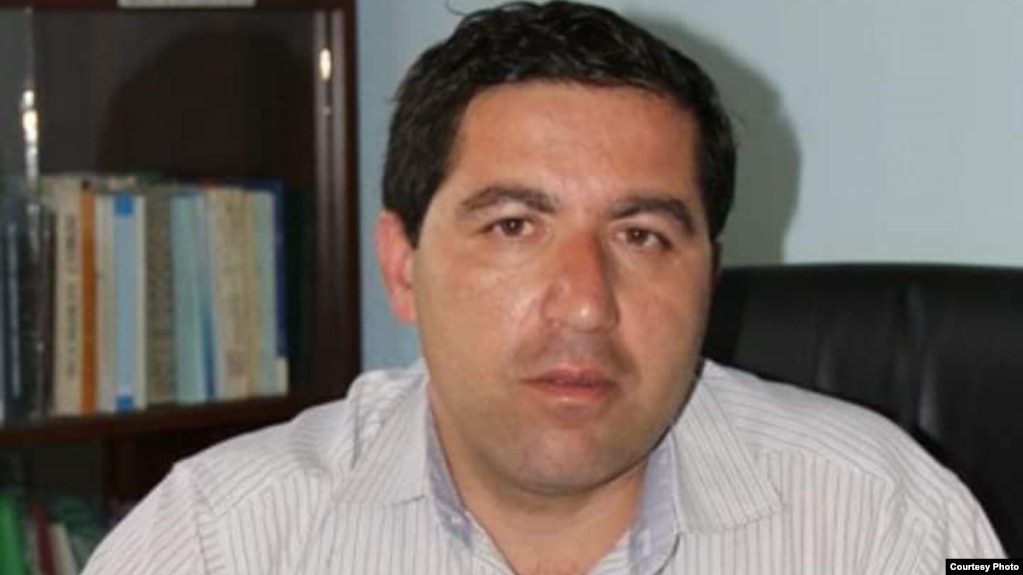
In June, the United Nations Working Group on Arbitrary Detention declared the detention of Buzurgmehr Yorov a violation of international law.
For more than five years now, lawyers’ ranks have been thinned as the Tajik authorities imposed new rules to disbar lawyers and, in some cases, brought criminal cases against lawyers who defended political opponents. According to RFE/RL’s Tajik Service, known locally as Ozodi, there are only around 850 lawyers in Tajikistan, a country of more than 9 million people. Yorov’s situation is one of the best-known. He had taken on clients who were almost surely targeted by the government. In 2015, Tajik authorities withdrew the registration of and then banned the country’s leading opposition party, the Islamic Renaissance Party of Tajikistan (IRPT), then later declared it an extremist group and claimed it was behind what the government said was a coup attempt. There is scant evidence to support the claim of an attempted coup and even less evidence connecting the IRPT to the purported coup’s alleged mastermind, who was killed by Tajik security forces. More than a dozen senior IRPT leaders were detained at the end of September 2015. Yorov said he would defend them in court, meeting with one of them on September 26. Two days later, he said publicly that his client was being tortured; shortly after that, Yorov was himself taken into custody.
In October 2016, Yorov and fellow rights lawyer Nuriddin Makhamov were found guilty of fraud and inciting national, racial, local, or religious hatred. Yorov was sentenced to 23 years in prison, but additional time was added to his sentence in two successive trials. At one of those trials, Yorov was given two extra years for contempt of court for quoting 11th-century poet Ibn Avicenna.*
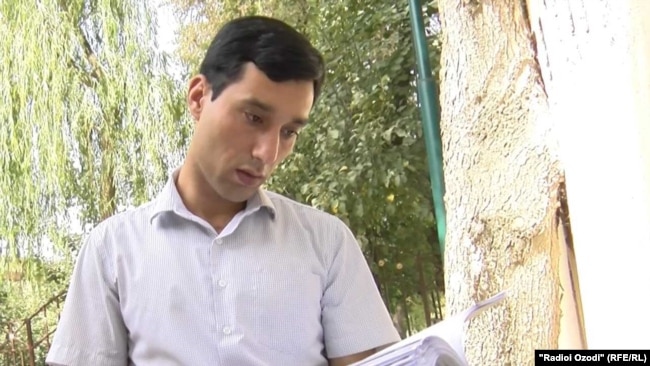
A September 10 statement by the Geneva-based International Commission of Jurists expressed concern about the Tajik Anti-Corruption Agency’s “acts of intimidation” against a group of lawyers. The statement mentions Abdulaziz Abdurahmonzoda, a member of the independent Lawyers Union of Tajikistan.
Abdurahmonzoda is being charged with fraud. Prosecutors allege that he demanded a $500 bribe from a man named Saidmurod Saidov, who came seeking Abdurahmonzoda’s legal services.
Abdulaziz Abdurahmonzoda
According to the International Commission of Jurists, “Following the initiation of the inquiry of the allegations of ill-treatment, the head of the Anti-Corruption Agency of Dushanbe allegedly sent requests to a number of district courts of Dushanbe to obtain information about civil and criminal cases in which Saidbek Nuriddinov had participated as a lawyer.” Saidbek Nuriddinov is the chairman of the Lawyers Union of Tajikistan.
In 2013, Yorov, Fakhriddin Zokirov, Ishoq Tabarov, and Shukrat Kudratov were the defense attorneys for Zayd Saidov, a successful and former minister of industry who suddenly faced charges ranging from financial crimes to sexual relations with a minor and polygamy, after he declared earlier in the year that he planned to establish a new political party. In December 2013, Saidov was found guilty and sentenced to 26 years in prison (three more years were added in a later trial).
In June, the United Nations Working Group on Arbitrary Detention declared the detention of Buzurgmehr Yorov a violation of international law. Rights groups including Human Rights Watch, Freedom Now, and Lawyers for Lawyers have repeatedly called for an end to the crackdown on lawyers in Tajikistan and the release of those who have been imprisoned.
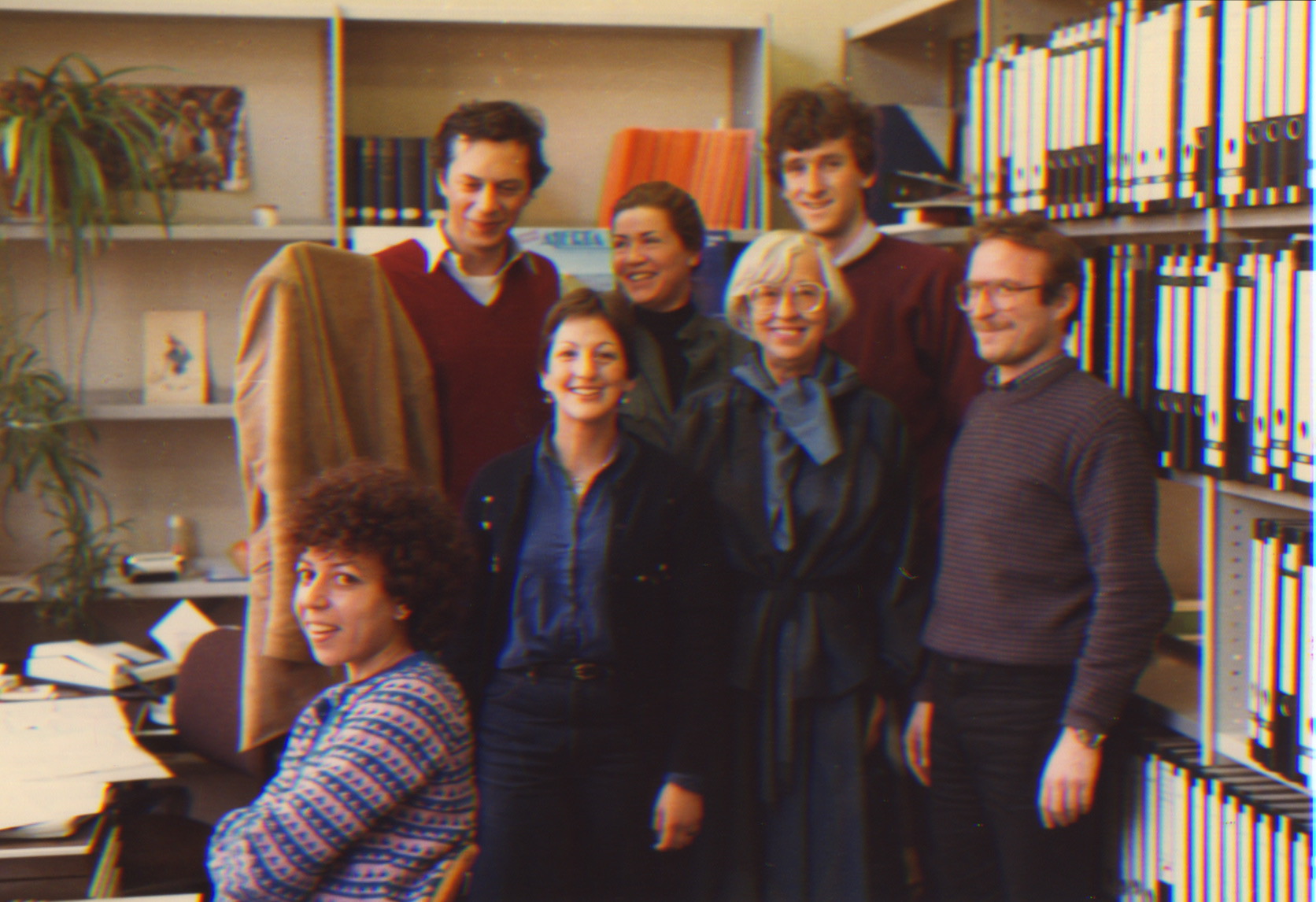
The SIM team in 1984, Bert Verstappen on the right
It is usually not a compliment when somebody is described as ‘furniture’. But Bert Verstappen, senior documentalist at HURIDOCS, is the exception. And the furniture in mind is an expensive, solid oak Dutch cupboard where all valuables are kept. Bert Verstappen – an historian by education – started working as a conscientious objector doing alternative service in the Netherlands Institute for Human Rights (SIM) in approximately 1983, soon after I became the founding director.
He proved his value immediately by working on themes such as documenting human rights violations and together we started a long term research project on the practice of fact finding by NGOs, which resulted in the first-of-its-kind publication of Human Rights Missions, a Study of the Fact‑Finding Practice ofNon‑governmental Organizations, published in 1986 by Martinus Nijhoff Publishers (ISBN: 90 247 3355 3). Morever, as SIM had become the initial ‘secretariat’ of the new HURIDOCS network created in 1982, Bert gave a lot of support to the fledgling unit. In 1987 HURIDOCS moved to Oslo and Bert moved with it, learned Norwegian very quickly and kept the flame burning for many years. He moved to Geneva with HURIDOCS after the big Crete conference in 1992.
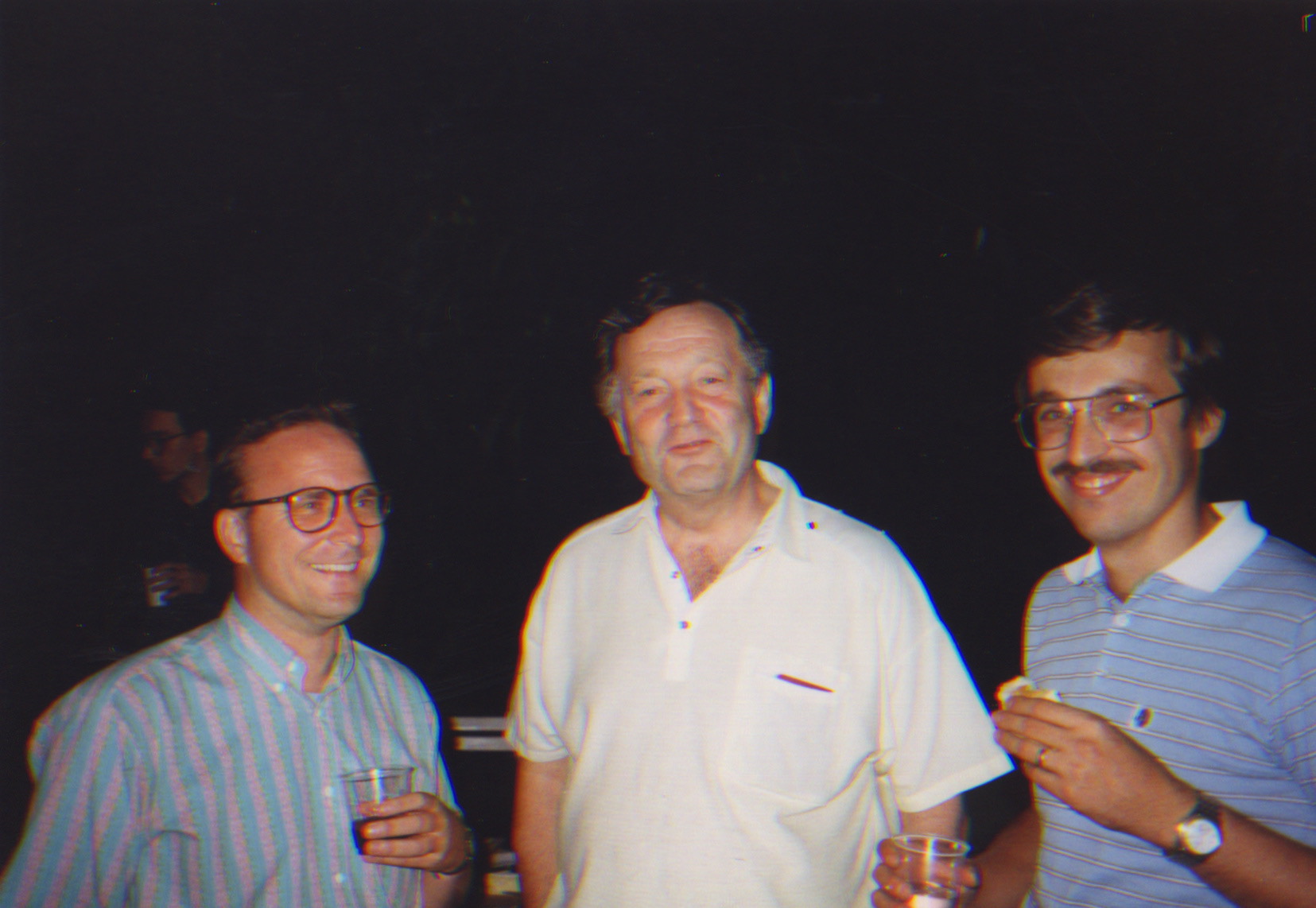
Bert (l.) 1993 in Geneva with Theo van Boven and Oldrich Andrysek
There he continued to coordinate the work of different task forces and co-authored essential HURIDOCS publications. He was involved in many capacity building projects, providing expertise mainly from the documentation angle. As from 1 October 2019 he goes into retirement but will remain involved in some HURIDOCS projects on a part-time basis until the end of the year, ensuring a “soft bertxit”.
“The development of new tools deeply changed HURIDOCS’ work throughout the years. We renew ourselves constantly. I have committed my career to this exciting challenge because I want to feel useful to human right defenders. Their courage is a source of inspiration for all of us” says Bert Verstappen on the HURIDOCS website
If you want to know more about the history of HURIDOCS in which Bert has played such an important role, see:
Rouba Mhaissen, Defending the human rights of people living as refugees
The Rafto Prize 2019 is awarded to Rouba Mhaissen, director of Sawa for Development and Aid (SDAID), for defending human rights from the local to the global level for people living as refugees. Rouba Mhaissen has contributed locally to improving the lives of people living as refugees in Lebanon in ways that protect their dignity and right to self-determination. At national and global levels, Mhaissen stands out as a relentless and powerful defender of the human rights of refugees. For more on this and other awards for human rights defenders see: http://www.trueheroesfilms.org/thedigest/awards/rafto-prize. For last year’s award: https://humanrightsdefenders.blog/2018/09/27/polish-ombudsman-adam-bodnar-winner-of-2018-rafto-award/
The Rafto Conference with a keynote address by the Rafto Laureate will take place 2 November at 11:00-14:00 at Universitetsaulaen, Bergen and the award ceremony the next day 3 November at 18:00 also in Bergen.
Dr. Rouba Mhaissen (31) is a Syrian-Lebanese economist, activist, community mobilizer and development practitioner who works on forced migration and the Syrian refugee crisis. She is the founder and director of Sawa for Development and Aid, and an outspoken defender of the rights of people living as refugees. Her relentless demands for human rights for all refugees have been heard in international fora. Through her advocacy for Syrian refugees in Lebanon, Mhaissen underlines the importance of treating refugees and other migrants with dignity and as people with the right to form their own lives and destinies: Since the beginning of the Syrian civil war in 2011, the Lebanese government has maintained open borders for Syrian refugees. The early arrivers were allowed to work in certain sectors of the economy, despite being exposed to expensive fees for work-permits, marginalization, and limited freedom of movement. But as the civil war endures, the refugees’ situation has become precarious. The demographic, political, and economic balance in Lebanon is fragile as a third of the local population lives below the poverty line and one out of four are refugees. Lebanese authorities routinely blame the country’s hardship on the refugees, and the economic crisis has further increased the suspicions of refugees.
In this increasingly volatile situation, the Lebanese government has begun emphasizing return-policies toward Syrians living in Lebanon, through a combination of restrictive policies and rampant discrimination. Unlawful evictions, harassment, intimidation, and attacks on refugees leave many with no choice but to return. Upon their arrival in Syria, many have faced arbitrary arrests, interrogations and torture. For Syrian refugees, both residing in Lebanon or returning to Syria represent impossible “choices”.
The Rafto Prize 2019 is a call to protect human rights for all, irrespective of our legal status. .. The current international neglect of the human rights situation for people living as refugees must stop: In the short-term this means financial support, in the long term assisting resettlement and facilitating return or local integration.
 The 3-day 2019 Dublin Platform for Human Rights Defenders at Risk was opened on 2 October by Irish Foreign Minister, Simon Coveney, and UN High Commissioner for Human Rights, Michelle Bachelet. Over 120 human rights defenders (HRDs) from more than 80 countries are attending. Front Line Defenders Executive Director, Andrew Anderson, said that five human rights defenders were prevented from traveling to Dublin – Khadija Ismayilova (Azerbaijan), Oyub Titiev (Russia), Said Boudour (Algeria), Michel Matos (Cuba) and Marivic Danyan (Philippines). See more below.




 Hans Thoolen on Human Rights Defenders and their awards