Author Archive

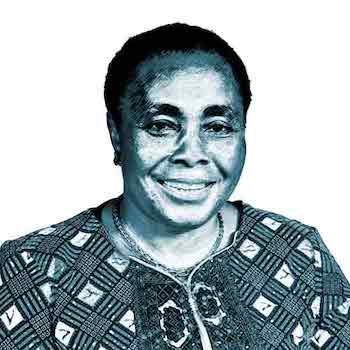
Congolese Julienne Lusenge wins 1 million $ 2021 Aurora Prize

October 11, 2021

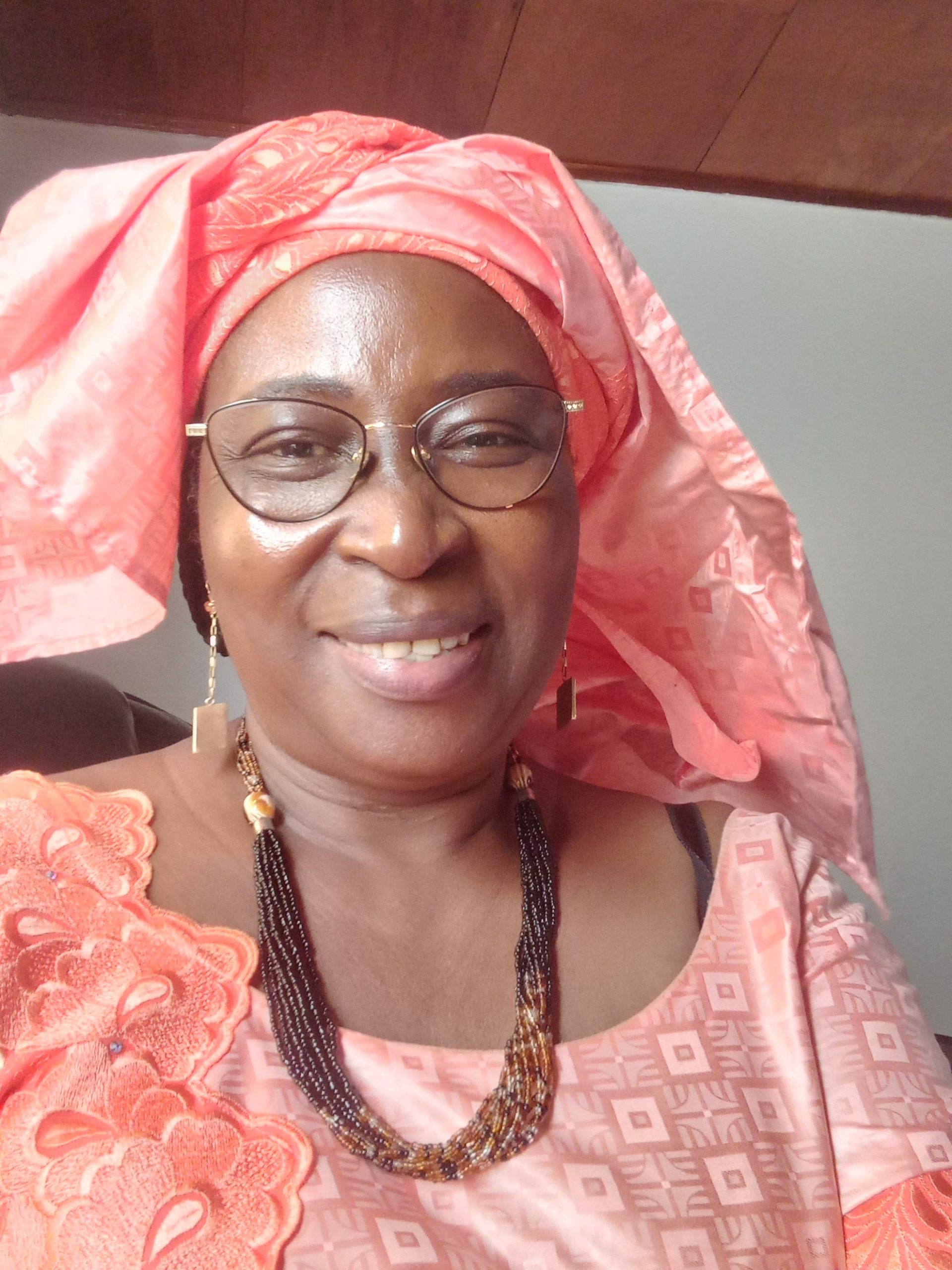
The sixth annual Aurora Prize for Awakening Humanity was awarded on 9 October 2021 to Julienne Lusenge, a human rights defender, co-founder of Women’s Solidarity for Inclusive Peace and Development (SOFEPADI) and Fund for Congolese Women (FFC), who has been helping the victims of wartime sexual violence for years. Her boundless courage and tireless activism have shone a light on the desperate plight of thousands of Congolese women subjected to horrific sexual abuse amidst the civil war in the country, exposing the perpetrators and bringing them to justice. She was named the 2021 Aurora Prize Laureate at the Ceremony titled “Reviving Together” that was held in Venice, Italy. For more on the Aurora Prize and its laureates, see: https://www.trueheroesfilms.org/thedigest/awards/35D4B5E3-D290-5DF9-08E1-14E6B3012FFA

Julienne Lusenge’s exceptional achievements remind us of the impact one person can have, even when encountering the seemingly insurmountable pressure and risks. By recognizing her courage, commitment and selflessness, we are hopeful that she can also inspire each one of us to think about what we can do to stand up on behalf of those whose rights are abused and who are in dire need of our solidarity and support,” noted Lord Ara Darzi, Chair of Aurora Prize Selection Committee and Co-Director of the Institute of Global Health Innovation at Imperial College London. Julienne Lusenge won 4 earlier awards: see https://www.trueheroesfilms.org/thedigest/laureates/d373dbdb-b269-4ecd-810c-bfd05b18859c

As the 2021 Aurora Prize Laureate, Julienne Lusenge will receive a $1,000,000 grant and a chance to continue the cycle of giving by supporting organizations that help people in need. This year, considering the acute needs of the people of Artsakh (Nagorno-Karabakh) affected by the 2020 war, Aurora will recommend her to direct 25% of the award funds to addressing urgent humanitarian issues in Artsakh. The Aurora Co-Founders are committed to matching this contribution to bring the total amount to $500,000. Besides this, Ms. Lusenge has nominated three organizations that support grassroots women’s organizations, empower survivors of gender-based violence and reintegrate internally displaced persons: 

  • Fund for Congolese Women;
  •  League for Congolese Solidarity;
  • Association of Mothers for Development and Peace. 

The outstanding work carried out by Julienne Lusenge and her organizations that help women, as well as her courage and perseverance in going against powerful local forces to protect them, is an example of empathy, kindness and dedication. One of the most important goals of Aurora is empowering such heroes, and we are grateful for the opportunity to do just that,” said Hina Jilani, Aurora Prize Selection Committee member and Former United Nations Special Representative of the Secretary-General on Human Rights Defenders.. 

https://hetq.am/en/article/136528

https://www.urdupoint.com/en/world/armenian-humanitarian-prize-awarded-to-congol-1372496.html

Nobel Peace Prize in 2021 for freedom of expression

October 8, 2021

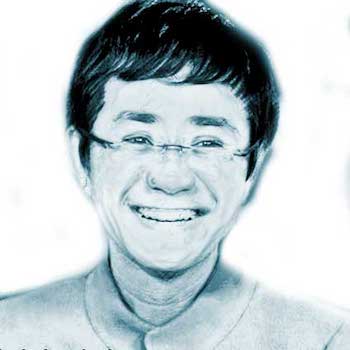
On 8 October 2021 the Norwegian Nobel Committee decided to award the Nobel Peace Prize for 2021 to Maria Ressa and Dmitry Muratov for their efforts to safeguard freedom of expression, which is a precondition for democracy and lasting peace. Ms Ressa and Mr Muratov are receiving the Peace Prize for their courageous fight for freedom of expression in the Philippines and Russia. At the same time, they are representatives of all journalists who stand up for this ideal in a world in which democracy and freedom of the press face increasingly adverse conditions.

Maria Ressa uses freedom of expression to expose abuse of power, use of violence and growing authoritarianism in her native country, the Philippines. In 2012, she co-founded Rappler, a digital media company for investigative journalism, which she still heads. As a journalist and the Rappler’s CEO, Ressa has shown herself to be a fearless defender of freedom of expression. Rappler has focused critical attention on the Duterte regime’s controversial, murderous anti-drug campaign. The number of deaths is so high that the campaign resembles a war waged against the country’s own population. Ms Ressa and Rappler have also documented how social media is being used to spread fake news, harass opponents and manipulate public discourse. Maria Ressa has received earlier recognition with 5 human rights awards [see: https://www.trueheroesfilms.org/thedigest/laureates/c048da20-ba0f-11ea-a77e-f524f6fc9aaa]

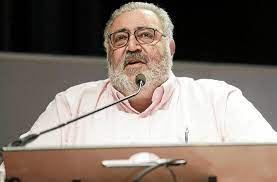
Dmitry Andreyevich Muratov has for decades defended freedom of speech in Russia under increasingly challenging conditions. In 1993, he was one of the founders of the independent newspaper Novaja Gazeta. Since 1995 he has been the newspaper’s editor-in-chief for a total of 24 years. Novaja Gazeta is the most independent newspaper in Russia today, with a fundamentally critical attitude towards power. The newspaper’s fact-based journalism and professional integrity have made it an important source of information on censurable aspects of Russian society rarely mentioned by other media. Since its start-up in 1993, Novaja Gazeta has published critical articles on subjects ranging from corruption, police violence, unlawful arrests, electoral fraud and ”troll factories” to the use of Russian military forces both within and outside Russia.

Novaja Gazeta’s opponents have responded with harassment, threats, violence and murder. Since the newspaper’s start, six of its journalists have been killed, including Anna Politkovskaja who wrote revealing articles on the war in Chechnya. Despite the killings and threats, editor-in-chief Muratov has refused to abandon the newspaper’s independent policy. He has consistently defended the right of journalists to write anything they want about whatever they want, as long as they comply with the professional and ethical standards of journalism.

Muratov dedicated his award to six contributors to his Novaya Gazeta newspaper who had been murdered for their work exposing human rights violations and corruption. “Igor Domnikov, Yuri Shchekochikhin, Anna Politkovskaya, Stas Markelov, Anastasia Baburova, Natasha Estemirova – these are the people who have today won the Nobel Prize,” Muratov said, reciting the names of slain reporters and activists whose portraits hang in the newspaper’s Moscow headquarters.

Free, independent and fact-based journalism serves to protect against abuse of power, lies and war propaganda. The Norwegian Nobel Committee is convinced that freedom of expression and freedom of information help to ensure an informed public. These rights are crucial prerequisites for democracy and protect against war and conflict. The award of the Nobel Peace Prize to Maria Ressa and Dmitry Muratov is intended to underscore the importance of protecting and defending these fundamental rights.

For more on the Nobel Peace Prize and many other awards on freedom of expression see: https://www.trueheroesfilms.org/thedigest/awards/F8EA8555-BF30-4D39-82C6-6D241CC41B74

https://www.nobelprize.org/prizes/peace/2021/press-release/

https://www.reuters.com/world/philippines-journalist-ressa-russian-journalist-muratov-win-2021-nobel-peace-2021-10-08/

United Nations Declaration on the Rights of Indigenous Peoples – a subversive document?

October 6, 2021
Sep 30, 2021

The government of Vietnam has admitted that it arrested an indigenous rights activist for possessing translated copied of the United Nations Declaration on the Rights of Indigenous Peoples. In an extraordinary statement, made to the United Nations High Commission on Human Rights on 20 September 2021 and just now made public, the government of Vietnam justified these arrests as being necessary to maintain national unity in Vietnam. In doing so, it has effectively sought to justify the criminalization of possession of a UN document that establishes core human rights belonging to indigenous people that the government of Vietnam itself voted to create.

The United Nations Declaration on the Rights of Indigenous Peoples (UNDRIP), in the words of the United Nations, “is the most comprehensive international instrument on the rights of indigenous peoples” and “establishes a universal framework of minimum standards for the survival, dignity and well-being of the indigenous peoples of the world and it elaborates on existing human rights standards and fundamental freedoms as they apply to the specific situation of indigenous peoples.”  It was approved by the UN General Assembly on 13 September 2007. … Vietnam was one of the 144 countries to vote in its favor.

In April 2021, the Unrepresented Nations and Peoples Organization (UNPO) brought to international attention the case of Mr. Duong Khai, a Khmer Krom activist campaigning for recognition of the indigenous status of the Khmer Krom people in Vietnam, who was arrested and threatened for possession of translated copies of the UNDRIP. In June 2021, a team of UN independent experts wrote a Joint Allegation Letter to the governmment of Vietnam demanding an answer and expressing their “concern that these reported threats may be connected to his efforts to disseminate United Nations documents, in particular the promotion and translation of the UNDRIP, and may have chilling effect on any expression, by all those, including human rights defenders, who draw attention to minority and indigenous people’s issues in the country.”

On 20 September 2021, the government of Vietnam responded to the UN experts in a letter to the UN Office of the High Commissioner for Human Rights. The response is deeply troubling. Instead of denying that such repressive actions took place, or admitting that they did and outlining a process for redress, the government of Vietnam admitted Mr. Duong Khai was indeed arrested for possession of copies of the UNDRIP and claimed that the arrest was justified in order to maintain “national unity” because, according to the government of Vietnam, there are no indigenous peoples in the country.

It is well-settled that indigenous people make up approximately 15% of Vietnam’s population and that the Khmer Krom are one of the major indigenous communities. Yet Vietnam denies the existance of indigenous people, resulting in significant negative impacts on these communities. Mr. Duong Khai is one of many human rights defenders campaigning for recognition of indigenous status, and persecuted for doing so. In Vietnam, seeking indigenous status is so dangerous that an indigenous person wearing a T-shirt with the logo of the United Nations Sustainable Development Goals stating “Implementing the United Nations 2030 Agenda for Sustainable Development to ensure No Khmer-Krom are left behind” can be arrested.

This case presents a troubling baseline for the status of human rights in Vietnam. If, in Vietnam, a person can be criminalized merely for possessing and distributing UN human rights instruments that their own government has had a hand in creating, there can be no limit to the ability of the state to repress its citizens and eradicate freedom of expression and opinion.

Unfortunately, all too often today, Member States of the United Nations justify the worst repression under the guise of “national unity.” Indigenous communities and religious and ethnic minorities regularly bear the brunt of this fundamental perversion of the international system. Yet rarely do states so explicitly and openly violate these rights as the government of Vietnam has done in this case. By criminalizing the mere possession of a document that presents solely the text of a UN human rights instrument the government of Vietnam is openly repudiating the very foundations of the international order.

In light of the government of Vietnam’s admission in this case, the UNPO is calling on the entire international community to unequivocally condemn the government’s action in this case and to ensure that any aid or support to the country or trade with it is conditioned on the provision of adequate protection for human rights defenders, indigenous communities, and freedom of expression and opinion.

https://unpo.org/article/22158

Report on Forum Asia’s 9th Asian Human Rights Defenders Forum

October 5, 2021

On 5 October 2021 FORUM-ASIA presented its new publication, “Summary Report: 9th Asian Human Rights Defenders Forum”, an abridgement from an event that facilitates human rights defenders (HRDs) and women human rights defenders (WHRDs) to discuss work and advocacy efforts, and share the experiences and challenges they face.

From 2019 to date, the situation of defenders and civil society organisations across Asia has grown increasingly challenging. Harassment and violations perpetrated against those defending human rights continue to increase and most perpetrators continue to benefit from impunity.

The global COVID-19 crisis, which started in 2020, exacerbated the already worrying situation for defenders. In the past one year alone, from 1 April 2020 to 31 March 2021, at least 760 cases of abuses and violations against defenders were recorded across 19 Asian countries, based on FORUM-ASIA’s monitoring. More than half of the cases recorded were related to judicial harassment (409 cases), which is often followed by arbitrary arrest and detention (323 cases). The number of killings is alarming at 55 cases, most of which took place in Myanmar, the Philippines, and Afghanistan.

Despite the restrictive atmosphere, human rights defenders and people from across Asia continue to bravely fight for their rights. Emblematic examples can be seen within the wave of pro-democracy protests that have been taking place in Thailand, the Civil Disobedience Movement in Myanmar, the Farmers Protest in India, and the anti-Omnibus Law protest in Indonesia, which have been held under the banner of the Milk Tea Alliance, alongside peoples’ movements from Hong Kong, Taiwan, Malaysia, and the Philippines.

Such movements show people’s determination to continuously find new ways to resist the shrinking civic space, and the rise of a new generation of defenders emerging to push for the realisation of human rights.

This year marks the 20th anniversary of the first AHRDF, and despite all the challenges this year posed, such as the COVID-19 pandemic and its restrictions on travel, FORUM-ASIA organised the event in an online format from 14 to 17 June 2021. This publication, “Summary report: 9th Asian Regional Human Rights Defender Forum,” highlights the key points discussed and provides the key recommendations made at the Forum.

For the PDF version of the summary, click here.

http://humanrightsinasean.info/

Erik K. Ward Wins 2021 Civil Courage Prize

October 5, 2021
Eric K. Ward, a nationally-recognized expert

New York, NY – Eric K. Ward, a nationally-recognized expert on the relationship between authoritarian movements, hate violence, and preserving inclusive democracy, will receive the 21st annual Civil Courage Prize virtually on Friday, October 29, 2021.

This is the first time in the award’s history that an American has won the prize, revealing the dangerous proliferation of hate crimes and political violence by authoritarian and extremist movements in the United States.

In his 30+ year civil rights career, Ward has worked with community groups, government and business leaders, human rights advocates, and philanthropists to combat white supremacy, extremism, and anti-democratic activities of the far right. The recipient of the Peabody-Facebook Futures Media Award, Ward’s widely quoted writings and speeches are credited with key narrative shifts in the fight to take white supremacist violence seriously. He currently serves as Executive Director of Western States Center, Senior Fellow with Southern Poverty Law Center and Race Forward, and as Chair of The Proteus Fund.

“There are few with more experience in the realm of civil courage in the United States than Eric Ward. Eric understands the deep connections between creating and sustaining inclusive, democratic institutions and combating extremism, bigotry and racism in all its forms,” said George Biddle, Train Foundation Trustee. “We commend Eric for spending his career and life demonstrating how extremism can only be mitigated through non-violent action and facilitating common ground.” 

The fact that I am the first ever American to win this prize is a clear and jarring message from The Train Foundation to governments and civil society domestically and internationally: the rise of authoritarianism and violent extremism has ended all illusions of ‘American exceptionalism.’ America’s dream of achieving a multiracial and inclusive democracy is in danger, said Eric Ward. “Bigoted and authoritarian ideological movements are now an active threat to the very structures of our democracy established by the 1960s Civil Rights movement. I am grateful and proud to accept this honor on behalf of all those who continue the struggle towards a strong, multicultural democracy.

For more on the Civil Courage Prize see: https://www.trueheroesfilms.org/thedigest/awards/B1359DF3-B0A3-4AE5-B8E3-50599E0665FF

Eric Ward has a special interest in the use of music to advance inclusive democracy. In 2020 he helped to launch the Western States Center Inclusive Democracy Culture Lab which works with musicians to create new narratives about anti-bigotry and inclusion, puncture the myths driving our political and social divisions, and invite people who don’t always trust politicians and movement leaders into the safe and trusting conversational space that exists between a performer and their audience.

Ward began his civil rights career at a time when the white nationalist movement was engaged in violent paramilitary activity that posed a threat to democracy and democratic participation in the Pacific Northwest. He founded and directed a community project designed to expose and counter hate groups and respond to bigoted violence before joining the staff of the Northwest Coalition Against Malicious Harassment, where he worked with government leaders, civil rights campaigners, businesses leaders and law enforcement officials in establishing over 120 task forces focused on human rights and anti-violence in Colorado, Idaho, Montana, Oregon, Washington, and Wyoming.

Ward considers himself ‘lucky’ to have had the experience of working closely side-by-side with people who decided to leave any movements which pose a threat to democracy. “I can’t take a lot of claim for that,” he said in an interview with Floss Media earlier this year. “What I think I presented was a doorway out. The truth is when we break this binary of white supremacy and the white nationalism that is trying to turn it into something new, what we find out is we have a lot of problems in common. We also have a lot of dreams in common.”

see also: https://humanrightsdefenders.blog/2017/10/17/mbonimpa-wins-also-the-2017-civil-courage-prize/

https://www.blackstarnews.com/us-politics/news/erik-k-ward-first-american-to-win-civil-courage-prize.html

Berlin’s Human Rights Film Festival: storytelling can combat human rights violations

October 5, 2021

Davide Abbatescianni in Cineurope of 1 October 2021 describes the panel “Storytelling and Activism” in which the speakers explored how powerful storytelling can help activists in their struggles, and how this can become a catalyst for social change

The magic of storytelling can combat injustices and human rights violations, say panellists at Berlin’s Human Rights Film Festival

A moment during the panel discussion

On 23 September, the Human Rights Film Festival hosted a panel entitled “Storytelling and Activism”. The gathering, which ran in Berlin from 16-25 September, aims to inspire and educate its attendees, opening their eyes to several humanitarian issues, as seen from new perspectives.

The panellists at this session explored how storytelling can help activists in their fights against injustice and human rights violations, and how this can become a catalyst for social change. The talk saw the participation of actress-director Katja Riermann (whose film …and here we are! was part of this year’s festival programme), Amnesty International Germany secretary general Markus Beeko, Save the Children communication director Martina Dase, co-host of feminist podcast Mothers of Invention Thimali Kodikara, campaigner Uma Mishra and Nigerian-American director Adesua Okosun. The conversation was moderated by Anna Ramsklogler-Witt.

Riermann spoke about her approach to storytelling, saying that she always tries to find the story “behind the news, behind what we know from the humanitarian organisations. […] I try to close the gap between what we know generally – and in many cases, such information is false – and the very specific, exclusive information provided by the people who are within this bubble. My approach is to tell the story to people who are not part of this bubble, who have never heard about it,” she explained.

Okosun said, “Luckily, a lot of directors and creators have the freedom to express themselves through storytelling and to not be afraid to seek questionable stories.” They don’t fear telling the stories of communities that everyone is ignoring or the experiences in Africa that many try to sugar-coat.

Dase noted a lack of meaningful stories: “I think storytelling is the art of telling something that gets under your skin. We still need to be more courageous, and we need to stop telling similar stories over and over again. People are tired of this.” She then mentioned that the most successful piece of storytelling ever produced by Save the Children was a viral video (watch it here) made in collaboration with an advertising agency. It was not a case study, but it basically transposed the Syrian War to London, showing a nine-year-old girl celebrating her birthday when, all of a sudden, a civil war breaks out in the UK. “We need to work more with suspense, surprise, shock and mystery – all of those skills that advertising agencies and blockbuster directors possess,” she added.

Speaking about how humour can be a powerful storytelling tool for just causes, Kodikara said that it allows us “to bring new audiences towards subjects that they are usually terrified of or know nothing about”.

Mishra discussed how emotions can have an impact on her campaigning work: “Working with human rights defenders is always incredibly tricky because of how you are portraying their stories.” She said that it is important to remember that the voices of these people – women, minorities, political prisoners and so on – have been silenced, so activists and campaigners need to make sure not to co-opt their voices and handle their portrayals, as far as possible, with the utmost care.

Beeko highlighted the shift from “telling stories about human rights violations and those affected by them” to a focus on the “activists and the changes that are possible”, which gives hope but is also stimulating more active modes of participation on the part of the audience.

See also: https://humanrightsdefenders.blog/2021/04/08/putting-words-into-action-successful-narrative-building-in-human-rights-work/

https://www.cineuropa.org/en/newsdetail/411353

United Arab Emirates: Dubai Expo continues whitewashing – EU Parliament call for boycott

October 4, 2021

Expo 2020 On 1 October 2021. Human Right Watch published “UAE: Tolerance Narrative a Sham Censorship; Surveillance; Prison or Barred Entry for Critics”. It stated that the United Arab Emirates authorities are using Expo 2020 Dubai to promote a public image of openness that is at odds with the government’s efforts to prevent scrutiny of its rampant systemic human rights violations. See also: https://humanrightsdefenders.blog/2021/09/03/uaes-new-human-rights-institute-sounds-like-a-joke/

Expo 2020 is a prominent global cultural event built on the free exchange of ideas. Domestic critics are routinely arrested and, since at least 2015, UAE authorities have ignored or denied requests for access to the country by United Nations experts, human rights researchers, and critical academics and journalists. The government’s pervasive domestic surveillance has led to extensive self-censorship by UAE residents and UAE-based institutions; and stonewalling, censorship, and possible surveillance of the news media by the government. “Dozens of UAE peaceful domestic critics have been arrested, railroaded in blatantly unfair trials, and condemned to many years in prison simply for trying to express their ideas on governance and human rights,” said Michael Page, deputy Middle East director at Human Rights Watch. “Expo 2020 is yet another opportunity for the UAE to falsely present itself on the world stage as open, tolerant, and rights-respecting while shutting down the space for politics, public discourse, and activism.” Expo 2020 is being held from October 1, 2021, to March 31, 2022, with the theme, “Connecting Minds, Creating the Future.”

This event, as with other expensive entertainment, cultural, sports, and educational events before it, is designed to promote a public relations image of the UAE as an open, progressive, and tolerant country while its abusive authorities forcefully bar all peaceful criticism and dissent, Human Rights Watch said.

…. Major international human rights organizations, including Human Rights Watch and Amnesty International, have also faced increased restrictions on their ability to visit and engage with government officials on human rights issues. Staff of both organizations were refused access to prisons and high-profile trials, and eventually admission to the country. UAE authorities have rarely responded to either organization’s requests for information or meetings.

The UAE has embarked on a decades-long effort to whitewash its reputation on the international stage. These efforts were made explicit in the government’s 2017 Soft Power Strategy, which includes cultivating “cultural and media diplomacy” as a central pillar and has a stated objective “to establish [the UAE’s] reputation as a modern and tolerant country that welcomes all people from across the world.” Expo 2020 is the latest in a long list of investments in ambitious cultural and educational projects that seek to further that goal, Human Rights watch said. Others include the acquisition of the Louvre, the Guggenheim, and New York University outposts, establishing Dubai as a luxury tourism destination, and hosting global cultural events such as the 2019 Special Olympics in Abu Dhabi and the upcoming World Expo in Dubai.  

While leading international academic and cultural institutions first established a presence in the UAE with the promise to serve the public good by promoting “ideas, discourse, and critical thinking,” they have since remained silent in the face of increasing repression of basic rights. … Some of those whose communications and devices were targeted by the government surveillance and who are residents of the UAE, were subsequently arrested and abused in detention.Among them is the prominent Emirati human rights activist Ahmed Mansoor. [See also: https://www.trueheroesfilms.org/thedigest/laureates/074ACCD4-A327-4A21-B056-440C4C378A1A] A UAE court sentenced Mansoor to 10 years in prison in May 2018 following a grossly unfair trial, partly based on private email exchanges and WhatsApp conversations. A 2016 Citizen Lab report demonstrated five other cases where arrests or convictions of users followed malware attacks against their Twitter accounts from 2012 to 2015. This repressive environment, coupled with the authorities’ use of advanced spyware to target anyone deemed a threat to the country, has led citizens, residents, and even journalists, academics, businessmen, and others who frequent the UAE to warily restrict their public criticism of the authorities. As one journalist said about their office based in Dubai, “The head of office is shit scared of the authorities … There is a practice of holding back stories if they can’t get official comment – which they often can’t. They don’t go hard on the UAE.” Governments and businesses have a human rights responsibility to avoid contributing to UAE authorities’ efforts to whitewash its abuses. As countries prepare to showcase their pavilions at the Dubai EXPO, they should help prevent the UAE’s whitewashing attempts by either advocating for the UAE to unconditionally release all those unjustly detained for exercising their right to free expression and to regularly open up the country, including its jails and its courts, to scrutiny by independent researchers and monitors, or not participate in the EXPO, Human Rights Watch said. “With widespread arrests, intimidation, surveillance, and retaliation that citizens and residents face for speaking out, Expo participants and other countries should raise concerns about rights abuses in the UAE,” ..The HRW report contains a lot more detail about the media repression.

The European Parliament has called on the United Arab Emirates to immediately release three prominent human rights defenders and urged EU member states to boycott next month’s Dubai Expo in order to “signal their disapproval” of rights violations. In a resolution adopted on Thursday, the parliament demanded the “unconditional release” of Ahmed Mansoor, Mohammed al-Roken, and Nasser bin Ghaith, as well as all other Emirati political activists and dissidents. Mansoor was arrested in 2017 on charges of publishing false information and rumours, and using social media to “damage the country’s reputation”.

According to letters that were published online in July, the 52-year-old said he had been held in solitary confinement since his arrest, cut off from the outside world as well as fellow prisoners.

Roken, a university professor and human rights lawyer, was arrested in July 2012, and convicted in July 2013 over charges of “establishing an organisation seeking to bring about the government’s overthrow”. He was sentenced to 10-years in prison and stood trial as part of a group that became known as the “UAE 94”. Former US intelligence officials admit to hacking for UAE at hearing in Virginia. See also: https://www.trueheroesfilms.org/thedigest/laureates/7B69B1D9-E359-444A-B448-02E8B9C0750C

Meanwhile, Ghaith, an economist, and human rights defender was arrested in August 2015 and jailed in March 2017 for 10 years over tweets that criticised Egypt, a key ally of the Gulf country. Ghaith had tweeted a picture of a burnt building in Cairo on 11 August 2015, a few days before the anniversary of the killing of hundreds of protesters in Rabaa square. 

In the resolution, which passed with 383 votes in favour, 47 towards and with 259 abstentions, the parliament criticised Mansoor’s prolonged detention and urged member states to boycott the upcoming World Fair in Dubai.

“In order to signal their disapproval of the human rights violations in the UAE, [the European Parliament] invites the international companies sponsoring Expo 2020 Dubai to withdraw their sponsorship and encourages member states not to participate in the event,” the resolution said.

Dubai has poured billions of dollars into Expo 2020, hoping the exhibition will generate new business and spur its economy amid a slowdown in growth due to the Covid-19 pandemic. 

Thursday’s strongly-worded resolution also condemned the role the UAE played in the extradition of women’s rights activist Loujain al-Hathloul. Hathloul was kidnapped in the UAE in 2018 and flown into Saudi Arabia against her will, where she faced a trial based on a loosely worded terror law often used to prosecute activists. She was released in February after almost three years in prison but is subject to a five-year travel ban and other restrictions.

On 15 September 2021 the Middle East Monitor has reported that the UAE had placed an additional 4 human rights defenders on its terror list:

Authorities in the United Arab Emirates (UAE) have placed 38 individuals and 15 companies on a terrorism list, saying they are “keen to target networks linked to the financing of terrorism.”

The updated list, issued by the Council of Ministers under Ministerial Resolution No. 83 of 2021, includes the names of four Emirati opposition figures living in exile: Ahmed Al Shaiba Al Nuaimi, Muhammad Saqr Al Zaabi, Hamad Al Shamsi and Saeed Al Tunaiji.

The UAE seeks to curb the political and legal activities of these activists who document human rights violations in the Emirates, WAM reported.

The four opposition activists are believed to be part of a small group that survived the state security apparatus’ 2012 arrest campaign of dozens of academics, lawyers, community leaders and students calling for political reform. However, they were outside the country and then tried in absentia in a case known as the “UAE94”.

The four opposition figures had announced the formation of the “Emirati League Against Normalisation” more than a year ago and issued a statement calling the normalisation agreement with the Israeli occupation a departure from the principles on which the UAE was founded.

https://www.hrw.org/news/2021/10/01/uae-tolerance-narrative-sham-0

https://www.middleeasteye.net/news/uae-european-parliament-release-political-prisoners-boycott-dubai-expo

https://www.middleeastmonitor.com/20210915-uae-puts-4-human-rights-defenders-on-terror-list/

https://www.middleeasteye.net/news/uae-ahmed-mansoor-activist-former-un-official-urges-release
Big Coalition urges UN to denounce abuses facilitated by spyware technologies

October 4, 2021

During the 28th U.N. Human Rights Council (HRC) Access Now joined 94 other civil society organizations and independent experts in urging member states to denounce abuses facilitated by spyware technologies.

The Pegasus Project revealed a long list of journalists, activists, human rights defenders, lawyers, world leaders, and civil society actors that were a target of NSO Group’s Pegasus Spyware. The U.N. HRC should mandate comprehensive measures to investigate and prevent further violations linked to the sale, export, and use of Pegasus spyware and cases of targeted surveillance. For earlier post on this hot topic, see: https://humanrightsdefenders.blog/tag/pegasus/

Member States must urgently act to address the perpetual human rights abuses by States facilitated by NSO Group’s Pegasus spyware,” said Laura O’Brien, UN Advocacy Officer at Access Now. “The clandestine surveillance industry must be held accountable.

The recent revelations showcased the unprecedented scale of human rights violations by States facilitated by the use of Pegasus with Budapest-based photojournalist Dániel Németh being the latest victim targeted by the spyware.

In the Middle East and North Africa (MENA), governments continue to use digital surveillance tools to target journalists and activists. In 2016, a Citizen Lab investigation revealed that the UAE spied on human rights defender Ahmed Mansoor, who is now serving 10 years in prison under inhumane conditions. The Pegasus Project revealed that friends and family of slain Saudi journalist, Jamal Khashoggi, were also targets of Pegasus spyware with the iPhone of Khashoggi’s Turkish fiancée, Hatice Cengiz, targeted and successfully infected. Last June, Access Now and the Gulf Centre for Human Rights launched the MENA Surveillance Coalition, convening civil society organizations working to defend freedom of expression, privacy, and fundamental rights, to call for an end to the sales of digital surveillance tools to repressive governments in the region.

“Invasive surveillance invades and corrodes the lives and work of human rights defenders, journalists, and activists across the globe,” said Kassem Mnejja, MENA Campaigner at Access Now. “Companies like NSO have been given free rein to proliferate the market with the dangerous Pegasus spyware used to facilitate these dehumanising and unsafe actions — this must end now.”

Despite the mounting evidence of its human rights abuses, the NSO Group continues to repeat its false claim that its spyware is only used for legitimate purposes like investigating crime and terror. This cannot continue.

U.N. human rights experts and civil society groups have previously called on governments to immediately implement a global moratorium on the sale, export, transfer, and use of private surveillance technology. Supporting this call, civil society organizations and independent experts are today requesting member states of the U.N. HRC to urgently denounce and mandate independent investigations into the human rights violations facilitated by this technology.

Read the full letter.

https://www.scoop.co.nz/stories/WO2110/S00016/act-now-against-spyware-coalition-tells-un-human-rights-council.htm

2021 Laureates of the Right Livelihood Award

October 4, 2021

The 2021 Laureates of the Right Livelihood Award were announced in Stockholm on Wednesday, 29 September at Kulturhuset, Stockholm. For more in this award and its laureates, see: https://www.trueheroesfilms.org/thedigest/awards/97238E26-A05A-4A7C-8A98-0D267FDDAD59

Marthe Wandou, Cameroon

“For building a model of community-based child protection in the face of terrorist insurgency and gender-based violence in the Lake Chad region of Cameroon.”

Read more

Vladimir Slivyak, Russia

“For his defence of the environment and for helping to ignite grassroots opposition to the coal and nuclear industries in Russia.”

Read more

Freda Huson of the Wet’suwet’en people, Canada

“For her fearless dedication to reclaiming her people’s culture and defending their land against disastrous pipeline projects.”

Read more

Legal Initiative for Forest and Environment, India

“For their innovative legal work empowering communities to protect their resources in the pursuit of environmental democracy in India.”

Read more

For last year’s winners, see: https://humanrightsdefenders.blog/2020/10/01/four-well-known-human-rights-defenders-are-the-2020-right-livelihood-laureates/

https://rightlivelihood.org/2021-announcement/

Michel Tubiana passed away

October 4, 2021

On 2 October 2021 EuroMed Rights announed with great sadness the passing of Michel Tubiana.

Born in 1952 and a lawyer by training, Michel Tubiana was first and foremost a human rights activist, a cause he had been committed to since university. Alternately Secretary General, then Vice-President and President of the League of Human Rights in France, Michel Tubiana put his knowledge, practice of law and pugnacity at the service of the fight against racism and the respect of human rights.

Michel Tubiana was President of the EuroMed Rights Network from 2012 to 2018 before becoming its Honorary President.

The EuroMed Rights Network expresses their most sincere condolences to his family and friends in their grief.

https://euromedrights.org/publication/passing-of-michel-tubiana-euromed-rights-honorary-president/

https://fr.wikipedia.org/wiki/Michel_Tubiana