Many organisations, especially NGOs, used the occasion of International Women’s Day 2020 to highlight work carried out by women human rights defenders. See also: https://humanrightsdefenders.blog/2020/02/27/women-human-rights-defenders-in-focus-at-43rd-human-rights-council/. Here an example of how 18 NGOs came together for a Joint Statement during the 43rd session of the UN Human Rights Council
Posts Tagged ‘women human rights defenders’
International Women’s Day 2020: Joint Statement at 43rd session of UN Human Rights Council
March 9, 20208 March 2020 International Women’s Day
March 9, 2020This week, the International Women’s Day 2020 (8 March) celebrates the remarkable work carried out by women human rights defenders worldwide. However, the work of women human rights defenders is often accompanied by intimidation, violence, imprisonment, and threats. In the 2019 report on the situation of women human rights defenders by the UN Special Rapporteur on the situation of human rights defenders, Michel Forst, it is stated that “women defenders are often perceived as challenging traditional notions of family and gender roles in society, a perception that can generate hostility from State actors, and from the public, the media, and other non-State actors.”
Many organisations, especially NGOs, used the occasion of International Women’s Day 2020 to highlight work carried out by women human rights defenders. See also: https://humanrightsdefenders.blog/2020/02/27/women-human-rights-defenders-in-focus-at-43rd-human-rights-council/. Here one example: Civil Rights Defenders and DefendDefedners:

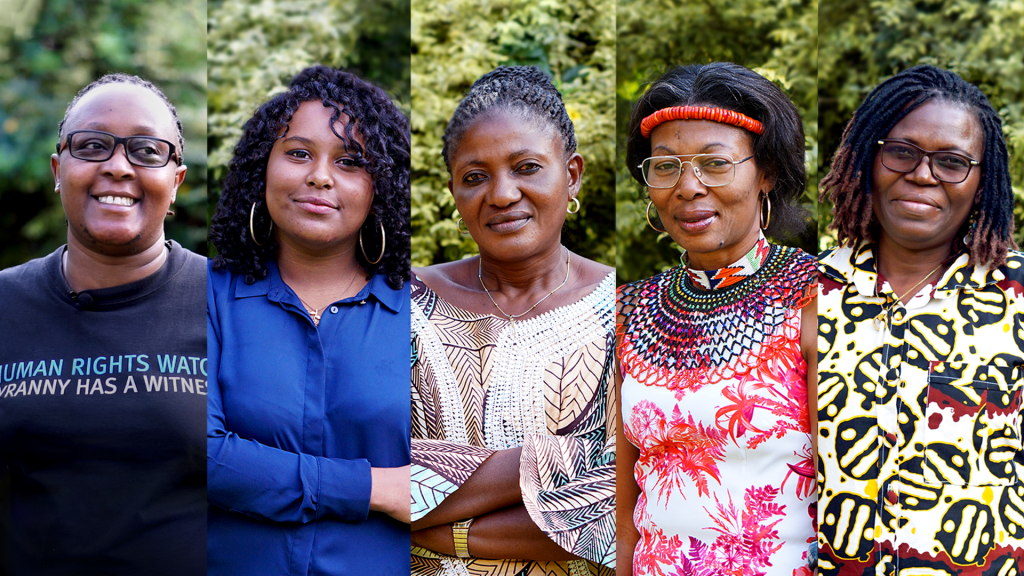
Women human rights defenders Diane Bakuraira, Maysaa Osama, Bernadette Ntumba, Maximilienne Ngo Mbe, and Mélanie Sonhaye Kombate. Photos: Civil Rights Defenders.
Civil Rights Defenders and DefendDefenders highlight individual women human rights defenders who, despite threats and challenges, continues their fight for human rights in Africa.
- Mélanie Sonhaye Kombate, Togo: “I need to move forward“.
- Diane Bakuraira, Uganda: “We live in a patriarchal society“.
- Maximilienne Ngo Mbe, Cameroon: “We want change“.
2020 International Women of Courage Awards by the U.S. State Department
March 4, 2020Today, Wednesday 4 March 2020, Secretary of State Michael R. Pompeo hosts the Annual International Women of Courage Awards at the U.S. Department of State to honor 12 women from around the world. The First Lady of the United States Melania Trump will deliver remarks to recognize the accomplishments of these women. For more on this and 7 other international awards that have word COURAGE in their name, see: http://www.trueheroesfilms.org/thedigest/awards/international-women-of-courage-award.
The 2020 announcement comes remarkably quickly on the heels of last year’s, see: https://humanrightsdefenders.blog/2019/12/18/usas-international-women-of-courage-awards-for-2019/
This year will bring the total to 146 awardees from 77 countries. U.S. diplomatic missions overseas nominate one woman of courage from their respective host countries. The finalists are selected and approved by senior Department officials. Following the IWOC ceremony, the 12 awardees will participate in an International Visitor Leadership Program (IVLP) visiting various cities throughout the country, before reconvening in Los Angeles for the conclusion of their program on March 16. The 2020 awardees are:
Zarifa Ghafari (Afghanistan) After successfully launching and operating a women-focused radio station, Afghanistan’s Zarifa Ghafari became mayor of Maidan Shar, in conservative Wardak province, at the age of 26. When she showed up to start work, a male mob appeared and she was forced to flee. Despite death threats, Ms. Ghafari came back, defying her conservative critics and their narrative that a woman is unfit to lead. She then withstood a walkout by all of the male members of her office. She later demonstrated ability and courage in tackling her town’s problems. Despite fierce opposition from vested interests, she successfully launched a “Clean City, Green City” campaign that reduced littering. Ghafari’s courage has inspired girls and women not only in her community and the wider province, but across the country. In her capacity as a trail-blazer and door-opener for a new generation of young women, she has helped empower the women of Afghanistan.
Lucy Kocharyan (Armenia) Using her platform as a journalist, Kocharyan has championed children with mental health issues and has emerged as a leading voice in the fight against psychological, physical, and domestic violence against women and children. Through her dedication and resolve, Kocharyan became famous for launching “Voices of Violence” in August 2018. She has become a spokesperson on gender-based violence in Armenia and has continued to speak out despite harsh criticism – from people on the street who yell “shame” as she passes by, to parliamentarians speaking out against her and threatening her with lawsuits. She successfully started a conversation about domestic and sexual violence that is slowly leading to some action. Gender-based violence is a pervasive problem throughout Armenia, where traditional social norms regarding masculinity, femininity, gender equality, and the division of household tasks remain rigid, making her achievements and impact all the more impressive.
Shahla Humbatova (Azerbaijan) Shahla Humbatova has worked as a defense lawyer in Azerbaijan since 2013, and is one of a handful of legal advocates who have been consistently willing to defend individuals facing punishment for exercising their fundamental freedoms. She has bravely defended human rights defenders, journalists, bloggers, youth activists, members of the political opposition, and others. Her example has inspired other lawyers to better advocate for their clients in politically sensitive cases, and her courage in representing LGBT clients in a conservative culture has pushed civil society further down the path to tolerance. She is one of only two female lawyers to take these cases on in a difficult environment in which human rights lawyers have regularly been harassed and threatened in social media, suspended from practicing law, and disbarred. [see also: https://humanrightsdefenders.blog/2020/01/20/annual-reports-2019-azerbaijan-in-review-muted-hope-for-2020/]
Ximena Galarza (Bolivia) Ximena Galarza is a Bolivian journalist with over 25 years of experience. She has worked as a reporter, a television presenter, and news editor on some of Bolivia’s most important news channels including Red UNO, Cadena A, and TVU. Across her extensive career, Galarza has interviewed hundreds of politicians, academics, intellectuals, artists, and experts. She has also trained journalists to better inform the public of their rights and obligations. Galarza’s work has supported democracy in Bolivia and exposed corruption and violations of democratic freedoms. Since 2015, Galarza has hosted the program Jaque Mate (Check Mate) on TVU, one of Bolivia’s most prestigious news programs. In 2019, two of Galarza’s interviews impacted Bolivia’s history by demonstrating fraud in the October 20 presidential elections. The electoral irregularities were later confirmed by an independent analysis from the Organization of American States.
Claire Ouedraogo (Burkina Faso) Claire Ouedraogo is the President of the Songmanegre Association for Women’s Development (Association féminine songmanegre pour le développement), an organization she founded that focuses on eliminating female genital mutilation/cutting (FGM/C) and promoting female empowerment through family planning education, vocational training, and micro-credit for women in the rural and underserved Center North region of Burkina Faso. She also serves as a senior advisor on the National Council to Combat Female Genital Mutilation. She is an active member of the Burkinabe Movement for Human and People’s Rights. In 2016, the prime minister of Burkina Faso nominated her as an Ambassador of Peace for her work in empowering rural women. Despite the increased threat of terrorist attacks and violent acts against civilians in Bam Province, Mrs. Ouedraogo continues her courageous work on behalf of vulnerable women threatened both by FGM/C and terrorism.
Sayragul Sauytbay (China) Sayragul Sauytbay was born in Ele Kazakh Autonomous Prefecture, Xinjiang, China. She attended medical university and worked as a doctor, teacher, education director, and headmaster. In July 2016, Sayragul and her family attempted to move to Kazakhstan but the Chinese Communist Party (CCP) confiscated her passport and prevented her from going with her husband and children. From November 2017 to March 2018, Sayragul was forced by the CCP to teach Chinese to ethnic minority people in a detention camp. In March 2018, Sauytbay fled to Kazakhstan to avoid being sent back to the camps, where she feared she would die. Subsequently, Sauytbay become one of the first victims in the world to speak publicly about the CCP’s repressive campaign against Muslims, igniting a movement against these abuses. Her testimony was among the first evidence that reached the broader international community of the CCP’s repressive policy, including both the camps and the coercive methods used against Muslim minorities. Sayragul and her family received asylum in Sweden, where they now live.
Susanna Liew (Malaysia) Following the February 2017 abduction of her husband, Christian pastor Raymond Koh, allegedly by state agents, Susanna Liew has fought on behalf of members of religious minorities who disappeared in Malaysia under similar circumstances—including Amri Che Mat, Joshua Hilmy, and Ruth Sitepu—or who face persecution for their beliefs. Susanna actively pursued justice for her husband and others during the Malaysian Human Rights Commission’s (SUHAKAM) 2018-2019 public inquiry into enforced disappearances and continues to push the government to investigate these cases and prosecute those responsible. Despite police harassment and death threats, she continues to advocate for her husband and others, not because of her faith or theirs, but because of their rights as Malaysians. Susanna and Raymond founded Hope Community in 2004, a non-profit organization that works with the poor, needy, and marginalized. She previously served as a school principal and educator.
Amaya Coppens (Nicaragua) Coppens is one of the leaders of the 19th of April Student Movement in Nicaragua. She participated in numerous protests against the Sandinista government and the violent, repressive tactics deployed by its security forces. In September 2018, she was abducted by Nicaraguan police from her residence after participating in a peaceful protest. She was released in June and continued to speak out against the regime in Nicaragua. She had the opportunity to repatriate to Belgium during her first captivity, but refused. On November 14, Coppens was imprisoned again when she and 12 other activists attempted to bring water to mothers of political prisoners on hunger strike. She and other political prisoners were released by the regime on December 30, 2019.
Jalila Haider (Pakistan) Known as the Iron Lady of Balochistan, Jalila Haider is a human rights attorney and founder of “We the Humans – Pakistan”, a non-profit organization to lift local communities by strengthening opportunities for vulnerable women and children. She specializes in defending women’s rights and provides free counseling and legal services to poverty-affected women. The first female attorney of her Hazara community, Haider led a peaceful hunger strike to recognize the right to life for the Hazara following a series of targeted attacks. Ms. Haider has taken up the cause of many other vulnerable communities. As Balochistan’s President of the Women Democratic Front and Balochistan’s branch of the Aurat (Woman’s) March, she fought against violence against women in public spaces, at work, and at home.
Amina Khoulani (Syria) Khoulani is a survivor of the Assad regime’s detention and torture centers, which have arbitrarily detained over 140,000 Syrians, and has dedicated her life to helping the families of forcibly disappeared Syrians. A long-time civil society activist, she fled Syria in 2014 after her release from prison. She was imprisoned for six months for “peaceful activism” and her husband detained for two and a half years at the notorious Sadnaya Prison. They survived, but her three brothers died while in regime custody. From this devastating experience, Khoulani rededicated her life to seeking information and justice for the families of the disappeared. She is a founding member of “Families for Freedom”, a women-led movement launched in 2017 by families who’s loved ones have been detained and disappeared in Syria. Forced from her home and country, living under constant threat as a refugee without government representation, she continues to advocate for human rights, democracy, and peace in Syria.
Yasmin al Qadhi (Yemen) After obtaining her journalism degree, Yasmin Al-Qadhi was one of the first women to write articles for local newspapers during the Arab Spring pro-democracy protests in Sanaa’a. When the civil war broke out in Yemen in 2015, Yasmine and her sister Entisar established the Marib Girls Foundation. Through the foundation, she works with senior army officials to combat child recruitment and obtained the military’s commitment to release any child recruited or detained. She fostered support for women displaced by the conflict by coordinating with the local and international community. She also raised awareness by co-producing a film about the negative effects of displacement on women and children. Yasmine still resides in Yemen, a tribal society where women are discouraged from working in public spaces. She is working to change social norms and has become a role model in her society. Both at home and abroad, she encourages women’s empowerment and meaningful participation in civil society and the UN-led peace process.
Dr. Rita Nyampinga (Zimbabwe) Rita Nyampinga has been a human rights defender for more than 35 years, fighting for gender equality in the workplace since she joined a trade union in 1983. She is also a trained mediator, and a mentor for girls and young women in leadership. Her experiences during detention led her to form the Female Prisoners Support Trust to support women and children in detention and raise awareness of the appalling conditions they face. Dr. Nyampinga continues to serve on several boards including Women Coalition of Zimbabwe, Crisis in Zimbabwe Coalition, Women Academy on Political Leadership Excellence, and Women AIDS Support Network. Her goal is to see a world that protects and respects the rights of prisoners through a just and fair legal system that is nondiscriminatory based on gender. In 2010 she became the Social and Economic Justice Ambassador for Zimbabwe’s Coalition on Debt and Development. Dr. Nyampinga won the Female Human Rights Activist of the Year in 2014 from Alpha Media House.
—-
https://www.state.gov/2020-international-women-of-courage-award-recipients-announced/
Women human rights defenders in focus at 43rd Human Rights Council
February 27, 2020Huda Al-Sarari is the laureate of the 2020 Martin Ennals Award for human rights defenders
February 22, 2020
On 19 February 2020 the Martin Ennals Foundation announced that is has granted Huda Al-Sarari, Yemeni lawyer and human rights defender, the 2020 Martin Ennals Award. Huda was among three women human rights defenders selected as finalists for the Award by a jury of ten of the world’s leading human rights organizations, along with Sizani Ngubane, South Africa, and Norma Librada Ledezma, Mexico. [see https://humanrightsdefenders.blog/2019/11/26/breaking-news-mea-has-3-women-hrds-as-finalists-for-2020/]
The 2020 Martin Ennals Award ceremony, co-hosted with the City of Geneva, was held on Wednesday 19 February, and for the first time in the history of the Award, all three finalists are women. “Women human rights defenders (WHRDs) are subject to the same risks as every human rights defender, but as women, they also face certain forms of violence and violations due to their gender. WHRDs are often stigmatized and ostracized by community leaders, faith-based groups and even family members”, said the Mayor of the City of Geneva, Sandrine Salerno.
Huda Al-Sarari is a Yemeni lawyer and human rights defender who graduated from Aden University. She also holds a masters in Women’s Studies and Development from the Women’s Centre at Aden University. Since 2015, Huda investigated, exposed and challenged the enforced disappearances that occurred as a result of secret prisons run by foreign governments in Southern Yemen where thousands of men and boys have suffered from arbitrary detention, torture and extrajudicial killings. She collected evidence on more than 250 cases of the abuse taking place within those prisons and succeeded in convincing international organisations such as Amnesty International and Human Rights Watch to take up the cause. “Being a human rights defender in Yemen is extremely challenging, and being a woman makes this even more difficult. In a male-dominated society, I have to prove myself maybe ten times more than a man”, explains Huda. Despite the threats, defamation campaigns and sacrifices she and her family endured, Huda continues to stand alongside the families of those who have disappeared.
“Receiving the 2020 Martin Ennals Award for human rights defenders means the world to me. It gives me great strength and emboldens me to continue this fight for justice”, she says. “I believe the Award will be incredibly important in drawing attention to the continual plight of victims of arbitrary detention, abuse and torture in Yemen”, she concluded.
As Chair of the Martin Ennals Award Jury, I myself added that “We commend Huda for the work that she conducted, not only against the backdrop of the ongoing Yemeni civil war, but also, in a country where women still struggle to express their political and civil rights. Huda’s legacy is crucial as her thorough investigations and search for accountability will serve to bring justice for human rights violations occurred during the conflict.”
For more on this and other awards for human rights defenders see: http://www.trueheroesfilms.org/thedigest/awards/martin-ennals-award-for-human-rights-defenders. The Martin Ennals Jury is composed of 10 of the world’s leading human rights organisations. See: https://www.martinennalsaward.org/about-us-about-the-martin-ennals-award/
Being a Woman Human Rights Defender in Thailand is risky
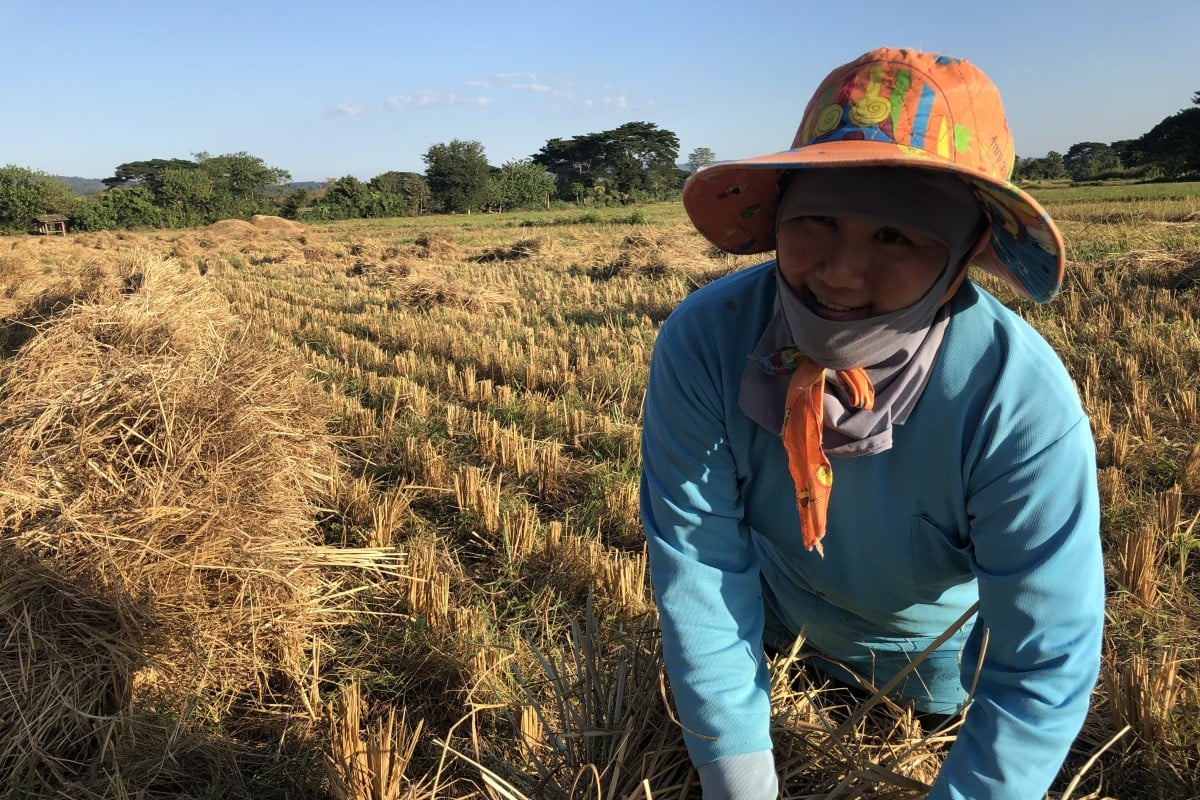
February 10, 2020Thai land rights activist Waewrin Buangern, or Jo, working in the fields in Ban Haeng village. Photo: Lam Le
Growing up, cassava farmer Nittaya Muangklang did not think she would ever become an activist – let alone that she would lead a group of land rights defenders in the first-ever bid to challenge Thailand’s government and its “take back the forests” policy at the Supreme Court. “We did encroach on the national park, but as poor farmers, we should be eligible for exemption,” said Muangklang, who is fighting eviction, imprisonment and fines. Faced with what farmers and rights groups perceive as increasing judicial harassment, more women living in rural areas have joined the fight for land rights in Thailand – amid the spectre of intimidation and the threat of jail time or even being killed for their activism. The appeal court last year sentenced Muangklang and 13 other land rights defenders from Ban Sap Wai village in Thailand’s northeast to up to four years in prison, and ordered them to pay fines of between 40,000 and 1.6 million baht (between US$1,300 and US$52,000) for encroaching on and damaging land in Sai Thong National Park. The court said the farmers failed to prove they had occupied the land before the park was established in 1992. Muangklang, out on bail since last August, said her family had not applied for a land certificate when they moved to Ban Sap Wai in 1986 because they never thought it necessary until the day they faced eviction.
Being a female advocate for land rights in Thailand is a dangerous calling. In 2012, female activists Montha Chukaew and Pranee Boonnak were brutally killed. Since 2014, 225 female human rights defenders from Thailand’s rural areas have been subjected to judicial harassment, according to NGO Protection International, which estimates that 70 per cent of these activists are land rights defenders accused of encroaching on national parks and other lands. However, their work is often overlooked and underappreciated…Even when efforts are made to enshrine women’s rights, as is the case with gender equality in the United Nations’ Sustainable Development Goals (SDGs) – a 17-section blueprint on achieving a sustainable future by 2030 – on-the-ground implementation when it comes to female land rights defenders tends to be lacking. “There’s a challenge there because many times states are not really connecting a human rights-based approach with [the SDGs’] development approach,” said Dubravka Simonovic, UN special rapporteur on violence against women. Thai human rights activist Matcha Phorn-in, who works with marginalised communities, agrees. “When the government is the key actor, [SDGs won’t work for] many people who oppose the government because of violations of human rights,” she said, explaining that this meant a lack of indicators and data to assess how female land rights defenders were being affected….On top of this, Phorn-in fears that millions of people could be affected, now that officials involved in the forest reclamation policy have search-and-destroy powers they can use without first needing court orders.
Protection International’s Somwong explained that with the labour involved in household and family-care duties, female activists were essentially “doing double work” while also facing the risk of sexual harassment. Consequently, rights groups have been calling for gender-sensitive support for these activists. “When you’re not protecting women, you’re not protecting the family, the community, or the movement,” Somwong said. Nine of the prosecuted Ban Sap Wai farmers are women.
…..
…Waewrin Buangern, or Jo, said it was her habit of questioning authority that led her to activism. She contended that the local authorities and the Kiew Lueng Company, which oversees the project, had not been transparent with local villagers on the environmental and economic impact of the mine. As a result, she and members of the conservation group have faced more than a dozen defamation lawsuits from the mining company as well as the local government. The project was put on hold in 2015 after the group counter-sued. The company got a mining permit in 2015 but has not been able to move forward since then due to the lawsuits. Jo has paid a steep price for her perseverance. She lost her job at the local school, another job as assistant to the village chief, and suffered two miscarriages due to the stress of activism, which also took its toll on her marriage and saw her divorce her husband. At 36, Jo’s main sources of income are farming and being an administrator of a Facebook group. But she has found a different family. Of the Rak Ban Haeng Conservation Group’s 1,400 members, 70 per cent are women. …….
Early last year, Ban Haeng villagers received a note that the government was planning to annex the forest the community had been relying on as a source of livelihood, and turn it into a national park. The villagers have submitted a letter of objection, stating that people are living in the area. Jo is positive that no one will get evicted. Unlike the Ban Sap Wai case, she said, the people of Ban Haeng had clear proof of the village’s history – a namesake temple that dates back to 1851….
Martin Ennals Award ceremony on 19 February – in Geneva and on internet
February 10, 2020
The MARTIN ENNALS AWARDS CERMONY 2020 will take place on Wednesday 19 February 2020, 18h00, at the Salle communale de Plainpalais in Geneva. It wil honour three women human rights defenders for their exceptional courage and dedication:
Ms Sizani Ngubane, South Africa
If you are in Geneva on 19 February please REGISTER . If not, note that the event with be live streamed. More information to follow on: https://www.martinennalsaward.org/.
Please spread the message.
Women human rights defenders and climate: a treasure of references
February 5, 2020
On 4 February 2020 Marisa O. Ensor wrote in the New Security Beat an informative piece “Unsung Sheroes, Climate Action, and the Global Peace and Security Agendas“.
The December 2019 workshop on Gender, Peace and the Environment convened by the London School of Economics’ Centre for Women, Peace and Security and the University of Rosario’s Law School in Bogotá, Colombia, brought all of these interrelated perspectives together. Among other conclusions, the workshop acknowledged that indigenous women and girls are vital to more effective climate solutions, including building climate resilience in communities affected by violent conflict. However, their work is becoming increasingly fraught with danger. Criminal gangs, paramilitary groups, and private security forces from industries like mining, logging, dam construction, and agribusiness often target these indigenous environmental and human rights activists……
London School of Economic’s Keina Yoshida, one of the participants in the workshop on Gender, Peace and the Environment, reminded us of the “gender power structures, which result in violence against environmental, indigenous and women’s rights defenders such as Berta Cáceres.” Yet, as Ambassador Melanne Verveer notes in her Foreword to the Georgetown Institute for Women, Peace and Security’s report on Women and Climate Change, women are contributing to both adaptation and mitigation efforts and are creating innovative and localized solutions to build resilient communities. There is a reason for hope.
The article contains a helpful listing of relevant reports and documents on the role of women human rights defenders and climate change:
- Indigenous women and girls are making significant contributions to the parallel Women, Peace and Security (WPS) and Youth, Peace and Security (YPS) global agendas. With their traditional knowledge of natural resource management, they can offer valuable insights on how to cope with the negative impacts of climate change. Yet, they are often the targets of violence.
- Resolution 1325 on Women, Peace and Security (WPS), which the Security Council adopted in 2000, was the first resolution to link women’s experiences of conflict to international peace and security. Seven related resolutions have been adopted since then. Among them, Resolution 2242 (2015) is particularly relevant, given that it was the first to recognize that climate change connects with the WPS framework.
- The joint UN report, Women and Natural Resources: Unlocking the Peacebuilding Potential (2013). It views women’s access to natural resources as a key component of peacebuilding and conflict prevention.
- The 2016 UN Women report, Indigenous Women & The Women, Peace and Security Agenda, also examined these linkages.
- Subsequent related efforts include the UN Framework Convention on Climate Change’s 2017 adoption of a global Gender Action Plan (GAP), which seeks to achieve gender-responsive climate policy and action.
- Resolution 2250 on Youth, Peace and Security (YPS) adopted in 2015 was the first international policy framework to recognize young people’s positive role in this field. It was followed by Resolution 2419 (2018), which stressed the need to consider young people’s views in security‑related discussions.
- Impacts of Climate Change on Youth, Peace and Security (2017),
- The Missing Peace: Independent Progress Study on Youth, Peace and Security (2018),
- Young Women in Peace and Security: At the Intersection of the YPS and WPS Agendas (2018).
For some of my earlier posts: https://humanrightsdefenders.blog/tag/women-human-rights-defenders/
Unsung Sheroes, Climate Action, and the Global Peace and Security Agendas
Front Line Defenders Global Analysis 2019 is out: 304 HRDs killed
January 14, 2020
The most dangerous and deadly sector of human rights defenders remains land, environmental and indigenous rights, according to the Global Analysis report 2019 by Front Line Defenders. 304 people across 31 countries were targeted and killed last year and the document starts by listing their names.
Front Line Defenders said this was due to “the profit driven exploitation of natural resources, combined with corruption, weak governments and poverty“. Speaking to RTÉ News, Executive Director of Front Line Defenders, Andrew Anderson, described the scale of the killings as “horrific” ..almost one person a day is being killed around the world because they are working “peacefully to defend land rights, environmental rights” and to “hold the powerful to account”. “The true scale of the problem is probably much higher” he said.
In the cases for which the data is available, the report found:
- 85% of those killed last year had previously been threatened either individually or as part of the community or group in which they worked
- 13% of those reported killed were women
- 40% of those killed worked on land, indigenous’ peoples and environmental issues
Last year saw mounting pressure on activists defending LGBTI rights, as well as women’s rights and migrants’ rights. Female activists faced online smear campaigns, trolling and defamation to intimidate, shame or harass in order to push women activists out of online spaces. The statistics show that 13% of human rights defenders killed in 2019 were women. The report also notes some positive developments, including the male guardianship system being revoked in Saudi Arabia, women from the Sulaliyat tribe in Morocco being able to inherit and own land, and Sudan removing a law where women could be arrested if found dancing, wearing trousers or mixing with men who were not their relatives.
With massive protests in Iran, Hong Kong and Chile, Front Line Defenders said that 2019 was characterised by waves of public uprisings of “remarkable magnitude”, which demanded change of how people are governed. However, it said there were restrictions on freedom of expression and authorities often invoked “security” as a justification to ban all peaceful demonstrations Physical assaults, defamation campaigns and digital attacks were major issues.
Internet shutdowns, restricting access or blocking communication tools, such as social media, were common. Messaging app WhatsApp, which is popular for organising and communications, became a “serious threat” when it was used against human rights defenders in a number of cases.
As the role of human rights defenders ranged from organising and mobilising to monitoring and documenting human rights violations, the human rights organisation said it provided more than 620 protection grants to activists at risk in 2019.
For last year’s report see: https://humanrightsdefenders.blog/2019/01/09/front-line-defenders-says-record-number-of-activists-killed-in-2018/
https://www.rte.ie/news/ireland/2020/0114/1107280-front-line-defenders/
https://www.theguardian.com/law/2020/jan/14/300-human-rights-activists-killed-2019-report