Posts Tagged ‘women human rights defenders’

Young human rights defenders honored by awards in Bangladesh

January 28, 2015

Recipients of the honorary awards given by Manusher Jonno Foundation, standing behind, with the guests sitting in front, in the capital's Bangla Academy yesterday, at the award giving ceremony marking Human Rights Day. Photo: Star

Recipients of the honorary awards given by Manusher Jonno Foundation, standing behind, with the guests sitting in front, in the capital’s Bangla Academy yesterday, at the award giving ceremony marking Human Rights Day. Photo: Star

A nice little item left-over from Human Rights Day 2014. How human rights awards play at the local level:

Ten human rights defenders from the grassroots level, two eminent social workers with international recognition, and a female football player were given honorary awards by Manusher Jonno Foundation (MJF) yesterday. The works of the activists focused on land rights, prevention of violence against women, child rights, and the rights of the indigenous people. The 10 grassroots activists were Jharna Ray, Madhobilata Chakma, and Nomita Chakma of Khagrachhari, Birendra Sangma of Mymensingh, Shafique Ullah of Noakhali, Kachhim Uddin of Tangail, Kananbala Gupta of Narail, Umme Kulsum Ranjana of Bogra, Kalpana Tirki of Rajshahi, and Rahela of Dinajpur.

Two social workers Jharna Dhara Chowdhury, chief of Noakhali’s Gandhi Ashram, and Angela Gomes, executive director of Bachte Shekha, were also honoured along with Bipasha Mali, a young footballer who was recently called to play on the national women’s football team.

Speaker Shirin Sharmin Chaudhury said, “They don’t work for recognition. Yet when we value their contributions, it makes us proud and we get inspiration to work.

MJF honours 10 grassroots human rights defenders | Two social workers, a young female footballer also receive the honorary awards.

U.N. Rapporteur on Myanmar called “whore” by radical Buddhist monk

January 21, 2015
Myanmar monk's U.N. whore rant
Wirathu:”Just because you hold a position in the United Nations doesn’t make you an honourable woman. In our country, you are just a whore,”

For those who think that hate speech has no place in peace-loving Buddhism, this is sobering item:

A radical Myanmar Buddhist monk, Wirathu,  called the U.N. human rights envoy – Ms Yanghee Lee –  a “whore”, and accused Lee of bias towards Rohingya Muslims, a stateless minority in the western Myanmar state of Rakhine. Wirathu denounced Yanghee Lee, the U.N. special rapporteur on human rights in Myanmar before a cheering crowd of several hundred people, in a speech in Yangon on Friday, after she questioned draft laws that critics say discriminate against women and non-Buddhists. “You can offer your arse to the kalars if you so wish but you are not selling off our Rakhine State,” he said. Kalars is a derogatory word for people of South Asian descent.

His speech was condemned by Thawbita, a leading member of the progressive Saffron Revolution Buddhist Monks Network in Mandalay, where Wirathu is also based. “The words used that day are very sad and disappointing. It is an act that could hurt Buddhism very badly,” Thawbita told Reuters. But he is unlikely to face censure. A senior official at the Ministry of Religious Affairs told Reuters there were no plans to act against Wirathu. This is the more remarkable as in December a New Zealander and two Burmese were charged with insulting Buddhism. The arrest was triggered by a complaint by an official from the country’s religious department. [see: http://news/world-asia-30527443]


Rapporteur Lee in a statement released by her office on Monday said:  “During my visit I was personally subjected to the kind of sexist intimidation that female human rights defenders experience when advocating on controversial issues“.

Myanmar monk’s U.N. whore rant “could hurt Buddhism” | Asia-Pasific | Worldbulletin News.

Rehana Hashmi, woman human rights defender from Pakistan

January 14, 2015

Still taken from "Notes to our Sons and Daughters" Project © 2015 Alexis Dixon

Still taken from “Notes to our Sons and Daughters” Project © 2015 Alexis Dixon

Last December, Brussels-based Protection International launched a new campaign, ‘The Women Who Defend Human Rights.’ In this series of monthly interviews, figure talks with Women Human Rights Defenders (WHRDs) about their work, challenges and every-day-life.

This month, the interview is with Rehana Hashmi from Pakistan. Rehana has been a defender of human rights since a young age. She is also the founder of two national networks that support women and helps them to take charge of their rights. Due to her work, she has received threats to the point that she has had to flee her native Pakistan. You can now read her full story on PI’s website: http://protectioninternational.org/2015/01/14/the-women-who-defend-human-rights-rehana-hashmi/

Friends wouldn’t pick up their phone when I would call..

Women Who Defend Human Rights – a series by Protection International

December 12, 2014


Protection Int'I_logo_final_vertical_72dpiTo shine a light on the courageous work of women human rights defenders (WHRDs) worldwide, the NGO Protection International announces the launch of a series of interviews with women who defend human rights across the globe, from December and continuing in 2015, each month will see a new portrait of a WHRD.

alejandra

This month’s conversation is with Alejandra Ancheita, a leading human rights defender from Mexico and winner of the 2014 Martin Ennals Award for Human Rights Defenders. Alejandra is the founder and executive director of The Project of Economic, Cultural, and Social Rights. To read the interview and watch the (Vimeo) video that goes with it go to Protection International’s website (see link below).
Other outstanding women lined up in the months to come include Rehana Hashmi (Pakistan), Eva Bande (Indonesia), María Martín (Spain), Porntip Honchai (Thailand).

Rehana Hashimi 
rehana

Eva Bande
eva


María Martín 
maria


Porntip Honchai
porntip


The Women Who Defend Human Rights – Alejandra AncheitaProtection International
.

Human Rights Day: exceptional chance to put questions to 3 women human rights defenders

December 9, 2014

To mark Human Rights Day tomorrow, Wednesday 10 December, the Guardian organises a live chat with three women human rights defenders who will answer your questions on their campaigning work and the challenges they face in uncovering abuses. The panel looks most promising:

Read the rest of this entry »

UN High Commissioner for Human Rights writes about Women’s Human Rights Defenders

December 8, 2014
UN HCHR Al Hussein

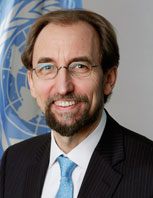
On 5 December 2014, Zeid Ra’ad Al Hussein, United Nations High Commissioner for Human Rights, wrote a piece in the Huffington Post in which he eloquently calls on all to ‘Stand in Solidarity With Courageous Women’s Human Rights Defenders’. 

In the article he explains that his Office has decided to launch a campaign to pay tribute to women and men who defy stereotypes and fight for women’s human rights. The campaign runs from Human Rights Day, December 10 this year, to International Women’s Day, March 8, 2015. We encourage everyone to join the ranks of these strong and inspiring advocates, on social media (#reflect2protect) and on the ground. Below the text in full:


Almost two decades ago, in Beijing, 189 countries made a commitment to achieve equality for women, in practice and in law, so that all women could at last fully enjoy their rights and freedoms as equal human beings.

They adopted a comprehensive and ambitious plan to guarantee women the same rights as men to be educated and develop their potential. The same rights as men to choose their profession. The same rights to lead communities and nations and make choices about their own lives without fear of violence or reprisal. No longer would hundreds of thousands of women die every year in childbirth because of health care policies and systems that neglected their care. No longer would women earn considerably less than men. No longer would discriminatory laws govern marriage, land, property and inheritance.

In the years that followed, the world has witnessed tremendous progress: the number of women in the work force has increased; there is almost gender parity in schooling at the primary level; the maternal mortality ratio declined by almost 50 percent; and more women are in leadership positions. Importantly, governments talk about women’s rights as human rights, and women’s rights and gender equality are acknowledged as legitimate and indispensable goals.

However, the world is still far from the vision articulated in Beijing. Approximately 1 in 3 women throughout the world will experience physical and/or sexual violence in their lifetime. Less than a quarter of parliamentarians in the world are women. In over 50 countries there is no legal protection for women against domestic violence. Almost 300,000 women and girls died in 2013 from causes related to pregnancy and childbirth. Approximately 1 in 3 married women aged 20 to 24 were child brides. In many parts of the world, women and girls cannot make decisions on their most private matters — sexuality, marriage, children. Girls and women who pursue their own life choices are still murdered by their own families in the dishonorable practice of so-called honor killings. All of our societies remain affected by stereotypes based on the inferiority of women, which often denigrate, humiliate and sexualize them.

Today we have the responsibility to protect the progress made in the past 20 years and address the remaining challenges. In doing so, we must recognize the vital role of women who defend human rights, often at great risk to themselves and their families precisely because they are viewed as stepping outside socially prescriptive gender stereotypes. We must recognize the role of all people, women and men, who publicly call for gender equality and often, as a result, find themselves the victim of archaic and patriarchal, but powerful, threats to their reputations, their work and even their lives. These extraordinary individuals — women’s human rights defenders — operate in hostile environments, where arguments of cultural relativism are common and often against the background of the rise of extremist, misogynistic groups, which threaten to dismantle the gains of the past.

Attacks against women who stand up to demand their human rights and individuals who advocate for gender equality are often designed to keep women in their “place.” In some areas of the world, women who participate in public demonstrations are told to go home to take care of their children. Consider the recent example of a newspaper publishing naked photos of a woman, claiming she was a well-known activist — an attack designed to shame this defender into silence. In other places, when women claim their right to affordable modern methods of contraception, they are labelled as prostitutes in smear campaigns seeking to undermine their credibility. Online attacks against those who speak for women’s human rights and gender equality by so-called “trolls” — who threaten heinous crimes — are increasingly reported.

These attacks have a common thread — they rely on gender stereotypes and deeply entrenched discriminatory social norms in an attempt to silence those who challenge the age-old system of gender inequality. However, these defenders will not be silenced, and we must stand in solidarity with them against these cowardly attacks.

This is why my Office has decided to launch a campaign to pay tribute to women and men who defy stereotypes and fight for women’s human rights. The campaign runs from Human Rights Day, December 10 this year, to International Women’s Day, March 8, 2015. We encourage everyone to join the ranks of these strong and inspiring advocates, on social media and on the ground.

As we approach the 20-year anniversary of Beijing, discrimination and violence against women, and the stereotypes that confine them into narrowly fixed roles must end. Women have the right to make their own decisions about their lives and their bodies. Guaranteeing and implementing these rights are non-negotiable obligations of all States. Women human rights defenders were instrumental in securing the ambitious program laid out in Beijing. Their work, their activism and their courage deserve our recognition, our support and our respect.”

Stand in Solidarity With Courageous Womens Human Rights Defenders | UN Women.

Alejandra Ancheita on the challenges for women defenders working on business and human rights

December 2, 2014

(Photo credit: Martin Ennals Foundation)

For the 3rd UN Forum on Business and Human Rights (going on at the moment), ISHR published also an article by Alejandra Ancheita, 2014 Martin Ennals Award Laureate and Executive Director of ProDESC. Women defenders and those working on business and human rights represent two groups facing particular risks yet, in Mexico, the State’s response is falling short, concludes Alejandra Ancheita in her article:

“The challenges and risks that human rights defenders (HRDs) are facing in Mexico and other Latin American countries are diverse and growing daily in the absence of comprehensive State action to address this situation. The inadequate response of the Mexican government to the hundreds of cases of attacks and intimidation has become evident in various spaces. For instance in the recent Universal Periodic Review of the United Nations, the Mexican State received 24 recommendations on the situation of human rights defenders and journalists in the country, whilst the Protection Mechanism for Human Rights Defenders and Journalists,  in the Interior Ministry, has received 130 applications for protection. Its response has been insufficient, particularly for those groups of defenders who face particular and heightened risks. As a woman human rights defender who works on issues related to business and the environment, I ought to know.……

Importantly, the fact that women human rights defenders face specific threats has been well established. However, existing protection mechanisms have not yet adjusted to incorporate this reality into their functioning, thus leaving women defenders vulnerable to gender-specific threats and aggressions. This is a global phenomenon and, in over 15 years as a human rights defender in Mexico, I have personally suffered violations of my human rights because of my gender and numerous colleagues have found themselves in the same situation.….

Integral security for women defenders must also seek to transform public opinion to understand and support our work. The first step in this regard is for States to recognize that working to defend certain rights can make women HRDs particularly vulnerable, for example by working on indigenous land rights in Latin America. Public statements made by public officials on the importance of our role and the legitimacy of our work are key. Authorities must investigate and punish those responsible for statements that seek to defame or attack defenders or delegitimize their work, even when such statements are made by non-State actors like community leaders or company representatives. Given the severe impact inflammatory statements have on women defenders’ work and wellbeing, they must be treated as aggressions in and of themselves.…..

In the vast majority of countries there are no specific mechanisms in place to protect human rights defenders. Where mechanisms have been created they are often hindered by operational failings, a lack of financial or human resources, the absence of gender-sensitivity, limited options for collective or community measures, and absent political will…..

As my work is based in Mexico, and due to my incorporation into the Federal Protection Mechanism for human rights defenders and journalists last year, this is the Mechanism I am best-placed to comment on. One very positive aspect of the mechanism is that four of the nine members of the decision-making body come from civil society. However, the Mechanism is also faced with several challenges.

The Mechanism falls short in the preventative aspect. Recently, various actors including Amnesty International, Human Rights Watch and the CEDAW Committee have highlighted impunity for violations against women defenders as the greatest obstacle in improving their safety. In spite of this concern, the law establishing the Mechanism does not guarantee the adequate investigation and prosecution of perpetrators.

The Mechanism also fails to incorporate a gender perspective to better understand the situation facing women HRDs. I believe that the Mexican authorities have the opportunity to set best practices in this regard, by providing gender-sensitive training to staff and by developing gender indicators to guide the granting, planning and implementation of protection measures.

Mexican authorities responsible for the Mechanism must also effectively involve defenders in the design and implementation of protection measures, as well as conducting risk assessments in a more transparent way. This is particularly important in the case of defenders working on issues that impact upon private actors such as business, or those defending land rights in isolated communities. Finally, cooperation and coordination between federal, state and local authorities in the implementation of protection measures need to drastically improve……..”

Read the rest of this entry »

Solomon Islands hold exhibition on human rights of women

December 1, 2014
The Solomon Islands do not figure prominently in any blogs on human rights. So this is special:  An exhibition highlighting the recipients of the US Department of State International Women’s Award was held last Saturday at the King Solomon Hotel, as part of the 16 Days of Activism Against Violence Against Women Campaign, which started last Tuesday. It was organised by SEIF PLES (Gender-based Violence Crisis and Referral Centre) to mark International Women Human Rights Defenders Day (IWHRD).

Read the rest of this entry »

‘Unsung Heroes’ – EU Tribute to Human Rights Defenders on 2 December in Geneva

November 28, 2014

Under the title “Unsung Heroes” the EU Delegation to the UN in  Geneva is organizing a Tribute to Human Rights Defenders on 2 December 2014 at 13h00 in the Palais des Nations in Geneva.

In light of the 10th anniversary of the EU Guidelines on Human Rights Defenders and ahead of the Human Rights Day, Stavros Lambrinidis, EU Special Representative for Human Rights, will discuss interactively with NGOs, Human Rights Defenders and International Organisations the challenges of speaking up for human rights. The event will also include the Geneva launch of a study conducted by the Kvinna till Kvinna Foundation on Women Human Right Defenders’ exposure to threats and violence.

The debate on questions such as “What does it take to stand up for human rights?”, “What risks do human rights defenders face, in particular if they are women?” and “What can we do to provide better support?” will be followed by the screening of the film documentary “Six Days”, portraying three women in three different countries, fighting for change in the wake of war and conflict.

I should add that the choice of the title ‘Unsung Heroes’ leaves to be desired as it has been used a lot by different organisations, including the US State Department, the Carter Foundation, the Martin Ennals Foundation for its 2001 study, the OHCHR, PBI, Freedom etc.

See also my post from two days ago: https://thoolen.wordpress.com/2014/11/26/tribute-remembering-women-human-rights-defenders/


Tribute: Remembering Women Human Rights Defenders

November 26, 2014

As part of the 16 Days Campaign Against Gender Based Violence (November 25 – December 10, 2014) AWID is honoring Women Human Rights Defenders (WHRDs) Who Are No Longer With Us.

The tribute was first launched at AWID’s 12th International Forum on Women’s Rights in Development, held in April 2012 in Istanbul, Turkey. The new version of the tribute takes the form of an online photo exhibition launched on 25 November, Day for the Elimination of Violence Against Women and ends on 10 December, International Human Rights Day with a special slide show featuring 16 WHRDs from around the world. The tribute features photographs and biographies of rights leaders from around the world. Each day of the campaign AWID will share the story of a WHRD(s) on its website as well as through Facebook and Twitter using hashtags #16days and #AWIDMembers and link back to the full online exhibit which will commemorate and celebrate the work and lives of WHRDs who have passed away since January 2011.

An example is Sunila Abeyesekera a lifelong women human rights defender from Sri Lanka, who played a lead role in the global women’s rights movement for over 40 years to be honored on 29 November which is International Women Human Rights Defenders’ Day. [https://thoolen.wordpress.com/2013/09/09/sri-lankan-hrd-sunila-abeysekera-dies-tribute-by-a-paper-bird/]

About one third of those honored in this tribute were killed or disappeared due to their activism. Women like Agnes Torres, from Mexico, Cheryl Ananayo, from the Philippines who was assassinated as she struggled against a mining company; Colombian women’s human rights defender Angelica Bello who died in suspicious circumstances; and Petite Jasmine, board member of Swedish sex worker’s rights organization Rose Alliance who was murdered by the father of her children, who had threatened and stalked her on numerous occasions.

WHRD Tribute / Women Human Rights Defenders / Our Initiatives / Homepage – AWID.