Miroslava Breachlived under constant threat starting in March 2016, when she began to feel pressure over her publications regarding links between drug cartels and politics. She brought this to the attention of her old friend, the recently elected governor of Chihuahua state Javier Corral, as well as those in charge of the mechanisms at the federal level to protect journalists. The Colectivo 23 de Marzo is made up of Mexican journalists in collaboration with Forbidden Stories, Bellingcat and Centro Latinoamericano de Investigaciones Periodísticas (CLIP). We reconstructed the thread of threats linked to Miroslava’s work, the warnings that she raised about the danger she was in, and the clues that she let in her publications prior to her murder on March 23 2017 that the authorities did not fully investigate.
Miroslava Breach in the Tarahumara sierra. She investigated illegal logging, the effects of megaprojects, and narcopolitics. Source: Colectivo 23 de Marzo
Before her murder, a grey Malibu prowled down José María Mata street in the Granjas neighbourhood of Chihuahua. Security cameras captured the vehicle on the street six times between March 21 and 22 2017 as it passed in front of the two-story house now infamous for the murder: number 1609, with its brown gates and a small garden out front. On the morning of March 23, 2017, journalist Miroslava Breach Velducea was shot to death while waiting inside her car to take her son to school.…….
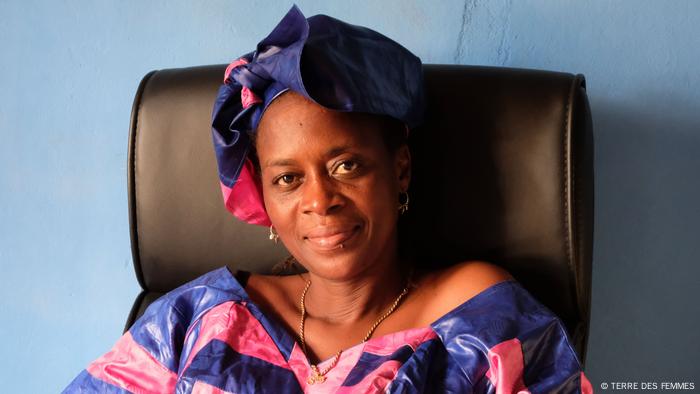
Ezega.com reported on 6 November 2019 the deatch of the highly-awarded woman human rights defender Bogaletch Gebre, founder of KMG Ethiopia (Kembatti Menotti Gezzima-Tope).
Bogaletch Gebre was a victim of female genital mutilation at the age of 12 and was forbidden from joining formal education, which forced her to sneak out of her home to attend a missionary school that paved the way for her to be what she became. Following her elementary years at the Missionary school, Bogalech Gebre attended various local schools as well as some prestigious Higher Education Institutions abroad.
In an interview with ETV, she said the trauma of FGM took her years to recuperate and she suffered complications from it years later. It wasn’t during her youth years Bogaletch Gebre learned more about what had happened to her and her family because of FGM. At the time Bogalech was a graduate student in the United States. When Bogaletch Gebre found out that FGM was needless and harmful practice, she became incensed. She eventually left her PhD program in epidemiology at the University of California, Los Angeles, and in 1995 she returned to Kembata Tembaro, her hometown in Ethiopia.
In 1997 she and her younger sister started KMG, an indigenous Resident Charity Organization with the goal of helping to create an environment where the values and rights of women are recognized and where their talents and wisdom are nurtured. The organization was founded with the two sister’s belief that if women are empowered and their talents nurtured, the lives of both men and women would improve.
Bogalech Gebre along with her sister began implementing their plans in the region of Kembatta – Tembaro. The organization they founded is now diversified its scope and operates in additional 24 of Southern Nations Nationalities and People’s Regional State (SNNPRS) and Oromia district, reaching out to more than 481,289 direct and 2,859,500 indirect beneficiaries, 70% of whom are women.
The realization of their effort has protected many girls from going through lasting complications. Bogalech Gebere believed and spoke about the need for a change and bringing together all communities, women, and men to make informed decisions.
In 2010, the Independent newspaper characterized her as “the woman who began the rebellion of Ethiopian women.” In particular, the Independent report praised her for KMG’s strong commitment to reduce the rate of bridal abductions in Kembatta and FGM. Bogalech Gebre was awarded the 2005 North-South Prize, in 2007 the Jonathan Mann Award for Global Health and Human Rights and in 2013 both the Bruno Kreisky Award and he King Baudouin International Development Prize.
Dr. Widad Akreyi at the award ceremony for the 2018 International Woman Harmony Award, Cortona, Italy, Nov. 23, 2018.
On 12 June 2019 Marta Bellingreri (an Italian writer, Arabist and cultural mediator. is the author of two books about Lampedusa and minor migrants in Tunisia, France and Italy) wrote a profile of Dr. Widad Akreyi, who lived through the 1980s Anfal genocide and the 2014 Yazidi genocide, and has become one of the major defenders of human rights in Iraq and beyond.
Asma Jahangir is rightly considered one of the foremost human rights defenders of our time [see: https://humanrightsdefenders.blog/2018/02/11/asma-jahangir-one-of-the-worlds-most-outstanding-human-rights-defenders-dies-at-age-66/]. So, the two-day ‘Asma Jahangir Conference 2019 – Roadmap for Human Rights’ which concluded in Lahore, Pakistan on 20 October 2019 is fully justified. The News carries a long report on the meeting in which some 120 jurists, politicians, human rights defenders and media people acted as panellists from Pakistan, England, America, Sri Lanka, Bangladesh, Ireland, Sweden and Afghanistan. Thousands of students, attended the sessions. They all resolved to carry forward the legacy of Asma Jahangir, who fought relentlessly against dictatorial forces and always sought due process of law, equality for women and protection of minorities in the country.
(Former) Politicians dominated the panels but other speakers at the sessions paid tribute to Asma Jahangir and appreciated her commitment to human rights with a resolve to uphold the rule of law and struggle for women’s rights. Munaza Hassan spoke of women’s right to inheritance. Daughter of Asma Jahangir and journalist Munizae Jahangir, who conducted the session, said: “It is a rare moment when all political parties are seen on the same platform.” She said that politicians conveniently forget to protect fundamental rights and right to expression when in they assume power. She said: “We are convinced that without freedom of the media, the rule of law and guarantees of security to human rights defenders, neither democracy nor justice, is possible. The main challenge to development of Pakistan and the rights of its citizens is a national security state. Until the national security is subservient, no other initiative in economy, health, education and rule of law can find success.
The day began with a short film on Asma Jahangir receiving the Right Livelihood Award, produced by True Heroes Films, where she spoke of growing expectations of citizens as far as what the governments should deliver. And governments falling ever further behind, internationally this gap of creative impulses of society on one side and governments dragging their feet on the other, has been the key engine of human rights challenges. Despite threats to her life, she spoke of never leaving Pakistan as it is a place where she has received most love and affection.
As a continuation of the discussion on ‘Art inspires politics’, Munizae Jahangir conducted a panel discussion on ‘How women can build bridges for peace in South Asia’. Former foreign minister Hina Rabbani Khar, Afghan politician Fawzia Koofi, human rights lawyer from Sri Lanka Bhavani Fonseka, Swedish Ambassador Ingrid Johansson and former Afghan ambassador to Pakistan Omar Zakhilwal opined that peace in South Asia was a prerequisite to securing women’s fundamental rights and the resources should be directed towards socio-economic areas rather than the military. Human Rights Ambassador of the Kingdom of the Netherlands, H. E. Dr Bahia Tahzib-Lie, Award-winning novelist Mohammad Hanif, Christian Caryl of the Washington Post, Wusat Ullah Khan, Ms Aisha Sarwari and Iqbal Khattak participated in the discussion on the role of social media.
Dr Bahia talked about the centrality of human rights in a thriving democratic society, and also the role of her government in supporting human rights initiatives all-over the world, including Pakistan. Aisha Sarwari talked about how women are systematically excluded from law-making process and, therefore, law-making concerning social media. She said it is essential for the social and economic development of all countries for women to be able to use the media as disruptive technology and end permission culture. Wusat Ullah Khan mentioned that the social media gives space to freedom, but also makes people extremely vulnerable. He said freedom of speech is part of a bouquet – you cannot talk about freedom of speech without talking about right to life and education and freedom of religion.
Iqbal Khattak, country representative of Reporters without Borders (RSF), spoke about the need for digital safety training and how one should protect oneself by disengaging with trolls. He particularly highlighted threats, accusations of blasphemy as threats that should be taken very seriously. He strongly encouraged use of PICA laws for individuals to seek online protection. He also highlighted Pakistan’s considerable investment in controlling social media spaces and vigilance on part of civil society. The Government of Pakistan should take social media as fundamental right.
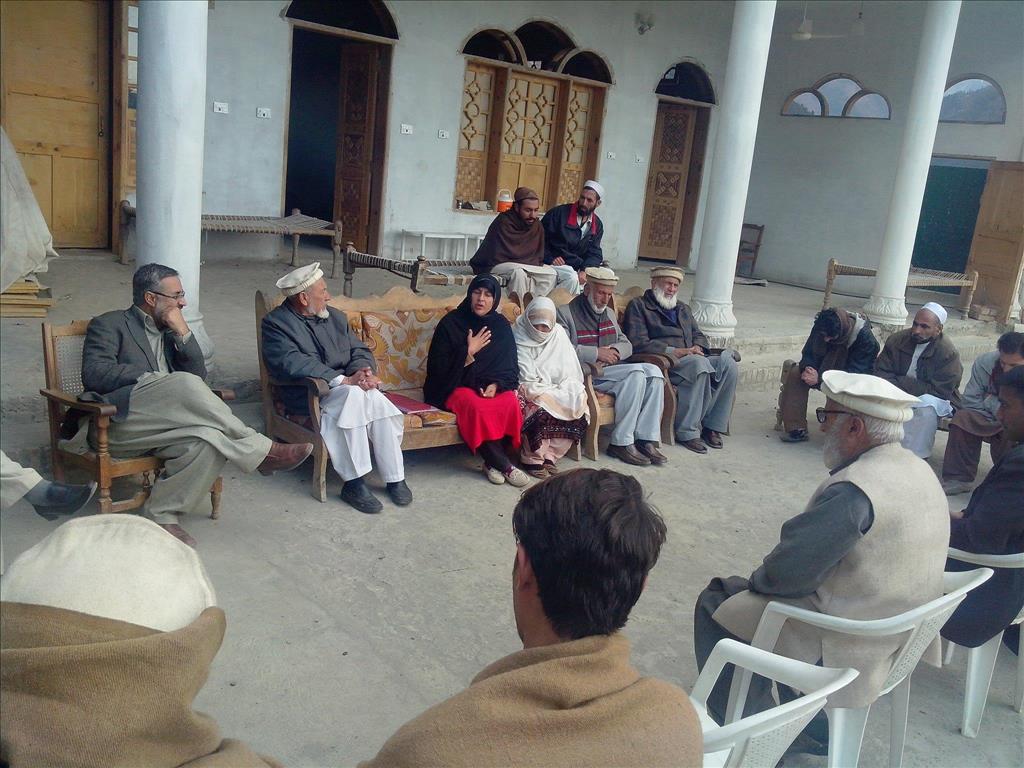
On fighting the culture of shame and silence, woman rights activist Uzma Noorani, British professor of human rights Ms Siobhan Mullally, provincial Ombudsperson Khyber-Pakhtunkhwa Rukshanda Naz, Pakistan People’s Party leader Nafisa Shah, former chairperson of the Punjab Commission on the Status of Women Fouzia Viqar said that there should be universality of rights, for all excluded communities including women and marginalised remote communities.
..
On ‘Silencing civil society’, Ms Fareeda Shahid moderated the session of Knut Ostby, United Nations Resident and Humanitarian Coordinator for Pakistan. Ms Zohra Yusuf, human rights activist and council member of HRCP, Mohammad Tehsin, convener of Pakistan Civil Society National Forum, law expert Asad Jamal said registered civil society organisations should be allowed to function, 2013 policy of banning CSOs should be challenged. Mass communication needed to change narratives.
Human rights lawyer Veronica Koman Photo: Whens Tebay
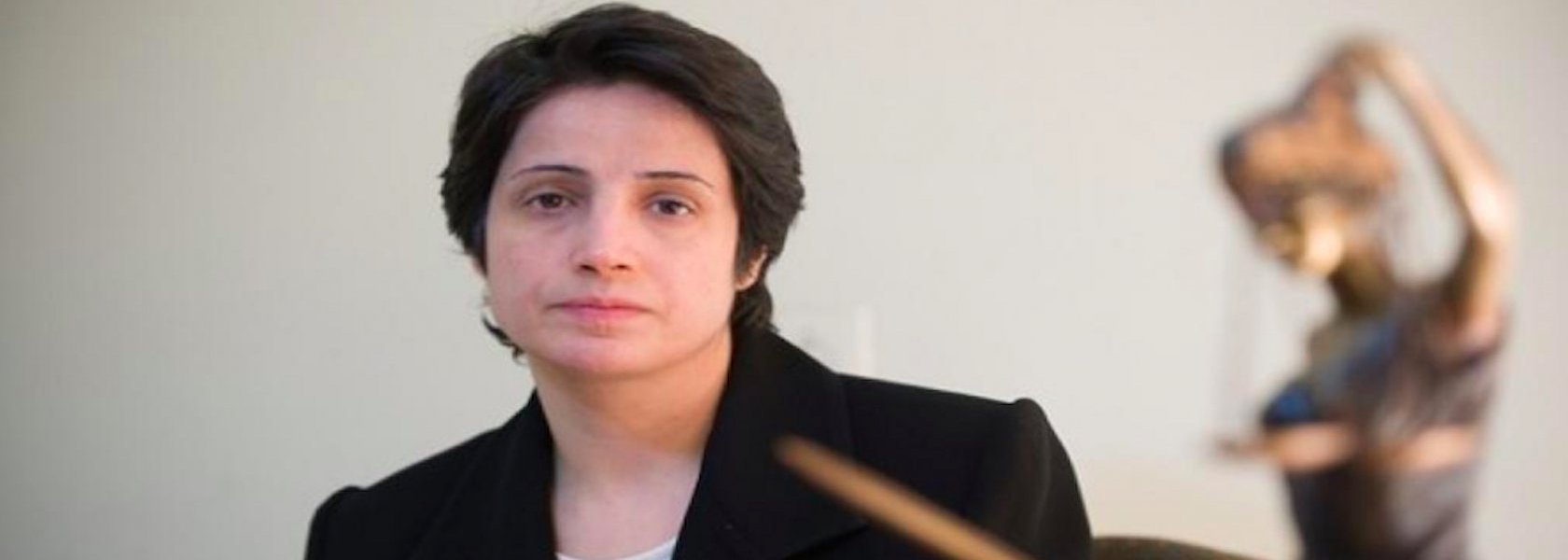
Five UN experts(Mr. Clement Nyaletsossi Voule, Special Rapporteur on the right to peaceful assembly and association; Mr. David Kaye, Special Rapporteur on the promotion and protection of the right to freedom of opinion and expression; Ms Dubravka Šimonović, Special Rapporteur on violence against women; Ms Meskerem Geset Techane, Chair of the Working Group on discrimination against women and girls; Mr. Michel Forst, Special Rapporteur on human rights defenders) have urged Indonesia to protect the rights of lawyer Veronica Koman who advocates for West Papuan rights. They also urged Indonesia to protect people’s rights to peaceful protest and those reporting on protests in West Papua, and to ensure access to the internet
Earlier this month a police warrant was issued for Ms Koman, who is believed to be in Australia, after police claimed she spread fake news online. Indonesian authorities have blamed disinformation and Papuan independence activists for a recent wave of protests in the region
The UN rights experts said Indonesian authorities should address acts of harassment, intimidation and threats against people reporting on the protests. Ms Koman was named as a “suspect” by authorities who accused her of provoking unrest after she published reports on the protests and on a racist attack against Papuan students in Java that triggered the demonstrations. “We welcome actions taken by the Government against the racist incident, but we urge it to take immediate steps to protect Veronica Koman from any forms of retaliation and intimidation and drop all charges against her so that she can continue to report independently on the human rights situation in the country,” the experts said.
They also expressed concerns over reports indicating that the authorities were considering revoking Ms Koman’s passport, blocking her bank accounts and requesting Interpol to issue a Red Notice to locate her. The experts stressed that restrictions on freedom of expression not only undermined discussion of government policies, but also jeopardised the safety of human rights defenders reporting on alleged violations.
Protests have been increasingly taking place in the provinces of Papua and West Papua since mid-August over alleged racism and discrimination and amid calls for independence. “These protests will not be stopped by an excessive use of force or by cracking down on freedom of expression and access to information,” the experts said… The experts welcomed the engagement of the authorities on these matters and said they looked forward to continued dialogue.
On 7 August 2019 DefendDefenders’ blog annouinced that Gladys Mmari, Tanzania, was chosen as Human Rights Defender of the Month July 2019:
Gladys Mmariis a driven Tanzanian human rights defender (HRD), and the founder of MAFGE (Male Advocacy For Gender Equality) – a non-governmental organisation (NGO) focused on women empowerment through educating both women and men. “So much of the work that I do is cultural conversation. We have grown up talking about these issues among women, but now, I have to work with men as well – making it more challenging,” Mmari stresses. She fosters the idea that male voices should be heard, and educated, in women’s rights, and that it is important to establish an equitable understanding between the genders, while breaking down gender stereotypes. “We need to stop romanticising the idea of women empowerment, and co-empower one another to achieve the goals of an equal world,” Mmari affirms.
After obtaining a law degree, she worked as a human rights researcher in Tanzania, with a focus on the African Court on Human and Peoples’ Rights and indigenous rights. Then, she worked for AfricAid, an NGO specialised in cultivating leadership in young women and girls. She recalls a young boy who, following one of her sessions, asked her why he could not participate in the dialogues. He also wanted to boost women and girls’ rights. “It was a turning point for me,” Mmari says. “The time has come to work together and empower each other to revisit the many socio-cultural constraints that have stopped us from equality.” Her organisation MAFGE was hereby born.
She pinpoints numerous challenges faced in her work. “It is challenging to mobilise men to join, to ensure impact to women empowerment.” Furthermore, “most organisations that deal with women empowerment want to fund women organisations. And they do not want to see men in women organisations.”
She also points out the political situation in Tanzania as a great hurdle. Political rallies in the state deviate and misconceive the importance of HRDs, putting them at risk. As she expresses a sincere concern for Tanzanian HRDs, she mentions that the government is currently registering all NGOs under a single entity. “Here there is potential importance of this initiative, as this could be used for something productive such as acting as a more centralised human rights platform allowing more structured approaches, information passage, and funding opportunities. It is a step forward, unless it is a political interest”.
Gladys will continue to fight for women’s rights. “Women are born into unequal societies, and their achievements are unacknowledged and their potential left untapped [..] I can imagine my children and grandchildren living in a world with equal rights, and that they’ll get the opportunities and securities that I missed as a woman. That’s what keeps me going.”
Through MAFGE, she is also running a crowdfunding campaign, to strengthen gender equality in Tanzania.
visiting Geneva to address the UN about issues faced by Dalit Women.
Abirami Jotheeswaran is a human rights defender and the National Program Coordinator of the National Campaign on Dalit Human Rights NCDHR. Most recently, she was part of a fact-finding team in Mirchpur to investigate a case of caste-based violence. Anagha Smrithi interviewed her for Feminism in India (FII) of 1 July 2019:
Anagha Smrithi: Can you describe your journey towards becoming the National Program Coordinator of the NCDHR?
Abirami Jotheeswaran: Residing in Chennai, I experienced many forms of caste-discrimination throughout my lifetime. A striking incident was during my graduation, when a classmate asked me what caste I belonged to in front of all my other classmates. The question was irrelevant, more so because she was aware of my social background as she knew my family. I felt insulted in front of my classmates and realised that caste certainly exists in urban cities like Chennai. After my Masters in Computer Science, I got married and settled in Delhi. A few years later, I got the opportunity to sit for an interview with the NCDHR. Even though I didn’t have a social work or human rights background, as someone who witnessed caste discrimination during my college days, I excelled in the group discussion and interview about caste-based discrimination. NCDHR changed me as a Dalit Human Rights Defender. When I joined as a Monitoring Associate in 2005, the work was new to me and I learnt everything through trial and error. I had to work hard to improve my Hindi to be able to coordinate with the State Coordinators of Northern states. I also equipped myself with legal knowledge of various legislatures surrounding the question of Dalit human rights. I used to work more than 10 hours a day, sometimes even carrying home documents to meet my deadlines. At the same time, I was also a mother. But I persisted at work so that I could be on par with my colleagues, most of whom were men. The 14 years I have been associated with the NCDHR has deepened my understanding of caste, violence, human rights and Dalit perspectives and ideologies. Today I am the National Program Coordinator and my primary responsibilities are to keep track of human rights violations, torture and ill-treatment of Dalits, and to provide legal assistance to the victims and survivors of caste atrocities across 12 States in India.
As a National Program Coordinator, I have participated in conferences and consultations at the State, National and International level to highlight Dalit human right violations in India, and to hold the state accountable. ..My 14 years with NCDHR has taught me the importance of struggling for justice in the courtroom. Because of this, I decided to pursue my higher studies in law. Most importantly, my association with NCDHR built my Dalit ideology and my strength as a leader to deepen the struggle against the caste system.
Anagha Smrithi: You were part of a fact-finding team about caste atrocities in Haryana. How did you obtain facts when the information was hidden/ fudged by the police and administration?
Abirami Jotheeswaran: On 24 April 2010, the National Dalit Movement for Justice (NDMJ) of National Campaign on Dalit Human Rights (NCDHR) and Anhad facilitated a national fact-finding visit to Mirchpur in Haryana’s Hisar district, where a dominant-caste mob had attacked Dalits in the village. The team consisted of a diverse group of people of journalists, activists, publishers and human rights defenders, including myself. The NDMJ Haryana state team visited the site of violence the day after the incident took place. They identified active victims, witnesses and built trust and a relationship with them. During our fact-finding process, we held detailed interviews with the victims—this was crucial in obtaining information that the police otherwise would not reveal. Through the interviews we gained information about the social background of the victims, the occurrence of previous atrocities in the same village and the events leading up to the incident. We discovered how the mob had planned to commit the offence, which differed from the police claim that it was a spontaneous conflict. We surveyed the loss of property and investigated the collusion of the police, administration and the Khap panchayat in committing the crime and obstructing justice.
Anagha Smrithi:Was any action taken after the fact-finding report?
Abirami Jotheeswaran: Soon after the fact-finding report, the NDMJ conducted a press conference to give visibility to the caste and build pressure on the government. We demanded appropriate sections of the SC & ST act be invoked for the immediate arrest of all those involved in the violence, along with resettling the affected Dalits in a secure place. We strove to register cases against the police and administration for the negligence of official duty, and demanded employment to all the members of the affected families, as well as a proper estimation of the damage inflicted upon the families. At the state level, we participated in protests, approached the Human Rights Law Network for legal interventions and took up advocacy with the Minister of Social Justice and other state authorities to ensure immediate arrest, complete investigation, the submission of a charge sheet, relief and rehabilitation for the affected and protection for the involved witnesses. As of today, we are still consistently engaging with the legal system and following up with the victims to achieve justice.
…… Anagha Smrithi:Even in cases of cruel atrocities & oppression, there is often still resistance and assertion from the community. What sort of resistance did you observe during your fact-finding process?
Abirami Jotheeswaran: Before the incident, violence had taken place against Dalits, but no proper action was taken by the police administration. But when this carnage happened, the Dalit community lost 2 lives and immeasurable damage to the property and possessions. Despite the losses, they unanimously decided to fight for justice and not tolerate any more violence by the dominant caste. They left their houses in Mirchpur and moved towards Mini Secretariat, demanding for justice. Their journey took them to Delhi, and finally to a farmhouse in Tanwar, protesting for justice, security, rehabilitation and jobs all the way. The State Government, faced with renewed pressure finally took action against the accused and the negligent administration. Though the victims continue to live away from their homes, in difficult conditions, the spirit of resistance is still alive.
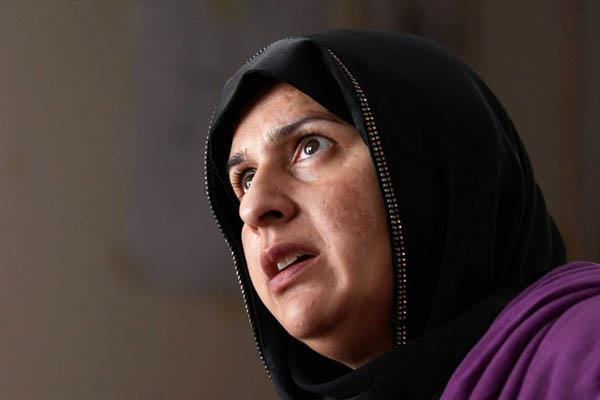
On 21 May, at the final hearing of the Özgür Gündem “Editors-in-Chief on Watch” campaign trial, woman human rights defender and co-chair of the Human Rights Association-Insan Hakları Dernerği (IHD), Eren Keskin, was sentenced to 3 years and 9 months prison term for “propaganda for a terrorist organisation” and “openly inciting to commit crime”.
As deeply concerning as this sentencing is, it is far from an isolated case: across Turkey, civil society activists struggling to ensure basic human rights and fundamental freedoms are targeted by the judiciary, acting as an extension of the legislative power, for legitimately and peacefully exercising their constitutional rights. EuroMed Rights strongly condemns the judicial harassment against Ms Keskin and her fellow activists.
EuroMed Rights calls on the Turkish authorities to respect their obligations under international human rights treaties, the European Convention on Human Rights and the Turkish constitution, end the crackdown on critics and halt the persecution of human rights defenders. and release all those detained for peacefully expressing their opinions.
Note The Editors-in-Chief on Watch campaign of Özgür Gündem daily began on May 3, 2016 and ended on August 7, 2016. Daily was closed through the Statutory Decree No. 675 issued under the State of Emergency. At the end of March, Ms. Keskin has been sentenced to 7 years and a half on charges of “insulting the President and State institutions” over three reports published in the newspaper in 2015. On 3 July, she will again stand trial in front of 23th High Criminal Court in Istanbul for the “ Özgür Gündem main trial”.
REBECCA ELLIS published a profile of Marini de Livera under the title “She’s A Lawyer … A Thespian … And Now A State Department ‘Woman Of Courage‘”
Marini de Livera’s plays are not for the faint of heart. In her home country of Sri Lanka, the pro bono lawyer has found that crimes against women and children often take place behind closed doors — in homes, orphanages and schools. With her traveling theater group, de Livera seeks to shed light on the human rights abuses in her country by putting the violence on stage, front and center. “There are beautiful laws in the law books,” she says. “But when I went out to the slums, to the rural areas, to conflict-ridden areas, I found what is in the law books is not a practical reality.”
De Livera has served as the chairperson of Sri Lanka’s child welfare agency, the National Child Protection Authority, and now runs Sisters at Law, an advocacy group for impoverished women and children. She spoke with NPR about her creative approach to addressing human rights in her country, and why she’s focusing on using her theater training to better the situation of children in Sri Lanka’s orphanages.
What are some of the legal issues that women and children in Sri Lanka need help with?
Women and children are denied justice if they’re uneducated, and if they live in rural areas. They don’t enjoy the same basket of human rights that privileged people have because they don’t have access to lawyers.
What needs to happen to accomplish that?
There has to be legal literacy. These women and children have to know what the laws in the country are and what their human rights are. If they are educated about their rights, they can go to court and demand them.
You’ve often used theater to promote this legal literacy in Sri Lanka. Can you give me an example of how this works?
One of my favorite plays I put on was about corporal punishment. I went to a Catholic school where a priest was hitting boys every day. I explained to the school that there are different forms of violence – cultural violence, psychological violence, physical violence. Then I asked the boys to make a play about their experiences with violence. And one of the boys reenacted what the priest had done to him. [It helped] these boys find an outlet to say, “We don’t want to kneel down when we come late to school. We don’t want to be beaten by a cane.”
How did you come to see theater as a way to educate the public on their legal rights?
I had been a lecturer in law [in Sri Lanka], and one of the things I had to teach was U.K. law principles. And the students were bored to death. So I said, these are the books, you read, then you tell me what the rule of law and separation of powers are through a performance. I realized if I could use this in the classroom, why not in the village to simplify the law?
What is your theater group working on now?
I’m working on a street theater [program] to create awareness for parents [and encourage them] not to send their children to orphanages. I’m going to show that family is the place for the child. In Sri Lanka, we have a lot of “social orphans” where they have both parents, but the children are suffering in orphanages.
Past reports have found that over 80 percent of the 20,000 children in Sri Lanka’s child-care institutions, including orphanages, have at least one parent. These parents are often unable to provide for their children or the child has a disability and requires extra care. And sometimes the children are sent to such an institution because of a criminal offense.
Orphanages should be the last resort. So I’m promoting alternative care. Some of the mothers are capable of looking after their children, but they’ve handed over their child to an overcrowded orphanage. I’m thinking of giving parenting skills training to these mothers and economically empowering them, finding them a nice home and settling the children with them.
You mentioned earlier that this prize is the first time in your life you felt appreciated for “walking in the opposite direction” from others in the law profession. Do you have hopes other attorneys will follow in your path?
I’m very unhappy to say each time I go to court people come up to me like a swarm of flies and say, “We don’t have a lawyer to appear on behalf of us.” I want to take all the country’s young attorneys and train them to be another Marini – to clone myself. Because I have to hand this on to the younger generation.