in the UN family: ReliefWeb published an overview of how the UN family has been making sure that this year’s Human Rights Day succeeds in raising awareness of the principles enshrined in the document, which are as important and relevant today, as they were in 1948. It refers to SG António Guterres and UN High Commissioner Michelle Bachelet in Marrakesh for global migration pact on Monday…..
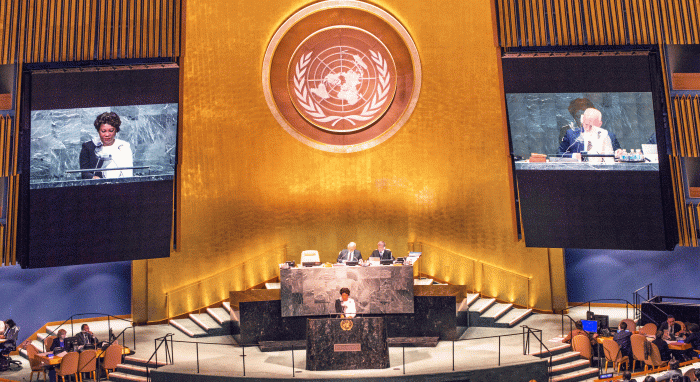
Threats to human rights were also being highlighted at UN headquarters in New York on Monday, where charities, non-governmental organizations and members of civil society were joined by Andrew Gilmour, UN Assistant Secretary-General for Human Rights, for a discussion about the ways that modern challenges, unforeseen 70 years ago, are impacting rights. The talk covered digital technologies, which have led to many benefits, but also brought about new risks which could replicate, and even exacerbate existing threats to human rights; and climate change, which risks making much of the planet uninhabitable.
Defending human rights in conflict zones:
..In Afghanistan, the UN Assistance Mission (UNAMA) renewed its call for human rights and fundamental freedoms to be respected in the country, welcoming breakthroughs such as the work of the Afghanistan Independent Human Rights Commission, new laws empowering the media, a new Penal Code reflecting the country’s commitment to promote fundamental freedoms, and the presence of women in civil service positions and in the private sector. Meanwhile, in South Sudan, commuters in the capital, Juba, got the chance to see their military in a different light on Monday: as athletes. Hundreds of military personnel – as well as police and prison officers, fire-fighters and members of the wildlife services – took part in a 10-kilometre race around the streets of the capital, organized by the United Nations Mission in South Sudan (UNMISS), to promote awareness of human rights and the need for peace in the conflict-affected country. Speaking on Monday, David Shearer, Special Representative of the Secretary-General and Head of UNMISS, said that “the only way that South Sudan is going to recover is by having peace and respect for human rights. If respect for human rights is there, then there is peace. If there is peace, it involves respect for human rights and people’s ethnicity and political persuasion. The two things go hand in hand.”
2. The Phnom Penh Post of 10 December (Niem Chheng) reports that the Cambodian authorities used the occasion to a ban march for Human Rights Day
Phnom Penh authorities have banned a planned march as local NGOs and workers’ unions gear up to celebrate the 70th anniversary of the signing of the Universal Declaration of Human Rights on Monday, with a youth group leader saying they would march nonetheless….In a letter issued on Saturday, Mean Chanyada, Phnom Penh’s deputy governor, said the NGOs concerned had been told that they could celebrate the anniversary at Freedom Park but marching was prohibited. “If [you] gather at a location outside the permitted area and continue to march on the street, which would affect security, safety and public order, the representatives will face the law,” Chanyada said. Sar Mory, the deputy chief of the Cambodian Youth Network (CYN) said on Sunday that he was concerned that important messages would not reach the public if they were to celebrate the anniversary without marching. “The reason we want to march is that we want to get our messages heard, ……
3. The winners of the “Kids for Human Rights” international drawing competition were announced on 10 December 2018. Nine young, creative artists from Australia, Bangladesh, Bolivia, Canada, Iran, Portugal, Thailand and the United States have won the top prizes in the “Kids for Human Rights” international drawing competition, launched earlier this year by the United Nations and the Gabarron Foundation. The call generated more than 17,000 entries. The full list winners is available here. The international jury was presided by internationally known Spanish artist Cristóbal Gabarrón and included Hani Abbas, a Syrian-Palestinian cartoonist who won the 2014 Editorial Cartoon International Prize awarded by Cartooning for Peace, Kate Gilmore, United Nations Deputy High Commissioner for Human Rights, Susanna Griso, Spanish journalist and television presenter, Jenna Ortega, a young American actress, Tomas Paredes, President of the Spanish chapter of the International Association of Art Critics, and Jayathma Wickramanayake, the United Nations Secretary-General’s Special Envoy on Youth.
4. The International Policy Digest used the occasion to draw attention to another international document that celebrates its 70th anniversary: the Genocide Convention which was signed into life a day before the UDHR, 9 December.,, It was the Polish-Jewish lawyer, Raphael Lemkin, who advocated for an international law for the crime of genocide. Before 1944, there was no law. However, in the wake of the Holocaust, the United Nations General Assembly adopted Resolution 260 (III) A on December 9, 1948 outlawing genocide. On January 12, 1951, the Convention came into force. …The UN’s High Commissioner for Human Rights, Michelle Bachelet, has argued that genocide continues to remain a “threat and reality.” She urged nations to act based on the “warning signs” often preceding genocide. She added that the crime of genocide is as real today as it was at the time of its signing. There are still 45 UN Member States who yet to ratify or agree to the Convention...
5. In Zimbabwe, a prominent human rights defender reminded Zimbabwean President Emmerson Mnangagwa that he had termed the abduction of journalist activist Itai Dzamara “barbaric” and called on him to follow his words with actions to prevent and punish rights abuses. [Dzamara has been missing since March 2015]. Zimbabwe Peace Project director Jestina Mukoko said: “With all due respect, I call upon the President to return to the words and show that it is barbaric. Such things are not expected from civilised people, inflicting pain on another person and the constitution clearly states that.”….Lawyer Jeremiah Bhamu, who has represented many abduction victims, called on the Zimbabwean government to ratify the convention on torture…The Zimbabwe Human Rights Association said while the adoption of the new constitution with a modern Declaration of Rights, enshrined in chapter four, in 2013 has been an important milestone, a lot needed to be done to align laws, respect its provisions and establish a culture of constitutionalism. [see also: https://humanrightsdefenders.blog/2018/10/08/jestina-mukokos-150-000-triumph-in-zimbabwe-gives-hope-to-all-torture-victims/]
6. “As human rights declaration turns 70, development banks have a way to go to respect and protect rights defenders” writes Olexi Pasyuk in Bankwatch. To coincide with this milestone, Bankwatch together with more than 200 organisations globally has called on international financiers to ensure that these institutions support the realisation of human rights, avoid causing or contributing to rights abuses, promote an enabling environment for public participation, and safeguard rights defenders.
7.
Today, on the occasion of the Human Rights Day – 20 years on from the first UN Declaration on Human Rights Defenders and on the 70th anniversary of the UN Universal Declaration on Human Rights – The Human Rights Defenders World Summit 2018published the final document of the action plan for the protection and the promotion of the work of human rights defenders. This action plan proposes a concrete set of measures and calls for a lasting commitment from States and other key actors to act to protect human rights defenders and to take concrete actions to offer better protection and create a more enabling environment for their work. We trust that this document will become a key reference for advocacy work at national, regional and international levels for the years to come. The action plan is available to download in five languages on the Summit’s website https://hrdworldsummit.org/action-plan/ It will be presented at the United Nations in New York on December 18th during the high level panel of experts on the situation of HRDs at the initiative of Norway. More information soon on the summit facebook page and website. See also Summit’s Facebook page, and on the website. [see also: https://humanrightsdefenders.blog/2018/07/24/announcement-of-the-human-rights-defenders-world-summit-in-paris-october-2018/]
8. Democracy without Borders writes on the occasion that Human rights defenders continue to face onerous challenges. In response to these challenges, Democracy Without Borders joined more than 900 other civil society organizations from across the world in supporting a global statement that urges governments “to create an enabling environment for HRDs to operate in line with regional and international human rights obligations and standards.”
Supporters of the Yellow Umbrella human rights and democracy movement in Hong Kong face state persecution. Source: Studio Incendo/Flickr
…..Unfortunately, as is evident from the monitoring of the situation of HRDs, those at the forefront of defending, promoting and protecting human rights are prime targets of attacks perpetrated by state and non-state actors. HRDs are often victims of physical assaults, and arbitrary and unlawful detention is the number one tactic of repression used by states. It is the increasingly threatening situation for HRDs that motivates the current global statement. [CIVICUS: World Alliance for Citizen Participation,. [see: https://humanrightsdefenders.blog/2018/12/07/global-statement-on-the-20th-anniversary-of-the-un-declaration-on-human-rights-defenders/]
9. In the Philippines, in line with the country’s celebration of Human Rights Day, the Commission on Human Rights (CHR) opened on Monday a freedom park to honor those who fought against human rights violation. Dubbed as the Liwasang Diokno, the CHR commemorated the heroic act of late Senator Jose ‘Ka Pepe’ Diokno, whom the agency tagged as a “symbol of freedom, democracy, and human rights.” Diokno was one of those individuals who fought to attain democracy in the country during the Martial Law era under the Marcos administration. a statue of Diokno was also installed inside the park with the approval of the National Historical Commission of the Philippines.With the opening of the Liwasang Diokno at the central office of CHR in Quezon City, the human rights group urged the public to continue to be more active in defending the human rights. The freedom park has a 30-tier fountain in its center, symbolizing the 30 articles of the Universal Declaration of Human Rights (UDHR).
10. A lights projection showing the faces of imprisoned, threatened and at-risk human rights defenders (HRDs) from around the world will shine at Dublin City Hall to mark the anniversary of the Universal Declaration of Human Rights. The faces will be projected on December 10th and 11th during a public reception, hosted by the Lord Mayor of Dublin Nial Ring with Front Line Defenders, Dublin City Council and the Department of Foreign Affairs.
Having reported on 4 December about Burundi in the 3rd Committee of the General Assembly (“Burundi made several attempts to stop the Commission of Inquiry on Burundi from presenting its report to the Third Committee. When these were foiled, in a repeat of what happened last year, the Burundian Ambassador took the floor to abuse Commission members. ….” and in the light of its history with UN investigations – see inter alia: https://humanrightsdefenders.blog/2018/10/26/burundi-outrageously-attacks-united-nations-team/), it hardly comes as a surprise that Burundi’s government has asked the UN to leave completely. (Associated Press reporting on 6 December 2018).
Spokeswoman Ravina Shamdasani in Geneva confirmed they received a letter on Wednesday “requesting us to close the office. We of course regret this decision and we would like to continue our cooperation with Burundi.” Anonymous sources within the U.N. office in Burundi told Associated Press they were given two months to leave.
The East African nation’s government has long been angered by U.N. reports describing alleged abuses amid the political turmoil since President Pierre Nkurunziza decided to run for another term in 2015. More than 1,200 people have been killed since then, the U.N. says, and ICC judges authorized an investigation into allegations of state-sponsored crimes including murder, rape and torture — a decision unaffected by Burundi’s withdrawal from the court. Outgoing U.N. High Commissioner Zeid Ra’ad al-Hussein early 2018 said Burundi was among “some of the most prolific slaughterhouses of humans in recent times.”
Burundi suspended its cooperation with the U.N. rights office in October 2016, accusing it of “complicity with coup plotters and Burundi’s enemies” after a report alleged the “involvement of the regime in systematic abuses and a risk of genocide.” In December 2017, the government shut four regional offices of the U.N. rights office in the country. And a team of experts mandated by the U.N. Human Rights Council to look into possible abuses was expelled in May despite Burundi’s agreement to cooperate.
Burundi’s foreign minister, Ezechiel Nibigira, on Thursday called a press conference on the issue but then postponed it, telling reporters that “We will communicate you when we are well prepared.” Rachel Nicholson, the Burundi researcher for Amnesty International, called the news “deeply disappointing” and called on the government to reverse its decision. Having refused to cooperate with a U.N. commission of inquiry or sign a memorandum of understanding with African Union monitors, the government is again trying to block independent monitoring, Nicholson said. “But the truth will still get out.”
On the 30 November, the Kato Mikeladze Awards were held in Georgia to celebrate women’s rights activists in Georgia.
It is not just in Kenya that national human rights award play a role [https://humanrightsdefenders.blog/2018/12/03/human-rights-defenders-in-kenya-honored-with-national-awards/]. In Georgia the Kato Mikeladze Awards recognize women human rights defenders. The Kato Mikeladze award celebrates a young generation of human rights defenders who work to advance gender equality. Nominees included 14 young civic leaders, journalists, researchers and entrepreneurs who advocate for sexual and reproductive rights, gender equality in education, the elimination of gender-based violence and the rights of migrants and minority groups.
Ida Bakhturidze, civic activist and one of the founders of the platform Women from Georgia, received the award in recognition of her achievements in supporting women’s rights and gender equality.
“We salute our award winners and nominees for their courage in standing up for equal rights,” stated Louisa Vinton, head of the UN system in Georgia. Stressing the importance for young champions for women’s rights, Nana Pantsulaia, Executive Director of the Women’s Fund in Georgia stated “Georgian women are becoming more vocal across all spheres of life. They make their voice heard in politics, economic activities, education and human rights protection.” Nonetheless, there is still a large deficit of female representation in parliament and many areas of public life in Georgia.
The Universal Declaration of Human Rights – celebrating its 70th anniversary – has 30 articles. True Heroes Films (THF) made for the UN 30 short video stories to show the impact of the Declaration around the world. Go to: @TrueHeroesFilms or YouTube. The series runs until 10 December, Human Rights Day. Everyday a new one!
With the last session of the the Human Rights Council having been considered fruitful by civil society [https://humanrightsdefenders.blog/2018/09/29/in-spite-of-or-because-of-the-us-absence-the-39th-human-rights-council-considered-a-relative-success/], the focus is now on New York. This week, the UN General Assembly’s principal human rights committee – the Third Committee – kicked off its deliberations (Tuesday 2 October, running through to 21 November 2018). This is a key moment in the year for UN member States to take action in support of the respect of human rights globally, through the negotiation and adoption of resolutions focused on thematic or country situations. The ISHR provides the following insight:
Over 50 Special Rapporteurs, independent experts, chairs of working groups and treaty bodies will present findings and recommendations to the Committee, and engage in interactive dialogues with member States. These reports and exchanges should inform the focus and shape of negotiated resolutions.
The Committee will consider over 60 resolutions, this year focusing on a range of issues from extrajudicial, summary or arbitrary executions, to the rights of indigenous peoples, and the human rights situation in Syria. Once adopted, resolutions will pass to the UN General Assembly plenary for confirmation in early December.
While opportunities for civil society to interact with the Third Committee are more limited than those available at the Human Rights Council, NGOs can attend formal sessions, follow them on UN Web TV and engage informally with individual member States. For more on the Third Committee see here.
ISHR will be working to see the inclusion of positive references to human rights defenders and civil society space, in Third Committee resolutions. We will be monitoring the Third Committee closely, as well as the General Assembly plenary meetings, and reporting on key developments. Follow us on Facebook, Twitter and Instagram at @ISHRglobal and at #UNGA73for the latest updates.
Also, note that the ISHR will be hosting two side events during the Third Committee session. [see also: https://humanrightsdefenders.blog/2017/07/09/civil-society-participation-at-the-un-subject-of-ishr-event-on-17-july/]
As local, national, regional, and international civil society organizations from every corner of the world, we offer warm congratulations on your appointment as United Nations (UN) High Commissioner for Human Rights. We are committed to a world in which every person enjoys human rights and dignity and in which our communities are fair, just and sustainable. We consider that a strong High Commissioner, working in strategic partnership with independent civil society, can contribute significantly to the realization of this vision.
You take up office at a time when human rights are under attack and when we risk the reversal of many of the achievements of the modern human rights movement. We look to you in these troubled times to be an unwavering voice in the defence of human rights, and of victims, rights-holders and human rights defenders around the world.
On every continent, the rights of individuals, communities and peoples are being violated and abused by governments and non-state actors, often with complete impunity. Civil society, peaceful dissidents, and the media are often brutally silenced. The role of your Office in ensuring robust monitoring of, and reporting on, such situations is essential for curbing violations and deterring further abuse, as well as for ensuring justice and accountability. Technical-assistance and capacity building by the OHCHR is also critical and, to be effective, should be approached holistically alongside a rigorous assessment of the rights challenges in the country, including through key indicators to measure progress and assess the degree of engagement and cooperation by the State.
As High Commissioner, you have a unique role to play in bringing country situations of concern to the attention of the UN Human Rights Council and other UN bodies, particularly situations that may not be on their agenda or which receive limited attention, often because of political pressure. This role should extend to providing briefings to the Security Council on situations either on its agenda or that, if left unattended, could represent a threat to international peace and security. Monitoring missions and inter-sessional briefings to the HRC can be initiated at the High Commissioner’s prerogative, on the basis of your Office’s universal mandate, bringing attention to neglected country situations and contributing towards the achievement of the Council’s mandate to prevent human rights violations.
We are aware that the position of High Commissioner comes with its own challenges. Many States will insist you avoid “naming and shaming” and push you to engage in “quiet diplomacy” and to respect national sovereignty. Often, those most intolerant of criticism and most forceful in suppressing dissent will speak the loudest in seeking to mute your voice. Survivors, victims and defenders on the front line in countries where their rights are being violated will rely on you as a human rights champion, to have the courage and conviction to call out violators clearly and publicly, even when it’s challenging or unpopular with governments.
Globally, the rights essential to civic space are being systematically undermined. Civil society and human rights defenders face severe daily risks in their struggle to defend human rights on the ground, including imprisonment, asset-freezes, defamatory campaigns, torture, enforced disappearance, and even death. Risks are also present in the UN context, where individuals frequently face intimidation, harassment or reprisals for their engagement with the UN. We urge you to be a staunch defender of the rights of defenders both on the ground and at the UN, to publicly call out violators, and to undertake or push for investigations into attacks and reprisals. We also encourage you to take full advantage of the distinct, often innovative complementary role of civil society to the work of the OHCHR, and ensure the Office works closely with civil society as a strategic partner at the national, regional, and international levels.
Currently, the human rights framework itself is under unparalleled attack. Authoritarian populists are attacking the universality of human rights, disproportionately and unlawfully restricting rights in the purported interests of “national security,” often tacitly or openly encouraging attacks by their followers or vigilantes on rights defenders as well as the vulnerable and poor, while selectively interpreting human rights and seeking to co-opt or subvert human rights mechanisms to suit their political agendas. Safeguarding and strengthening universal human rights norms and mechanisms should be a core responsibility of the High Commissioner.
The current climate highlights the need for a strong public advocacy role for your mandate in the defence of international human rights law and the international human rights system, as well as a strong role internally within the UN to mainstream respect for human rights throughout the work of UN organs and agencies, and within the Sustainable Development Agenda.
Once again, we congratulate you on your new role, and stand ready to support you and your Office in the fulfilment of your vital mandate.
United Nations Secretary-General António Guterres, following approval by the General Assembly, has appointed Michelle Bachelet of Chile the next United Nations High Commissioner for Human Rights. [Ms. Bachelet ended her second four-year term as President of Chile in March 2018, having already held the position between 2006 and 2010. The first woman elected to Chile’s highest office, after her first term, she joined the United Nations as the first Executive Director of the newly established United Nations Entity for Gender Equality and the Empowerment of Women (UN-Women). A long-time human rights champion and ground-breaking leader, Ms. Bachelet is a paediatrician who began her Government career as an adviser in the Ministry of Health, rising quickly to become the first woman to lead Chile’s Health Ministry in 2000 and its Defence Ministry in 2002. Ms. Bachelet became involved in Chilean human rights activism in the early 1970s. She and her parents were political prisoners, and her father, a general in the air force, died in prison. After their release, Ms. Bachelet and her mother spent several years in exile. She returned to Chile in 1979.] Her human rights background as well as her political cloud and experience give reason to hope that the Office of the High Commissioner will continue to be at the forefront in spite of the countervailing currents at the moment.
Recognition of the fearless outgoing High Commissioner has continued to pour in:
The 2018 Human Rights Tulip has been awarded to the United Nations High Commissioner for Human Rights Zeid Ra’ad Al Hussein. Dutch Foreign minister Stef Blok will present him with the prize on 3 September in The Hague. For more information on the Human Rights Tulip see: http://trueheroesfilms.org/thedigest/awards/tulip-award. ‘The Netherlands greatly values the way in which he has fulfilled his mandate as High Commissioner,’ Mr Blok said. ‘He addressed human rights violations wherever they occurred. This critical and independent attitude is what is needed in a world where human rights are in jeopardy in many places.’
On Monday 20 August the U.N. High Commissioner for Human Rights Zeid Ra’ad al-Hussein said in a wide-ranging interview days before his four-year term ends that U.S. President Donald Trump bears “a heavy responsibility” for how the media is portrayed and that his remarks could have a knock-on effect that could hurt journalists in other countries.” [U.S. newspapers across the country ran editorials last Thursday defending freedom of the press in response to President Donald Trump calling some media organizations enemies of the American people.] “The President should be aware that a heavy responsibility lies on his shoulders when it comes to the way in which the media is being portrayed,” Zeid said.
In his last major interview with UN News on 15 August, the UN human rights chief says that the “real pressure on this job comes from the victims and those who suffer and expect a great deal from us.” “Governments are more than capable of defending themselves. It’s not my job to defend them. I have to defend civil society, vulnerable groups, the marginalized, the oppressed. Those are the people that we, in our office, need to represent,” he adds, noting that “oppression is making a comeback”.
When asked about whether his view of the UN and what it can achieve has diminished during his time spent speaking out loudly in defence of the abused and defenceless over the past four years, he says: “It’s very difficult to tolerate abuse of the UN when I keep thinking of the heroic things that people do in the field, whether the humanitarian actors or humanitarian personnel, my human rights people, the people who are monitoring or observing. And I take my hat off to them. I mean, they are the UN that I will cherish and remember.”
For some of the posts about him see https://humanrightsdefenders.blog/tag/zeid-raad-al-hussein/ and especially:
Former United Nations Secretary-General Kofi Annandied on Saturday 18 August 2018 at the age of 80. “Kofi Annan was a global statesman and a deeply committed internationalist who fought throughout his life for a fairer and more peaceful world. During his distinguished career and leadership of the United Nations, he was an ardent champion of peace, sustainable development, human rights and the rule of law,” the Kofi Annan Foundation and Annan family said in a statement. His wife Nane and their children Ama, Kojo and Nina were by his side during his last days.
Born on April 8, 1938, in Ghana, Annan took his first job with the U.N. in 1962,and became its seventh secretary-general serving between 1997 and 2006.
It has been pointed out by many media that he was awarded the Nobel Peace Prize (jointly with the United Nations) in 2001 but few mention the other 9 human rights awards that he received before, such as
The current U.N. secretary-general, António Guterres, called Annan “a guiding force for good. … In many ways, Kofi Annan was the United Nations. He rose through the ranks to lead the organization into the new millennium with matchless dignity and determination,” he said in a statement.
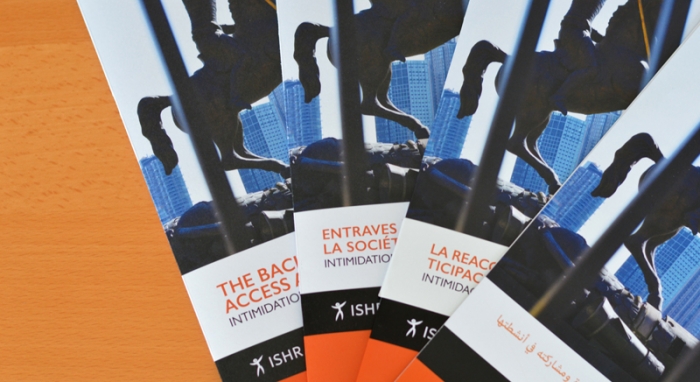
In a new report entitled “The Backlash Against Civil Society Access and Participation at the United Nations” the ISHR outlines the many different ways States employ to keep critical voices out of multilateral spaces. ISHR’s new report provides a road map for States and UN representatives to prevent and counter restrictions on civil society participation in UN processes.
Civil society has the right to ‘unhindered access to and communication with international bodies. However, that right is not being respected. ISHR’s new report documents a broad range of obstacles faced by human rights defenders, from opaque bureaucracies and procedures to reprisals, physical threats and attacks. ‘States decide who gets through the door,’ said ISHR’s Eleanor Openshaw. ‘States that fear calls for accountability and justice do what they can to prevent civil society access to and participation in UN spaces’.
Click on the video below to get an insight into the report:
Opaque practices and procedures provide covers for States seeking to block NGO entry. An NGO seeking to participate in a UN high-level event can be a victim of the ‘no-objection’ procedure. This is the means by which any State can veto their participation without being named or providing any justification. ‘The no-objection procedure is poorly defined, and provides no formal criteria for objections to NGO participation,’ said ISHR’s John Indergaard. ‘It’s carte blanche to exclude legitimate NGOs for illegitimate reasons.’
Even when civil society representatives make it into an actual UN building, they have been thrown out without explanation or asked to leave while events were ongoing. At some high-level events and committee meetings, NGO representatives have been barred from giving statements or bringing in documents related to their work. Physical attacks and intimidation against those seeking to cooperate with the UN are well documented. ‘These restrictions and reprisals are all aimed at dissuading civil society participation,’ said Openshaw. ‘They need to be challenged in each and every case.’
There are many different approaches States employ to keep critical voices out of multilateral spaces. ISHR’s new report of 30 May 2018 [The Backlash Against Civil Society Access and Participation at the United Nations] outlines what these are and provides a road map for States and UN representatives to prevent and counter reprisals and restrictions on civil society participation in UN processes.
Civil society has the right to ‘unhindered access to and communication with international bodies’. However, that right is not being respected. ISHR’s new report, ‘The Backlash Against Civil Society Access and Participation at the United Nations‘ documents a broad range of obstacles faced by human rights defenders, from opaque bureaucracies and procedures to physical threats and attacks.
‘States decide who gets through the door,’ said ISHR’s Eleanor Openshaw. ‘States that fear calls for accountability and justice do what they can to prevent civil society access to and participation in UN spaces’. Opaque practices and procedures provide covers for States seeking to block NGO entry. An NGO seeking to participate in a UN high-level event can be a victim of the ‘no-objection’ procedure. This is the means by which any State can veto their participation without being named or providing any justification. ‘The no-objection procedure is poorly defined, and provides no formal criteria for objections to NGO participation,’ said ISHR’s John Indergaard. ‘It’s carte blanche to exclude legitimate NGOs for illegitimate reasons.’
Even when civil society representatives make it into an actual UN building, they have been thrown out without explanation or asked to leave while events were ongoing. At some high-level events and committee meetings, NGO representatives have been barred from giving statements or bringing in documents related to their work. Physical attacks and intimidation against those seeking to coöperate with the UN are well documented.
‘These restrictions and reprisals are all aimed at dissuading civil society participation,’ said Openshaw. ‘They need to be challenged in each and every case.’



 Hans Thoolen on Human Rights Defenders and their awards