On 1 February last year, the military seized power over Myanmar/Burma by overturning the election results and detaining State Counsellor Aung San Suu Kyi. The military is still controlling power by force and uses brutal violence against human rights defenders, civil society groups, and journalists in order to silence all forms of protest and dissent. More than 1,500 people have been killed by the military and over 8,000 people have been arrested.
Despite the military’s brutal response, people have come together to fight the dictatorship. Nationwide protests, boycotts, strikes, and coordinated civil disobedience movements have taken place. Journalists across the country have continued their work despite severe attacks by the military.
A new report by Athan looks at how the military coup has affected journalists’ work and press freedom in the country. Throughout the country’s history, military coups have led to severe attacks on press freedom and the 2021 coup is no exception. Since the launch of the coup, 141 journalists have been arrested and 13 have been sentenced to prison. On 10 December, photojournalists Ko Soe Naing and Ko Zaw Tun were arrested while taking photos of a nationwide silent strike. Ko Soe Naing was tortured to death at the interrogation centre four days later. Just a couple of weeks after that, editor of the Federal Journal, A Sai Kay (Aka) Sai Win Aung, was shot dead by the military in Lay Kay Kaw. See also: https://humanrightsdefenders.blog/2021/05/11/three-democratic-voice-of-burma-journalists-and-two-activists-risk-refoulement-by-thailand/
According to Athan, the attacks on press freedom since the 2021 military coup have been the worst the country has seen. “Journalists and news media require continuous support to sustain local media and its journalists in order to secure journalists’ careers and their safety, and to enable an environment for journalistic professionals and the industry,” says a representative from Athan about the report.
On the one-year anniversary of the military coup in Myanmar, the High Representative on behalf of the European Union and the Foreign Ministers of Albania, Australia, Canada, New Zealand, Norway, Republic of Korea, Switzerland, the United Kingdom, and the United States, have made the following declaration:
….The European Union is deeply concerned by the continuing escalation of violence and the evolution towards a protracted conflict with regional implications. Since the military coup, the situation has continuously and gravely deteriorated. A large part of the population is now in a highly precarious situation, experiencing poverty, food shortages, displacement, and violence. ..
The European Union condemns in the strongest terms continuing grave human rights violations including torture, sexual and gender-based violence, the continued persecution of civil society, human rights defenders, and journalists, attacks on the civilian population, including ethnic and religious minorities by the Myanmar armed forces. Therefore, the EU calls for full accountability of the leaders responsible for the coup as well as of the perpetrators of violence and human rights violations. The EU also reiterates its firm demand for the immediate and unconditional release of all prisoners arbitrarily detained in relation to the coup and the return to power of democratically elected leaders.
As a matter of priority, the EU reiterates its calls for an immediate cessation of all hostilities, and an end to the disproportionate use of force and the state of emergency. The military authorities must ensure rapid, safe, and unhindered humanitarian access to all displaced persons and people in need, in all parts of the country. The European Union will continue to provide humanitarian assistance, in accordance with the principles of humanity, neutrality, impartiality, and independence and reiterates its call for the full and immediate respect of international humanitarian law…
In view of the escalating violence in Myanmar, increased international action is required in line with the already existing EU arms embargo on Myanmar. Since the military coup on 1 February 2021, the EU has imposed targeted sanctions on the Myanmar military, its leaders, and entities. In the absence of any swift progress of the situation in Myanmar, the EU stands ready to adopt further restrictive measures against those responsible for undermining democracy and the serious human rights violations in Myanmar.
“It is a failed coup,” said Yanghee Lee, co-founder of the Special Advisory Group on Myanmar and former UN special rapporteur for human rights in the country in a CNN report of 1 February. “The coup has not succeeded in the past year. And that is why they are taking even more drastic measures to finish out the coup.” He reported on problems for human rights defenders already in 2015, see: https://humanrightsdefenders.blog/2015/03/19/myanmar-backsliding-by-prosecuting-human-rights-defenders-instead-of-perpetrators/
Women and girls everywhere continue to be subjected to multiple forms of gender-based violence, including femicide, online violence and domestic violence, UN and regional experts (for impressive list see below) said today. They call on States to exercise due diligence and to fight pushbacks on gender equality.
“Although they represent more than half the world’s population, women and girls the world over are still at risk of being killed and subject to violence, intimidation and harassment when they speak out – for the simple fact of being women and girls. Violence against women and girls is the result of intersectional forms of social, political, economic, racial, caste and cultural discrimination perpetrated daily against women and girls in all of their diversity, including in the context of armed conflict, and States and the international community have the obligation mandated by international human rights law and standards to address this violence. Together, these forms of discrimination not only aggravate the intensity and frequency of violence but also sharpen the impunity that exists against it and increase societal and individual readiness to allow it.
Of particular concern is the fact that not only women and girls continue to be subjected to multiple manifestations of violence but that the spaces where this violence takes place have also multiplied. Nowhere is this more apparent than within online spaces, including social media. Governments, private companies and others may seek to hide their responsibilities behind the seemingly “borderless” nature of the internet. But human rights are universal and, as such, there is one human rights regime that protects the rights of women and girls offline as well as online, and that demands zero tolerance for violence against women and girls in the digital space. Violence against women and girls flourishes because those who seek to silence women and girls and facilitate their exploitation, abuse, maiming and killing are not firmly prevented from and held accountable for their actions.
It is unacceptable that in today’s world where humanity and life on this planet faces the existential threats of climate change and toxic pollution amidst a proliferation of conflict; the COVID-19 pandemic has killed at least 5 million people and infected at least 250 million worldwide in less than two years, also causing an increase in domestic violence against women, that women and girls are unable to participate fully in responding to these threats or in the search for solutions because they are discriminated, abused and continue to suffer violence, including sexual violence, exploitation and death on the basis of their sex, gender, sexual orientation and gender identity. These global crises interact with and further deepen pre-existing inequalities as well as legal, institutional and policy gaps to eliminate gender-based violence against women and girls, which in many cases, worsen them. Indigenous women, internally displaced women, women with disabilities, lesbian and transgender women and women belonging to other vulnerable or marginalized groups are particularly affected by the failure of these policies to prevent such violence, as well as protect and assist survivors.
While a number of States, non-state actors and other stakeholders have stepped up their interventions and resource allocations to prevent and respond to gender-based violence against women and girls, more effort in terms of both financial and non-financial interventions is needed to make these approaches truly transformative, particularly with regards to prevention, to avoid that policies remain ‘gender blind’, ‘gender exploitative’ or ‘race neutral’. Many of these policies do not disaggregate data based on social and racial constructs which discriminate, marginalize, exclude, and violate women and girls. These policies need to transform the prevailing social, economic and political systems that produce, nurture, and maintain gender inequality and drive violence against women and girls everywhere, through increased investment in their education and skills development, access to information, social services and financial resources, and support for positive representation and images in public discourse and social media. Collectively, they need to do more to challenge the patriarchal social norms and constructs of masculinity, femininity, racism and casteism that are based on extremely harmful stereotypes and which can cause psychological, physical, emotional and economical harm, including for women of colour, including those of African descent. These stereotypes pervade state institutions as evidenced by the lack of accountability for many cases before law enforcement and justice systems. States must also ensure access to comprehensive physical and mental care for survivors of gender-based violence, as part of the full range of quality sexual and reproductive health care that must be available for all.
Collective effort is required to stop the reversal of progress made in ending violence against women across the world and to counter the backlash against gender equality and the tenets of human rights-based legislation and governance. Those responsible for these regressive steps often begin by attempts to co-opt the justice system, change or issue new legislation and curtail fundamental rights and freedoms for women and girls, such as their freedom of thought, expression and association, their right to peaceful assembly, freedom of association, freedom of thought and, in particular, their sexual and reproductive rights. All human rights are inalienable, interdependent and exist without a hierarchy, despite the efforts of some actors to sacrifice some of these rights at the expense of others, often in the name of their own cultural or religious norms and their particular perception of societal harmony.
Women and girls around the world need to be heard; their voices should not be silenced nor their experiences go unnoticed. Women will never gain their dignity until their human rights are protected. Women’s rights are human rights. Women and girls’ agency and participation in all processes that affect their rights and lives need to be promoted and protected at all costs. States should ensure and create an enabling environment for women to exercise their fundamental freedoms of expression, association, peaceful assembly and public participation free from intimidation and attacks. States must exercise their due diligence obligation and protect women human rights defenders, activists and women’s organizations who are regularly harassed, intimidated and subjected to violence for defending their rights and promoting equality. The level and frequency of violence against them should raise alarm bells everywhere. It is, and should be, a public policy and a human rights priority.
If we want to gauge the underlying health, security and prosperity of a society, we all need to address our duty to play a part in the respect and furtherance of women and girls’ rights. There will be no prosperity without ending violence against women and girls in the public as well as in the private sphere.
There will be no ending of violence against women and girls if we don’t recognize and protect the dignity, rights and security of women and girls everywhere and at all times.” ENDS
The government of Vietnam has admitted that it arrested an indigenous rights activist for possessing translated copied of the United Nations Declaration on the Rights of Indigenous Peoples. In an extraordinary statement, made to the United Nations High Commission on Human Rights on 20 September 2021 and just now made public, the government of Vietnam justified these arrests as being necessary to maintain national unity in Vietnam. In doing so, it has effectively sought to justify the criminalization of possession of a UN document that establishes core human rights belonging to indigenous people that the government of Vietnam itself voted to create.
The United Nations Declaration on the Rights of Indigenous Peoples (UNDRIP), in the words of the United Nations, “is the most comprehensive international instrument on the rights of indigenous peoples” and “establishes a universal framework of minimum standards for the survival, dignity and well-being of the indigenous peoples of the world and it elaborates on existing human rights standards and fundamental freedoms as they apply to the specific situation of indigenous peoples.” It was approved by the UN General Assembly on 13 September 2007. … Vietnam was one of the 144 countries to vote in its favor.
In April 2021, the Unrepresented Nations and Peoples Organization (UNPO) brought to international attention the case of Mr. Duong Khai, a Khmer Krom activist campaigning for recognition of the indigenous status of the Khmer Krom people in Vietnam, who was arrested and threatened for possession of translated copies of the UNDRIP. In June 2021, a team of UN independent experts wrote a Joint Allegation Letter to the governmment of Vietnam demanding an answer and expressing their “concern that these reported threats may be connected to his efforts to disseminate United Nations documents, in particular the promotion and translation of the UNDRIP, and may have chilling effect on any expression, by all those, including human rights defenders, who draw attention to minority and indigenous people’s issues in the country.”
On 20 September 2021, the government of Vietnam responded to the UN experts in a letter to the UN Office of the High Commissioner for Human Rights. The response is deeply troubling. Instead of denying that such repressive actions took place, or admitting that they did and outlining a process for redress, the government of Vietnam admitted Mr. Duong Khai was indeed arrested for possession of copies of the UNDRIP and claimed that the arrest was justified in order to maintain “national unity” because, according to the government of Vietnam, there are no indigenous peoples in the country.
It is well-settled that indigenous people make up approximately 15% of Vietnam’s population and that the Khmer Krom are one of the major indigenous communities. Yet Vietnam denies the existance of indigenous people, resulting in significant negative impacts on these communities. Mr. Duong Khai is one of many human rights defenders campaigning for recognition of indigenous status, and persecuted for doing so. In Vietnam, seeking indigenous status is so dangerous that an indigenous person wearing a T-shirt with the logo of the United Nations Sustainable Development Goals stating “Implementing the United Nations 2030 Agenda for Sustainable Development to ensure No Khmer-Krom are left behind” can be arrested.
This case presents a troubling baseline for the status of human rights in Vietnam. If, in Vietnam, a person can be criminalized merely for possessing and distributing UN human rights instruments that their own government has had a hand in creating, there can be no limit to the ability of the state to repress its citizens and eradicate freedom of expression and opinion.
Unfortunately, all too often today, Member States of the United Nations justify the worst repression under the guise of “national unity.” Indigenous communities and religious and ethnic minorities regularly bear the brunt of this fundamental perversion of the international system. Yet rarely do states so explicitly and openly violate these rights as the government of Vietnam has done in this case. By criminalizing the mere possession of a document that presents solely the text of a UN human rights instrument the government of Vietnam is openly repudiating the very foundations of the international order.
In light of the government of Vietnam’s admission in this case, the UNPO is calling on the entire international community to unequivocally condemn the government’s action in this case and to ensure that any aid or support to the country or trade with it is conditioned on the provision of adequate protection for human rights defenders, indigenous communities, and freedom of expression and opinion.
Enforced disappearance refers to the arrest, detention or abduction of persons by agents of the State, or those acting with State authorization or support, whose whereabouts are unknown.
Once largely the product of military dictatorships, it has become a global problem, according to the UN, with hundreds of thousands of people “disappeared” in more than 80 countries. Impunity remains widespread.
While strictly prohibited under international human rights law, the SG, Mr. Guterres said enforced disappearance continues to be used across the world as a method of repression, terror, and stifling dissent.
“Paradoxically, it is sometimes used under the pretext of countering crime or terrorism. Lawyers, witnesses, political opposition, and human rights defenders are particularly at risk,” he added.
Having been removed from the protection of the law, victims, who can include children, are deprived of all their rights and are at the mercy of their captors.
They are frequently tortured and know that it is unlikely anyone will come to their aid. Some are even killed.
“Enforced disappearance deprives families and communities of the right to know the truth about their loved ones, of accountability, justice and reparation,” the Secretary-General said.
“The COVID-19 pandemic has added to the agony and anguish of enforced disappearance, by limiting capacities to search for missing persons and investigate alleged enforced disappearance.”
It was established by the UN General Assembly, which adopted a resolution in December 2010 expressing deep concern about the rise in incidents in various regions, and increasing reports of harassment, ill-treatment and intimidation of witnesses of disappearances, or relatives of people who were disappeared.
“The Convention for the Protection of all Persons against Enforced Disappearances is indispensable in helping to tackle this cowardly practice. But it requires the will and commitment of those with the power to do so,” the Secretary-General said. “States must fulfil their obligations to prevent enforced disappearance, to search for the victims, and to investigate, prosecute and punish the perpetrators.”
Mr. Guterres reiterated his call for countries to ratify the Convention, and to work with the UN Committee that monitors its implementation, as well as the Working Group on Enforced Disappearances, which assists families in determining the fate of their loved ones.
On this day Amnesty International, Human Rights Watch and the International Commission of Jurists (ICJ) issued a statement that the government of Nepal should promptly enforce Supreme Court rulings and permit the regular courts to try cases of enforced disappearance and other grave international crimes. On the International Day of the Victims of Enforced Disappearances, August 30, 2021, thousands of Nepali families are no closer to knowing the truth of what happened to their missing loved ones than they were when the country’s armed conflict ended 15 years ago.
Nepal’s Supreme Court has repeatedly ordered the government to investigate gross violations of human rights and international humanitarian law during the conflict from 1996 to 2006, and to conduct a meaningful, effective transitional justice process to establish the truth and provide justice for thousands of cases of serious abuses.
“The Nepali government stands in blatant violation of express orders of the Supreme Court by failing to conduct a credible, timely transitional justice process,” said Mandira Sharma, senior legal adviser for South Asia at the ICJ.
Clea Skopeliti reports in the Independent of 27 January 2021 that an 11-year-old environmental and children’s rights activist in Colombia has received death threats after he urged the government to improve children’s access to remote education during the Covid-19 pandemic.
Francisco Vera was sent a death threat from an anonymous Twitter account in mid-January after posting a video calling on the government to better internet connection for pupils learning from home during the coronavirus crisis. The child activist has since been awarded with a letter of congratulations from the UN for his work, personally delivered by a UN representative who also expressed solidarity with the 11-year-old for the intimidation he has faced.
Francisco’s mother, Ana María Manzanare was the first to noticed the threatening messages. Ms Manzanare told Columbian newspaper El Tiempo: “I was the one who noticed that message because I checked all of Francisco’s networks. He had already received many ridicules, criticism and insults for his activism in defence of life and the environment, but he had never been threatened with death.”
Colombian President Ivan Duque condemned the threats of violence, and ordered the police to “find those bandits” who threatened Francisco. Police say the investigation is ongoing.
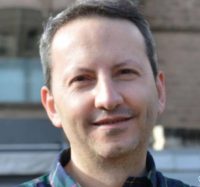
Around the world, shock and outrage has been the reaction to the news that Iran is preparing to execute Swedish-Iranian emergency medicine specialist Dr Ahmadreza Djalali. In a call from Evin Prison on 24 November, Ahmadreza told his wife Vida, who lives in Sweden, that he believed he may be executed in less than a week. He has been transferred into solitary confinement and it has been reported that he will shortly be sent to Rajai Shahr Prison where this draconian death sentence would be delivered.
Dr Djalali has been used as a bargaining chip as part of Iran’s hostage diplomacy. A dual national, illegally detained in solitary confinement with no access to a lawyer before being sentenced to death in October 2017. The court based their sentence for “corruption on earth” on “confessions” elicited after torture, threats to kill Ahmadreza Djalali’s wife and two young children, solitary confinement and his prolonged ill treatment.
The UN, EU, Council of Europe, European governments, worldwide academic institutions, civil society and thousands of individuals have all called for Dr Djalali’s release.
UN experts Javaid Rehman, Special Rapporteur on the situation of human rights in the Islamic Republic of Iran and Agnes Callamard, Special Rapporteur on extrajudicial, summary or arbitrary executions issued a statement saying: “We are horrified by the reports that Mr. Djalali is soon to be executed by the Islamic Republic of Iran. His torture, arbitrary detention, death sentence and now reported imminent execution are unconscionable acts that should be condemned by the international community in the strongest terms. We urge the Iranian authorities to take immediate action to reverse this decision before it is too late.”
Amnesty International’s Deputy Director for the Middle East and North Africa, Diana Eltahawy, said:
“We call on members of the international community to immediately intervene, including through their embassies in Tehran, to save Ahmadreza Djalali’s life before it is too late.”
Valerie Peay, Director of the International Observatory of Human Rights said: “We stand in support of Dr Djalali and his family. Ahmadreza has already suffered gross injustice, pain and the cruel separation from his wife and two children. For three years he has faced a baseless death sentence while Iran has used him as a bargaining chip and sought to gain leverage with the international community by unjustly incarcerating Dr Djalali and other dual nationals. Now is the moment for the Islamic Republic to act to cease this action to execute Dr Djalali and instead, release him to return his life in Sweden with his family.”
Ryan Kaminski and Grace Anderson wrote in Just Security of 14 October 2020 a scathing assessment of US human rights policy under Trump, Here some large extracts, but it is worth reading in full:
At the launch of the first virtual session of the United Nations General Assembly last month, Secretary of State Mike Pompeo sought center stage to question one of the most historic documents put forward by the U.N. shortly after its inception: the Universal Declaration of Human Rights. Pompeo presented the findings of the State Department’s Commission on Unalienable Rights via videotape during a U.N. event that took place the same week [see: https://humanrightsdefenders.blog/2019/07/11/trump-marches-on-with-commission-on-unalienable-rights/]
Although jarring, the Commission’s conclusions should have come as no surprise: They are simply the culmination of the Trump administration’s downward trajectory on protecting human rights and engaging on these issues specifically at the U.N.
Just this month, for example, the U.S. microphone at the U.N. Human Rights Council was silent on the situation in Belarus, where massive protests have taken place against the country’s authoritarian leader. Nor did the United States take the floor when the Human Rights Council discussed combating global racism during an urgent debate requested by hundreds of U.S. non-governmental organizations (NGOs) and human rights advocates, as well as the family of George Floyd. Moreover, the Trump administration’s recent self “report card” on human rights in the United States, posted online by the U.N. in September, is the shortest ever submitted from the United States, and it is unnecessarily combative, and conspicuously cherry-picked.
The practice of the Trump administration turning its back on rights at the U.N. goes well beyond the Human Rights Council.
Last December, the administration torpedoed a U.N. Security Council session on human rights in North Korea for a second year in a row. Its actions broke with years of precedent in which U.S. ambassadors of varying political stripes lobbied Security Council members to debate Pyongyang’s atrocious rights record. In 2019, the United States effectively kneecapped its own effort, despite having support from key allies and partners on the Security Council to move forward.
Recent budgetary moves by the Trump administration are another example of this worrying trend. In September, the State Department again served notice that it would be flouting the will of Congress by “reprogramming” $28 million for the U.N. Human Rights Council and the Office of the High Commissioner for Human Rights (OHCHR). Over the past three years, the Trump administration has unilaterally withheld nearly $60 million in assessed contributions to OHCHR, an especially disdainful action given the bipartisan congressional support for the office.
Another area of concern is the Trump administration’s absentee track record of filling openings on U.N. human rights treaty bodies. These treaty bodies are official assemblies of international rights experts tasked with holding governments accountable for implementing the human rights accords they have ratified. They are effectively incubators and accelerators for the maintenance of international law and norms central to fundamental freedoms and human dignity. Yet, in a break with precedent from the George W. Bush and Obama administrations, Trump has not even nominated a candidate to sit on the Committee on the Elimination of Racial Discrimination. The absence of American presence on the Committee, as well as other unsung, yet influential, bodies, represents a sorely missed opportunity.
The Committee, for example, works to ensure compliance among its 182 State parties and has taken decisive action on issues at the heart of bipartisan U.S. foreign policy priorities, such as grilling China on atrocities committed against ethnic Uyghurs in its territory….
Worse than stonewalling special procedures and limiting visits, Trump administration officials have in certain cases even gone on the offensive against these U.N. watchdogs. After an official U.S. visit by the U.N. Special Rapporteur on extreme poverty, originally authorized by the Obama administration, then-U.S. Permanent Representative to the United Nations Nikki Haley claimed the expert’s findings were inaccurate, offensive and wasteful. This was a missed opportunity for the United States to constructively address scrutiny of its rights record like any other advanced democracy; instead the administration reflexively attacked an independent rights watchdog.
Constructive U.S. engagement with U.N. special procedures helps set a positive example and bolsters U.S. credibility, especially when the United States calls on regimes violating rights to not hide from these exact same investigations. This year, for instance, Pompeo called out Cuba, via Twitter, for not responding to communications from the U.N. special rapporteurs on combating trafficking and modern slavery.
The picture is not entirely gloomy, however.
One potential bright spot for the Trump administration’s human rights engagement at the U.N. is the State Department’s prioritization of U.N. Human Rights Council reform…butt reform is a function of engagement, not withdrawal. Thus, the administration’s 2018 decision to give up its seat on the Human Rights Council has proven ineffective, unsurprisingly, in accomplishing meaningful reform. In fact, research from the Jacob Blaustein Institute for the Advancement of Human Rights found active U.S. membership on the Human Rights Council was a “game-changer,” resulting in a significant drop in anti-Israel resolutions and “scrutiny of many of the world’s worst human rights violators.”
Conversely, the U.S. absence from the Council, together with attempts to strong-arm U.N. institutions through funding cuts, has abetted China’s growing assertiveness in the U.N. system. Even the Heritage Foundation has acknowledged the “concerning” trend of China’s upward trajectory in the U.N. system.
The Trump administration also acknowledged this new reality when the State Department established an unusual new envoy posting charged with countering Chinese influence at the U.N. and other international organizations. But this move falls well short of the United States adopting an overarching strategic policy on China’s growing U.N. influence. This month, the Trump administration awkwardly tweeted support for action by the U.N. Human Rights Council on China, all the while warming the bench in its ongoing boycott.
Overall, sustained pushback against human rights work at the U.N. by the United States has become yet another cornerstone of the Trump administration’s “America First” doctrine. As Pompeo stated unequivocally at the launch of the Commission on Unalienable Rights: “Many [human rights] are worth defending in light of our founding; others aren’t.”
Critics of the Commission are right to be concerned. Whether leaving critical human rights positions unfilled, undercutting U.N. human rights bodies by withholding funds, or attacking U.N. independent rights advocates, Eleanor Roosevelt’s warning more than 60 years ago is more salient than ever: “Without concerted citizen action to uphold [universal human rights] close to home, we shall look in vain for progress in the larger world.”
Iranian opposition human rights activist, Narges Mohammadi, at the Defenders of Human Rights Center in Tehran (AFP/File photo) By MEE staff
Prominent Iranian human rights defender Narges Mohammadi has been released from prison, her husband confirmed on Thursday 8 October 2020. She had been serving a eight and a half years out of a10-year sentence for ‘forming and managing an illegal group’
Ismail Sadeghi Niaraki, prosecutor in Zanjan province, said a newly passed law reducing prison sentences included the activist and said she had been released on that basis, according to BBC Persian. Mohammadi, who was held in Zanjan Prison in northwestern Iran, was the spokeswoman for the Centre of Human Rights Defenders in Iran.
Originally serving a six-year sentence dating from 2011, she had been released on bail before being arrested again on new charges in 2015.
The mother of two was then sentenced to 16 years in prison for “forming and managing an illegal group” among other charges, with a minimum of 10 years having to be served. Coronavirus: Iran reports record high death numbers as it grapples with third wave
Her husband, Taghi Rahmani, confirmed the news on Twitter. “Narges was released from Zanjan prison at three in the morning,” he tweeted. “Wishing freedom for all prisoners.“
Over the last several years, the world has seen China taking on more responsibility and power in international institutions. China’s growing ‘activism’ has provided a glimpse into its ambitions to assert a greater role for itself on matters of global governance. China’s growing activism also has raised key questions about the scale of Beijing’s ambitions and the tools it would be willing to use to advance them. On September 21, Foreign Policyat Brookings hosted a webinar to address these and other questions concerning China’s evolving approach to international institutions, rules, and norms. The event launched the next tranche of Brookings papers released as part of its series “Global China: Assessing China’s Growing Role in the World.” From human rights to energy to trade, these papers present a range of arguments for observers of China and policymakers to consider as they evaluate China’s role on the international stage.
Jamil Chade in Geneva spoke with Paulo Sergio Pinheiro, 25 years with the UN, recently as Chairperson of the Commission of Inquiry on Syria. Swissinfo published the result on 20 September 2020 under the title UN human rights veteran is a target in his native Brazil‘
swissinfo.ch: After 25 years of service at the UN, what role do you believe the international body can actually play to protect human rights?
Paulo Sérgio Pinheiro: If we think of the United Nations as a whole, from the very beginning human rights have been at its core, starting with the 1948 Universal Declaration of Human Rights. They are present in decisions at the General Assembly and the Security Council. All UN agencies protect human rights around the world. But the most important body that ensures this is the UN Human Rights Council in Geneva, with its special rapporteurs [in place] since 1979 examining the human rights situation in various countries, assisted by the UN High Commissioner for Human Rights.
Paulo Sergio Pinheiro (centre) listens to an official while visiting the Shwedagon pagoda in Yangon, Myanmar, during his visit to the Asian country in November 2007 as an independent rights investigator. Keystone / Str
Have you experienced any frustrations because of the limits of the international role?
Only the victims – whom I prefer to call survivors – of human rights violations can feel frustration. Those of us who try to bring rights violations to light and seek justice are only frustrated by UN bodies that don’t function as they should. After more than 10 years of human rights violations and war crimes [in Syria, for example], the malfunctioning of the Security Council means that these crimes are not being tried at the International Criminal Court. This is not only frustrating but also inexplicable for survivors of the war.
In Burundi, in your first assignment in 1995, there was a real expectation that progress would be made. Did it work out?
The special rapporteur has no magic wand to change the situation in a particular country. But it makes a difference that there were special rapporteurs and, after 2016, a commission of inquiry. Local civil society is stronger, and the government feels empowered in the area of human rights. My best interlocutor there was the human rights minister Eugene Nindorera, who later became a UN director of human rights for missions in Ivory Coast and South Sudan.
You also spent years dealing with Myanmar and its leader, Aung San Suu Kyi, when she was still under house arrest. What were those meetings like?
Myanmar was an exceptional case, because it was a military government that wanted to get closer to UN human rights bodies and civil society. During the first four years, I got access to all the places and institutions I requested. But neither I nor the other UN representatives in the country responded satisfactorily to this openness. The government therefore was not able to justify our presence to the military junta [which effectively ruled the country] and was eventually ousted. I did not go back until four years later, in 2007, when there was an uprising by the [Buddhist] monks and civil society.
The war in Syria is now nearly ten years old, and the inquiry you are leading has gathered an unprecedented amount of information on the crisis. What can you do with this information?
The Independent International Commission of Inquiry on the Syrian Arab Republic is not a court, and it doesn’t have any competence in political negotiations. The aim of these commissions is to investigate and document human rights violations, war crimes, and crimes against humanity. We work to address the right to truth of the Syrian people.
Our database has been used in investigations into human rights perpetrators of the conflict that were opened in several countries. Our data has also been used by the International Impartial and Independent Mechanism on Syria, which is preparing criminal cases to be brought before the courts in the future.
2020 also marks the 75th anniversary of the UN. What is there to celebrate?
There is more to commemorate than there is to regret. Let’s imagine that the UN did not exist. International conflicts would be much more intense, humanitarian crises would not be addressed, and there would be even fewer guarantees of economic and social rights. And the application, even if flawed, of the principles of the Universal Declaration and the human rights conventions would be even less effective. My assistant when I was working in Burundi, Brigitte Lacroix, said to me when she left: “Paulo, what really matters is what you will do for the victims. From the perspective of the survivors, we must be glad because they are at the centre of our actions.”
The UN and multilateralism are at a crossroads, and the response to the pandemic is showing that. Is there a real risk to the system?
The pandemic has clearly exposed the inequality, the concentration of income, and the racism that continue to prevail in almost all societies, both in the North and the South. No one has escaped. Those who were poor are getting poorer, the healthcare situation of the poor has gotten worse, not only in the lack of care for those affected by Covid-19, but in the right to healthcare in general.
I don’t think that after the pandemic there will automatically be greater solidarity […] or better care for the disenfranchised. For this to happen, UN member states, instead of denying resources to the system – as they did with the WHO – have to increase their political support and financial resources to the UN.
Has your Brazilian citizenship helped you in your international work over the last 25 years?
Latin America, as a former French ambassador to Brazil, Alain Rouquié, says in one of his books, is the “Far West”, a category apart from the western world. Because they are in this group, Brazilians are perceived as being independent. After the return to democracy in 1985 and until the Dilma Rousseff administration [in 2016], Brazil was considered an honest broker – a reliable negotiator. Because during this period we never denied serious human rights violations in Brazil. Every country wanted to be in the picture with Brazil – until the coup against President Dilma Rousseff took place. At the UN Human Rights Council, Brazil was always present for the most sensitive resolutions, such as on homosexuality, racism, and violence against women and children. I think that Brazil’s aura has certainly been of benefit to me.
You were included in a list [of so-called “anti-fascists”] prepared by the Ministry of Justice in Brazil this summer – a dossier of sorts of those who question the government.
It was a strange honour to have been included, when it would have been enough to open Google to see what I think, say and do in Brazil, in UN bodies and around the world. It was a regrettable initiative to resurrect the abhorrent political espionage dossiers of the military dictatorship.
Fortunately, the Federal Supreme Court made a historic decision – in a 9-1 vote on August 21 – to prohibit the Ministry of Justice from distributing these reports on what certain citizens think and do.



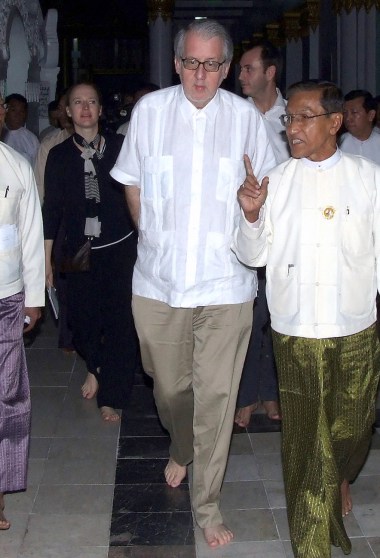 Paulo Sergio Pinheiro (centre) listens to an official while visiting the Shwedagon pagoda in Yangon, Myanmar, during his visit to the Asian country in November 2007 as an independent rights investigator.
  Hans Thoolen on Human Rights Defenders and their awards