Posts Tagged ‘UN Special Rapporteurs’

Important side event in Geneva on ending reprisals coming up

September 12, 2018

On Wednesday 19 September (16:00-17:30 – Room XXIV, Palais des Nations, Geneva) the International Service for Human Rights (ISHR) is organizing a side event Ending reprisals: Discussion with human rights defenders and experts.

This event seeks to provide a space for human rights defenders and experts to shed light on the nature and extent of reprisals and intimidation against those cooperating with the UN; discuss and expand on the Secretary-General’s report; and to consider efforts to date to address reprisals and intimidation against those cooperating with the UN as well as ways to further develop and strengthen policies and practices to prevent and address reprisals.

Participants: 

  • Andrew Gilmour, Assistant Secretary General for Human Rights
  • Victoria Tauli-Corpuz, Special Rapporteur on the Rights of Indigenous Peoples
  • National human rights defenders

Moderator: Phil Lynch, Director of ISHR (see also: https://humanrightsdefenders.blog/2018/06/08/ishr-new-report-on-reprisals-and-restrictions-against-ngo-participation-in-the-un/)

The event is co-sponsored by the Permanent Mission of Ireland to the United Nations and the Permanent Mission of Uruguay to the Office of the United Nations.

Download the flyer here

some of my earlier posts on reprisals: https://humanrightsdefenders.blog/tag/reprisals/

Many HRD issues at the 39th session of the UN Human Rights Council

September 8, 2018

The 39th session of the UN Human Rights Council is held from coming Monday to 28 September 2018. Human Rights Defenders issues abound. Thanks to the excellent overview of the ISHR I can provide a short summary. To stay up-to-date, follow @ISHRglobal and #HRC39 on Twitter.

Reprisals

On 19 September, the Council will hold its first dedicated interactive dialogue on reprisals. It will engage with the Assistant Secretary General for Human Rights (Andrew Gilmour) who as UN senior official on reprisals will present the Secretary General’s annual report on the United Nations’ “the reprisals report”. The dedicated dialogue to address acts of intimidation and reprisals was mandated by the resolution on reprisals in September 2017 and provides a key opportunity for States to raise concerns about reprisals, and demand that Governments involved in existing cases provide an update on any investigation or action taken toward accountability. [for some of my earlier posts on reprisals: https://humanrightsdefenders.blog/tag/reprisals/]

Other key thematic reports relevant to HRDs

The Council will hold interactive dialogues and consider the reports of the Working Group on Arbitrary Detention, including on their country visits to Argentina and Sri Lanka, as well as the Working Group on Enforced or Involuntary Disappearance including on their country visit to Gambia.

The Council will consider the human rights of indigenous peoples on several occasions: it will hold a panel on the issue (see further below), the annual reports by the High Commissioner,  the Special Rapporteur on the rights of indigenous peoples, including on her visits to Mexico and Guatemala, and the Expert Mechanism on the Rights of Indigenous Peoples.

The Special Rapporteur on the promotion of truth, justice, reparation and guarantees of non-recurrence will also present his annual report, followed by an interactive dialogue, in addition to discussing the Secretary General report on the prevention of genocide.

The Council will discuss the report of the Secretary-General on capital punishment and the implementation of the safeguards guaranteeing protection of the rights of those facing the death penalty.

The Council will also discuss the report of the High Commissioner on mechanisms concerned with ensuring the safety of journalists and the Council will consider a resolution on the issue. The first informal consultation is scheduled for 11 September at 15:30.

The Special Rapporteur on the implications for human rights of the environmentally sound management and disposal of hazardous substances and wastes will present a set of principles for States, businesses and other actors to protect workers, including the need to protect worker representatives and human rights defenders from reprisal.

Country-specific developments

Burundi. During its 36th session, the Council passed two resolutions on Burundi (read here ISHR’s analysis of these two resolutions). At the 39th session, the Council will hold an interactive dialogue with the High Commissioner on his final report on Burundi on 11 September from 15:00 to 18:00. The Council will also hold an interactive dialogue with the Commission of Inquiry on 17 September between 09:00 and 12:00. ISHR continues to remain highly concerned about the human rights situation in Burundi and its refusal to cooperate with the Council’s mechanisms, which clearly warrant an invitation to the General Assembly to consider the suspension of Burundi as a member of the Council. ISHR joined a group of NGOs in calling for the renewal of the mandate of the Commission of Inquiry. [for earlier posts on Burundi: https://humanrightsdefenders.blog/tag/burundi/]

Yemen. Last September, the Council appointed a Group of Eminent Experts to carry out a comprehensive examination of all alleged violations of international human rights law committed by all parties to the conflict since September 2014. They will present their report followed by an interactive dialogue on 26 September from 09:00 to 12:00. The Council will also consider a report of the High Commissioner on the human rights situation in Yemen and on the implementation of the technical assistance. The Group of Eminent Experts’ report strongly suggests that parties to the armed conflict have perpetrated, and continue to perpetrate, violations and crimes under international law. Over 50 civil society organisations have called on the Council to renew and strengthen the mandate of the Group of Eminent Experts through the enhancement of its reporting structure and strengthening language on accountability.

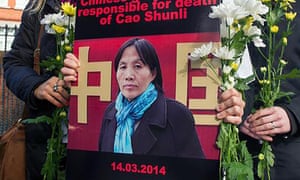
China. The 39th session is the final session before China’s Universal Periodic Review. [https://humanrightsdefenders.blog/2016/03/15/remember-2nd-anniversary-of-the-death-of-cao-shunli/; https://humanrightsdefenders.blog/2018/03/26/chinas-win-win-resolution-gets-the-votes-in-the-un-council/ and many more]

Other country situations where HRD issues are relevant

The Council will hear reports on and is expected to consider resolutions addressing a range of country situations, in some instances involving the renewal of the relevant expert mandates.

They include:

  • Interactive dialogue with the Commission on Syria
  • Interactive dialogue with the Commission on human rights in South Sudan
  • Interactive dialogue with the Fact-finding mission on Myanmar
  • Interactive dialogue on the High Commissioner’s oral update on Ukraine
  • Interactive dialogue on the High Commissioner’s report on the Democratic Republic of the Congo
  • Interactive dialogue on the High Commissioner’s oral update on Libya
  • Interactive dialogue with the Special Rapporteur on Cambodia
  • Interactive dialogue with the Independent Expert on Somalia
  • Interactive dialogue with the Independent Expert on Sudan
  • Interactive dialogue with the Independent Expert on the Central African Republic

Adoption of Universal Periodic Review (UPR) reports

During this session, the Council will adopt the UPR working group reports on Turkmenistan, Burkina Faso, Cabo Verde, Colombia, Uzbekistan, Tuvalu, Germany, Djibouti, Canada, Bangladesh, Russian Federation, Azerbaijan, Cameroon, and Cuba.

Appointment of mandate holders

The President of the Human Rights Council has proposed candidates for the following two vacancies of mandate holders to be filled at this session:

  1. Special Rapporteur on the situation of human rights in Belarus
  2. Special Rapporteur on the situation of human rights in Eritrea

Resolutions to be presented to the Council’s 39th session

At the organisational meeting the following resolutions relevant to HRDs were announced (States sponsoring the resolution in brackets):

  1. The human rights situation in Yemen (Yemen and a group of countries)
  2. The protection of human rights in the Democratic Republic of Congo (Togo on behalf of the African group)
  3. The protection of human rights in the Sudan (Togo on behalf of the African group)
  4. World Programme for Human Rights Education (Brazil, Costa Rica, Italy, Morocco, Slovenia, Senegal,  Philippines, Thailand)
  5. The human rights situation in Syria (France, Germany, Italy, Jordan, Kuwait, Morocco, Qatar, Saudi Arabia, Turkey, the United Kingdom)
  6. The human rights situation in Somalia (the UK and a group of countries)
  7. The safety of journalists (Austria, Brazil, France, Greece, Morocco, Qatar and Tunisia)
  8. The human rights of indigenous peoples (Guatemala and Mexico)
  9. The promotion and protection of the human rights of peasants and other people working in rural areas (Bolivia, Cuba, Ecuador, South Africa)
  10. The human rights situation in Burundi (the European Union)
  11. The human rights situation in Myanmar (the European Union)
  12. Equal participation in political and public affairs (Botswana, Czech Republic, Indonesia, Netherlands, Peru)
  13. The situation of Rohingya muslims and other minorities in Myanmar (Pakistan on behalf of the Organisation for Islamic Cooperation)

Panel discussions

During each Council session, panel discussions are held to provide member States and NGOs with opportunities to hear from subject-matter experts and raise questions. All panel discussions will be broadcast live and archived on http://webtv.un.org. Three panel discussions are scheduled for this upcoming session:

  • The high-level panel discussion to commemorate the seventieth anniversary of the Convention on the Prevention and Punishment of the Crime of Genocide will take place on 13 September from 10:00 to 12:00.
  • The annual half-day panel discussion on the rights of indigenous peoples will take place on 19 September from 9:00 to 11:00. The theme will be the participation and inclusion of indigenous peoples in the development and implementation of strategies and projects in the context of the 2030 Agenda for Sustainable Development.
  • The annual discussion on the integration of a gender perspective throughout the work of the Human Rights Council and that of its mechanisms will take place on 24 September from 16:00 to 18:00. The theme will be gender integration and human rights investigations: strengthening a victim-centred approach.

Side events. As always there will be many side events concerning HRDs to which I will refer in the future.

——

https://www.ishr.ch/news/hrc39-key-issues-agenda-september-2018-session

Emirates: one year later human rights defender Ahmed Mansoor’s whereabouts remain unknown

March 21, 2018
 

The authorities in the United Arab Emirates (UAE) should reveal the whereabouts of prominent human rights defender and citizen-journalist Ahmed Mansoor and release him immediately and unconditionally, an impressive group of over twenty human rights organisations said on 20 March 2018.  This day marks one year since security forces arbitrarily arrested Mansoor, winner of the Martin Ennals Award for Human Rights Defenders in 2015, at his home in Ajman. The UAE authorities have continued to detain him in an unknown location, despite condemnation from UN human rights experts and independent human rights organisations.

The authorities have subjected Ahmed Mansoor to enforced disappearance since his wife last saw him in September 2017. They must reveal his whereabouts to his family and grant him regular access to them and to a lawyer of his choosing.  Following his arrest on 20 March 2017, the authorities announced that he is facing speech-related charges that include using social media websites to “publish false information that harms national unity.”  On 28 March 2017, a group of UN human rights experts called on the UAE government to release Mansoor immediately, describing his arrest as “a direct attack on the legitimate work of human rights defenders in the UAE.” They said that they feared his arrest “may constitute an act of reprisal for his engagement with UN human rights mechanisms, for the views he expressed on social media, including Twitter, as well as for being an active member of human rights organisations.”  Since his arrest, Mansoor has not been allowed to make telephone calls to his family and has been allowed only two short visits with his wife, on 3 April and 17 September 2017, both under strict supervision. He was brought from an unknown place of detention to the State Security Prosecutor’s office in Abu Dhabi for both visits. The authorities have refused to inform his family about his place of detention and have ignored their requests for further visits.

In February 2018, a group of international human rights organisations commissioned two lawyers from Ireland to travel to Abu Dhabi to seek access to Mansoor. The UAE authorities gave the lawyers conflicting information about Mansoor’s whereabouts. The Interior Ministry, the official body responsible for prisons and prisoners, denied any knowledge of his whereabouts and referred the lawyers to the police. The police also said they had no information about his whereabouts. The lawyers also visited Al-Wathba Prison in Abu Dhabi following statements made by the authorities after Mansoor’s arrest, which suggested that he was held being held there. However, the prison authorities told the lawyers there was nobody matching Mansoor’s description in the prison.  Instead of protecting Mansoor, the authorities have detained him for a year with hardly any access to his family and no access to a lawyer of his choosing. Their contempt for human rights defenders and brazen disregard for their obligations under international human rights law is truly shocking. [https://humanrightsdefenders.blog/2018/02/27/somewhere-in-a-prison-in-the-emirates-is-ahmed-mansoor-but-authorities-claim-not-to-know-where/]

Background to his case is documented in the joint statement and in my earlier posts: https://humanrightsdefenders.blog/tag/ahmed-mansoor/

Mansoor is a member of GCHR’s Advisory Board and a member of the advisory committee of Human Rights Watch’s Middle East and North Africa Division.

Signed:
Americans for Democracy and Human Rights in Bahrain
Amnesty International
Arabic Network for Human Rights Information (ANHRI)
ARTICLE 19
CIVICUS
Committee for the Respect of Freedoms and Human Rights in Tunisia
English PEN
Freedom Now, Morocco
Front Line Defenders
Gulf Centre for Human Rights (GCHR)
Human Rights First
Human Rights Watch
International Commission of Jurists (ICJ)
International Federation for Human Rights (FIDH), under the Observatory for the Protection of Human Rights Defenders
International Service for Human Rights (ISHR)
Maharat Foundation
Martin Ennals Foundation
Moroccan Association for Human Rights
PEN International
Reporters Without Borders
Scholars at Risk
Tunisian Association for Academic Freedoms
Tunis Center for Press Freedom
Tunisian Forum for Economic and Social Rights
Tunisian League for Human Rights (LTDH)
Tunisian Organisation against Torture
Vigilance for Democracy and the Civic State
World Organisation Against Torture (OMCT), under the Observatory for the Protection of Human Rights Defenders

http://www.martinennalsaward.org/ahmed-mansoors-remain-missing/

https://www.ifex.org/united_arab_emirates/2018/03/20/uae-ahmed-mansoor-1-year/

There seems to be no limit to what Duterte is willing to say – and may get away with

March 10, 2018

Most likely you have seen the reports about the UN High Commissioner of Human Right suggesting that Philippine President Rodrigo Duterteneeds to submit himself to some sort of psychiatric evaluation” over his “unacceptable” remarks about some Special Rapporteurs. Zeid Ra’ad al-Hussein demanded – rightly – that the Human Rights Council, of which the Philippines is a member, “must take a strong position” on the issue and that “these attacks cannot go unanswered.”

Speaking to reporters in Geneva, the rights chief referred to a court petition filed last month by Duterte’s government accusing the U.N. rapporteur on indigenous peoples, Victoria Tauli-Corpuz, and others of being members of a key communist rebel group. The Filipino President had repeatedly insulted the U.N. expert on extrajudicial killings, Agnes Callamard, lashing out at her for raising alarm over the thousands of suspects killed under his anti-drug crackdown. He has also taken aim at International Criminal Court prosecutor Fatou Bensouda, who announced last month that she was opening a preliminary examination into alleged extrajudicial drug killings. In a speech Wednesday, Duterte insulted the international court’s justices as “dumb” and “evil,” and said Callamard was “thin” and “undernourished.” Using an expletive, he warned, “Don’t (mess) with me, girls.

Almost laughably “deaf’ to the language used his own President, the Philippine Foreign Secretary Alan Peter Cayetano blasted Zeid’s remarks as “irresponsible and disrespectful” and said the “unmeasured outburst” demeaned the Philippine president and should not be repeated.

Victoria Tauli-Corpuz, was listed as a member of the Maoist rebel group. She has denied the allegations. “The charges are entirely baseless and malicious,” Tauli-Corpuz told the Thomson Reuters Foundation in a telephone interview. “The government sees this as an opportunity to pursue people they don’t like. I am worried for my safety and the safety of others on the list, including several rights activists.” Local and international organizations have slammed the Philippine government’s action, with New York-based Human Rights Watch calling the petition “a virtual government hit list”. Two other U.N. special rapporteurs expressed “grave concern” about Tauli-Corpuz being on the list, and said she was being punished by Philippine President Rodrigo Duterte for speaking out against some of his policies.

Preview of Human Rights Defenders issues at the 2018 session of the UN Human Rights Council starting Monday

February 24, 2018

Thanks to the International Service for Human Rights I am able to give you a short overview of what issues directly relevant to human rights defenders are coming up in the 37th session of the UN Human Rights Council starting on Monday 26 February 2018. For the broader human rights view please follow the link at the end of this post.

Thematic

Protection of human rights defenders working in the context of people on the move

A few days ago I posted https://humanrightsdefenders.blog/2018/02/20/michel-forst-empowering-defenders-on-the-move-is-crucial-to-the-prevention-of-further-tragedy/ which refers to:

– the Global Compact for Migration which States will negotiate (in an open letter sent on 21 February, High Commissioner for Human Rights Zeid urged States to develop a compact that ‘explicitly recognizes and fully conforms to the existing international human rights framework as the authoritative protection agenda for all migrants’)

–  a thematic report on the situation of defenders of the rights of people on the move by the Special Rapporteur Michel Forst (read  ISHR’s detailed analysis)

– the OHCHR Principles and Practical Guidance for the protection of the Human Rights of Migrants in Vulnerable Situations (Principle 18 which states that States should ‘respect and support the activities of human rights defenders who promote and protect the human rights of migrants’)

– the Special Rapporteur on Torture’s report which is expected to focus on torture and other forms of ill-treatment in the context of migration.

Reprisals

During its last session, the Council adopted a resolution on reprisals. The resolution established a dedicated dialogue to address acts of intimidation and reprisals at each September Council session. Through the resolution, the Council also affirmed the particular responsibilities of its Members, President and Vice-Presidents to investigate and promote accountability for reprisals and intimidation.Reports of cases of reprisals not only continue, but grow in spite of the passage of this resolution, and the appointment of the UN Assistant Secretary General as the Senior Official on addressing Reprisals. As requested by Council Resolution 12/2, the General Debate under Item 5 of the Council is a key moment for States and civil society to raise and follow up cases of reprisals, and to push for accountability for such acts. [one of my favorite topics: https://humanrightsdefenders.blog/tag/reprisals/]

Other key thematic report will be the one by the body working on developing a treaty on business and human rights. The open-ended inter-governmental working group on transnational corporations and other business enterprises (known as IGWG), will present its third report to the Council. ISHR is concerned about the limited protection for human rights defenders in the current elements discussed at the last session. Any process towards drafting a business and human rights treaty should effectively prevent and respond to cases of reprisals.

Country-specific developments relating specially to HRDs:

Burundi. During the 36th session, the Council passed two resolutions on Burundi; one led by the European Union extending the mandate of the Commission of Inquiry and a second resolution by the African Group that requested OHCHR to urgently dispatch a team of three experts to engage with the Burundian authorities and all other stakeholders. Read here ISHR’s analysis of the two resolutions. At the 37th session, the Commission of Inquiry on Burundi will present an oral briefing to the Council. In addition, the High Commissioner will give an oral briefing of the Council on the mission of the OHCHR. Furthermore, the Secretary-General’s report on Burundi noted that OHCHR continued to receive allegations of serious human rights violations and abuses, primarily by the State and affiliated actors, including killings, enforced disappearances, torture and ill-treatment, more than 1,000 arbitrary arrests and detentions and restrictions on the freedoms of association, expression and movement. Burundi’s vice president criticised the report, suggesting that the Secretary-General has been transformed into an opposition member. ISHR and other NGOs continues to remain highly concerned about the human rights situation in Burundi and its refusal to cooperate with the Council’s mechanisms, which both clearly warrant an invitation to the General Assembly to consider the suspension of Burundi as a member of the Council. [see also: https://humanrightsdefenders.blog/2016/02/08/what-is-burundi-doing-in-the-un-human-rights-council/] For more information on the situation of human rights defenders in Burundi, check ISHR Briefing Paper for the UPR here.

China. Since Xi Jinping’s assumption of power in 2013, the situation for human rights defenders in China has gone from bad to worse. Five current cases illustrate the sense of impunity with which Chinese authorities trample on the rights of civil society actors. ISHR has discussed many of them in detail, but in short they include:

  • the baseless house arrest since 2010 of Liu Xia, a poet and the widow of Nobel Peace Prize Laureate Liu Xiaobo;
  • the prolonged detention of rights lawyer Wang Quanzhang, who has been held incommunicado, and without charge or access to lawyers since July 9, 2015;
  • the seizure and disappearance in January 2018 of bookseller Gui Minhai, a Swedish citizen previously forcibly disappeared from Thailand in October 2015;
  • the detention and prosecution for inciting separatism of Tashi Wangchuk, a Tibetan cultural rights and education advocate; and
  • the punitive disbarment in January 2018 and, later that month, arbitrary detention of Yu Wensheng, a prominent human rights lawyer.

see also: https://humanrightsdefenders.blog/2018/01/10/more-on-residential-surveillance-in-a-designated-location-rsdl-in-china/

Other country situations:

The Council will hear reports on and is expected to consider resolutions addressing a range of country situations, in many instances involving the renewal of the relevant expert mandates and the situation of human rights defenders. They include:

  • The High Commissioner will present his reports on Guatemala, Honduras and Colombia, Afghanistan and give oral updates on the situation of human rights in Haiti, Yemen, Ukraine, Libya, Democratic Republic of Congoand Democratic People’s Republic of Korea.
  • OHCHR will present its report on Cyprus and an oral update on Eritrea.
  • The Council will consider the written update of OHCHR on promoting reconciliation, accountability and human rights in Sri Lanka.
  • The Council will consider the report of the Commission of Inquiry on Syria and renew its mandate.
  • The Council will consider the report of the Commission on Human Rights in South Sudan and the report of the Special Rapporteur on the Democratic People’s Republic of Korea.
  • The fact-finding mission on the situation of human rights in Myanmar will present an oral update to the Council and the Special Rapporteur on Myanmar will also present her report to the Council.
  • The Council will consider the interim report of the Secretary-General on the situation of human rights in Iran and Cambodia.
  • The Council will hold an interactive dialogue with the Independent Expert on the Central African Republic.
  • The Independent Expert on Mali will present his report to the Council, who will also hold an interactive dialogue on the human rights situation in Mali.
  • The Council was intending to consider the report of the Special Rapporteur on Iran, Asma Jahangir, however due to her death, it is currently unclear whether and how the report will be considered. {see also: https://humanrightsdefenders.blog/2018/02/11/asma-jahangir-one-of-the-worlds-most-outstanding-human-rights-defenders-dies-at-age-66/]

The High Commissioner will present his annual report in the last interactive dialogue of his term. Read here ISHR and other regional and international human rights organisations’ open letter to the Secretary General on the selection process of the next High Commissioner. [see also https://humanrightsdefenders.blog/2017/12/22/bound-to-happen-but-still-high-commissioner-zeid-announces-he-will-not-seek-second-term/]

Universal Periodic Review (UPR): States to be reviewed

During this session the Council will adopt the UPR reports which list the recommendations the State under review is expected to implement of the following 14 countries: Czechia, Argentina, Gabon, Ghana, Peru, Guatemala, Benin, the Republic of Korea, Switzerland, Pakistan, Zambia, Japan, Ukraine and Sri Lanka. ISHR submits briefing papers regarding the situation facing human rights defenders in some States under review and advocates for the UPR to be used as mechanism to support and protect human rights defenders on the ground.

Appointment of mandate holders

The President of the Human Rights Council has proposed candidates for the following a number of vacancies of mandate holders to be filled at this session, including:

  • Special Rapporteur on the rights to freedom of peaceful assembly and of association
  • Special Rapporteur on the promotion of truth, justice, reparation and guarantees of non-recurrence
  • Independent Expert on the situation of human rights in Mali


Panel discussions

During each Council session, panel discussions are held to provide member States and NGOs with opportunities to hear from subject-matter experts and raise questions. All panel discussions will be broadcast live and archived on http://webtv.un.org. Seven panel discussions are scheduled for this upcoming session, including:

  • The annual high-level panel discussion on human rights mainstreaming will take place on 26 February 2018 from 16:00 to 18:00. This panel will discuss the challenges and opportunities of the promotion and protection of human rights in the light of the UPR mechanism. The concept note of the panel is available here.
  • High-level panel discussion on the seventieth anniversary of the Universal Declaration of Human Rights and the twenty-fifth anniversary of the Vienna Declaration and Programme of Action will take place on 28 February 2018 at 16:00 to 18:00. The concept note of the panel is available here.
  • Annual full-day meeting on the rights of the child will take place on 5 March 2018 from 09:00 to 11:00 and from 16:00 to 18:00. This panel will discuss the protection of the rights of the child in humanitarian situations. The concept note of the panel is available here.
  • Debate on promoting tolerance, inclusion, unity and respect for diversity in the context of combating racial discrimination will take place on 16 March 2018 at 09:00 to 11:00. This panel will be held in commemoration of the International Day for the Elimination of Racial Discrimination. The concept note will soon be made available here.

Side events. States and NGOs are holding a series of events. You can download the list of State events here and NGO events here. I will post on some of these separately.

https://www.ishr.ch/news/hrc37-key-issues-agenda-march-2018-session

UN Rapporteurs urge ASEAN summit to address regional human rights concerns

November 11, 2017

Four UN human rights experts*(including Michel Forst, the Rapporteur on Human Rights Defenders) have called on states to address pressing human rights issues during the 31st ASEAN Summit being held from 10-14 November in the Philippines. Recognising the important work of the many active civil society organisations across the region, the experts expressed concern about “a worrying deterioration in the environment in which they operate.

Human rights defenders, social activists, lawyers, journalists, independent media and even parliamentarians trying to speak out and protect the rights of others, increasingly face a multitude of risks ranging from judicial harassment and prosecution to threats, disappearances and killings,” said the experts. They observed rising numbers of cases of serious human rights violations affecting among others, people working on women’s rights, environmental and land issues and lawyers dealing with drug cases.

The experts called on the 10 ASEAN Member States to amend or repeal existing legislation and to reconsider draft laws that are being or could be applied to criminalize or restrict the vital work of civil society.  “We condemn the public vilification, harassment, arrests and killings of members of civil society, and call on Member States to rigorously uphold their duty to ensure the freedom and protection of those exercising their fundamental rights to freedom of expression, association and peaceful assembly,” the experts said. “Independent media, members of civil society and human rights defenders should be viewed as partners and as an essential element of democracy.


This summit should be seen as an opportunity to make real progress on these issues and to show the world that the Member States of ASEAN are fully committed to securing the human rights of all in the region,” the group said.

(*) The UN experts are: Ms. Annalisa Ciampi, the Special Rapporteur on the rights to freedom of peaceful assembly and of association; Ms. Agnes Callamard, Special Rapporteur on extrajudicial, summary or arbitrary executions;  Mr. Michel Forst, Special Rapporteur on the situation of human rights defenders;  Ms. Yanghee Lee, Special Rapporteur on the situation of human rights in Myanmar

http://www.ohchr.org/EN/NewsEvents/Pages/DisplayNews.aspx?NewsID=22380&LangID=E

9 August: International Day of the World’s Indigenous Peoples – UN experts see increasing murder

August 8, 2017
Ahead of the International Day of the World’s Indigenous Peoples on 9 August 2017, IPS publishes a statement by Mariam Wallet Aboubakrine (Chairperson of the UN Permanent Forum on Indigenous Issues), Albert K. Barume (chairman of the UN Expert Mechanism on the Rights of Indigenous Peoples) and Victoria Tauli-Corpuz (Special Rapporteur on the rights of indigenous peoples). The group of experts warns that he world’s indigenous peoples still face huge challenges a decade after the adoption of an historic declaration on their rights. The killing of environmental defenders has been the topic of several recent reports (see e.g. https://humanrightsdefenders.blog/2017/07/15/documenting-the-killings-of-environmental-defenders-guardian-and-global-witness/).


Women from Nepal’s indigenous tribe. Credit: Mallika Aryal/IPS

They state that States must put words into action to end discrimination, exclusion and lack of protection illustrated by the worsening murder rate of human rights defenders. The full text of the short statement follows here: Read the rest of this entry »

What the next session of the Human Rights Council will do with Human Rights Defenders

June 9, 2016

The UN Human Rights Council will hold its 32nd regular session at Palais des Nations in Geneva from 13 June to 1 July 2016. The Geneva-based International Service for Human Rights published its preview called “Alert to the Human Rights Council’s 32nd session”. This special issue of the ISHR Monitor is worth reading in full, but for those with special interest in human rights defenders here are some of the highlights:  Read the rest of this entry »

UN experts launch practical advice on how to implement the freedom to demonstrate

March 28, 2016

At the latest session of the Human Rights Council, States and NGOs reacted to the new compilation of advise and recommendations on how to protect the right to assembly (‘freedom to demonstrate’). UN human rights experts have launched a major new report on the proper management of assemblies. The compilation of practical recommendation, which seeks to ensure that the management of assemblies and protests comply with international law through which to apply international law, was drafted by the Special Rapporteurs on Freedom of Association and Assembly (Maina Kiai) and on Extrajudicial Executions (Christoph Heyns), after a series of consultations with multiple stakeholders including civil society.

An interactive dialogue with the Rapporteurs followed the report’s presentation, and several States – including Norway, Egypt and Ireland – reiterated the responsibilities of business. Whilst a broad range of States – including Costa Rica, Turkey and Tunisia – acknowledged the report’s importance, others used their interventions to emphasise the responsibilities of protesters. In response to Russia, Botswana and Cuba amongst others, Mr Heyns was clear: ‘Rights come before responsibilities. The report does not challenge that responsibilities are an inherent component of human rights, but one must come before the other.’ Maina Kiai underlined that ‘requiring authorisation for a protest dilutes a right to a mere privilege’.

ISHR’s statement reiterated that free assembly is a vital component of a safe and enabling environment for human rights defence, and highlighted how vague laws such as the Ley de Tumulos in Guatemala, repressive clampdowns on protest such as in Gezi Park in Turkey, and the imprisonment of protesters such as the Bahrain 13 are being used to hamper the work of human rights defenders.


ISHR welcomed the report’s emphasis on the responsibilities of business. ‘We hear increasingly of abuses by private security firms against protesters, as well as strategic lawsuits against public participation brought by companies and the enactment, by States, of laws which specifically target and restrict protests against business operations,’ said ISHR’s Ben Leather. ‘States should take heed of the recommendations made in the report to reverse these trends’.

For other posts on this topic: https://thoolen.wordpress.com/tag/freedom-to-demonstrate/

Source: UN experts launch practical advice on management of protests | ISHR

Preview of the upcoming session of the UN Human Rights Council

February 25, 2016

The UN Human Rights Council will hold its 31st regular session at Palais des Nations in Geneva from 29 February to 24 March 2016 (it also marks the 10th anniversary of the Human Rights Council). The International Service for Human Rights (see link at the bottom of the post) has published an Alert full of details, but I highlight here the elements that concern human rights defenders most directly:ISHR-logo-colour-high

Human rights defenders:  The Special Rapporteur on the situation of human rights defenders, Michel Forst, will present his annual report to the Council on 3 March. The report focuses on good practices to promote and protect the rights of human rights defenders. Presentation of the report will be followed by a dialogue. Of significance this session is a substantive resolution that will be presented by Norway on the situation of human rights defenders. The resolution at this session of the Council follows on the heels of the resolution on human rights defenders presented at the General Assembly in November 2015. The General Assembly resolution included a number of new, important and substantive provisions, including on the vital role of advocacy and the work of defenders in contributing to sustainable development and the realisation of economic, social and cultural rights, and the responsibilities of business enterprises with respect to engaging, consulting and protecting defenders. [see also: https://thoolen.wordpress.com/2015/12/18/un-general-assembly-adopts-resolution-on-human-rights-defenders-with-increased-majority/] This latest resolution provides an opportunity to recognise the critically important work of economic, social and cultural rights defenders, and the cross-cutting challenges they face, including restrictions not only on their rights to health, food, housing, social security and work, but also on their rights to freedom of expression, association, assembly and life itself. Economic, social and cultural rights activists have been identified by current and previous Special Rapporteurs on the situation of human rights defenders as among the most isolated and stigmatised defenders. It is integral that the resolution recognises the role of both State and non-State actors in the protection of human rights defenders, and enjoys broad State support for strong language demanding their protection.  (On 7 March, ISHR will facilitate a side event on this topic which will be the subject of a separate post) Read the rest of this entry »