Posts Tagged ‘UN expert’

Mali: UN experts demand activist El Bachir Thiam’s release, four months after enforced disappearance

September 23, 2025
United Nations logo

On 9 September 2025 UN experts called on authorities in Mali to disclose the fate and whereabouts of journalist and activist El Bachir Thiam, who disappeared four months ago.

Mali must immediately and unconditionally release El Bachir Thiam and other victims of enforced disappearance, and cease the crackdown on civil society actors, human rights defenders, and political opponents or those perceived as such,” the experts said.

El Bachir Thiam is a journalist for the MaliActu website and a member of several civil society organisations and political movements, including the political party Yelema – Le Changement, led by former Prime Minister Moussa Mara, the Collectif Sirako, and a youth movement calling for a return to constitutional order, for which he serves as spokesperson and communications officer.

Thiam was allegedly kidnapped on 8 May 2025, in front of several witnesses in Kati town, by a group of at least five hooded and unidentified men suspected of being Malian intelligence agents – more specifically from the the Agence Nationale de la Sécurité d’Etat (ANSE) – or elements of the Bamako gendarmerie du Camp I, who were traveling in a gray TOYOTA V8 4×4 vehicle with tinted windows and no license plate. His relatives and colleagues reportedly searched for him in vain in police stations and gendarmeries of Bamako and Kati. Since then, Thiam’s fate and whereabouts have remained unknown.

“As time goes by, Thiam’s condition risks deteriorating further and will take a profound toll on his physical and psychological health,” the experts said.

On 17 July 2025, Thiam Mariam Dagnon, wife of El Bachir Thiam, filed a complaint for kidnapping and disappearance with the Public Prosecutor of the Kati Court of First Instance. Thiam’s alleged kidnapping and enforced disappearance took place in the context of peaceful protest movements initiated in early May 2025 by several political movements and parties, as well as civil society actors and organisations, following the adoption of draconian laws further restricting civic space by Malian transitional authorities in April 2025.

The experts stressed that Malian authorities are allegedly making increased use of enforced disappearance as a weapon to instill fear and silence civil society actors, human rights defenders, political opponents or those perceived as such.

“These actions have a pattern. The frequency of the practice, its organised nature and the methods used indicate a systematic character,” they said.

“Thiam’s case reflects the persistent and escalating pattern of human rights violations against members of opposition political parties, civil society organisations, journalists and human rights defenders in Mali,” the experts said, recalling that several mandate holders had expressed similar concerns in 2021, 2024 as well as in February, April and August 2025.

They noted that the situation has continued to further deteriorate, as illustrated by the signature or adoption of several draconian laws, including a presidential decree on 13 May which dissolved all political parties and “organisations of a political nature” in Mali.

The experts have written to the Government of Mali and will continue to closely monitor the situation.

https://www.ohchr.org/en/press-releases/2025/09/mali-un-experts-demand-activist-el-bachir-thiams-release-four-months-after

Enforced disappearances: UN expert group to review 1317 cases from 44 countries at 137th Session
Group of UN Experts on Nicaragua finds escalating persecution against human rights defenders

September 14, 2023

Nicaragua has increased human rights violations and persecution of the opposition as it ratchets up its efforts to stifle dissent, a United Nations group of experts monitoring the country said on 12 September 2023.

The Group of Human Rights Experts on Nicaragua told the U.N. Human Rights Council in Geneva, Switzerland, that the government continues increasing pressure on human rights defenders to force them to leave the country.

That persecution has extended to the education sector, where the government has systematically cancelled the legal status of private universities and seized their campuses.

We have observed the intentional and severe deprivation of economic and social rights, in particular the right to education and academic freedom,” said Jan-Michael Simon, chair of the group. “Today, the university sector of Nicaragua as a whole no longer has independent institutions. Nicaragua is being stripped of its intellectual capital and critical voices, leaving the country’s prospects and development on hold.”

Last month, the government confiscated the prestigious Jesuit-run University of Central America in Nicaragua. It was the latest in a series of actions by authorities against the Catholic Church, but also among some 27 higher education institutions that have been cancelled and confiscated.

The group noted that religious figures, in particular from the Catholic Church, are increasingly targets of attacks and some have been forced to leave the country. Once abroad they are sometimes stripped of their nationality and have their assets in Nicaragua confiscated.

The university and other education institutions were important centers of dissent during the popular protests in April in 2018 that became a referendum on President Daniel Ortega’s administration. Ortega was re-elected after jailing seven potential competitors in 2021.

The government’s pursuit of the opposition has continued and intensified. Students and other opposition figures have been imprisoned or forced into exile.

In February, the Nicaraguan government put 222 prisoners on a plane to the United States, declaring them traitors.

The seriousness of these violations, in conjunction with the other crimes documented to date, perpetrated by reason of the political identity of the group targeted, leads the Group of Experts to conclude that these constitute prima facie the crime against humanity of persecution on political grounds,” the group said.

See also: https://humanrightsdefenders.blog/2022/02/21/nicaragua-death-in-detention-and-sham-trial/

https://www.ohchr.org/en/news/2023/09/group-experts-nicaragua-finds-escalating-persecution-against-dissent-and-crackdown?sub-site=HRC

https://abcnews.go.com/International/wireStory/nicaraguas-human-rights-violations-persecution-dissidents-rise-103128377

Pham Doan Trang: UN experts call for release of Vietnamese human rights defender

November 1, 2021

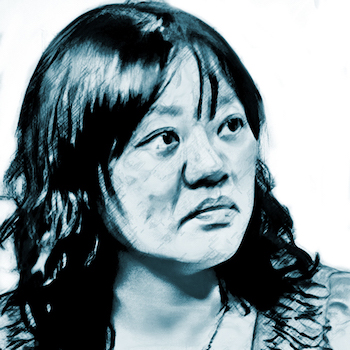
On 30 October 2021 AFP reported that a group of UN human rights experts called for the immediate release of Vietnamese activist Pham Doan Trang (pic), who is awaiting trial after a year in detention. The prominent Vietnamese author, who campaigns for press freedom and civil rights, was arrested in October last year. [see: https://www.trueheroesfilms.org/thedigest/laureates/fe8bf320-1d78-11e8-aacf-35c4dd34b7ba]

Trang has pushed for change on a host of controversial issues, including land grabs and LGBTQ rights. “Pham Doan Trang is only the latest victim of the authorities’ use of vaguely-defined propaganda charges to persecute writers, journalists and human rights defenders,” the experts said in a statement.

The UN experts said the charges against her stem from at least three human rights reports she co-authored, plus interviews with foreign media. They accuse the authorities of “criminalising the exercise of their right to freedom of opinion”.

We urge the authorities to immediately and unconditionally release Ms Pham Doan Trang.

The UN experts included the special rapporteurs on the right to freedom of opinion, on human rights defenders, and on the right to physical and mental health.

See also: https://humanrightsdefenders.blog/2020/10/08/vietnam-detaines-human-rights-defender-pham-doan-trang-just-after-concluding-its-annual-human-rights-dialogue-with-the-usa/

https://www.thestar.com.my/aseanplus/aseanplus-news/2021/10/30/un-experts-call-for-release-of-vietnamese-activist

UN Experts urge EU to take the lead on protecting human rights defenders in context of business

September 7, 2021

The European Union has a chance to set an example for the entire world by protecting people who risk their lives standing up for human rights in the context of business activities, said Mary Lawlor, UN Special Rapporteur on the situation of human rights defenders, joined by the UN Working Group on the issue of human rights and transnational corporations and other business enterprises known as the Working Group on Business and Human Rights), Mr. Surya Deva (Chairperson), Ms. Elzbieta Karska (Vice-Chairperson), Mr. Githu Muigai, Mr. Dante Pesce, and Ms. Anita Ramasastry; and Mr. Fernand de Varennes, Special Rapporteur on minority issues.

The European Union legislative initiative on mandatory human rights and environmental due diligence “must include safeguards for human rights defenders,” they stated on 6 September 2021.

The European Union, as the world’s largest single market, has a golden opportunity to advance the safety and security of human rights defenders who are working around the globe to build more just societies, often at great personal risk,” Lawlor said. “A robust, binding regime in the EU covering companies of all sizes would provide a powerful model for other parts of the world.”

Human rights defenders often risk their lives confronting violations along supply chains, Lawlor said. “Parent companies must carry out human rights and environmental due diligence throughout their supply chains to ensure human rights defenders are not subjected to reprisals from their subsidiaries, sub-contractors and suppliers,” she said. “The EU must ensure that where such retaliation happens, these companies can be held accountable.”

In the 10 years since the Human Rights Council adopted the UN Guiding Principles on Business and Human Rights, business compliance has remained extremely low. In the same period, increasing numbers of human rights defenders have been killed for their work. The UN Working Group on Business and Human Rights has recently developed guidance setting forth expectations that businesses address risks to defenders and that States address this as part of their own mandatory human rights due diligence regulations.

People who stand up for human rights related to environmental protection, community land rights, indigenous peoples’ rights, poverty, minorities and business accountability – often intertwining issues – are most at risk of being attacked or killed.

Where human rights defenders come under attack in the context of business activities it is a clear sign of other underlying human rights issues.” Lawlor said. Potential risks for human rights defenders should be seen as a key component of companies’ due diligence duty to identify and assess human rights risks connected to their projects, and must be specifically included in the expected EU proposal.

Business enterprises must also be obliged to consult with defenders under the EU initiative, and the door should be kept open for defenders to bring issues to companies’ attention at every stage within business projects,” Lawlor said. “

“Now is the time for the EU to give new life to its founding principles by delivering a strong law that could help reduce the number of lives lost in defence of human rights,” Lawlor said.

https://www.miragenews.com/golden-opportunity-for-eu-to-take-global-lead-626609/

UN experts demand release of human rights defender Dawit Isaak, imprisoned without trial in Eritrea since 2001

August 19, 2021

On 18 August 2021 UN experts demanded the release of journalist and human rights defender Dawit Isaak, imprisoned without trial in Eritrea since 2001, amid uncertainty about whether he is even still alive.

To this day, Dawit Isaak has never been charged with a crime, spent a day in court or spoken to his lawyer,” said Mary Lawlor, UN Special Rapporteur on the situation of human rights defenders. “The level to which the Eritrean Government is ignoring Mr. Isaak’s basic, fundamental human rights is appalling. He must be released at once.”

In the first years of his detention, “we received information that Mr. Isaak was often taken to hospital, which was concerning in itself,” Lawlor said, “Now we receive no news, and that’s worse. We fear for his life. At an absolute minimum, Eritrea must immediately present evidence that he is alive and well.”

Dawit Isaak, 56, a dual Swedish-Eritrean national, established one of Eritrea’s first independent media outlets in the 1990s, the Setit newspaper. In May 2001, it published open letters written by a group of politicians known as the G15 urging the Government to hold open elections and implement a newly drafted Constitution. With the world’s attention diverted by the September 11 terrorist attacks, Mr. Isaak was arrested on 23 September 2001.

According to a credible source, Mr. Isaak was alive in September 2020, the first sign of life in seven years. He is reportedly being held in Eiraeiro prison, a detention centre infamous for its conditions, where torture is allegedly common practice and where many inmates have reportedly died in custody.

The enforced disappearance of Mr. Isaak for almost two decades is extremely concerning,” said Mohamed Abdelsalam Babiker, Special Rapporteur on Eritrea. “The Government of Eritrea has not confirmed his whereabouts or provided any solid evidence about his state of health in all these years. It has denied torture allegations but has not allowed anyone to visit Mr. Isaak.

Lawlor said she had rarely witnessed such disregard for human life as she documents cases of human rights defenders in long-term detention around the world.

“Locking up human rights defenders for long periods of time may feel like a guarantee against internal scrutiny,” Lawlor said. “But we have not forgotten.”

Mr. Isaak’s work has been recognised by a number of prestigious awards, including UNESCO’s Freedom of Press Award {see: https://www.trueheroesfilms.org/thedigest/laureates/9329f937-0d8b-4543-8664-2263e968adbf] and he was a finalist for the Sakharov Award in 2017

The Special Procedures mandate holders are in contact with the Eritrean authorities on this matter.

The experts’ call is endorsed by: Ms. Tlaleng Mofokeng, Special Rapporteur on the right to physical and mental health; the Working Group on Enforced or Involuntary Disappearances: Mr. Tae-Ung Baik (Chair), Mr. Henrikas Mickevičius (Vice Chair), Ms. Aua Balde, Ms. Gabriella Citroni and Mr. Luciano Hazan; and Mr. Morris Tidball-Binz, Special Rapporteur on extrajudicial, summary or arbitrary executions.

https://www.miragenews.com/un-experts-demand-release-of-human-rights-615941/

Anaïs Marin – UN Expert on Belarus: “Full-scale assault” ongoing against civil society

July 6, 2021
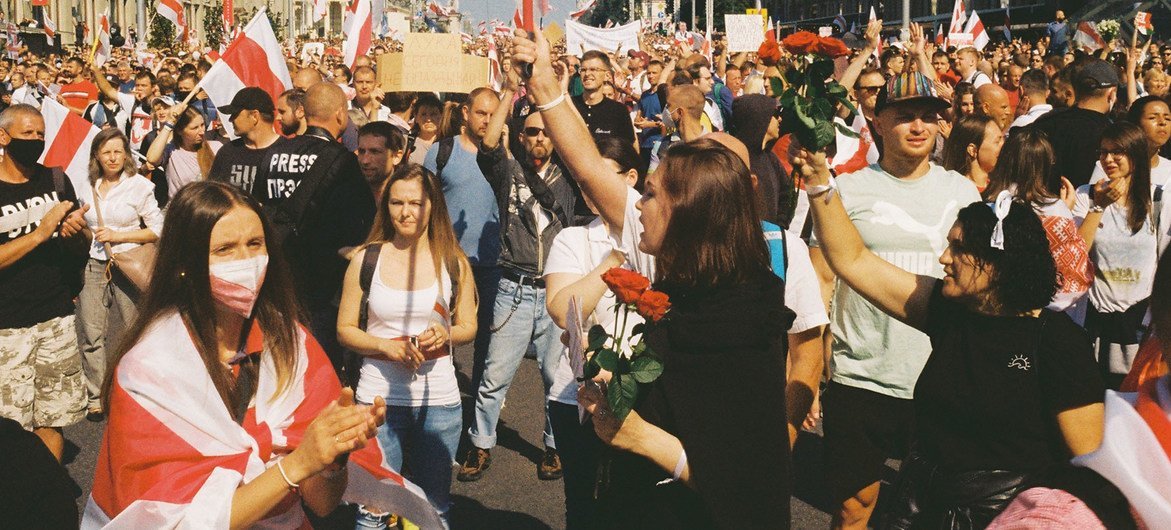
Protestors at the March of Peace and Independence in Minsk, Belarus (file photo).

Unsplash/Andrew KeymasterProtestors at the March of Peace and Independence in Minsk, Belarus (file photo). 5 July 2021

Belarus has witnessed an unprecedented human rights crisis over the past year, the independent expert appointed to monitor the country said on Monday 5 July 2021, calling on authorities to immediately end their policy of repression and fully respect the legitimate aspirations of their people.

Belarus has witnessed an unprecedented human rights crisis over the past year, the independent expert appointed to monitor the country said on Monday, calling on authorities to immediately end their policy of repression and fully respect the legitimate aspirations of their people.

In her annual report to the Human Rights CouncilAnaïs Marin said she had received reports of massive police violence used against protesters – since last August’s disputed presidential election brought millions onto the streets to contest the result – cases of enforced disappearance, allegations of torture and ill-treatment and the continuous intimidation and harassment of civil society actors.

Broad spectrum of abuses

“The Belarusian authorities have launched a full-scale assault against civil society, curtailing a broad spectrum of rights and freedoms, targeting people from all walks of life, while systematically persecuting human rights defenders, journalists, media workers and lawyers in particular,” Ms. Marin told the Council.

“The crackdown is such that thousands of Belarusians have been forced or otherwise compelled to leave their homeland and seek safety abroad; yet the downing of a civilian plane in Minsk on 23 May, for the apparent sole purpose of arresting a dissident who was on board, signaled that no opponent to the current Government is safe anywhere”, the expert added.

She noted that the significant deterioration of the human rights situation in Belarus started in late spring 2020 and climaxed in the aftermath of the presidential election of 9 August, the results of which were widely contested.

Malpractices were reported during the election campaign, as most opposition candidates were forced out of the race, while the vote count was marred by allegations of fraud.

Unjustified and disproportionate

“Distrust in the legitimacy of the electoral outcome triggered spontaneous and largely peaceful popular protests to which the authorities responded with unjustified, disproportionate and often arbitrary force”, said the Special Rapporteur, who reminded that over 35,000 people have been detained since then for trying to exert their right to freedom of peaceful assembly, including women and children arrested for peacefully demonstrating solidarity with victims of police violence.

“Since August 2020 I received innumerable allegations of beatings and ill-treatment, including torture in detention, but also allegations of rapes, enforced disappearances and even killings – all remain to be investigated.”

She said she was also alarmed by the hundreds of cases of criminal prosecution of human rights defenders and lawyers, journalists and medical staff, which have taken place, simply for doing their job.

Abusers protected

“As the legal and judicial systems in Belarus protect the perpetrators of grave human rights violations, continuing impunity means that there is no guarantee of non-reoccurrence,” Ms. Marin said. “Hence the international community should keep on demanding the release and rehabilitation of all those still detained on political grounds, and support initiatives aiming at bringing perpetrators of the most serious crimes to account”.

The UN expert also expressed concerns about the impact the ongoing crackdown has had on the right to education, pointing to discriminatory measures that persist in Belarus against people with disabilities, ethno-linguistic minorities, people living in rural areas and those deprived of liberty.

‘Disastrous consequences’

I call on the Belarusian authorities to put an end to their policy of repression, to immediately and unconditionally release those arbitrarily detained, and to ensure full respect for the human rights and legitimate democratic aspirations of people in Belarus”, the UN expert said, warning that a further aggravation of the human rights crisis and international self-isolation could have disastrous consequences for the whole country.

See also: https://humanrightsdefenders.blog/2021/06/28/fidh-launches-website-tracking-systematic-human-rights-violations-in-belarus/

https://news.un.org/en/story/2021/07/1095302

UN human rights experts ‘alarmed’ by treatment of human rights defenders in Cambodia.

November 17, 2020

Voicing concerns over increasing restrictions on civil society in Cambodia, a group of independent UN human rights experts have called for an immediate end to the systematic detention and criminalization of human rights defenders. 

In a statement on 16 November 2020 Mary Lawlor, Special Rapporteur on the situation of human rights defenders, said she was “alarmed” by credible reports that at least 21 human rights defenders have been subjected to threats, arbitrary arrests and detentions in the past three months. 

I have reviewed publicly available footage where excessive force has been used by the security forces to prohibit human rights defenders, many of them women, from exercising their rights to peaceful assembly. Promotion and protection of human rights through peaceful means is not a crime,” she said. 

Ms. Lawlor referred to several cases in which detention has reportedly been used to punish human rights defenders for carrying out their work.  

Rights defender Rong Chhun was arrested on 31 July after taking up the case of farmers in Tbong Khmom province who had their land taken in connection with a border demarcation between Cambodia and Viet Nam.  

See also: https://humanrightsdefenders.blog/2020/07/16/even-simply-remembering-kem-ley-is-forbidden-in-cambodia/

Subsequently, several other human rights defenders who protested his detention were also arrested. Twelve remain in pre-trial detention, have been denied bail, and are facing charges punishable by up to two years in prison. 

Human rights defenders should never be criminalized for their courageous efforts to protect the rights of others … I am increasingly concerned by the circular pattern of detaining them for advocating against the detention of or violations against fellow defenders,” said Ms. Lawlor. 

There seems to be no limit to who the authorities will target, making their actions in recent months appear as a concerted attempt to erode civic space and stifle the work of human rights defenders,” she added. 

Rhona Smith, Special Rapporteur on the situation of human rights in Cambodia, also voiced concerns over the restrictions, urging the authorities to end “this harmful approach to human rights defenders and facilitate freedom of expression and assembly, for the benefit of all members of society in Cambodia.” [see also; https://humanrightsdefenders.blog/2017/03/11/even-landmark-un-decision-does-not-change-cambodias-treatment-of-human-rights-defenders/]

The statement was also endorsed by the special rapporteurs on the rights of peaceful assembly and association, and on the freedom of opinion and expression, and the members of Working Group on discrimination against women and girls

https://news.un.org/en/story/2020/11/1077702  

In 3 months the Escazú Agreement should come into force

November 11, 2020

On 9 November 2020, a very large group of UN human rights experts welcomed the impending entry into force of the first environmental human rights treaty in Latin America and the Caribbean, known as the Escazú Agreement, lauding it as a ground-breaking pact to fight pollution and secure a healthy environment. [see: https://humanrightsdefenders.blog/2019/12/23/escazu-agreement-to-protect-environmental-human-rights-in-latin-america-stalling/]

In the face of proliferating environmental conflicts and persistent intimidation, harassment and detention of environmental human rights defenders, the Escazú Agreement offers hope to the countless individuals and communities in the region that suffer from pollution and the negative impacts of extractive industries,’ said the UN Special Rapporteur on toxics and human rights, Marcos Orellana.

The Escazú Agreement includes strong protections for indigenous peoples and environmental human rights defenders, at a time when they are subject to unprecedented levels of violence.

The experts expressed hope that the treaty could serve as a model for other regions to improve cooperation and mobilise efforts for better governance of natural resources and environmental protection through transparency, accountability and community engagement. By ensuring people’s rights to information, participation, and access to justice, the Agreement affirms a strong rights-based approach to environmental governance.

The experts also voiced concern over disinformation campaigns that have obfuscated public debate in certain countries of the region.

‘We urge those countries who have yet to ratify or adhere, to join regional efforts and demonstrate best practice for a more just and sustainable region,’ the experts said.

The Escazú Agreement will enter into force 90 days following the 11th ratification. The experts commended the 11 countries that ratified the agreement: Antigua and Barbuda, Argentina, Bolivia, Ecuador, Guyana, Nicaragua, Mexico, Panama, Saint Vincent and the Grenadines, Saint Kitts & Nevis, and Uruguay.

‘The remaining nations in the Latin America and Caribbean region should move quickly towards ratifying the Escazú Agreement in order to maximise the treaty’s effectiveness in protecting human rights in the face of today’s interconnected climate, biodiversity, and pollution crises,’ the experts said.

https://www.marketscreener.com/news/latest/UN-Experts-Hail-Landmark-Environmental-Treaty-in-Latin-America-and-the-Caribbean–31739025

UN Experts Appalled by the Enforced Disappearance of Idris Khattak even though now re-appeared

June 30, 2020

UN experts no only jointly addressed three big countries [see: https://humanrightsdefenders.blog/2020/06/27/un-experts-address-3-big-ones-usa-china-and-india/] but on 30 june 2020 a group of experts also spoke out on the re-appearance of Idris Khattak, a human rights defender who went missing last year (https://humanrightsdefenders.blog/2019/11/25/how-human-rights-defender-idris-khattak-went-missing-in-pakistan/)

While welcoming of course the disclosure by the Pakistani Government of the whereabouts of Khattak, they strongly condemned his enforced disappearance. On 16 June 2020, the Pakistani authorities acknowledged for the first time that he has been in the custody of law enforcement authorities and detained incommunicado since then.

“The enforced disappearance of Mr. Khattak, which began over seven months ago, is an intolerable attack on his legitimate work of monitoring, documenting and advocating against a range of human rights and minority violations in the Khyber Pakhtunkhwa and the former Federally Administered Tribal Areas in Pakistan,” the independent experts said.

Even today, Mr. Khattak remains deprived of the most basic protections of the law, and his enforced disappearance subjected him and his family to severe and prolonged suffering, that could amount to torture,” the experts said. “Given the arbitrariness of Mr. Khattak’s arrest and detention, and the very serious violations of his integrity and procedural rights, we call on the Government of Pakistan to immediately release Mr. Khattak and to provide him and his family with adequate redress and rehabilitation,” said the experts..

The experts stressed that there can be no justification for the Government’s failure to end enforced disappearances and that any such violation must be investigated, prosecuted and punished.

Truth and justice must be served, both in the case of Idris Khattak and for countless other victims and their families in Pakistan. State-sponsored disappearances and related impunity may amount to a crime against humanity and must end now,” they said.

https://www.ohchr.org/EN/NewsEvents/Pages/DisplayNews.aspx?NewsID=26010&LangID=E

17 May was International Day against Homophobia: COVID-19 makes things worse

May 18, 2020

The commemoration on 17 May comes as the world continues to battle the COVID-19 pandemic which has increased the vulnerability of lesbian, gay, bisexual, transgender and intersex (LGBTI) people. On the eve of the International Day Against Homophobia, Transphobia and Biphobia (IDAHOBIT) a large group of United Nations and international human rights experts (for names see the link below) call on States and other stakeholders to urgently take into account the impact of COVID-19 on lesbian, gay, bisexual, transgender and gender diverse (LGBT) persons when designing, implementing and evaluating the measures to combat the pandemic.

…..
COVID-19, and the measures taken to address it, exacerbate inequalities and discrimination. The existence of criminalization laws, for example, makes LGBT persons more vulnerable to police abuse and arbitrary arrest and detention in the context of movement restrictions and curfews. While contributing to the fight against the pandemic by staying at home, LGBT children, youths and elders are forced to endure prolonged exposure to unaccepting family members, which exacerbates rates of domestic violence and physical and emotional abuse, as well as damage to mental health. In many jurisdictions, LGBT persons, particularly those most impoverished or without proper documentation, rely overwhelmingly on informal economies made impossible by COVID-19 restrictions. The socio-economic consequences of the pandemic and the loss of income might also increase the vulnerabilities of LGBT persons to human trafficking and sexual exploitation. The reallocation of health resources has also created or exacerbated shortages of antiretrovirals for those living with HIV, while also impacting the ability of trans men and women to receive hormonal therapy or gender-affirming care. Gender-based curfew laws and policies have reportedly condemned gender-diverse persons to permanent seclusion while making trans individuals targets for humiliation and violence when going out.  

The pandemic has also created a context conducive to increased persecution. Some States have enacted measures which intentionally target LGBT persons under the guise of public health, including proposing legislation to deny transgender and gender diverse persons of their legal recognition. Hate speech explicitly or implicitly inciting violence against LGBT persons has been on the rise, including discourse by prominent political or religious leaders blaming the pandemic on the existence of LGBT persons in the community. Surveillance and other digital technologies enacted to track COVID-19 carriers increase risks of infringing privacy and exacerbating stigma.

………We therefore urge States and other stakeholders, on the eve of this 17 May 2020 and in times of COVID-19, to give visibility to and protect LGBT persons in the context of the pandemic. We call on States to pursue all means necessary – including conducting research, adopting legislation, public policy, and ensuring access to justice mechanisms – to ensure that this public health emergency will neither exacerbate existing misconceptions, prejudices, inequalities or structural barriers, nor lead to increased violence and discrimination against persons with diverse sexual orientations and gender identities. We urge all stakeholders, particularly States, to urgently implement lines of action designed to sustain and ensure the continuity of the work of civil society and human rights defenders – the capacities existing within this sector must not be put in peril. And, to effectively meet these objectives, we urge States to engage with LGBT persons, organizations and communities in the design, implementation and evaluation of the measures adopted to respond to the pandemic.The history of LGBT persons, like others subjected to discrimination and violence, has been one of suffering, endurance and hope – a vital struggle for freedom and equality in the face of singular adversity. During the COVID-19 pandemic, we call upon State authorities to listen to the particular concerns of LGBT persons, respect their expertise over their own lives and communities, and accept their solidarity in the construction of new realities of freedom and equality for humankind. 

Already facing bias, attacks and murder simply for who they are or whom they love, many LGBTI people are experiencing heightened stigma as a result of the virus, as well as new obstacles when seeking health care,” added UN SG Guterres. There are also reports of COVID-19 directives being misused by police to target LGBTI individuals and organizations.”

“LGBTI people are often exposed to additional stigma, discrimination and violence, including when seeking medical services – and perhaps saddest of all, within their own families during lock-downs. They are also in some places being treated as scapegoats for the spread of the virus,” UN High Commissioner for Human Rights, Michelle Bachelet said. Referencing the theme for the international day, Ms. Bachelet urged everyone to stand up against hate and ‘break the silence’ surrounding the discrimination and violence suffered by LGBTI people.

See also: https://humanrightsdefenders.blog/2017/05/21/nine-things-everyone-needs-to-know-about-international-lgbti-rights/

https://www.coe.int/en/web/commissioner/-/covid-19-the-suffering-and-resilience-of-lgbt-persons-must-be-visible-and-inform-the-actions-of-states

https://news.un.org/en/story/2020/05/1064232