Posts Tagged ‘Uganda’
Video interview with Cleopatra KAMBUGU from Uganda
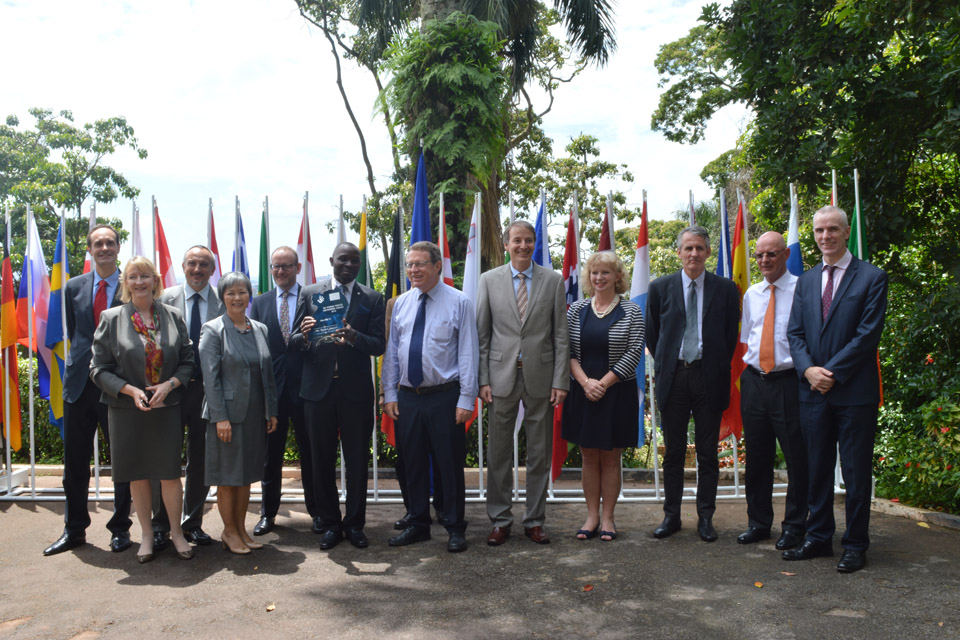
April 25, 20172017 EU Human Rights Defenders Award In Uganda: Call for nominations
March 24, 2017Interesting example of how governments (here the EU) can work together to protect human rights defenders in a specific country (here Uganda). Since a few years there is an annual EU HRD Award to recognise and honour the achievements of an individual Human Rights Defender active in Uganda.
Source: 2017 EU Human Rights Defenders Award: Call for nominations – GOV.UK
Uganda NGO offices regularly ransacked – coincidence?
June 14, 2016Ugandan police have been urged to probe incessant attacks on non-governmental organisations and human rights defenders amid the recent killing of security guards on premises. Since April 2016, intruders have broken into the offices of at least three groups in the city: the Forum for African Women Educationalists (FAWE), the Human Rights Awareness and Promotion Forum (HRAPF), and the Human Rights Network for Journalists-Uganda (HRNJ-Uganda). At HRAPF, the assailants beat to death security guard. In an earlier attack on the premises of Uganda Land Alliance, another security guard was beaten to death. No one has been arrested for the murders.
A 13 June joint letter from 31 Ugandan and international organizations tells it all:
RE: Break-ins targeting offices of Ugandan human rights organizationsPrint
Dear General Kayihura,
We, the undersigned national and international organizations engaged in various ways in work in Uganda, are writing to express our grave concern about a wave of break-ins targeting offices of Ugandan civil society groups.
We are particularly concerned by the manner in which the Uganda Police Force (UPF) has responded – during investigations, and through public statements – regarding these incidents. Recent break-ins appear to form part of a longer-term, systemic, and worsening pattern of attacks on Ugandan civil society organizations targeting their legitimate and valuable work.
Since September 2012, there have been over two dozen break-ins at NGO offices across Uganda. Private security guards have been killed in the course of two break-ins, registered in July 2015 and May 2016. Documents, electronic data, and other confidential and sensitive information has been stolen in many cases, and indeed, appears to have been the objective in cases where expensive technology was left untouched.
The UPF has so far failed to make consistent, meaningful efforts to fulfill its legal obligations under the constitution and international law to investigate such incidents robustly and ensure prosecutors have the best evidence possible to bring perpetrators to justice.
Each incident has been reported to police in a timely fashion. But police efforts to duly investigate and collect evidence such as witness statements, DNA samples, and closed circuit security footage, have been limited and lacked follow-up. In some cases, the UPF has provided no response to the complainant, or more commonly, no substantive update as to the status of investigations. Recent comments from official UPF spokespersons have provided no reassurance that investigations have been robustly carried out or that police are determined to identify and bring to justice perpetrators. Based on discussions with those affected, we are unaware of any instance among the over two dozen break-ins reported to the UPF since September 2012 in which there has been a successful prosecution for any charge.
Recent attacks on human rights organizations include the following:
- On the early morning of May 22, 2016, intruders broke into the offices of the Human Rights Awareness and Promotion Forum (HRAPF), an organization that provides legal support and representation to marginalized people. The assailants beat to death the security guard, Emmanuel Arituha, ransacked the offices of the director and the deputy director, and stole documents and a television screen. The assailants did not take computers, laptops and other electronic gadgets.
- On the night of May 24, 2016, intruders broke into the offices of the Forum for African Women Educationists (FAWE), an organization that promotes gender equity and equality in education. They stole a server, laptop and desktop computers, cameras, and projectors.
- On the afternoon of April 10, 2016, a visitor to the office of the Human Rights Network for Journalists-Uganda (HRNJ-Uganda) – a network of journalists working to advance human rights – apparently offered the security guard a plate of food containing sedatives. Once he had passed out, four men entered the premises and searched the office, as evidenced by closed circuit television footage.
Organizations broken into in 2014 included Human Rights Network, the Anti-Corruption Coalition Uganda, the Uganda Land Alliance, Action Group for Health, Human Rights and HIV/Aids, and Lira NGO Forum, all known for undertaking work on sensitive subjects – including corruption, land rights, freedom of expression, and the rights of lesbian, gay, bisexual, transgender and intersex (LGBTI) people – and for voicing criticism of government policies. We recall that you established a committee of eight police officers to investigate the 2014 NGO break-ins; to our knowledge, however, no one has been brought to book.
We call on the police to undertake speedy and thorough investigations in order to bring the perpetrators of these attacks to justice. As a state party to the African Charter on Human and Peoples’ Rights and the International Covenant on Civil and Political Rights, the Ugandan government is obligated to ensure the right to life and the right to liberty and security of the person, as well as the right to freedom of association, which are severely impeded when organizations cannot conduct their work in a safe and secure environment.
Under the UN Declaration on Human Rights Defenders, states have a duty to protect human rights defenders “against any violence, threats, retaliation, de facto or de jure adverse discrimination, pressure or any other arbitrary action” as a consequence of their work to uphold human rights.[1] According to the UN Special Rapporteur on Human Rights Defenders:
States should prevent violations of the rights of defenders under their jurisdiction by taking legal, judicial, administrative and all other measures to ensure the full enjoyment by defenders of their rights; investigating alleged violations; prosecuting alleged perpetrators; and providing defenders with remedies and reparation (A/65/223, para. 34). Examples of actions or omissions which contravene the State´s duty of due diligence include the failure to provide effective protection to defenders at risk who have documented attacks and threats by non-State actors or who have been granted interim protection measures by regional human rights mechanisms (A/65/223, para. 35).[2]
The lack of accountability and persistent impunity for attacks on human rights defenders and their offices sends a message that such attacks are condoned and tolerated by the authorities, which has apparently led to a situation in which attackers are willing to resort to extreme violence, including killing a security guard, in order to accomplish their aims. Ending impunity is essential to ensure a safe and enabling environment for human rights defenders.
We kindly request that you provide us a public statement clarifying these concerns:
- What steps did police undertake to investigate break-ins of non-governmental organizations in 2014 after the establishment of a committee of eight police officers? Did the investigations result in any arrests or prosecutions and what is the status of the committee now?
- What steps have the police taken to investigate the three most recent attacks and break-ins at the offices of FAWE, HRAPF, and HRNJ?
- What steps will police take to ensure that human rights defenders who have been victims of attacks, including members of HRPAF, are effectively protected from further acts of violence?
We look forward to hearing from you and to further collaboration with you to advance the security, protection and human rights of all, including human rights defenders, in Uganda.
Yours sincerely,
Amnesty International, Kenya
Centre for Human Rights – University of Pretoria, South Africa
Chapter Four Uganda, Uganda
COC-Netherlands, Netherlands
Commonwealth Human Rights Initiative, India
Community Development and Child Welfare Initiatives (CODI) Uganda, Uganda
EHAHRDP/Defend Defenders, Uganda
FOKUS – Forum for Women and Development, Norway
Foundation for Human Rights Initiative, Uganda
Freedom House, United States
FRI – The Norwegian Organization for Sexual and Gender Diversity, Norway
Health GAP, United States
Human Dignity Trust, United Kingdom
Human Rights Awareness and Promotion Forum, Uganda
Human Rights Network for Journalists, Uganda
Human Rights Network, Uganda
Human Rights Watch, United States
Icebreakers, Uganda
International Lesbian, Gay, Bisexual, Trans and Intersex Association (ILGA), Switzerland
Initiative for Social and Economic Rights (ISER), Uganda
Legal Aid Service Providers Network-Laspnet, Uganda
NGO Forum, Uganda
Pan Africa ILGA, South Africa
Robert F. Kennedy Human Rights, United States
Sexual Minorities Uganda (SMUG), Uganda
The African Centre for Treatment and Rehabilitation of Torture Victims (ACTV), Uganda
The National Coalition on HRDs, Uganda
Uganda Land Alliance, Uganda
Uganda Network of AIDS Service Organisations (UNASO), Uganda
UHAI-EASHRI, Kenya
Unwanted Witness, Uganda
CC:
Honorable Jeje Odongo, Minister of Internal Affairs, Uganda
Ambassador Deborah Malac, Embassy of the United States of America, Kampala, Uganda
Ambassador Kristian Schmidt, Head of European Union Delegation to Uganda
Ambassador Alison Blackburne, British High Commissioner to Uganda
[1] United Nations General Assembly, A/RES/53/144, March 1999, http://www.ohchr.org/Documents/Issues/Defenders/Declaration/declaration.pdf, article 12.
[2] UN Special Rapporteur on the situation of human rights defenders, “Commentary to the Declaration
on the Right and Responsibility of Individuals, Groups and Organs of Society to Promote and Protect Universally Recognized Human Rights and Fundamental Freedoms,” July 2011, http://www.ohchr.org/Documents/Issues/Defenders/CommentarytoDeclarationo…
2015 Right Livelihood Awards include Kasha from Uganda
October 1, 2015The 2015 Right Livelihood Awards were announced today in Stockholm:![]()
Three Laureates will share the cash award of SEK 3 million (ca. EUR 320 000):
- SHEILA WATT-CLOUTIER (Canada) “for her lifelong work to protect the Inuit of the Arctic and defend their right to maintain their livelihoods and culture, which are acutely threa
tened by climate change.“ - KASHA JACQUELINE NABAGESERA (Uganda) “for her courage and persistence, despite violence and intimidation, in working for the right of LGBTI people to a life free from prejudice and persecution.” Kasha was the Laureate of the 2011 Martin Ennals Award.
- GINO STRADA, co-founder of EMERGENCY, (Italy) “for his great humanity and skill in providing outstanding medical and surgical services to the victims of conflict and injustice, while fearlessly addressing the causes of war.“
The 2015 Right Livelihood Honorary Award goes to TONY DE BRUM and THE PEOPLE OF THE MARSHALL ISLANDS “in recognition of their vision and courage to take legal action against the nuclear powers for failing to honour their disarmament obligations under the Nuclear Non-Proliferation Treaty.”
The Awards will be presented at a ceremony in Stockholm on 30 November 2015, hosted by the Society for the Right Livelihood Award in the Swedish Parliament.
Human Rights Tulip makes public its 2015 Jury
September 10, 2015Transparency in the composition of the jury of human rights awards is not always very high, so the announcement by the Netherlands Ministry of Foreign Affairs on the composition of its 2105 Tulip jury is to be welcomed:

Ugandan Margaret Sekaggya is to chair the jury. She is a human rights lawyer who from 2008 until 2014 was UN Special Rapporteur on the Situation of Human Rights Defenders. She is the founder and Executive Director of the Human Rights Centre Uganda and sits on the Board of a number of NGOs, including True Heroes Films.
Ales Bialiatski is a distinguished human rights defender from Belarus and the founder of the Viasna Human Rights Center.
Nicola Jägers is a professor international human rights law and her research is mainly focused on the expansion of trade beyond borders and the universaling effects of the human rights movement.
Shahzad Ahmed has made his voice known by fighting against online censorship in Pakistan.
Amira Yahyaoui is a Tunisian blogger, activist and founder of the NGO Al Bawsala.
For more on awards, see: https://thoolen.wordpress.com/2013/11/27/my-post-number-1000-human-rights-awards-finally-made-accessible-for-and-by-true-heroes/
4 Human Rights Defenders receiving the Alison des Forges Award 2015
August 11, 20152015 Alison Des Forges Award Honorees. Top: Khadija Ismayilova (Azerbaijan), Yara Bader (Syria), Father Bernard Kinvi (CAR – 2014 winner). Bottom: Nicholas Opiyo (Uganda), Nisha Ayub (Malaysia), Dr. M.R. Rajagopal (India – 2014 winner). © Jahangir Yusif, Francesca Leonardi (Internazionale), 2014 Human Rights Watch, 2015 Rebecca Vassie, 2015 Nisha Ayub, Paramount Color Lab, Ulloor, Trivandrum
Human Rights Watch just announced that its Alison Des Forges Award winners 2015 come from Uganda, Syria, Malaysia and Azerbaijan:
Nisha Ayub, Malaysia
For over a decade, Nisha Ayub has championed the rights of transgender people in Malaysia through support services, legal and policy analysis, and public outreach. Human Rights Watch honors Nisha Ayub for challenging the discriminatory laws that prevent transgender people in Malaysia from living free of violence, fear, and oppression.
Yara Bader, Syria
Yara Bader, a journalist and human rights activist, works to expose the detention and torture of activists – including her husband, Mazen Darwish recently released – in war-torn Syria. She has experienced first-hand how the Syrian government uses its security and intelligence agencies to brutally crack down on independent voices. Human Rights Watch honors Yara Bader for her tremendous courage in speaking out on behalf of Syrian detainees despite grave risks to her safety.
Khadija Ismayilova, Azerbaijan
Khadija Ismayilova, a prominent investigative journalist in Azerbaijan, has dedicated her life to the fight against corruption, for human rights, and for freedom for political prisoners in a country under increasingly harsh authoritarian rule. Human Rights Watch honors Khadija Ismayilova for her extraordinary courage as a journalist and human rights activist in the face of an escalating crackdown on freedom of expression in Azerbaijan. She is currently behind bars. see also: https://thoolen.wordpress.com/2014/12/11/khadija-ismayilova-azerbaijan-is-not-deterred/
Nicholas Opiyo, Uganda
Nicholas Opiyo is a leading human rights lawyer and founder of Chapter Four Uganda, a human rights organization. He has successfully argued several high-level constitutional challenges, including to the notorious Anti-Homosexuality Act of 2013, which was declared null and void in August 2014. Human Rights Watch honors Nicholas Opiyo for his unfaltering dedication to upholding the human rights of all Ugandans by promoting universal access to justice.
The award is named for Dr. Alison Des Forges, senior adviser at Human Rights Watch for almost two decades, who died in a plane crash in New York State on February 12, 2009. For more on the award, see: http://www.brandsaviors.com/thedigest/award/alison-des-forges-award-extraordinary-activism. See also: https://thoolen.wordpress.com/2015/04/19/events-in-memory-of-alison-des-forges-at-buffalo-university/
The four 2015 honorees will be honored at the Voices for Justice Human Rights Watch Annual Dinners held in more than 20 cities worldwide in November 2015 and March-April 2016. Also two 2014 recipients of the award, Father Bernard Kinvi from the Central African Republic and Dr. M.R. Rajagopal from India will included in this series of events:
Father Bernard Kinvi, Central African Republic
Father Bernard Kinvi is a Catholic priest who directs the hospital at the Catholic mission in Bossemptele, Central African Republic. In early 2014, when sectarian violence devolved into coordinated violence targeting Muslim civilians, Kinvi saved the lives of hundreds of besieged Muslims, whom he gathered from their homes and sheltered in the Catholic church. Despite repeated death threats, Kinvi persisted in protecting those in his charge until they could be taken to safety. Human Rights Watch honors Father Bernard Kinvi for his unwavering courage and dedication to protecting civilians in the Central African Republic.
Dr. M. R. Rajagopal, India
Dr. M. R. Rajagopal is a leading palliative care physician from India who, for more than 20 years, has battled conditions that cause patients to suffer severe pain unnecessarily. As clinician, academic, and activist, Rajagopal is a global force behind efforts to promote and put into practice palliative care as a human right. He built the world’s most successful community-based palliative care program, and he and his organization, Pallium India, played a key role in convincing India’s government to make morphine accessible. Human Rights Watch honors Dr. M. R. Rajagopal for his efforts to defend the right of patients with severe pain to live and die with dignity.
Gilbert Sendugwa: African human rights defender and freedom of information campaigner
May 15, 2015 
Interview with Gilbert Sendugwa, Coordinator of Africa Freedom of Information Centre (AFIC), a pan-African network based in Kampala, Uganda, published by the International Service for Human Rights [ISHR] on 28 April 2015:
‘Before I started working with the Centre, I worked with issues of health and education. And it was always a big issue: information. I always asked: How do we get the information we need? How do people get the information they need from the Government in order to get on in life?’ In 2010 Gilbert went to work for AFIC, a network which has grown to 35 member organisations from 22 African countries, which are working on issues of access to information at the national level.
‘The main focus of the Centre so far has been to push for ratification of the many African instruments which enshrine the right of freedom of information, as well as ensure that these rights are reflected in national legislation and practice’. They do this through international advocacy campaigns and supporting national strategies. And with a good degree of success. In 2010 Angola, Ethiopia, South Africa, Uganda and Zimbabwe were the only States with Freedom of Information Legislation. The number now totals 16, and with Tanzania likely to become number 17 next month….
Nonetheless, as Gilbert says ‘We have come to see that the passage of laws might be the easiest part’. Therefore AFIC is putting increasingly more energy into initiatives for implementation.
‘The objective of these laws is to empower the people. Implicitly, this means taking power away from those who have it and giving it to the population, so that they can help themselves advance in all of their rights. However, sometimes this provokes fear in the powerful and a reluctance to provide the information’.
Gilbert suggests that this fear can manifest itself in two ways: some Governments will not legislate on the issue, whilst others do, but ensure that the environment for civil society is not conducive to people having the confidence to use the law. He says that in many States fear of reprisals deters requests for information. A successful law on access to information, it seems, must go hand in hand with a safe and enabling environment for human rights defence in general. However he points out that a common mistake of advocates on this issue is to see the State as a monolith. Rather, he argues, when it comes to implementation it is necessary to look at the various agencies from which you are soliciting information. ‘It is them who can grant the information or not. If you look at Uganda – as pointed out in their review by the ACHPR this week – some ministries have responded to all requests for information, whilst the response rate from the ministries for finance and education, for example, is zero’.
AFIC is pushing for implementation by training civil society on accessing information and producing a manual for them. They are also increasing their work with States, having seen results when these two approaches work in parallel. Developing a website with the Ugandan Government led Rwanda to follow, whilst they have also trained officials and are producing a separate manual for them.
As ISHR prepared to make a statement on the importance of an enabling environment for human rights defenders working on corporate accountability, Gilbert admitted that this was one of the most challenging areas for freedom of information activists across the continent. ‘It is very difficult and risky to request information, whether it be regarding concessions, payments or environmental impact. But at the end of the day we are simply talking about the ability for communities to evaluate the impact of a project upon their lives and check the level of compliance of a business or a State with human rights law’.
Gilbert Sendugwa can be contacted at gilbert@africainfocentre.org. Follow him on Twitter: @GilbertSendugwa
Gilbert Sendugwa: Human rights defender and freedom of information campaigner from Uganda | ISHR.
Austria and Netherlands pledge €1.35 million to African human rights defenders
February 16, 2015World Bulletin News (from Turkey) reports on 13 February about the Dutch and Austrian governments funding a three-year project to support African human rights defenders. One always wonders why this kind of information pops up in one news source but not in others. Read the rest of this entry »
Two national level human rights awards (Uganda and West Papua)
July 4, 2014Although I try to be as complete as possible on international human rights awards (see http://www.trueheroesfilms.org/thedigest/), there is a plethora of interesting awards at the national level of which follow here two examples:
1. Uganda: The annual “European Union Human Rights Defenders Award” is given by the EU Member States, Norway and the EU Delegation in Uganda to recognise the achievements of Human Rights Defenders in Uganda. In 2014 the award (which could be named more clearly) is shared among:
- Ms. Gladys Canogura, Executive Director of Kitgum Women Peace Initiative.
- Ms. Christine AlaloC, Head Uganda Police Child and Family Protection Unit.
- Mr. Mohammed Ndifuna, Chief Executive Officer Human Rights Network Uganda.
Dr. Simone Knapp, Head of the Austrian Development Cooperation in Uganda and host of the 2014 Ceremony stated the following: “Human rights defenders and civil society organisations are indispensable partners for governments, the European Union and equally the United Nations in highlighting violations of human rights and analysing their causes. The internet and social media tools have enabled sharing of information and concerns even more effectively. They are the ones that work in the field every day and experience first-hand what the great challenges are to the realisation of all human rights. At the same time, human rights defenders, the same as journalists, face increasing harassment, inhibition and even violence as a consequence of their commitment to human rights. We must better protect human rights defenders and promote their work. Civil Society can help us develop policies and instruments for tackling these challenges.”
2. West Papua: Two New Zealanders have been awarded the 2014 John Rumbiak Human Rights Defenders Award for their work pushing for improved human rights in Indonesia’s Papua region. The West Papua Advocacy Team says the Green Party’s Catherine Delahunty has challenged the New Zealand governments community policing project in Papua and sought to provide a platform for Papuan rights advocates in the New Zealand Parliament. The Advocacy Team says the second recipient, activist Maire Leadbeater, has worked tirelessly to inform New Zealand about the human rights crisis in West Papua. Ms Delahunty says she is honoured to be considered.”There are many people working all around the world and the Pacific to support the campaign for human rights and independence in West Papua. Im one of the small players, have got the privilege of working in Parliament with the Green Party fully supporting my work. So yes, it’s an incredible honour, I was most surprised to receive it and very, very humbled.” John Rumbiak had worked in Papua for many years, raising concerns on human rights issues.
via NZers win West Papua advocacy award | Radio New Zealand News.
‘God Loves Uganda’ shows that anti-gay campaign is western-inspired
March 22, 2014
One of the most striking aspects of the controversy surrounding the Ugandan anti-gay bill is that the Ugandan government – and quite a few media – stress the ‘african’ aspect of resisting ‘western values”. The film “God Loves Uganda” (2013) should put that argument to rest. The documentary is a powerful exploration of the evangelical campaign to change African culture with values imported from America’s Christian Right. The film follows American and Ugandan religious leaders fighting “sexual immorality” and missionaries trying to convince Ugandans to follow Biblical law.
For those based in Washington there is a showing and debate on 8 April organized by Global Rights. Others will have to find it on the internet or rent it. It is worth it!